KAUSHALYA THE – SKILL
UNIVERSITY
Akshat Nayak B.C.A Sem-1 Div-B
Enrollment No:1C2400204011019
Topic
Environmental management system: ISO 14001
Concept of circular Economy
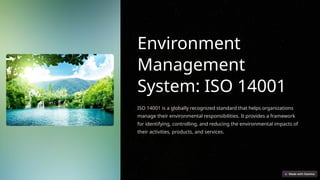
Environment
Management
System: ISO 14001
ISO 14001 is a globally recognized standard that helps organizations
manage their environmental responsibilities. It provides a framework
for identifying, controlling, and reducing the environmental impacts of
their activities, products, and services.
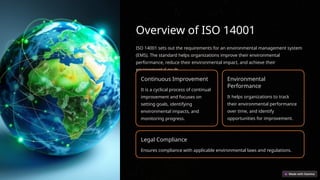
Overview of ISO 14001
ISO 14001 sets out the requirements for an environmental management system
(EMS). The standard helps organizations improve their environmental
performance, reduce their environmental impact, and achieve their
environmental goals.
Continuous Improvement
It is a cyclical process of continual
improvement and focuses on
setting goals, identifying
environmental impacts, and
monitoring progress.
Environmental
Performance
It helps organizations to track
their environmental performance
over time, and identify
opportunities for improvement.
Legal Compliance
Ensures compliance with applicable environmental laws and regulations.
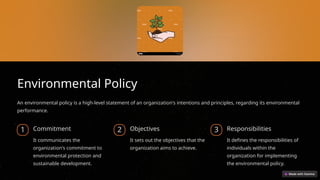
Environmental Policy
An environmental policy is a high-level statement of an organization's intentions and principles, regarding its environmental
performance.
1 Commitment
It communicates the
organization's commitment to
environmental protection and
sustainable development.
2 Objectives
It sets out the objectives that the
organization aims to achieve.
3 Responsibilities
It defines the responsibilities of
individuals within the
organization for implementing
the environmental policy.
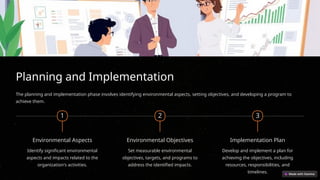
Planning and Implementation
The planning and implementation phase involves identifying environmental aspects, setting objectives, and developing a program to
achieve them.
1
Environmental Aspects
Identify significant environmental
aspects and impacts related to the
organization's activities.
2
Environmental Objectives
Set measurable environmental
objectives, targets, and programs to
address the identified impacts.
3
Implementation Plan
Develop and implement a plan for
achieving the objectives, including
resources, responsibilities, and
timelines.
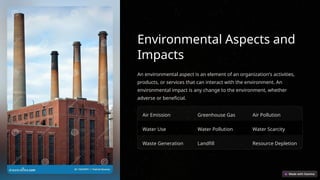
Environmental Aspects and
Impacts
An environmental aspect is an element of an organization's activities,
products, or services that can interact with the environment. An
environmental impact is any change to the environment, whether
adverse or beneficial.
Air Emission Greenhouse Gas Air Pollution
Water Use Water Pollution Water Scarcity
Waste Generation Landfill Resource Depletion
Legal and Other Requirements
This involves identifying and complying with all applicable environmental laws and regulations, as well as any other
requirements that the organization subscribes to.
Local Laws
Regulations related to air, water, and
waste management.
International Standards
Compliance with ISO 14001 and other
global environmental standards.
Industry Specific
Regulations specific to the industry in
which the organization operates.
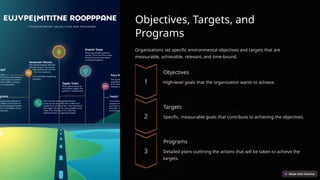
Objectives, Targets, and
Programs
Organizations set specific environmental objectives and targets that are
measurable, achievable, relevant, and time-bound.
Objectives
High-level goals that the organization wants to achieve.
Targets
Specific, measurable goals that contribute to achieving the objectives.
Programs
Detailed plans outlining the actions that will be taken to achieve the
targets.
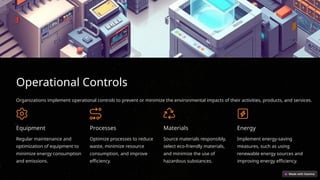
Operational Controls
Organizations implement operational controls to prevent or minimize the environmental impacts of their activities, products, and services.
Equipment
Regular maintenance and
optimization of equipment to
minimize energy consumption
and emissions.
Processes
Optimize processes to reduce
waste, minimize resource
consumption, and improve
efficiency.
Materials
Source materials responsibly,
select eco-friendly materials,
and minimize the use of
hazardous substances.
Energy
Implement energy-saving
measures, such as using
renewable energy sources and
improving energy efficiency.
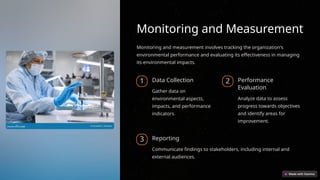
Monitoring and Measurement
Monitoring and measurement involves tracking the organization's
environmental performance and evaluating its effectiveness in managing
its environmental impacts.
1 Data Collection
Gather data on
environmental aspects,
impacts, and performance
indicators.
2 Performance
Evaluation
Analyze data to assess
progress towards objectives
and identify areas for
improvement.
3 Reporting
Communicate findings to stakeholders, including internal and
external audiences.
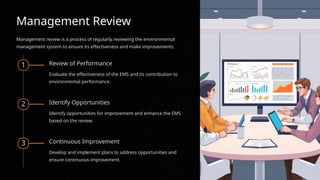
Management Review
Management review is a process of regularly reviewing the environmental
management system to ensure its effectiveness and make improvements.
1 Review of Performance
Evaluate the effectiveness of the EMS and its contribution to
environmental performance.
2 Identify Opportunities
Identify opportunities for improvement and enhance the EMS
based on the review.
3 Continuous Improvement
Develop and implement plans to address opportunities and
ensure continuous improvement.
Circular Economy:
Rethinking Waste
Management
A circular economy is a model of production and consumption
that seeks to eliminate waste and pollution. It aims to keep
resources in use for as long as possible.
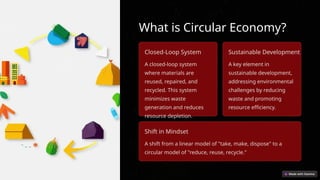
What is Circular Economy?
Closed-Loop System
A closed-loop system
where materials are
reused, repaired, and
recycled. This system
minimizes waste
generation and reduces
resource depletion.
Sustainable Development
A key element in
sustainable development,
addressing environmental
challenges by reducing
waste and promoting
resource efficiency.
Shift in Mindset
A shift from a linear model of "take, make, dispose" to a
circular model of "reduce, reuse, recycle."
Benefits of a Circular Economy
1 Reduced
Environmental Impact
Reduces waste and
pollution by reusing and
recycling materials,
contributing to a
healthier planet.
2 Resource Conservation
Reduces resource
consumption by
extending the lifespan of
products and materials.
3 Economic Growth
Creates new business
opportunities and jobs in
the circular economy
sector.
4 Enhanced
Competitiveness
Businesses can gain a
competitive edge by
adopting circular
practices.
Principles of Circular Economy
Reduce
Minimize resource consumption
by designing products for
durability and longevity.
Reuse
Extend the lifespan of products
through repair, refurbishment, or
remanufacturing.
Recycle
Close the loop by recovering and
reprocessing materials into new
products.
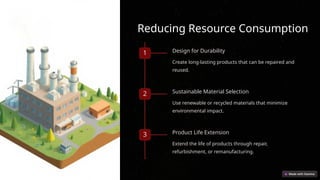
Reducing Resource Consumption
1 Design for Durability
Create long-lasting products that can be repaired and
reused.
2 Sustainable Material Selection
Use renewable or recycled materials that minimize
environmental impact.
3 Product Life Extension
Extend the life of products through repair,
refurbishment, or remanufacturing.
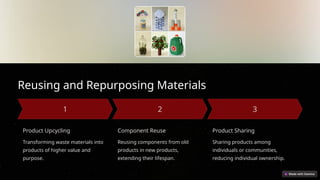
Reusing and Repurposing Materials
Product Upcycling
Transforming waste materials into
products of higher value and
purpose.
Component Reuse
Reusing components from old
products in new products,
extending their lifespan.
Product Sharing
Sharing products among
individuals or communities,
reducing individual ownership.
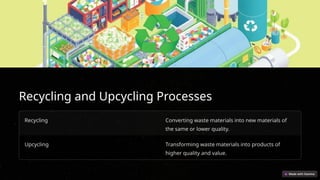
Recycling and Upcycling Processes
Recycling Converting waste materials into new materials of
the same or lower quality.
Upcycling Transforming waste materials into products of
higher quality and value.
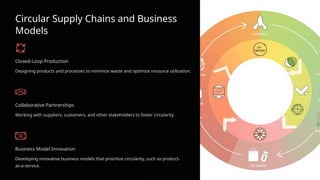
Circular Supply Chains and Business
Models
Closed-Loop Production
Designing products and processes to minimize waste and optimize resource utilization.
Collaborative Partnerships
Working with suppliers, customers, and other stakeholders to foster circularity.
Business Model Innovation
Developing innovative business models that prioritize circularity, such as product-
as-a-service.
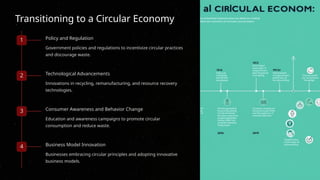
Transitioning to a Circular Economy
1 Policy and Regulation
Government policies and regulations to incentivize circular practices
and discourage waste.
2 Technological Advancements
Innovations in recycling, remanufacturing, and resource recovery
technologies.
3 Consumer Awareness and Behavior Change
Education and awareness campaigns to promote circular
consumption and reduce waste.
4 Business Model Innovation
Businesses embracing circular principles and adopting innovative
business models.
The Future of Sustainability:
Embracing Circularity
Circular economy principles offer a path toward a more
sustainable future. By embracing circularity, we can reduce
waste, conserve resources, and create a more equitable and
thriving society.

Environment-Management-System-ISO-14001.pptx

  • 1.
    KAUSHALYA THE –SKILL UNIVERSITY Akshat Nayak B.C.A Sem-1 Div-B Enrollment No:1C2400204011019 Topic Environmental management system: ISO 14001 Concept of circular Economy
  • 2.
    Environment Management System: ISO 14001 ISO14001 is a globally recognized standard that helps organizations manage their environmental responsibilities. It provides a framework for identifying, controlling, and reducing the environmental impacts of their activities, products, and services.
  • 3.
    Overview of ISO14001 ISO 14001 sets out the requirements for an environmental management system (EMS). The standard helps organizations improve their environmental performance, reduce their environmental impact, and achieve their environmental goals. Continuous Improvement It is a cyclical process of continual improvement and focuses on setting goals, identifying environmental impacts, and monitoring progress. Environmental Performance It helps organizations to track their environmental performance over time, and identify opportunities for improvement. Legal Compliance Ensures compliance with applicable environmental laws and regulations.
  • 4.
    Environmental Policy An environmentalpolicy is a high-level statement of an organization's intentions and principles, regarding its environmental performance. 1 Commitment It communicates the organization's commitment to environmental protection and sustainable development. 2 Objectives It sets out the objectives that the organization aims to achieve. 3 Responsibilities It defines the responsibilities of individuals within the organization for implementing the environmental policy.
  • 5.
    Planning and Implementation Theplanning and implementation phase involves identifying environmental aspects, setting objectives, and developing a program to achieve them. 1 Environmental Aspects Identify significant environmental aspects and impacts related to the organization's activities. 2 Environmental Objectives Set measurable environmental objectives, targets, and programs to address the identified impacts. 3 Implementation Plan Develop and implement a plan for achieving the objectives, including resources, responsibilities, and timelines.
  • 6.
    Environmental Aspects and Impacts Anenvironmental aspect is an element of an organization's activities, products, or services that can interact with the environment. An environmental impact is any change to the environment, whether adverse or beneficial. Air Emission Greenhouse Gas Air Pollution Water Use Water Pollution Water Scarcity Waste Generation Landfill Resource Depletion
  • 7.
    Legal and OtherRequirements This involves identifying and complying with all applicable environmental laws and regulations, as well as any other requirements that the organization subscribes to. Local Laws Regulations related to air, water, and waste management. International Standards Compliance with ISO 14001 and other global environmental standards. Industry Specific Regulations specific to the industry in which the organization operates.
  • 8.
    Objectives, Targets, and Programs Organizationsset specific environmental objectives and targets that are measurable, achievable, relevant, and time-bound. Objectives High-level goals that the organization wants to achieve. Targets Specific, measurable goals that contribute to achieving the objectives. Programs Detailed plans outlining the actions that will be taken to achieve the targets.
  • 9.
    Operational Controls Organizations implementoperational controls to prevent or minimize the environmental impacts of their activities, products, and services. Equipment Regular maintenance and optimization of equipment to minimize energy consumption and emissions. Processes Optimize processes to reduce waste, minimize resource consumption, and improve efficiency. Materials Source materials responsibly, select eco-friendly materials, and minimize the use of hazardous substances. Energy Implement energy-saving measures, such as using renewable energy sources and improving energy efficiency.
  • 10.
    Monitoring and Measurement Monitoringand measurement involves tracking the organization's environmental performance and evaluating its effectiveness in managing its environmental impacts. 1 Data Collection Gather data on environmental aspects, impacts, and performance indicators. 2 Performance Evaluation Analyze data to assess progress towards objectives and identify areas for improvement. 3 Reporting Communicate findings to stakeholders, including internal and external audiences.
  • 11.
    Management Review Management reviewis a process of regularly reviewing the environmental management system to ensure its effectiveness and make improvements. 1 Review of Performance Evaluate the effectiveness of the EMS and its contribution to environmental performance. 2 Identify Opportunities Identify opportunities for improvement and enhance the EMS based on the review. 3 Continuous Improvement Develop and implement plans to address opportunities and ensure continuous improvement.
  • 12.
    Circular Economy: Rethinking Waste Management Acircular economy is a model of production and consumption that seeks to eliminate waste and pollution. It aims to keep resources in use for as long as possible.
  • 13.
    What is CircularEconomy? Closed-Loop System A closed-loop system where materials are reused, repaired, and recycled. This system minimizes waste generation and reduces resource depletion. Sustainable Development A key element in sustainable development, addressing environmental challenges by reducing waste and promoting resource efficiency. Shift in Mindset A shift from a linear model of "take, make, dispose" to a circular model of "reduce, reuse, recycle."
  • 14.
    Benefits of aCircular Economy 1 Reduced Environmental Impact Reduces waste and pollution by reusing and recycling materials, contributing to a healthier planet. 2 Resource Conservation Reduces resource consumption by extending the lifespan of products and materials. 3 Economic Growth Creates new business opportunities and jobs in the circular economy sector. 4 Enhanced Competitiveness Businesses can gain a competitive edge by adopting circular practices.
  • 15.
    Principles of CircularEconomy Reduce Minimize resource consumption by designing products for durability and longevity. Reuse Extend the lifespan of products through repair, refurbishment, or remanufacturing. Recycle Close the loop by recovering and reprocessing materials into new products.
  • 16.
    Reducing Resource Consumption 1Design for Durability Create long-lasting products that can be repaired and reused. 2 Sustainable Material Selection Use renewable or recycled materials that minimize environmental impact. 3 Product Life Extension Extend the life of products through repair, refurbishment, or remanufacturing.
  • 17.
    Reusing and RepurposingMaterials Product Upcycling Transforming waste materials into products of higher value and purpose. Component Reuse Reusing components from old products in new products, extending their lifespan. Product Sharing Sharing products among individuals or communities, reducing individual ownership.
  • 18.
    Recycling and UpcyclingProcesses Recycling Converting waste materials into new materials of the same or lower quality. Upcycling Transforming waste materials into products of higher quality and value.
  • 19.
    Circular Supply Chainsand Business Models Closed-Loop Production Designing products and processes to minimize waste and optimize resource utilization. Collaborative Partnerships Working with suppliers, customers, and other stakeholders to foster circularity. Business Model Innovation Developing innovative business models that prioritize circularity, such as product- as-a-service.
  • 20.
    Transitioning to aCircular Economy 1 Policy and Regulation Government policies and regulations to incentivize circular practices and discourage waste. 2 Technological Advancements Innovations in recycling, remanufacturing, and resource recovery technologies. 3 Consumer Awareness and Behavior Change Education and awareness campaigns to promote circular consumption and reduce waste. 4 Business Model Innovation Businesses embracing circular principles and adopting innovative business models.
  • 21.
    The Future ofSustainability: Embracing Circularity Circular economy principles offer a path toward a more sustainable future. By embracing circularity, we can reduce waste, conserve resources, and create a more equitable and thriving society.