Environmental and
Social Due Diligence
By
Jini Rajendran
Definition
2
Cost effective technique for
understanding the risk and
liabilities associated with a
transaction or investment
while ensuring compliance
with law, standards and
company and lenders
policies and procedures.
Reference Framework
• IFC Performance Standard on Environmental and Social Sustainability January 2012
• Industry Specific and general World Bank EHS guidelines.
• ADB Safeguard Policy Statement June 2009
• AIIB Environmental and Social Framework February 2016
• National Laws including those laws which implementing host country is obligation
under international law.
IFC Performance Standard
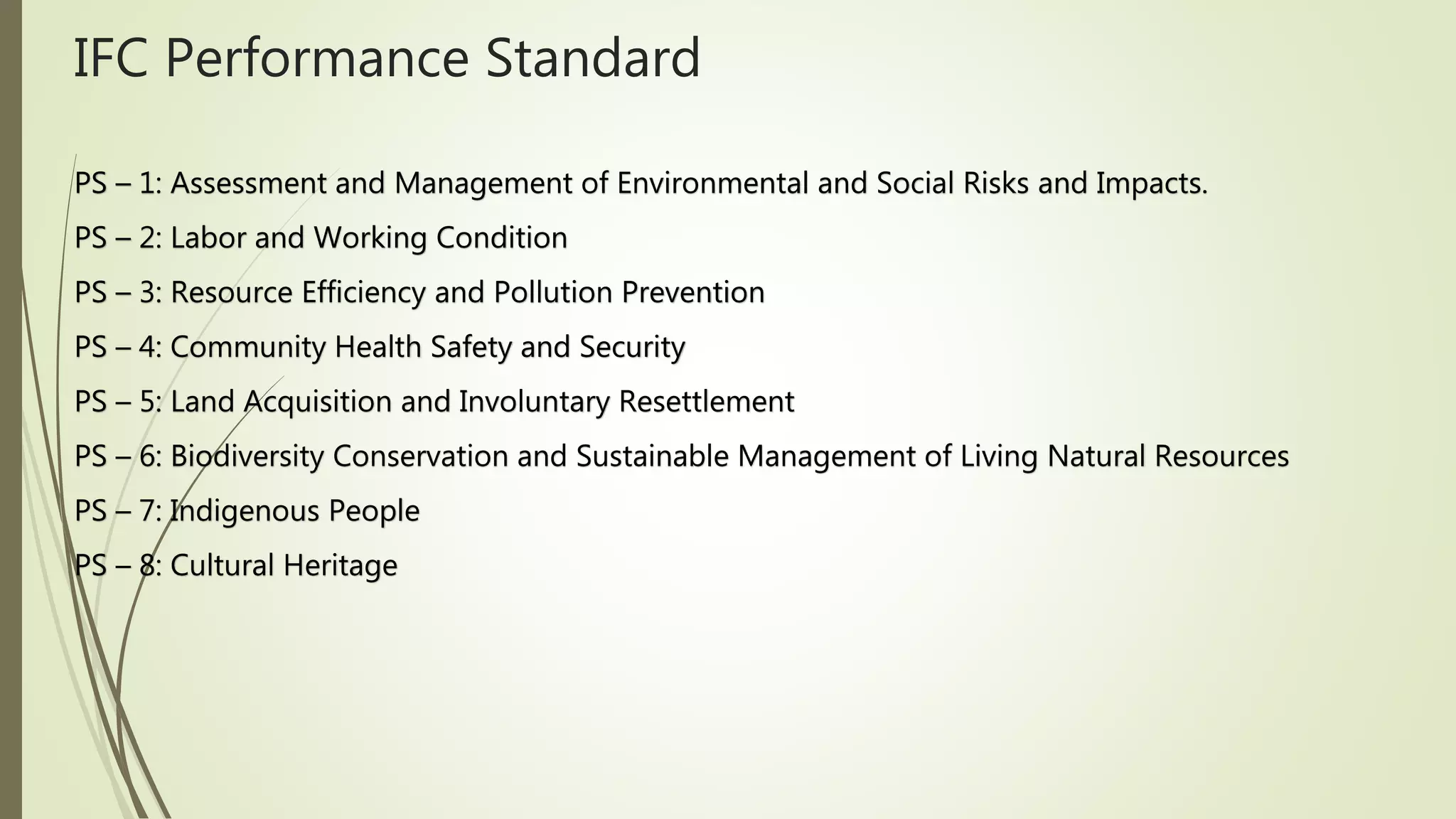
PS – 1: Assessment and Management of Environmental and Social Risks and Impacts.
PS – 2: Labor and Working Condition
PS – 3: Resource Efficiency and Pollution Prevention
PS – 4: Community Health Safety and Security
PS – 5: Land Acquisition and Involuntary Resettlement
PS – 6: Biodiversity Conservation and Sustainable Management of Living Natural Resources
PS – 7: Indigenous People
PS – 8: Cultural Heritage
Assessment and Management of Environmental
and Social Risk and Impacts
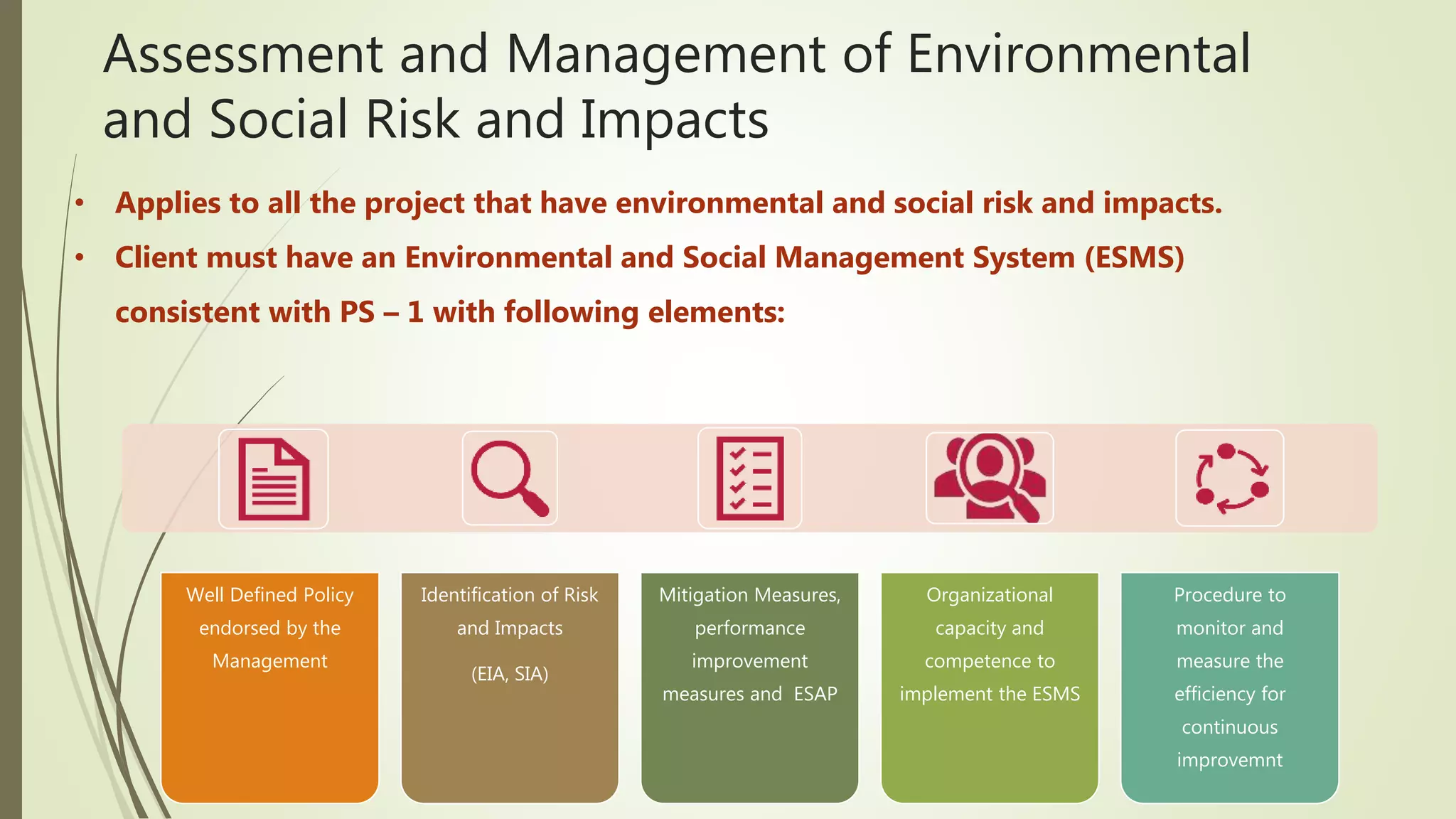
• Applies to all the project that have environmental and social risk and impacts.
• Client must have an Environmental and Social Management System (ESMS)
consistent with PS – 1 with following elements:
Well Defined Policy
endorsed by the
Management
Identification of Risk
and Impacts
(EIA, SIA)
Mitigation Measures,
performance
improvement
measures and ESAP
Organizational
capacity and
competence to
implement the ESMS
Procedure to
monitor and
measure the
efficiency for
continuous
improvemnt
Assessment and Management of Environmental
and Social Risk and Impacts
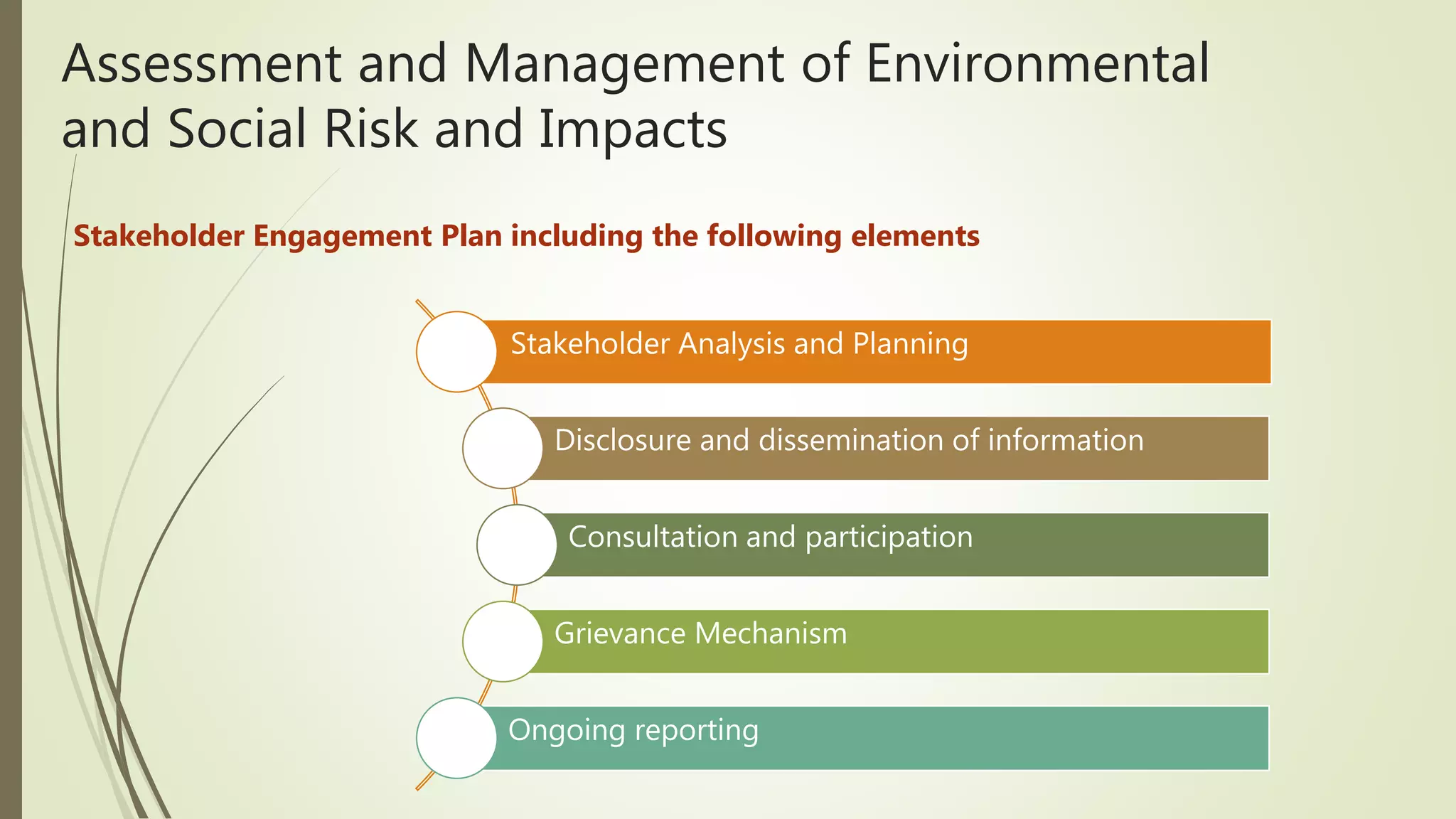
Stakeholder Engagement Plan including the following elements
Stakeholder Analysis and Planning
Disclosure and dissemination of information
Consultation and participation
Grievance Mechanism
Ongoing reporting
Labor and Working Condition
Applies to workers directly engaged, third party workers and workers in supply chain.
Human
Resource
Working
condition
and terms of
employment
Workers
Organization
Accessible
Grievance
MechanismProtecting
workforce
against child
and forced
labor
Non-
discrimination
and equality
HR Policy and
Manual
Labor and Working Condition
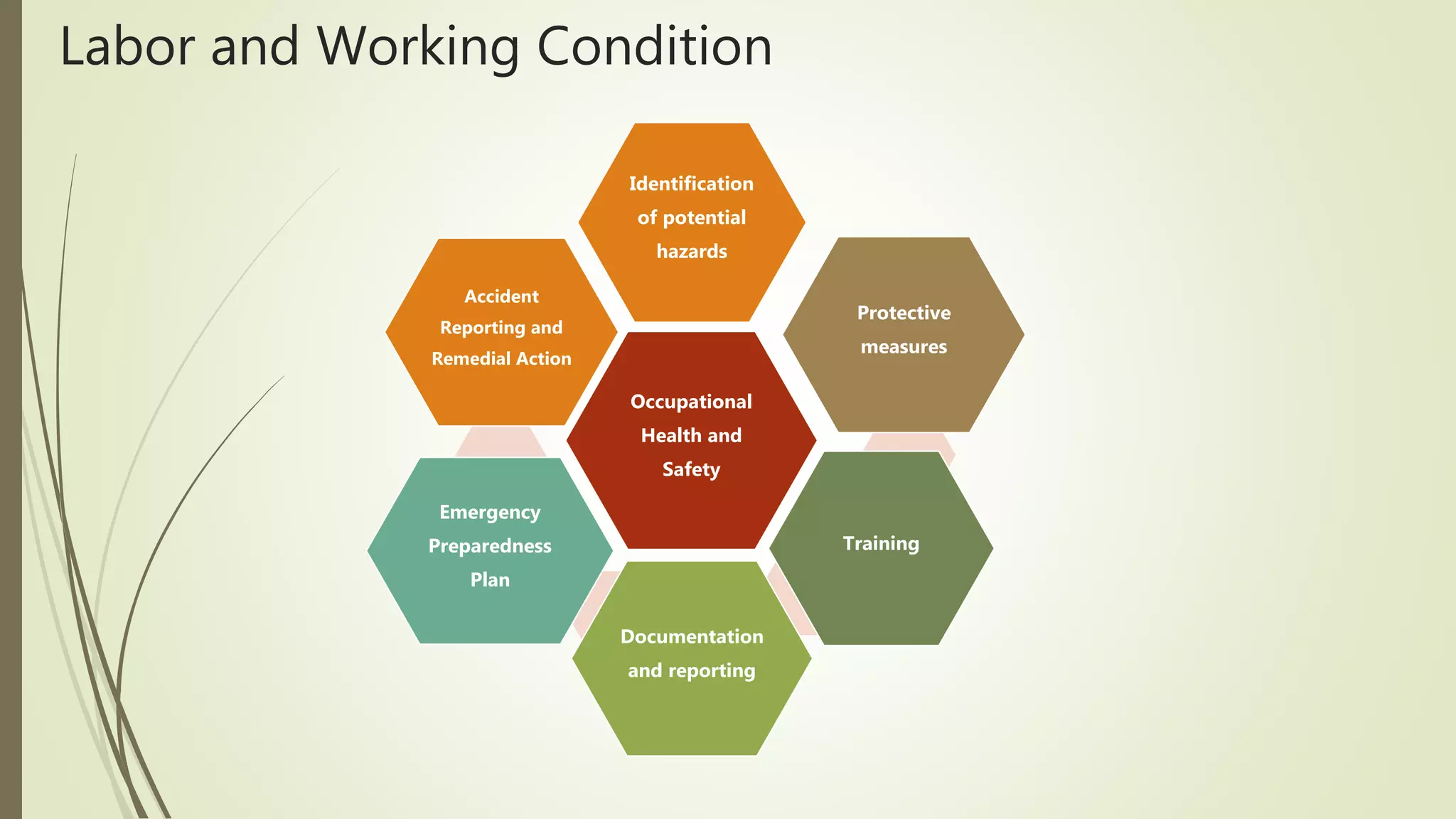
Occupational
Health and
Safety
Identification
of potential
hazards
Protective
measures
Training
Documentation
and reporting
Emergency
Preparedness
Plan
Accident
Reporting and
Remedial Action
Labor and Working Condition
• Client shall ensure that the third party engaged are reputable and legitimate
enterprise and have appropriate ESMS and have access to grievance
mechanism.
• Client shall have arrangement for monitoring its primary supply chain on an
ongoing basis.
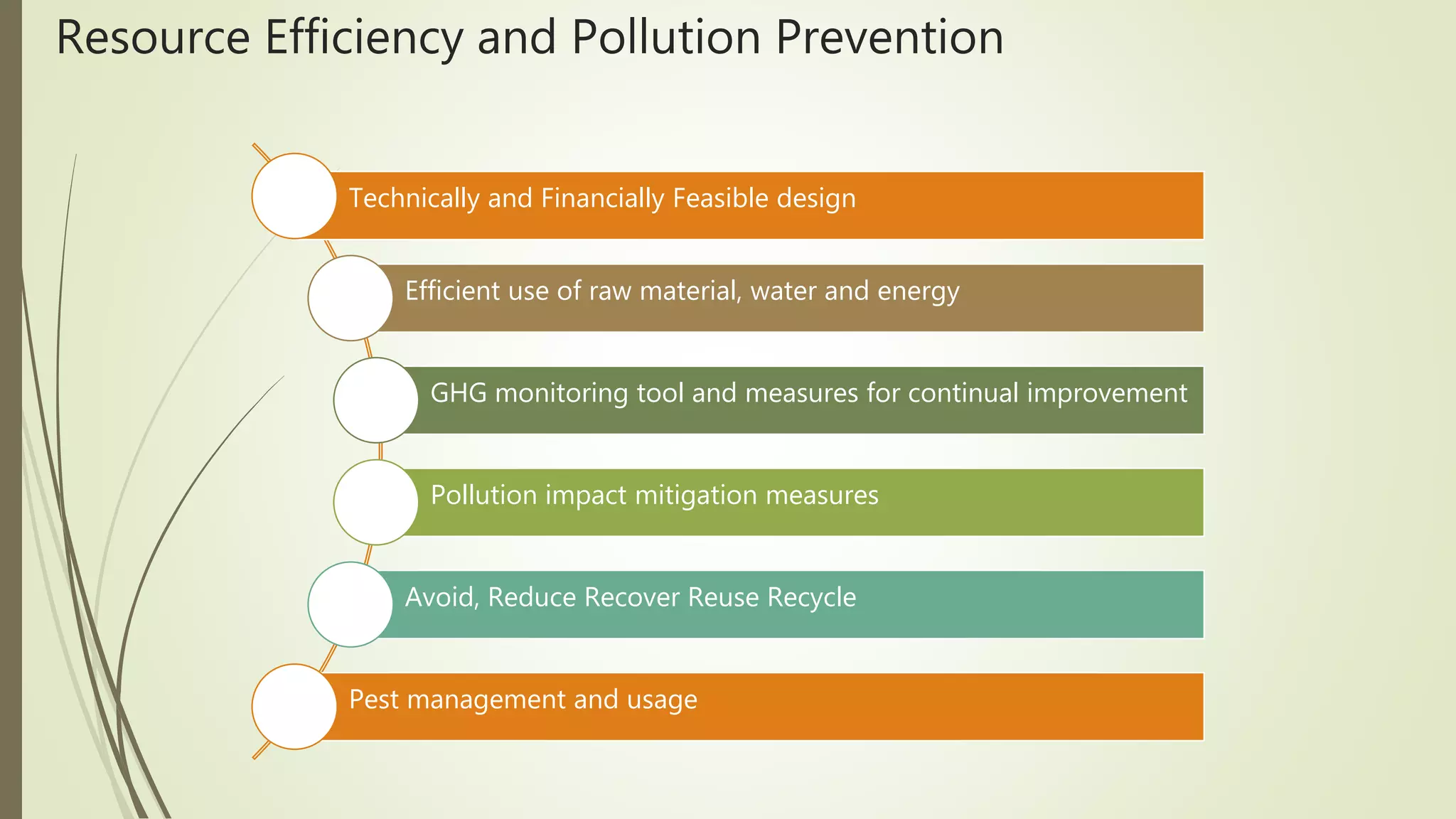
Resource Efficiency and Pollution Prevention
Technically and Financially Feasible design
Efficient use of raw material, water and energy
GHG monitoring tool and measures for continual improvement
Pollution impact mitigation measures
Avoid, Reduce Recover Reuse Recycle
Pest management and usage
Community Health Safety and Security
DesignConsiderationandReview
• Project design
construct operate and
decommission in
accordance with GIIP
and Safety of third
party and affected
community.
• Review by external
experts for all the
project stage.
Impactidentificationandcommunication
• Avoid or minimize
community
exposure to
hazardous material
• Identify risk and
potential impacts
on priority
ecosystem
services that may
exacerbated by
climate change
CommunityEngagement
• Emergency
Preparedness and
Response plan in
collaboration with
affected
community and
local government
officials.
• Training on
behavioral aspects
for the client’s
security
personnel's
Land Acquisition and Involuntary Resettlement
Prefer negotiated
settlement
Compensation at full
replacement cost
and improved living
standards
Grievance
mechanism to
address specific
concerns
Land Acquisition and Involuntary Resettlement
Resettlement Action Plan or Livelihood Restoration Plan
Socio-economic
baseline data
Compensation and
assistance
Monitoring and
evaluation of RAP /
LRP
Completion Audit by
resettlement
professional
Land Acquisition and Involuntary Resettlement
• In case land acquisition and resettlement are responsibility of the government, the
client will collaborate with the responsible government agency to extent permitted
to achieve performance standard requirements.
• Supplemental Resettlement Plan shall be prepared in case of land acquisition by the
government agency.
Biodiversity Conservation and Sustainable Management
of Living Natural Resources
Applicability is identified during E&S risk and impact identification stage.
Applicable if the project is located in an modified, natural or critical habitat.
ESMS must address the actions necessary to manage the requirements
In areas of natural habitat mitigation measures must be designed to achieve no net loss
No project will be acceptable in critical habitat unless client demonstrate the requirements and develop and
implement Biodiversity Action Plan
Introduction of alien species only after requisite approval in the existing regulatory framework
Indigenous People
Indigenous people are social groups with identities that are distinct from mainstream group in national
societies and are often most marginalized and vulnerable. The vulnerability may include loss of identity,
culture, and natural resource-based livelihood as well as exposure to impoverishment and disease.
Avoidance of
adverse impacts
Engagement planning,
disclosure, consultation
and participation
Free Prior Informed Consent and
engage external experts for
identification of risk and impacts
Avoid impact on
critical cultural
heritage
Cultural Heritage
Cultural Heritage (CH) are sites or structures having archaeological, paleontological, historical, cultural,
artistic and religious values. Unique features such as sacred groves, rocks, caves and water fall are also
considered as cultural heritages. Apply to cultural heritage regardless of whether or not it has been
legally protected or previously disturbed.
Site and design project to avoid significant adverse impact on CH
Consult with affected community to identify importance
Allow continued access to the CH or provide alternate route
Under unavoidable circumstances use process of Informed Consultation and Participation of affected
community
Commercial use of CH only with prior ICP and fair and equitable sharing of benifits
Thank You

Environmental and social due diligence

  • 1.
    Environmental and Social DueDiligence By Jini Rajendran
  • 2.
    Definition 2 Cost effective techniquefor understanding the risk and liabilities associated with a transaction or investment while ensuring compliance with law, standards and company and lenders policies and procedures.
  • 3.
    Reference Framework • IFCPerformance Standard on Environmental and Social Sustainability January 2012 • Industry Specific and general World Bank EHS guidelines. • ADB Safeguard Policy Statement June 2009 • AIIB Environmental and Social Framework February 2016 • National Laws including those laws which implementing host country is obligation under international law.
  • 4.
    IFC Performance Standard PS– 1: Assessment and Management of Environmental and Social Risks and Impacts. PS – 2: Labor and Working Condition PS – 3: Resource Efficiency and Pollution Prevention PS – 4: Community Health Safety and Security PS – 5: Land Acquisition and Involuntary Resettlement PS – 6: Biodiversity Conservation and Sustainable Management of Living Natural Resources PS – 7: Indigenous People PS – 8: Cultural Heritage
  • 5.
    Assessment and Managementof Environmental and Social Risk and Impacts • Applies to all the project that have environmental and social risk and impacts. • Client must have an Environmental and Social Management System (ESMS) consistent with PS – 1 with following elements: Well Defined Policy endorsed by the Management Identification of Risk and Impacts (EIA, SIA) Mitigation Measures, performance improvement measures and ESAP Organizational capacity and competence to implement the ESMS Procedure to monitor and measure the efficiency for continuous improvemnt
  • 6.
    Assessment and Managementof Environmental and Social Risk and Impacts Stakeholder Engagement Plan including the following elements Stakeholder Analysis and Planning Disclosure and dissemination of information Consultation and participation Grievance Mechanism Ongoing reporting
  • 7.
    Labor and WorkingCondition Applies to workers directly engaged, third party workers and workers in supply chain. Human Resource Working condition and terms of employment Workers Organization Accessible Grievance MechanismProtecting workforce against child and forced labor Non- discrimination and equality HR Policy and Manual
  • 8.
    Labor and WorkingCondition Occupational Health and Safety Identification of potential hazards Protective measures Training Documentation and reporting Emergency Preparedness Plan Accident Reporting and Remedial Action
  • 9.
    Labor and WorkingCondition • Client shall ensure that the third party engaged are reputable and legitimate enterprise and have appropriate ESMS and have access to grievance mechanism. • Client shall have arrangement for monitoring its primary supply chain on an ongoing basis.
  • 10.
    Resource Efficiency andPollution Prevention Technically and Financially Feasible design Efficient use of raw material, water and energy GHG monitoring tool and measures for continual improvement Pollution impact mitigation measures Avoid, Reduce Recover Reuse Recycle Pest management and usage
  • 11.
    Community Health Safetyand Security DesignConsiderationandReview • Project design construct operate and decommission in accordance with GIIP and Safety of third party and affected community. • Review by external experts for all the project stage. Impactidentificationandcommunication • Avoid or minimize community exposure to hazardous material • Identify risk and potential impacts on priority ecosystem services that may exacerbated by climate change CommunityEngagement • Emergency Preparedness and Response plan in collaboration with affected community and local government officials. • Training on behavioral aspects for the client’s security personnel's
  • 12.
    Land Acquisition andInvoluntary Resettlement Prefer negotiated settlement Compensation at full replacement cost and improved living standards Grievance mechanism to address specific concerns
  • 13.
    Land Acquisition andInvoluntary Resettlement Resettlement Action Plan or Livelihood Restoration Plan Socio-economic baseline data Compensation and assistance Monitoring and evaluation of RAP / LRP Completion Audit by resettlement professional
  • 14.
    Land Acquisition andInvoluntary Resettlement • In case land acquisition and resettlement are responsibility of the government, the client will collaborate with the responsible government agency to extent permitted to achieve performance standard requirements. • Supplemental Resettlement Plan shall be prepared in case of land acquisition by the government agency.
  • 15.
    Biodiversity Conservation andSustainable Management of Living Natural Resources Applicability is identified during E&S risk and impact identification stage. Applicable if the project is located in an modified, natural or critical habitat. ESMS must address the actions necessary to manage the requirements In areas of natural habitat mitigation measures must be designed to achieve no net loss No project will be acceptable in critical habitat unless client demonstrate the requirements and develop and implement Biodiversity Action Plan Introduction of alien species only after requisite approval in the existing regulatory framework
  • 16.
    Indigenous People Indigenous peopleare social groups with identities that are distinct from mainstream group in national societies and are often most marginalized and vulnerable. The vulnerability may include loss of identity, culture, and natural resource-based livelihood as well as exposure to impoverishment and disease. Avoidance of adverse impacts Engagement planning, disclosure, consultation and participation Free Prior Informed Consent and engage external experts for identification of risk and impacts Avoid impact on critical cultural heritage
  • 17.
    Cultural Heritage Cultural Heritage(CH) are sites or structures having archaeological, paleontological, historical, cultural, artistic and religious values. Unique features such as sacred groves, rocks, caves and water fall are also considered as cultural heritages. Apply to cultural heritage regardless of whether or not it has been legally protected or previously disturbed. Site and design project to avoid significant adverse impact on CH Consult with affected community to identify importance Allow continued access to the CH or provide alternate route Under unavoidable circumstances use process of Informed Consultation and Participation of affected community Commercial use of CH only with prior ICP and fair and equitable sharing of benifits
  • 18.