ESG
(Environmental, Social & Governance)
ESG (environmental, social and governance) is a generic term used in capital markets and used
by investors to evaluate corporate behavior and to determine the future financial performance of
companies.
Sustainable, responsible and impact investing (SRI) is an investment discipline that considers
environmental, social and corporate governance (ESG) criteria to generate long-term competitive
financial returns and positive societal impact.
ESG stands for Environmental, Social and Governance. There is growing evidence that suggests
that ESG factors, when integrated into investment analysis and decision making, may offer
investors potential long-term performance advantages. ESG has become shorthand for
investment methodologies that embrace ESG or sustainability factors as a means of helping to
identify companies with superior business models.
ESG factors offer portfolio managers added insight into the quality of a company's management,
culture, risk profile and other characteristics. By taking advantage of the increased level of
scrutiny associated with ESG analysis, ESG Managers® Portfolios seek to identify companies
that we believe:
 Are leaders in their industries
 Are better managed and are more forward-thinking
 Are better at anticipating and mitigating risk
 Meet positive standards of corporate responsibility
 Are focused on the long term
Environmental, social and governance (ESG) refers to the three main areas of concern that
have developed as central factors in measuring the sustainability and ethical impact of
an investment in a company or business. These areas cover a broad set of concerns increasingly
included in the non-financial factors that figure in the valuation of equity, real-estate, corporate,
and fixed-income investments. ESG is the catch-all term for the criteria used in what has become
known as socially-responsible investing. Socially responsible investing is among several related
concepts and approaches that influence and, in some cases govern, how asset managers invest
portfolios.
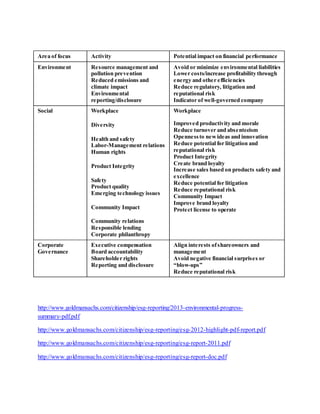
As the chart below suggests, a company's ESG activities have the potential to positively impact
its financial performance over the long term.
Area of focus Activity Potential impact on financial performance
Environment  Resource management and
pollution prevention
 Reduced emissions and
climate impact
 Environmental
reporting/disclosure
 Avoid or minimize environmental liabilities
 Lower costs/increase profitability through
energy and other efficiencies
 Reduce regulatory, litigation and
reputational risk
 Indicator of well-governed company
Social Workplace
Diversity
 Health and safety
 Labor-Management relations
 Human rights
Product Integrity
 Safety
 Product quality
 Emerging technology issues
Community Impact
 Community relations
 Responsible lending
 Corporate philanthropy
Workplace
 Improved productivity and morale
 Reduce turnover and absenteeism
 Opennessto newideas and innovation
 Reduce potential for litigation and
reputational risk
Product Integrity
 Create brand loyalty
 Increase sales based on products safety and
excellence
 Reduce potential for litigation
 Reduce reputational risk
Community Impact
 Improve brand loyalty
 Protect license to operate
Corporate
Governance
 Executive compensation
 Board accountability
 Shareholder rights
 Reporting and disclosure
 Align interests ofshareowners and
management
 Avoid negative financial surprises or
“blow-ups”
 Reduce reputational risk
http://www.goldmansachs.com/citizenship/esg-reporting/2013-environmental-progress-
summary-pdf.pdf
http://www.goldmansachs.com/citizenship/esg-reporting/esg-2012-highlight-pdf-report.pdf
http://www.goldmansachs.com/citizenship/esg-reporting/esg-report-2011.pdf
http://www.goldmansachs.com/citizenship/esg-reporting/esg-report-doc.pdf
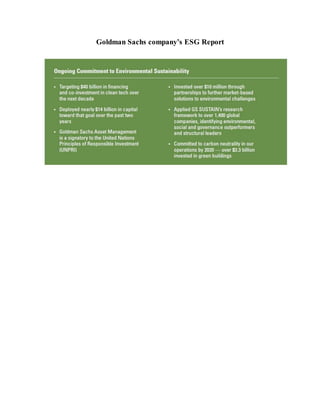
Goldman Sachs company’s ESG Report

ESG Environmental, Social & Governance

  • 1.
    ESG (Environmental, Social &Governance) ESG (environmental, social and governance) is a generic term used in capital markets and used by investors to evaluate corporate behavior and to determine the future financial performance of companies. Sustainable, responsible and impact investing (SRI) is an investment discipline that considers environmental, social and corporate governance (ESG) criteria to generate long-term competitive financial returns and positive societal impact. ESG stands for Environmental, Social and Governance. There is growing evidence that suggests that ESG factors, when integrated into investment analysis and decision making, may offer investors potential long-term performance advantages. ESG has become shorthand for investment methodologies that embrace ESG or sustainability factors as a means of helping to identify companies with superior business models. ESG factors offer portfolio managers added insight into the quality of a company's management, culture, risk profile and other characteristics. By taking advantage of the increased level of scrutiny associated with ESG analysis, ESG Managers® Portfolios seek to identify companies that we believe:  Are leaders in their industries  Are better managed and are more forward-thinking  Are better at anticipating and mitigating risk  Meet positive standards of corporate responsibility  Are focused on the long term Environmental, social and governance (ESG) refers to the three main areas of concern that have developed as central factors in measuring the sustainability and ethical impact of an investment in a company or business. These areas cover a broad set of concerns increasingly included in the non-financial factors that figure in the valuation of equity, real-estate, corporate, and fixed-income investments. ESG is the catch-all term for the criteria used in what has become known as socially-responsible investing. Socially responsible investing is among several related concepts and approaches that influence and, in some cases govern, how asset managers invest portfolios. As the chart below suggests, a company's ESG activities have the potential to positively impact its financial performance over the long term.
  • 2.
    Area of focusActivity Potential impact on financial performance Environment  Resource management and pollution prevention  Reduced emissions and climate impact  Environmental reporting/disclosure  Avoid or minimize environmental liabilities  Lower costs/increase profitability through energy and other efficiencies  Reduce regulatory, litigation and reputational risk  Indicator of well-governed company Social Workplace Diversity  Health and safety  Labor-Management relations  Human rights Product Integrity  Safety  Product quality  Emerging technology issues Community Impact  Community relations  Responsible lending  Corporate philanthropy Workplace  Improved productivity and morale  Reduce turnover and absenteeism  Opennessto newideas and innovation  Reduce potential for litigation and reputational risk Product Integrity  Create brand loyalty  Increase sales based on products safety and excellence  Reduce potential for litigation  Reduce reputational risk Community Impact  Improve brand loyalty  Protect license to operate Corporate Governance  Executive compensation  Board accountability  Shareholder rights  Reporting and disclosure  Align interests ofshareowners and management  Avoid negative financial surprises or “blow-ups”  Reduce reputational risk http://www.goldmansachs.com/citizenship/esg-reporting/2013-environmental-progress- summary-pdf.pdf http://www.goldmansachs.com/citizenship/esg-reporting/esg-2012-highlight-pdf-report.pdf http://www.goldmansachs.com/citizenship/esg-reporting/esg-report-2011.pdf http://www.goldmansachs.com/citizenship/esg-reporting/esg-report-doc.pdf
  • 3.