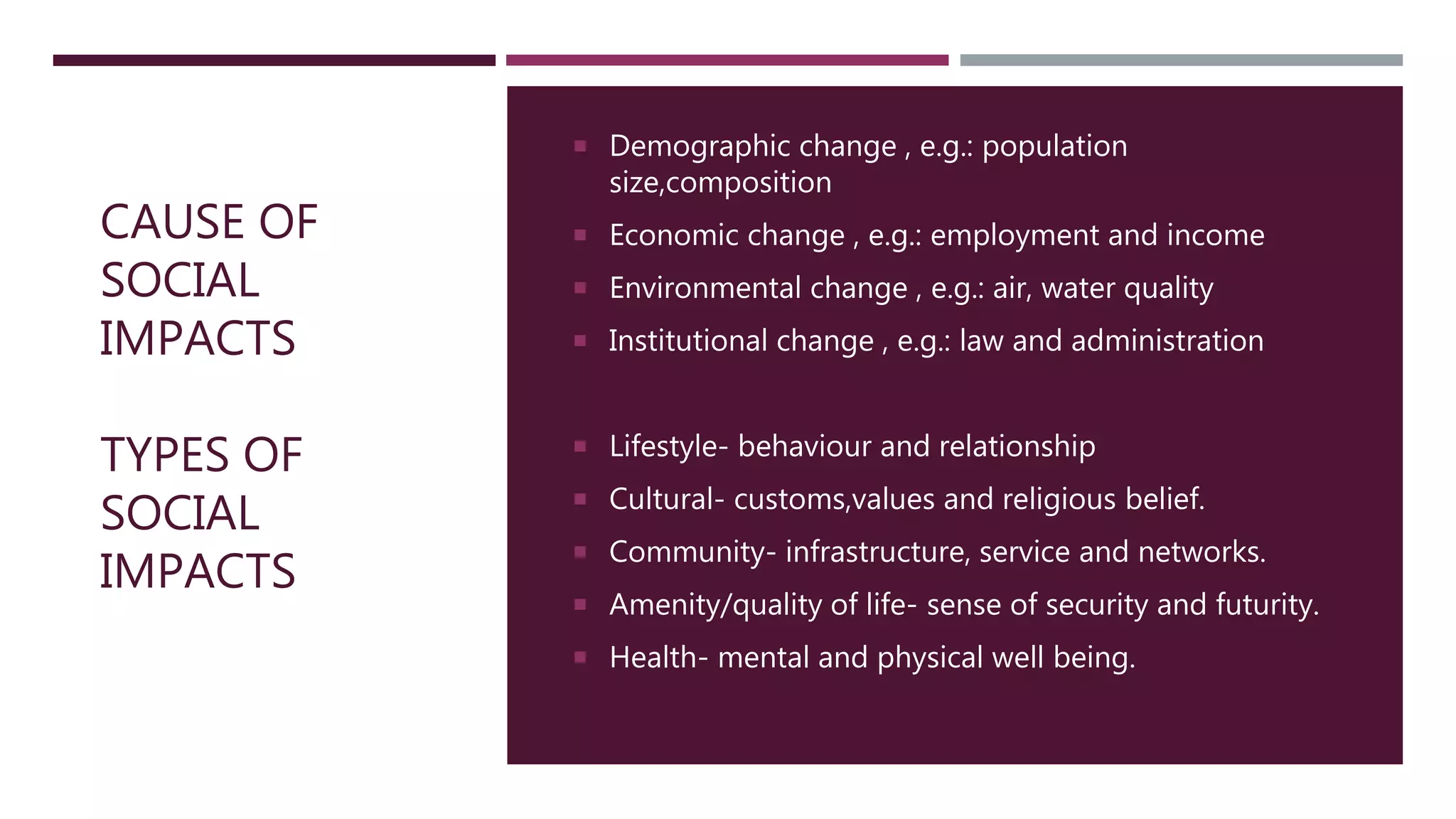
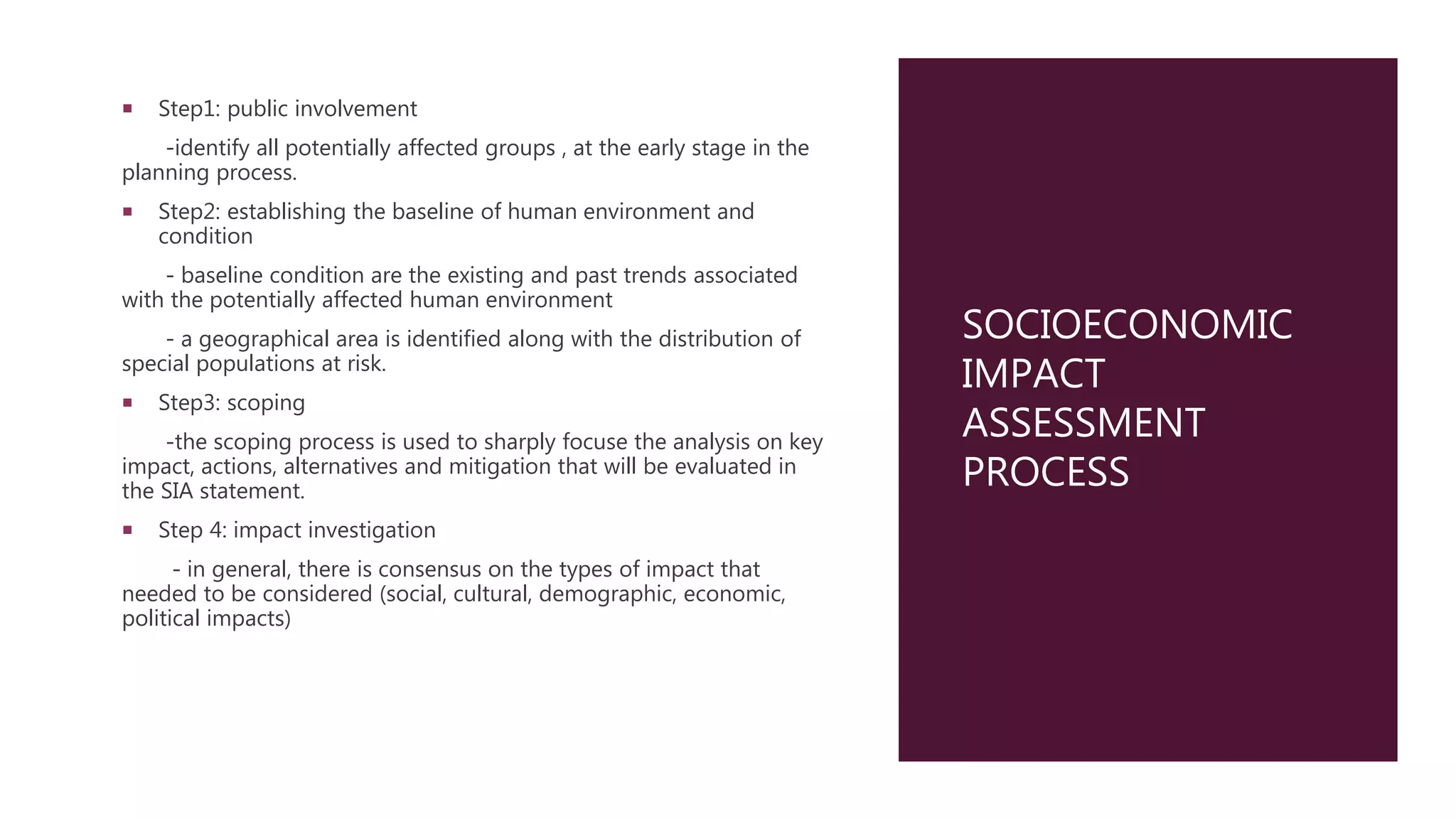
Social impact assessment involves analyzing the intended and unintended social consequences of planned interventions like policies, programs, and projects. It aims to analyze how proposals affect people, identify adverse impacts, enhance benefits, and help manage social change. The concept was introduced in 1969 under the US National Environmental Policy Act and emerged as a field in the 1970s. The SIA process involves public participation, establishing a baseline, scoping impacts, forecasting direct and indirect impacts, assessing alternatives and mitigation measures, and monitoring impacts. Key variables assessed include cultural, political, and community factors as well as population and individual changes.