• Introduction
• Enterotoxemia,also known as "overeating disease" or "pulpy
kidney disease," is a fatal disease in ruminants caused by
toxins produced by Clostridium perfringens bacteria. It
primarily affects calves, lambs, goats, and other livestock
consuming high-energy diets.
3.
• Etiology (Cause)
•Causative Agent: Clostridium perfringens (Types C and D)
• Toxin Production:
• Type C: Produces Beta toxin, leading to hemorrhagic enteritis.
• Type D: Produces Epsilon toxin, affecting the nervous system and
kidneys.
• Triggering Factors:
• Sudden increase in carbohydrate-rich diets (grain, lush pasture,
milk).
• Rapid bacterial multiplication in the gut, releasing toxins.
4.
• Clinical Signs
•Acute Form:
• Sudden death (often without visible signs).
• Nervous signs (convulsions, head pressing, opisthotonus).
• Frothing at the mouth, difficulty breathing.
• Subacute/Chronic Form:
• Diarrhea (often bloody in Type C cases).
• Abdominal pain, bloating.
• Lethargy, weakness, and loss of appetite.
5.
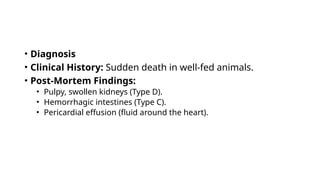
• Diagnosis
• ClinicalHistory: Sudden death in well-fed animals.
• Post-Mortem Findings:
• Pulpy, swollen kidneys (Type D).
• Hemorrhagic intestines (Type C).
• Pericardial effusion (fluid around the heart).
6.
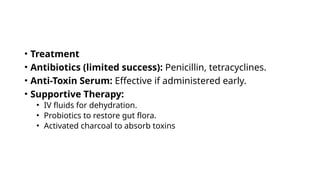
• Treatment
• Antibiotics(limited success): Penicillin, tetracyclines.
• Anti-Toxin Serum: Effective if administered early.
• Supportive Therapy:
• IV fluids for dehydration.
• Probiotics to restore gut flora.
• Activated charcoal to absorb toxins
7.
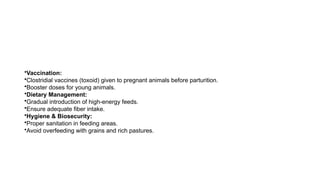
•Vaccination:
•Clostridial vaccines (toxoid)given to pregnant animals before parturition.
•Booster doses for young animals.
•Dietary Management:
•Gradual introduction of high-energy feeds.
•Ensure adequate fiber intake.
•Hygiene & Biosecurity:
•Proper sanitation in feeding areas.
•Avoid overfeeding with grains and rich pastures.