Enterobacteriaceae
BY
Dr SB Zailani
CLINICAL MICROBIOLOGIST
UNIVERSITY OF MAIDUGURI
November 17, 2024 1
OUTLINE
• Introduction
• Classification
• Morphology
• Properties
• Epidemiology
• Diseases
Pathogenesis & treatment
• Laboratory Identification/Biochemical Tests
• Prevention & control
• Conclusion
November 17, 2024 2
Introduction
• The Enterobacteriaceae are a large family of
bacteria that are Gram negative, rod shaped
(1-5μm in length), oxidase negative, catalase
positive, nitrate-reducing, facultative
anaerobes, fermenting sugars to produce
lactic acid and various other end products,
that live in mammalian Gastrointestinal tracts
November 17, 2024 3
Scientific Classification
• Kingdom: Bacteria
• Phylum: Protobacteria
• Class: Gamma Proteobacteria
• Order: Enterobacteriales
• Family: Enterobacteriaceae
Rahn, 1937
• Over 30 genera and 170 species with more species being named
every year.
• >95% of the clinically significant strains fall into 10 genera and
about 25 species
November 17, 2024 4
Family Enterobacteriaceae
• Escherichia coli
Opportunistic Escherichia coli
ETEC = enterotoxigenic E. coli
EIEC = enteroinvasive E. coli
EPEC = enteropathogenic E. coli
EHEC = enterohemorrhagic E. coli
EaggEC = enteroaggregative E. coli
UPEC = uropathogenic E. coli
November 17, 2024 5
Citrobacter
Citrobacter freundii
Citrobacter diversus
Enterobacter spp
Enterobacter aerogenes
Enterobacter agglomerans
Enterobacter cloacae
Morganella morganii
Klebsiella Spp
Klebsiella pneumoniae
k.ozaena
k.rhinoscleromatis
Klebsiella oxytoca
klebsiella granulomatis
Proteus spp
Proteus mirabilis
Proteus vulgaris
Providencia spp
Providencia alcalifaciens
Providencia rettgeri
Providencia stuartii
Serratia spp
Serratia marcesans
Serratia liquifaciens
Shigella spp
Shigella dysenteriae
Shigella flexneri
Shigella boydii
Shigella sonnei
Yersinia spp
Yersinia enterocolitica
Yersinia pestis
Yersinia pseudotuberculosis
Salmonella spp
Salmonella
Salmonella enterica
Salmonella typhi
Salmonella paratyphi
Salmonella enteritidis
Salmonella cholerae-suis
Salmonella typhimurium
November 17, 2024 6
Others
• Edwardsiella
• Hafnia
• Erwinia
• Pectinobacterium
November 17, 2024 7
MORPHOLOGY
• (A)Flagella
Enterobacteriaceae are motile via peritrichous
flagella except Shigella and Klebsiella which are non-
motile.
• Constitute the H antigens (H = Hauch,German for breath)
-used for typing.
-Non motile organisms lack flagellar H antigens.
• The flagella are maximal in young cultures
November 17, 2024 8
(B)Capsule
• The capsule is a thin layer of surface polysaccharide.
• Constitutes the K antigen (K= Kapseal, German for
capsule).
• Formation enhanced by sugar-containing media.
• Capsules are particularly heavy in Klebsiella, it forms
mucoid colonies.
• Capsule -interfere with O agglutination
-inhibits phagocytosis
-may cross react with capsular
antigens of other bacteria.
November 17, 2024 9
(C) Fimbriae (Pili)
• Hair-like projections of protein on cell surface
• Promote adhesion and are developed in old (24-48
hours) broth cultures.
• The ability to agglutinate red cells, inhibition by
mannose and the width differentiate the types.
• Fimbriae may interfere with H agglutination.
• They are preserved by formalin and destroyed by
heat
November 17, 2024 10
(D) Cell Wall
• Consists of an outer layer and an inner layers
Outer layer
• Is a lipopolysaccharide (LPS) complex
• The side chains of repeating sugar units project from the
outer LPS layer constituting the O (somatic) antigen (O= Ohne,
German for without).
-used for typing
-Smooth colonies
-Resistance to killing by complement.
-Absence, is associated with rough colonies,
autoagglutination, non-virulence and killing by complement
November 17, 2024 11
Cont’d
• Core glycolipids form the basal layer to
which side chains are attached (The
enterobacterial common antigen)
• Phospholipid membrane
• Proteins (outer membrane proteins, OMPs)
are present in the phospholipids membrane.
They include those responsible for solute
transport (‘porins’) and structural
lipoproteins.
November 17, 2024 12
Cont’d
• Lipid A forms a layer between the
lipopolysaccharide and phospholipids.
Is the toxic moiety of ‘endotoxin’.
Biologic effects;
• induction of host febrile response by production
of IL-1 and prostaglandins,
• activation of complement,
• induction of interferon production,
• production of tumour necrosis factor,
• production of colony stimulating factor
• activity as a B-cell mitogen.
November 17, 2024 13
November 17, 2024 14
Cont’d
Inner layer of cell wall
• Consists of peptidoglycan that maintains
the cell wall rigidity
November 17, 2024 15
Antigens
• Somatic O antigens- these are heat stable polysaccharide
part of LPS
Variation from smooth to rough
colonial forms is accompanied by
progressive loss of smooth O Antigen
• Flagellar H antigens-heat labile
• Envelope /capsule K antigen-overlay the surface O antigen
and may block agglutination by O specific antisera
 Boiling for 15min destroy K antigen and unmask
O antigen
 K antigen is called Vi antigen in salmonella
November 17, 2024 16
Properties1
– Gram-negative, non-sporing, rod shaped bacteria
– Oxidase –ve, facultative anaerobes
– Ferment glucose aerogenically or anaerogenically
– Reduce nitrate to nitrite
– Many are normal inhabitants of the intestinal tract of man
and other animals
– Some are enteric pathogens and others are urinary or
respiratory tract pathogens
– Differentiation is based on biochemical reactions and
differences in antigenic structure
November 17, 2024 17
Properties2
– Most grow well on a variety of lab media including
a lot of selective and differential media originally
developed for the the selective isolation of enteric
pathogens.
• Most of this media is selective by incorporation of dyes
and bile salts that inhibit G+ organisms and may
suppress the growth of nonpathogenic species of
Enterobacteriaceae.
• Many are differential on the basis of whether or not the
organisms ferment lactose and/or produce H2S.
November 17, 2024 18
Properties3 - colonial morphology
– They all produce similar colonies usually moist, dull grey (except
Serratia marcescens which appears red) or mucoid colonies on
blood agar (Klebsiella) and smooth colonies on non-selective
media.
– They may or may not be hemolytic
– Colonies appearing as thin films or as waves (swarming) suggest
motility (Proteus)
– Colonies that appear red on McConkey agar or have a green
sheen on eosin methylene blue (EMB) agar indicate acid
production from lactose
– The three most useful media for screening stool cultures for
potential pathogens are TSI, kIA, and urea or phenylalanine agar.
November 17, 2024 19
Epidemiology
Habitat
• Normal intestinal microbial flora from birth,
present in the intestines of humans and other
animals, fish, insects, as well as in plants, soil and
water, decaying matter, or parasites on a variety
of different animals and plants
Prevalence
• Enterics are responsible for a majority of
nosocomial infections
November 17, 2024 20
Escherichia
November 17, 2024 21
Escherichia coli
• Normal inhabitant of the
G.I.T tract
• Some strains cause various
forms of gastroenteritis
• Is a major cause of urinary
tract infection and neonatal
meningitis and septicemia
• May have a capsule
• Most are motile
E. coli
– Antigenic structure - has O, H, and K antigens; K1 has a strong
association with virulence, particularly meningitis in neonates
– Virulence factors
(A)Toxins
-Enterotoxin (ETEC) LT&ST
-Enteroaggregative toxin ST- like toxin
-Haemolysin ;cell bound or secreted (lyse
RBC& leucocyte ,inhibits phagocytosis when
cell bound)
-Endotoxin
-EHEC (Shiga-like toxin);verotoxin: cytotoxic, enterotoxic
&neurotoxic inhibits protein synthesis
November 17, 2024 22
E. coli toxins
November 17, 2024 23
LT vs ST activity
November 17, 2024 24
(B)Type III secretion system to deliver effector
molecules directly into host cells
-Involved in uptake of EIEC into intestinal cells
-Involved in development of attachment &
effacing lesions in EPEC xterised by villi
destruction & pedastal formation
(C)Adhesion; colonization factors includes pilli or
fimbrae & non-fimbraefactors e.g. intimin
November 17, 2024 25
(D) Virulence factors that prevent host from
defence
-Capsule
-Iron capturing ability(enterochellin)
(E) Outer membrane proteins; Help the
organism to invade by helping in attachment &
initiatng endocytosis
November 17, 2024 26
E. coli toxins
» Both enterotoxins are composed of five beta
» subunits (for binding) and 1 alpha subunit
» (has the toxic enzymatic activity).
November 17, 2024 27
Type III secretion system
November 17, 2024 28
Pedestal formation
November 17, 2024 29
Types of adhesions
November 17, 2024 30
(intimin)
E. Coli
 Urinary Tract Infections
Commonly caused by E.coli uropathogenic strain
Host factors & organism factors allow seemingly
‘normal’ individuals to develop UTIs
 New evidence in women who suffer from
recurrent UTIs suggests that this is due to the
formation of pod-like E. coli biofilms inside
bladder epithelial cells
November 17, 2024 31
Ascending urinary tract infection
November 17, 2024 32
Pod-like biofilm
November 17, 2024 33
E. coli
Neonatal meningitis
E.coli strains with the K1 capsular antigen is
the leading cause it is associated with
septicaemia and has high mortality
Gastroenteritis
Several distinct types are involved and result
in different patterns of gastroenteritis
November 17, 2024 34
Various types of E. coli
November 17, 2024 35
– ETEC – is a common cause of traveler’s diarrhea and diarrhea in children
in developing countries.
– The organism attaches to the intestinal mucosa via colonization factors
and then liberates enterotoxin.
– The disease is characterized by a watery diarrhea, nausea, abdominal
cramps and low-grade fever for 1-5 days.
– Transmission is via contaminated food or water
November 17, 2024 36
• EPEC – Bundle forming pili are involved in attachment to the
intestinal mucosa.
• The type III secretion system inserts the tir (translocated
intimin receptor) into target cells, and intimate attachment
of the non-fimbrial adhesion called intimin to tir occurs.
• Host cell kinases activated to phosphorylate tir which then
causes a reorganization of host cytoskeletal elements
resulting in pedestal formation and development of an
attaching and effacing lesion
• The exact mode of pathogenesis is unclear, but it is probably
due to the attachment and effacement.
• Diarrhea with copius mucous without blood or pus along
with vomiting, malaise and low grade fever occurs
November 17, 2024 37
BFP
November 17, 2024 38
EPEC
EPEC
EPEC
Pedestal formation
November 17, 2024 39
EPEC
November 17, 2024 40
Tir injected
• EIEC – The organism attaches to the intestinal mucosa via pili and
outer membrane proteins are involved in direct penetration,
invasion and destruction of the intestinal mucosa.
• There is lateral movement of the organism from one cell to
adjacent cells.
• Symptoms include fever, severe abdominal cramps, malaise, and
watery diarrhea followed by scanty stools containing blood,
mucous, and pus.
• EAEC – Mucous associated autoagglutinins cause aggregation of
the bacteria at the cell surface and result in the formation of a
mucous biofilm.
• The organisms attach via pili and liberate a cytotoxin distinct
from, but similar to the ST and LT enterotoxins liberated by ETEC.
• Symptoms include watery diarrhea,vomiting, dehydration and
occasional abdominal pain.
November 17, 2024 41
• EHEC – The organism attaches via pili to the intestinal mucosa and
liberates the shiga-like toxin.
• The symptoms start with a watery diarrhea,progresses to bloody
diarrhea without pus and crampy abdominal pain with a low-grade
fever.
• This may progress to hemolytic-uremic syndrome that
• Its most often caused by serotypes O157:H7.
• This strain of E. coli can be differentiated from other strains of E. coli
by the fact that it does not ferment sorbitol in 48 hours (other
strains do).
• A sorbitol-Mac (SMAC) plate (contains sorbitol instead of lactose) is
used to selectively isolate this organism.
• One must confirm the isolate as E. coli O157:H7 using serological
testing, also confirm production of the shiga-like toxin
• Serotypes of E. coli other than O157H7 have now been found to
cause this disease
November 17, 2024 42
Summary of E.coli strains that cause
gastroenteritis.
November 17, 2024 43
E.coli
– Antimicrobic therapy- E. coli is usually susceptible to a
variety of chemotherapeutic agents, though drug resistant
strains are increasingly prevalent.
– It is essential to do susceptibility testing.
– Treatment of patients with EHEC infections is not
recommended because it can increase the release of shiga-
like toxins and actually trigger HUS
November 17, 2024 44
Shigella
(dysentery bacterium )
November 17, 2024 45
Shigella
Contains four species that
differ antigenically and, to a
lesser extent, biochemically.
S. dysenteriae (Group A)
12 serotypes
S. flexneri (Group B)
6 serotypes
S. boydii (Group C)
18 serotypes
S. sonnei (Group D)
1 serotype
Shigella species
Antigenic structure
• Differentiation into groups (A, B, C, and D) is based on O
antigen serotyping; K antigens may interfere with serotyping,
but are heat labile.
• O antigen is similar to E. coli, so it is important to ID as
Shigella before doing serotyping.
• Virulence factors
-Shiga toxin – is produced by S. dysenteriae and in smaller
amounts by S. flexneri and S. sonnei.
-Acts to inhibit protein synthesis by inactivating the 60S
ribosomal subunit by cleaving a glycosidic bond in the 28S
rRNA constituents.
-This plays a role in the ulceration of the intestinal mucosa.
November 17, 2024 46
Shigella
• Outer membrane and secreted proteins
• These proteins are expressed at body temperature and upon
contact with M cells in the intestinal mucosa they induce
phagocytosis of the bacteria into vacuoles.
• Shigella destroy the vacuoles to escape into the cytoplasm.
• From there they spread laterally (Polymerization of actin
filaments propels them through the cytoplasm.) to epithelial
cells where they multiply but do not usually disseminate
beyond the epithelium
November 17, 2024 47
November 17, 2024 48
Shigella attachment and penetration
November 17, 2024 49
Shigella attachment
November 17, 2024 50
Shigella penetration
November 17, 2024 51
Shigella invasion continued
November 17, 2024 52
Clinical significance
• Causes shigellosis or bacillary dysentery.
• Transmission is via the fecal-oral route.
• The infective dose required to cause infection is very low (10-200
organisms).
• There is an incubation of 1-7 days followed by fever, cramping,
abdominal pain, and watery diarrhea (due to the toxin)for 1-3
days.
• This may be followed by frequent, scant stools with blood,
mucous, and pus (due to invasion of intestinal mucosa).
• It is rare for the organism to disseminate.
• The severity of the disease depends upon the species one is
infected with.
• S. dysenteria is the most pathogenic followed by S. flexneri, S.
sonnei and S. boydii.
November 17, 2024 53
Shigella
– Antimicrobial therapy
• Sulfonamides are commonly used as are streptomycin,
tetracycline, ampicillin, and chloramphenicol.
• Resistant strains are becoming increasingly common, so
sensitivity testing is required.
November 17, 2024 54
Salmonella
November 17, 2024 55
Salmonella
• Classification has been changing in the last few years.
• There is now 1 species: S. enteritica, and 7 subspecies: 1,
2 ,3a ,3b ,4 ,5, and 6.
• Subgroup 1 causes most human infections
• Clinically Salmonella isolates are often still reported out as
serogroups or serotypes based on the Kauffman-White scheme
of classification.
• Based on O and H (flagella) antigens
• The H antigens occur in two phases; 1 and 2 and only 1 phase is
expressed at a given time.
• Polyvalent antisera is used followed by group specific antisera (A,
B, C1, C2, D, and E)
• Salmonella typhi also has a Vi antigen which is a capsular antigen
November 17, 2024 56
Salmonella virulence factors
• Capsule (for S. typhi and some strains of S. paratyphi)
• Adhesions – both fimbrial and non-fimbrial
• Type III secretion systems and effector molecules – 2 different
systems ;One promotes entry into intestinal epithelial cells
&The other type aids in survival of Salmonella inside
macrophages
• Outer membrane proteins - involved in the ability of
Salmonella to survive inside macrophages
• Flagella – help bacteria to move through intestinal mucous
• Enterotoxin - may be involved in gastroenteritis
• Iron capturing ability
November 17, 2024 57
Salmonella
– Clinical Significance – causes two different kinds of
disease: enteric fevers and gastroenteritis.
– Both types of disease begin in the same way, but
with the gastroenteritis the bacteria remains
restricted to the intestine and with the enteric fevers,
the organism spreads
– Transmission is via a fecal-oral route, i.e., via
ingestion of contaminated food or water
November 17, 2024 58
Salmonella
• The organism moves through the intestinal mucosa and adheres
to intestinal epithelium.
• Effector proteins of the type III secretion system mediate
invasion of enterocytes and M cells via an induced endocytic
mechanism.
• Salmonella multiplies within the endosome which moves to the
basal side of the cell and is released for phagocytoses by
macrophages
• In gastroenteritis inflammatory response mounted prevents the
spread beyond the GI tract and eventually kills the bacteria
• In enteric fevers the Salmonella disseminate before the
inflammatory response
November 17, 2024 59
Salmonella invasion of epithelial cells
November 17, 2024 60
November 17, 2024 61
November 17, 2024 62
Hemorrhage;
perforation
Cholecystitis;
Carrier state
Fever;
Relatively slow
pulse;
Enlarged liver
And spleen;
Rose spots;
Normal or low
WBC count
Inflammation and
ulceration of
Peyer’s patches
gallbladder
Small
intestine
Mesenteric
Lymph nodes
Transient
(primary)
bacteremia
Multiplication
in macrophages
in
liver,
spleen,
kidney,and
bone marrow
Septicemia
(second)
Ingestion of S. typhi
Bile
Bile
Thoracic duct
Lymph
nodes
Signs and
symptoms
Incubation
period
Fever,
malaise
Salmonella
• Diagnosis
• Blood cultures positive during 1st(75-90%)
& 3rd(30%)
week
• Stool culture positive during the 3rd
(80%) & 2nd
(40-50%)
week
• Urine culture positive during the 2nd
(25%) week
• Widal test, 4-fold rise in titer between acute and convalescent
stages
• 10% become short-term carriers & few % long-term carriers
due to persistence of bacteria in the Gall/Urinary bladder
November 17, 2024 63
Salmonella
– Antimicrobial therapy
• Enteric fevers – use chloramphenicol usually. Resistant
strains have emerged making antimicrobial
susceptibility testing essential.
• Gastroenteritis – usually doesn’t require antimicrobic
therapy.
– Replace lost fluids and electrolytes.
November 17, 2024 64
Comparison of Shigella versus
Salmonella invasion
November 17, 2024 65
Shigella Salmonella
Enterobacteriacea
• KLEBSIELLA
– NF of the GIT and respiratory tract, but potential pathogen
elsewhere
– Non- motile ,capsulated
– Has both O and K antigens
– Virulence factors: -capsule
-Adhesions
- Fe capturing ability
– Causes pneumonia, mostly in immunocompromised
– A major cause of nosocomial infections; UTI,
pneumonia ,septicaemia & meningitis
– Rhinoscleroma (granuloma of nose & pharynx), ozena
(progressive atrophy of nasal mucosa) &chronic genital
ulcerative disease are other manifestations
November 17, 2024 66
Enterobacteriaceae
• Citrobacter
• Are opportunistic pathogens causing urinary
tract, respiratory tract infections and
occasionally wound infections, osteomyelitis,
endocarditis, and meningitis
• Edwardsiella tarda
–Causes GI disease in tropical and subtropical
countries
November 17, 2024 67
Enterobacteriaceae
• Enterobacter
-NF of GI tract
-Motile ,capsulated
-Produces mucoid colonies
-Lactose fermenting
-Incriminated in Nosocomial infections; UTI, wound
& device
-Bacteremia in burns patients
-Possess ampC a xsomal ß-lactamase
-Most are resistant to ampicillin, 1st
& 2nd
generation
cephalosporins
November 17, 2024 68
Enterobacteriaceae
• Proteus, Providencia, and Morganella
• All are NF of the GIT
• Motile, with proteus swarming
• Virulence factors
-Urease; the ammonia produced may
damage the epithelial cells of the UT
• UT infections, as well as pneumonia,
septicemia, and wound infections
November 17, 2024 69
Enterobacteriaceae
Biochemical Reactions
November 17, 2024 70
IMViC Test
• Indole, Methyl Red, Voges-Prosakauer, Citrate
(IMViC) Tests:
– The following four tests comprise a series of
important determinations that are collectively
called the IMViC series of reactions
– The IMViC series of reactions allows for the
differentiation of the various members of
Enterobacteriaceae.
November 17, 2024 71
IMViC: Indole test
 Principle
 Certain microorganisms can metabolize
tryptophan by tryptophanase
 The enzymatic degradation leads to the
formation of pyruvic acid, indole and ammonia
 The presence of indole is detected by addition
of Kovac's reagent.
November 17, 2024 72
Tryptophan
amino acids
Tryptophanase
Indole + Pyurvic acid + NH3
Kovac’s Reagent
Red color in upper organic layer`
IMViC: Indole test
 Method:
 Inoculate tryptone water with the tested
microorganism
 Incubate at 37°C for 24 hours
 After incubation interval, add 1 ml
Kovacs reagent, shake the tube gently and read
immediately
November 17, 2024 73
IMViC: Indole test
 Result:
 A bright pink color in the top layer
indicates the presence of indole
 The absence of color means that
indole was not produced i.e.
indole is negative
 Special Features:
 Used in the differentiation of genera
and species. e.g. E. coli (+) from
Klebsiella (-).
November 17, 2024 74
Positive test
e.g. E. coli
Negative test
e.g. Klebsiella
IMViC test: MR/VP test
November 17, 2024 75
Results
Methyl Red test Voges-Proskauer test
Red: Positive MR (E. coli)
Yellow or orange: Negative MR (Klebsiella)
Pink: Positive VP (Klebsiella)
No pink: Negative VP (E. coli)
Citrate Utilization Test
 Incubate at 37°C for 24 hours.
November 17, 2024 76
Method
 Streak a Simmon's Citrate agar slant with
the organism
Citrate Utilization Test
Examine for growth (+)
Growth on the medium is
accompanied by a rise in
pH to change the
medium from its initial
green color to deep blue
November 17, 2024 77
Result
Positive
Klebsiella, Enterobacter
Negative
E. coli
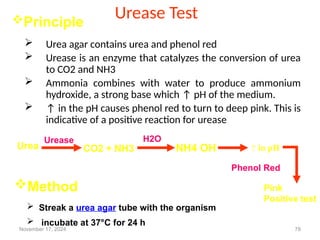
Urease Test
 Urea agar contains urea and phenol red
 Urease is an enzyme that catalyzes the conversion of urea
to CO2 and NH3
 Ammonia combines with water to produce ammonium
hydroxide, a strong base which ↑ pH of the medium.
 ↑ in the pH causes phenol red to turn to deep pink. This is
indicative of a positive reaction for urease
November 17, 2024 78
Urea
Urease
CO2 + NH3
H2O
NH4 OH ↑ in pH
Phenol Red
Pink
Positive test
 Streak a urea agar tube with the organism
 incubate at 37°C for 24 h
Method
Principle
Urease Test
• If color of medium turns
from yellow to pink
indicates positive test.
• Proteus give positive
reaction after 4 h while
Klebsiella and Enterobacter
gave positive results after
24 h
November 17, 2024 79
Result
Positive test Negative test
Reaction on Triple Sugar Iron (TSI) Agar
• TSI contains
– Three different types of sugars
• Glucose (1 part)
• Lactose (10 part)
• Sucrose (10 part)
– Phenol red (acidic: Yellow)
• TSI dispensed in tubes with equal butt & slant
• Principle
– To determine the ability of an organism to attack a specific carbohydrate
incorporated into a basal growth medium, with or without the production
of gas, along with the determination of possible hydrogen sulphide
production.
November 17, 2024 80
Reaction on TSI
• Method:
– Inoculate TSI medium with an organism by
inoculating needle by stabbing the butt and
streaking the slant
– Incubate at 37°C for 24 hours
November 17, 2024 81
Typical reactions are as follows:
• Alkaline slant/Alkaline butt
• No carbohydrate fermentation
• Non fermenters
• E.g. Pseudomonas aeruginosa
• Alkaline slant/ Acid butt
• Glucose fermented
• Lactose (or sucrose for TSIA) not fermented
• Non-lactose-fermenting bacteria
• E.g. Shigella spp
November 17, 2024 82
• Alkaline slant/Acid (Black) butt
Glucose fermented
Lactose not fermented
H2S produced
Non-lactose fermenting- H2S producing bacteria
E.g. Salmonella spp, Citrobacter spp and Proteus spp
• Acid slant/ Acid butt
Glucose and Lactose (Sucrose for TSIA) fermented
Lactose fermenting coliforms
E.g. E. coli and the Klebsiella-Enterobacter spp.
November 17, 2024 83
Example
Result
Reaction on TSI
H2
S Slant
color
Butt
color
Non fermenter
e.g.
Pseudomonas
Alk/Alk/-
(No action on sugars)
Negative Red Red
LNF
e.g. Shigella
A/Alk/-
(Glucose fermented
without H2
S)
Negative
Red Yellow
LNF
e.g. Salmonella &
Proteus
A/Alk/+
(Glucose fermented
with H2
S)
Positive
black in
butt Red Yellow
LF
e.g. E. coli,
Klebsiella,
Enterobacter
A/A/-
(three sugars are
fermented)
Negative
Yellow Yellow
November 17, 2024 84
Result
EMB SS MacCon
key
O/F Nitrate
reductase
Oxidase Gram
stain
Metallic
sheen
LF LF O+/F+ +ve -ve -ve rod E. coli
Dark LF LF O+/F+ +ve -ve -ve rods Citrobacter
Dark LF LF O+/F+ +ve -ve -ve rods Klebsiella
Dark LF LF O+/F+ +ve -ve -ve rods Enterobacter
Colorless NLF/
H2S
NLF O+/F+ +ve -ve -ve rods Salmonella
Colorless NLF NLF O+/F+ +ve -ve -ve rods Shigella
Colorless NLF/
H2S
NLF O+/F+ +ve -ve -ve rods Proteus
November 17, 2024 85
Summary of morphology, cultural characteristics,
and biochemical reactions of Enterobacteriaceae
Motility Urease Citrate VP MR Indole TSI
Motile -ve -ve -ve +ve +ve A/A/- E. coli
Motile -ve +ve -ve +ve +ve A/A/- Citrobacter
freundii
Non
motile
+ve +ve +ve -ve -ve A/A/- Klebsiella
pneumoniae
Motile +ve +ve +ve -ve -ve A/A/- Enterobacter
cloacae
Motile -ve +ve -ve +ve -ve A/Alk/+ Salmonella
typhi
Non
motile
-ve -ve -ve +ve -ve A/Alk/- Shigella
boydii
Motile
Swarwing
+ve +ve -ve +ve -ve A/Alk/+ Proteus
mirabilis
November 17, 2024 86
Summary of morphology, cultural characteristics,
and biochemical reactions of Enterobacteriaceae
Oxidase Test
Positive
Negative
Pseudomonas
Enterobacteriaceae
 Nitrate test: +ve further
reduction to N2
 Growth on cetrimide agar
Pale colonies with green
pigmentation
MacConkey’s agar
& TSI
Lactose fermenter
Pink colonies on MacConkey
& acidic butt and slant on TSI
colorless colonies on MacConkey
& acidic butt alkaline slant onTSI
Lactose non-fermenter
IMViC test
& EMB
IMViC
++ - -
& black
colonies with
metalic shines
on EMB
E.coli
IMViC
- - ++
No H2S production
(no blacking in TSI)
H2S production
(blacking in TSI)
Shigella
Urease production
+ve
Proteus
-ve
SS agar
colorless colonies with black centers
Salmonella
 O/F test: O+
/F-
Motility
Not motile Motile
November 17, 2024 87
Prevention and control
There control depends on;
• Hand washing,
• Asepsis, sterilisation and disinfection,
• Minimal IV therapy
• Strict precautions in keeping the urinary tract
sterile (closed drainage)
• Proper handling and processing of foods and
animal products e.t.c
November 17, 2024 88
You have been a great
audience
November 17, 2024 89
Campylobacter &
Helicobacter
rRNA Superfamily VI of Class Proteobacteria
 Gram-negative
 Helical (spiral or curved) morphology; Tend to be
pleomorphic
 Characteristics that facilitate penetration and
colonization of mucosal environments (e.g.,
motile by polar flagella; corkscrew shape)
 Microaerophilic atmospheric requirements
 Become coccoid when exposed to oxygen or upon
prolonged culture
 Neither ferment nor oxidize carbohydrates
General Characteristics Common
to Superfamily
 First isolated as Vibrio fetus in 1909 from
spontaneous abortions in livestock
 Campylobacter enteritis was not recognized until
the mid-1970s when selective isolation media
were developed for culturing campylobacters
from human feces
 Most common form of acute infectious diarrhea in
developed countries; Higher incidence than
Salmonella & Shigella combined
 In the U.S., >2 million cases annually, an annual
incidence close to the 1.1% observed in the
United Kingdom; Estimated 200-700 deaths
History of Campylobacter
 Small, thin (0.2 - 0.5 um X 0.5 - 5.0 um), helical
(spiral or curved) cells with typical gram-negative
cell wall; “Gull-winged” appearance
• Tendency to form coccoid & elongated forms
on prolonged culture or when exposed to O2
 Distinctive rapid darting motility
• Long sheathed polar flagellum at one (polar) or
both (bipolar) ends of the cell
• Motility slows quickly in wet mount preparation
 Microaerophilic & capnophilic 5%O2,10%CO2,85%N2
 Thermophilic (42-43C) (except C. fetus)
• Body temperature of natural avian reservoir
 May become nonculturable in nature
Morphology & Physiology of Campylobacter
Campylobacter Species Associated
with Human Disease
 Low incidence potential sequela
 Reactive, self-limited, autoimmune disease
 Campylobacter jejuni most frequent antecedent
pathogen
 Immune response to specific O-antigens cross-
reacts with ganglioside surface components of
peripheral nerves (molecular or antigenic mimicry)
• Acute inflammatory demyelinating neuropathy
(85% of cases) from cross reaction with
Schwann-cells or myelin
• Acute axonal forms of GBS (15% of cases) from
molecular mimicry of axonal membrane
Guillain-Barre Syndrome (GBS)
 Zoonotic infections in many animals particularly
avian (bird) reservoirs
 Spontaneous abortions in cattle, sheep, and
swine, but generally asymptomatic carriage in
animal reservoir
 Humans acquire via ingestion of contaminated
food (particularly poultry), unpasteurized milk, or
improperly treated water
 Infectious dose is reduced by foods that neutralize
gastric acidity, e.g., milk. Fecal-oral transmission
also occurs
Epidemiology of Campylobacteriosis
 Contaminated poultry accounts for more than half
of the camylobacteriosis cases in developed
countries but different epidemiological picture in
developing countries
 In U.S. and developed countries: Peak incidence
in children below one year of age and young
adults (15-24 years old)
 In developing countries where campylobacters
are hyperendemic: Symptomatic disease occurs
in young children and persistent, asymptomatic
carriage in adults
Epidemiology of Campylobacteriosis(cont.)
 Sporadic infections in humans far outnumber
those affected in point-source outbreaks
 Sporadic cases peak in the summer in temperate
climates with a secondary peak in the late fall
seen in the U.S.
 Globally, C. jejuni subsp. jejuni accounts for more
than 80% of all Campylobacter enteriti
 C. coli accounts for only 2-5% of the total cases
in the U.S.; C. coli accounts for a higher
percentage of cases in developing countries
Epidemiology of Campylobacteriosis(cont.)
 Infectious dose and host immunity determine
whether gastroenteric disease develops
• Some people infected with as few as 500 organisms
while others need >106
CFU
 Pathogenesis not fully characterized
• No good animal model
• Damage (ulcerated, edematous and bloody) to the
mucosal surfaces of the jejunum, ileum, colon
• Inflammatory process consistent with invasion of the
organisms into the intestinal tissue; M-cell (Peyer’s
patches) uptake and presentation of antigen to
underlying lymphatic system
 Non-motile & adhesin-lacking strains are avirulent
Pathogenesis & Immunity
Cellular components:
Endotoxin
Flagellum: Motility
Adhesins: Mediate attachment to mucosa
Invasins
GBS is associated with C. jejuni serogroup O19
S-layer protein “microcapsule” in C. fetus:
Extracellular components:
Enterotoxins
Cytopathic toxins
Putative Virulence Factors
Specimen Collection and Processing:
 Feces refrigerated & examined within few hours
 Rectal swabs in semisolid transport medium
 Blood drawn for C. fetus
 Care to avoid oxygen exposure
 Selective isolation by filtration of stool specimen
 Enrichment broth & selective media
 Filtration: pass through 0.45 μm filters
Microscopy:
 Gull-wing appearance in gram stain
 Darting motility in fresh stool (rarely done in clinical lab)
 Fecal leukocytes are commonly present
Identification:
 Growth at 25o
, 37o
, or 42-43o
C
 Hippurate hydrolysis (C. jejuni is positive)
 Susceptibility to nalidixic acid & cephalothin
Laboratory Identification
Laboratory Identification (cont.)
 Gastroenteritis:
•Self-limiting; Replace fluids and electrolytes
•Antibiotic treatment can shorten the excretion period;
Erythromycin is drug of choice for severe or complicated
enteritis & bacteremia; Fluroquinolones are highly active
(e.g., ciprofloxacin was becoming drug of choice) but
fluoroquinolone resistance has developed rapidly since the
mid-1980s apparently related to unrestricted use and the
use of enrofloxacin in poultry
•Azithromycin was effective in recent human clinical trials
•Control should be directed at domestic animal reservoirs
and interrupting transmission to humans
 Guillain-Barre Syndrome (GBS)
•Favorable prognosis with optimal supportive care
•Intensive-care unit for 33% of cases
Treatment, Prevention & Control
History & Taxonomy of Helicobacter
 Family not yet named (17 species by rRNA sequencing)
 First observed in 1983 as Campylobacter-like
organisms (formerly Campylobacter pyloridis) in the
stomachs of patients with type B gastritis
 Nomenclature of Helicobacter was first established
in 1989, but only three species are currently
considered to be human pathogens
Important Human Pathogens:
 Helicobacter pylori (human; no animal reservoir)
 H. cinaedi (male homosexuals; rodents)
 H. fenneliae (male homosexuals; rodents)
 Helicobacter pylori is major human pathogen
associated with gastric antral epithelium in patients
with active chronic gastritis
 Stomach of many animal species also colonized
 Urease (gastric strains only), mucinase, and
catalase positive highly motile microorganisms
 Other Helicobacters: H. cinnaedi and H. fenneliae
• Colonize human intestinal tract
• Isolated from homosexual men with proctitis,
proctocolitis, enteritis, and bacteremia and are
often transmitted through sexual practices
General Characteristics of Helicobacter
 Gram-negative; Helical (spiral or curved) (0.5-1.0
um X 2.5-5.0 um); Blunted/rounded ends in gastric
biopsy specimens; Cells become rod-like and
coccoid on prolonged culture
 Produce urease, mucinase, and catalase
 H. pylori tuft (lophotrichous) of 4-6 sheathed flagella
(30um X 2.5nm) attached at one pole
 Single polar flagellum on H. fennellae & H. cinaedi
 Smooth cell wall with unusual fatty acids
Morphology & Physiology of
Helicobacter
Helicobacter on Paramagnetic Beads
Helicobacter Species Associated with
Human Disease
 Family Clusters
 Orally transmitted person-to-person (?)
Worldwide:
 ~ 20% below the age of 40 years are infected
 50% above the age of 60 years are infected
 H. pylori is uncommon in young children
Epidemiology of Helicobacter Infections
Developed Countries:
 United States: 30% of total population infected
• Of those, ~1% per year develop duodenal ulcer
• ~1/3 eventually have peptic ulcer disease(PUD)
 70% gastric ulcer cases colonized with H. pylori
 Low socioeconomic status predicts H. pylori infection
Developing Countries:
 Hyperendemic
 About 10% acquisition rate per year for children
between 2 and 8 years of age
 Most adults infected but no disease
• Protective immunity from multiple childhood infections
Epidemiology of Helicobacter Infections (cont.)
 Colonize mucosal lining of stomach & duodenum in
man & animals
• Adherent to gastric surface epithelium or pit epithelial
cells deep within the mucosal crypts adjacent to gastric
mucosal cells
• Mucosa protects the stomach wall from its own gastric
milleu of digestive enzymes and hydrochloric acid
• Mucosa also protects Helicobacter from immune
response
 Most gastric adenocarcinomas and lymphomas are
concurrent with or preceded by an infection with H.
pylori
Pathogenesis of Helicobacter Infections
Virulence Factors of Helicobacter
 Multiple polar, sheathed flagella
• Corkscrew motility enables penetration into viscous
environment (mucus)
 Adhesins: Hemagglutinins; Sialic acid binding
adhesin; Lewis blood group adhesin
 Mucinase: Degrades gastric mucus; Localized
tissue damage
 Urease converts urea (abundant in saliva and
gastric juices) into bicarbonate (to CO2) and
ammonia
• Neutralize the local acid environment
• Localized tissue damage
 Acid-inhibitory protein
Virulence Factors of Helicobacter
Urease
C=O(NH2)2 + H+
+ 2H2O  HCO3
-
+ 2 (NH4
+
)
Urea Bicarbonate Ammonium
ions
And then… HCO3
-

CO2 + OH-
Urea Hydrolysis
Tissue damage:
 Vacuolating cytotoxin: Epithelial cell damage
 Invasin(s)(??): Poorly defined (e.g., hemolysins;
phospholipases; alcohol dehydrogenase)
Protection from phagocytosis & intracellular killing:
 Superoxide dismutase
 Catalase
Virulence Factors of Helicobacter (cont.)
Laboratory Identification
Recovered from or detected in endoscopic antral
gastric biopsy material; Multiple biopsies are taken
Many different transport media
Culture media containing whole or lysed blood
Microaerophilic
Grow well at 37oC, but not at 25 nor 42oC
Like Campylobacter, does not use
carbohydrates, neither fermentatively nor oxidatively
Triple Chemotherapy (synergism):
Proton pump inhibitor (e.g., omeprazole =
Prilosec(R))
One or more antibiotics (e.g., clarithromycin;
amoxicillin; metronidazole)
Bismuth compound
Inadequate treatment results in recurrence of symptoms
Treatment, Prevention & Control
REVIEW
Campylobacter & Helicobacter
Superfamily
 Gram-negative
 Helical (spiral or curved) morphology; Tend to be
pleomorphic
 Characteristics that facilitate penetration and
colonization of mucosal environments (e.g.,
motile by polar flagella; corkscrew shape)
 Microaerophilic atmospheric requirements
 Become coccoid when exposed to oxygen or upon
prolonged culture
 Neither ferment nor oxidize carbohydrates
General Characteristics Common
to Superfamily
REVIEW
Campylobacter Review
 First isolated as Vibrio fetus in 1909 from
spontaneous abortions in livestock
 Campylobacter enteritis was not recognized until
the mid-1970s when selective isolation media
were developed for culturing campylobacters from
human feces
 Most common form of acute infectious diarrhea in
developed countries; Higher incidence than
Salmonella & Shigella combined
 In the U.S., >2 million cases annually, an annual
incidence close to the 1.1% observed in the
United Kingdom; Estimated 200-700 deaths
History of Campylobacter
REVIEW
REVIEW
REVIEW
 Small, thin (0.2 - 0.5 um X 0.5 - 5.0 um), helical
(spiral or curved) cells with typical gram-negative
cell wall; “Gull-winged” appearance
• Tendency to form coccoid & elongated forms
on prolonged culture or when exposed to O2
 Distinctive rapid darting motility
• Long sheathed polar flagellum at one (polar) or
both (bipolar) ends of the cell
• Motility slows quickly in wet mount preparation
 Microaerophilic & capnophilic 5%O2,10%CO2,85%N2
 Thermophilic (42-43C) (except C. fetus)
• Body temperature of natural avian reservoir
 May become nonculturable in nature
Morphology & Physiology of Campylobacter
REVIEW
Campylobacter Species Associated
with Human Disease
REVIEW
 Low incidence potential sequela
 Reactive, self-limited, autoimmune disease
 Campylobacter jejuni most frequent antecedent
pathogen
 Immune response to specific O-antigens cross-
reacts with ganglioside surface components of
peripheral nerves (molecular or antigenic mimicry)
• Acute inflammatory demyelinating neuropathy
(85% of cases) from cross reaction with
Schwann-cells or myelin
• Acute axonal forms of GBS (15% of cases) from
molecular mimicry of axonal membrane
Guillain-Barre Syndrome (GBS)
REVIEW
 Zoonotic infections in many animals particularly
avian (bird) reservoirs
 Spontaneous abortions in cattle, sheep, and
swine, but generally asymptomatic carriage in
animal reservoir
 Humans acquire via ingestion of contaminated
food (particularly poultry), unpasteurized milk, or
improperly treated water
 Infectious dose is reduced by foods that neutralize
gastric acidity, e.g., milk. Fecal-oral transmission
also occurs
Epidemiology of Campylobacteriosis
REVIEW
 Contaminated poultry accounts for more than half
of the camylobacteriosis cases in developed
countries but different epidemiological picture in
developing countries
 In U.S. and developed countries: Peak incidence
in children below one year of age and young
adults (15-24 years old)
 In developing countries where campylobacters
are hyperendemic: Symptomatic disease occurs
in young children and persistent, asymptomatic
carriage in adults
Epidemiology of Campylobacteriosis(cont.)
REVIEW
 Sporadic infections in humans far outnumber
those affected in point-source outbreaks
 Sporadic cases peak in the summer in temperate
climates with a secondary peak in the late fall
seen in the U.S.
 Globally, C. jejuni subsp. jejuni accounts for more
than 80% of all Campylobacter enteriti
 C. coli accounts for only 2-5% of the total cases
in the U.S.; C. coli accounts for a higher
percentage of cases in developing countries
Epidemiology of Campylobacteriosis(cont.)
REVIEW
Helicobacter Review
History & Taxonomy of Helicobacter
 Family not yet named (17 species by rRNA sequencing)
 First observed in 1983 as Campylobacter-like
organisms (formerly Campylobacter pyloridis) in the
stomachs of patients with type B gastritis
 Nomenclature of Helicobacter was first established
in 1989, but only three species are currently
considered to be human pathogens
Important Human Pathogens:
 Helicobacter pylori (human; no animal reservoir)
 H. cinaedi (male homosexuals; rodents)
 H. fenneliae (male homosexuals; rodents)
REVIEW
 Helicobacter pylori is major human pathogen
associated with gastric antral epithelium in patients
with active chronic gastritis
 Stomach of many animal species also colonized
 Urease (gastric strains only), mucinase, and
catalase positive highly motile microorganisms
 Other Helicobacters: H. cinnaedi and H. fenneliae
• Colonize human intestinal tract
• Isolated from homosexual men with proctitis,
proctocolitis, enteritis, and bacteremia and are
often transmitted through sexual practices
General Characteristics of Helicobacter
REVIEW
REVIEW
REVIEW
 Gram-negative; Helical (spiral or curved) (0.5-1.0
um X 2.5-5.0 um); Blunted/rounded ends in gastric
biopsy specimens; Cells become rod-like and
coccoid on prolonged culture
 Produce urease, mucinase, and catalase
 H. pylori tuft (lophotrichous) of 4-6 sheathed flagella
(30um X 2.5nm) attached at one pole
 Single polar flagellum on H. fennellae & H. cinaedi
 Smooth cell wall with unusual fatty acids
Morphology & Physiology of
Helicobacter
REVIEW
Helicobacter Species Associated with
Human Disease
REVIEW
 Family Clusters
 Orally transmitted person-to-person
 ~ 20% below the age of 40 years are infected
 50% above the age of 60 years are infected
 H. pylori is uncommon in young children
Epidemiology of Helicobacter Infections
REVIEW
Developed Countries:
 United States: 30% of total population infected
• Of those, ~1% per year develop duodenal ulcer
• ~1/3 eventually have peptic ulcer disease(PUD)
 70% gastric ulcer cases colonized with H. pylori
 Low socioeconomic status predicts H. pylori infection
Developing Countries:
 Hyperendemic
 About 10% acquisition rate per year for children
between 2 and 8 years of age
 Most adults infected but no disease
• Protective immunity from multiple childhood infections
Epidemiology of Helicobacter Infections (cont.)
REVIEW
 Colonize mucosal lining of stomach & duodenum in
man & animals
• Adherent to gastric surface epithelium or pit epithelial
cells deep within the mucosal crypts adjacent to gastric
mucosal cells
• Mucosa protects the stomach wall from its own gastric
milleu of digestive enzymes and hydrochloric acid
• Mucosa also protects Helicobacter from immune
response
 Most gastric adenocarcinomas and lymphomas are
concurrent with or preceded by an infection with H.
pylori
Pathogenesis of Helicobacter Infections
REVIEW
Virulence Factors of Helicobacter
REVIEW
Triple Chemotherapy (synergism):
Proton pump inhibitor (e.g., omeprazole =
Prilosec(R))
One or more antibiotics (e.g., clarithromycin;
amoxicillin; metronidazole)
Bismuth compound
Inadequate treatment results in recurrence of symptoms
Treatment, Prevention & Control
REVIEW
Enterobacteriaceae lecture noteCopy.pptx

Enterobacteriaceae lecture noteCopy.pptx

  • 1.
    Enterobacteriaceae BY Dr SB Zailani CLINICALMICROBIOLOGIST UNIVERSITY OF MAIDUGURI November 17, 2024 1
  • 2.
    OUTLINE • Introduction • Classification •Morphology • Properties • Epidemiology • Diseases Pathogenesis & treatment • Laboratory Identification/Biochemical Tests • Prevention & control • Conclusion November 17, 2024 2
  • 3.
    Introduction • The Enterobacteriaceaeare a large family of bacteria that are Gram negative, rod shaped (1-5μm in length), oxidase negative, catalase positive, nitrate-reducing, facultative anaerobes, fermenting sugars to produce lactic acid and various other end products, that live in mammalian Gastrointestinal tracts November 17, 2024 3
  • 4.
    Scientific Classification • Kingdom:Bacteria • Phylum: Protobacteria • Class: Gamma Proteobacteria • Order: Enterobacteriales • Family: Enterobacteriaceae Rahn, 1937 • Over 30 genera and 170 species with more species being named every year. • >95% of the clinically significant strains fall into 10 genera and about 25 species November 17, 2024 4
  • 5.
    Family Enterobacteriaceae • Escherichiacoli Opportunistic Escherichia coli ETEC = enterotoxigenic E. coli EIEC = enteroinvasive E. coli EPEC = enteropathogenic E. coli EHEC = enterohemorrhagic E. coli EaggEC = enteroaggregative E. coli UPEC = uropathogenic E. coli November 17, 2024 5
  • 6.
    Citrobacter Citrobacter freundii Citrobacter diversus Enterobacterspp Enterobacter aerogenes Enterobacter agglomerans Enterobacter cloacae Morganella morganii Klebsiella Spp Klebsiella pneumoniae k.ozaena k.rhinoscleromatis Klebsiella oxytoca klebsiella granulomatis Proteus spp Proteus mirabilis Proteus vulgaris Providencia spp Providencia alcalifaciens Providencia rettgeri Providencia stuartii Serratia spp Serratia marcesans Serratia liquifaciens Shigella spp Shigella dysenteriae Shigella flexneri Shigella boydii Shigella sonnei Yersinia spp Yersinia enterocolitica Yersinia pestis Yersinia pseudotuberculosis Salmonella spp Salmonella Salmonella enterica Salmonella typhi Salmonella paratyphi Salmonella enteritidis Salmonella cholerae-suis Salmonella typhimurium November 17, 2024 6
  • 7.
    Others • Edwardsiella • Hafnia •Erwinia • Pectinobacterium November 17, 2024 7
  • 8.
    MORPHOLOGY • (A)Flagella Enterobacteriaceae aremotile via peritrichous flagella except Shigella and Klebsiella which are non- motile. • Constitute the H antigens (H = Hauch,German for breath) -used for typing. -Non motile organisms lack flagellar H antigens. • The flagella are maximal in young cultures November 17, 2024 8
  • 9.
    (B)Capsule • The capsuleis a thin layer of surface polysaccharide. • Constitutes the K antigen (K= Kapseal, German for capsule). • Formation enhanced by sugar-containing media. • Capsules are particularly heavy in Klebsiella, it forms mucoid colonies. • Capsule -interfere with O agglutination -inhibits phagocytosis -may cross react with capsular antigens of other bacteria. November 17, 2024 9
  • 10.
    (C) Fimbriae (Pili) •Hair-like projections of protein on cell surface • Promote adhesion and are developed in old (24-48 hours) broth cultures. • The ability to agglutinate red cells, inhibition by mannose and the width differentiate the types. • Fimbriae may interfere with H agglutination. • They are preserved by formalin and destroyed by heat November 17, 2024 10
  • 11.
    (D) Cell Wall •Consists of an outer layer and an inner layers Outer layer • Is a lipopolysaccharide (LPS) complex • The side chains of repeating sugar units project from the outer LPS layer constituting the O (somatic) antigen (O= Ohne, German for without). -used for typing -Smooth colonies -Resistance to killing by complement. -Absence, is associated with rough colonies, autoagglutination, non-virulence and killing by complement November 17, 2024 11
  • 12.
    Cont’d • Core glycolipidsform the basal layer to which side chains are attached (The enterobacterial common antigen) • Phospholipid membrane • Proteins (outer membrane proteins, OMPs) are present in the phospholipids membrane. They include those responsible for solute transport (‘porins’) and structural lipoproteins. November 17, 2024 12
  • 13.
    Cont’d • Lipid Aforms a layer between the lipopolysaccharide and phospholipids. Is the toxic moiety of ‘endotoxin’. Biologic effects; • induction of host febrile response by production of IL-1 and prostaglandins, • activation of complement, • induction of interferon production, • production of tumour necrosis factor, • production of colony stimulating factor • activity as a B-cell mitogen. November 17, 2024 13
  • 14.
  • 15.
    Cont’d Inner layer ofcell wall • Consists of peptidoglycan that maintains the cell wall rigidity November 17, 2024 15
  • 16.
    Antigens • Somatic Oantigens- these are heat stable polysaccharide part of LPS Variation from smooth to rough colonial forms is accompanied by progressive loss of smooth O Antigen • Flagellar H antigens-heat labile • Envelope /capsule K antigen-overlay the surface O antigen and may block agglutination by O specific antisera  Boiling for 15min destroy K antigen and unmask O antigen  K antigen is called Vi antigen in salmonella November 17, 2024 16
  • 17.
    Properties1 – Gram-negative, non-sporing,rod shaped bacteria – Oxidase –ve, facultative anaerobes – Ferment glucose aerogenically or anaerogenically – Reduce nitrate to nitrite – Many are normal inhabitants of the intestinal tract of man and other animals – Some are enteric pathogens and others are urinary or respiratory tract pathogens – Differentiation is based on biochemical reactions and differences in antigenic structure November 17, 2024 17
  • 18.
    Properties2 – Most growwell on a variety of lab media including a lot of selective and differential media originally developed for the the selective isolation of enteric pathogens. • Most of this media is selective by incorporation of dyes and bile salts that inhibit G+ organisms and may suppress the growth of nonpathogenic species of Enterobacteriaceae. • Many are differential on the basis of whether or not the organisms ferment lactose and/or produce H2S. November 17, 2024 18
  • 19.
    Properties3 - colonialmorphology – They all produce similar colonies usually moist, dull grey (except Serratia marcescens which appears red) or mucoid colonies on blood agar (Klebsiella) and smooth colonies on non-selective media. – They may or may not be hemolytic – Colonies appearing as thin films or as waves (swarming) suggest motility (Proteus) – Colonies that appear red on McConkey agar or have a green sheen on eosin methylene blue (EMB) agar indicate acid production from lactose – The three most useful media for screening stool cultures for potential pathogens are TSI, kIA, and urea or phenylalanine agar. November 17, 2024 19
  • 20.
    Epidemiology Habitat • Normal intestinalmicrobial flora from birth, present in the intestines of humans and other animals, fish, insects, as well as in plants, soil and water, decaying matter, or parasites on a variety of different animals and plants Prevalence • Enterics are responsible for a majority of nosocomial infections November 17, 2024 20
  • 21.
    Escherichia November 17, 202421 Escherichia coli • Normal inhabitant of the G.I.T tract • Some strains cause various forms of gastroenteritis • Is a major cause of urinary tract infection and neonatal meningitis and septicemia • May have a capsule • Most are motile
  • 22.
    E. coli – Antigenicstructure - has O, H, and K antigens; K1 has a strong association with virulence, particularly meningitis in neonates – Virulence factors (A)Toxins -Enterotoxin (ETEC) LT&ST -Enteroaggregative toxin ST- like toxin -Haemolysin ;cell bound or secreted (lyse RBC& leucocyte ,inhibits phagocytosis when cell bound) -Endotoxin -EHEC (Shiga-like toxin);verotoxin: cytotoxic, enterotoxic &neurotoxic inhibits protein synthesis November 17, 2024 22
  • 23.
  • 24.
    LT vs STactivity November 17, 2024 24
  • 25.
    (B)Type III secretionsystem to deliver effector molecules directly into host cells -Involved in uptake of EIEC into intestinal cells -Involved in development of attachment & effacing lesions in EPEC xterised by villi destruction & pedastal formation (C)Adhesion; colonization factors includes pilli or fimbrae & non-fimbraefactors e.g. intimin November 17, 2024 25
  • 26.
    (D) Virulence factorsthat prevent host from defence -Capsule -Iron capturing ability(enterochellin) (E) Outer membrane proteins; Help the organism to invade by helping in attachment & initiatng endocytosis November 17, 2024 26
  • 27.
    E. coli toxins »Both enterotoxins are composed of five beta » subunits (for binding) and 1 alpha subunit » (has the toxic enzymatic activity). November 17, 2024 27
  • 28.
    Type III secretionsystem November 17, 2024 28
  • 29.
  • 30.
    Types of adhesions November17, 2024 30 (intimin)
  • 31.
    E. Coli  UrinaryTract Infections Commonly caused by E.coli uropathogenic strain Host factors & organism factors allow seemingly ‘normal’ individuals to develop UTIs  New evidence in women who suffer from recurrent UTIs suggests that this is due to the formation of pod-like E. coli biofilms inside bladder epithelial cells November 17, 2024 31
  • 32.
    Ascending urinary tractinfection November 17, 2024 32
  • 33.
  • 34.
    E. coli Neonatal meningitis E.colistrains with the K1 capsular antigen is the leading cause it is associated with septicaemia and has high mortality Gastroenteritis Several distinct types are involved and result in different patterns of gastroenteritis November 17, 2024 34
  • 35.
    Various types ofE. coli November 17, 2024 35
  • 36.
    – ETEC –is a common cause of traveler’s diarrhea and diarrhea in children in developing countries. – The organism attaches to the intestinal mucosa via colonization factors and then liberates enterotoxin. – The disease is characterized by a watery diarrhea, nausea, abdominal cramps and low-grade fever for 1-5 days. – Transmission is via contaminated food or water November 17, 2024 36
  • 37.
    • EPEC –Bundle forming pili are involved in attachment to the intestinal mucosa. • The type III secretion system inserts the tir (translocated intimin receptor) into target cells, and intimate attachment of the non-fimbrial adhesion called intimin to tir occurs. • Host cell kinases activated to phosphorylate tir which then causes a reorganization of host cytoskeletal elements resulting in pedestal formation and development of an attaching and effacing lesion • The exact mode of pathogenesis is unclear, but it is probably due to the attachment and effacement. • Diarrhea with copius mucous without blood or pus along with vomiting, malaise and low grade fever occurs November 17, 2024 37
  • 38.
    BFP November 17, 202438 EPEC EPEC EPEC
  • 39.
  • 40.
    EPEC November 17, 202440 Tir injected
  • 41.
    • EIEC –The organism attaches to the intestinal mucosa via pili and outer membrane proteins are involved in direct penetration, invasion and destruction of the intestinal mucosa. • There is lateral movement of the organism from one cell to adjacent cells. • Symptoms include fever, severe abdominal cramps, malaise, and watery diarrhea followed by scanty stools containing blood, mucous, and pus. • EAEC – Mucous associated autoagglutinins cause aggregation of the bacteria at the cell surface and result in the formation of a mucous biofilm. • The organisms attach via pili and liberate a cytotoxin distinct from, but similar to the ST and LT enterotoxins liberated by ETEC. • Symptoms include watery diarrhea,vomiting, dehydration and occasional abdominal pain. November 17, 2024 41
  • 42.
    • EHEC –The organism attaches via pili to the intestinal mucosa and liberates the shiga-like toxin. • The symptoms start with a watery diarrhea,progresses to bloody diarrhea without pus and crampy abdominal pain with a low-grade fever. • This may progress to hemolytic-uremic syndrome that • Its most often caused by serotypes O157:H7. • This strain of E. coli can be differentiated from other strains of E. coli by the fact that it does not ferment sorbitol in 48 hours (other strains do). • A sorbitol-Mac (SMAC) plate (contains sorbitol instead of lactose) is used to selectively isolate this organism. • One must confirm the isolate as E. coli O157:H7 using serological testing, also confirm production of the shiga-like toxin • Serotypes of E. coli other than O157H7 have now been found to cause this disease November 17, 2024 42
  • 43.
    Summary of E.colistrains that cause gastroenteritis. November 17, 2024 43
  • 44.
    E.coli – Antimicrobic therapy-E. coli is usually susceptible to a variety of chemotherapeutic agents, though drug resistant strains are increasingly prevalent. – It is essential to do susceptibility testing. – Treatment of patients with EHEC infections is not recommended because it can increase the release of shiga- like toxins and actually trigger HUS November 17, 2024 44
  • 45.
    Shigella (dysentery bacterium ) November17, 2024 45 Shigella Contains four species that differ antigenically and, to a lesser extent, biochemically. S. dysenteriae (Group A) 12 serotypes S. flexneri (Group B) 6 serotypes S. boydii (Group C) 18 serotypes S. sonnei (Group D) 1 serotype
  • 46.
    Shigella species Antigenic structure •Differentiation into groups (A, B, C, and D) is based on O antigen serotyping; K antigens may interfere with serotyping, but are heat labile. • O antigen is similar to E. coli, so it is important to ID as Shigella before doing serotyping. • Virulence factors -Shiga toxin – is produced by S. dysenteriae and in smaller amounts by S. flexneri and S. sonnei. -Acts to inhibit protein synthesis by inactivating the 60S ribosomal subunit by cleaving a glycosidic bond in the 28S rRNA constituents. -This plays a role in the ulceration of the intestinal mucosa. November 17, 2024 46
  • 47.
    Shigella • Outer membraneand secreted proteins • These proteins are expressed at body temperature and upon contact with M cells in the intestinal mucosa they induce phagocytosis of the bacteria into vacuoles. • Shigella destroy the vacuoles to escape into the cytoplasm. • From there they spread laterally (Polymerization of actin filaments propels them through the cytoplasm.) to epithelial cells where they multiply but do not usually disseminate beyond the epithelium November 17, 2024 47
  • 48.
  • 49.
    Shigella attachment andpenetration November 17, 2024 49
  • 50.
  • 51.
  • 52.
  • 53.
    Clinical significance • Causesshigellosis or bacillary dysentery. • Transmission is via the fecal-oral route. • The infective dose required to cause infection is very low (10-200 organisms). • There is an incubation of 1-7 days followed by fever, cramping, abdominal pain, and watery diarrhea (due to the toxin)for 1-3 days. • This may be followed by frequent, scant stools with blood, mucous, and pus (due to invasion of intestinal mucosa). • It is rare for the organism to disseminate. • The severity of the disease depends upon the species one is infected with. • S. dysenteria is the most pathogenic followed by S. flexneri, S. sonnei and S. boydii. November 17, 2024 53
  • 54.
    Shigella – Antimicrobial therapy •Sulfonamides are commonly used as are streptomycin, tetracycline, ampicillin, and chloramphenicol. • Resistant strains are becoming increasingly common, so sensitivity testing is required. November 17, 2024 54
  • 55.
  • 56.
    Salmonella • Classification hasbeen changing in the last few years. • There is now 1 species: S. enteritica, and 7 subspecies: 1, 2 ,3a ,3b ,4 ,5, and 6. • Subgroup 1 causes most human infections • Clinically Salmonella isolates are often still reported out as serogroups or serotypes based on the Kauffman-White scheme of classification. • Based on O and H (flagella) antigens • The H antigens occur in two phases; 1 and 2 and only 1 phase is expressed at a given time. • Polyvalent antisera is used followed by group specific antisera (A, B, C1, C2, D, and E) • Salmonella typhi also has a Vi antigen which is a capsular antigen November 17, 2024 56
  • 57.
    Salmonella virulence factors •Capsule (for S. typhi and some strains of S. paratyphi) • Adhesions – both fimbrial and non-fimbrial • Type III secretion systems and effector molecules – 2 different systems ;One promotes entry into intestinal epithelial cells &The other type aids in survival of Salmonella inside macrophages • Outer membrane proteins - involved in the ability of Salmonella to survive inside macrophages • Flagella – help bacteria to move through intestinal mucous • Enterotoxin - may be involved in gastroenteritis • Iron capturing ability November 17, 2024 57
  • 58.
    Salmonella – Clinical Significance– causes two different kinds of disease: enteric fevers and gastroenteritis. – Both types of disease begin in the same way, but with the gastroenteritis the bacteria remains restricted to the intestine and with the enteric fevers, the organism spreads – Transmission is via a fecal-oral route, i.e., via ingestion of contaminated food or water November 17, 2024 58
  • 59.
    Salmonella • The organismmoves through the intestinal mucosa and adheres to intestinal epithelium. • Effector proteins of the type III secretion system mediate invasion of enterocytes and M cells via an induced endocytic mechanism. • Salmonella multiplies within the endosome which moves to the basal side of the cell and is released for phagocytoses by macrophages • In gastroenteritis inflammatory response mounted prevents the spread beyond the GI tract and eventually kills the bacteria • In enteric fevers the Salmonella disseminate before the inflammatory response November 17, 2024 59
  • 60.
    Salmonella invasion ofepithelial cells November 17, 2024 60
  • 61.
  • 62.
    November 17, 202462 Hemorrhage; perforation Cholecystitis; Carrier state Fever; Relatively slow pulse; Enlarged liver And spleen; Rose spots; Normal or low WBC count Inflammation and ulceration of Peyer’s patches gallbladder Small intestine Mesenteric Lymph nodes Transient (primary) bacteremia Multiplication in macrophages in liver, spleen, kidney,and bone marrow Septicemia (second) Ingestion of S. typhi Bile Bile Thoracic duct Lymph nodes Signs and symptoms Incubation period Fever, malaise
  • 63.
    Salmonella • Diagnosis • Bloodcultures positive during 1st(75-90%) & 3rd(30%) week • Stool culture positive during the 3rd (80%) & 2nd (40-50%) week • Urine culture positive during the 2nd (25%) week • Widal test, 4-fold rise in titer between acute and convalescent stages • 10% become short-term carriers & few % long-term carriers due to persistence of bacteria in the Gall/Urinary bladder November 17, 2024 63
  • 64.
    Salmonella – Antimicrobial therapy •Enteric fevers – use chloramphenicol usually. Resistant strains have emerged making antimicrobial susceptibility testing essential. • Gastroenteritis – usually doesn’t require antimicrobic therapy. – Replace lost fluids and electrolytes. November 17, 2024 64
  • 65.
    Comparison of Shigellaversus Salmonella invasion November 17, 2024 65 Shigella Salmonella
  • 66.
    Enterobacteriacea • KLEBSIELLA – NFof the GIT and respiratory tract, but potential pathogen elsewhere – Non- motile ,capsulated – Has both O and K antigens – Virulence factors: -capsule -Adhesions - Fe capturing ability – Causes pneumonia, mostly in immunocompromised – A major cause of nosocomial infections; UTI, pneumonia ,septicaemia & meningitis – Rhinoscleroma (granuloma of nose & pharynx), ozena (progressive atrophy of nasal mucosa) &chronic genital ulcerative disease are other manifestations November 17, 2024 66
  • 67.
    Enterobacteriaceae • Citrobacter • Areopportunistic pathogens causing urinary tract, respiratory tract infections and occasionally wound infections, osteomyelitis, endocarditis, and meningitis • Edwardsiella tarda –Causes GI disease in tropical and subtropical countries November 17, 2024 67
  • 68.
    Enterobacteriaceae • Enterobacter -NF ofGI tract -Motile ,capsulated -Produces mucoid colonies -Lactose fermenting -Incriminated in Nosocomial infections; UTI, wound & device -Bacteremia in burns patients -Possess ampC a xsomal ß-lactamase -Most are resistant to ampicillin, 1st & 2nd generation cephalosporins November 17, 2024 68
  • 69.
    Enterobacteriaceae • Proteus, Providencia,and Morganella • All are NF of the GIT • Motile, with proteus swarming • Virulence factors -Urease; the ammonia produced may damage the epithelial cells of the UT • UT infections, as well as pneumonia, septicemia, and wound infections November 17, 2024 69
  • 70.
  • 71.
    IMViC Test • Indole,Methyl Red, Voges-Prosakauer, Citrate (IMViC) Tests: – The following four tests comprise a series of important determinations that are collectively called the IMViC series of reactions – The IMViC series of reactions allows for the differentiation of the various members of Enterobacteriaceae. November 17, 2024 71
  • 72.
    IMViC: Indole test Principle  Certain microorganisms can metabolize tryptophan by tryptophanase  The enzymatic degradation leads to the formation of pyruvic acid, indole and ammonia  The presence of indole is detected by addition of Kovac's reagent. November 17, 2024 72 Tryptophan amino acids Tryptophanase Indole + Pyurvic acid + NH3 Kovac’s Reagent Red color in upper organic layer`
  • 73.
    IMViC: Indole test Method:  Inoculate tryptone water with the tested microorganism  Incubate at 37°C for 24 hours  After incubation interval, add 1 ml Kovacs reagent, shake the tube gently and read immediately November 17, 2024 73
  • 74.
    IMViC: Indole test Result:  A bright pink color in the top layer indicates the presence of indole  The absence of color means that indole was not produced i.e. indole is negative  Special Features:  Used in the differentiation of genera and species. e.g. E. coli (+) from Klebsiella (-). November 17, 2024 74 Positive test e.g. E. coli Negative test e.g. Klebsiella
  • 75.
    IMViC test: MR/VPtest November 17, 2024 75 Results Methyl Red test Voges-Proskauer test Red: Positive MR (E. coli) Yellow or orange: Negative MR (Klebsiella) Pink: Positive VP (Klebsiella) No pink: Negative VP (E. coli)
  • 76.
    Citrate Utilization Test Incubate at 37°C for 24 hours. November 17, 2024 76 Method  Streak a Simmon's Citrate agar slant with the organism
  • 77.
    Citrate Utilization Test Examinefor growth (+) Growth on the medium is accompanied by a rise in pH to change the medium from its initial green color to deep blue November 17, 2024 77 Result Positive Klebsiella, Enterobacter Negative E. coli
  • 78.
    Urease Test  Ureaagar contains urea and phenol red  Urease is an enzyme that catalyzes the conversion of urea to CO2 and NH3  Ammonia combines with water to produce ammonium hydroxide, a strong base which ↑ pH of the medium.  ↑ in the pH causes phenol red to turn to deep pink. This is indicative of a positive reaction for urease November 17, 2024 78 Urea Urease CO2 + NH3 H2O NH4 OH ↑ in pH Phenol Red Pink Positive test  Streak a urea agar tube with the organism  incubate at 37°C for 24 h Method Principle
  • 79.
    Urease Test • Ifcolor of medium turns from yellow to pink indicates positive test. • Proteus give positive reaction after 4 h while Klebsiella and Enterobacter gave positive results after 24 h November 17, 2024 79 Result Positive test Negative test
  • 80.
    Reaction on TripleSugar Iron (TSI) Agar • TSI contains – Three different types of sugars • Glucose (1 part) • Lactose (10 part) • Sucrose (10 part) – Phenol red (acidic: Yellow) • TSI dispensed in tubes with equal butt & slant • Principle – To determine the ability of an organism to attack a specific carbohydrate incorporated into a basal growth medium, with or without the production of gas, along with the determination of possible hydrogen sulphide production. November 17, 2024 80
  • 81.
    Reaction on TSI •Method: – Inoculate TSI medium with an organism by inoculating needle by stabbing the butt and streaking the slant – Incubate at 37°C for 24 hours November 17, 2024 81
  • 82.
    Typical reactions areas follows: • Alkaline slant/Alkaline butt • No carbohydrate fermentation • Non fermenters • E.g. Pseudomonas aeruginosa • Alkaline slant/ Acid butt • Glucose fermented • Lactose (or sucrose for TSIA) not fermented • Non-lactose-fermenting bacteria • E.g. Shigella spp November 17, 2024 82
  • 83.
    • Alkaline slant/Acid(Black) butt Glucose fermented Lactose not fermented H2S produced Non-lactose fermenting- H2S producing bacteria E.g. Salmonella spp, Citrobacter spp and Proteus spp • Acid slant/ Acid butt Glucose and Lactose (Sucrose for TSIA) fermented Lactose fermenting coliforms E.g. E. coli and the Klebsiella-Enterobacter spp. November 17, 2024 83
  • 84.
    Example Result Reaction on TSI H2 SSlant color Butt color Non fermenter e.g. Pseudomonas Alk/Alk/- (No action on sugars) Negative Red Red LNF e.g. Shigella A/Alk/- (Glucose fermented without H2 S) Negative Red Yellow LNF e.g. Salmonella & Proteus A/Alk/+ (Glucose fermented with H2 S) Positive black in butt Red Yellow LF e.g. E. coli, Klebsiella, Enterobacter A/A/- (three sugars are fermented) Negative Yellow Yellow November 17, 2024 84 Result
  • 85.
    EMB SS MacCon key O/FNitrate reductase Oxidase Gram stain Metallic sheen LF LF O+/F+ +ve -ve -ve rod E. coli Dark LF LF O+/F+ +ve -ve -ve rods Citrobacter Dark LF LF O+/F+ +ve -ve -ve rods Klebsiella Dark LF LF O+/F+ +ve -ve -ve rods Enterobacter Colorless NLF/ H2S NLF O+/F+ +ve -ve -ve rods Salmonella Colorless NLF NLF O+/F+ +ve -ve -ve rods Shigella Colorless NLF/ H2S NLF O+/F+ +ve -ve -ve rods Proteus November 17, 2024 85 Summary of morphology, cultural characteristics, and biochemical reactions of Enterobacteriaceae
  • 86.
    Motility Urease CitrateVP MR Indole TSI Motile -ve -ve -ve +ve +ve A/A/- E. coli Motile -ve +ve -ve +ve +ve A/A/- Citrobacter freundii Non motile +ve +ve +ve -ve -ve A/A/- Klebsiella pneumoniae Motile +ve +ve +ve -ve -ve A/A/- Enterobacter cloacae Motile -ve +ve -ve +ve -ve A/Alk/+ Salmonella typhi Non motile -ve -ve -ve +ve -ve A/Alk/- Shigella boydii Motile Swarwing +ve +ve -ve +ve -ve A/Alk/+ Proteus mirabilis November 17, 2024 86 Summary of morphology, cultural characteristics, and biochemical reactions of Enterobacteriaceae
  • 87.
    Oxidase Test Positive Negative Pseudomonas Enterobacteriaceae  Nitratetest: +ve further reduction to N2  Growth on cetrimide agar Pale colonies with green pigmentation MacConkey’s agar & TSI Lactose fermenter Pink colonies on MacConkey & acidic butt and slant on TSI colorless colonies on MacConkey & acidic butt alkaline slant onTSI Lactose non-fermenter IMViC test & EMB IMViC ++ - - & black colonies with metalic shines on EMB E.coli IMViC - - ++ No H2S production (no blacking in TSI) H2S production (blacking in TSI) Shigella Urease production +ve Proteus -ve SS agar colorless colonies with black centers Salmonella  O/F test: O+ /F- Motility Not motile Motile November 17, 2024 87
  • 88.
    Prevention and control Therecontrol depends on; • Hand washing, • Asepsis, sterilisation and disinfection, • Minimal IV therapy • Strict precautions in keeping the urinary tract sterile (closed drainage) • Proper handling and processing of foods and animal products e.t.c November 17, 2024 88
  • 89.
    You have beena great audience November 17, 2024 89
  • 91.
  • 92.
     Gram-negative  Helical(spiral or curved) morphology; Tend to be pleomorphic  Characteristics that facilitate penetration and colonization of mucosal environments (e.g., motile by polar flagella; corkscrew shape)  Microaerophilic atmospheric requirements  Become coccoid when exposed to oxygen or upon prolonged culture  Neither ferment nor oxidize carbohydrates General Characteristics Common to Superfamily
  • 93.
     First isolatedas Vibrio fetus in 1909 from spontaneous abortions in livestock  Campylobacter enteritis was not recognized until the mid-1970s when selective isolation media were developed for culturing campylobacters from human feces  Most common form of acute infectious diarrhea in developed countries; Higher incidence than Salmonella & Shigella combined  In the U.S., >2 million cases annually, an annual incidence close to the 1.1% observed in the United Kingdom; Estimated 200-700 deaths History of Campylobacter
  • 94.
     Small, thin(0.2 - 0.5 um X 0.5 - 5.0 um), helical (spiral or curved) cells with typical gram-negative cell wall; “Gull-winged” appearance • Tendency to form coccoid & elongated forms on prolonged culture or when exposed to O2  Distinctive rapid darting motility • Long sheathed polar flagellum at one (polar) or both (bipolar) ends of the cell • Motility slows quickly in wet mount preparation  Microaerophilic & capnophilic 5%O2,10%CO2,85%N2  Thermophilic (42-43C) (except C. fetus) • Body temperature of natural avian reservoir  May become nonculturable in nature Morphology & Physiology of Campylobacter
  • 95.
  • 96.
     Low incidencepotential sequela  Reactive, self-limited, autoimmune disease  Campylobacter jejuni most frequent antecedent pathogen  Immune response to specific O-antigens cross- reacts with ganglioside surface components of peripheral nerves (molecular or antigenic mimicry) • Acute inflammatory demyelinating neuropathy (85% of cases) from cross reaction with Schwann-cells or myelin • Acute axonal forms of GBS (15% of cases) from molecular mimicry of axonal membrane Guillain-Barre Syndrome (GBS)
  • 97.
     Zoonotic infectionsin many animals particularly avian (bird) reservoirs  Spontaneous abortions in cattle, sheep, and swine, but generally asymptomatic carriage in animal reservoir  Humans acquire via ingestion of contaminated food (particularly poultry), unpasteurized milk, or improperly treated water  Infectious dose is reduced by foods that neutralize gastric acidity, e.g., milk. Fecal-oral transmission also occurs Epidemiology of Campylobacteriosis
  • 98.
     Contaminated poultryaccounts for more than half of the camylobacteriosis cases in developed countries but different epidemiological picture in developing countries  In U.S. and developed countries: Peak incidence in children below one year of age and young adults (15-24 years old)  In developing countries where campylobacters are hyperendemic: Symptomatic disease occurs in young children and persistent, asymptomatic carriage in adults Epidemiology of Campylobacteriosis(cont.)
  • 99.
     Sporadic infectionsin humans far outnumber those affected in point-source outbreaks  Sporadic cases peak in the summer in temperate climates with a secondary peak in the late fall seen in the U.S.  Globally, C. jejuni subsp. jejuni accounts for more than 80% of all Campylobacter enteriti  C. coli accounts for only 2-5% of the total cases in the U.S.; C. coli accounts for a higher percentage of cases in developing countries Epidemiology of Campylobacteriosis(cont.)
  • 101.
     Infectious doseand host immunity determine whether gastroenteric disease develops • Some people infected with as few as 500 organisms while others need >106 CFU  Pathogenesis not fully characterized • No good animal model • Damage (ulcerated, edematous and bloody) to the mucosal surfaces of the jejunum, ileum, colon • Inflammatory process consistent with invasion of the organisms into the intestinal tissue; M-cell (Peyer’s patches) uptake and presentation of antigen to underlying lymphatic system  Non-motile & adhesin-lacking strains are avirulent Pathogenesis & Immunity
  • 102.
    Cellular components: Endotoxin Flagellum: Motility Adhesins:Mediate attachment to mucosa Invasins GBS is associated with C. jejuni serogroup O19 S-layer protein “microcapsule” in C. fetus: Extracellular components: Enterotoxins Cytopathic toxins Putative Virulence Factors
  • 103.
    Specimen Collection andProcessing:  Feces refrigerated & examined within few hours  Rectal swabs in semisolid transport medium  Blood drawn for C. fetus  Care to avoid oxygen exposure  Selective isolation by filtration of stool specimen  Enrichment broth & selective media  Filtration: pass through 0.45 μm filters Microscopy:  Gull-wing appearance in gram stain  Darting motility in fresh stool (rarely done in clinical lab)  Fecal leukocytes are commonly present Identification:  Growth at 25o , 37o , or 42-43o C  Hippurate hydrolysis (C. jejuni is positive)  Susceptibility to nalidixic acid & cephalothin Laboratory Identification
  • 104.
  • 105.
     Gastroenteritis: •Self-limiting; Replacefluids and electrolytes •Antibiotic treatment can shorten the excretion period; Erythromycin is drug of choice for severe or complicated enteritis & bacteremia; Fluroquinolones are highly active (e.g., ciprofloxacin was becoming drug of choice) but fluoroquinolone resistance has developed rapidly since the mid-1980s apparently related to unrestricted use and the use of enrofloxacin in poultry •Azithromycin was effective in recent human clinical trials •Control should be directed at domestic animal reservoirs and interrupting transmission to humans  Guillain-Barre Syndrome (GBS) •Favorable prognosis with optimal supportive care •Intensive-care unit for 33% of cases Treatment, Prevention & Control
  • 107.
    History & Taxonomyof Helicobacter  Family not yet named (17 species by rRNA sequencing)  First observed in 1983 as Campylobacter-like organisms (formerly Campylobacter pyloridis) in the stomachs of patients with type B gastritis  Nomenclature of Helicobacter was first established in 1989, but only three species are currently considered to be human pathogens Important Human Pathogens:  Helicobacter pylori (human; no animal reservoir)  H. cinaedi (male homosexuals; rodents)  H. fenneliae (male homosexuals; rodents)
  • 108.
     Helicobacter pyloriis major human pathogen associated with gastric antral epithelium in patients with active chronic gastritis  Stomach of many animal species also colonized  Urease (gastric strains only), mucinase, and catalase positive highly motile microorganisms  Other Helicobacters: H. cinnaedi and H. fenneliae • Colonize human intestinal tract • Isolated from homosexual men with proctitis, proctocolitis, enteritis, and bacteremia and are often transmitted through sexual practices General Characteristics of Helicobacter
  • 109.
     Gram-negative; Helical(spiral or curved) (0.5-1.0 um X 2.5-5.0 um); Blunted/rounded ends in gastric biopsy specimens; Cells become rod-like and coccoid on prolonged culture  Produce urease, mucinase, and catalase  H. pylori tuft (lophotrichous) of 4-6 sheathed flagella (30um X 2.5nm) attached at one pole  Single polar flagellum on H. fennellae & H. cinaedi  Smooth cell wall with unusual fatty acids Morphology & Physiology of Helicobacter
  • 110.
  • 111.
  • 112.
     Family Clusters Orally transmitted person-to-person (?) Worldwide:  ~ 20% below the age of 40 years are infected  50% above the age of 60 years are infected  H. pylori is uncommon in young children Epidemiology of Helicobacter Infections
  • 113.
    Developed Countries:  UnitedStates: 30% of total population infected • Of those, ~1% per year develop duodenal ulcer • ~1/3 eventually have peptic ulcer disease(PUD)  70% gastric ulcer cases colonized with H. pylori  Low socioeconomic status predicts H. pylori infection Developing Countries:  Hyperendemic  About 10% acquisition rate per year for children between 2 and 8 years of age  Most adults infected but no disease • Protective immunity from multiple childhood infections Epidemiology of Helicobacter Infections (cont.)
  • 114.
     Colonize mucosallining of stomach & duodenum in man & animals • Adherent to gastric surface epithelium or pit epithelial cells deep within the mucosal crypts adjacent to gastric mucosal cells • Mucosa protects the stomach wall from its own gastric milleu of digestive enzymes and hydrochloric acid • Mucosa also protects Helicobacter from immune response  Most gastric adenocarcinomas and lymphomas are concurrent with or preceded by an infection with H. pylori Pathogenesis of Helicobacter Infections
  • 115.
  • 116.
     Multiple polar,sheathed flagella • Corkscrew motility enables penetration into viscous environment (mucus)  Adhesins: Hemagglutinins; Sialic acid binding adhesin; Lewis blood group adhesin  Mucinase: Degrades gastric mucus; Localized tissue damage  Urease converts urea (abundant in saliva and gastric juices) into bicarbonate (to CO2) and ammonia • Neutralize the local acid environment • Localized tissue damage  Acid-inhibitory protein Virulence Factors of Helicobacter
  • 117.
    Urease C=O(NH2)2 + H+ +2H2O  HCO3 - + 2 (NH4 + ) Urea Bicarbonate Ammonium ions And then… HCO3 -  CO2 + OH- Urea Hydrolysis
  • 118.
    Tissue damage:  Vacuolatingcytotoxin: Epithelial cell damage  Invasin(s)(??): Poorly defined (e.g., hemolysins; phospholipases; alcohol dehydrogenase) Protection from phagocytosis & intracellular killing:  Superoxide dismutase  Catalase Virulence Factors of Helicobacter (cont.)
  • 119.
    Laboratory Identification Recovered fromor detected in endoscopic antral gastric biopsy material; Multiple biopsies are taken Many different transport media Culture media containing whole or lysed blood Microaerophilic Grow well at 37oC, but not at 25 nor 42oC Like Campylobacter, does not use carbohydrates, neither fermentatively nor oxidatively
  • 120.
    Triple Chemotherapy (synergism): Protonpump inhibitor (e.g., omeprazole = Prilosec(R)) One or more antibiotics (e.g., clarithromycin; amoxicillin; metronidazole) Bismuth compound Inadequate treatment results in recurrence of symptoms Treatment, Prevention & Control
  • 122.
  • 123.
     Gram-negative  Helical(spiral or curved) morphology; Tend to be pleomorphic  Characteristics that facilitate penetration and colonization of mucosal environments (e.g., motile by polar flagella; corkscrew shape)  Microaerophilic atmospheric requirements  Become coccoid when exposed to oxygen or upon prolonged culture  Neither ferment nor oxidize carbohydrates General Characteristics Common to Superfamily REVIEW
  • 124.
  • 125.
     First isolatedas Vibrio fetus in 1909 from spontaneous abortions in livestock  Campylobacter enteritis was not recognized until the mid-1970s when selective isolation media were developed for culturing campylobacters from human feces  Most common form of acute infectious diarrhea in developed countries; Higher incidence than Salmonella & Shigella combined  In the U.S., >2 million cases annually, an annual incidence close to the 1.1% observed in the United Kingdom; Estimated 200-700 deaths History of Campylobacter REVIEW
  • 126.
  • 127.
  • 128.
     Small, thin(0.2 - 0.5 um X 0.5 - 5.0 um), helical (spiral or curved) cells with typical gram-negative cell wall; “Gull-winged” appearance • Tendency to form coccoid & elongated forms on prolonged culture or when exposed to O2  Distinctive rapid darting motility • Long sheathed polar flagellum at one (polar) or both (bipolar) ends of the cell • Motility slows quickly in wet mount preparation  Microaerophilic & capnophilic 5%O2,10%CO2,85%N2  Thermophilic (42-43C) (except C. fetus) • Body temperature of natural avian reservoir  May become nonculturable in nature Morphology & Physiology of Campylobacter REVIEW
  • 129.
  • 130.
     Low incidencepotential sequela  Reactive, self-limited, autoimmune disease  Campylobacter jejuni most frequent antecedent pathogen  Immune response to specific O-antigens cross- reacts with ganglioside surface components of peripheral nerves (molecular or antigenic mimicry) • Acute inflammatory demyelinating neuropathy (85% of cases) from cross reaction with Schwann-cells or myelin • Acute axonal forms of GBS (15% of cases) from molecular mimicry of axonal membrane Guillain-Barre Syndrome (GBS) REVIEW
  • 131.
     Zoonotic infectionsin many animals particularly avian (bird) reservoirs  Spontaneous abortions in cattle, sheep, and swine, but generally asymptomatic carriage in animal reservoir  Humans acquire via ingestion of contaminated food (particularly poultry), unpasteurized milk, or improperly treated water  Infectious dose is reduced by foods that neutralize gastric acidity, e.g., milk. Fecal-oral transmission also occurs Epidemiology of Campylobacteriosis REVIEW
  • 132.
     Contaminated poultryaccounts for more than half of the camylobacteriosis cases in developed countries but different epidemiological picture in developing countries  In U.S. and developed countries: Peak incidence in children below one year of age and young adults (15-24 years old)  In developing countries where campylobacters are hyperendemic: Symptomatic disease occurs in young children and persistent, asymptomatic carriage in adults Epidemiology of Campylobacteriosis(cont.) REVIEW
  • 133.
     Sporadic infectionsin humans far outnumber those affected in point-source outbreaks  Sporadic cases peak in the summer in temperate climates with a secondary peak in the late fall seen in the U.S.  Globally, C. jejuni subsp. jejuni accounts for more than 80% of all Campylobacter enteriti  C. coli accounts for only 2-5% of the total cases in the U.S.; C. coli accounts for a higher percentage of cases in developing countries Epidemiology of Campylobacteriosis(cont.) REVIEW
  • 135.
  • 136.
    History & Taxonomyof Helicobacter  Family not yet named (17 species by rRNA sequencing)  First observed in 1983 as Campylobacter-like organisms (formerly Campylobacter pyloridis) in the stomachs of patients with type B gastritis  Nomenclature of Helicobacter was first established in 1989, but only three species are currently considered to be human pathogens Important Human Pathogens:  Helicobacter pylori (human; no animal reservoir)  H. cinaedi (male homosexuals; rodents)  H. fenneliae (male homosexuals; rodents) REVIEW
  • 137.
     Helicobacter pyloriis major human pathogen associated with gastric antral epithelium in patients with active chronic gastritis  Stomach of many animal species also colonized  Urease (gastric strains only), mucinase, and catalase positive highly motile microorganisms  Other Helicobacters: H. cinnaedi and H. fenneliae • Colonize human intestinal tract • Isolated from homosexual men with proctitis, proctocolitis, enteritis, and bacteremia and are often transmitted through sexual practices General Characteristics of Helicobacter REVIEW
  • 138.
  • 139.
  • 140.
     Gram-negative; Helical(spiral or curved) (0.5-1.0 um X 2.5-5.0 um); Blunted/rounded ends in gastric biopsy specimens; Cells become rod-like and coccoid on prolonged culture  Produce urease, mucinase, and catalase  H. pylori tuft (lophotrichous) of 4-6 sheathed flagella (30um X 2.5nm) attached at one pole  Single polar flagellum on H. fennellae & H. cinaedi  Smooth cell wall with unusual fatty acids Morphology & Physiology of Helicobacter REVIEW
  • 141.
    Helicobacter Species Associatedwith Human Disease REVIEW
  • 142.
     Family Clusters Orally transmitted person-to-person  ~ 20% below the age of 40 years are infected  50% above the age of 60 years are infected  H. pylori is uncommon in young children Epidemiology of Helicobacter Infections REVIEW
  • 143.
    Developed Countries:  UnitedStates: 30% of total population infected • Of those, ~1% per year develop duodenal ulcer • ~1/3 eventually have peptic ulcer disease(PUD)  70% gastric ulcer cases colonized with H. pylori  Low socioeconomic status predicts H. pylori infection Developing Countries:  Hyperendemic  About 10% acquisition rate per year for children between 2 and 8 years of age  Most adults infected but no disease • Protective immunity from multiple childhood infections Epidemiology of Helicobacter Infections (cont.) REVIEW
  • 144.
     Colonize mucosallining of stomach & duodenum in man & animals • Adherent to gastric surface epithelium or pit epithelial cells deep within the mucosal crypts adjacent to gastric mucosal cells • Mucosa protects the stomach wall from its own gastric milleu of digestive enzymes and hydrochloric acid • Mucosa also protects Helicobacter from immune response  Most gastric adenocarcinomas and lymphomas are concurrent with or preceded by an infection with H. pylori Pathogenesis of Helicobacter Infections REVIEW
  • 145.
    Virulence Factors ofHelicobacter REVIEW
  • 146.
    Triple Chemotherapy (synergism): Protonpump inhibitor (e.g., omeprazole = Prilosec(R)) One or more antibiotics (e.g., clarithromycin; amoxicillin; metronidazole) Bismuth compound Inadequate treatment results in recurrence of symptoms Treatment, Prevention & Control REVIEW