Steven Lipton M.Ed. LEHP President  Biotest Services Inc.
Foodborne Infection A foodborne Infection is caused by bacteria directly causing damage to the human body They must be alive and will require longer periods of time to grow to sufficient numbers to cause illness. The body will require more time to fight this type of illness
Foodborne Intoxication A foodborne intoxication is caused by wastes (toxins) produced by the bacteria. The bacteria does not have to be alive to cause illness. Some toxins are extremely heat stable and can not be destroyed by cooking. Toxins tend to cause illness rapidly. With a few exceptions, these will be relatively quick illnesses.
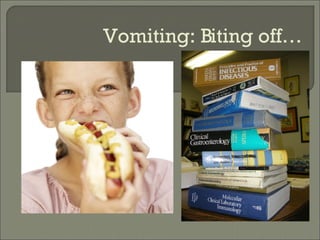
Vomiting: Biting off…
Where the Monsters Are
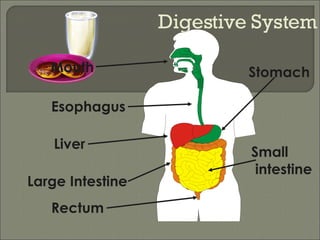
Digestive System Small intestine Mouth Esophagus Rectum Large Intestine Liver Stomach
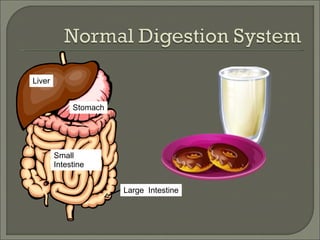
Small Intestine Large  Intestine Stomach Liver
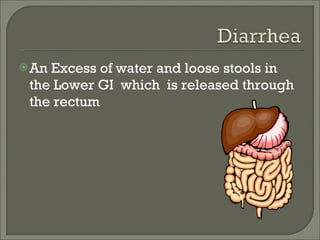
An Excess of water and loose stools in the Lower GI  which  is released through the rectum
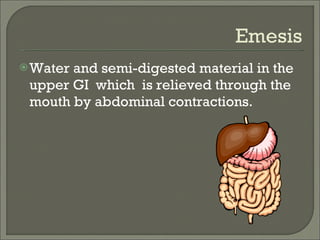
Water and semi-digested material in the upper GI  which  is relieved through the mouth by abdominal contractions.  Emesis
Basic Microbiology
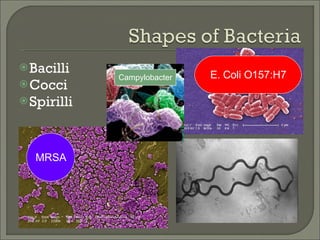
Bacilli Cocci Spirilli MRSA E. Coli O157:H7 Campylobacter
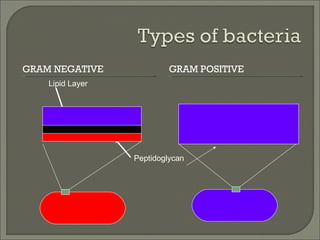
GRAM NEGATIVE GRAM POSITIVE Peptidoglycan Lipid Layer
Enterotoxins – toxins that attack the Digestive system May be either  an Exotoxin or Endotoxin
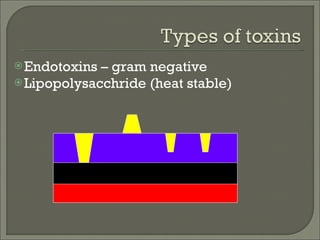
Endotoxins – gram negative Lipopolysacchride (heat stable)
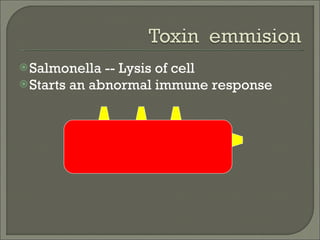
Salmonella -- Lysis of cell Starts an abnormal immune response
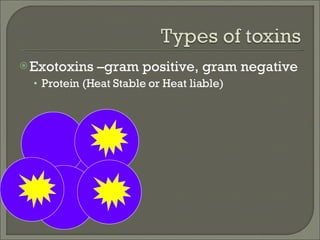
Exotoxins –gram positive, gram negative Protein (Heat Stable or Heat liable)
Exotoxin Types: Type I – acts on the cell surface Type II – membrane damaging Type III - intracellular
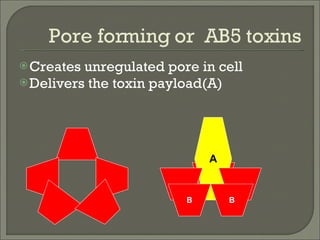
Pore forming or  AB5 toxins A B B Creates unregulated pore in cell Delivers the toxin payload(A)
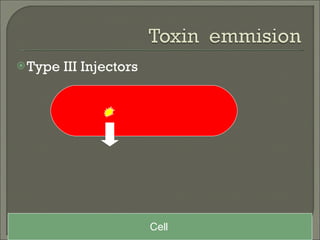
Type III Injectors Cell
Secretory Osmotic Inflammatory
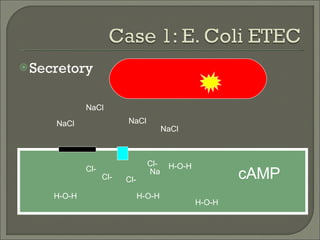
Cells secrete  water  sugar  Electrolytes (NaCl, KCl) cAMP or gAMP over activated
Secretory  NaCl Cl- NaCl NaCl NaCl Na Cl- Cl- Cl- cAMP H-O-H H-O-H H-O-H H-O-H
Substances not absorbed by the body attract water in the system
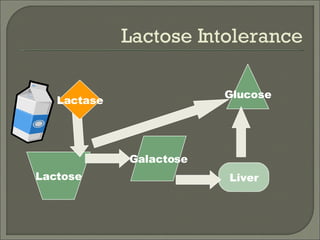
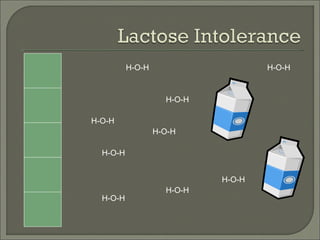
Lactose Intolerance Lactose Galactose Liver Glucose Lactase
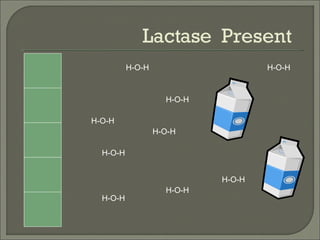
H-O-H H-O-H H-O-H H-O-H H-O-H H-O-H H-O-H H-O-H H-O-H Lactase  Present
H-O-H H-O-H H-O-H H-O-H H-O-H H-O-H H-O-H H-O-H H-O-H
Damage to cells, or response to cell damage Combination of types above
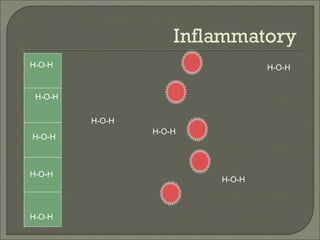
Inflammatory  H-O-H H-O-H H-O-H H-O-H H-O-H H-O-H H-O-H H-O-H H-O-H
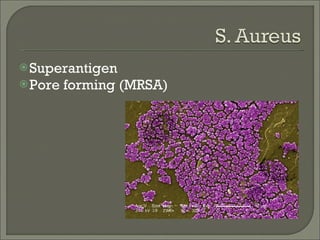
Superantigen  Pore forming (MRSA)
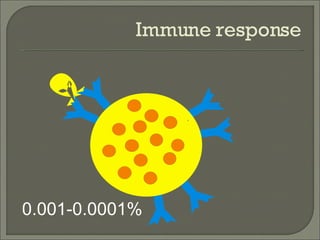
Immune response 0.001-0.0001%
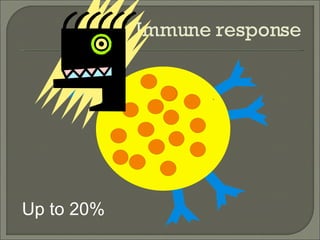
Immune response Up to 20%
Not Classified as Diarrhea Blood and Mucus emitted in feces Damage to cells and mucosal linings
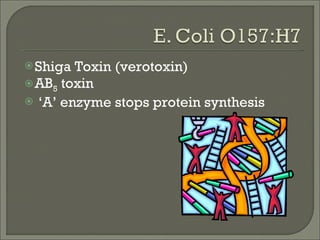
Shiga Toxin (verotoxin) AB 5  toxin ‘ A’ enzyme stops protein synthesis
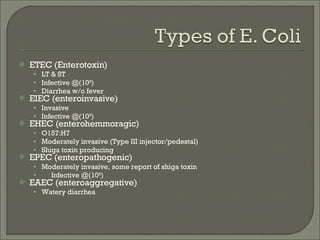
ETEC (Enterotoxin) LT & ST  Infective @(10 8 ) Diarrhea w/o fever EIEC (enteroinvasive) Invasive Infective @(10 6 ) EHEC (enterohemmoragic) O157:H7 Moderately invasive (Type III injector/pedestal) Shiga toxin producing  EPEC (enteropathogenic) Moderately invasive, some report of shiga toxin Infective @(10 6 ) EAEC (enteroaggregative) Watery diarrhea
Questions? [email_address] http://Biotestservices.com PowerPoint presentation available at http://EHblogger.blogspot.com http://shoestringsanitarian.blogspot.com

What causes Diarrhea IEHA 2008