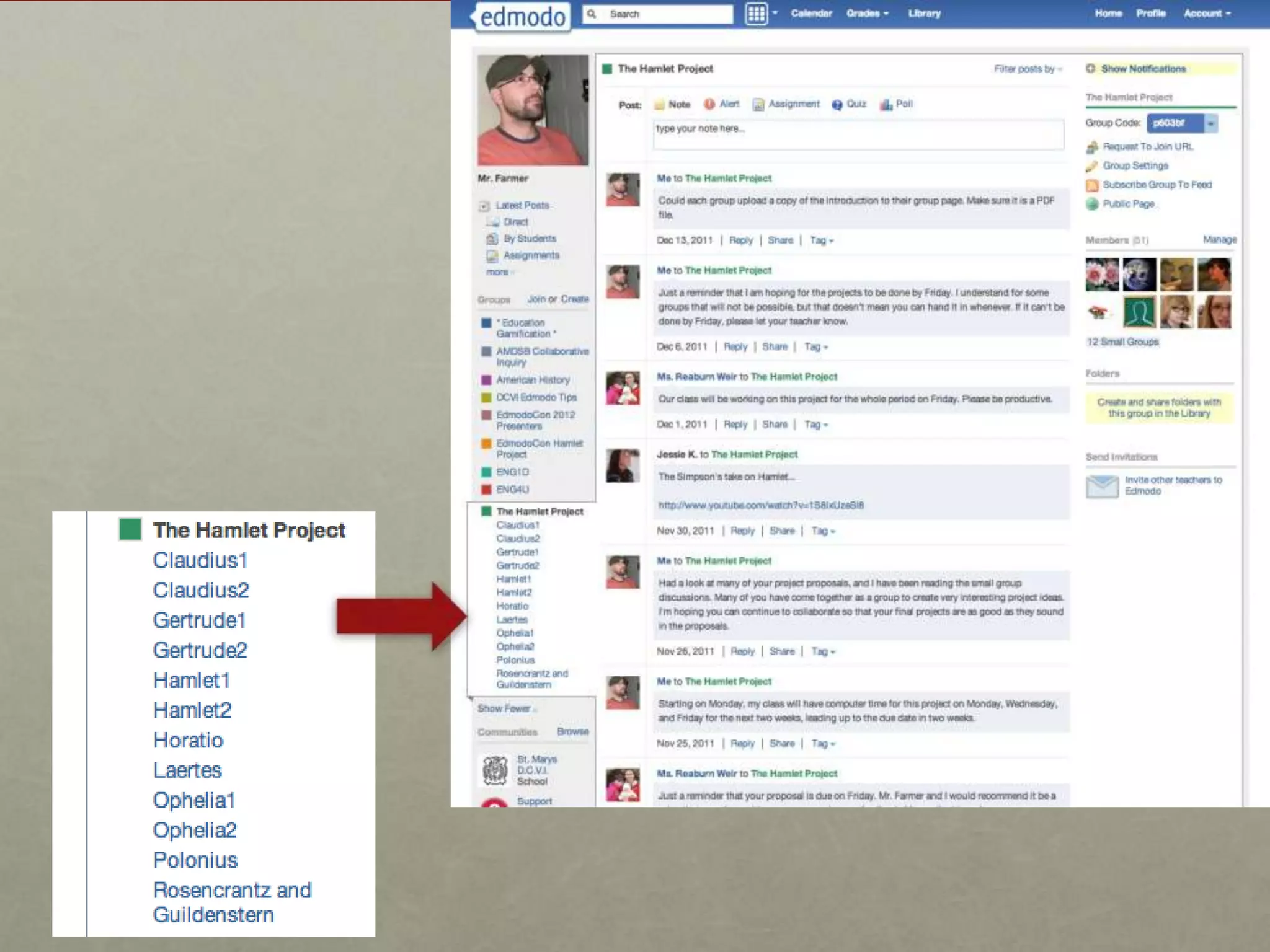



The Hamlet Project


  By Richard Farmer and Jamie Weir
Project Overview

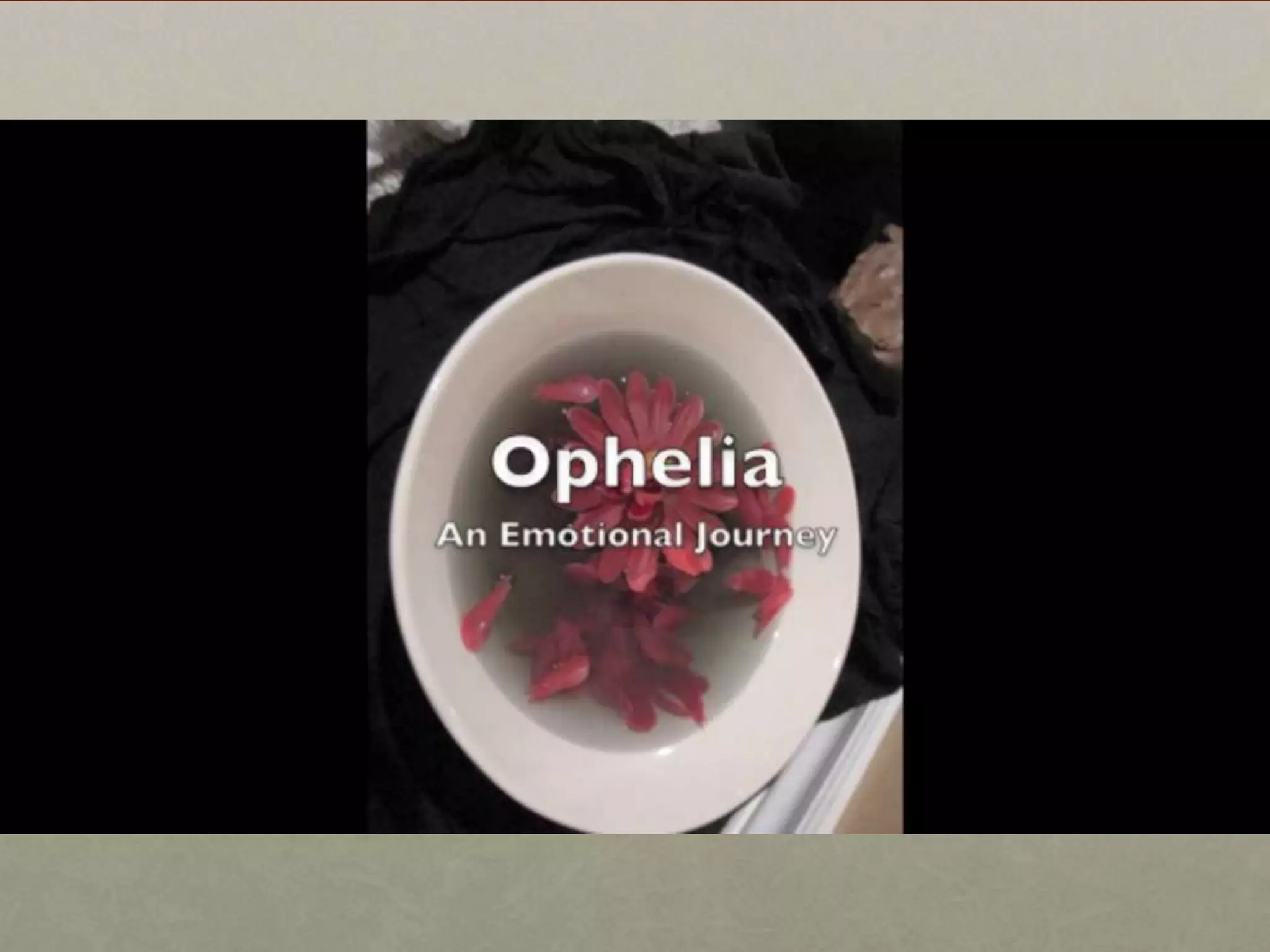
• Through a collaborative effort between Mr. Farmer
  and Mrs. Weir’s classes, we as a group will create a
  visual representation of the emotional journey taken
  by many of the characters in Shakespeare’s Hamlet.
• CREATIVITY AND
   LEARNING AND                               INNOVATION
    INNOVATION
                                            • CRITICAL THINKING
      SKILLS                                  AND PROBLEM
     Learning and innovation skills           SOLVING
increasingly are being recognized as
those that separate students who are        • COMMUNICATION AND
    prepared for a more and more
 complex life and work environments
                                              COLLABORATION
  in the 21st century, and those who
 are not. A focus on creativity, critical
      thinking, communication and
 collaboration is essential to prepare
          students for the future.


                                                         P21 Framework
                                                         Definitions
Communication and
               Collaboration
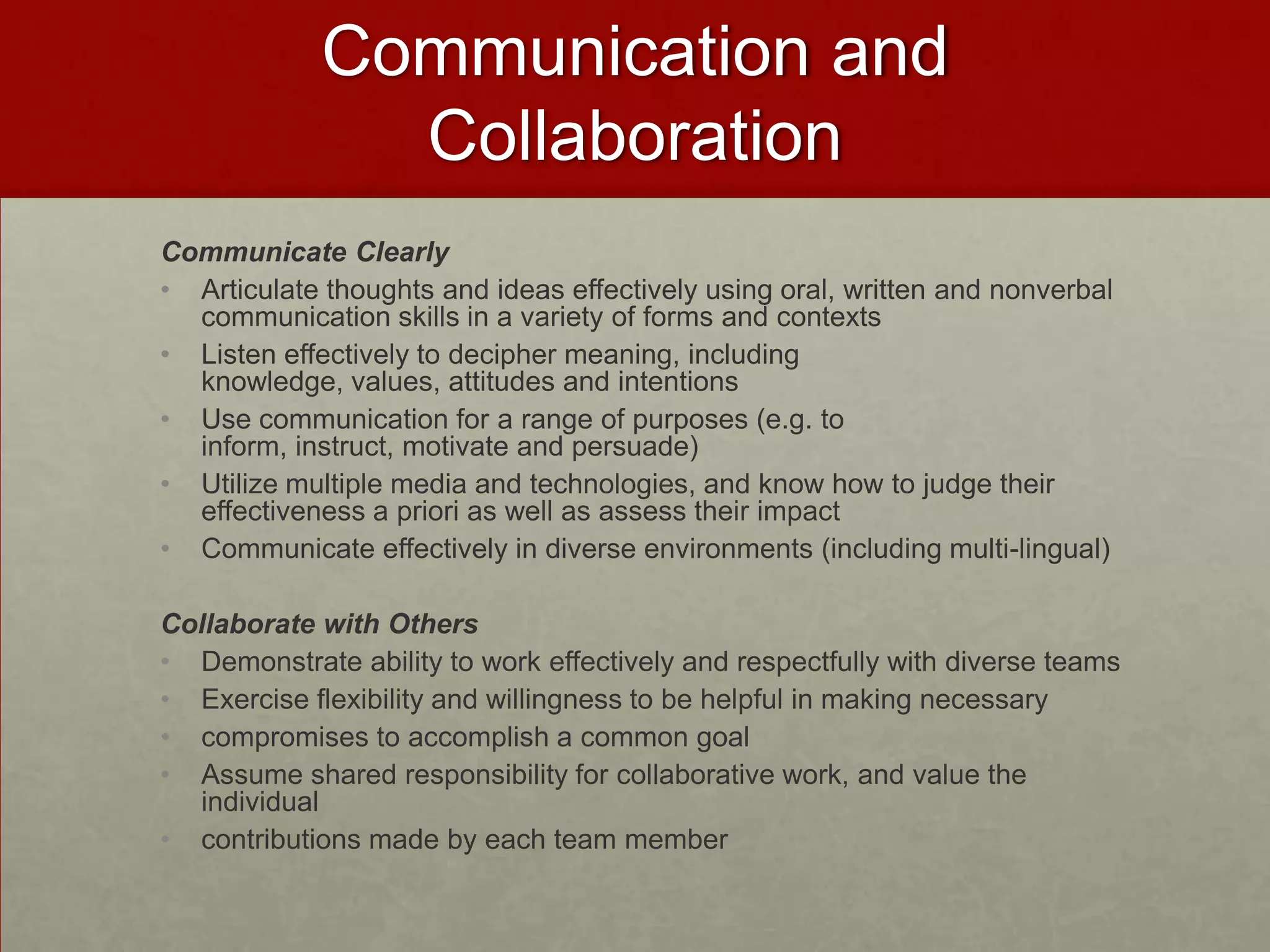
Communicate Clearly
• Articulate thoughts and ideas effectively using oral, written and nonverbal
  communication skills in a variety of forms and contexts
• Listen effectively to decipher meaning, including
  knowledge, values, attitudes and intentions
• Use communication for a range of purposes (e.g. to
  inform, instruct, motivate and persuade)
• Utilize multiple media and technologies, and know how to judge their
  effectiveness a priori as well as assess their impact
• Communicate effectively in diverse environments (including multi-lingual)

Collaborate with Others
• Demonstrate ability to work effectively and respectfully with diverse teams
• Exercise flexibility and willingness to be helpful in making necessary
• compromises to accomplish a common goal
• Assume shared responsibility for collaborative work, and value the
  individual
• contributions made by each team member
Creativity and Innovation
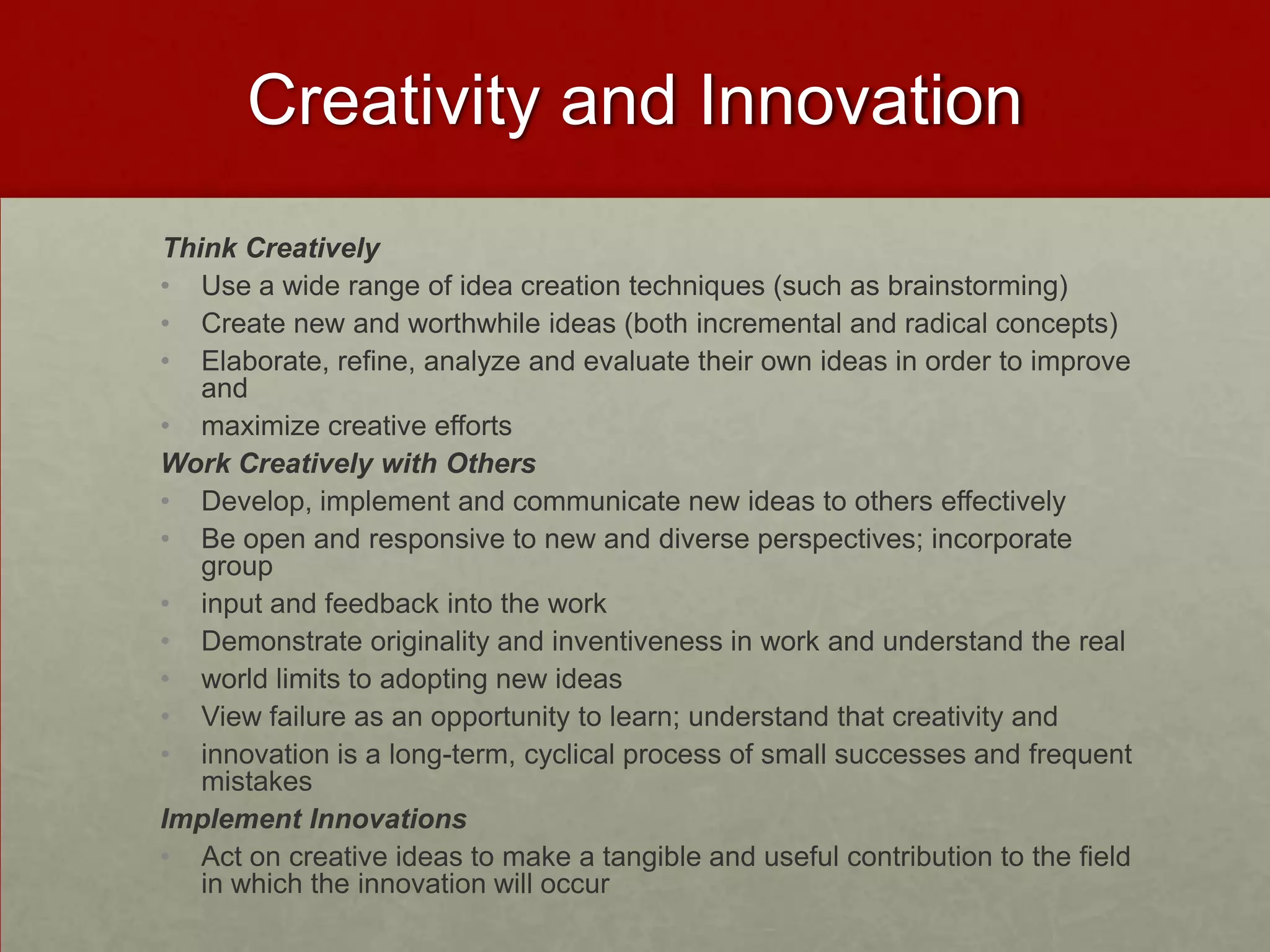
Think Creatively
• Use a wide range of idea creation techniques (such as brainstorming)
• Create new and worthwhile ideas (both incremental and radical concepts)
• Elaborate, refine, analyze and evaluate their own ideas in order to improve
   and
• maximize creative efforts
Work Creatively with Others
• Develop, implement and communicate new ideas to others effectively
• Be open and responsive to new and diverse perspectives; incorporate
   group
• input and feedback into the work
• Demonstrate originality and inventiveness in work and understand the real
• world limits to adopting new ideas
• View failure as an opportunity to learn; understand that creativity and
• innovation is a long-term, cyclical process of small successes and frequent
   mistakes
Implement Innovations
• Act on creative ideas to make a tangible and useful contribution to the field
   in which the innovation will occur
Critical Thinking and Problem
             Solving
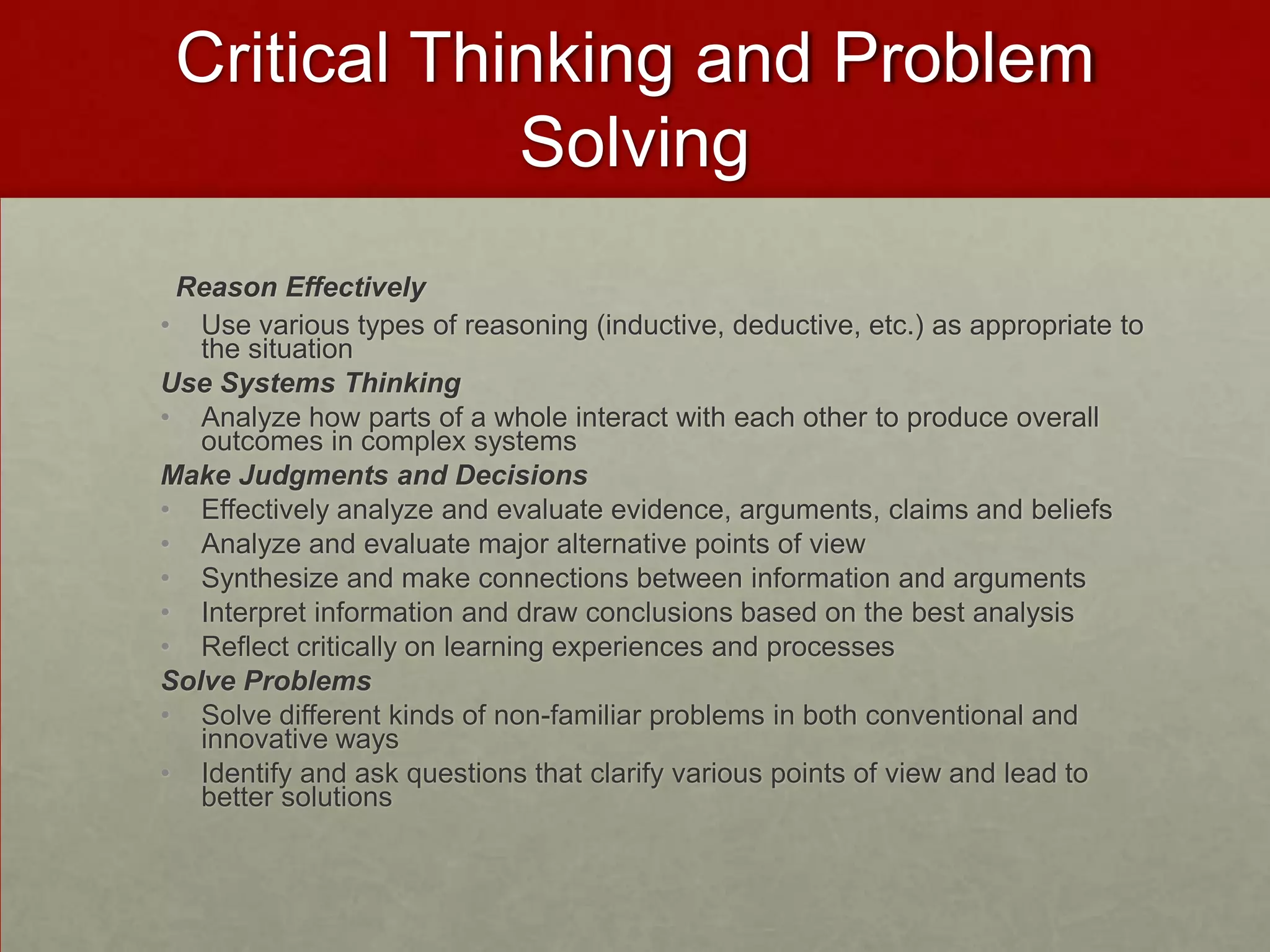
 Reason Effectively
• Use various types of reasoning (inductive, deductive, etc.) as appropriate to
   the situation
Use Systems Thinking
• Analyze how parts of a whole interact with each other to produce overall
   outcomes in complex systems
Make Judgments and Decisions
• Effectively analyze and evaluate evidence, arguments, claims and beliefs
• Analyze and evaluate major alternative points of view
• Synthesize and make connections between information and arguments
• Interpret information and draw conclusions based on the best analysis
• Reflect critically on learning experiences and processes
Solve Problems
• Solve different kinds of non-familiar problems in both conventional and
   innovative ways
• Identify and ask questions that clarify various points of view and lead to
   better solutions
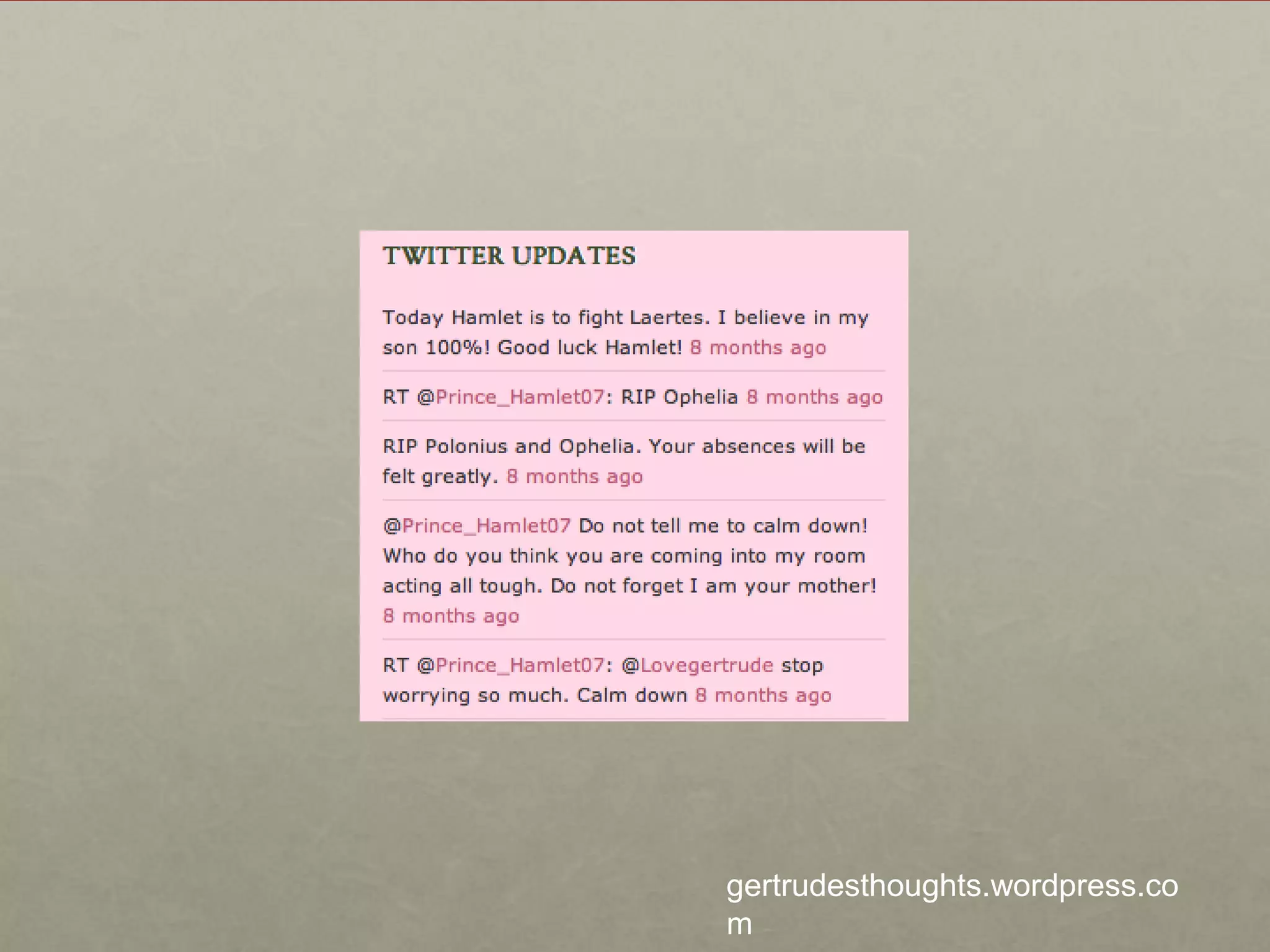
gertrudesthoughts.wordpress.co
m
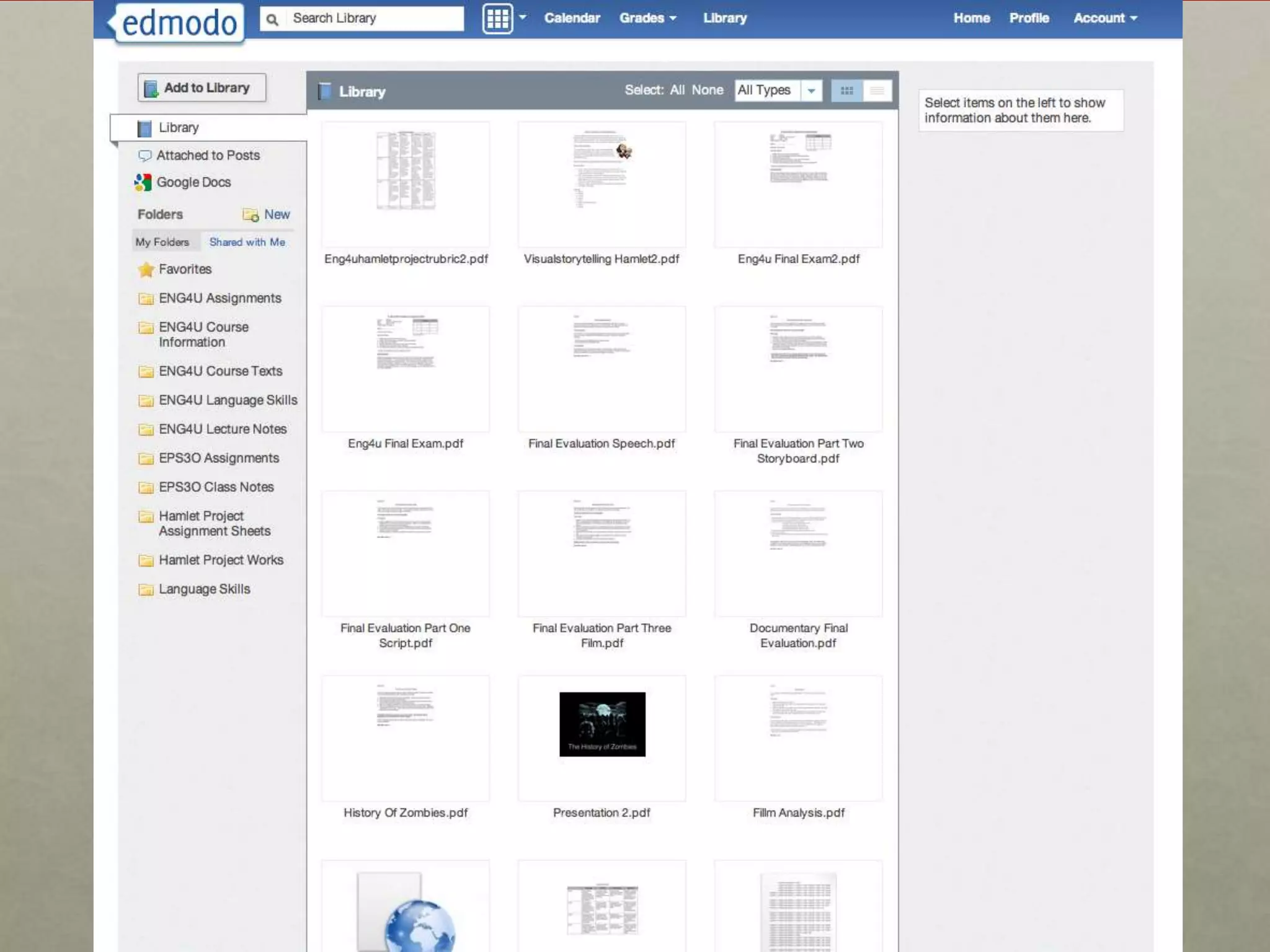
EdmodoCon Hamlet
     Project
 Join Code: x6g4mg
Thank YOu

Enhancing Student Collaboration Presented by Richard Hamlin and Jamie Weir

  • 1.
    The Hamlet Project By Richard Farmer and Jamie Weir
  • 2.
    Project Overview • Througha collaborative effort between Mr. Farmer and Mrs. Weir’s classes, we as a group will create a visual representation of the emotional journey taken by many of the characters in Shakespeare’s Hamlet.
  • 4.
    • CREATIVITY AND LEARNING AND INNOVATION INNOVATION • CRITICAL THINKING SKILLS AND PROBLEM Learning and innovation skills SOLVING increasingly are being recognized as those that separate students who are • COMMUNICATION AND prepared for a more and more complex life and work environments COLLABORATION in the 21st century, and those who are not. A focus on creativity, critical thinking, communication and collaboration is essential to prepare students for the future. P21 Framework Definitions
  • 5.
    Communication and Collaboration Communicate Clearly • Articulate thoughts and ideas effectively using oral, written and nonverbal communication skills in a variety of forms and contexts • Listen effectively to decipher meaning, including knowledge, values, attitudes and intentions • Use communication for a range of purposes (e.g. to inform, instruct, motivate and persuade) • Utilize multiple media and technologies, and know how to judge their effectiveness a priori as well as assess their impact • Communicate effectively in diverse environments (including multi-lingual) Collaborate with Others • Demonstrate ability to work effectively and respectfully with diverse teams • Exercise flexibility and willingness to be helpful in making necessary • compromises to accomplish a common goal • Assume shared responsibility for collaborative work, and value the individual • contributions made by each team member
  • 6.
    Creativity and Innovation ThinkCreatively • Use a wide range of idea creation techniques (such as brainstorming) • Create new and worthwhile ideas (both incremental and radical concepts) • Elaborate, refine, analyze and evaluate their own ideas in order to improve and • maximize creative efforts Work Creatively with Others • Develop, implement and communicate new ideas to others effectively • Be open and responsive to new and diverse perspectives; incorporate group • input and feedback into the work • Demonstrate originality and inventiveness in work and understand the real • world limits to adopting new ideas • View failure as an opportunity to learn; understand that creativity and • innovation is a long-term, cyclical process of small successes and frequent mistakes Implement Innovations • Act on creative ideas to make a tangible and useful contribution to the field in which the innovation will occur
  • 7.
    Critical Thinking andProblem Solving Reason Effectively • Use various types of reasoning (inductive, deductive, etc.) as appropriate to the situation Use Systems Thinking • Analyze how parts of a whole interact with each other to produce overall outcomes in complex systems Make Judgments and Decisions • Effectively analyze and evaluate evidence, arguments, claims and beliefs • Analyze and evaluate major alternative points of view • Synthesize and make connections between information and arguments • Interpret information and draw conclusions based on the best analysis • Reflect critically on learning experiences and processes Solve Problems • Solve different kinds of non-familiar problems in both conventional and innovative ways • Identify and ask questions that clarify various points of view and lead to better solutions
  • 16.
  • 17.
    EdmodoCon Hamlet Project Join Code: x6g4mg
  • 18.