CVE Tutor Retreat – Melbourne, 11-13 April, 2014
Exploiting the
online environment
for learning
OUTLINE
•  Overview of approaches to learning design and
distance education using current technologies
•  Exploiting the features of Moodle to achieve powerful
learning, including…
•  Incorporating multimedia elements
•  Creating knowledge building communities
•  Incentivizing participation and completion
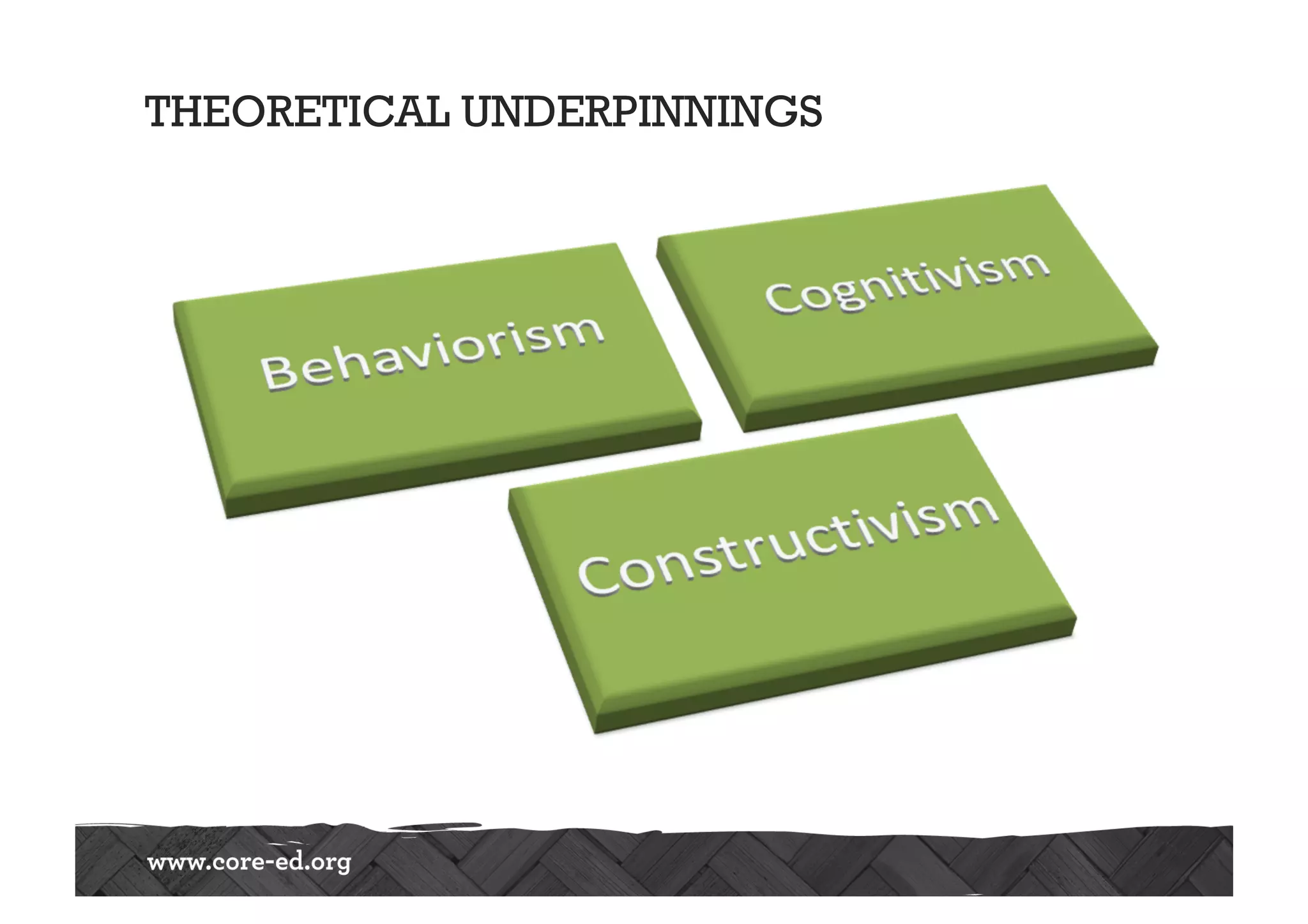
THEORETICAL UNDERPINNINGS
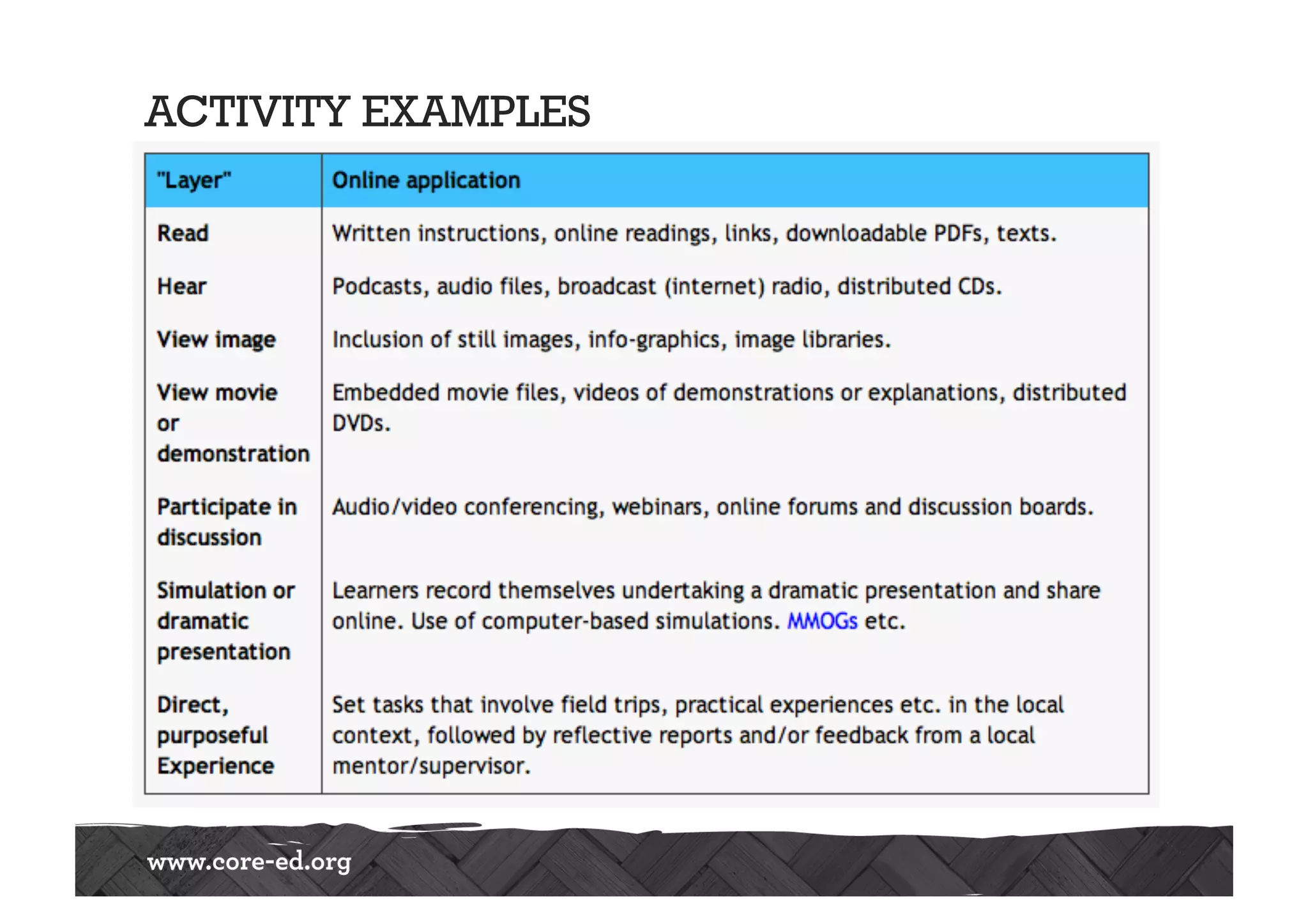
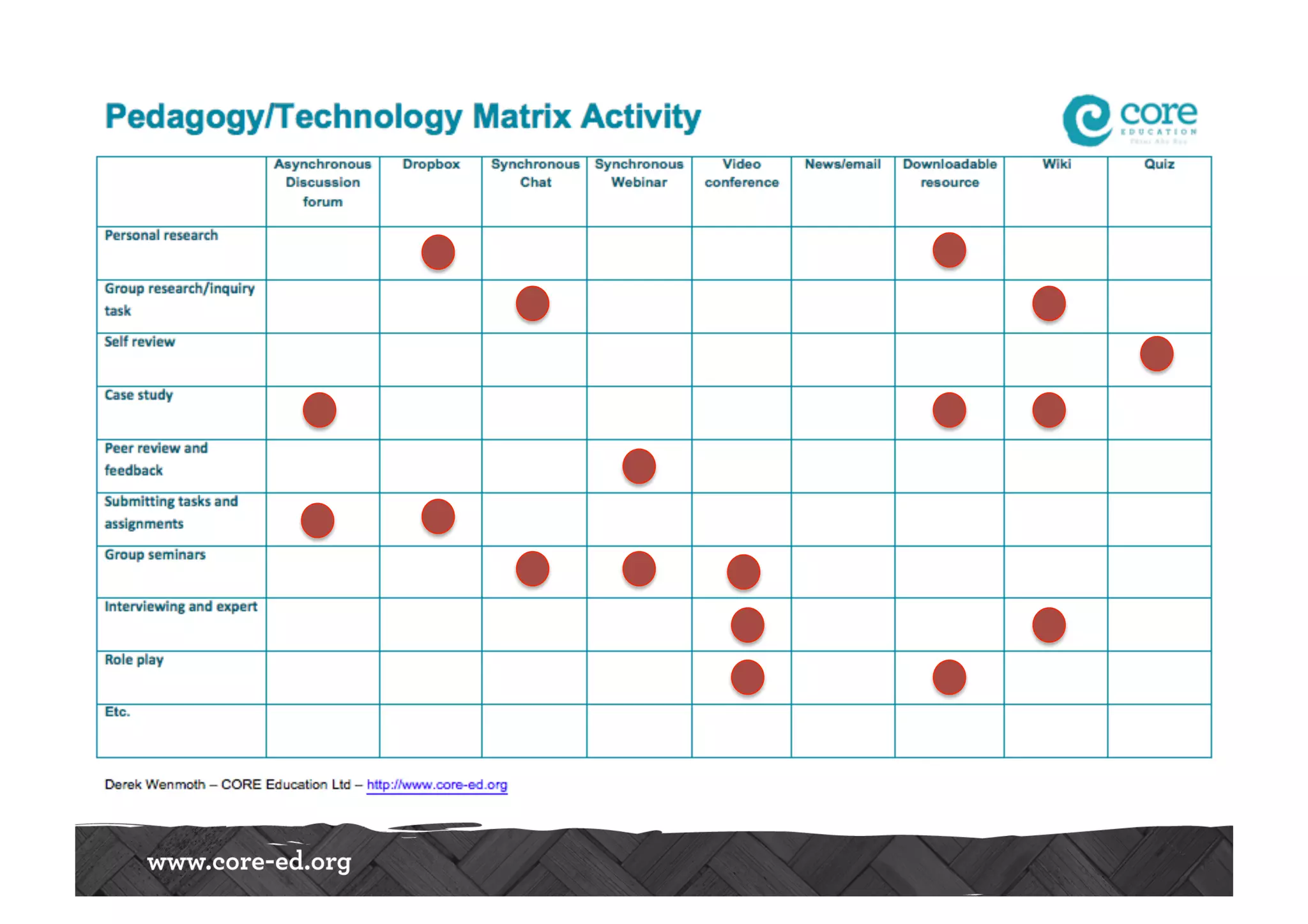
ACTIVITY EXAMPLES
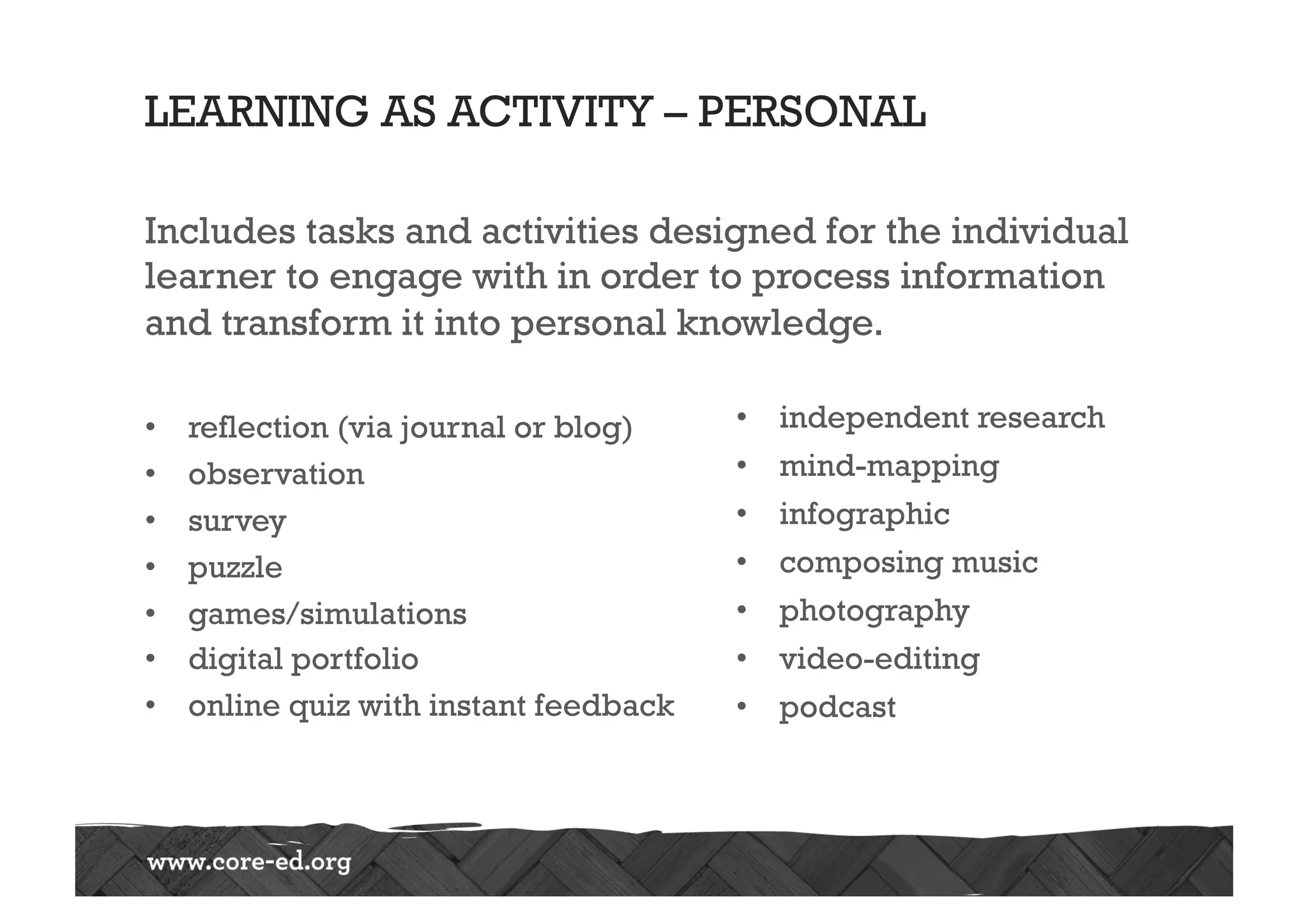
LEARNING AS ACTIVITY – PERSONAL
Includes tasks and activities designed for the individual
learner to engage with in order to process information
and transform it into personal knowledge.
•  reflection (via journal or blog)
•  observation
•  survey
•  puzzle
•  games/simulations
•  digital portfolio
•  online quiz with instant feedback
•  independent research
•  mind-mapping
•  infographic
•  composing music
•  photography
•  video-editing
•  podcast
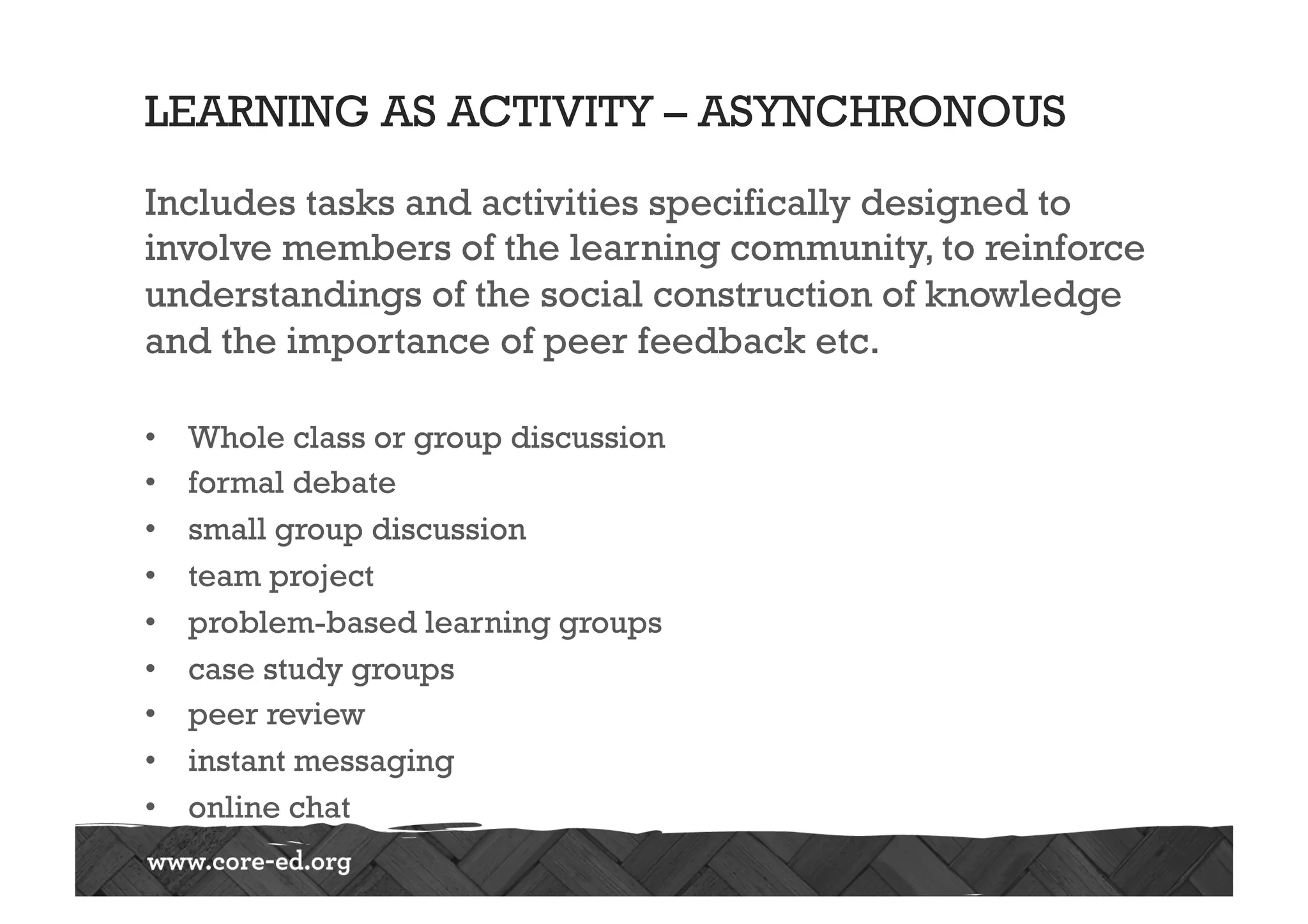
LEARNING AS ACTIVITY – ASYNCHRONOUS
Includes tasks and activities specifically designed to
involve members of the learning community, to reinforce
understandings of the social construction of knowledge
and the importance of peer feedback etc.
•  Whole class or group discussion
•  formal debate
•  small group discussion
•  team project
•  problem-based learning groups
•  case study groups
•  peer review
•  instant messaging
•  online chat
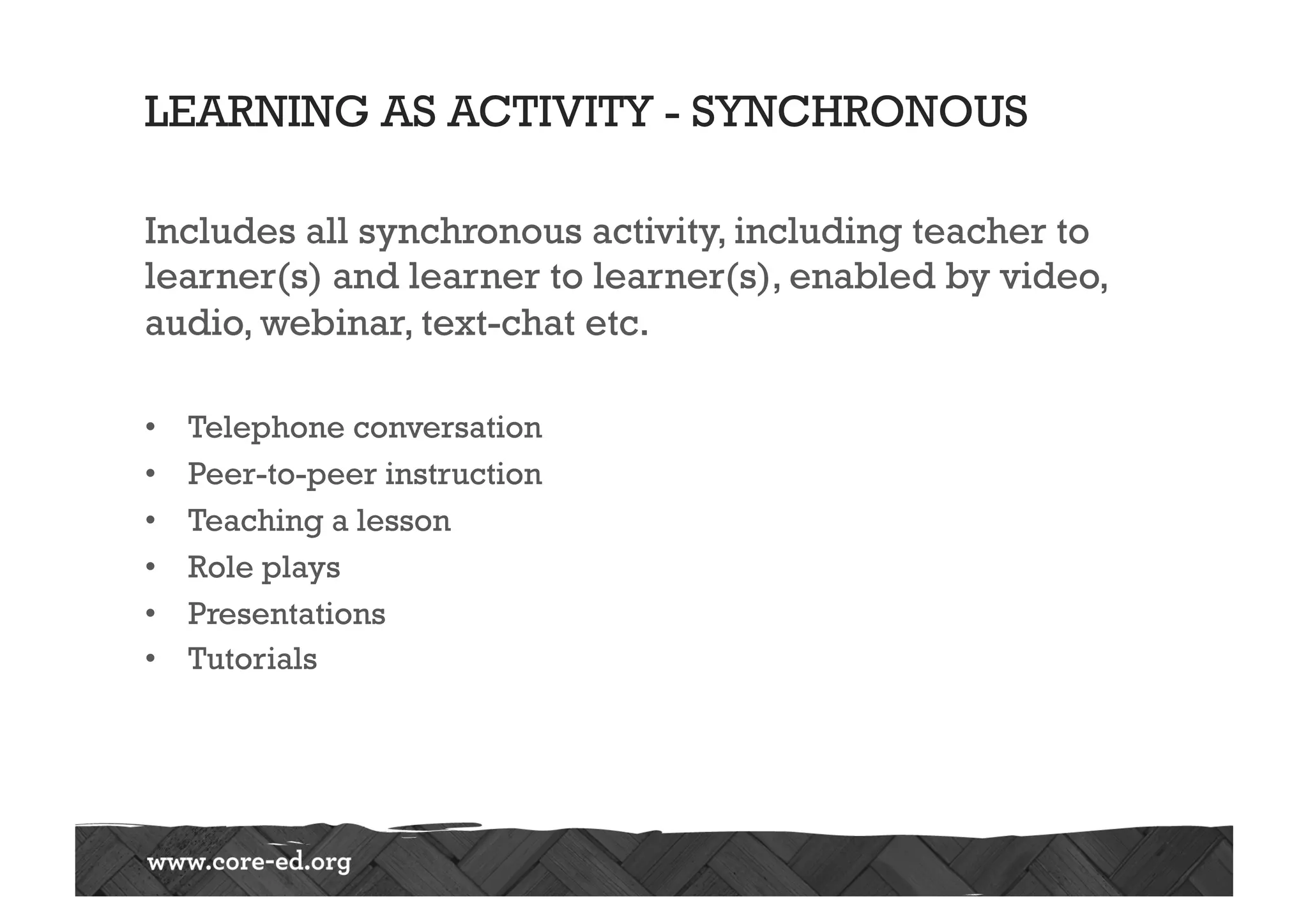
LEARNING AS ACTIVITY - SYNCHRONOUS
Includes all synchronous activity, including teacher to
learner(s) and learner to learner(s), enabled by video,
audio, webinar, text-chat etc.
•  Telephone conversation
•  Peer-to-peer instruction
•  Teaching a lesson
•  Role plays
•  Presentations
•  Tutorials
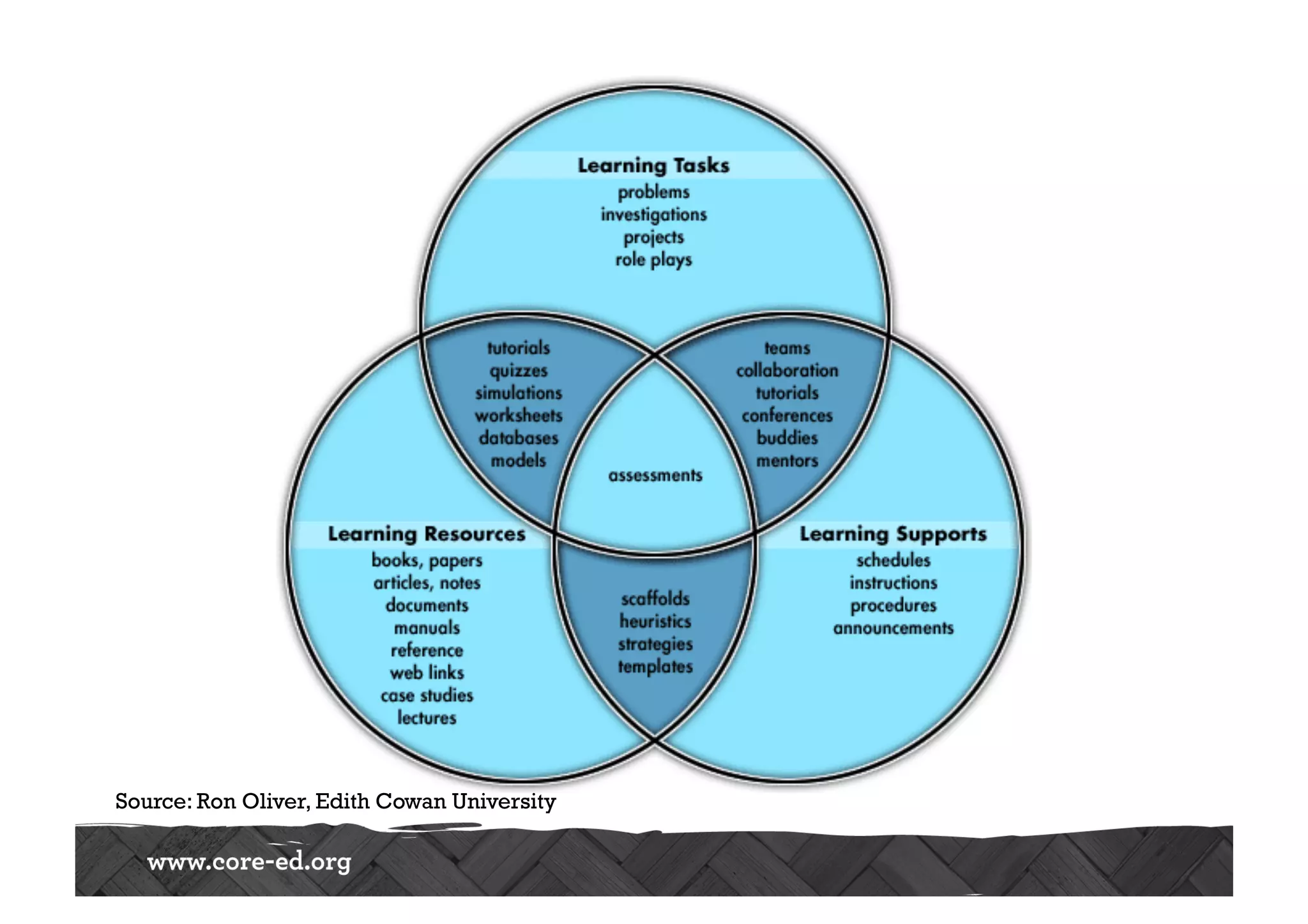
Source: Ron Oliver, Edith Cowan University
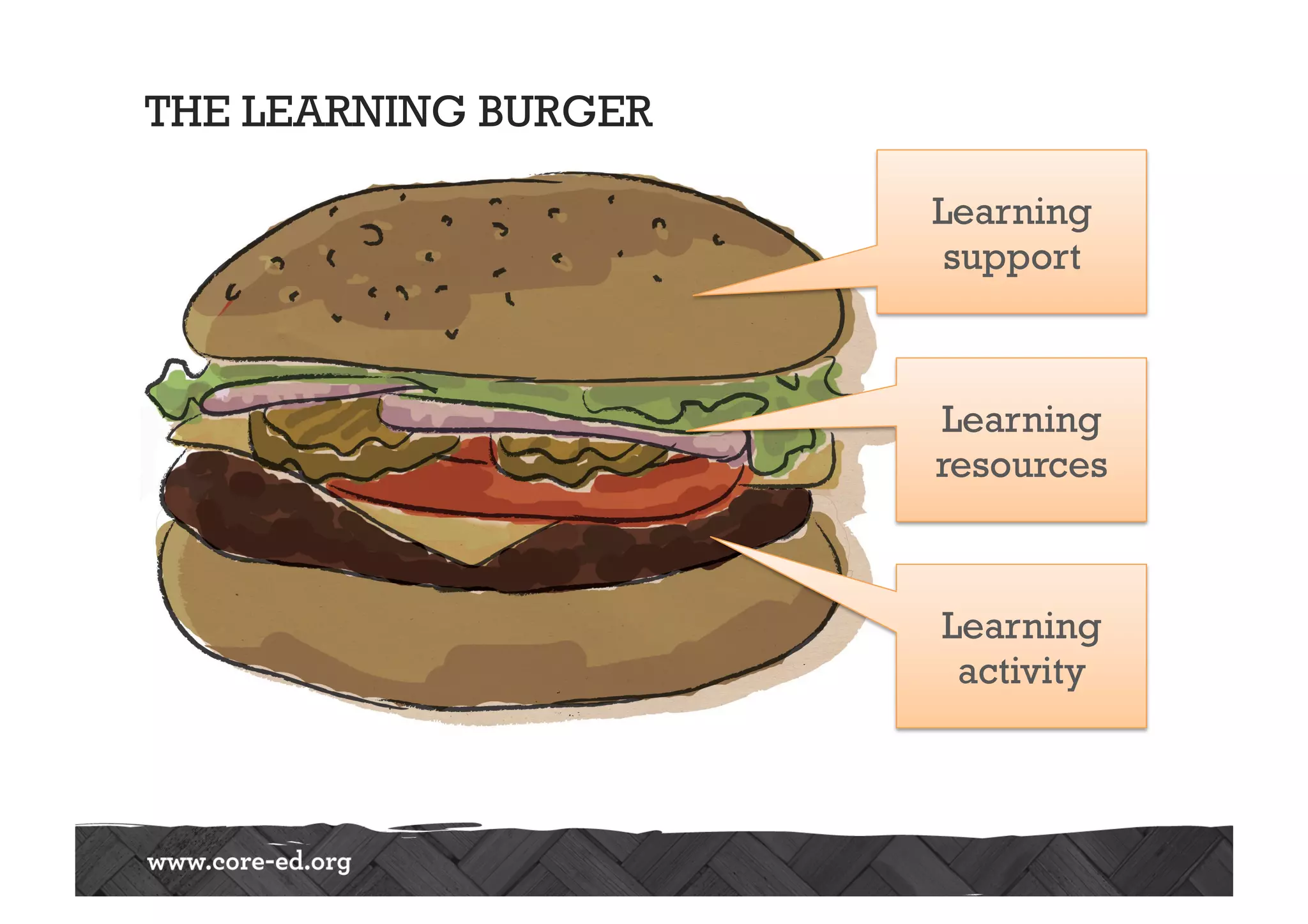
THE LEARNING BURGER
•  B
Learning
support
Learning
resources
Learning
activity
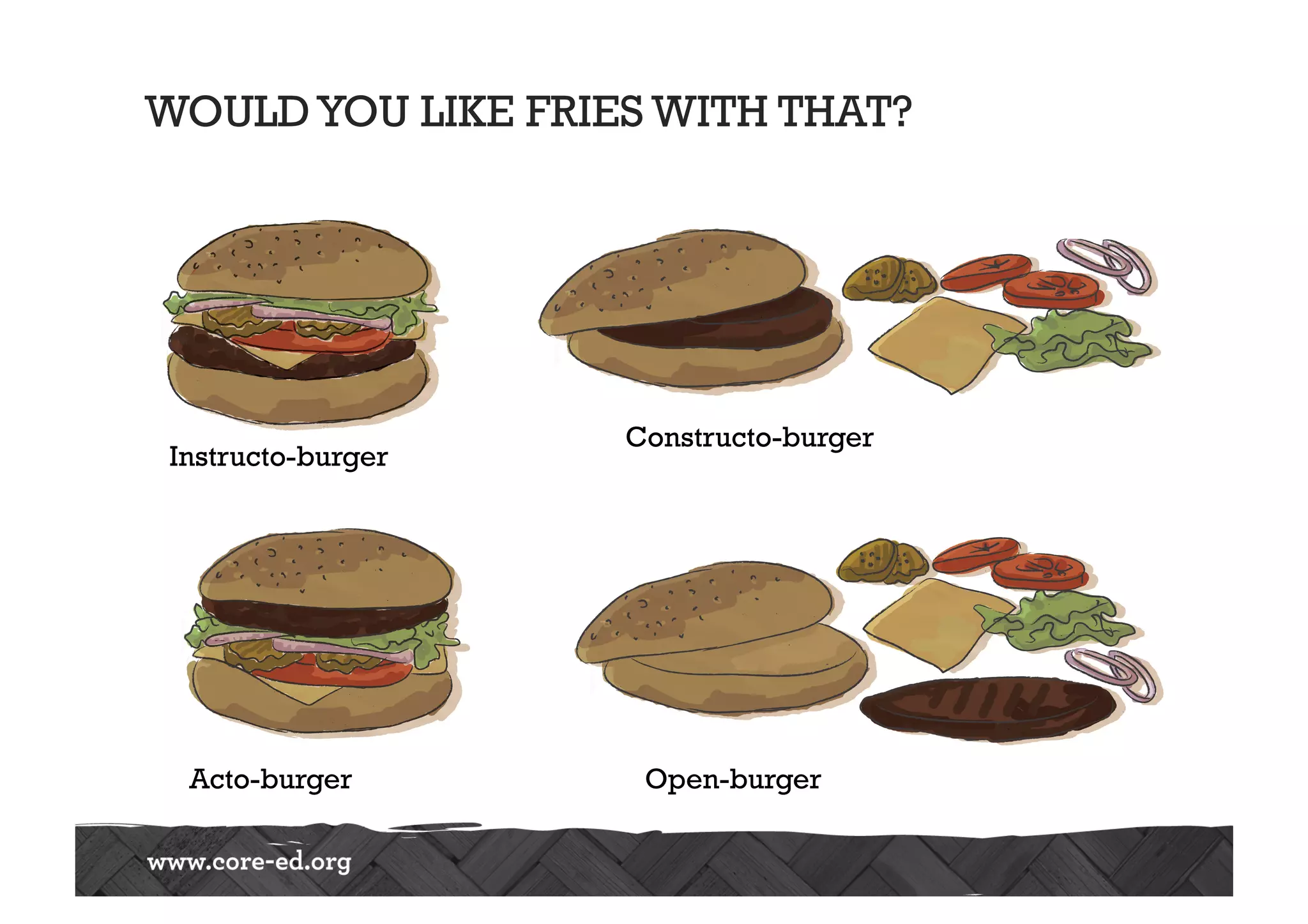
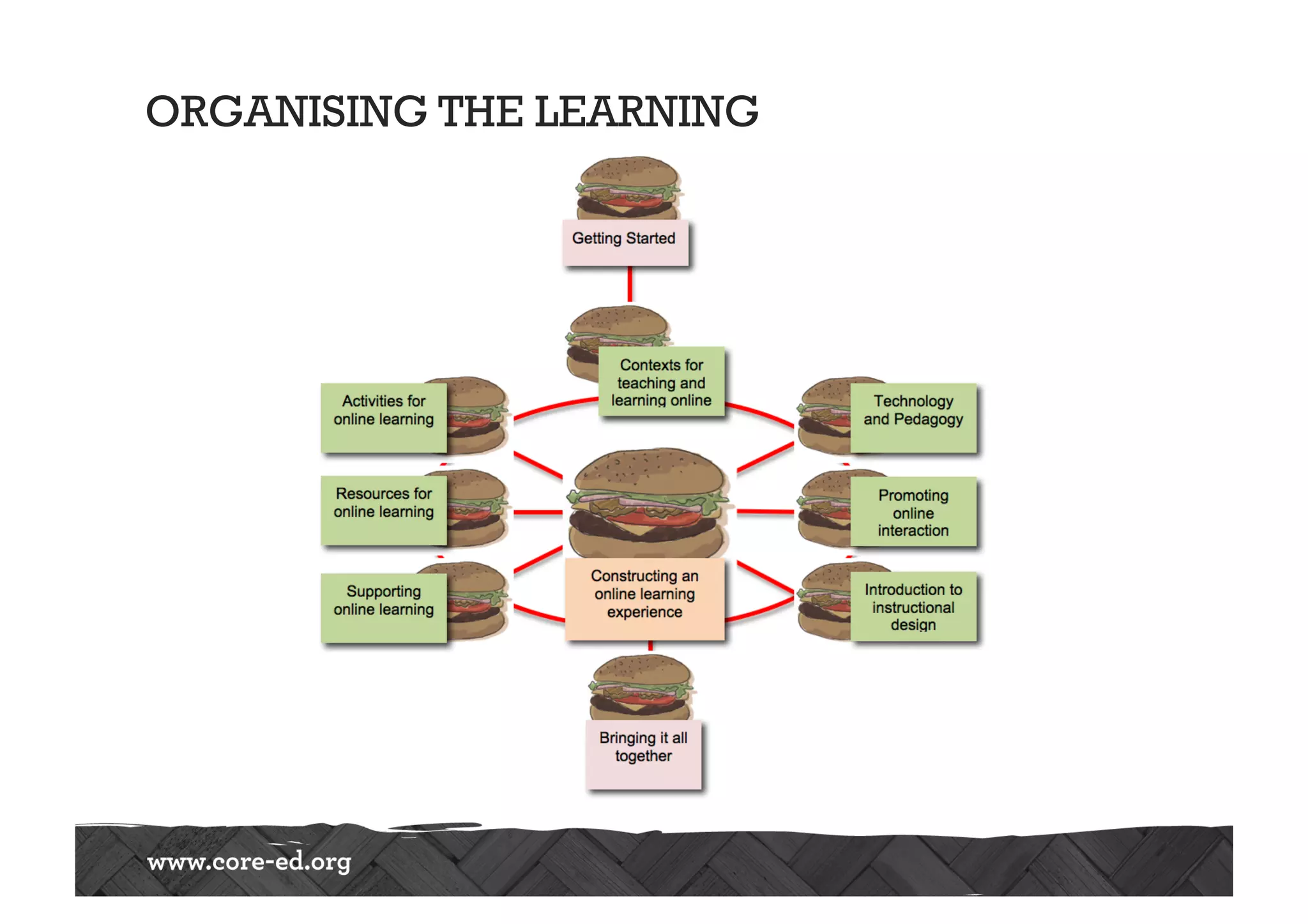
WOULDYOU LIKE FRIES WITH THAT?
Constructo-burger
Open-burger
Instructo-burger
Acto-burger
ORGANISING THE LEARNING
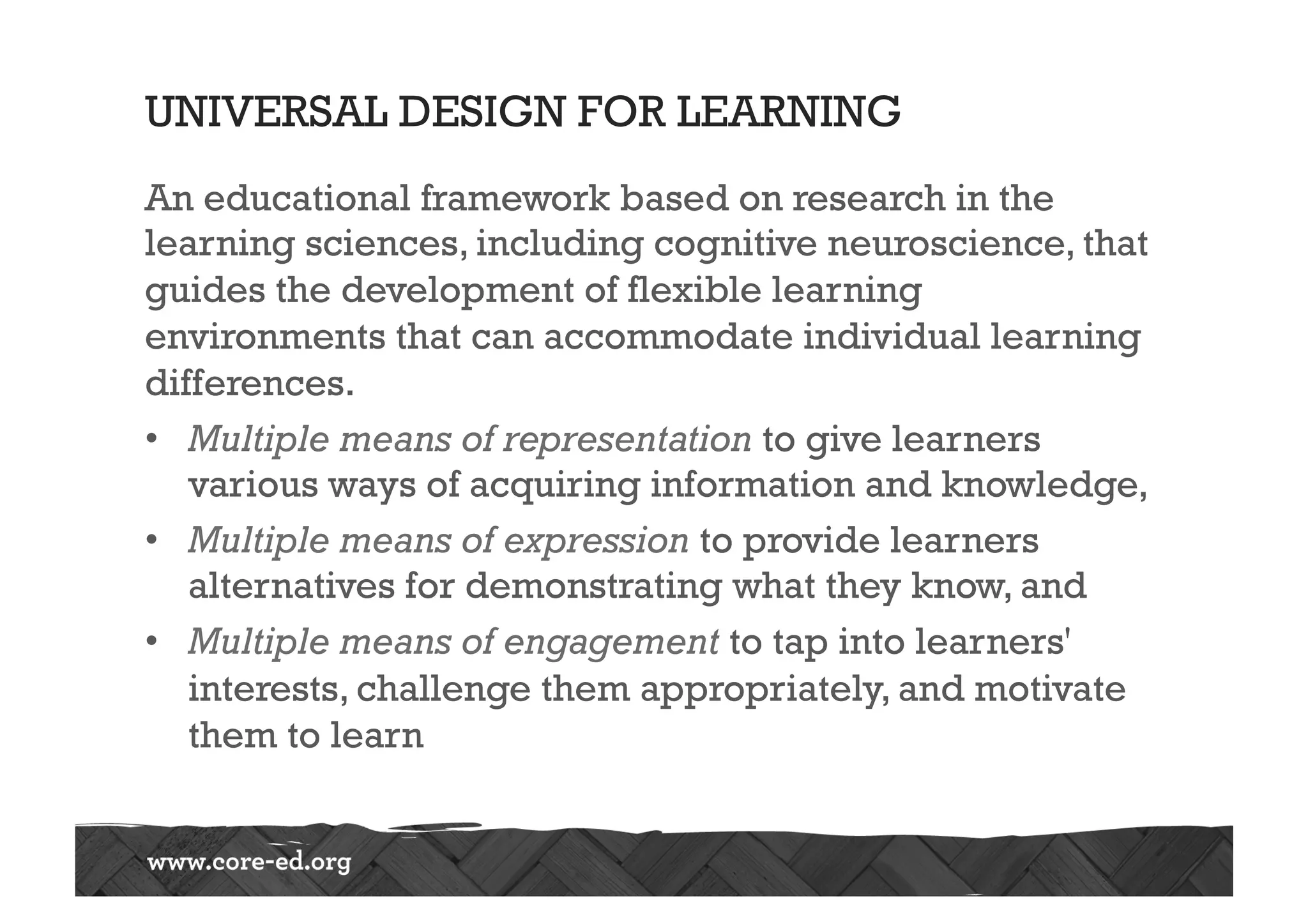
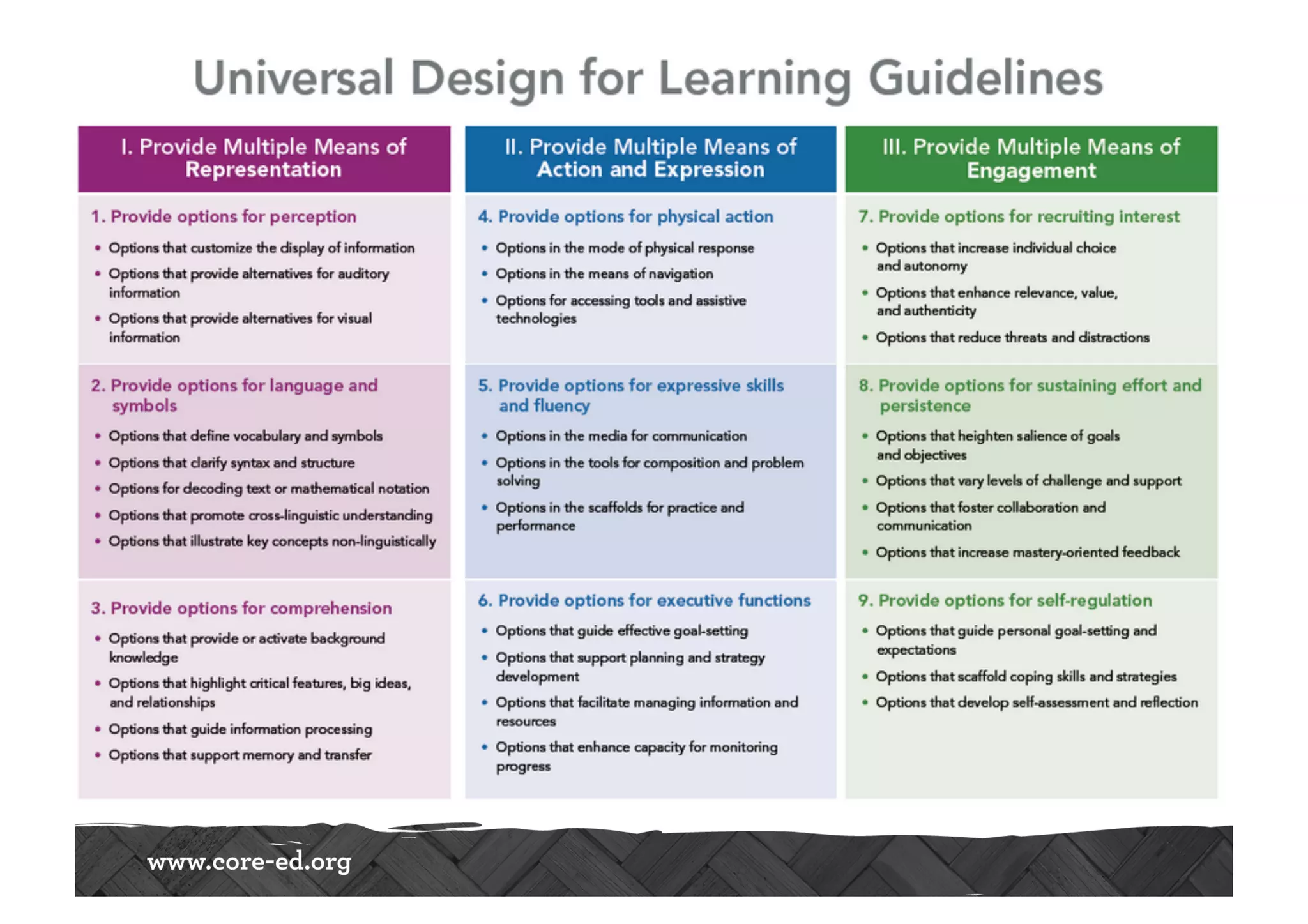
UNIVERSAL DESIGN FOR LEARNING
An educational framework based on research in the
learning sciences, including cognitive neuroscience, that
guides the development of flexible learning
environments that can accommodate individual learning
differences.
•  Multiple means of representation to give learners
various ways of acquiring information and knowledge,
•  Multiple means of expression to provide learners
alternatives for demonstrating what they know, and
•  Multiple means of engagement to tap into learners'
interests, challenge them appropriately, and motivate
them to learn
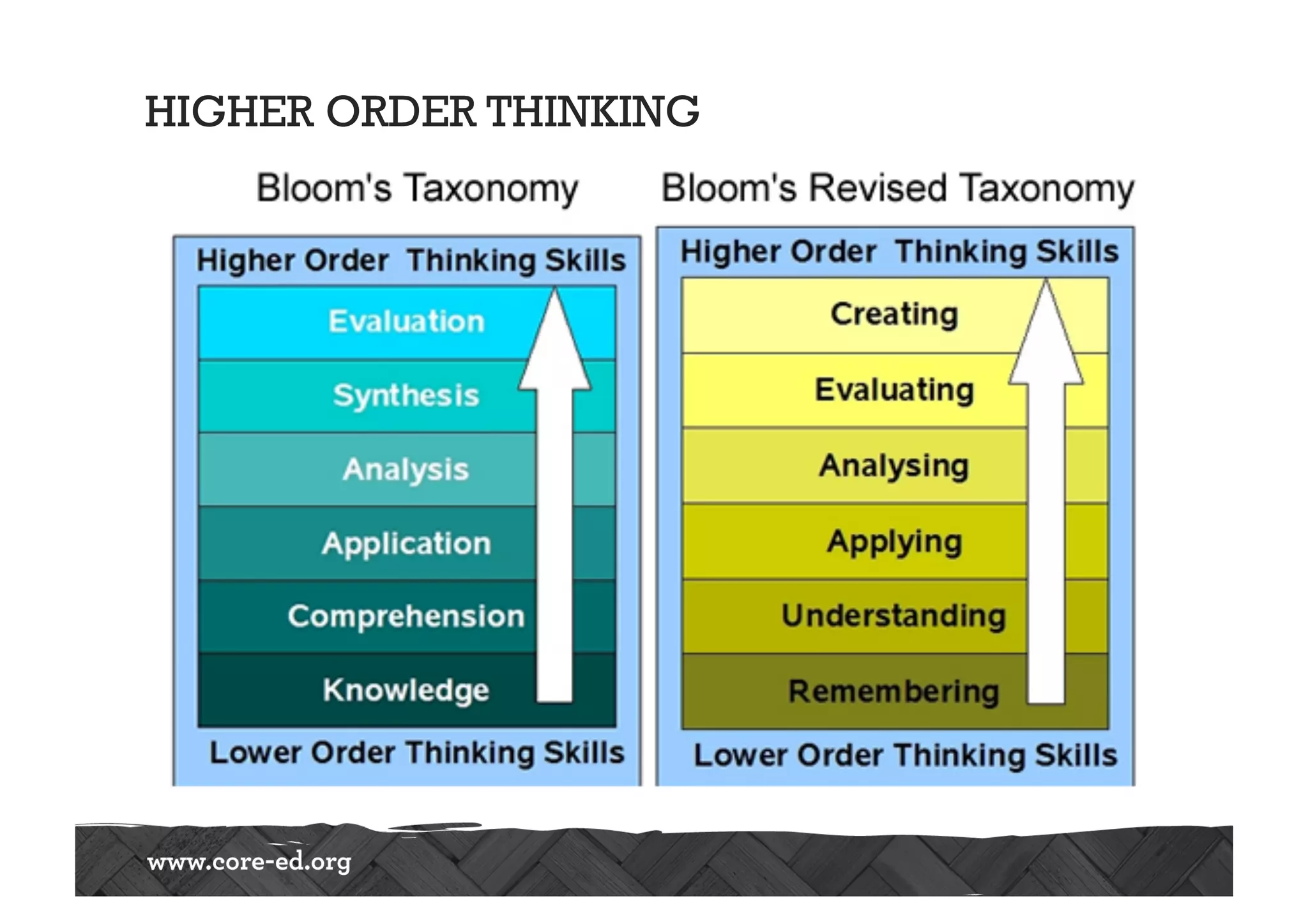
HIGHER ORDER THINKING
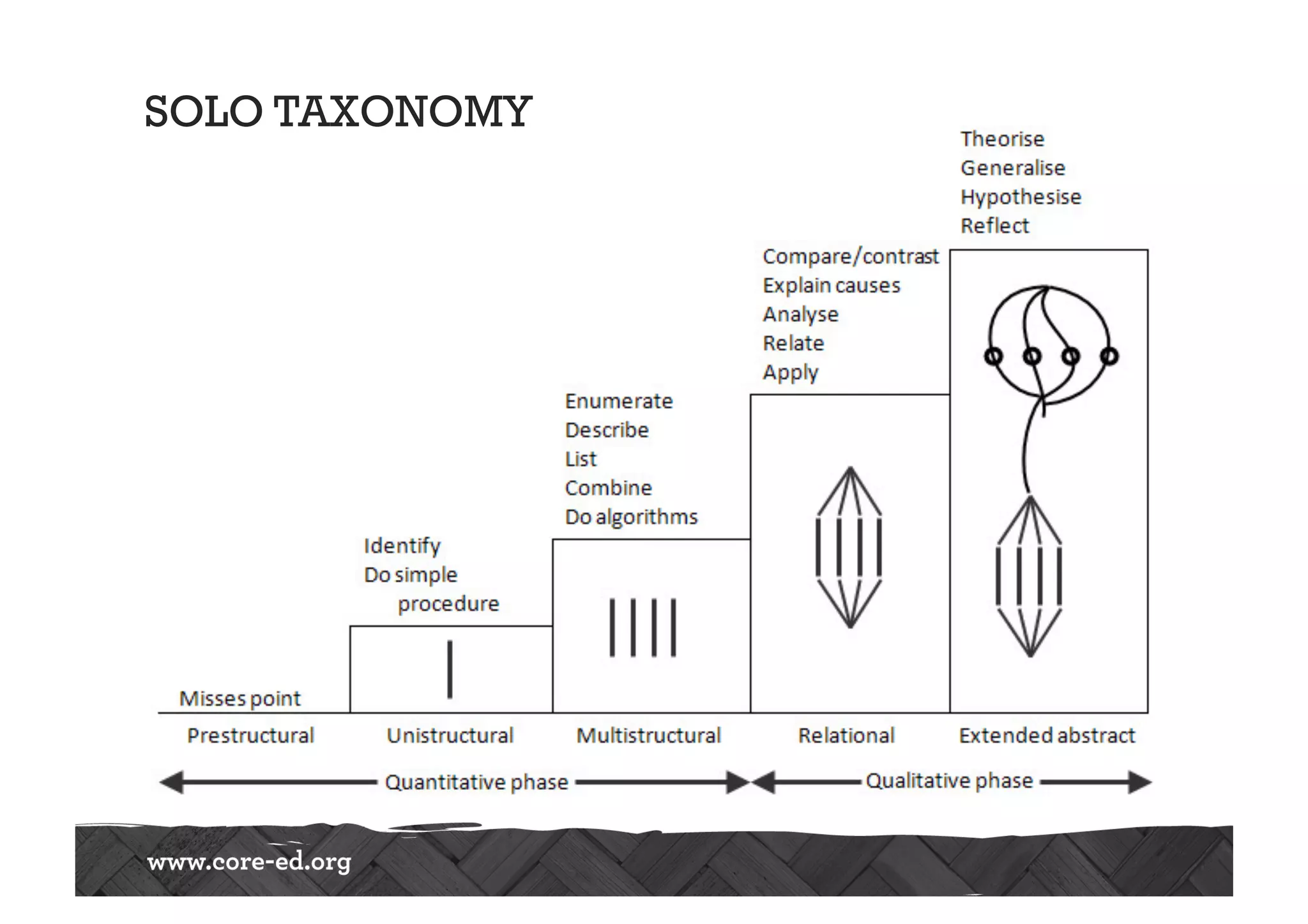
SOLO TAXONOMY
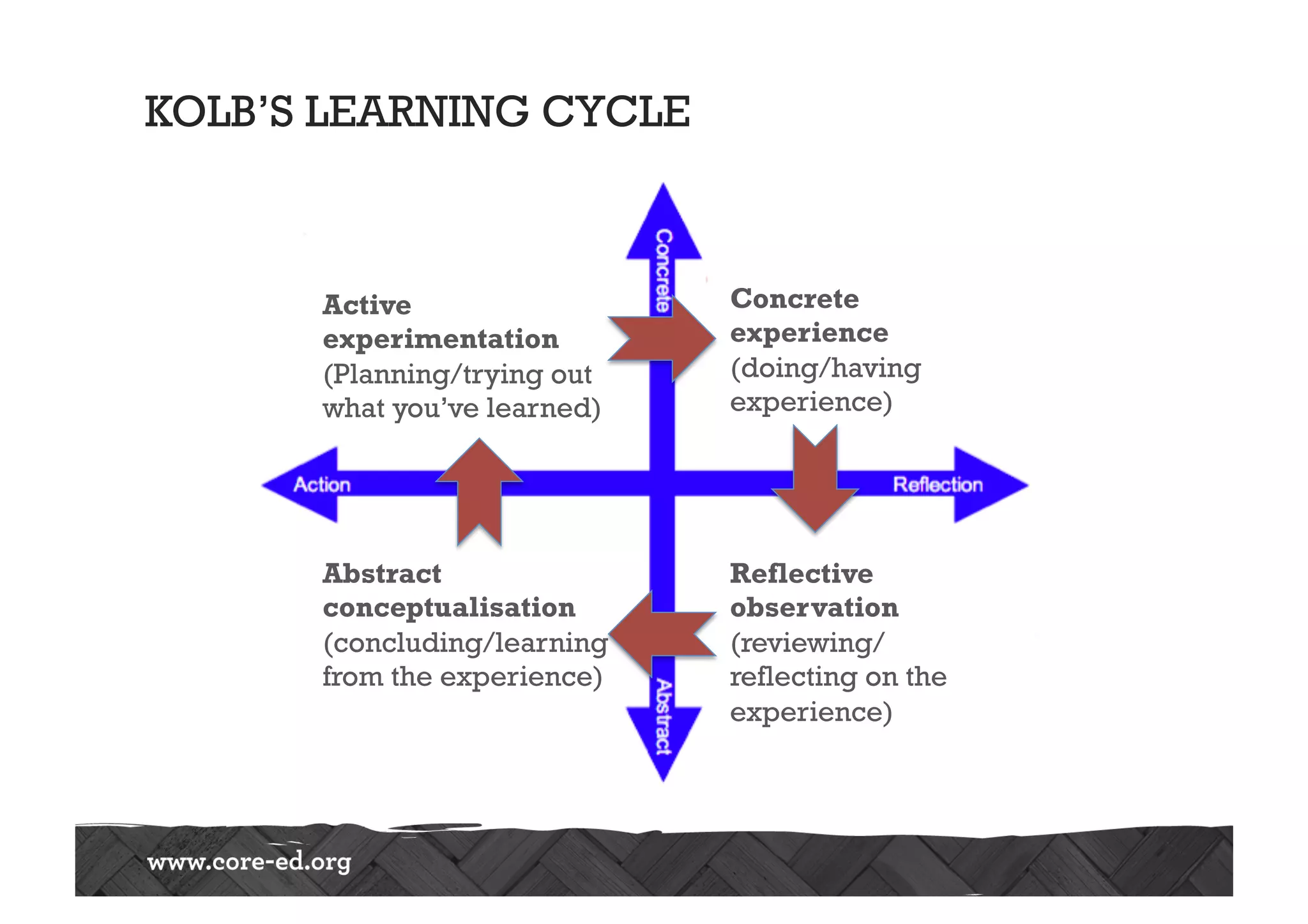
KOLB’S LEARNING CYCLE
Concrete
experience
(doing/having
experience)
Reflective
observation
(reviewing/
reflecting on the
experience)
Abstract
conceptualisation
(concluding/learning
from the experience)
Active
experimentation
(Planning/trying out
what you’ve learned)
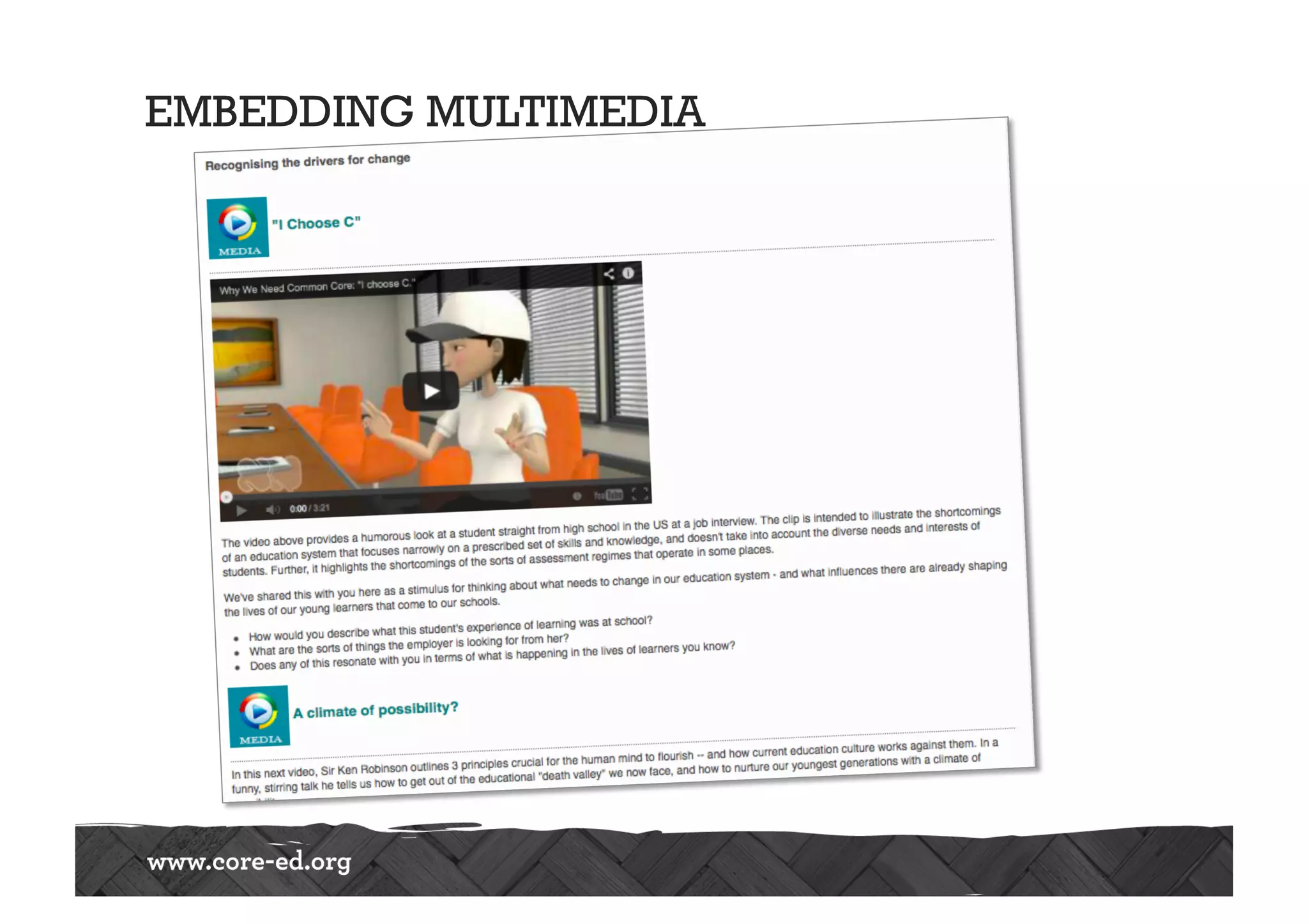
EMBEDDING MULTIMEDIA
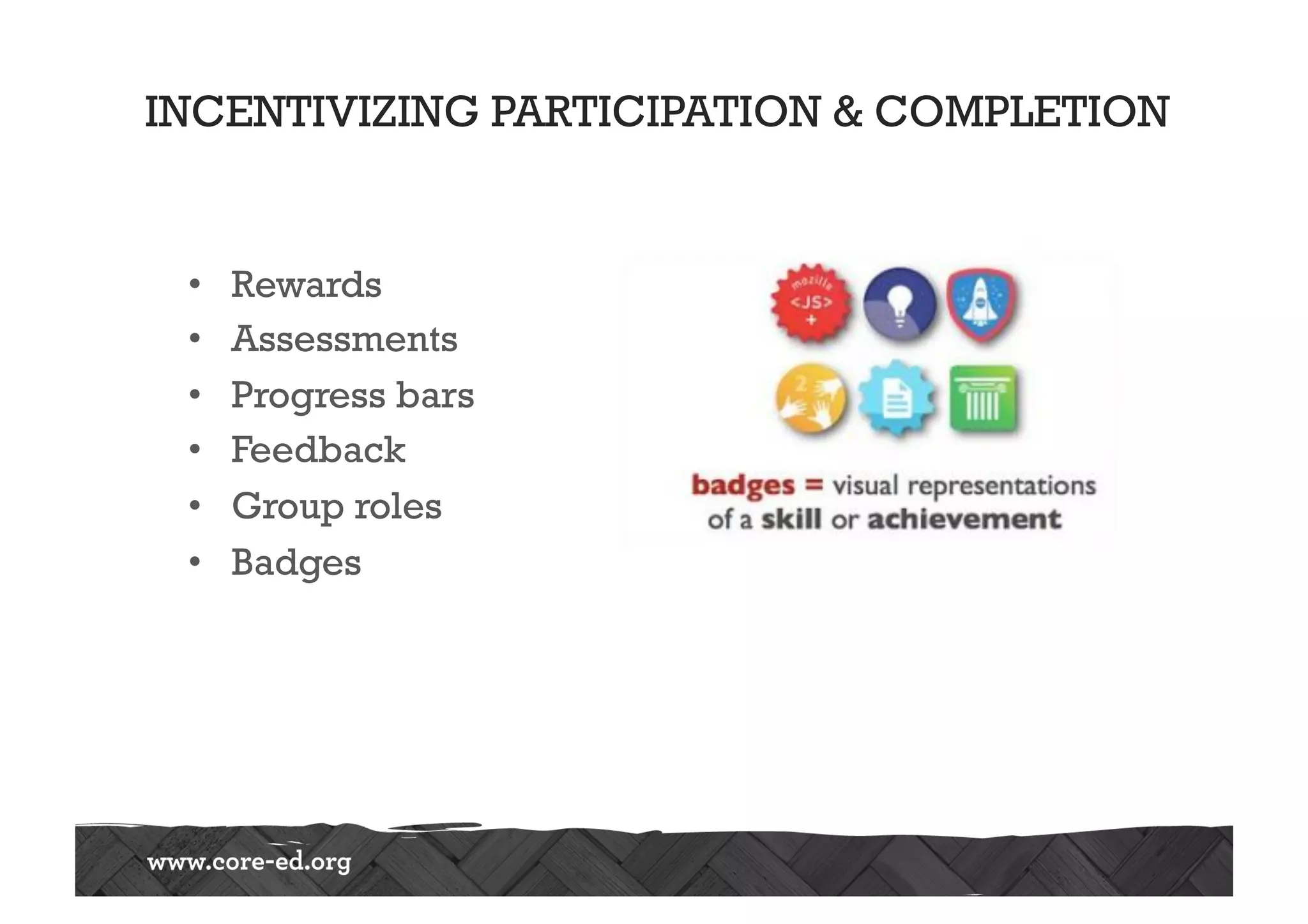
INCENTIVIZING PARTICIPATION & COMPLETION
•  Rewards
•  Assessments
•  Progress bars
•  Feedback
•  Group roles
•  Badges
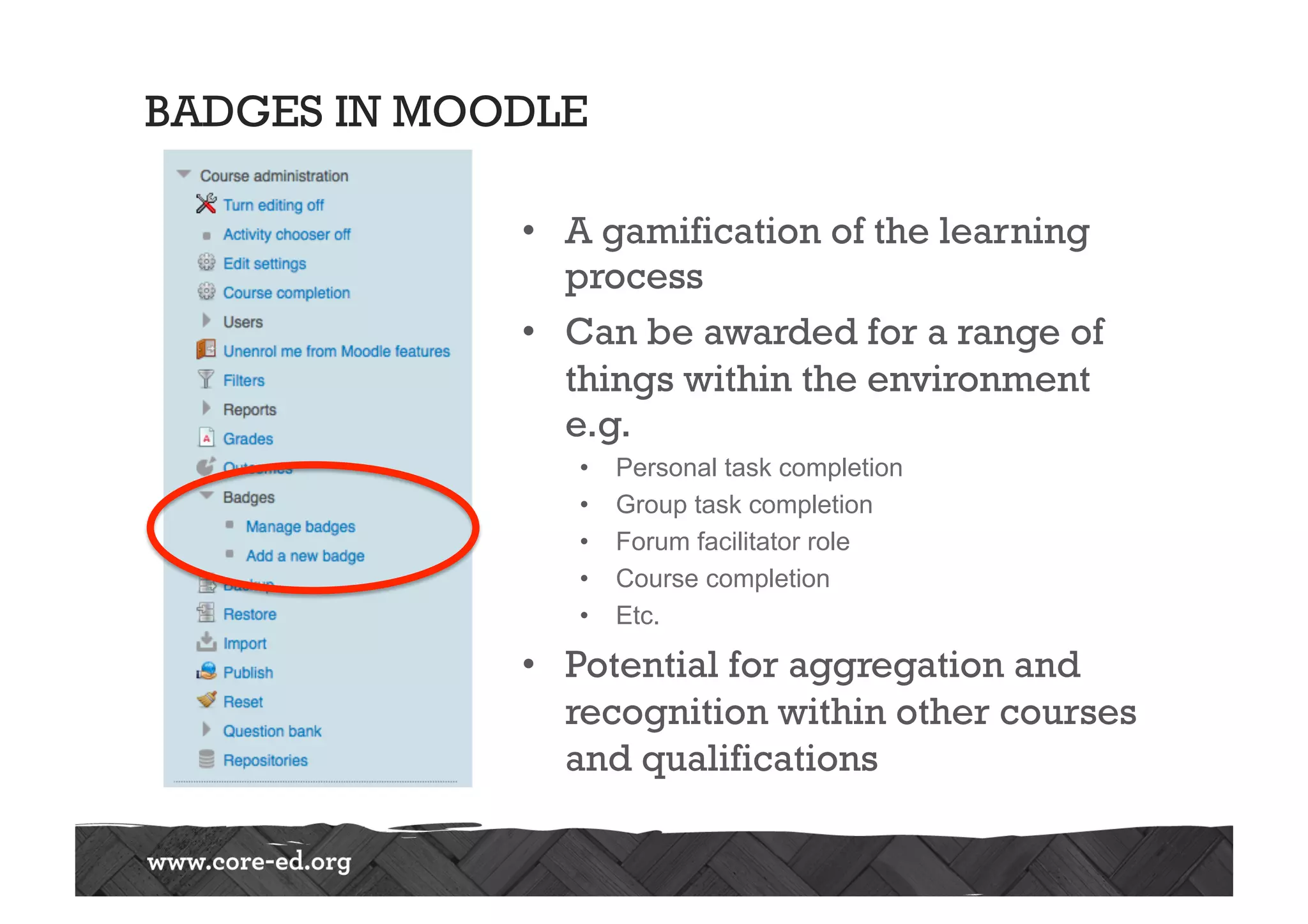
BADGES IN MOODLE
•  A gamification of the learning
process
•  Can be awarded for a range of
things within the environment
e.g.
•  Personal task completion
•  Group task completion
•  Forum facilitator role
•  Course completion
•  Etc.
•  Potential for aggregation and
recognition within other courses
and qualifications
Derek Wenmoth
Email: derek@core-ed.org
Blog: http://blog.core-ed.org/derek
Skype: <dwenmoth>

CVA presentation, Melbourne

  • 1.
    CVE Tutor Retreat– Melbourne, 11-13 April, 2014 Exploiting the online environment for learning
  • 2.
    OUTLINE •  Overview ofapproaches to learning design and distance education using current technologies •  Exploiting the features of Moodle to achieve powerful learning, including… •  Incorporating multimedia elements •  Creating knowledge building communities •  Incentivizing participation and completion
  • 3.
  • 5.
  • 6.
    LEARNING AS ACTIVITY– PERSONAL Includes tasks and activities designed for the individual learner to engage with in order to process information and transform it into personal knowledge. •  reflection (via journal or blog) •  observation •  survey •  puzzle •  games/simulations •  digital portfolio •  online quiz with instant feedback •  independent research •  mind-mapping •  infographic •  composing music •  photography •  video-editing •  podcast
  • 7.
    LEARNING AS ACTIVITY– ASYNCHRONOUS Includes tasks and activities specifically designed to involve members of the learning community, to reinforce understandings of the social construction of knowledge and the importance of peer feedback etc. •  Whole class or group discussion •  formal debate •  small group discussion •  team project •  problem-based learning groups •  case study groups •  peer review •  instant messaging •  online chat
  • 8.
    LEARNING AS ACTIVITY- SYNCHRONOUS Includes all synchronous activity, including teacher to learner(s) and learner to learner(s), enabled by video, audio, webinar, text-chat etc. •  Telephone conversation •  Peer-to-peer instruction •  Teaching a lesson •  Role plays •  Presentations •  Tutorials
  • 10.
    Source: Ron Oliver,Edith Cowan University
  • 11.
    THE LEARNING BURGER • B Learning support Learning resources Learning activity
  • 12.
    WOULDYOU LIKE FRIESWITH THAT? Constructo-burger Open-burger Instructo-burger Acto-burger
  • 13.
  • 20.
    UNIVERSAL DESIGN FORLEARNING An educational framework based on research in the learning sciences, including cognitive neuroscience, that guides the development of flexible learning environments that can accommodate individual learning differences. •  Multiple means of representation to give learners various ways of acquiring information and knowledge, •  Multiple means of expression to provide learners alternatives for demonstrating what they know, and •  Multiple means of engagement to tap into learners' interests, challenge them appropriately, and motivate them to learn
  • 22.
  • 23.
  • 24.
    KOLB’S LEARNING CYCLE Concrete experience (doing/having experience) Reflective observation (reviewing/ reflectingon the experience) Abstract conceptualisation (concluding/learning from the experience) Active experimentation (Planning/trying out what you’ve learned)
  • 25.
  • 26.
    INCENTIVIZING PARTICIPATION &COMPLETION •  Rewards •  Assessments •  Progress bars •  Feedback •  Group roles •  Badges
  • 27.
    BADGES IN MOODLE • A gamification of the learning process •  Can be awarded for a range of things within the environment e.g. •  Personal task completion •  Group task completion •  Forum facilitator role •  Course completion •  Etc. •  Potential for aggregation and recognition within other courses and qualifications
  • 28.
    Derek Wenmoth Email: derek@core-ed.org Blog:http://blog.core-ed.org/derek Skype: <dwenmoth>