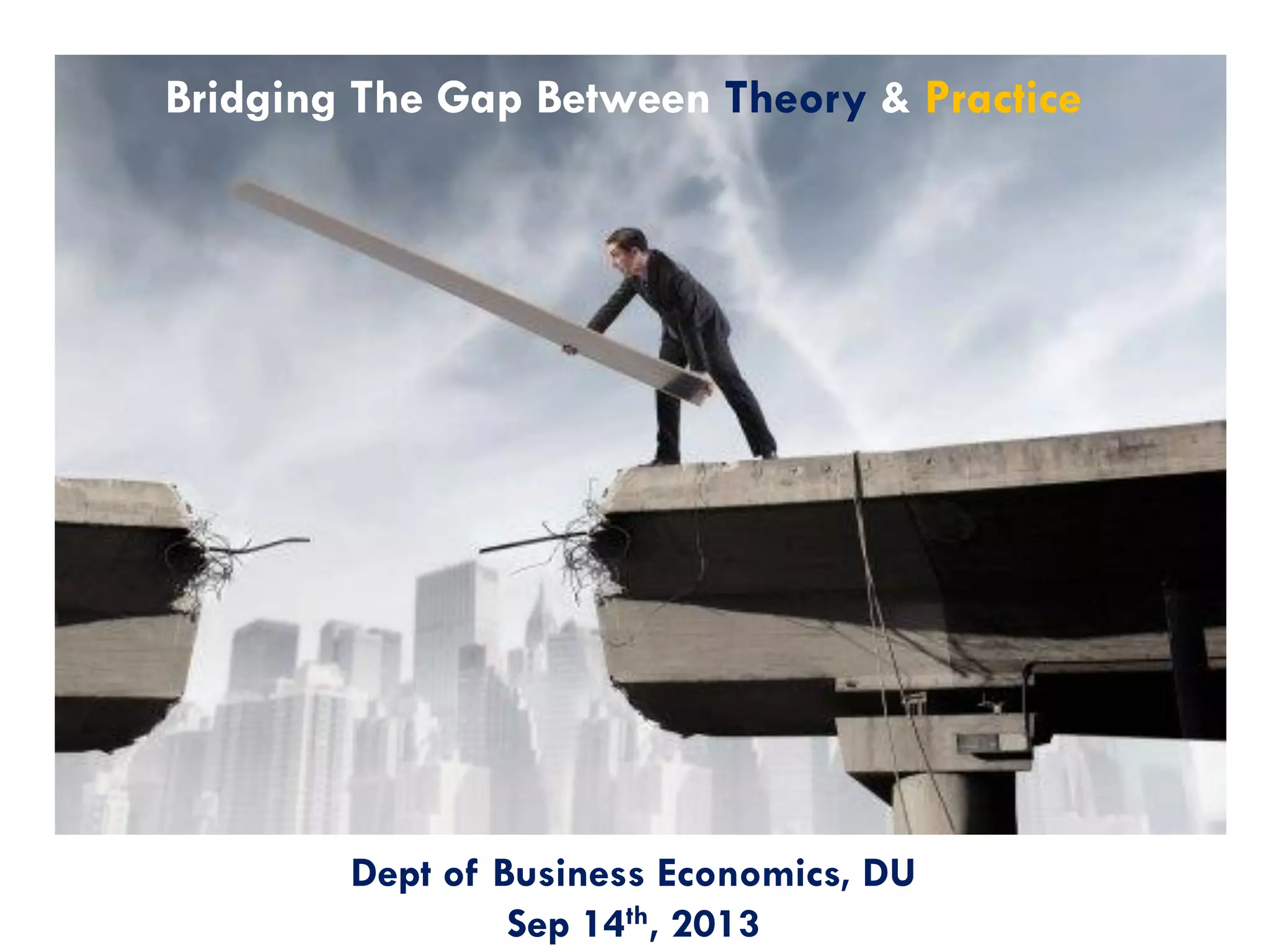
Bridging The Gap Between Theory & Practice
Dept of Business Economics, DU
Sep 14th, 2013
Agenda
• Why This Session ?
• Why Does A Business Exist ?
• What Is A Manager Supposed To Do ?
• Q/A | Feedback
Why This Session ?
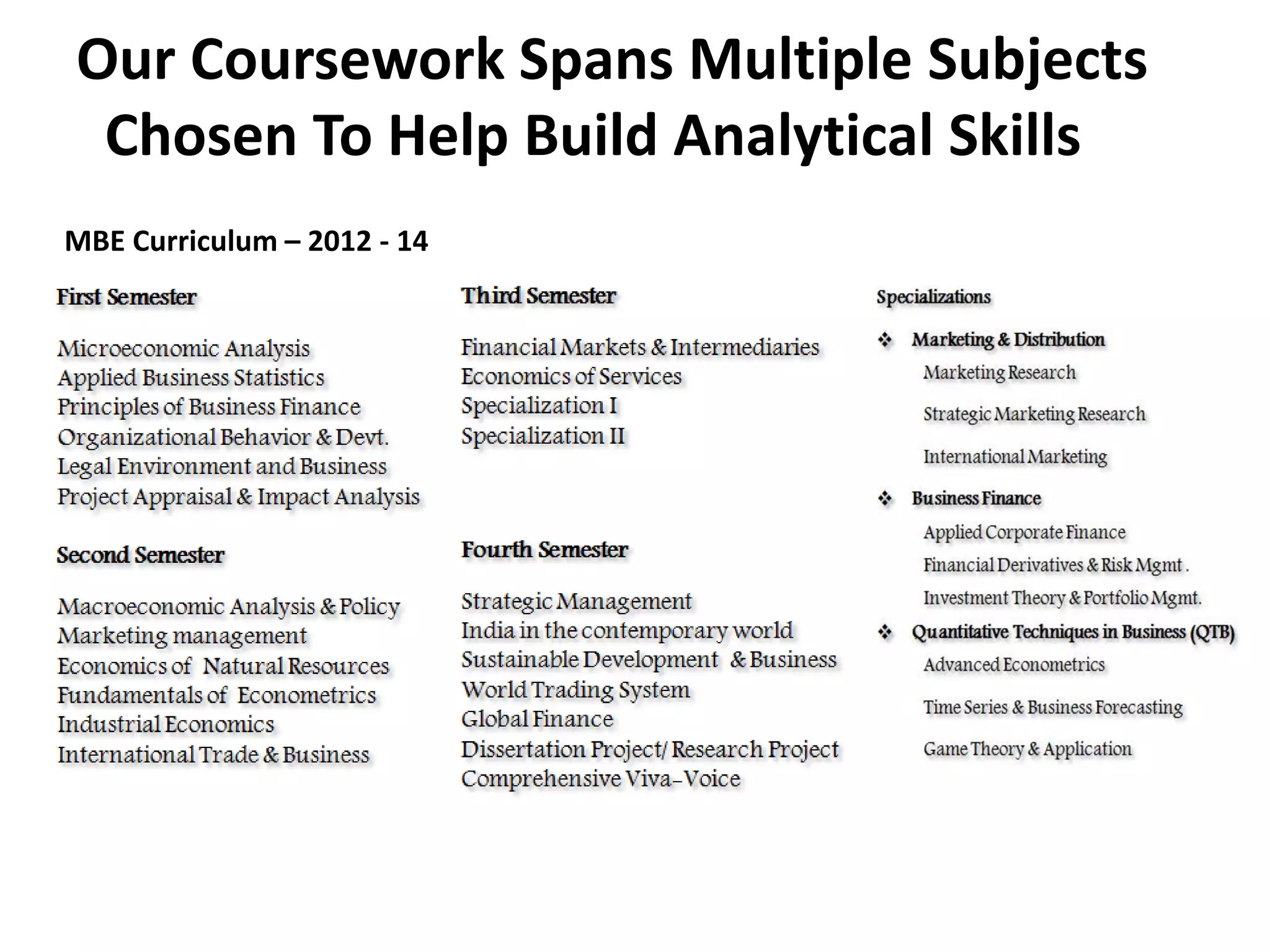
Our Coursework Spans Multiple Subjects
Chosen To Help Build Analytical Skills
MBE Curriculum – 2012 - 14
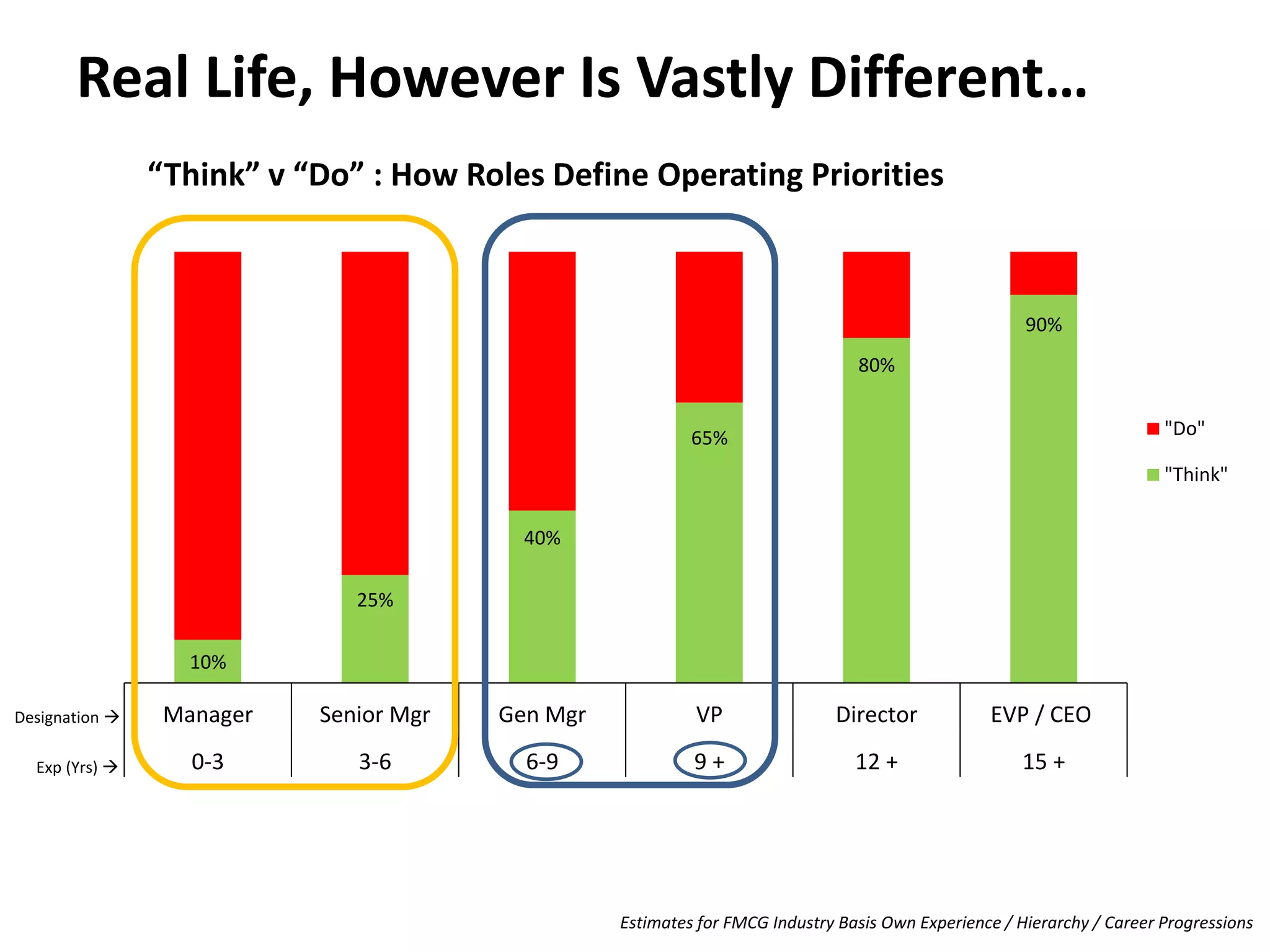
Real Life, However Is Vastly Different…
10%
25%
40%
65%
80%
90%
Manager Senior Mgr Gen Mgr VP Director EVP / CEO
0-3 3-6 6-9 9 + 12 + 15 +
"Do"
"Think"
Exp (Yrs) 
Designation 
Estimates for FMCG Industry Basis Own Experience / Hierarchy / Career Progressions
“Think” v “Do” : How Roles Define Operating Priorities
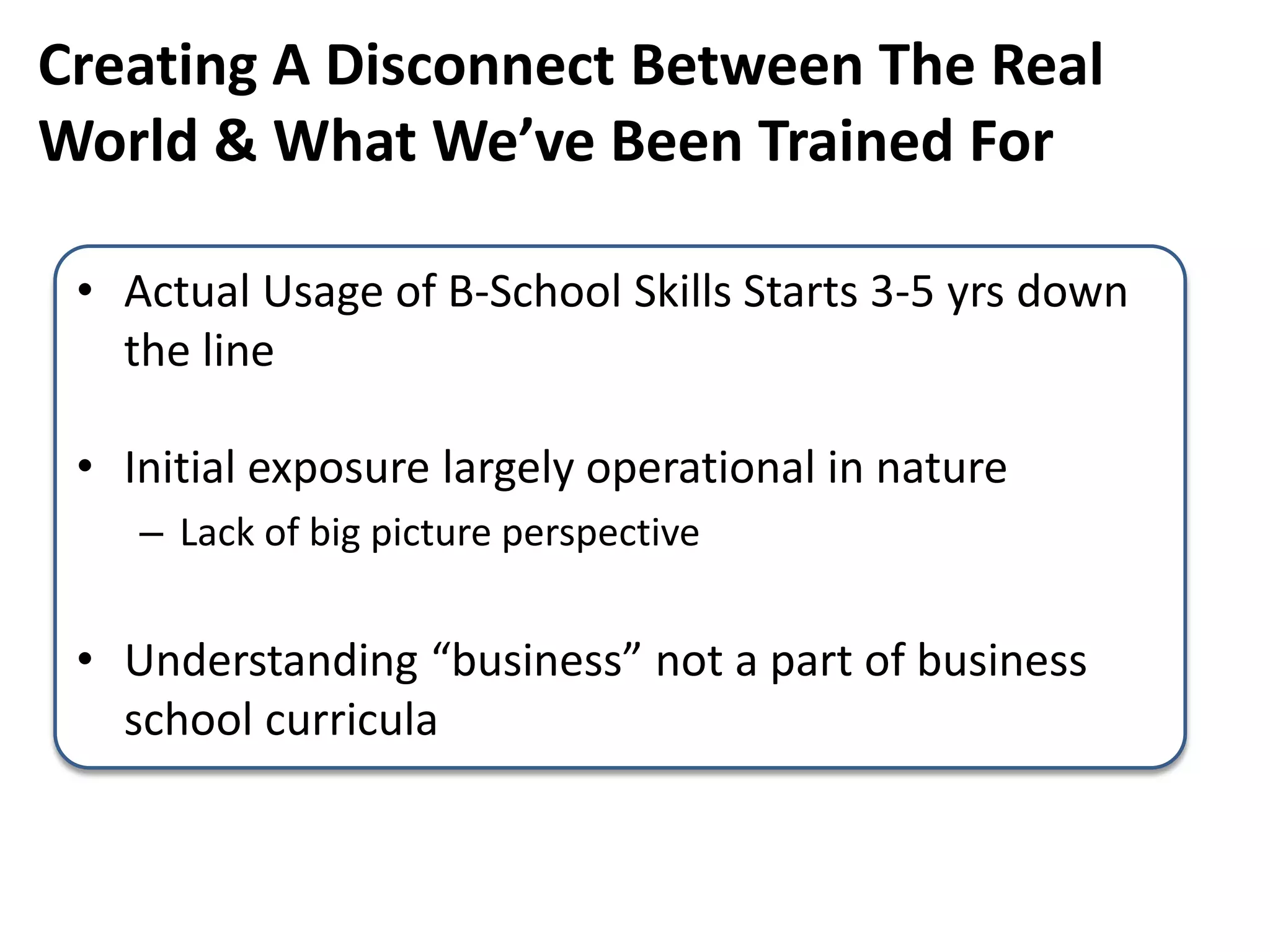
Creating A Disconnect Between The Real
World & What We’ve Been Trained For
• Actual Usage of B-School Skills Starts 3-5 yrs down
the line
• Initial exposure largely operational in nature
– Lack of big picture perspective
• Understanding “business” not a part of business
school curricula
Why Does A Business Exist ?
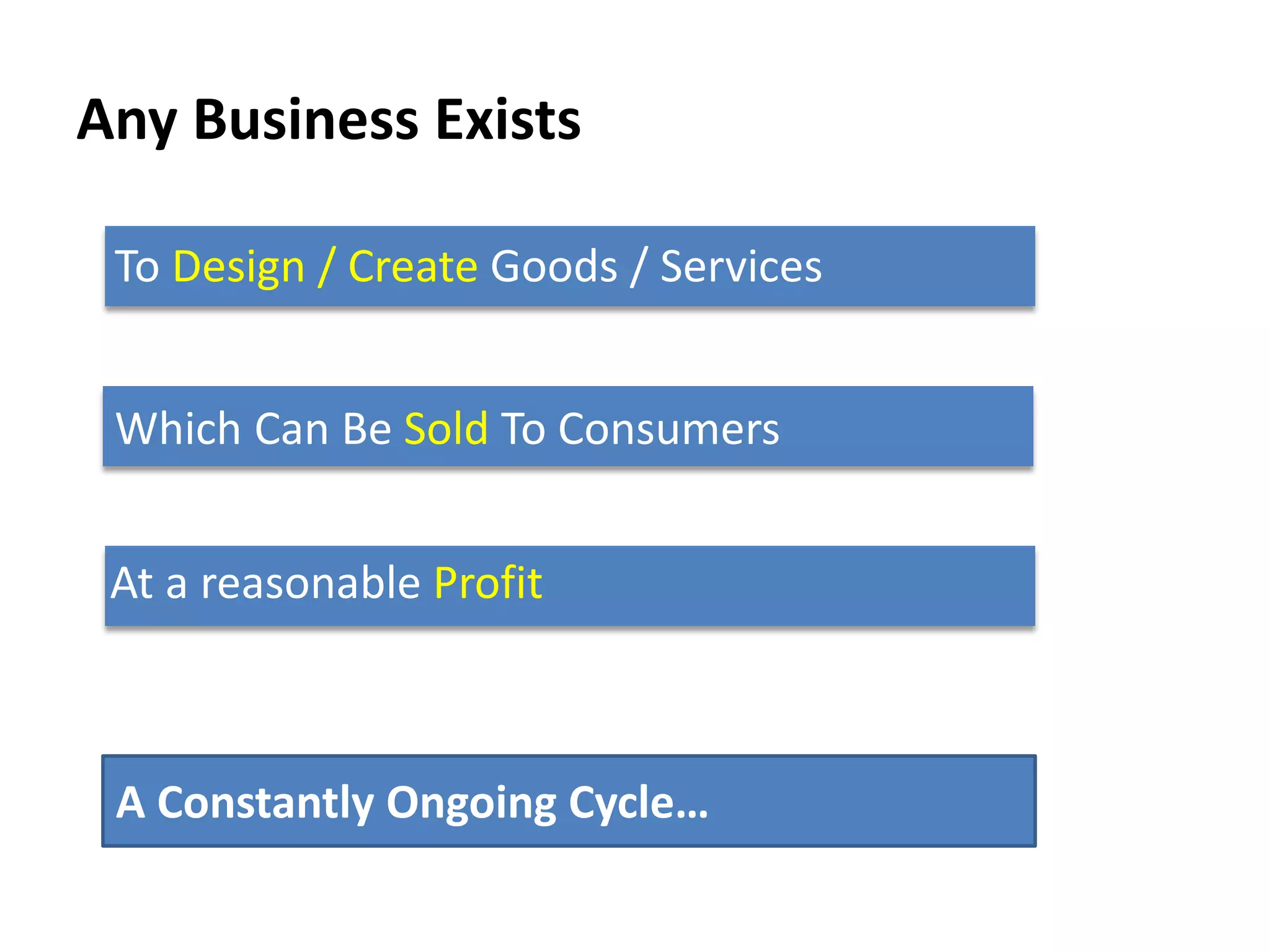
Any Business Exists
To Design / Create Goods / Services
Which Can Be Sold To Consumers
At a reasonable Profit
A Constantly Ongoing Cycle…
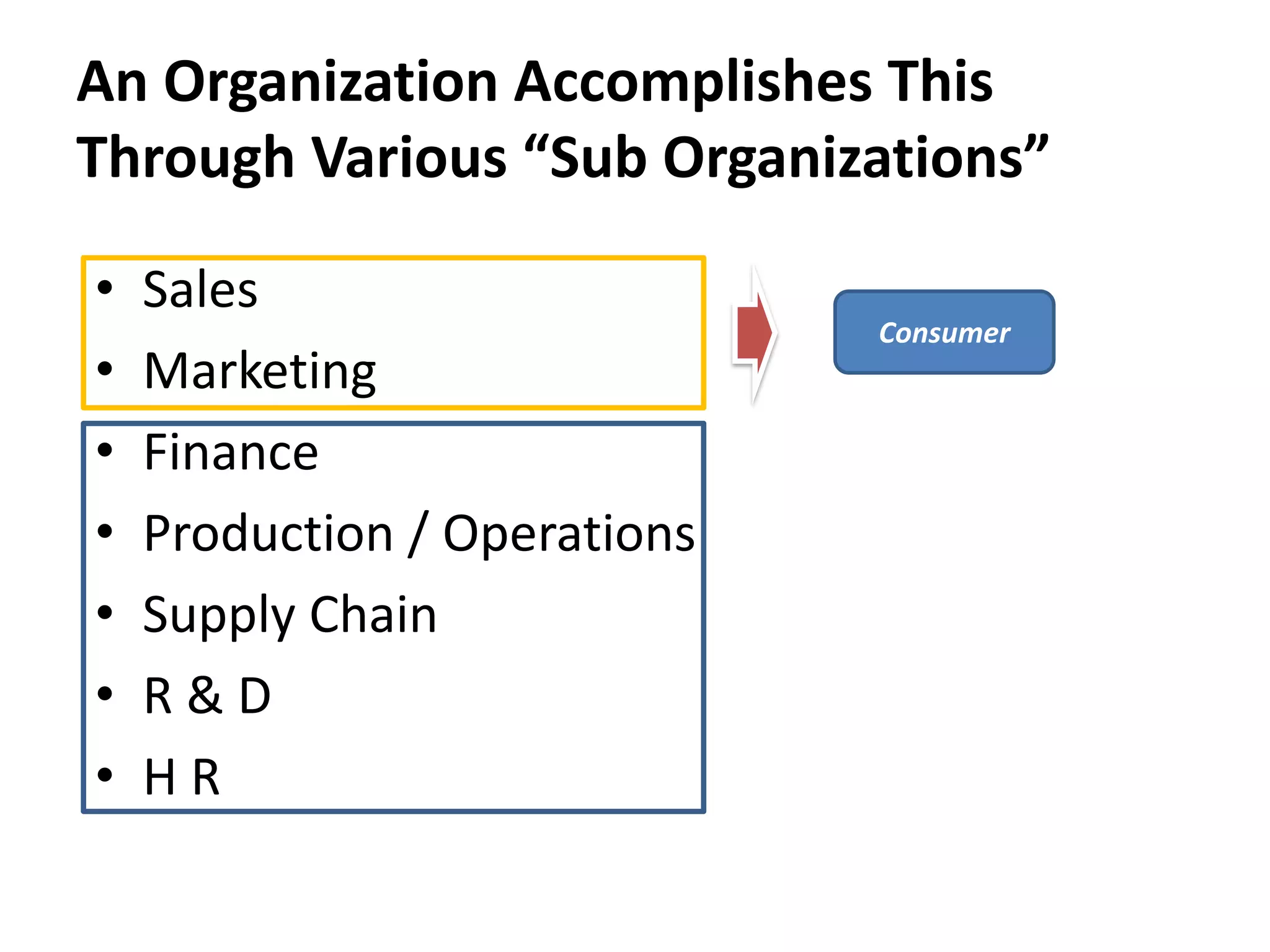
An Organization Accomplishes This
Through Various “Sub Organizations”
• Sales
• Marketing
• Finance
• Production / Operations
• Supply Chain
• R & D
• H R
Consumer
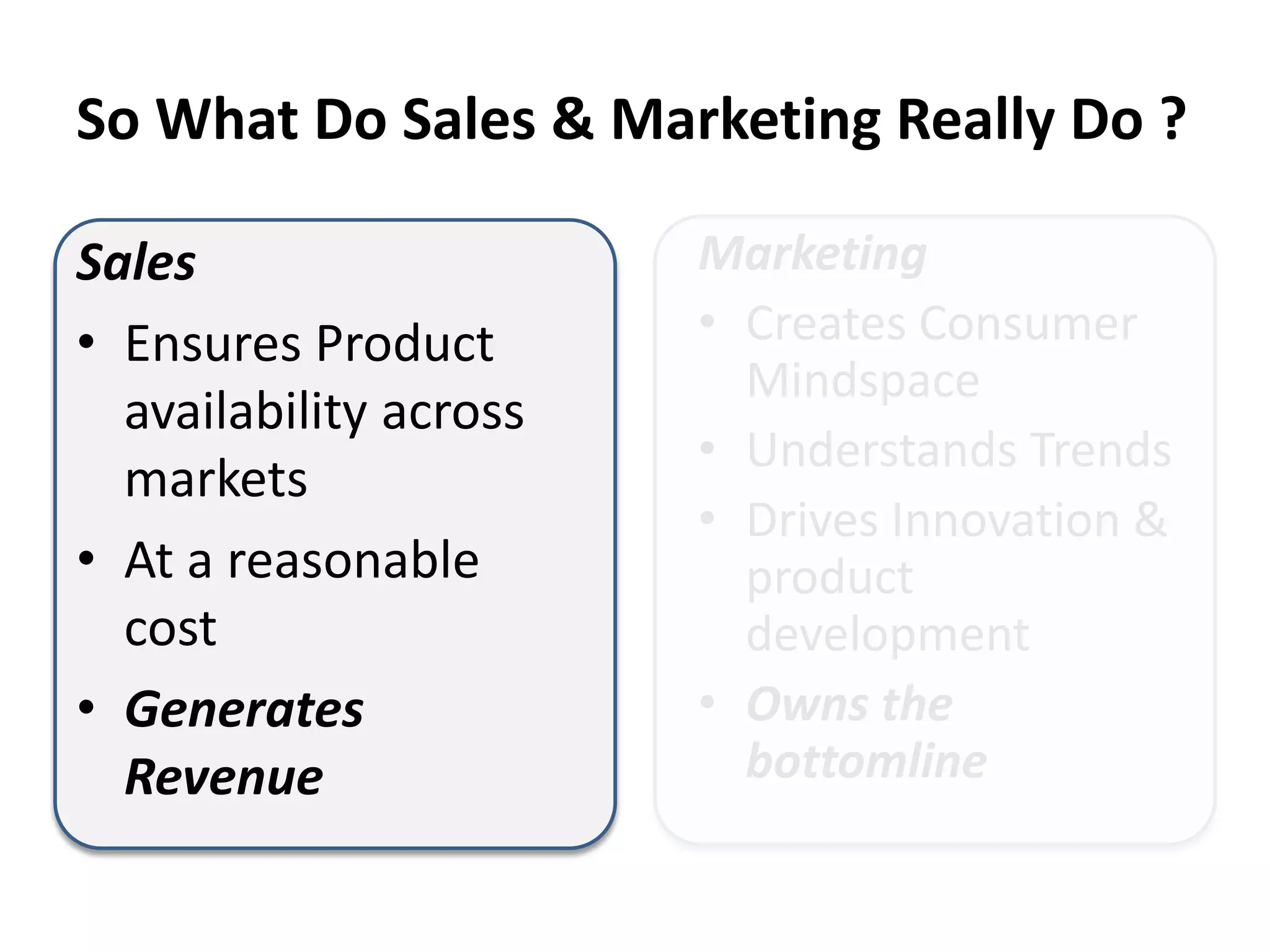
So What Do Sales & Marketing Really Do ?
Sales
• Ensures Product
availability across
markets
• At a reasonable
cost
• Generates
Revenue
Marketing
• Creates Consumer
Mindspace
• Understands Trends
• Drives Innovation &
product
development
• Owns the
bottomline
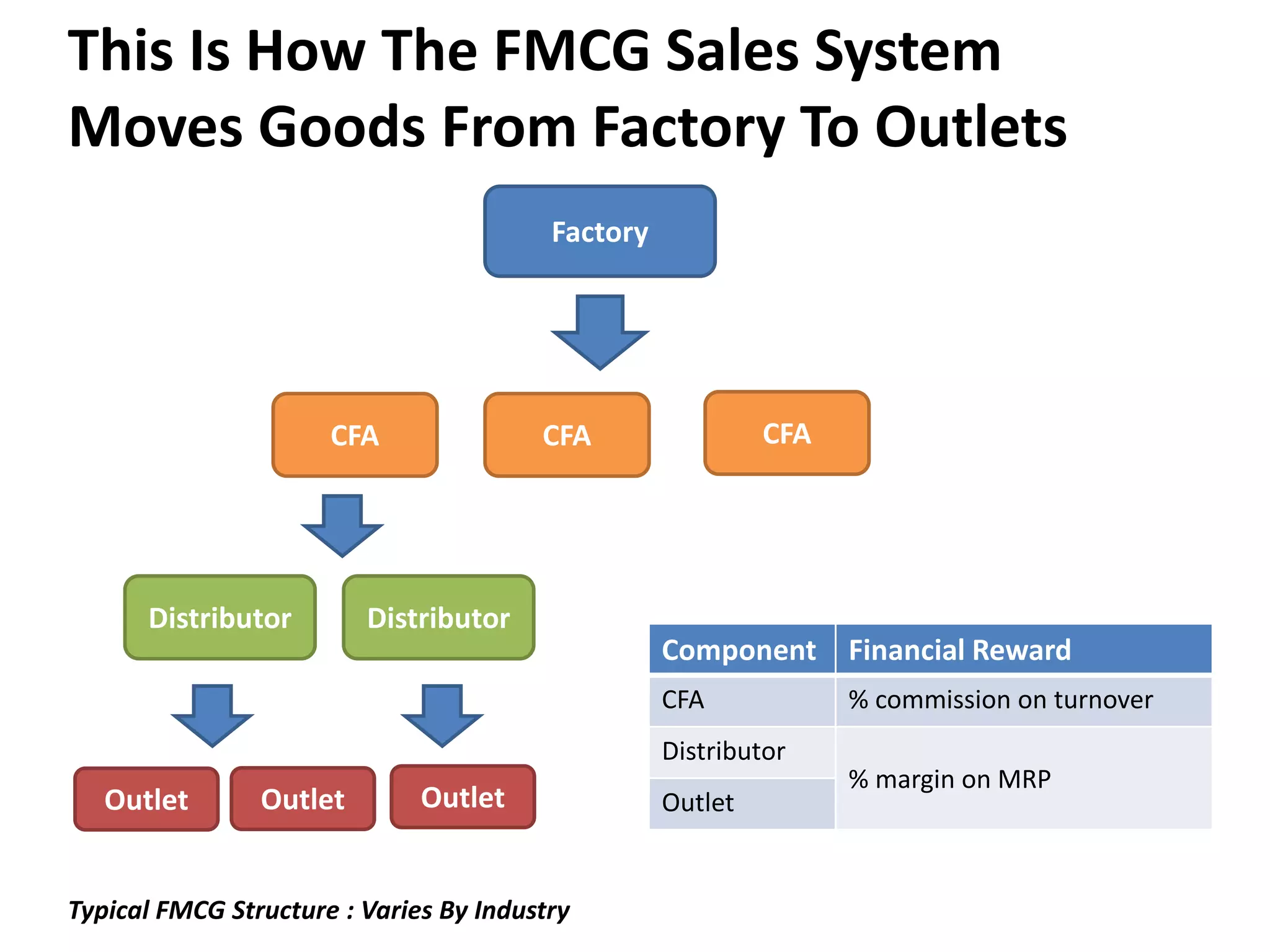
This Is How The FMCG Sales System
Moves Goods From Factory To Outlets
Factory
Outlet Outlet Outlet
CFA CFA CFA
Distributor Distributor
Typical FMCG Structure : Varies By Industry
Component Financial Reward
CFA % commission on turnover
Distributor
% margin on MRP
Outlet
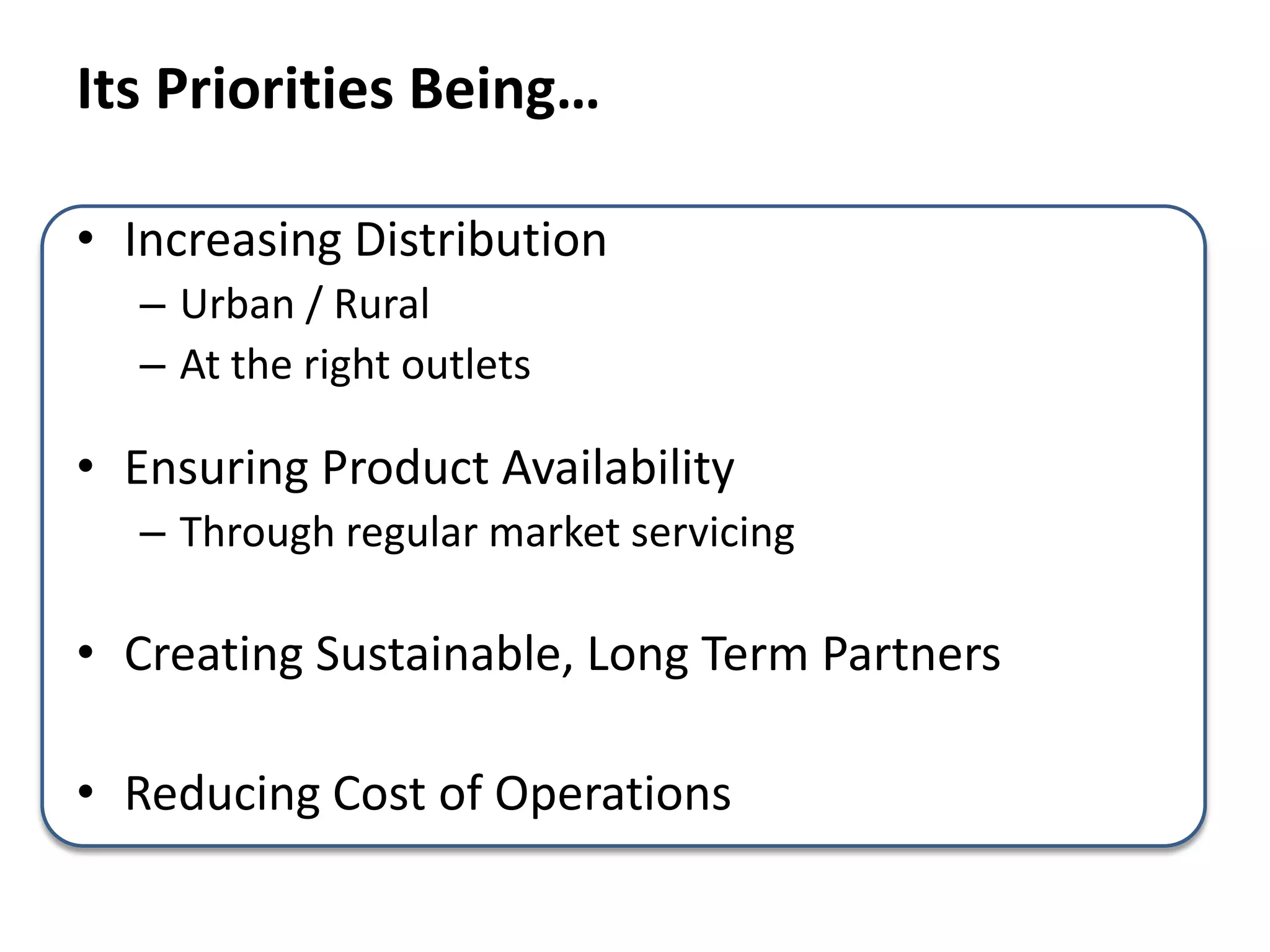
Its Priorities Being…
• Increasing Distribution
– Urban / Rural
– At the right outlets
• Ensuring Product Availability
– Through regular market servicing
• Creating Sustainable, Long Term Partners
• Reducing Cost of Operations
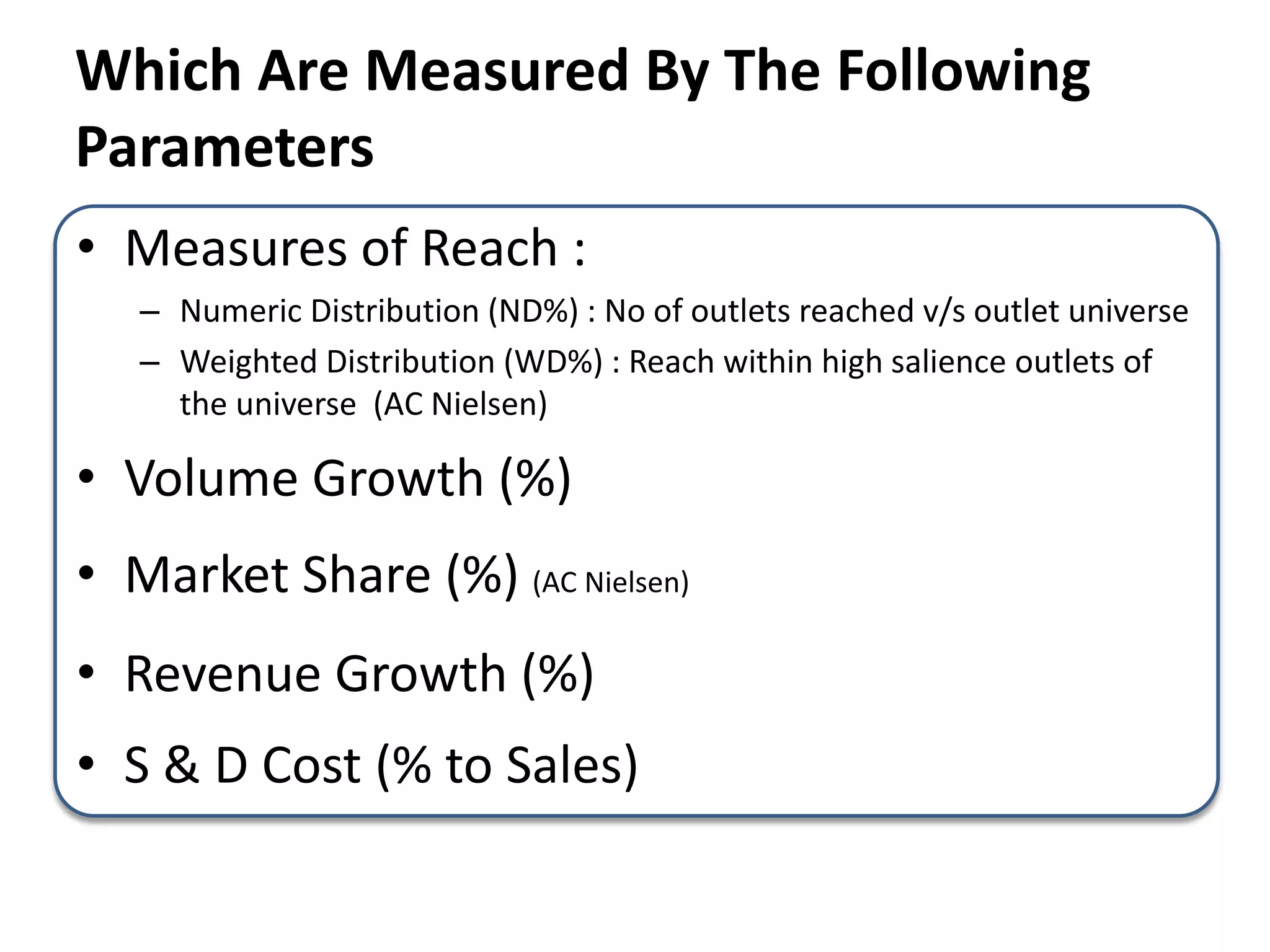
• Measures of Reach :
– Numeric Distribution (ND%) : No of outlets reached v/s outlet universe
– Weighted Distribution (WD%) : Reach within high salience outlets of
the universe (AC Nielsen)
• Volume Growth (%)
• Market Share (%) (AC Nielsen)
• Revenue Growth (%)
• S & D Cost (% to Sales)
Which Are Measured By The Following
Parameters
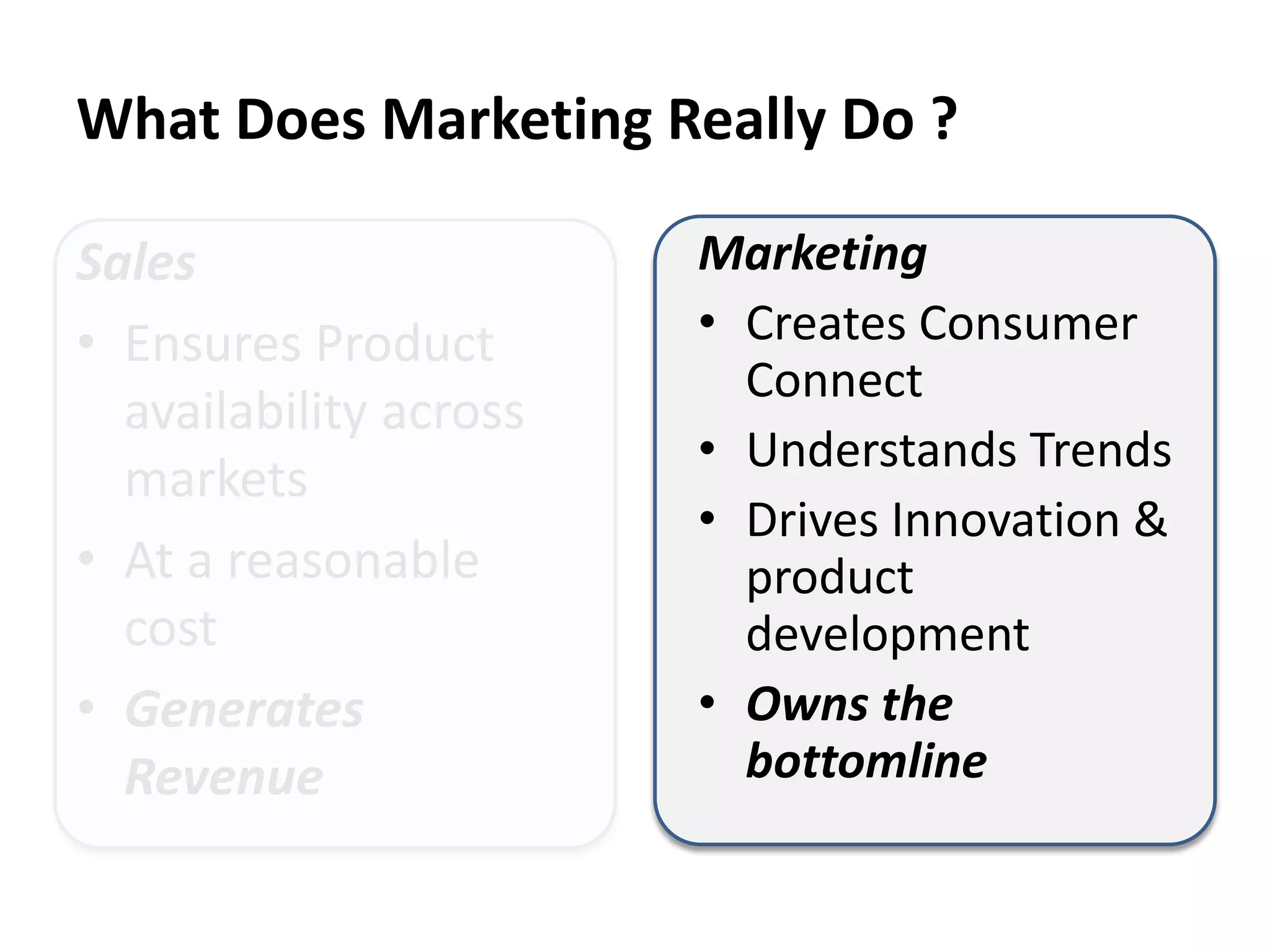
What Does Marketing Really Do ?
Sales
• Ensures Product
availability across
markets
• At a reasonable
cost
• Generates
Revenue
Marketing
• Creates Consumer
Connect
• Understands Trends
• Drives Innovation &
product
development
• Owns the
bottomline
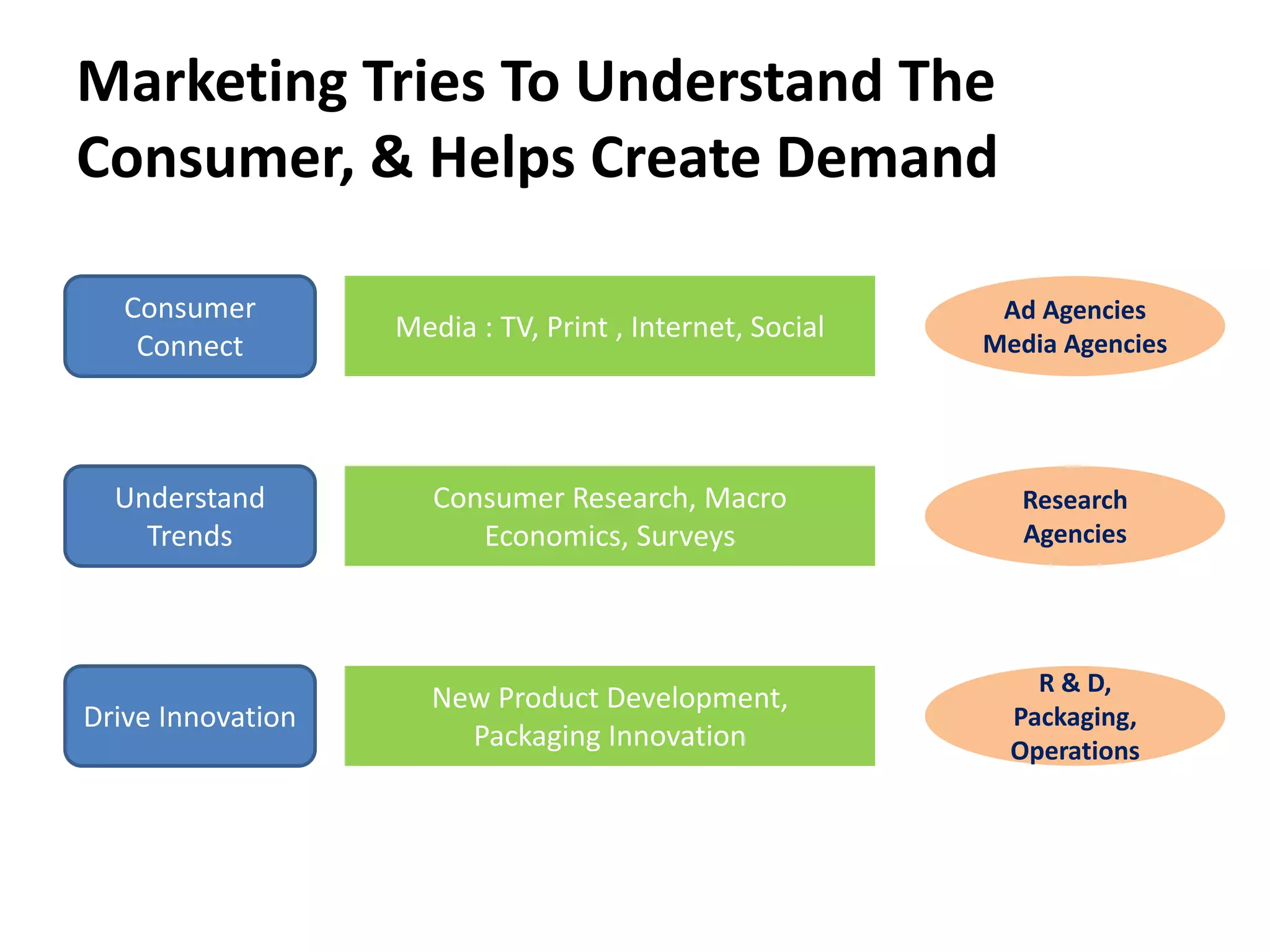
Marketing Tries To Understand The
Consumer, & Helps Create Demand
Consumer
Connect
Understand
Trends
Drive Innovation
Media : TV, Print , Internet, Social
Consumer Research, Macro
Economics, Surveys
New Product Development,
Packaging Innovation
Ad Agencies
Media Agencies
Research
Agencies
R & D,
Packaging,
Operations
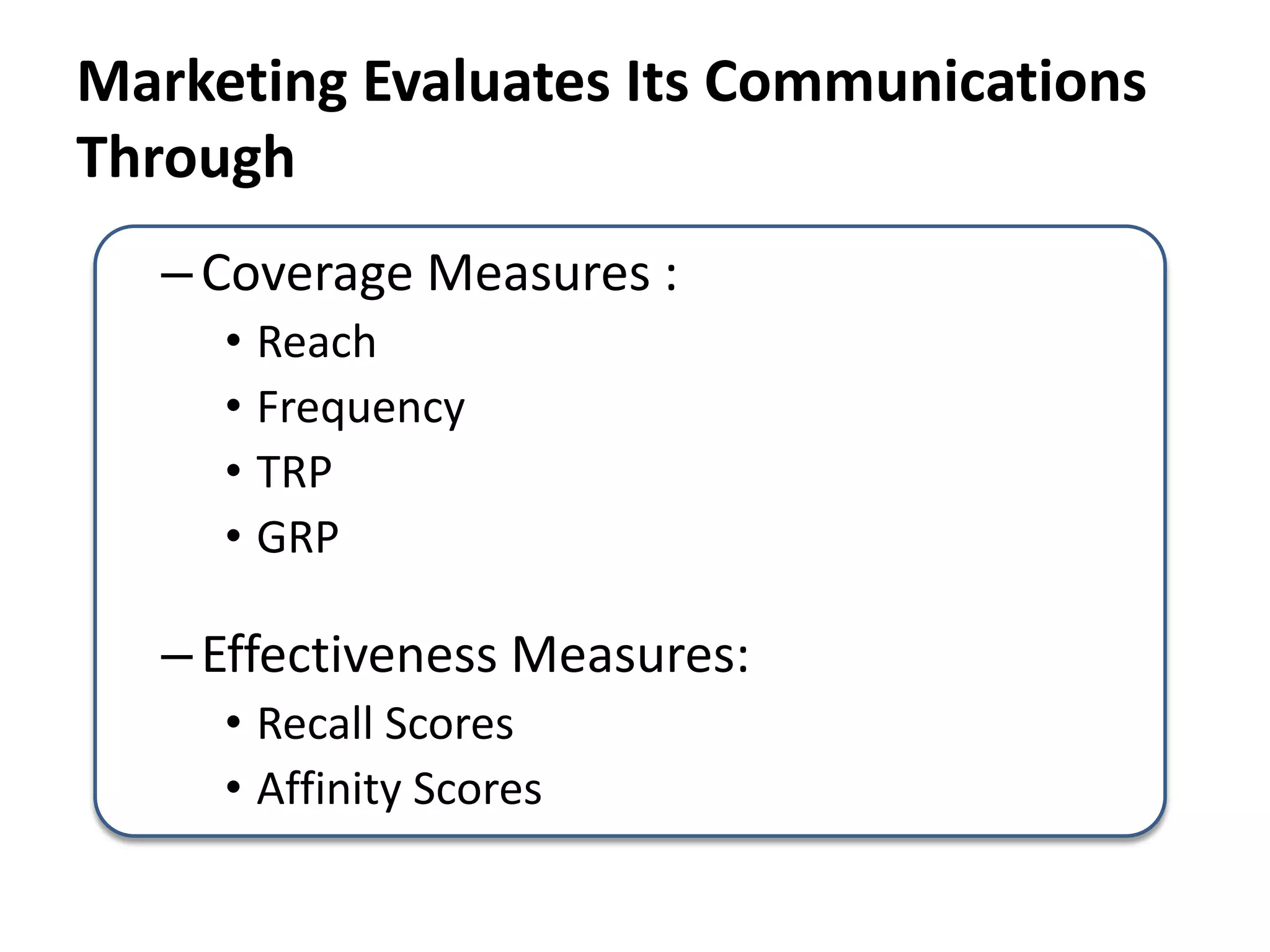
Marketing Evaluates Its Communications
Through
–Coverage Measures :
• Reach
• Frequency
• TRP
• GRP
–Effectiveness Measures:
• Recall Scores
• Affinity Scores
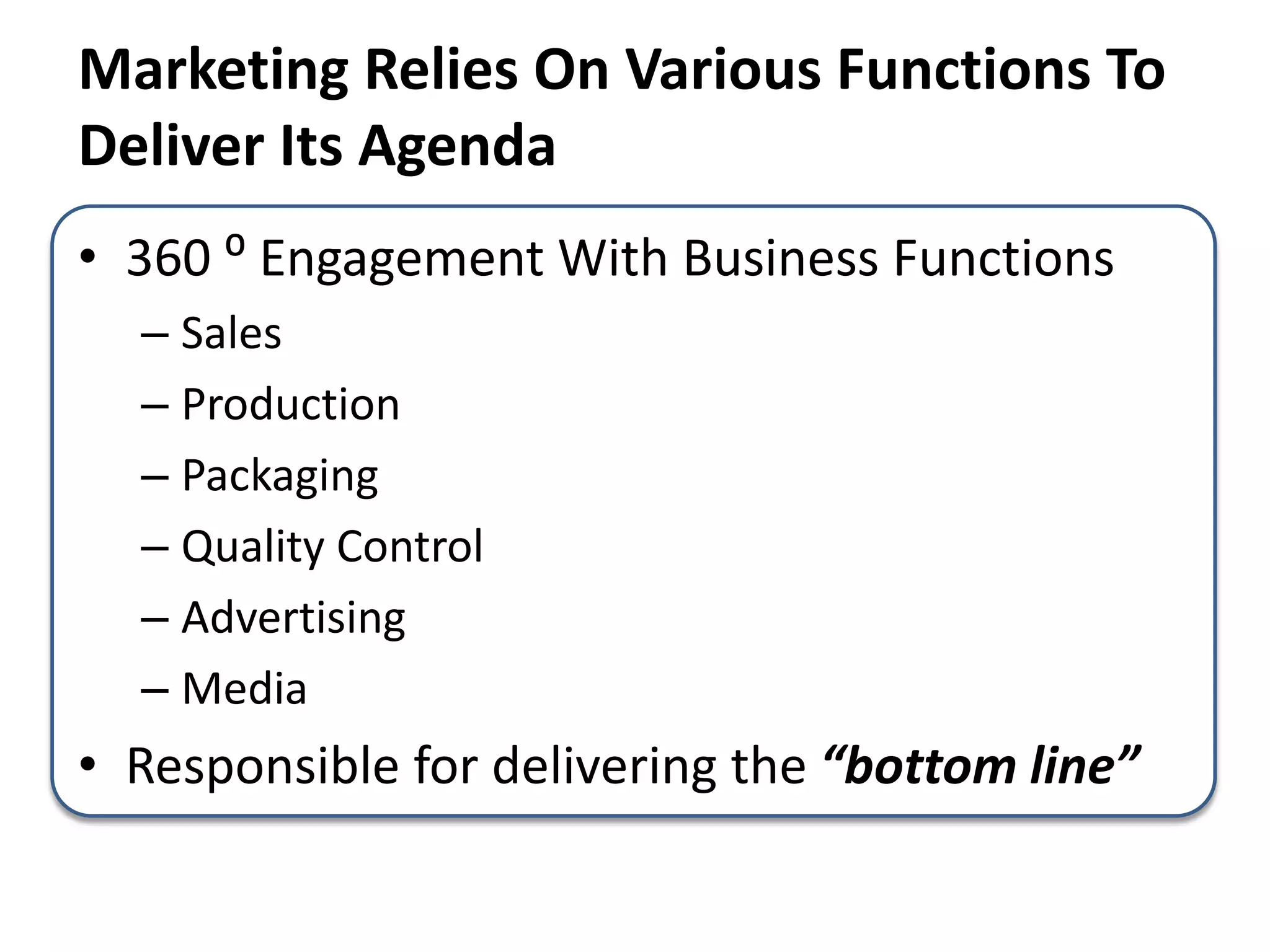
• 360 ⁰ Engagement With Business Functions
– Sales
– Production
– Packaging
– Quality Control
– Advertising
– Media
• Responsible for delivering the “bottom line”
Marketing Relies On Various Functions To
Deliver Its Agenda
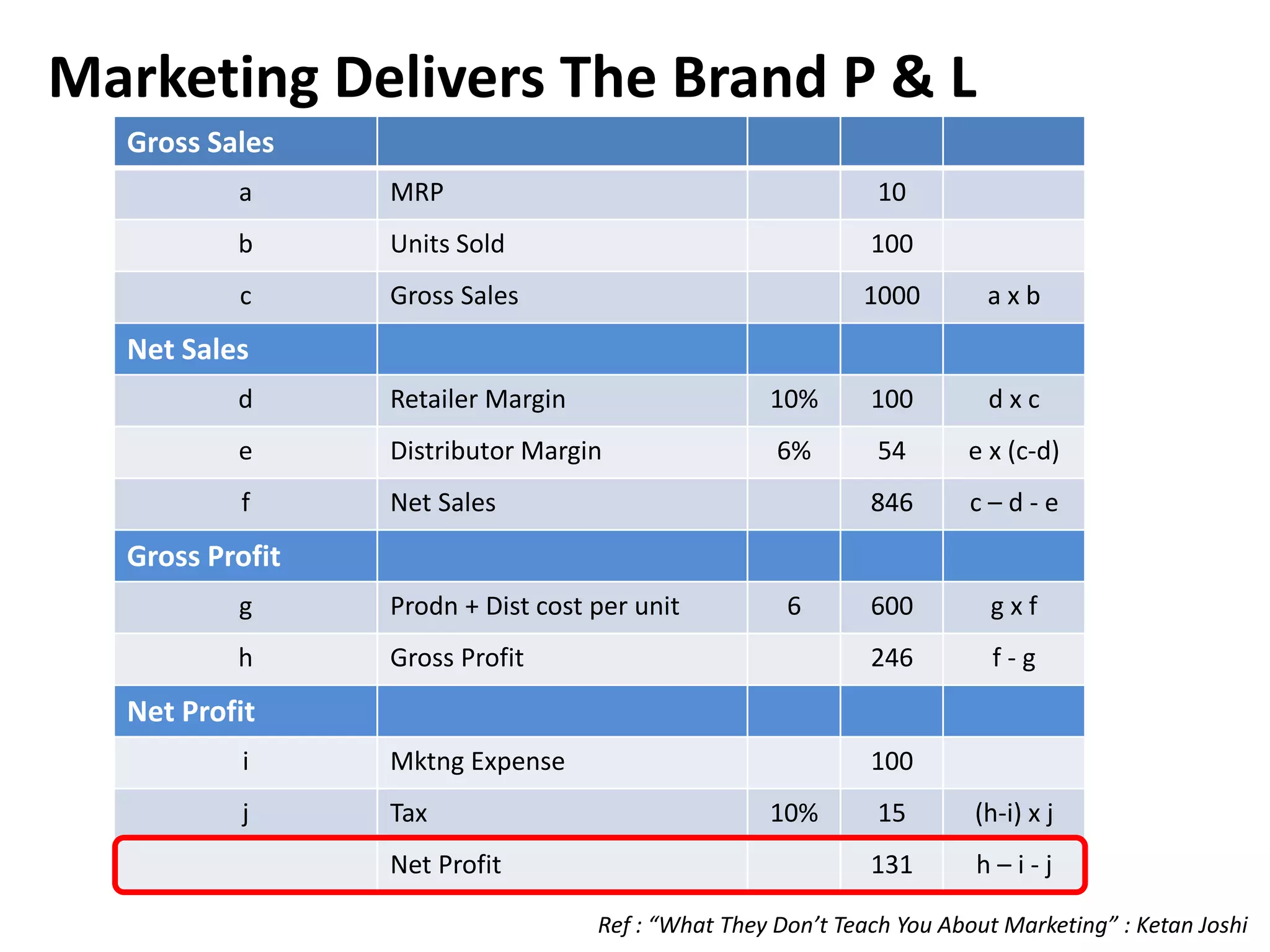
Gross Sales
a MRP 10
b Units Sold 100
c Gross Sales 1000 a x b
Net Sales
d Retailer Margin 10% 100 d x c
e Distributor Margin 6% 54 e x (c-d)
f Net Sales 846 c – d - e
Gross Profit
g Prodn + Dist cost per unit 6 600 g x f
h Gross Profit 246 f - g
Net Profit
i Mktng Expense 100
j Tax 10% 15 (h-i) x j
Net Profit 131 h – i - j
Marketing Delivers The Brand P & L
Ref : “What They Don’t Teach You About Marketing” : Ketan Joshi
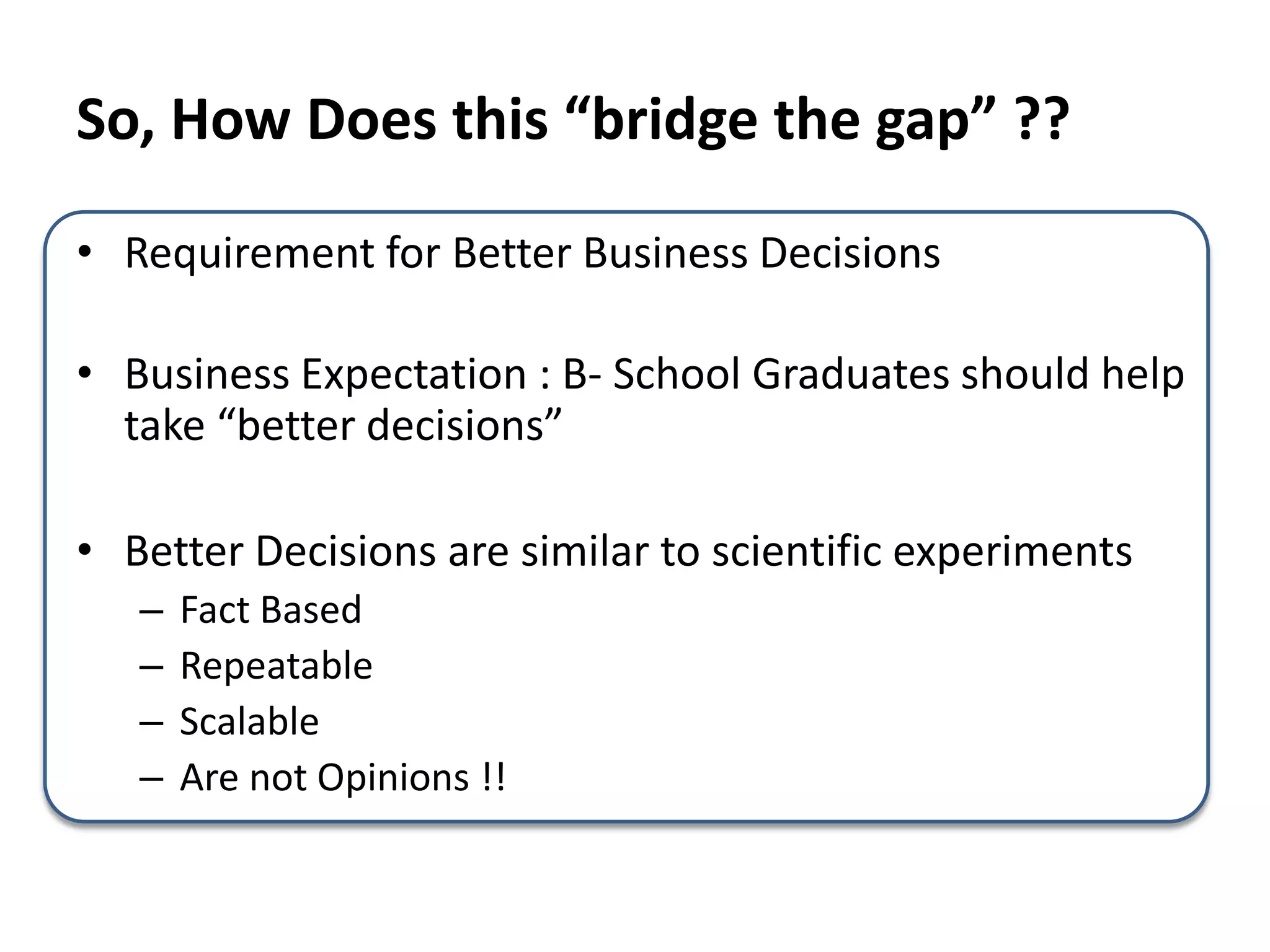
So, How Does this “bridge the gap” ??
• Requirement for Better Business Decisions
• Business Expectation : B- School Graduates should help
take “better decisions”
• Better Decisions are similar to scientific experiments
– Fact Based
– Repeatable
– Scalable
– Are not Opinions !!
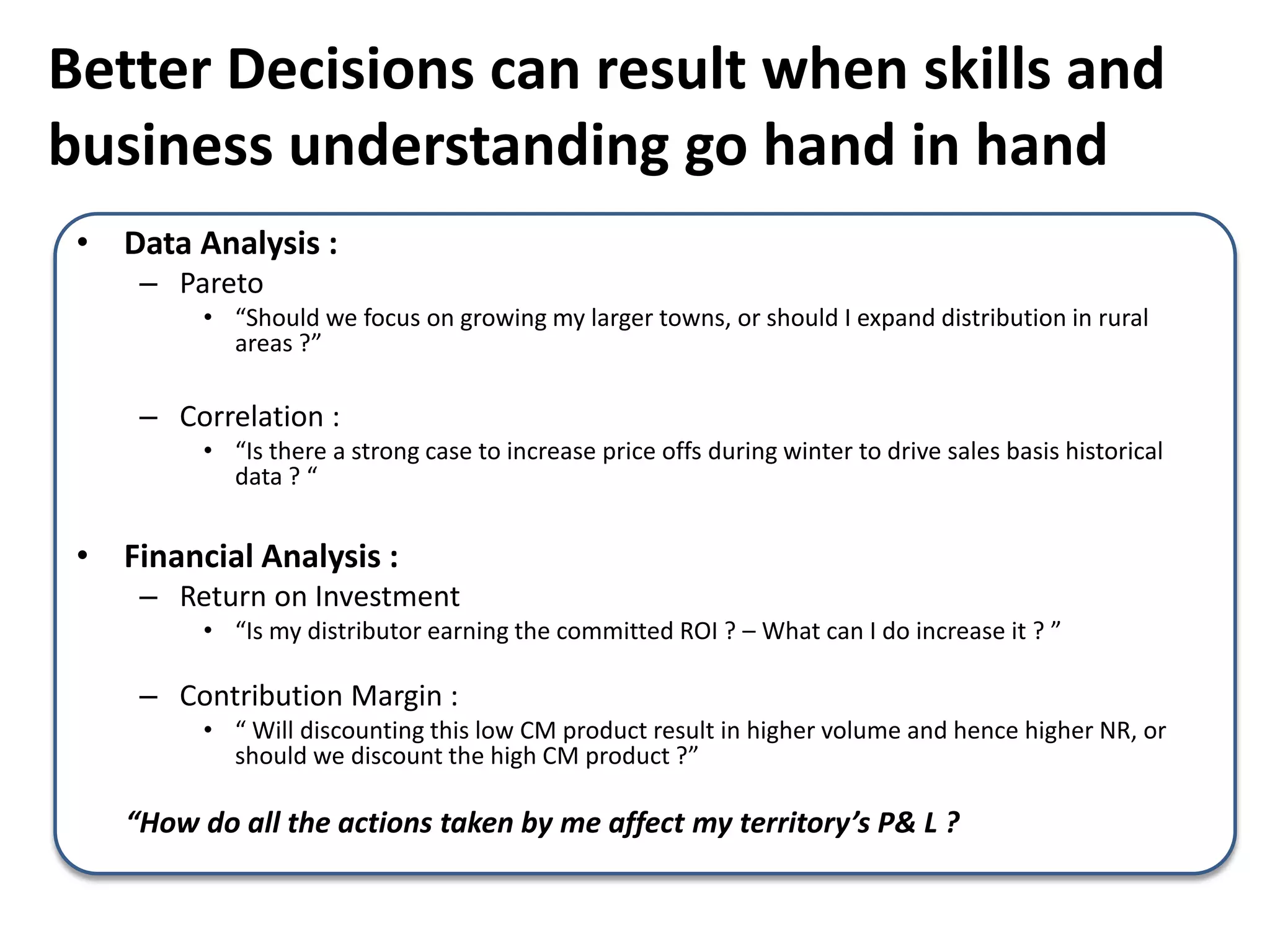
Better Decisions can result when skills and
business understanding go hand in hand
• Data Analysis :
– Pareto
• “Should we focus on growing my larger towns, or should I expand distribution in rural
areas ?”
– Correlation :
• “Is there a strong case to increase price offs during winter to drive sales basis historical
data ? “
• Financial Analysis :
– Return on Investment
• “Is my distributor earning the committed ROI ? – What can I do increase it ? ”
– Contribution Margin :
• “ Will discounting this low CM product result in higher volume and hence higher NR, or
should we discount the high CM product ?”
“How do all the actions taken by me affect my territory’s P& L ?
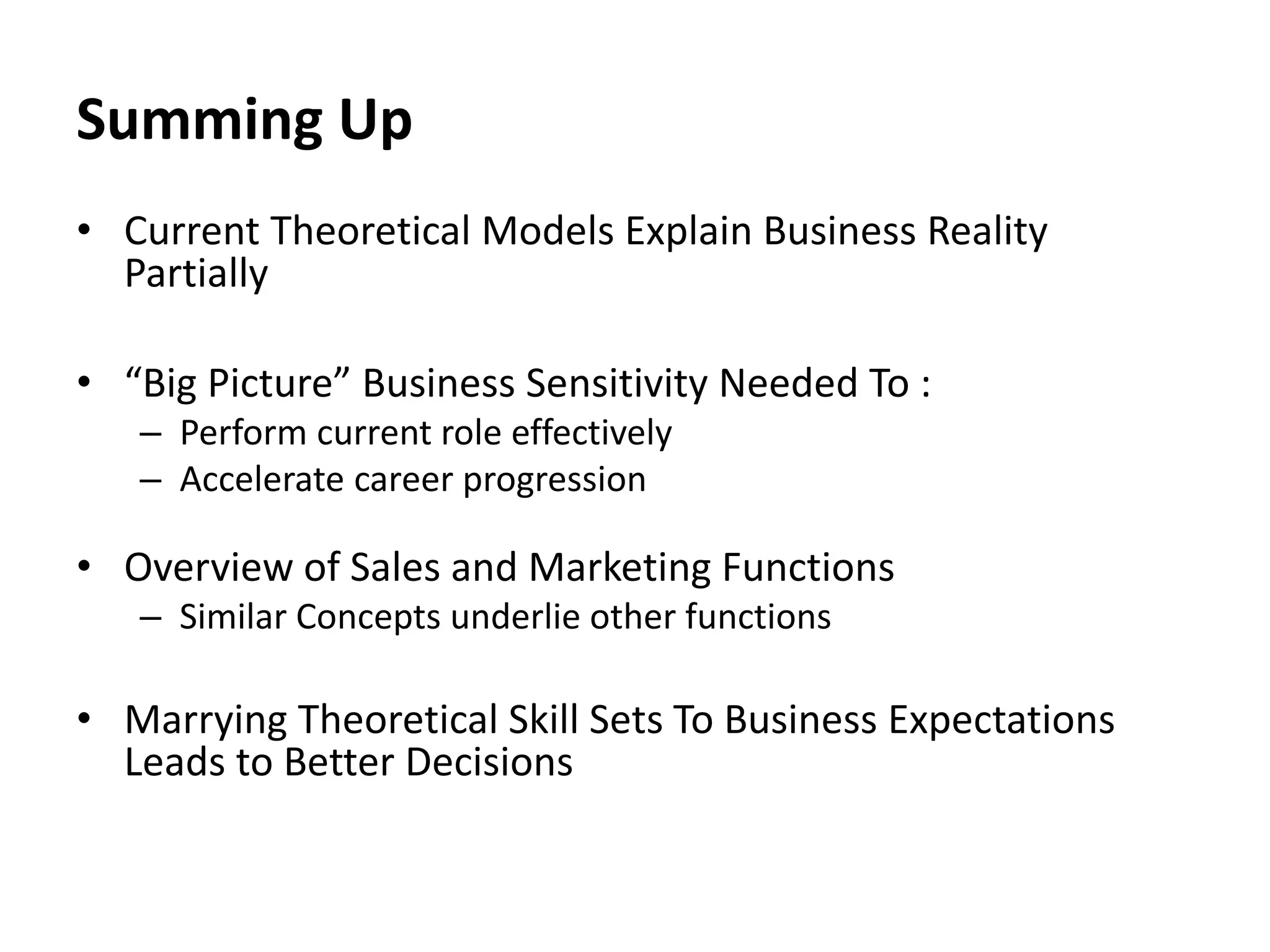
Summing Up
• Current Theoretical Models Explain Business Reality
Partially
• “Big Picture” Business Sensitivity Needed To :
– Perform current role effectively
– Accelerate career progression
• Overview of Sales and Marketing Functions
– Similar Concepts underlie other functions
• Marrying Theoretical Skill Sets To Business Expectations
Leads to Better Decisions
What Does A Manager Do ?
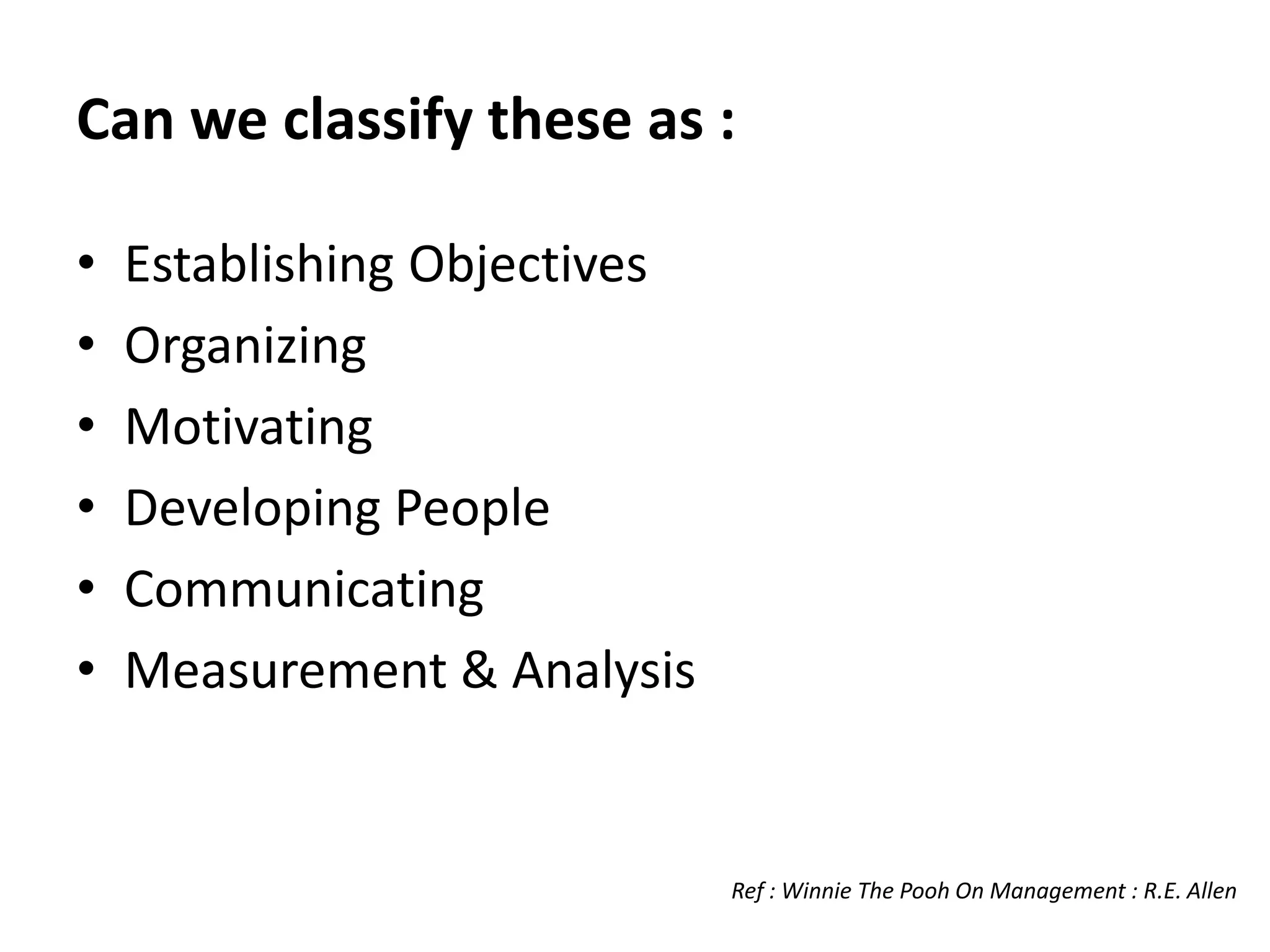
Can we classify these as :
• Establishing Objectives
• Organizing
• Motivating
• Developing People
• Communicating
• Measurement & Analysis
Ref : Winnie The Pooh On Management : R.E. Allen
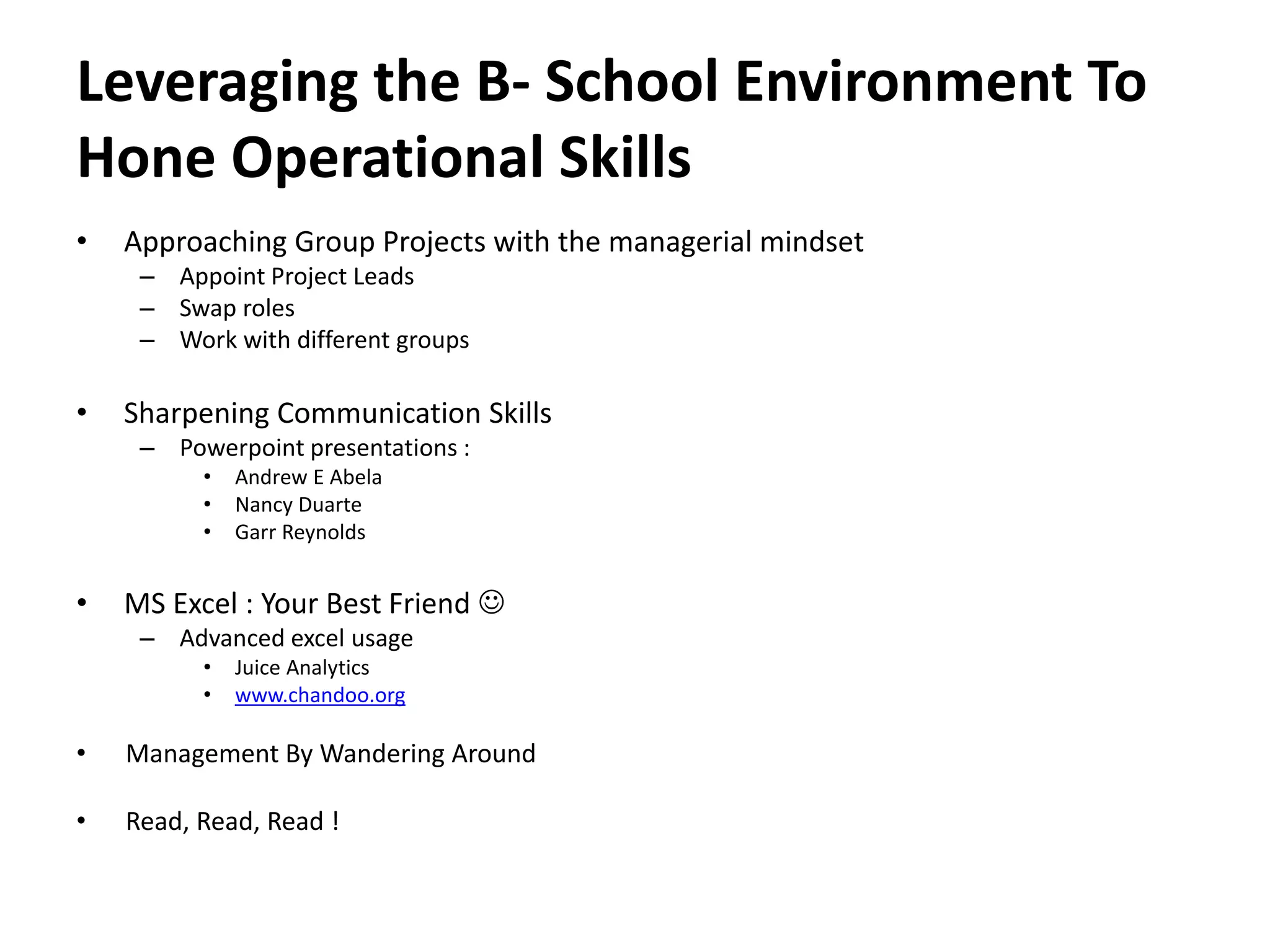
Leveraging the B- School Environment To
Hone Operational Skills
• Approaching Group Projects with the managerial mindset
– Appoint Project Leads
– Swap roles
– Work with different groups
• Sharpening Communication Skills
– Powerpoint presentations :
• Andrew E Abela
• Nancy Duarte
• Garr Reynolds
• MS Excel : Your Best Friend 
– Advanced excel usage
• Juice Analytics
• www.chandoo.org
• Management By Wandering Around
• Read, Read, Read !
References
• “What They Do Not Teach You About
Marketing” – Ketan Joshi – Macmillan – 2009
• “Winnie – the – Pooh on Management” –
Roger E. Allen – Penguin – 1994
Suggested Reading
The Effective Executive : Peter Drucker
HarperBusiness; Revised edition (2006)
Managing Oneself : Peter Drucker
http://hbr.org/2005/01/managing-oneself/
The Checklist Manifesto : Atul Gawande
Penguin – 2009
Romancing the Balance Sheet : Anil Lamba
Network 18 Publications – 2010
My Years With General Motors : Alfred P Sloan
Crown Business - 1990
Q / A
Thank You…
anshul.punetha@gmail.com

Bridging the gap between theory and practise

  • 1.
    Bridging The GapBetween Theory & Practice Dept of Business Economics, DU Sep 14th, 2013
  • 2.
    Agenda • Why ThisSession ? • Why Does A Business Exist ? • What Is A Manager Supposed To Do ? • Q/A | Feedback
  • 3.
  • 4.
    Our Coursework SpansMultiple Subjects Chosen To Help Build Analytical Skills MBE Curriculum – 2012 - 14
  • 5.
    Real Life, HoweverIs Vastly Different… 10% 25% 40% 65% 80% 90% Manager Senior Mgr Gen Mgr VP Director EVP / CEO 0-3 3-6 6-9 9 + 12 + 15 + "Do" "Think" Exp (Yrs)  Designation  Estimates for FMCG Industry Basis Own Experience / Hierarchy / Career Progressions “Think” v “Do” : How Roles Define Operating Priorities
  • 6.
    Creating A DisconnectBetween The Real World & What We’ve Been Trained For • Actual Usage of B-School Skills Starts 3-5 yrs down the line • Initial exposure largely operational in nature – Lack of big picture perspective • Understanding “business” not a part of business school curricula
  • 7.
    Why Does ABusiness Exist ?
  • 8.
    Any Business Exists ToDesign / Create Goods / Services Which Can Be Sold To Consumers At a reasonable Profit A Constantly Ongoing Cycle…
  • 9.
    An Organization AccomplishesThis Through Various “Sub Organizations” • Sales • Marketing • Finance • Production / Operations • Supply Chain • R & D • H R Consumer
  • 10.
    So What DoSales & Marketing Really Do ? Sales • Ensures Product availability across markets • At a reasonable cost • Generates Revenue Marketing • Creates Consumer Mindspace • Understands Trends • Drives Innovation & product development • Owns the bottomline
  • 11.
    This Is HowThe FMCG Sales System Moves Goods From Factory To Outlets Factory Outlet Outlet Outlet CFA CFA CFA Distributor Distributor Typical FMCG Structure : Varies By Industry Component Financial Reward CFA % commission on turnover Distributor % margin on MRP Outlet
  • 12.
    Its Priorities Being… •Increasing Distribution – Urban / Rural – At the right outlets • Ensuring Product Availability – Through regular market servicing • Creating Sustainable, Long Term Partners • Reducing Cost of Operations
  • 13.
    • Measures ofReach : – Numeric Distribution (ND%) : No of outlets reached v/s outlet universe – Weighted Distribution (WD%) : Reach within high salience outlets of the universe (AC Nielsen) • Volume Growth (%) • Market Share (%) (AC Nielsen) • Revenue Growth (%) • S & D Cost (% to Sales) Which Are Measured By The Following Parameters
  • 14.
    What Does MarketingReally Do ? Sales • Ensures Product availability across markets • At a reasonable cost • Generates Revenue Marketing • Creates Consumer Connect • Understands Trends • Drives Innovation & product development • Owns the bottomline
  • 15.
    Marketing Tries ToUnderstand The Consumer, & Helps Create Demand Consumer Connect Understand Trends Drive Innovation Media : TV, Print , Internet, Social Consumer Research, Macro Economics, Surveys New Product Development, Packaging Innovation Ad Agencies Media Agencies Research Agencies R & D, Packaging, Operations
  • 16.
    Marketing Evaluates ItsCommunications Through –Coverage Measures : • Reach • Frequency • TRP • GRP –Effectiveness Measures: • Recall Scores • Affinity Scores
  • 17.
    • 360 ⁰Engagement With Business Functions – Sales – Production – Packaging – Quality Control – Advertising – Media • Responsible for delivering the “bottom line” Marketing Relies On Various Functions To Deliver Its Agenda
  • 18.
    Gross Sales a MRP10 b Units Sold 100 c Gross Sales 1000 a x b Net Sales d Retailer Margin 10% 100 d x c e Distributor Margin 6% 54 e x (c-d) f Net Sales 846 c – d - e Gross Profit g Prodn + Dist cost per unit 6 600 g x f h Gross Profit 246 f - g Net Profit i Mktng Expense 100 j Tax 10% 15 (h-i) x j Net Profit 131 h – i - j Marketing Delivers The Brand P & L Ref : “What They Don’t Teach You About Marketing” : Ketan Joshi
  • 19.
    So, How Doesthis “bridge the gap” ?? • Requirement for Better Business Decisions • Business Expectation : B- School Graduates should help take “better decisions” • Better Decisions are similar to scientific experiments – Fact Based – Repeatable – Scalable – Are not Opinions !!
  • 20.
    Better Decisions canresult when skills and business understanding go hand in hand • Data Analysis : – Pareto • “Should we focus on growing my larger towns, or should I expand distribution in rural areas ?” – Correlation : • “Is there a strong case to increase price offs during winter to drive sales basis historical data ? “ • Financial Analysis : – Return on Investment • “Is my distributor earning the committed ROI ? – What can I do increase it ? ” – Contribution Margin : • “ Will discounting this low CM product result in higher volume and hence higher NR, or should we discount the high CM product ?” “How do all the actions taken by me affect my territory’s P& L ?
  • 21.
    Summing Up • CurrentTheoretical Models Explain Business Reality Partially • “Big Picture” Business Sensitivity Needed To : – Perform current role effectively – Accelerate career progression • Overview of Sales and Marketing Functions – Similar Concepts underlie other functions • Marrying Theoretical Skill Sets To Business Expectations Leads to Better Decisions
  • 22.
    What Does AManager Do ?
  • 23.
    Can we classifythese as : • Establishing Objectives • Organizing • Motivating • Developing People • Communicating • Measurement & Analysis Ref : Winnie The Pooh On Management : R.E. Allen
  • 24.
    Leveraging the B-School Environment To Hone Operational Skills • Approaching Group Projects with the managerial mindset – Appoint Project Leads – Swap roles – Work with different groups • Sharpening Communication Skills – Powerpoint presentations : • Andrew E Abela • Nancy Duarte • Garr Reynolds • MS Excel : Your Best Friend  – Advanced excel usage • Juice Analytics • www.chandoo.org • Management By Wandering Around • Read, Read, Read !
  • 25.
    References • “What TheyDo Not Teach You About Marketing” – Ketan Joshi – Macmillan – 2009 • “Winnie – the – Pooh on Management” – Roger E. Allen – Penguin – 1994
  • 26.
    Suggested Reading The EffectiveExecutive : Peter Drucker HarperBusiness; Revised edition (2006) Managing Oneself : Peter Drucker http://hbr.org/2005/01/managing-oneself/ The Checklist Manifesto : Atul Gawande Penguin – 2009 Romancing the Balance Sheet : Anil Lamba Network 18 Publications – 2010 My Years With General Motors : Alfred P Sloan Crown Business - 1990
  • 27.
    Q / A ThankYou… anshul.punetha@gmail.com