Topic :Sociolinguistics
Prepared by: Rinkal Jani
Roll no: 22
Seam: 3
Year: 2016-2018
Enrolment no: 2069108420170012
Email Id: rinkaljani1807@gmail.com
Paper no-11:English language
teaching-1
Smt. S.B Gardi Department of English
Professor: Dr. Dillip Barad
Maharaja Krishna Kumarsinghji
Bhavanagar university
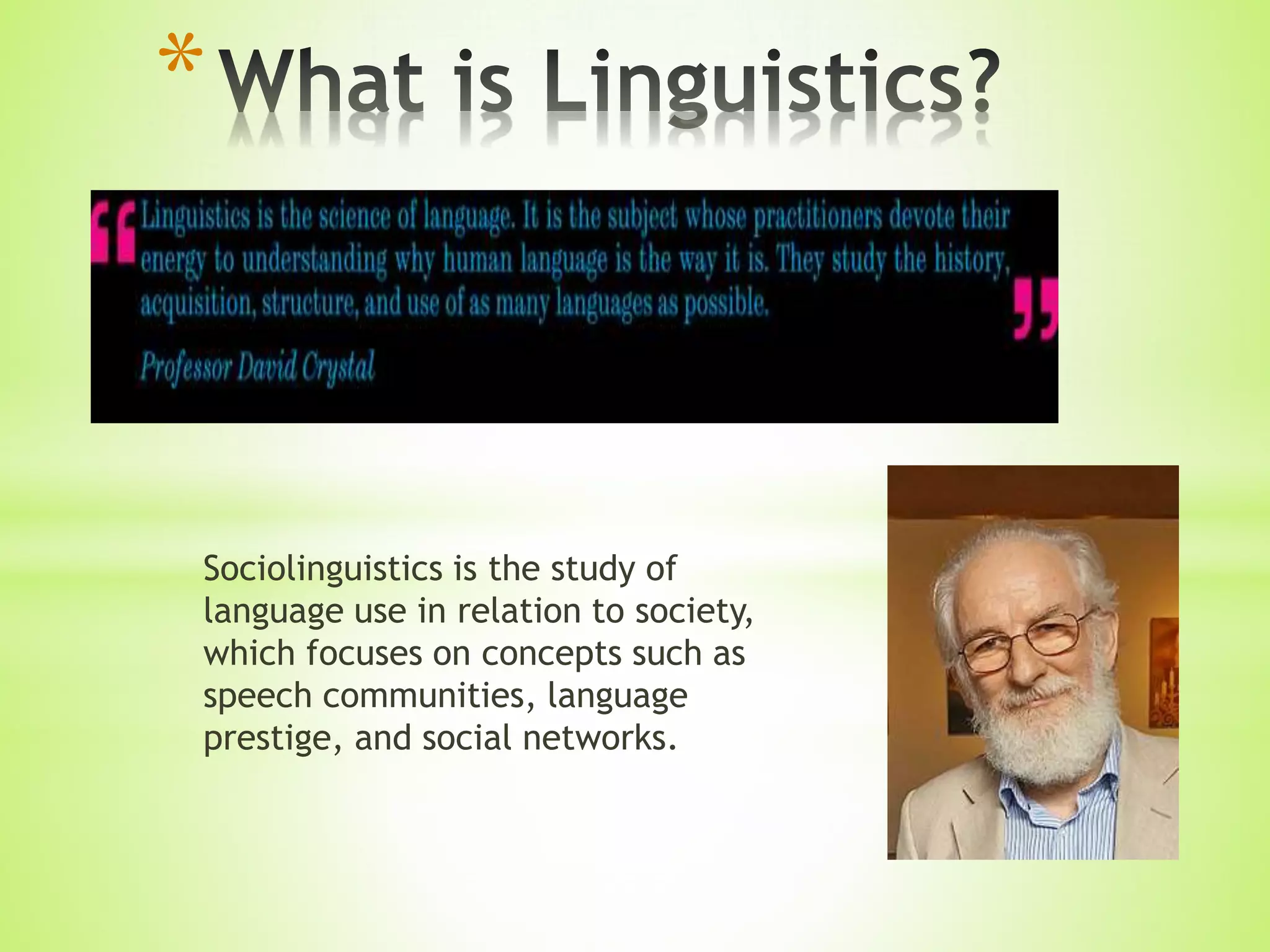
Sociolinguistics is the study of
language use in relation to society,
which focuses on concepts such as
speech communities, language
prestige, and social networks.
*
 Linguists study all aspects of language, from
its formal structural properties through to the
way it is used an represented in the brain.
 The work of linguists falls into two main areas:
 language structure and language use.
 Linguists interested in language structure
consider the formal properties of language
 word structure (morphology),
 sentence structure (syntax),
 speech sounds and the rules and patterns
between them (phonetics and phonology),
 meaning in language
(semanticsand pragmatics).
 Linguists also study the way that language is
used, and this can cover a very broad range of
subjects, since language enters almost every
area of human activity. Examples include:
 psycholinguistics (the psychology of language
acquisition and use);
 historical linguistics and the history of
languages; applied linguistics (using linguistic
knowledge to help in real-world situations like
language teaching);
 sociolinguistics,
 varieties of English,
 discourse analysis
 conversation analysis (language use in social
contexts); and stylistics (the use of different
styles in language).
What it is
Who studies it
Where and when it is
studied
How it is studied
Why it is studied
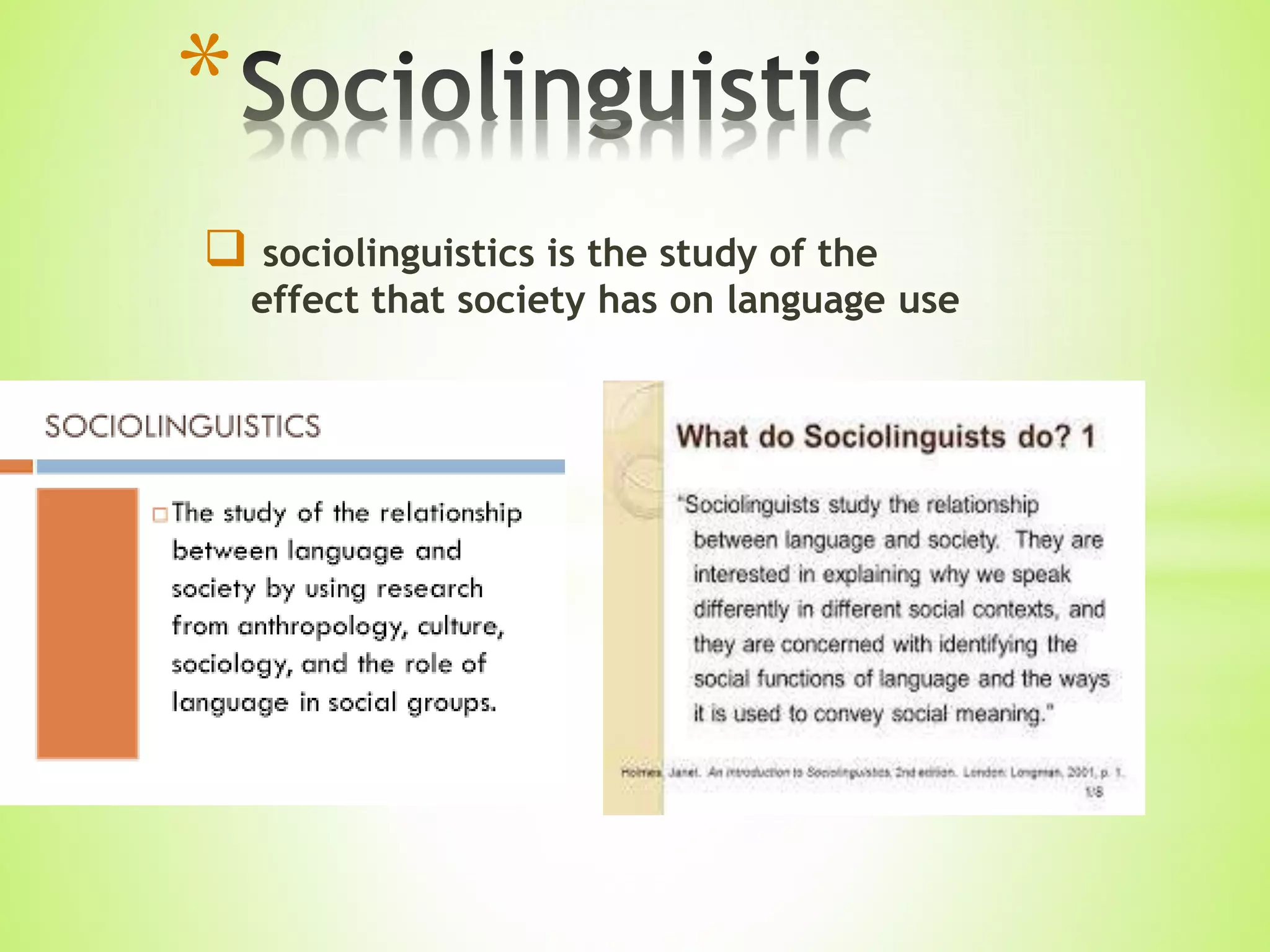
 sociolinguistics is the study of the
effect that society has on language use
*
 Sociolinguistics is the study of the
relationship between language and
society.
Sociolinguistics can help us understand why we speak
differently in various social contexts, and help uncover
the social relationships in a community.
For example, you probably wouldn't speak the same to
your boss at work as you would your friends, or speak
to strangers as you would to your family.
Sociolinguistics may also wonder whether women and
men speak the same as each other.
Or why do people the same age or from the same
social class or same ethnicity use similar language?
Sociolinguistics attempts to explain all these questions
and more.
Ultimately, sociolinguistics is everywhere!
*
Sociolinguistics is a move towards
studying language performance, and
there are two arguments on why this
should be studied within language:
 Language is an interactive and cultural
phenomenon which should be studied.
 Actual language use is highly structured
and not at a random.
These arguments split into two strands
of sociolinguistics:
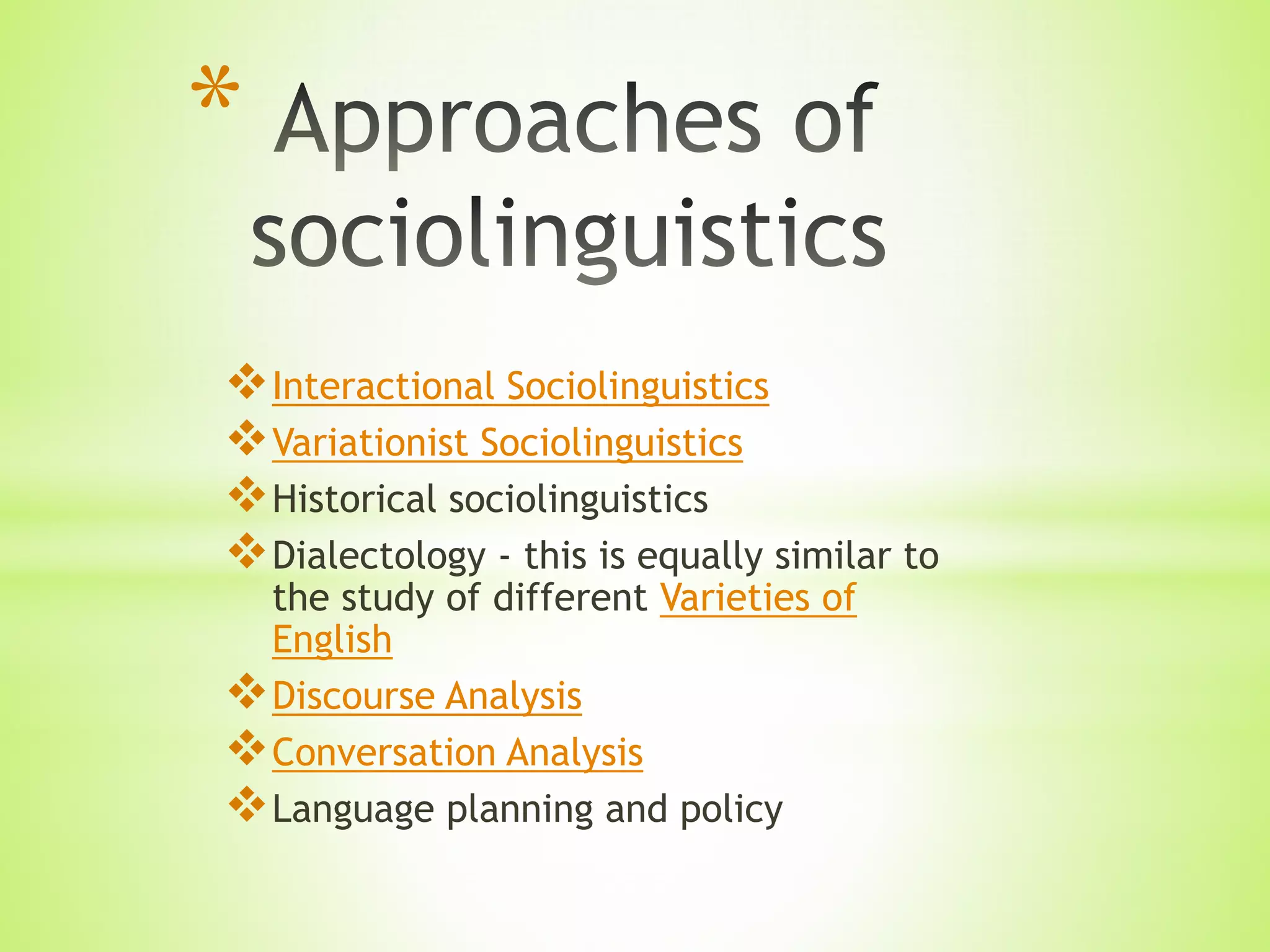
 Interactional Sociolinguistics
 Variationist Sociolinguistics
Interactional Sociolinguistics
Variationist Sociolinguistics
Historical sociolinguistics
Dialectology - this is equally similar to
the study of different Varieties of
English
Discourse Analysis
Conversation Analysis
Language planning and policy
*
2. Methods and Applications
Sociolinguistics teaches us about real-life
attitudes and social situations.
Sociolinguistics is interested in
explaining reasons for speaking differently in
different social situations
It also looks at how language is used to convey
a social meaning
Due to its constant use, either spoken or
written, it is important to
understand behaviour and attitudes towards
language
Behaviour towards language is a concern
shared on an international level by political
and educational leaders, as well as the general
public, so sociolinguistics is often seen in the
headlines.
*
 Sociolinguistics is now a recognized part of
'linguistics' and 'language' modules in most
courses at university level
 Language is an important means
of establishing and maintaining relationships
 It provides a way for humans to subconsciously
read their peers
 Examining the way in which people use language
in different social contexts can begin to explain
how language works and the workings of social
relationships in a community.
 The consideration of spoken communication
enables a student of sociolinguistics to discover
certain information about the speaker from
their language, without direct questioning, this
includes sex, approximate age, regional and
ethnic origins, level of education and
their attitude to the listener
 Further to this, the study of language and
identity, an aspect of sociolinguistics, allows the
application of sociolinguistics to everyday life.
"It begins with the simple act of noticing
a variation – that there are two
alternative ways of saying the same
thing"
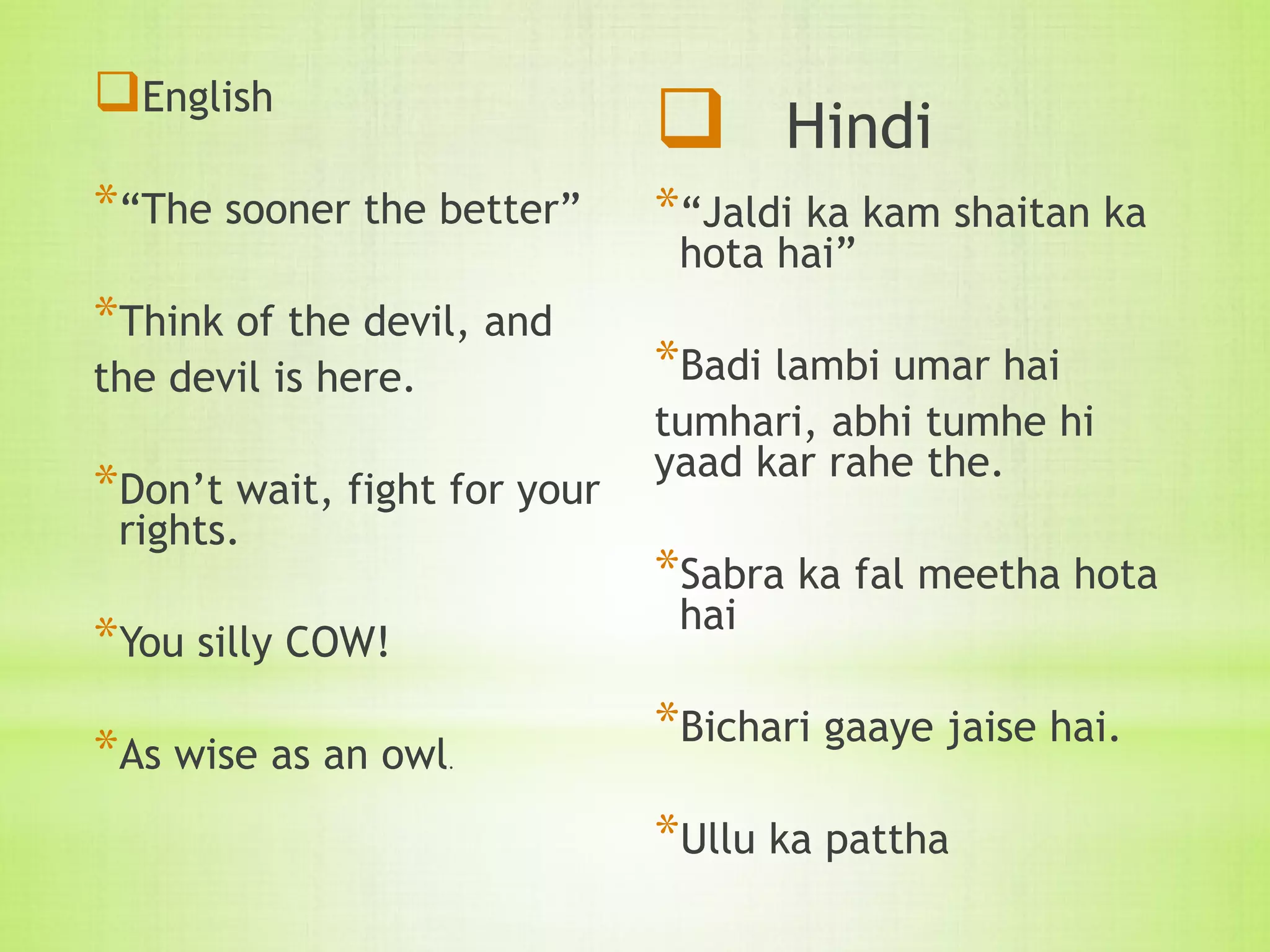
 Counterparts of sayings in English and Hindi
*
English
*“The sooner the better”
*Think of the devil, and
the devil is here.
*Don’t wait, fight for your
rights.
*You silly COW!
*As wise as an owl.
 Hindi
*“Jaldi ka kam shaitan ka
hota hai”
*Badi lambi umar hai
tumhari, abhi tumhe hi
yaad kar rahe the.
*Sabra ka fal meetha hota
hai
*Bichari gaaye jaise hai.
*Ullu ka pattha
 https://sites.google.com/a/sheffield.a
c.uk/aal2013/what-is-linguistics
English language teaching- "Sociolinguistic"

English language teaching- "Sociolinguistic"

  • 2.
    Topic :Sociolinguistics Prepared by:Rinkal Jani Roll no: 22 Seam: 3 Year: 2016-2018 Enrolment no: 2069108420170012 Email Id: rinkaljani1807@gmail.com Paper no-11:English language teaching-1 Smt. S.B Gardi Department of English Professor: Dr. Dillip Barad Maharaja Krishna Kumarsinghji Bhavanagar university
  • 3.
    Sociolinguistics is thestudy of language use in relation to society, which focuses on concepts such as speech communities, language prestige, and social networks. *
  • 4.
     Linguists studyall aspects of language, from its formal structural properties through to the way it is used an represented in the brain.  The work of linguists falls into two main areas:  language structure and language use.  Linguists interested in language structure consider the formal properties of language  word structure (morphology),  sentence structure (syntax),  speech sounds and the rules and patterns between them (phonetics and phonology),  meaning in language (semanticsand pragmatics).
  • 5.
     Linguists alsostudy the way that language is used, and this can cover a very broad range of subjects, since language enters almost every area of human activity. Examples include:  psycholinguistics (the psychology of language acquisition and use);  historical linguistics and the history of languages; applied linguistics (using linguistic knowledge to help in real-world situations like language teaching);  sociolinguistics,  varieties of English,  discourse analysis  conversation analysis (language use in social contexts); and stylistics (the use of different styles in language).
  • 6.
    What it is Whostudies it Where and when it is studied How it is studied Why it is studied
  • 7.
     sociolinguistics isthe study of the effect that society has on language use *
  • 8.
     Sociolinguistics isthe study of the relationship between language and society. Sociolinguistics can help us understand why we speak differently in various social contexts, and help uncover the social relationships in a community. For example, you probably wouldn't speak the same to your boss at work as you would your friends, or speak to strangers as you would to your family. Sociolinguistics may also wonder whether women and men speak the same as each other. Or why do people the same age or from the same social class or same ethnicity use similar language? Sociolinguistics attempts to explain all these questions and more. Ultimately, sociolinguistics is everywhere! *
  • 9.
    Sociolinguistics is amove towards studying language performance, and there are two arguments on why this should be studied within language:  Language is an interactive and cultural phenomenon which should be studied.  Actual language use is highly structured and not at a random. These arguments split into two strands of sociolinguistics:  Interactional Sociolinguistics  Variationist Sociolinguistics
  • 10.
    Interactional Sociolinguistics Variationist Sociolinguistics Historicalsociolinguistics Dialectology - this is equally similar to the study of different Varieties of English Discourse Analysis Conversation Analysis Language planning and policy *
  • 12.
    2. Methods andApplications
  • 13.
    Sociolinguistics teaches usabout real-life attitudes and social situations. Sociolinguistics is interested in explaining reasons for speaking differently in different social situations It also looks at how language is used to convey a social meaning Due to its constant use, either spoken or written, it is important to understand behaviour and attitudes towards language Behaviour towards language is a concern shared on an international level by political and educational leaders, as well as the general public, so sociolinguistics is often seen in the headlines. *
  • 14.
     Sociolinguistics isnow a recognized part of 'linguistics' and 'language' modules in most courses at university level  Language is an important means of establishing and maintaining relationships  It provides a way for humans to subconsciously read their peers  Examining the way in which people use language in different social contexts can begin to explain how language works and the workings of social relationships in a community.  The consideration of spoken communication enables a student of sociolinguistics to discover certain information about the speaker from their language, without direct questioning, this includes sex, approximate age, regional and ethnic origins, level of education and their attitude to the listener  Further to this, the study of language and identity, an aspect of sociolinguistics, allows the application of sociolinguistics to everyday life.
  • 15.
    "It begins withthe simple act of noticing a variation – that there are two alternative ways of saying the same thing"  Counterparts of sayings in English and Hindi *
  • 16.
    English *“The sooner thebetter” *Think of the devil, and the devil is here. *Don’t wait, fight for your rights. *You silly COW! *As wise as an owl.  Hindi *“Jaldi ka kam shaitan ka hota hai” *Badi lambi umar hai tumhari, abhi tumhe hi yaad kar rahe the. *Sabra ka fal meetha hota hai *Bichari gaaye jaise hai. *Ullu ka pattha
  • 17.