Downloaded 180 times



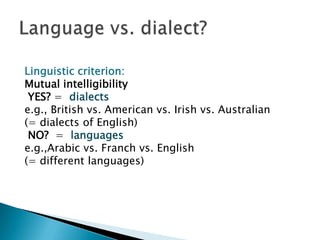
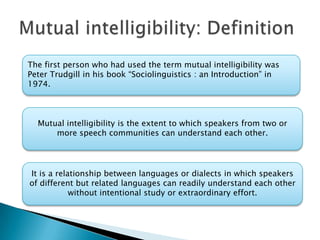
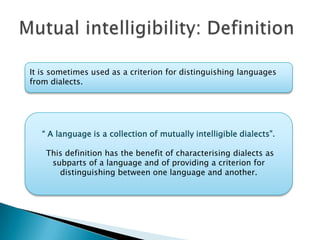
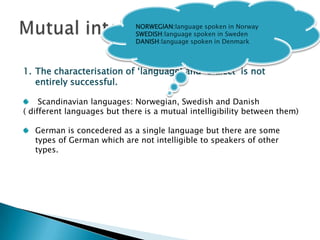
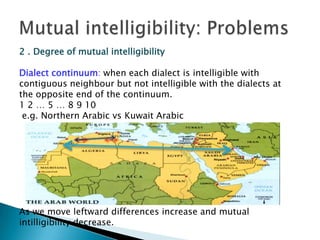

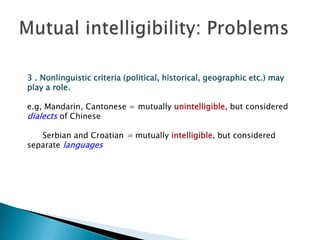
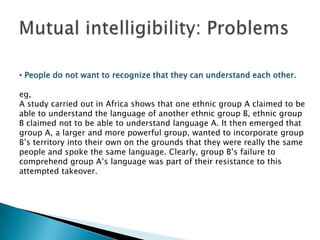
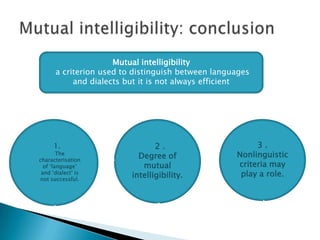


Mutual intelligibility refers to the extent that speakers of related languages or dialects can understand each other without special training. It is sometimes used as a criterion to distinguish languages from dialects, with dialects being mutually intelligible and languages not. However, this characterization is problematic, as some languages like Scandinavian tongues are mutually intelligible while some dialects of languages like German are not. Degree of mutual intelligibility and non-linguistic political/historical factors can also influence whether related varieties are considered languages or dialects. Mutual intelligibility is not an absolute criterion.


