Created by : K.B.Manjunath
diploma civil engineering
Government polytechnic soraba
welcome
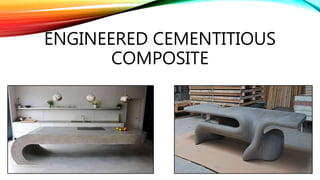
ENGINEERED CEMENTITIOUS
COMPOSITE
BENDABLE CONCRTE
CONTENT
 INTRODUCTION
WHAT IS BENDABLE CONCRTE ?
MATERIALS USED IN BENDABLE CONCRETE
ADVANTAGES OF BENDABLE CONCRETE
DISADVANTAGES OF BENDABLE CONCRETE
USES OF ECC OR BENDABLE CONCRETE
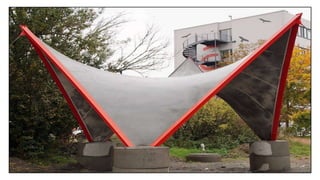
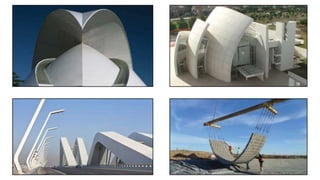
SOME OF THE STRUCTURES CONSTRUCTED BY USING
BENDABLE CONCRETE
INTRODUCTION
Concrete is widely used in today’s construction industry. It
has good load bearing capacity. It can take
the compressive load very effectively. But the main problem
with the traditional concrete is that it cannot take much
tensile stresses. It fails under the tensile load. The bendable
concrete is a good substitute for this problem.
Bendable concrete is class of ultra-ductile fiber
reinforced cementitious composites, characterized
by high ductility and tight crack width control. This
material is capable to exhibit considerably enhanced
flexibility.
WHAT IS BENDABLE CONCRETE
It is special type of concrete that can take the bending
stresses. It consists of special type of materials that makes it
flexible.
It was developed by the Professor Victor Li at the University
of Michigan.
Its engineering name is Engineered Cementitious
Composite(ECC)
It exhibits the property of a ductile material instead of a
brittle material which is shown by the conventional
concrete.
MATERIALS USED IN BENDABLE
CONCRETE
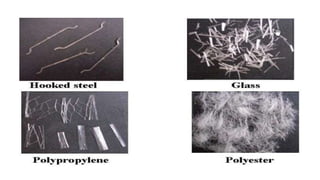
1. FIBRES REINFORCEMENT
For giving the concrete flexibility we have to alter the material of the
conventional concrete.
 In the bendable concrete we eliminate the coarse aggregate. Instead of
that we use the fibres that are used in the fibre reinforced concrete such
as silica fibres, glass fibres, steel fibres, asbestos fibers, polyvinyl
alcohol fibers, etc.
The micro fibres provide the flexibility to the concrete. It also act as
a reinforcement material in the concrete.
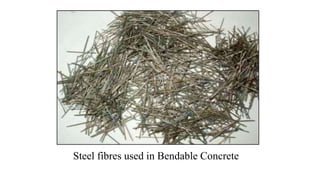
Steel fibres used in Bendable Concrete
2. SLICK COATING (ANTI-FRICTION COATING)
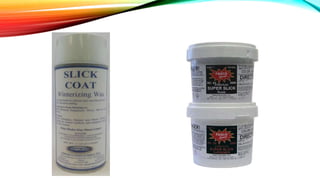
Additionally, the slick coating (anti-frictional coating) is
provided so that the fibers particles can slide over one another
and does not have the friction which may result into the cracks
in concrete.
This tendency of slipping of fibers over one another helps the
concrete to minimize the crack and provide flexibility to the
concrete. The normal cement can be used for the concrete.
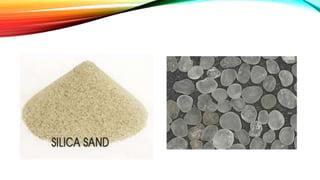
3. FINE SAND
The fine silica sand is suitable for the bendable concrete which
is used in the water treatment plant but if it is not available the
normal sand can be used but it may effects the strength and
flexibility of concrete. fly ash, silica fume, blast furnace slag
can also be used in the concrete.
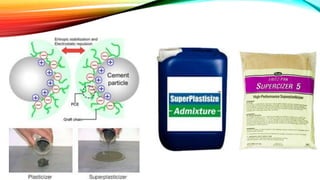
4. SUPERPLASTICIZER
Polycarboxylated ether, lignosulfonates, lignin, napthalene or
melamine formal dehyde sulphonate(any one) is used in the
concrete for increasing the workability of the concrete. Latex
can also be used in the concrete for improving its flexibility.
ADVANTAGES OF BENDABLE
CONCRETE
The bendable concrete has the ability to bend like a metal
It is more stronger, more durable, and lasts longer than
conventional concrete
It has a self-healing property that it can heal itself by using
carbon dioxide and rainwater
It is not brittle like a glass
It is more resistant to cracking
It does not emit that amount of harmful gases as compared to
conventional concrete.
The bendable concrete is approximately 20 - 40% lighter
The use of steel reinforcement is reduces and can be eliminated
It reduces the cost of the project
It can be used as precast concrete.
DISADVANTAGES OF BENDABLE
CONCRETE
It has a high initial cost as compared to conventional concrete.
It requires skilled labour for its construction.
It needs some special type of materials which can be difficult to
find in some areas.
Its quality depends upon the material used and the condition
under which it is made.
Its compressive strength can be lesser than the conventional
concrete.
 SPECIAL FEATURES OF BENDABLE CONCRETE
The bending strength or tensile capacity of bendable concrete is
in the range of 10 to 15 MPa and compressive strength is up to
70 MPa.
It has a self-healing property as the cement particles make
reaction with the rain water and makes some complex product
that expands and fill the microcracks that are developed in the
bendable concrete.
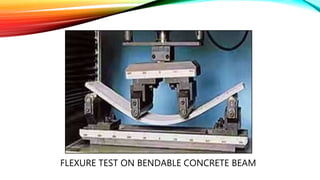
The bendable concrete is proved to be lighter and also proved to
be 500 times more bendable than normal concrete.
Its ultimate tensile strain capacity is 3 to 5 %.
The strain capacity in bendable concrete is 300 times more than
conventional concrete. Due to this the concrete is act like a
flexible material such as metal.
FLEXURE TEST ON BENDABLE CONCRETE BEAM
USES OF ECC
OR
BENDABLE CONCRETE
 EARTHQUAKE RESISTANCE BUILDING
The structure made with the bendable concrete can take more
tensile stresses that it does not break down due to the vibration
caused by the earthquake. In Japan a 60 floor is under
construction which uses this concrete.
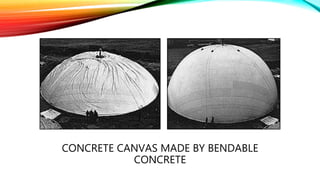
 CONCRETE CANVAS
The concrete canvas can also be made with the
bendable concrete. The concrete canvas is stronger and
durable than the normal canvas. It can be used in the
military area.
CONCRETE CANVAS MADE BY BENDABLE
CONCRETE
 FOR ROADS & BRIDGES
It can be used in roads and bridges. With the use of bendable
concrete in roads and bridges there is no need of joints such as
expansion joint, contraction joint as the concrete is itself have
the ability to change its shape. More over the bridges and roads
are more durable and has low repair cost.
SOME OF THE STRUCTURES CONSTRUCTED
BY USING BENDABLE CONCRETE
ANY QUESTIONS
Engineered cementitious composite (bendable concrete)

Engineered cementitious composite (bendable concrete)

  • 1.
    Created by :K.B.Manjunath diploma civil engineering Government polytechnic soraba welcome
  • 2.
  • 3.
  • 4.
    CONTENT  INTRODUCTION WHAT ISBENDABLE CONCRTE ? MATERIALS USED IN BENDABLE CONCRETE ADVANTAGES OF BENDABLE CONCRETE DISADVANTAGES OF BENDABLE CONCRETE USES OF ECC OR BENDABLE CONCRETE SOME OF THE STRUCTURES CONSTRUCTED BY USING BENDABLE CONCRETE
  • 5.
    INTRODUCTION Concrete is widelyused in today’s construction industry. It has good load bearing capacity. It can take the compressive load very effectively. But the main problem with the traditional concrete is that it cannot take much tensile stresses. It fails under the tensile load. The bendable concrete is a good substitute for this problem.
  • 6.
    Bendable concrete isclass of ultra-ductile fiber reinforced cementitious composites, characterized by high ductility and tight crack width control. This material is capable to exhibit considerably enhanced flexibility.
  • 7.
  • 8.
    It is specialtype of concrete that can take the bending stresses. It consists of special type of materials that makes it flexible. It was developed by the Professor Victor Li at the University of Michigan. Its engineering name is Engineered Cementitious Composite(ECC) It exhibits the property of a ductile material instead of a brittle material which is shown by the conventional concrete.
  • 9.
    MATERIALS USED INBENDABLE CONCRETE
  • 10.
    1. FIBRES REINFORCEMENT Forgiving the concrete flexibility we have to alter the material of the conventional concrete.  In the bendable concrete we eliminate the coarse aggregate. Instead of that we use the fibres that are used in the fibre reinforced concrete such as silica fibres, glass fibres, steel fibres, asbestos fibers, polyvinyl alcohol fibers, etc. The micro fibres provide the flexibility to the concrete. It also act as a reinforcement material in the concrete.
  • 12.
    Steel fibres usedin Bendable Concrete
  • 13.
    2. SLICK COATING(ANTI-FRICTION COATING) Additionally, the slick coating (anti-frictional coating) is provided so that the fibers particles can slide over one another and does not have the friction which may result into the cracks in concrete. This tendency of slipping of fibers over one another helps the concrete to minimize the crack and provide flexibility to the concrete. The normal cement can be used for the concrete.
  • 15.
    3. FINE SAND Thefine silica sand is suitable for the bendable concrete which is used in the water treatment plant but if it is not available the normal sand can be used but it may effects the strength and flexibility of concrete. fly ash, silica fume, blast furnace slag can also be used in the concrete.
  • 17.
    4. SUPERPLASTICIZER Polycarboxylated ether,lignosulfonates, lignin, napthalene or melamine formal dehyde sulphonate(any one) is used in the concrete for increasing the workability of the concrete. Latex can also be used in the concrete for improving its flexibility.
  • 19.
  • 20.
    The bendable concretehas the ability to bend like a metal It is more stronger, more durable, and lasts longer than conventional concrete It has a self-healing property that it can heal itself by using carbon dioxide and rainwater It is not brittle like a glass It is more resistant to cracking It does not emit that amount of harmful gases as compared to conventional concrete.
  • 21.
    The bendable concreteis approximately 20 - 40% lighter The use of steel reinforcement is reduces and can be eliminated It reduces the cost of the project It can be used as precast concrete.
  • 22.
  • 23.
    It has ahigh initial cost as compared to conventional concrete. It requires skilled labour for its construction. It needs some special type of materials which can be difficult to find in some areas. Its quality depends upon the material used and the condition under which it is made. Its compressive strength can be lesser than the conventional concrete.
  • 24.
     SPECIAL FEATURESOF BENDABLE CONCRETE The bending strength or tensile capacity of bendable concrete is in the range of 10 to 15 MPa and compressive strength is up to 70 MPa. It has a self-healing property as the cement particles make reaction with the rain water and makes some complex product that expands and fill the microcracks that are developed in the bendable concrete.
  • 25.
    The bendable concreteis proved to be lighter and also proved to be 500 times more bendable than normal concrete. Its ultimate tensile strain capacity is 3 to 5 %. The strain capacity in bendable concrete is 300 times more than conventional concrete. Due to this the concrete is act like a flexible material such as metal.
  • 26.
    FLEXURE TEST ONBENDABLE CONCRETE BEAM
  • 27.
  • 28.
     EARTHQUAKE RESISTANCEBUILDING The structure made with the bendable concrete can take more tensile stresses that it does not break down due to the vibration caused by the earthquake. In Japan a 60 floor is under construction which uses this concrete.
  • 29.
     CONCRETE CANVAS Theconcrete canvas can also be made with the bendable concrete. The concrete canvas is stronger and durable than the normal canvas. It can be used in the military area.
  • 30.
    CONCRETE CANVAS MADEBY BENDABLE CONCRETE
  • 31.
     FOR ROADS& BRIDGES It can be used in roads and bridges. With the use of bendable concrete in roads and bridges there is no need of joints such as expansion joint, contraction joint as the concrete is itself have the ability to change its shape. More over the bridges and roads are more durable and has low repair cost.
  • 32.
    SOME OF THESTRUCTURES CONSTRUCTED BY USING BENDABLE CONCRETE
  • 35.