Analysis of Engine Performance
P M V Subbarao
Professor
Mechanical Engineering Department
How to Achieve higher Performance?
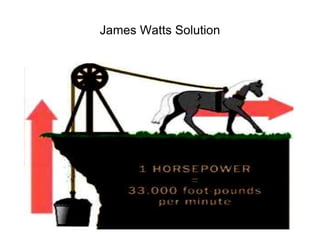
James Watts Solution
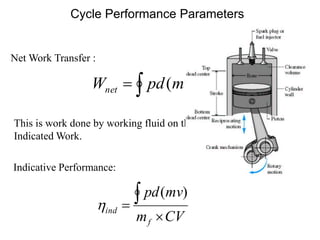
Cycle Performance Parameters
Net Work Transfer :

 )
(mv
pd
Wnet
This is work done by working fluid on the piston, also called as
Indicated Work.
Indicative Performance:
CV
m
mv
pd
f
ind


 )
(

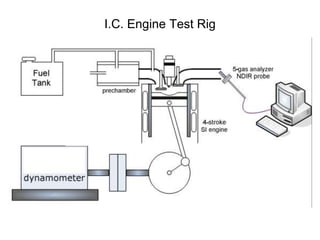
I.C. Engine Test Rig
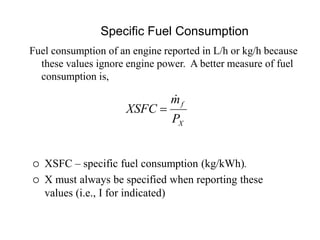
Specific Fuel Consumption
X
f
P
m
XSFC


 XSFC – specific fuel consumption (kg/kWh).
 X must always be specified when reporting these
values (i.e., I for indicated)
Fuel consumption of an engine reported in L/h or kg/h because
these values ignore engine power. A better measure of fuel
consumption is,
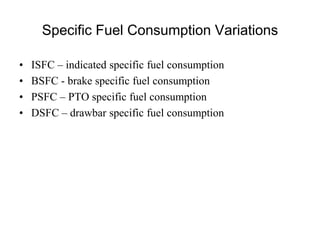
Specific Fuel Consumption Variations
• ISFC – indicated specific fuel consumption
• BSFC - brake specific fuel consumption
• PSFC – PTO specific fuel consumption
• DSFC – drawbar specific fuel consumption
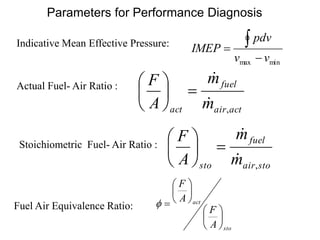
Indicative Mean Effective Pressure:
min
max v
v
pdv
IMEP



Actual Fuel- Air Ratio :
act
air
fuel
act m
m
A
F
,









Stoichiometric Fuel- Air Ratio :
sto
air
fuel
sto m
m
A
F
,









Parameters for Performance Diagnosis
Fuel Air Equivalence Ratio:
sto
act
A
F
A
F














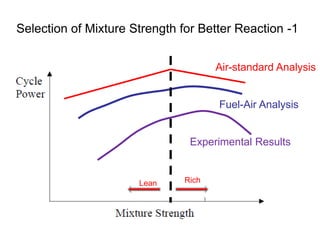
Selection of Mixture Strength for Better Reaction -1
Air-standard Analysis
Experimental Results
Fuel-Air Analysis
Rich
Lean
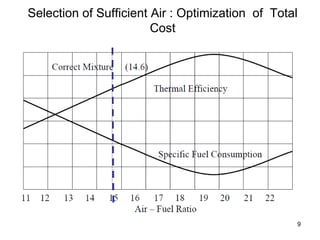
Selection of Sufficient Air : Optimization of Total
Cost
9
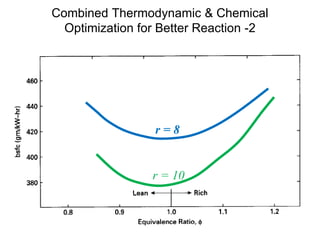
Combined Thermodynamic & Chemical
Optimization for Better Reaction -2
r = 8
r = 10
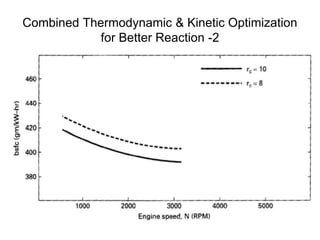
Combined Thermodynamic & Kinetic Optimization
for Better Reaction -2
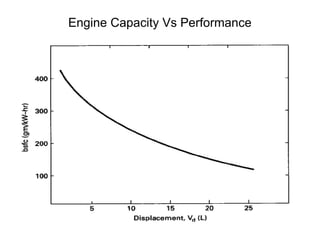
Engine Capacity Vs Performance
Optimizing Engine Performance
• Engines are most efficient at or near peak load.
• Efficiency drops with a reduction in torque load.
• At zero brake torque, all fuel energy is expended in engine
friction.
• Lower rated engine speeds provide lower BSFC, and at the
same time reduce torque reserve – design compromise.
• Heavy engines for a given capacity….. More inertial losses…
• Compromise – Necessary Evil …..
• Any alternate to overcome this fact…..
• Develop an idea to Change natural behaviour…..
Artificial Breathing Attachments to Engines
Preferred Artificial Breathing ….
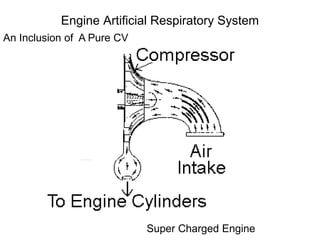
Engine Artificial Respiratory System
Super Charged Engine
An Inclusion of A Pure CV
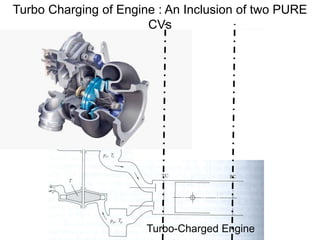
Turbo Charging of Engine : An Inclusion of two PURE
CVs
Turbo-Charged Engine
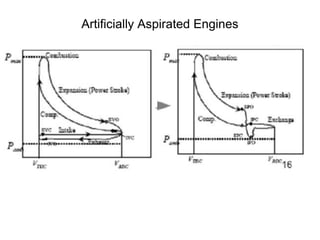
Artificially Aspirated Engines
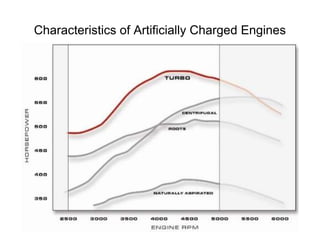
Characteristics of Artificially Charged Engines

IC engine performance.ppt

  • 1.
    Analysis of EnginePerformance P M V Subbarao Professor Mechanical Engineering Department How to Achieve higher Performance?
  • 2.
  • 3.
    Cycle Performance Parameters NetWork Transfer :   ) (mv pd Wnet This is work done by working fluid on the piston, also called as Indicated Work. Indicative Performance: CV m mv pd f ind    ) ( 
  • 4.
  • 5.
    Specific Fuel Consumption X f P m XSFC   XSFC – specific fuel consumption (kg/kWh).  X must always be specified when reporting these values (i.e., I for indicated) Fuel consumption of an engine reported in L/h or kg/h because these values ignore engine power. A better measure of fuel consumption is,
  • 6.
    Specific Fuel ConsumptionVariations • ISFC – indicated specific fuel consumption • BSFC - brake specific fuel consumption • PSFC – PTO specific fuel consumption • DSFC – drawbar specific fuel consumption
  • 7.
    Indicative Mean EffectivePressure: min max v v pdv IMEP    Actual Fuel- Air Ratio : act air fuel act m m A F ,          Stoichiometric Fuel- Air Ratio : sto air fuel sto m m A F ,          Parameters for Performance Diagnosis Fuel Air Equivalence Ratio: sto act A F A F              
  • 8.
    Selection of MixtureStrength for Better Reaction -1 Air-standard Analysis Experimental Results Fuel-Air Analysis Rich Lean
  • 9.
    Selection of SufficientAir : Optimization of Total Cost 9
  • 10.
    Combined Thermodynamic &Chemical Optimization for Better Reaction -2 r = 8 r = 10
  • 11.
    Combined Thermodynamic &Kinetic Optimization for Better Reaction -2
  • 12.
    Engine Capacity VsPerformance
  • 13.
    Optimizing Engine Performance •Engines are most efficient at or near peak load. • Efficiency drops with a reduction in torque load. • At zero brake torque, all fuel energy is expended in engine friction. • Lower rated engine speeds provide lower BSFC, and at the same time reduce torque reserve – design compromise. • Heavy engines for a given capacity….. More inertial losses… • Compromise – Necessary Evil ….. • Any alternate to overcome this fact….. • Develop an idea to Change natural behaviour…..
  • 14.
    Artificial Breathing Attachmentsto Engines Preferred Artificial Breathing ….
  • 15.
    Engine Artificial RespiratorySystem Super Charged Engine An Inclusion of A Pure CV
  • 16.
    Turbo Charging ofEngine : An Inclusion of two PURE CVs Turbo-Charged Engine
  • 17.
  • 18.