E-learning comprises all forms of
electronically supported learning and
teaching. The information and
communication systems, whether
networked learning or not, serve as
specific media to implement the
learning process.
The term will still most likely be utilized to
reference out-of-classroom and in-
classroom educational experiences via
technology, even as advances continue
in regard to devices and curriculum.
E-learning is essentially the computer
and network-enabled transfer of skills
and knowledge. E-learning applications
and processes include Web-based
learning, computer-based
learning, virtual education opportunities
and digital collaboration.
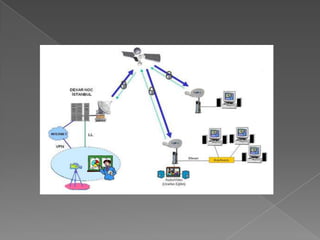
Content is delivered via the
Internet, intranet/extranet, audio or
video tape, satellite TV, and CD-ROM. It
can be self-paced or instructor-led and
includes media in the form of
text, image, animation, streaming video
and audio.
Learning takes place through
conversations about content and
grounded interaction about problems
and actions. Advocates of social
learning claim that one of the best ways
to learn something is to teach it to others.
However, it should be noted that many
early online courses, such as those
developed by Murray Turoff and Starr
Roxanne Hiltz in the 1970s and 80s at the
New Jersey Institute of Technology, courses
at the University of Guelph in Canada, the
British Open University, and the online
distance courses at the University of British
Columbia (where Web CT, now
incorporated into Blackboard Inc. was first
developed), have always made heavy use
of online discussion between students.
Also, from the start, practitioners such as Harasim
(1995) have put heavy emphasis on the use of
learning networks for knowledge construction, long
before the term e-learning, let alone e-learning
, was even considered.
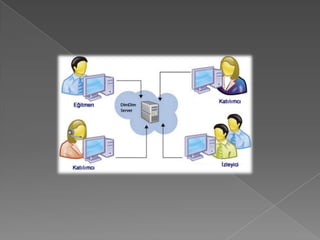
  There is also an increased use of virtual classrooms
(online presentations delivered live) as an online
learning platform and classroom for a diverse set of
education providers such as Minnesota State
Colleges and Universities and Sachem School
District.
In addition to virtual classroom
environments, social networks have
become an important part of E-
learning. Social networks have been
used to foster online learning
communities around subjects as
diverse as test preparation and
language education.
REFENRENCES
 http://en.wikipedia.org/wiki/E-learning
 http://www.uzaktanegitim.gen.tr/YaziDet
  ay.aspx?YaziID=427
 http://www.zargan.com/
Eng 204 sunumu

Eng 204 sunumu

  • 3.
    E-learning comprises allforms of electronically supported learning and teaching. The information and communication systems, whether networked learning or not, serve as specific media to implement the learning process.
  • 4.
    The term willstill most likely be utilized to reference out-of-classroom and in- classroom educational experiences via technology, even as advances continue in regard to devices and curriculum.
  • 5.
    E-learning is essentiallythe computer and network-enabled transfer of skills and knowledge. E-learning applications and processes include Web-based learning, computer-based learning, virtual education opportunities and digital collaboration.
  • 7.
    Content is deliveredvia the Internet, intranet/extranet, audio or video tape, satellite TV, and CD-ROM. It can be self-paced or instructor-led and includes media in the form of text, image, animation, streaming video and audio.
  • 9.
    Learning takes placethrough conversations about content and grounded interaction about problems and actions. Advocates of social learning claim that one of the best ways to learn something is to teach it to others.
  • 10.
    However, it shouldbe noted that many early online courses, such as those developed by Murray Turoff and Starr Roxanne Hiltz in the 1970s and 80s at the New Jersey Institute of Technology, courses at the University of Guelph in Canada, the British Open University, and the online distance courses at the University of British Columbia (where Web CT, now incorporated into Blackboard Inc. was first developed), have always made heavy use of online discussion between students.
  • 11.
    Also, from thestart, practitioners such as Harasim (1995) have put heavy emphasis on the use of learning networks for knowledge construction, long before the term e-learning, let alone e-learning , was even considered. There is also an increased use of virtual classrooms (online presentations delivered live) as an online learning platform and classroom for a diverse set of education providers such as Minnesota State Colleges and Universities and Sachem School District.
  • 12.
    In addition tovirtual classroom environments, social networks have become an important part of E- learning. Social networks have been used to foster online learning communities around subjects as diverse as test preparation and language education.
  • 14.