“The endocrine system”
By

Dr. Mary A. Youssef
________________________________
Cairo University
2012
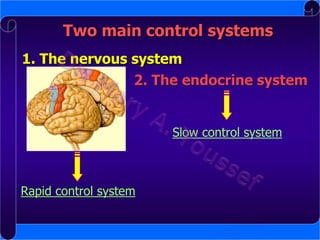
Two main control systems
1. The nervous system
2. The endocrine system

Slow control system

Rapid control system
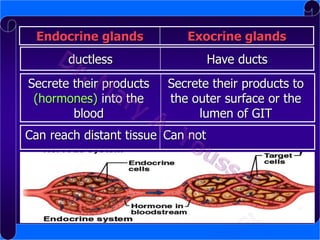
Endocrine glands

Exocrine glands

ductless

Have ducts

Secrete their products
(hormones) into the
blood

Secrete their products to
the outer surface or the
lumen of GIT

Can reach distant tissue Can not
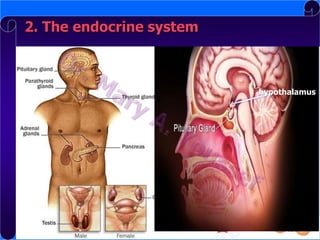
2. The endocrine system

hypothalamus
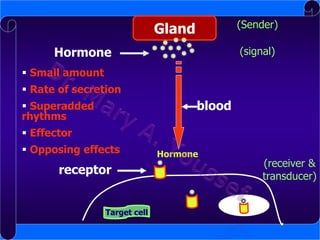
(Sender)

Gland
Hormone

(signal)

 Small amount
 Rate of secretion

blood

 Superadded
rhythms
 Effector
 Opposing effects

receptor
Target cell

Hormone

(receiver &
transducer)
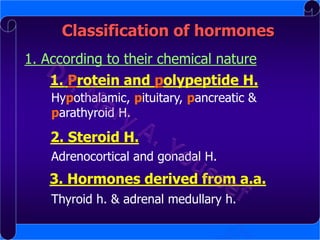
Classification of hormones
1. According to their chemical nature
1. Protein and polypeptide H.
Hypothalamic, pituitary, pancreatic &
parathyroid H.

2. Steroid H.
Adrenocortical and gonadal H.

3. Hormones derived from a.a.
Thyroid h. & adrenal medullary h.
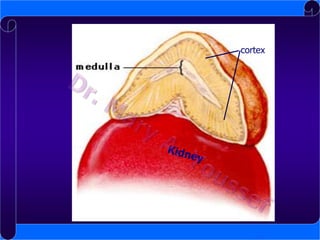
cortex
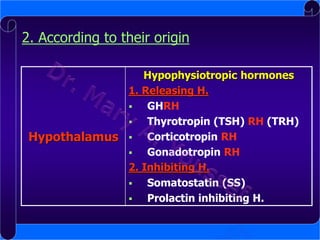
2. According to their origin
Hypophysiotropic hormones
1. Releasing H.

GHRH

Thyrotropin (TSH) RH (TRH)
Hypothalamus  Corticotropin RH

Gonadotropin RH
2. Inhibiting H.

Somatostatin (SS)

Prolactin inhibiting H.
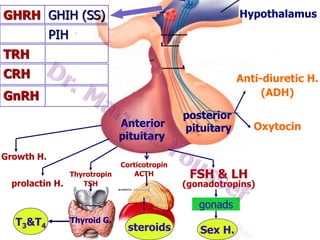
GHRH GHIH (SS)

Hypothalamus

PIH
TRH
CRH

Anti-diuretic H.
(ADH)

GnRH
Anterior
pituitary
Growth H.
prolactin H.

Thyrotropin
TSH

Corticotropin
ACTH

posterior
pituitary

FSH & LH

(gonadotropins)

gonads
T3&T4

Thyroid G.

Oxytocin

steroids

Sex H.
Mechanisms of hormone action
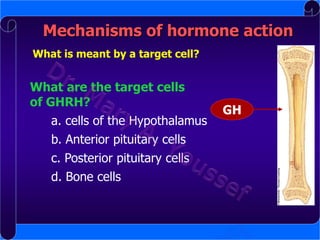
What is meant by a target cell?

What are the target cells
of GHRH?
a. cells of the Hypothalamus
b. Anterior pituitary cells

c. Posterior pituitary cells
d. Bone cells

GH
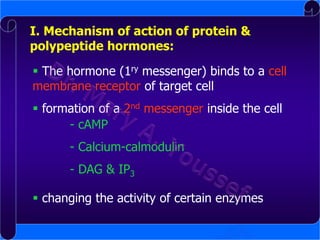
I. Mechanism of action of protein &
polypeptide hormones:

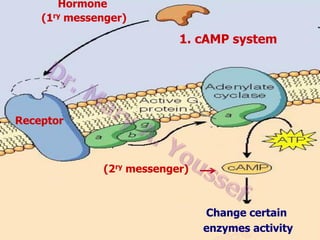
 The hormone (1ry messenger) binds to a cell
membrane receptor of target cell
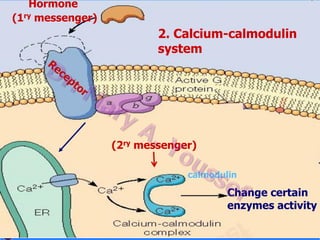
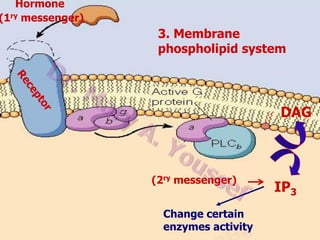
 formation of a 2nd messenger inside the cell
- cAMP
- Calcium-calmodulin
- DAG & IP3
 changing the activity of certain enzymes
Hormone
(1ry messenger)

1. cAMP system

Receptor

(2ry messenger)

Change certain
enzymes activity
Hormone
(1ry messenger)

2. Calcium-calmodulin
system

(2ry messenger)
calmodulin

Change certain
enzymes activity
Hormone
(1ry messenger)

3. Membrane
phospholipid system

DAG

(2ry messenger)
Change certain
enzymes activity

IP3
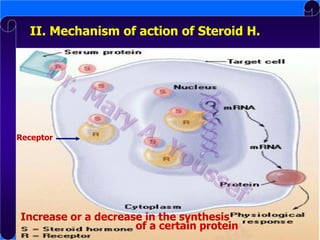
II. Mechanism of action of Steroid H.

Receptor

Increase or a decrease in the synthesis
of a certain protein
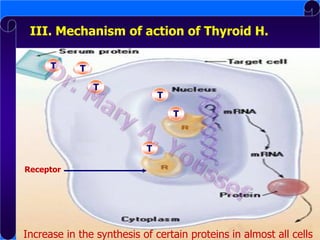
III. Mechanism of action of Thyroid H.
T

T
T

T
T

T
Receptor

Increase in the synthesis of certain proteins in almost all cells
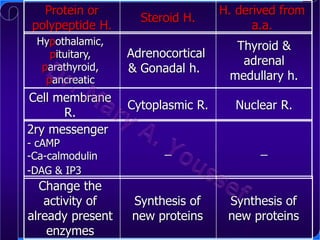
Protein or
polypeptide H.
Hypothalamic,
pituitary,
parathyroid,
pancreatic

Cell membrane
R.
2ry messenger
- cAMP
-Ca-calmodulin
-DAG & IP3

Change the
activity of
already present
enzymes

Steroid H.

H. derived from
a.a.

Adrenocortical
& Gonadal h.

Thyroid &
adrenal
medullary h.

Cytoplasmic R.

Nuclear R.

_

_

Synthesis of
new proteins

Synthesis of
new proteins
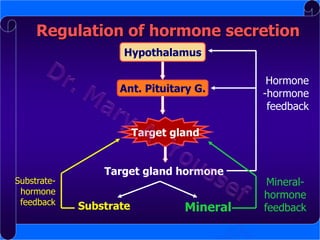
Regulation of hormone secretion
Hypothalamus
Ant. Pituitary G.

Hormone
-hormone
feedback

Target gland

Substratehormone
feedback

Target gland hormone
Substrate

Mineral

Mineralhormone
feedback
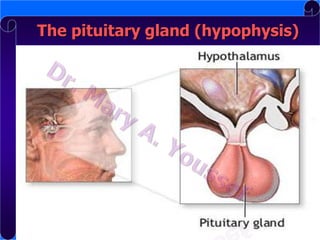
The pituitary gland (hypophysis)
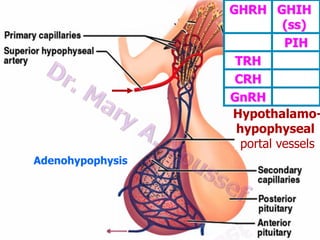
GHRH GHIH
(ss)
PIH
TRH
CRH
GnRH
Hypothalamohypophyseal
portal vessels
Adenohypophysis
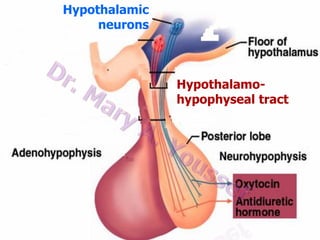
Hypothalamic
neurons

Hypothalamohypophyseal tract
Hypothalamus

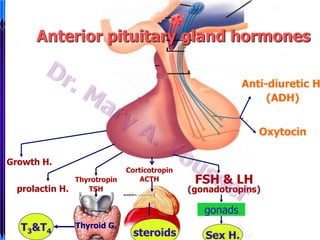
Anterior pituitary gland hormones
 The anterior pituitary produces & secretes
its own hormones

Anti-diuretic H
 Its Hormones are given the extension; (ADH)

tropic, tropin or trophic

posterior
Anterior
pituitary
 It is the master pituitary
for the majority of the

Oxytocin

endocrine glands

Growth H.

prolactin H.

Thyrotropin
TSH

Corticotropin
ACTH

FSH & LH

(gonadotropins)

gonads
T3&T4

Thyroid G.

steroids

Sex H.
Which of these is not produced by
the anterior pituitary?
► ACTH
► follicle-stimulating
► Somatostatin

(ss)
► Somatotropic H.

hormone (FSH)
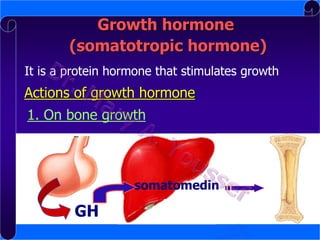
Growth hormone
(somatotropic hormone)
It is a protein hormone that stimulates growth

Actions of growth hormone

1. On bone growth

somatomedin

GH
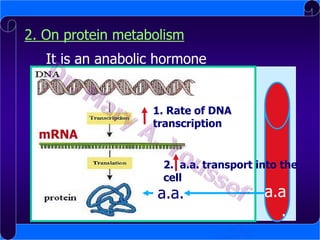
2. On protein metabolism
It is an anabolic hormone

mRNA

1. Rate of DNA
transcription

2. a.a. transport into the
cell

a.a.

a.a
.
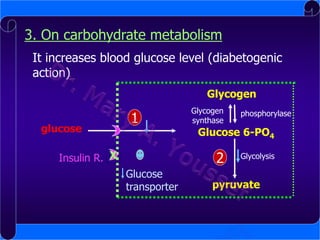
3. On carbohydrate metabolism
It increases blood glucose level (diabetogenic
action)
Glycogen
glucose

1

Insulin R. X
Glycogen
synthase

Glucose 6-PO4

2
Glucose
transporter

phosphorylase

Glycolysis

pyruvate
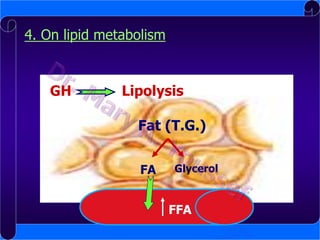
4. On lipid metabolism

GH

Lipolysis
Fat (T.G.)
FA

Glycerol

FFA
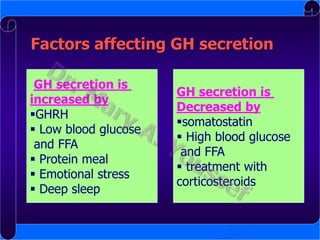
Factors affecting GH secretion
GH secretion is
increased by
GHRH
 Low blood glucose
and FFA
 Protein meal
 Emotional stress
 Deep sleep

GH secretion is
Decreased by
somatostatin
 High blood glucose
and FFA
 treatment with
corticosteroids
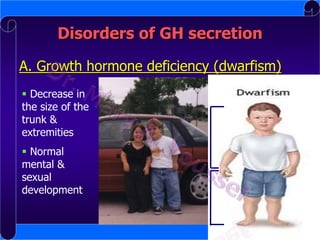
Disorders of GH secretion
A. Growth hormone deficiency (dwarfism)
 Decrease in
the size of the
trunk &
extremities
 Normal
mental &
sexual
development
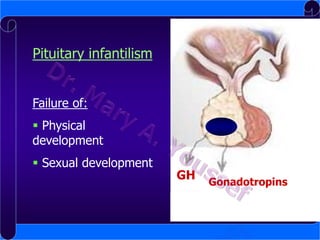
Pituitary infantilism
Failure of:
 Physical
development

 Sexual development

GH

Gonadotropins
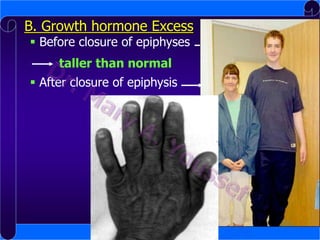
B. Growth hormone Excess
 Before closure of epiphyses

Gigantism

taller than normal
 After closure of epiphysis

Acromegaly
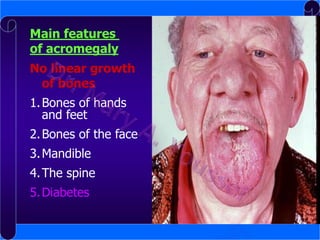
Main features
of acromegaly

No linear growth
of bones
1. Bones of hands
and feet
2. Bones of the face

3. Mandible
4. The spine
5. Diabetes
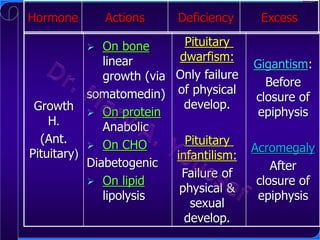
Hormone

Actions

Deficiency

Pituitary
On bone
dwarfism:
linear
growth (via Only failure
somatomedin) of physical
develop.
Growth  On protein
H.
Anabolic
(Ant.
Pituitary
 On CHO
Pituitary(
infantilism:
Diabetogenic
Failure of
 On lipid
physical &
lipolysis
sexual
develop.

Excess



Gigantism:
Before
closure of
epiphysis
Acromegaly
After
closure of
epiphysis
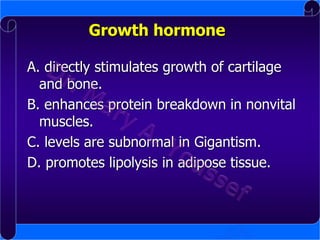
Growth hormone
A. directly stimulates growth of cartilage
and bone.
B. enhances protein breakdown in nonvital
muscles.
C. levels are subnormal in Gigantism.
D. promotes lipolysis in adipose tissue.
Posterior pituitary gland hormones
Antidiuretic hormone (ADH)
(Vasopressin)
 It is a protein hormone

 Formed in supraoptic n. of the
hypothalamus and secreted from the
posterior pituitary
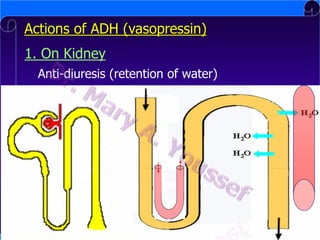
Actions of ADH (vasopressin)
1. On Kidney
Anti-diuresis (retention of water)
2. On blood vessels
Pressor effect
3. On smooth muscles
Contraction of the smooth muscles
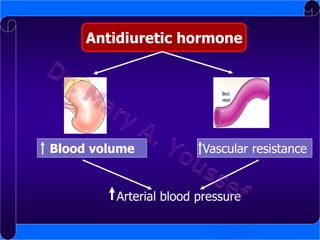
Summary of the actions of ADH

Antidiuretic H.
Antidiuretic hormone

Blood volume

Vascular resistance

Arterial blood pressure
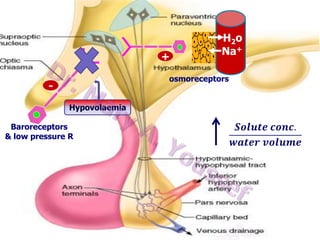
Regulation of ADH secretion
H2 o
+

ADH- secretion is
increased by
Hypovolaemia
 osmotic pressure of ECF
Baroreceptors
& low pressure volume (e.g. Hge)
 blood R
 Stress
 Drugs (e.g. morphine &
nicotine)

Na+

osmoreceptors
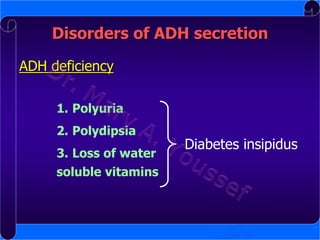
Disorders of ADH secretion
ADH deficiency
1. Polyuria
2. Polydipsia
3. Loss of water
soluble vitamins

Diabetes insipidus
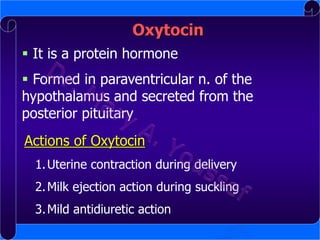
Oxytocin
 It is a protein hormone

 Formed in paraventricular n. of the
hypothalamus and secreted from the
posterior pituitary
Actions of Oxytocin
1. Uterine contraction during delivery
2. Milk ejection action during suckling

3. Mild antidiuretic action
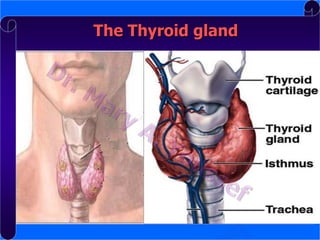
The Thyroid gland
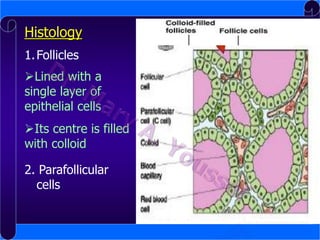
Histology
1. Follicles
Lined with a
single layer of
epithelial cells
Its centre is filled
with colloid
2. Parafollicular
cells
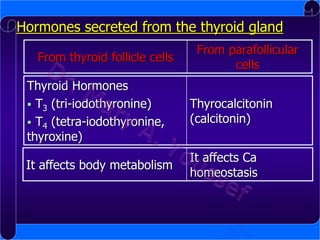
Hormones secreted from the thyroid gland
From thyroid follicle cells

From parafollicular
cells

Thyroid Hormones
 T3 (tri-iodothyronine)
 T4 (tetra-iodothyronine,
thyroxine)

Thyrocalcitonin
(calcitonin)

It affects body metabolism

It affects Ca
homeostasis
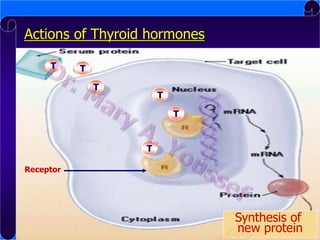
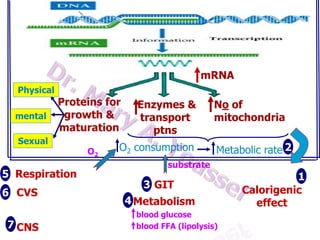
Actions of Thyroid hormones
T

T
T

T
T

T
Receptor

Synthesis of
new protein
mRNA
Physical
mental

Proteins for
growth &
maturation

Sexual

5 Respiration
6 CVS
7 CNS

O2

Enzymes &
transport
ptns

O2 consumption

No of
mitochondria

Metabolic rate 2

substrate

3 GIT

4 Metabolism
blood glucose
blood FFA (lipolysis)

1
Calorigenic
effect
Hypothalamus
Cold &
+
emotional
stress
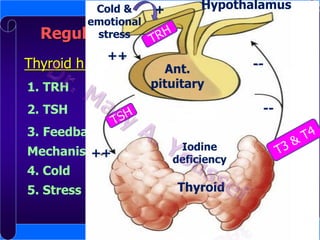
Regulation of thyroid hormones

++

Thyroid h. secretion is Ant.
regulated by :
-1. TRH

pituitary

--

2. TSH
3. Feedback
Mechanism
++
4. Cold
5. Stress

Iodine
deficiency

Thyroid
Disorders of thyroid hormone
secretion
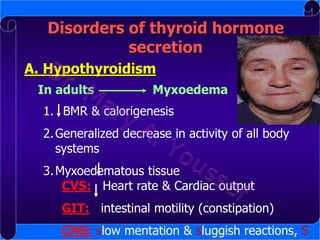
A. Hypothyroidism
In adults

Myxoedema

1. BMR & calorigenesis
2. Generalized decrease in activity of all body
systems
3. Myxoedematous tissue
CVS: Heart rate & Cardiac output

GIT: intestinal motility (constipation)
CNS: slow mentation & sluggish reactions, S
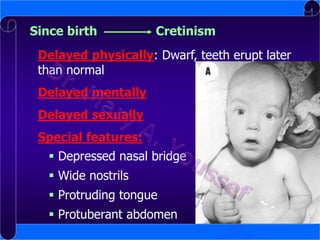
Since birth

Cretinism

Delayed physically: Dwarf, teeth erupt later
than normal
Delayed mentally

Delayed sexually
Special features:
 Depressed nasal bridge
 Wide nostrils
 Protruding tongue
 Protuberant abdomen
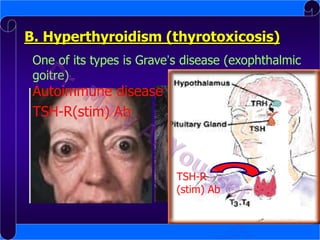
B. Hyperthyroidism (thyrotoxicosis)
One of its types is Grave’s disease (exophthalmic
goitre)

Autoimmune disease
TSH-R(stim) Ab

TSH-R
(stim) Ab
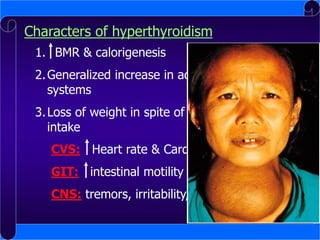
Characters of hyperthyroidism
1. BMR & calorigenesis

2. Generalized increase in activity of all body
systems
3. Loss of weight in spite of increased food
intake
CVS: Heart rate & Cardiac output
GIT: intestinal motility (diarrhea)

CNS: tremors, irritability, insomnia
Calcium homeostasis
 The adult human body contains 1 Kg of calcium
 Functions of calcium:
1. Mineralization of bones & teeth

2. Blood clotting
3. Neuromuscular excitability

4. Muscle contraction & relaxation
5. Release of neurotransmitters

6. Hormonal secretion & act as a 2ry messenger
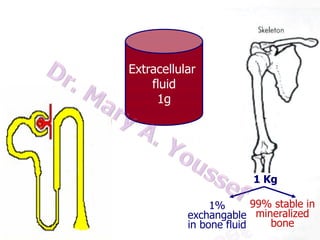
Diet 1g
175 mg

8
Extracellular
fluid
1g
10 g
filtered/day
1 Kg
175 mg

99% stable in
1%
exchangable mineralized
bone
in bone fluid
Plasma calcium:
Its concentration is about 10mg/dl
1. Ionized 50%
2. Bound to protein 40%

3. Complex & diffusible form 10%

Solubility product:
[Ca2+] x [PO43-] = constant
Bone
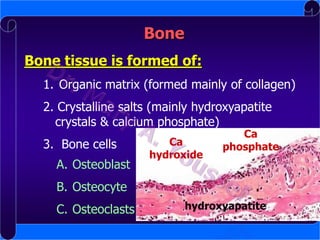
Bone tissue is formed of:
1. Organic matrix (formed mainly of collagen)
2. Crystalline salts (mainly hydroxyapatite
crystals & calcium phosphate)
3. Bone cells
A. Osteoblast

Ca
hydroxide

Ca
phosphate

B. Osteocyte

C. Osteoclasts

hydroxyapatite
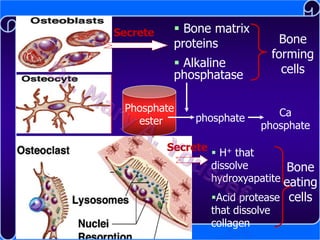
Secrete

 Bone matrix
proteins
 Alkaline
phosphatase

Phosphate
ester

phosphate

Secrete

Bone
forming
cells
Ca
phosphate

 H+ that
dissolve
Bone
hydroxyapatite eating
Acid protease cells
that dissolve
collagen
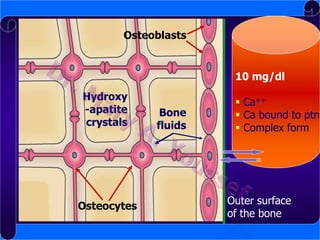
Osteoblasts

10 mg/dl
Hydroxy
-apatite
crystals

Osteocytes

Bone
fluids

 Ca++
 Ca bound to ptn
 Complex form

Outer surface
of the bone
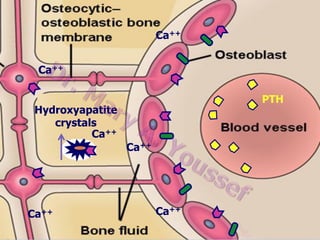
Hormonal control of plasma Ca level
Ca++
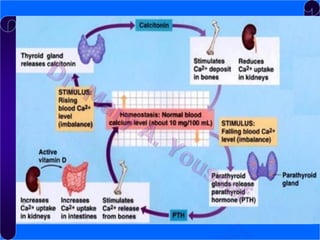
3 hormones play a role in the control of plasma Ca
Ca++
level

1. Parathormone hormone (PTH)
Source: Parathyroid gland
Hydroxyapatite
Actions:
crystals
Ca++

1. On bones

A.Rapid phase
2. On kidney
B.Slow Phase
3. On GIT
Ca++

Ca++

Ca++

PTH
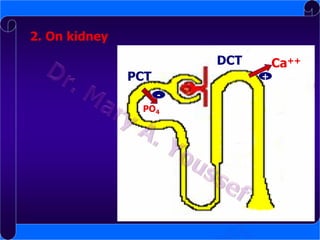
2. On kidney
DCT
PCT

Ca++
+

-

PO4
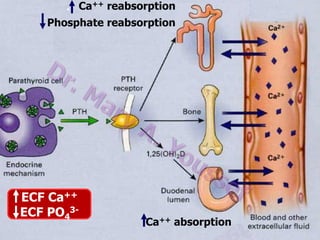
Ca++ reabsorption
Phosphate reabsorption

ECF Ca++
ECF PO43-

Ca++ absorption
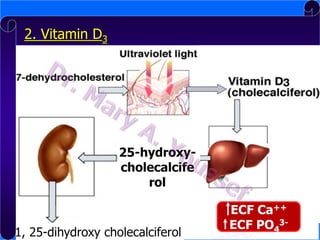
2. Vitamin D3

Source: Skin

25-hydroxycholecalcife
rol

1, 25-dihydroxy cholecalciferol

ECF Ca++
ECF PO43-
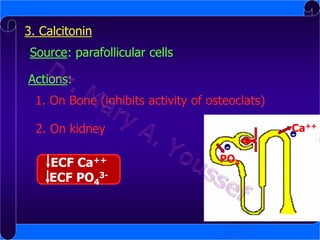
3. Calcitonin
Source: parafollicular cells
Actions:
1. On Bone (inhibits activity of osteoclats)
2. On kidney

Ca++

-

ECF Ca++
ECF PO43-

PO4
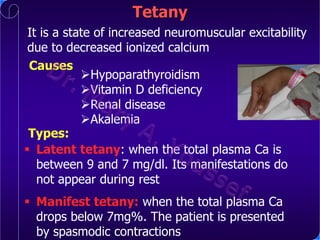
Tetany
It is a state of increased neuromuscular excitability
due to decreased ionized calcium
Causes
Hypoparathyroidism
Vitamin D deficiency
Renal disease
Akalemia
Types:
 Latent tetany: when the total plasma Ca is
between 9 and 7 mg/dl. Its manifestations do
not appear during rest
 Manifest tetany: when the total plasma Ca
drops below 7mg%. The patient is presented
by spasmodic contractions
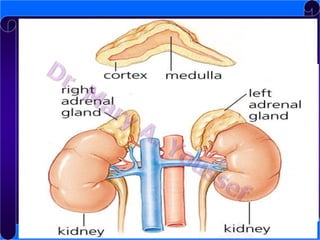
The adrenal glands
Each adrenal gland consists of two
endocrine organs
1. Adrenal cortex
Secretes steroid hormones

2. Adrenal medulla
Secretes catecholamines

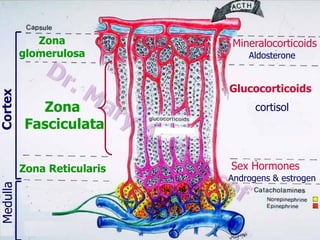
cortex
Cortex

Medulla

Zona
glomerulosa

Mineralocorticoids
Aldosterone

Glucocorticoids

Zona
Fasciculata
Zona Reticularis

cortisol

Sex Hormones
Androgens & estrogen
A. Glucocorticoids
Cortisol = 95% of total glucocorticoid
activity.
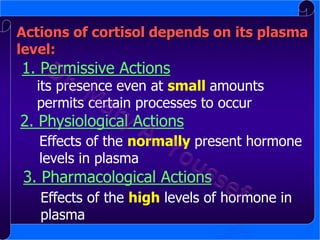
Actions of cortisol depends on its plasma
level:

1. Permissive Actions

its presence even at small amounts
permits certain processes to occur

2. Physiological Actions

Effects of the normally present hormone
levels in plasma

3. Pharmacological Actions
Effects of the high levels of hormone in
plasma
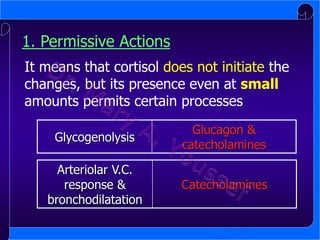
1. Permissive Actions
It means that cortisol does not initiate the
changes, but its presence even at small
amounts permits certain processes
Glycogenolysis

Glucagon &
catecholamines

Arteriolar V.C.
response &
bronchodilatation

Catecholamines
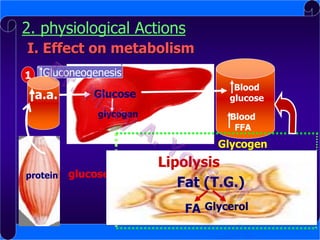
2. physiological Actions
I. Effect on metabolism
1

Gluconeogenesis

a.a.

Glucose
glycogen

Blood
glucose
Blood
FFA

Glycogen
protein

glucose

2

Glycogen
phosphorylase
Lipolysis
synthase
Glucose 6-PO4
Fat (T.G.)
3 Glycolysis

FA Glycerol

pyruvate
I. Effect on metabolism

II. Effect on CNS
Required for normal EEG pattern

III. Weak mineralocorticoid effect
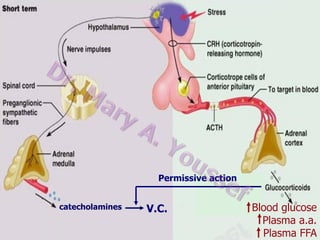
IV. Anti-stress effect

Permissive action
catecholamines

V.C.

Blood glucose
Plasma a.a.
Plasma FFA
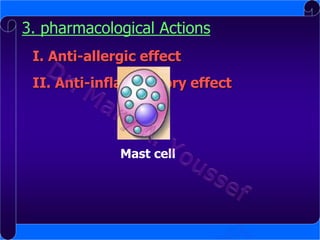
3. pharmacological Actions
I. Anti-allergic effect
II. Anti-inflammatory effect

Mast cell
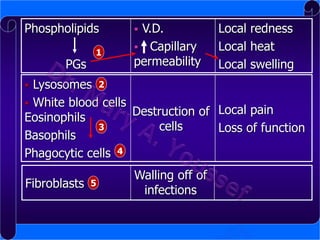
Phospholipids

PGs

1

V.D.
 Capillary
permeability


Local redness
Local heat
Local swelling

Lysosomes 2
 White blood cells
Destruction of Local pain
Eosinophils
3
cells
Loss of function
Basophils
Phagocytic cells 4


Fibroblasts

5

Walling off of
infections
5

4

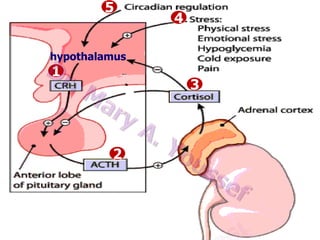
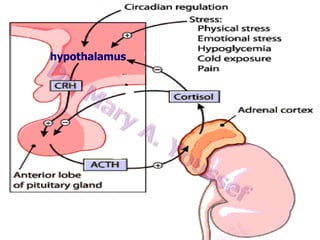
Control of glucocorticoid secretion
hypothalamus

1

3

2
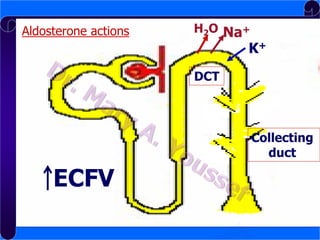
H2O Na+
Aldosterone actions
B. Mineralocorticoids

K+

Actions:
DCT

Collecting
duct

ECFV
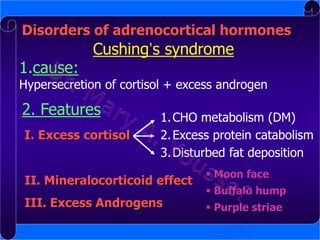
Disorders of adrenocortical hormones

1.cause:

Cushing’s syndrome

Hypersecretion of cortisol + excess androgen

2. Features
I. Excess cortisol

1. CHO metabolism (DM)
2. Excess protein catabolism
3. Disturbed fat deposition

II. Mineralocorticoid effect

III. Excess Androgens

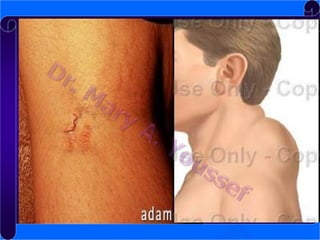
 Moon face
 Buffalo hump
 Purple striae
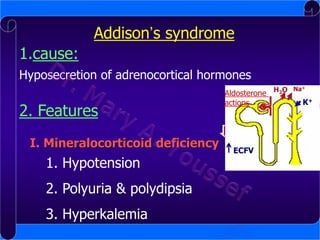
Addison’s syndrome
1.cause:
Hyposecretion of adrenocortical hormones

2. Features
I. Mineralocorticoid deficiency

1. Hypotension
2. Polyuria & polydipsia
3. Hyperkalemia

Aldosterone H2O
actions

Na+

B. K
Actions
Mineraloco
:
rticoids
ECFV

+
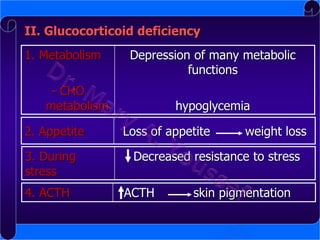
II. Glucocorticoid deficiency
1. Metabolism

Depression of many metabolic
functions

- CHO
metabolism
2. Appetite
3. During
stress
4. ACTH

hypoglycemia
Loss of appetite

weight loss

Decreased resistance to stress
ACTH

skin pigmentation
Control of glucocorticoid secretion
hypothalamus
1
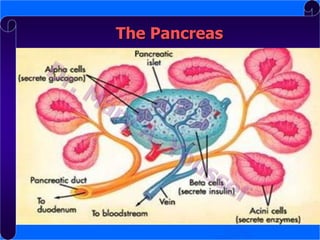
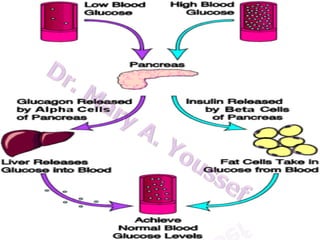
The Pancreas
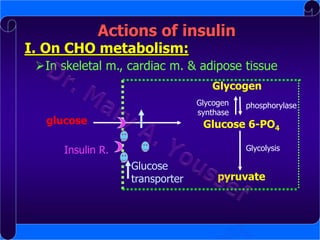
Actions of insulin

I. On CHO metabolism:

In skeletal m., cardiac m. & adipose tissue
Glycogen
Glycogen
synthase

glucose

phosphorylase

Glucose 6-PO4
Glycolysis

Insulin R.
Glucose
transporter

pyruvate
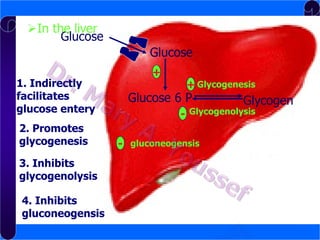
In the liver
Glucose
Glucose
1. Indirectly
facilitates
glucose entery
2. Promotes
glycogenesis
3. Inhibits
glycogenolysis

4. Inhibits
gluconeogensis

+

+ Glycogenesis

Glucose 6 P

Glycogen

- Glycogenolysis
- gluconeogensis
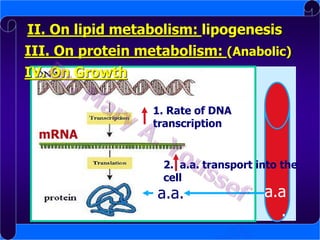
II. On lipid metabolism: lipogenesis
III. On protein metabolism: (Anabolic)
IV. On Growth

mRNA

1. Rate of DNA
transcription

2. a.a. transport into the
cell

a.a.

a.a
.
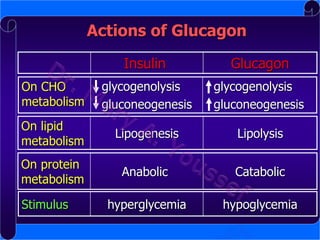
Actions of Glucagon
Insulin

Glucagon

On CHO
metabolism

glycogenolysis
gluconeogenesis

glycogenolysis
gluconeogenesis

On lipid
metabolism

Lipogenesis

Lipolysis

On protein
metabolism

Anabolic

Catabolic

hyperglycemia

hypoglycemia

Stimulus
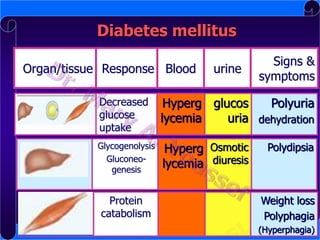
Diabetes mellitus
Organ/tissue Response Blood

urine

Signs &
symptoms

Decreased
glucose
uptake

Hyperg glucos
Polyuria
lycemia
uria dehydration

Glycogenolysis
Gluconeogenesis

Hyperg Osmotic
lycemia diuresis

Protein
catabolism

Polydipsia

Weight loss
Polyphagia
(Hyperphagia)
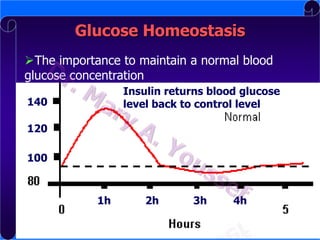
Glucose Homeostasis
The importance to maintain a normal blood
glucose concentration
Insulin returns blood glucose
Body response to ingestion of a meal (high
140
level back to control level

glucose)
120
100

1h

2h

3h

4h
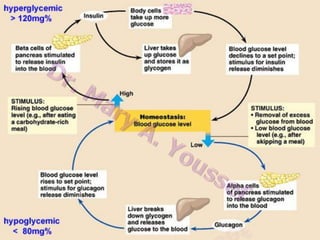
Mechanisms controlling blood
glucose concentration
1. Glucostatic function of the liver
 Glycogenesis (after meals)
 Glycogenolysis (between meals)
 Gluconeogenesis (during fasting)

2. Hormonal Mechanism
Both insulin & glucagon function as important
feedback control systems to maintain a normal
blood glucose level
Thank You

Endocrine System - Physiology

  • 1.
    “The endocrine system” By Dr.Mary A. Youssef ________________________________ Cairo University 2012
  • 2.
    Two main controlsystems 1. The nervous system 2. The endocrine system Slow control system Rapid control system
  • 3.
    Endocrine glands Exocrine glands ductless Haveducts Secrete their products (hormones) into the blood Secrete their products to the outer surface or the lumen of GIT Can reach distant tissue Can not
  • 4.
    2. The endocrinesystem hypothalamus
  • 6.
    (Sender) Gland Hormone (signal)  Small amount Rate of secretion blood  Superadded rhythms  Effector  Opposing effects receptor Target cell Hormone (receiver & transducer)
  • 7.
    Classification of hormones 1.According to their chemical nature 1. Protein and polypeptide H. Hypothalamic, pituitary, pancreatic & parathyroid H. 2. Steroid H. Adrenocortical and gonadal H. 3. Hormones derived from a.a. Thyroid h. & adrenal medullary h.
  • 8.
  • 9.
    2. According totheir origin Hypophysiotropic hormones 1. Releasing H.  GHRH  Thyrotropin (TSH) RH (TRH) Hypothalamus  Corticotropin RH  Gonadotropin RH 2. Inhibiting H.  Somatostatin (SS)  Prolactin inhibiting H.
  • 10.
    GHRH GHIH (SS) Hypothalamus PIH TRH CRH Anti-diureticH. (ADH) GnRH Anterior pituitary Growth H. prolactin H. Thyrotropin TSH Corticotropin ACTH posterior pituitary FSH & LH (gonadotropins) gonads T3&T4 Thyroid G. Oxytocin steroids Sex H.
  • 11.
    Mechanisms of hormoneaction What is meant by a target cell? What are the target cells of GHRH? a. cells of the Hypothalamus b. Anterior pituitary cells c. Posterior pituitary cells d. Bone cells GH
  • 12.
    I. Mechanism ofaction of protein & polypeptide hormones:  The hormone (1ry messenger) binds to a cell membrane receptor of target cell  formation of a 2nd messenger inside the cell - cAMP - Calcium-calmodulin - DAG & IP3  changing the activity of certain enzymes
  • 13.
    Hormone (1ry messenger) 1. cAMPsystem Receptor (2ry messenger) Change certain enzymes activity
  • 14.
    Hormone (1ry messenger) 2. Calcium-calmodulin system (2rymessenger) calmodulin Change certain enzymes activity
  • 15.
    Hormone (1ry messenger) 3. Membrane phospholipidsystem DAG (2ry messenger) Change certain enzymes activity IP3
  • 16.
    II. Mechanism ofaction of Steroid H. Receptor Increase or a decrease in the synthesis of a certain protein
  • 17.
    III. Mechanism ofaction of Thyroid H. T T T T T T Receptor Increase in the synthesis of certain proteins in almost all cells
  • 18.
    Protein or polypeptide H. Hypothalamic, pituitary, parathyroid, pancreatic Cellmembrane R. 2ry messenger - cAMP -Ca-calmodulin -DAG & IP3 Change the activity of already present enzymes Steroid H. H. derived from a.a. Adrenocortical & Gonadal h. Thyroid & adrenal medullary h. Cytoplasmic R. Nuclear R. _ _ Synthesis of new proteins Synthesis of new proteins
  • 19.
    Regulation of hormonesecretion Hypothalamus Ant. Pituitary G. Hormone -hormone feedback Target gland Substratehormone feedback Target gland hormone Substrate Mineral Mineralhormone feedback
  • 20.
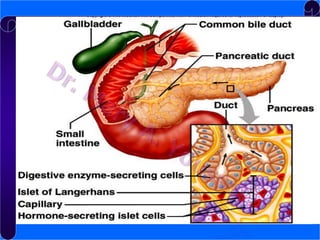
    The pituitary gland(hypophysis)
  • 21.
  • 22.
  • 23.
    Hypothalamus Anterior pituitary glandhormones Anterior pituitary gland hormones  The anterior pituitary produces & secretes its own hormones Anti-diuretic H  Its Hormones are given the extension; (ADH) tropic, tropin or trophic posterior Anterior pituitary  It is the master pituitary for the majority of the Oxytocin endocrine glands Growth H. prolactin H. Thyrotropin TSH Corticotropin ACTH FSH & LH (gonadotropins) gonads T3&T4 Thyroid G. steroids Sex H.
  • 24.
    Which of theseis not produced by the anterior pituitary? ► ACTH ► follicle-stimulating ► Somatostatin (ss) ► Somatotropic H. hormone (FSH)
  • 25.
    Growth hormone (somatotropic hormone) Itis a protein hormone that stimulates growth Actions of growth hormone 1. On bone growth somatomedin GH
  • 26.
    2. On proteinmetabolism It is an anabolic hormone mRNA 1. Rate of DNA transcription 2. a.a. transport into the cell a.a. a.a .
  • 27.
    3. On carbohydratemetabolism It increases blood glucose level (diabetogenic action) Glycogen glucose 1 Insulin R. X Glycogen synthase Glucose 6-PO4 2 Glucose transporter phosphorylase Glycolysis pyruvate
  • 28.
    4. On lipidmetabolism GH Lipolysis Fat (T.G.) FA Glycerol FFA
  • 29.
    Factors affecting GHsecretion GH secretion is increased by GHRH  Low blood glucose and FFA  Protein meal  Emotional stress  Deep sleep GH secretion is Decreased by somatostatin  High blood glucose and FFA  treatment with corticosteroids
  • 30.
    Disorders of GHsecretion A. Growth hormone deficiency (dwarfism)  Decrease in the size of the trunk & extremities  Normal mental & sexual development
  • 31.
    Pituitary infantilism Failure of: Physical development  Sexual development GH Gonadotropins
  • 32.
    B. Growth hormoneExcess  Before closure of epiphyses Gigantism taller than normal  After closure of epiphysis Acromegaly
  • 33.
    Main features of acromegaly Nolinear growth of bones 1. Bones of hands and feet 2. Bones of the face 3. Mandible 4. The spine 5. Diabetes
  • 34.
    Hormone Actions Deficiency Pituitary On bone dwarfism: linear growth (viaOnly failure somatomedin) of physical develop. Growth  On protein H. Anabolic (Ant. Pituitary  On CHO Pituitary( infantilism: Diabetogenic Failure of  On lipid physical & lipolysis sexual develop. Excess  Gigantism: Before closure of epiphysis Acromegaly After closure of epiphysis
  • 35.
    Growth hormone A. directlystimulates growth of cartilage and bone. B. enhances protein breakdown in nonvital muscles. C. levels are subnormal in Gigantism. D. promotes lipolysis in adipose tissue.
  • 36.
  • 37.
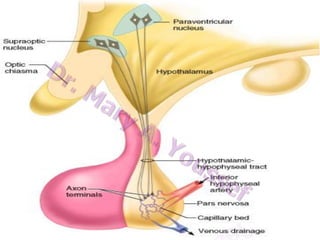
    Antidiuretic hormone (ADH) (Vasopressin) It is a protein hormone  Formed in supraoptic n. of the hypothalamus and secreted from the posterior pituitary
  • 38.
    Actions of ADH(vasopressin) 1. On Kidney Anti-diuresis (retention of water)
  • 39.
    2. On bloodvessels Pressor effect 3. On smooth muscles Contraction of the smooth muscles
  • 40.
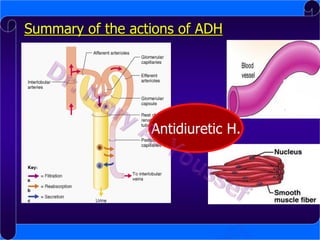
    Summary of theactions of ADH Antidiuretic H.
  • 41.
    Antidiuretic hormone Blood volume Vascularresistance Arterial blood pressure
  • 42.
    Regulation of ADHsecretion H2 o + ADH- secretion is increased by Hypovolaemia  osmotic pressure of ECF Baroreceptors & low pressure volume (e.g. Hge)  blood R  Stress  Drugs (e.g. morphine & nicotine) Na+ osmoreceptors
  • 43.
    Disorders of ADHsecretion ADH deficiency 1. Polyuria 2. Polydipsia 3. Loss of water soluble vitamins Diabetes insipidus
  • 44.
    Oxytocin  It isa protein hormone  Formed in paraventricular n. of the hypothalamus and secreted from the posterior pituitary Actions of Oxytocin 1. Uterine contraction during delivery 2. Milk ejection action during suckling 3. Mild antidiuretic action
  • 45.
  • 46.
    Histology 1. Follicles Lined witha single layer of epithelial cells Its centre is filled with colloid 2. Parafollicular cells
  • 47.
    Hormones secreted fromthe thyroid gland From thyroid follicle cells From parafollicular cells Thyroid Hormones  T3 (tri-iodothyronine)  T4 (tetra-iodothyronine, thyroxine) Thyrocalcitonin (calcitonin) It affects body metabolism It affects Ca homeostasis
  • 48.
    Actions of Thyroidhormones T T T T T T Receptor Synthesis of new protein
  • 49.
    mRNA Physical mental Proteins for growth & maturation Sexual 5Respiration 6 CVS 7 CNS O2 Enzymes & transport ptns O2 consumption No of mitochondria Metabolic rate 2 substrate 3 GIT 4 Metabolism blood glucose blood FFA (lipolysis) 1 Calorigenic effect
  • 50.
    Hypothalamus Cold & + emotional stress Regulation ofthyroid hormones ++ Thyroid h. secretion is Ant. regulated by : -1. TRH pituitary -- 2. TSH 3. Feedback Mechanism ++ 4. Cold 5. Stress Iodine deficiency Thyroid
  • 51.
    Disorders of thyroidhormone secretion A. Hypothyroidism In adults Myxoedema 1. BMR & calorigenesis 2. Generalized decrease in activity of all body systems 3. Myxoedematous tissue CVS: Heart rate & Cardiac output GIT: intestinal motility (constipation) CNS: slow mentation & sluggish reactions, S
  • 52.
    Since birth Cretinism Delayed physically:Dwarf, teeth erupt later than normal Delayed mentally Delayed sexually Special features:  Depressed nasal bridge  Wide nostrils  Protruding tongue  Protuberant abdomen
  • 53.
    B. Hyperthyroidism (thyrotoxicosis) Oneof its types is Grave’s disease (exophthalmic goitre) Autoimmune disease TSH-R(stim) Ab TSH-R (stim) Ab
  • 54.
    Characters of hyperthyroidism 1.BMR & calorigenesis 2. Generalized increase in activity of all body systems 3. Loss of weight in spite of increased food intake CVS: Heart rate & Cardiac output GIT: intestinal motility (diarrhea) CNS: tremors, irritability, insomnia
  • 55.
    Calcium homeostasis  Theadult human body contains 1 Kg of calcium  Functions of calcium: 1. Mineralization of bones & teeth 2. Blood clotting 3. Neuromuscular excitability 4. Muscle contraction & relaxation 5. Release of neurotransmitters 6. Hormonal secretion & act as a 2ry messenger
  • 56.
    Diet 1g 175 mg 8 Extracellular fluid 1g 10g filtered/day 1 Kg 175 mg 99% stable in 1% exchangable mineralized bone in bone fluid
  • 57.
    Plasma calcium: Its concentrationis about 10mg/dl 1. Ionized 50% 2. Bound to protein 40% 3. Complex & diffusible form 10% Solubility product: [Ca2+] x [PO43-] = constant
  • 58.
    Bone Bone tissue isformed of: 1. Organic matrix (formed mainly of collagen) 2. Crystalline salts (mainly hydroxyapatite crystals & calcium phosphate) 3. Bone cells A. Osteoblast Ca hydroxide Ca phosphate B. Osteocyte C. Osteoclasts hydroxyapatite
  • 59.
    Secrete  Bone matrix proteins Alkaline phosphatase Phosphate ester phosphate Secrete Bone forming cells Ca phosphate  H+ that dissolve Bone hydroxyapatite eating Acid protease cells that dissolve collagen
  • 60.
    Osteoblasts 10 mg/dl Hydroxy -apatite crystals Osteocytes Bone fluids  Ca++ Ca bound to ptn  Complex form Outer surface of the bone
  • 61.
    Hormonal control ofplasma Ca level Ca++ 3 hormones play a role in the control of plasma Ca Ca++ level 1. Parathormone hormone (PTH) Source: Parathyroid gland Hydroxyapatite Actions: crystals Ca++ 1. On bones A.Rapid phase 2. On kidney B.Slow Phase 3. On GIT Ca++ Ca++ Ca++ PTH
  • 62.
  • 63.
    Ca++ reabsorption Phosphate reabsorption ECFCa++ ECF PO43- Ca++ absorption
  • 64.
    2. Vitamin D3 Source:Skin 25-hydroxycholecalcife rol 1, 25-dihydroxy cholecalciferol ECF Ca++ ECF PO43-
  • 65.
    3. Calcitonin Source: parafollicularcells Actions: 1. On Bone (inhibits activity of osteoclats) 2. On kidney Ca++ - ECF Ca++ ECF PO43- PO4
  • 67.
    Tetany It is astate of increased neuromuscular excitability due to decreased ionized calcium Causes Hypoparathyroidism Vitamin D deficiency Renal disease Akalemia Types:  Latent tetany: when the total plasma Ca is between 9 and 7 mg/dl. Its manifestations do not appear during rest  Manifest tetany: when the total plasma Ca drops below 7mg%. The patient is presented by spasmodic contractions
  • 68.
    The adrenal glands Eachadrenal gland consists of two endocrine organs 1. Adrenal cortex Secretes steroid hormones 2. Adrenal medulla Secretes catecholamines cortex
  • 69.
  • 70.
    A. Glucocorticoids Cortisol =95% of total glucocorticoid activity.
  • 71.
    Actions of cortisoldepends on its plasma level: 1. Permissive Actions its presence even at small amounts permits certain processes to occur 2. Physiological Actions Effects of the normally present hormone levels in plasma 3. Pharmacological Actions Effects of the high levels of hormone in plasma
  • 72.
    1. Permissive Actions Itmeans that cortisol does not initiate the changes, but its presence even at small amounts permits certain processes Glycogenolysis Glucagon & catecholamines Arteriolar V.C. response & bronchodilatation Catecholamines
  • 73.
    2. physiological Actions I.Effect on metabolism 1 Gluconeogenesis a.a. Glucose glycogen Blood glucose Blood FFA Glycogen protein glucose 2 Glycogen phosphorylase Lipolysis synthase Glucose 6-PO4 Fat (T.G.) 3 Glycolysis FA Glycerol pyruvate
  • 74.
    I. Effect onmetabolism II. Effect on CNS Required for normal EEG pattern III. Weak mineralocorticoid effect IV. Anti-stress effect Permissive action catecholamines V.C. Blood glucose Plasma a.a. Plasma FFA
  • 75.
    3. pharmacological Actions I.Anti-allergic effect II. Anti-inflammatory effect Mast cell
  • 76.
    Phospholipids PGs 1 V.D.  Capillary permeability  Local redness Localheat Local swelling Lysosomes 2  White blood cells Destruction of Local pain Eosinophils 3 cells Loss of function Basophils Phagocytic cells 4  Fibroblasts 5 Walling off of infections
  • 77.
    5 4 Control of glucocorticoidsecretion hypothalamus 1 3 2
  • 78.
    H2O Na+ Aldosterone actions B.Mineralocorticoids K+ Actions: DCT Collecting duct ECFV
  • 79.
    Disorders of adrenocorticalhormones 1.cause: Cushing’s syndrome Hypersecretion of cortisol + excess androgen 2. Features I. Excess cortisol 1. CHO metabolism (DM) 2. Excess protein catabolism 3. Disturbed fat deposition II. Mineralocorticoid effect III. Excess Androgens  Moon face  Buffalo hump  Purple striae
  • 81.
    Addison’s syndrome 1.cause: Hyposecretion ofadrenocortical hormones 2. Features I. Mineralocorticoid deficiency 1. Hypotension 2. Polyuria & polydipsia 3. Hyperkalemia Aldosterone H2O actions Na+ B. K Actions Mineraloco : rticoids ECFV +
  • 82.
    II. Glucocorticoid deficiency 1.Metabolism Depression of many metabolic functions - CHO metabolism 2. Appetite 3. During stress 4. ACTH hypoglycemia Loss of appetite weight loss Decreased resistance to stress ACTH skin pigmentation
  • 83.
    Control of glucocorticoidsecretion hypothalamus
  • 85.
  • 87.
    Actions of insulin I.On CHO metabolism: In skeletal m., cardiac m. & adipose tissue Glycogen Glycogen synthase glucose phosphorylase Glucose 6-PO4 Glycolysis Insulin R. Glucose transporter pyruvate
  • 88.
    In the liver Glucose Glucose 1.Indirectly facilitates glucose entery 2. Promotes glycogenesis 3. Inhibits glycogenolysis 4. Inhibits gluconeogensis + + Glycogenesis Glucose 6 P Glycogen - Glycogenolysis - gluconeogensis
  • 89.
    II. On lipidmetabolism: lipogenesis III. On protein metabolism: (Anabolic) IV. On Growth mRNA 1. Rate of DNA transcription 2. a.a. transport into the cell a.a. a.a .
  • 90.
    Actions of Glucagon Insulin Glucagon OnCHO metabolism glycogenolysis gluconeogenesis glycogenolysis gluconeogenesis On lipid metabolism Lipogenesis Lipolysis On protein metabolism Anabolic Catabolic hyperglycemia hypoglycemia Stimulus
  • 91.
    Diabetes mellitus Organ/tissue ResponseBlood urine Signs & symptoms Decreased glucose uptake Hyperg glucos Polyuria lycemia uria dehydration Glycogenolysis Gluconeogenesis Hyperg Osmotic lycemia diuresis Protein catabolism Polydipsia Weight loss Polyphagia (Hyperphagia)
  • 92.
    Glucose Homeostasis The importanceto maintain a normal blood glucose concentration Insulin returns blood glucose Body response to ingestion of a meal (high 140 level back to control level glucose) 120 100 1h 2h 3h 4h
  • 93.
    Mechanisms controlling blood glucoseconcentration 1. Glucostatic function of the liver  Glycogenesis (after meals)  Glycogenolysis (between meals)  Gluconeogenesis (during fasting) 2. Hormonal Mechanism Both insulin & glucagon function as important feedback control systems to maintain a normal blood glucose level
  • 94.