Endocrine Glands
     Waqas Nawaz
          11-arid-975
               Group A-1
Endocrine Glands:


Endocrine glands are ductless organs that secrete
special substances termed HORMONES.
These hormones are released into circulatory system
and transported to distant receptor organ.
Hormones are produced by parenchymal cells,which
can be found as single,aggregate or organized as
endocrine glands.
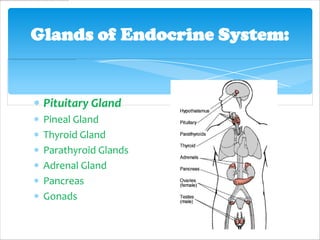
Glands of Endocrine System:


 Pituitary Gland
 Pineal Gland
 Thyroid Gland
 Parathyroid Glands
 Adrenal Gland
 Pancreas
 Gonads
Pituitary Gland
Called “Master gland” of the body.
Plays major regulatory role in entire endocrine
system.
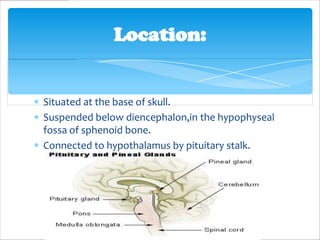
Location:


Situated at the base of skull.
Suspended below diencephalon,in the hypophyseal
fossa of sphenoid bone.
Connected to hypothalamus by pituitary stalk.
Morphology:


Pituitary gland is an un-paired organ.
Has size only of pea.
Anatomy of Pituitary Gland:


 Anatomically pituitary gland is made up of following 3
 parts……..
 Adenohypophysis (anterior pituitary)
 Neurohypophysis (posterior pituitary)
 Intermediate lobe
Adenohypophysis:


Consists of endocrine cells, numerous blood vessels
& very few nerve fibers.
The pituitary stalk contains a special portal
system,organised in same manner as portal venous
system in liver,with two capillary networks following
each other.
Blood supply to
       adenohypophysis:


Vessels from first capillary network convey blood to
anterior pituitary.
While second capillary system surrounds the hormone
producing cells.
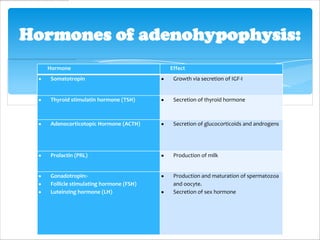
Hormones of adenohypophysis:
  Hormone                               Effect
   Somatotropin                          Growth via secretion of IGF-I


   Thyroid stimulatin hormone (TSH)      Secretion of thyroid hormone


   Adenocorticotopic Hormone (ACTH)      Secretion of glucocorticoids and androgens


   Prolactin (PRL)                       Production of milk


   Gonadotropin:-                        Production and maturation of spermatozoa
   Follicle stimulating hormone (FSH)    and oocyte.
   Luteinzing hormone (LH)               Secretion of sex hormone
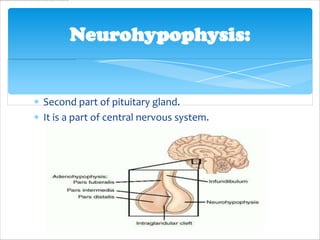
Neurohypophysis:


Second part of pituitary gland.
It is a part of central nervous system.
Location:


Located caudal to adenohypophysis.
It is a neural outgrowth of hypothlamus.
Anatomy of neurohypophysis:

 It consists of a stalk which connects the pituitary
 gland to tuber cinereum of hypothalamus and
 distal,major part of neurohypophysis.
Mode of secretion:


Contains no hormone producing cells.
Instead the hormones are secreted by the neurons
which have their cell bodies into hypothalamus.
Because the posterior pituitary hormones are
produced in hypothalamus.
So it is not entirely accurate to call posterior as
endocrine gland,rather it acts as hormone storage
store.
Conti……..


Neurohypophysis stores and releases hormones
produced by the neurosecretory cells of supraoptic
and paraventricular nuclei of hypothalamus.
Conti..
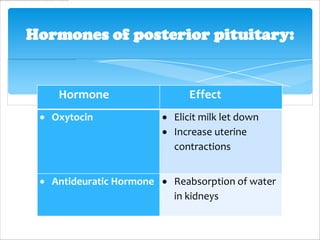
Hormones of posterior pituitary:


    Hormone                  Effect
   Oxytocin               Elicit milk let down
                          Increase uterine
                          contractions


   Antideuratic Hormone   Reabsorption of water
                          in kidneys
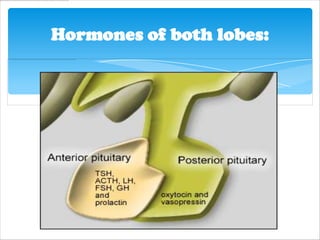
Hormones of both lobes:
Intermediate lobe:


The portion of adenohypophysis, in direct contact
with distal part of neurohypophysis is termed as
intermediate lobe.
Intermediate lobe is present between two major
parts of pituitary gland, which thing gives it its name.
During embryonic development intermediate lobe
develops from epithelial tissue.
Anatomy of intermediate lobe:


  Intermediate lobe extends around neurohypophysis
  and the anterior lobe is separated from the
  intermediate lobe by the hypophyseal cleft which is
  also known as cavum hypophysis.
Hormones of intermd. lobe:


The intermediate lobe of pituitary gland produces
melanocyte stimulating hormone.
Which regulates the skin colour.
This hormone regulates the skin colour only in lower
vertebrates but the function of this hormone is not
known in mammals and birds, although it is secreted.
Endocrine glands
Endocrine glands

Endocrine glands

  • 1.
    Endocrine Glands Waqas Nawaz 11-arid-975 Group A-1
  • 2.
    Endocrine Glands: Endocrine glandsare ductless organs that secrete special substances termed HORMONES. These hormones are released into circulatory system and transported to distant receptor organ. Hormones are produced by parenchymal cells,which can be found as single,aggregate or organized as endocrine glands.
  • 3.
    Glands of EndocrineSystem: Pituitary Gland Pineal Gland Thyroid Gland Parathyroid Glands Adrenal Gland Pancreas Gonads
  • 4.
    Pituitary Gland Called “Mastergland” of the body. Plays major regulatory role in entire endocrine system.
  • 5.
    Location: Situated at thebase of skull. Suspended below diencephalon,in the hypophyseal fossa of sphenoid bone. Connected to hypothalamus by pituitary stalk.
  • 6.
    Morphology: Pituitary gland isan un-paired organ. Has size only of pea.
  • 7.
    Anatomy of PituitaryGland: Anatomically pituitary gland is made up of following 3 parts…….. Adenohypophysis (anterior pituitary) Neurohypophysis (posterior pituitary) Intermediate lobe
  • 8.
    Adenohypophysis: Consists of endocrinecells, numerous blood vessels & very few nerve fibers. The pituitary stalk contains a special portal system,organised in same manner as portal venous system in liver,with two capillary networks following each other.
  • 9.
    Blood supply to adenohypophysis: Vessels from first capillary network convey blood to anterior pituitary. While second capillary system surrounds the hormone producing cells.
  • 10.
    Hormones of adenohypophysis: Hormone Effect Somatotropin Growth via secretion of IGF-I Thyroid stimulatin hormone (TSH) Secretion of thyroid hormone Adenocorticotopic Hormone (ACTH) Secretion of glucocorticoids and androgens Prolactin (PRL) Production of milk Gonadotropin:- Production and maturation of spermatozoa Follicle stimulating hormone (FSH) and oocyte. Luteinzing hormone (LH) Secretion of sex hormone
  • 11.
    Neurohypophysis: Second part ofpituitary gland. It is a part of central nervous system.
  • 12.
    Location: Located caudal toadenohypophysis. It is a neural outgrowth of hypothlamus.
  • 13.
    Anatomy of neurohypophysis: It consists of a stalk which connects the pituitary gland to tuber cinereum of hypothalamus and distal,major part of neurohypophysis.
  • 14.
    Mode of secretion: Containsno hormone producing cells. Instead the hormones are secreted by the neurons which have their cell bodies into hypothalamus. Because the posterior pituitary hormones are produced in hypothalamus. So it is not entirely accurate to call posterior as endocrine gland,rather it acts as hormone storage store.
  • 15.
    Conti…….. Neurohypophysis stores andreleases hormones produced by the neurosecretory cells of supraoptic and paraventricular nuclei of hypothalamus.
  • 16.
  • 17.
    Hormones of posteriorpituitary: Hormone Effect Oxytocin Elicit milk let down Increase uterine contractions Antideuratic Hormone Reabsorption of water in kidneys
  • 18.
  • 19.
    Intermediate lobe: The portionof adenohypophysis, in direct contact with distal part of neurohypophysis is termed as intermediate lobe. Intermediate lobe is present between two major parts of pituitary gland, which thing gives it its name. During embryonic development intermediate lobe develops from epithelial tissue.
  • 20.
    Anatomy of intermediatelobe: Intermediate lobe extends around neurohypophysis and the anterior lobe is separated from the intermediate lobe by the hypophyseal cleft which is also known as cavum hypophysis.
  • 21.
    Hormones of intermd.lobe: The intermediate lobe of pituitary gland produces melanocyte stimulating hormone. Which regulates the skin colour. This hormone regulates the skin colour only in lower vertebrates but the function of this hormone is not known in mammals and birds, although it is secreted.