UNIVERSITY OF
LUCKNOW
Faculty of Science
Department of Botany
Topic- Progymnosperm
Present by-
Madhesh kumar rai (011)
(M.Sc, 2nd sem.)
Plant science
Contents of the Topic
 Introduction of the Progymnosperms
 Characteristics of the Progymnosperms
 Origin of gymnosperm stele
 Homospory
 Anisospory
 Incipient Heterospory
 Heterospory
 Evolution of integument
Introduction
 The stratigraphically oldest known examples belong to
the Middle Devonian order the Aneurophytales, with
forms such as Protopteridium, in which the vegetative
organs consisted of relatively loose clusters of axes.
 Tetraxylopteris is another example of a genus lacking
leaves.
 In more advanced aneurophytaleans such as
Aneurophyton these vegetative organs started to look
rather more like fronds, and eventually during Late
Devonian times the anuerophytaleans are presumed to
have given rise to the pteridosperm order, the
Lyginopteridales.
INTRODUCTION
 The gymnosperms are believed to have appeared
during Upper Devonian and Lower
Carboniferous in Palaeozoic era approximately
350 million year ago.
 The progymnosperms are an extinct group of
woody, spore-bearing plants that is presumed to
have evolved from the trimerophytes, and
eventually gave rise to the gymnosperms.
 They have been treated formally at the rank of
division Progymnospermophyta or class
Progymnospermopsida (as opposite).
Characteristics
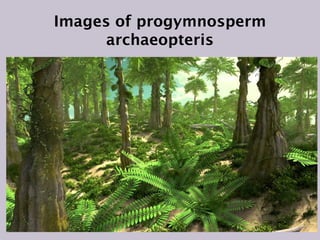
 In Late Devonian times, another group of
progymnosperms gave rise to the first really large
trees known as Archaeopteris.
 Vascular cambium with unlimited growth
potential is present as well as xylem and phloem.
 Ancestors of the earliest seed plants as well as the
first true trees.
 Strong monopodial growth is exhibited.
 Some were heterosporous but others were
homosporous
Origin of gymnosperm stele
 The Origin of gymnosperm stele was earlier
believed (Jeffrey 1899,1902,1917) to be from a
basic protostelic pattern which gave rise to
siphonostele by enclosing extrastelar
parenchymatous cortical tissue (as pith) and
simultaneous appearance of leaf gaps.
 The presence of leaf gaps was considered by
Jeffrey (1917) as one of the characteristic
features of the siphonostele in Filicales,
gymnosperms and angiosperms.
Homospory
 Homospory or isospory can be defined by the
occurrence of equal sized spores within the
same sporangium, which are morphologically
similar but genetically they may be similar or
different.
 Most of the bryophytes and pteridophytes
show homospory of one kind or the other.
 All the steps towards heterospory are basically
involved around the size and production of
spores within the same or differents porangia.
Anisospory
 Anisospory is reported only in dioecious
mosses and hepatics (e.g., Orthotrichaceae and
Targioniaceae).
 Two size of spores (small and large) are
produced in the same tetrad in a 1:1 ratio and
they subsequently give rise to male and and
female plants, respectively (Mogensen, 1983).
Incipient Heterospory
 Incipient Heterospory is aphenomenon
distinguished usually in fossil plants where
spores of different sizes were found within the
same sporangium but size of spores dose not
correspond to the sexes after their germination
as in the case of living Queensland genus
Platyzoma (Bower, 1926; Tryon, 1964 ).
 During the change described above the
sporangia became sex determined and the
gametophyte became from monoecious to
dioecious.
Heterospory
 In geological time, the evolution from
homospory to heterospory and then seed was
accomplished in about 40 million year (within
the Devonian).
 During Late Silurian and Early Devonian, only
homosporous plants were present.
 Two theories are known which use fossil
evidence to show how seeds and integument
evolved.
Images of progymnosperm
archaeopteris
Evolution of integument
 Long (1966) described and discussed the
evolution of integument of pteridosperm
ovules by the fusion of telome trusses.
 Genomosperma kidstoni represent the most
primitive form where eight filaments (tilome
trusses) cover a centrally placed
megasporangium.
Chapter - Progymnosperm lecture 2nd year

Chapter - Progymnosperm lecture 2nd year

  • 1.
    UNIVERSITY OF LUCKNOW Faculty ofScience Department of Botany Topic- Progymnosperm Present by- Madhesh kumar rai (011) (M.Sc, 2nd sem.) Plant science
  • 2.
    Contents of theTopic  Introduction of the Progymnosperms  Characteristics of the Progymnosperms  Origin of gymnosperm stele  Homospory  Anisospory  Incipient Heterospory  Heterospory  Evolution of integument
  • 3.
    Introduction  The stratigraphicallyoldest known examples belong to the Middle Devonian order the Aneurophytales, with forms such as Protopteridium, in which the vegetative organs consisted of relatively loose clusters of axes.  Tetraxylopteris is another example of a genus lacking leaves.  In more advanced aneurophytaleans such as Aneurophyton these vegetative organs started to look rather more like fronds, and eventually during Late Devonian times the anuerophytaleans are presumed to have given rise to the pteridosperm order, the Lyginopteridales.
  • 4.
    INTRODUCTION  The gymnospermsare believed to have appeared during Upper Devonian and Lower Carboniferous in Palaeozoic era approximately 350 million year ago.  The progymnosperms are an extinct group of woody, spore-bearing plants that is presumed to have evolved from the trimerophytes, and eventually gave rise to the gymnosperms.  They have been treated formally at the rank of division Progymnospermophyta or class Progymnospermopsida (as opposite).
  • 5.
    Characteristics  In LateDevonian times, another group of progymnosperms gave rise to the first really large trees known as Archaeopteris.  Vascular cambium with unlimited growth potential is present as well as xylem and phloem.  Ancestors of the earliest seed plants as well as the first true trees.  Strong monopodial growth is exhibited.  Some were heterosporous but others were homosporous
  • 6.
    Origin of gymnospermstele  The Origin of gymnosperm stele was earlier believed (Jeffrey 1899,1902,1917) to be from a basic protostelic pattern which gave rise to siphonostele by enclosing extrastelar parenchymatous cortical tissue (as pith) and simultaneous appearance of leaf gaps.  The presence of leaf gaps was considered by Jeffrey (1917) as one of the characteristic features of the siphonostele in Filicales, gymnosperms and angiosperms.
  • 7.
    Homospory  Homospory orisospory can be defined by the occurrence of equal sized spores within the same sporangium, which are morphologically similar but genetically they may be similar or different.  Most of the bryophytes and pteridophytes show homospory of one kind or the other.  All the steps towards heterospory are basically involved around the size and production of spores within the same or differents porangia.
  • 8.
    Anisospory  Anisospory isreported only in dioecious mosses and hepatics (e.g., Orthotrichaceae and Targioniaceae).  Two size of spores (small and large) are produced in the same tetrad in a 1:1 ratio and they subsequently give rise to male and and female plants, respectively (Mogensen, 1983).
  • 9.
    Incipient Heterospory  IncipientHeterospory is aphenomenon distinguished usually in fossil plants where spores of different sizes were found within the same sporangium but size of spores dose not correspond to the sexes after their germination as in the case of living Queensland genus Platyzoma (Bower, 1926; Tryon, 1964 ).  During the change described above the sporangia became sex determined and the gametophyte became from monoecious to dioecious.
  • 10.
    Heterospory  In geologicaltime, the evolution from homospory to heterospory and then seed was accomplished in about 40 million year (within the Devonian).  During Late Silurian and Early Devonian, only homosporous plants were present.  Two theories are known which use fossil evidence to show how seeds and integument evolved.
  • 11.
  • 12.
    Evolution of integument Long (1966) described and discussed the evolution of integument of pteridosperm ovules by the fusion of telome trusses.  Genomosperma kidstoni represent the most primitive form where eight filaments (tilome trusses) cover a centrally placed megasporangium.