Self-Empowerment: UNIT- XVII
Prepared By:
Prof. (Dr.) Rahul Sharma
Professor
Senior Coordinator
HOD Department of Mental Health Nursing
Ph.D. Coordinator
Seedling School of Nursing
Jaipur National University (NAAC-A+)
Self-Empowerment: A Journey
of Growth
Self-empowerment is a transformative journey of
personal growth and self-discovery. It's about
recognizing your strengths, embracing your
values, and taking control of your life.
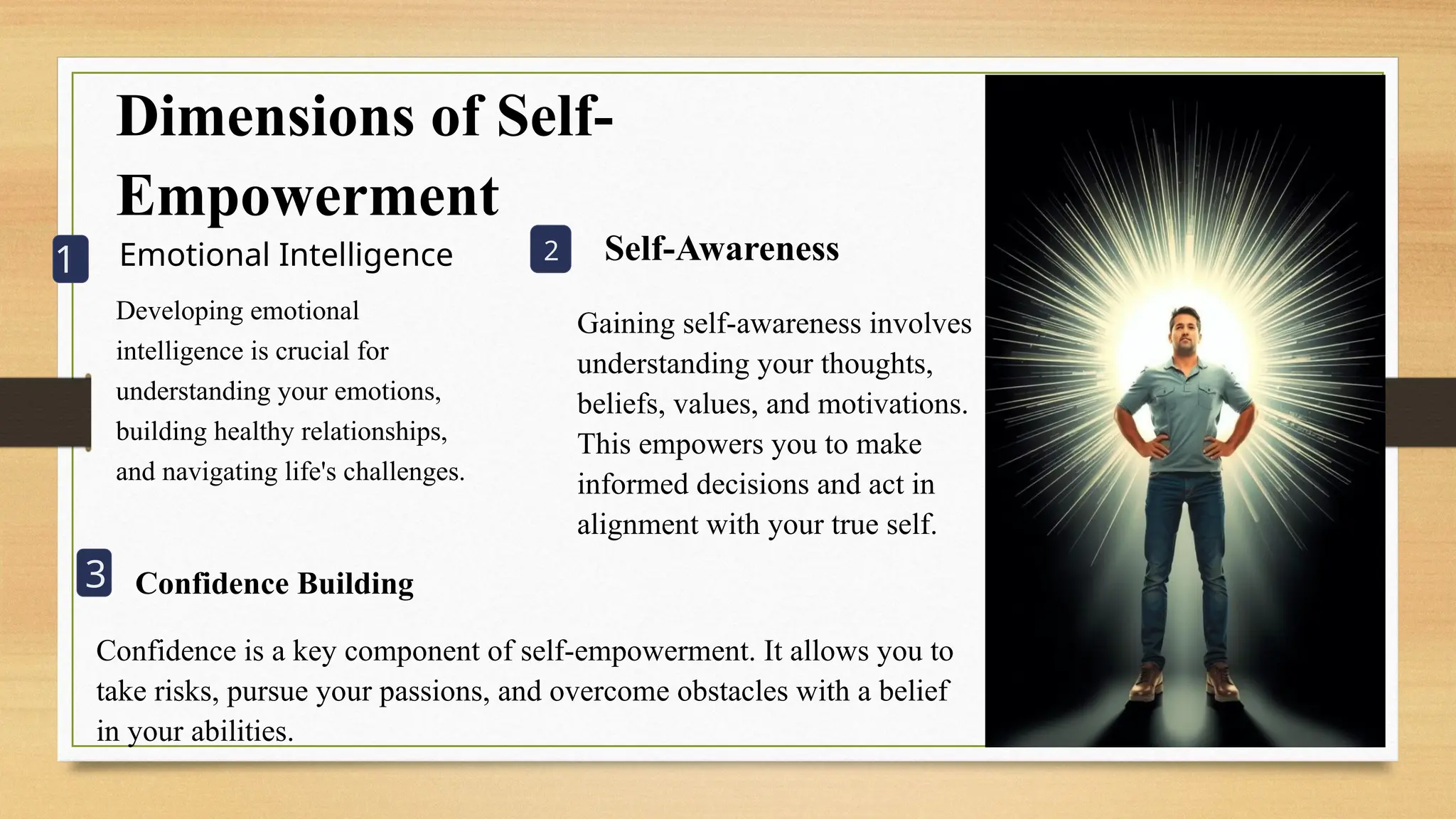
Dimensions of Self-
Empowerment
1 Emotional Intelligence
Developing emotional
intelligence is crucial for
understanding your emotions,
building healthy relationships,
and navigating life's challenges.
2 Self-Awareness
Gaining self-awareness involves
understanding your thoughts,
beliefs, values, and motivations.
This empowers you to make
informed decisions and act in
alignment with your true self.
3 Confidence Building
Confidence is a key component of self-empowerment. It allows you to
take risks, pursue your passions, and overcome obstacles with a belief
in your abilities.
Self-Empowerment Development
1 Identify Your Strengths
Recognize your natural talents, skills, and abilities.
2 Set Goals and Make Plans
Define your aspirations and create a roadmap to achieve
them.
3
Embrace challenges, experiment, and grow from your
successes and setbacks.
Take Action and Learn from Experiences
The Importance of Women's Empowerment in Society
Economic Growth
Empowering women leads to increased
economic participation, fostering
innovation and entrepreneurship.
Social Progress
Empowered women contribute to
stronger communities, promoting
equality, justice, and human rights.
Health and Well-being
Empowerment enhances women's access to education, healthcare,
and decision-making power, leading to improved health outcomes.
Professional Etiquette and Personal Grooming
Dress Code
Understanding and adhering
to appropriate dress codes
creates a professional image
and fosters respect.
Communication Skills
Effective communication,
including active listening, clear
articulation, and respectful
interactions, is crucial for
professional success.
Personal Hygiene
Maintaining good personal hygiene shows respect for yourself
and others, contributing to a positive workplace environment.

Self empowerment (Unit XVII), development.pptx

  • 1.
    Self-Empowerment: UNIT- XVII PreparedBy: Prof. (Dr.) Rahul Sharma Professor Senior Coordinator HOD Department of Mental Health Nursing Ph.D. Coordinator Seedling School of Nursing Jaipur National University (NAAC-A+)
  • 2.
    Self-Empowerment: A Journey ofGrowth Self-empowerment is a transformative journey of personal growth and self-discovery. It's about recognizing your strengths, embracing your values, and taking control of your life.
  • 3.
    Dimensions of Self- Empowerment 1Emotional Intelligence Developing emotional intelligence is crucial for understanding your emotions, building healthy relationships, and navigating life's challenges. 2 Self-Awareness Gaining self-awareness involves understanding your thoughts, beliefs, values, and motivations. This empowers you to make informed decisions and act in alignment with your true self. 3 Confidence Building Confidence is a key component of self-empowerment. It allows you to take risks, pursue your passions, and overcome obstacles with a belief in your abilities.
  • 4.
    Self-Empowerment Development 1 IdentifyYour Strengths Recognize your natural talents, skills, and abilities. 2 Set Goals and Make Plans Define your aspirations and create a roadmap to achieve them. 3 Embrace challenges, experiment, and grow from your successes and setbacks. Take Action and Learn from Experiences
  • 5.
    The Importance ofWomen's Empowerment in Society Economic Growth Empowering women leads to increased economic participation, fostering innovation and entrepreneurship. Social Progress Empowered women contribute to stronger communities, promoting equality, justice, and human rights. Health and Well-being Empowerment enhances women's access to education, healthcare, and decision-making power, leading to improved health outcomes.
  • 6.
    Professional Etiquette andPersonal Grooming Dress Code Understanding and adhering to appropriate dress codes creates a professional image and fosters respect. Communication Skills Effective communication, including active listening, clear articulation, and respectful interactions, is crucial for professional success. Personal Hygiene Maintaining good personal hygiene shows respect for yourself and others, contributing to a positive workplace environment.