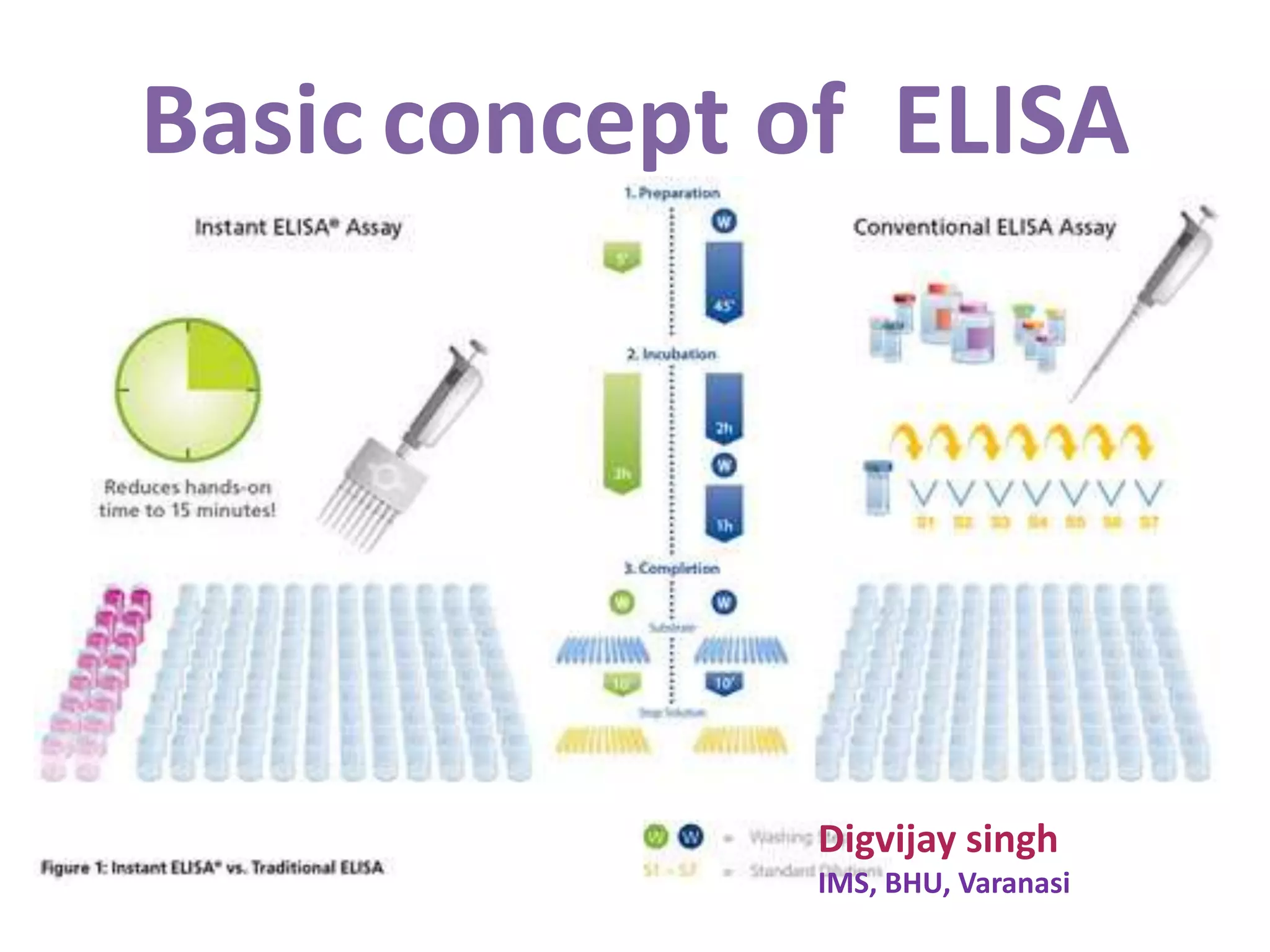
Basic concept of ELISA
Digvijay singh
IMS, BHU, Varanasi
ENZYME LINKED
IMMUNOSORBENT ASSAY
INTRODUCTION TO ELISA
• ELISA or enzyme linked immunosorbent assay are quantitative
immunological procedures in which the Ag-Ab reaction is monitored by
enzyme measurement.
or
• ELISA (enzyme linked immuno sorbent assay) is a common laboratory
technique which is use to measure the concentration of analyte (usally Ag
or Ab) in solution.
Why known as………….?
Enzyme Linked Immunosorbent Assay
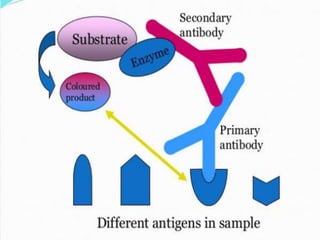
• Antigen/Antibody of interest is absorbed on
the plastic surface(sorbent).
• Antigen is recognised by specific
antibody(immuno).
• The antibody is recognised by specific
antibody(immuno) which has enzyme
attached(enzyme-linked).
• substrate reacts with enzyme to produced
product usually coloured
History of Elisa
• 1960 Radioimmunoassay
• 1966 Non radio immunoassay(enzyme linked)
• 1971 Method to perform EIA/ELISA
• In 1971 Peter Perlmann and Eva Engvall used
term ELISA.
• 2012 an ultrasensitive enzyme based ELISA
test.
BASIC PRINCIPLE OF ELISA
• Use an enzyme to detect the binding of
antigen(Ag) antibody (Ab).
• The enzyme converts a colourless substrate
(Chromogen) to a colour product, incubating
the presence of Ag-Ab binding.
• An ELISA can be used to detect either the
presence of Antigen or Antibody in a sample
depending how the test is designed.
NON COMPETATIVE ELISA
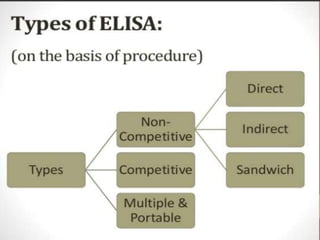
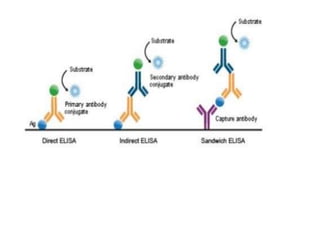
• 1- DIRECT ELISA *It use a primary labeled
antibody that react directly with the antigen.
• It can be performed with the antigen that is
directly immobilized on the assay plate.
• Not widely used but common for Immuno-
histochemical staining of cell & tissue.
• 2-INDIRECT ELISA * It utilizes a primary un-
labeled antibody in conjunction with a labeled
secondary antibody.
• secondry antibody has specific for primary
antibody.
NON-COMPETATIVE ELISA
• 3-Sandwich ELISA * Antigen like Tumour
markers,hormones,serum proteins may be
determined.
• Antigens in the sample binds with the capture
antibody & become immobilized.
• The antibody of the enzyme conjugate bind
with the immobilized antigen to form a
sandwich of Ab-Ag-Ab/ enzyme bound to
microwell.
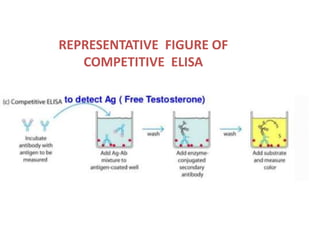
COMPETATIVE ELISA
• Antibody coated microwell.
• Serum antigen and labeled antigen added
together.
• Ag-Ab enzyme complex bound is inversely
related to the conc. of antigen present in sample.
• Increased serum antigen results in reduced
binding of Ag-enzyme conjugated with the
antibody producing less enzyme activity &
(yellow colour) formation.
• Used to determine small molecules like T3,T4 etc.
REPRESENTATIVE FIGURE OF
COMPETITIVE ELISA
Multiple & Portable ELISA
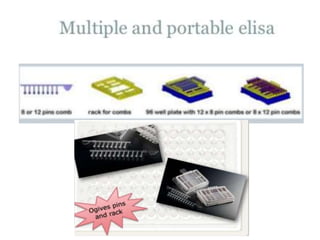
• A new technique use an solid phase made up of
an immune-sorbent polystyrene rod with 8-12
protruding ogives pins.
• The entire device is immersed in a test tube
containing the collected sample and the following
steps (washing , incubation in the conjugate and
incubation in chromogenous) are carried out by
dipping the ogives in microwells of standard
microplates pre-filled with reagents.
Advantage of ELISA
• Reagent are relatively cheap & have along self
life.
• ELISA is highly specific and sensitive.
• No radiation hazard occur during labelling or
disposal of waste.
• Easy to perform and quick procedures.
• ELISA can be used to variety of infections and
research.
Disadvantages of ELISA
• Measurement of enzyme activity can be more
complex.
• Enzyme activity may be affected by plasma
constituents.
• Kits are commercially available but not cheap.
• very specific to a particular antigen won’t
recognize any other antigen.
• false positives/negatives possible.
Limitations
• Result may not be absolute.
• Antibody must be available.
• Concentration may be unclear.
• False positive possible.
• False negative possible.
Application of ELISA
• Proteins
• Hormones
• Drug Markers
• Tumor Markers
• Serum proteins
• Antibody and Antigen detection
• vaccine Quality control
• In clinical research etc.
Troubleshooting in ELISA
If the negative controls are giving positive result:
• 1-Contamination of substrate solution, enzyme-labelled
antibody, control themselves.
• 2-Inadequate rinsing of plates.
• 3-Inadequate blocking of plates.
If no colour developed for the positive controls or for the
samples:
* Check all reagents for dating and storage condition.
*Microwell plate not coated properly.
*Reagents applied in wrong order or step.
*Enzyme conjugate defective or inhibited by contamination
If a very little colour has developed for
positive controls and the test samples
• Check the dilution of the enzyme labelled
antibody.
• The concentration of the substrate.
• Wash buffer not adequately drained after every
wash step.
• Inadequate incubation times.
• Enzyme conjugate or substrate defective or
contaminated.
• microwell plate poorly coated
If colour has developed for the test
sample but not positive controls
• Check the source of positive controls, their
expiry date and storage.
• If the colour can be seen but the absorbance
is not high as expected check the wave
length.
Application of ELISA in viral
disease in our VRDL lab
• Dengue-NS1 -Ag, IgM,IgG Ab.
• Japanese Encephalitis-IgM,IgG Ab.
• Influenza-IgM,IgG Ab .
• Chikungunya- IgM,IgG Ab.
• Scrub typhus- IgM,IgG Ab.
• Leptospirosis-IgM Ab.
• Zika-IgM,IgG Ab.
• Ebola and other out break of viral infections
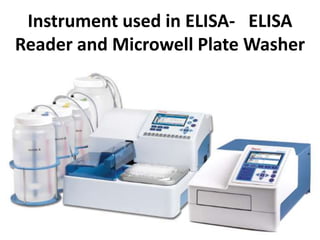
Instrument used in ELISA- ELISA
Reader and Microwell Plate Washer
Presentation elisa ppt

Presentation elisa ppt

  • 1.
    Basic concept ofELISA Digvijay singh IMS, BHU, Varanasi
  • 2.
    ENZYME LINKED IMMUNOSORBENT ASSAY INTRODUCTIONTO ELISA • ELISA or enzyme linked immunosorbent assay are quantitative immunological procedures in which the Ag-Ab reaction is monitored by enzyme measurement. or • ELISA (enzyme linked immuno sorbent assay) is a common laboratory technique which is use to measure the concentration of analyte (usally Ag or Ab) in solution.
  • 3.
    Why known as………….? EnzymeLinked Immunosorbent Assay • Antigen/Antibody of interest is absorbed on the plastic surface(sorbent). • Antigen is recognised by specific antibody(immuno). • The antibody is recognised by specific antibody(immuno) which has enzyme attached(enzyme-linked). • substrate reacts with enzyme to produced product usually coloured
  • 5.
    History of Elisa •1960 Radioimmunoassay • 1966 Non radio immunoassay(enzyme linked) • 1971 Method to perform EIA/ELISA • In 1971 Peter Perlmann and Eva Engvall used term ELISA. • 2012 an ultrasensitive enzyme based ELISA test.
  • 6.
    BASIC PRINCIPLE OFELISA • Use an enzyme to detect the binding of antigen(Ag) antibody (Ab). • The enzyme converts a colourless substrate (Chromogen) to a colour product, incubating the presence of Ag-Ab binding. • An ELISA can be used to detect either the presence of Antigen or Antibody in a sample depending how the test is designed.
  • 9.
    NON COMPETATIVE ELISA •1- DIRECT ELISA *It use a primary labeled antibody that react directly with the antigen. • It can be performed with the antigen that is directly immobilized on the assay plate. • Not widely used but common for Immuno- histochemical staining of cell & tissue. • 2-INDIRECT ELISA * It utilizes a primary un- labeled antibody in conjunction with a labeled secondary antibody. • secondry antibody has specific for primary antibody.
  • 10.
    NON-COMPETATIVE ELISA • 3-SandwichELISA * Antigen like Tumour markers,hormones,serum proteins may be determined. • Antigens in the sample binds with the capture antibody & become immobilized. • The antibody of the enzyme conjugate bind with the immobilized antigen to form a sandwich of Ab-Ag-Ab/ enzyme bound to microwell.
  • 12.
    COMPETATIVE ELISA • Antibodycoated microwell. • Serum antigen and labeled antigen added together. • Ag-Ab enzyme complex bound is inversely related to the conc. of antigen present in sample. • Increased serum antigen results in reduced binding of Ag-enzyme conjugated with the antibody producing less enzyme activity & (yellow colour) formation. • Used to determine small molecules like T3,T4 etc.
  • 13.
  • 14.
    Multiple & PortableELISA • A new technique use an solid phase made up of an immune-sorbent polystyrene rod with 8-12 protruding ogives pins. • The entire device is immersed in a test tube containing the collected sample and the following steps (washing , incubation in the conjugate and incubation in chromogenous) are carried out by dipping the ogives in microwells of standard microplates pre-filled with reagents.
  • 19.
    Advantage of ELISA •Reagent are relatively cheap & have along self life. • ELISA is highly specific and sensitive. • No radiation hazard occur during labelling or disposal of waste. • Easy to perform and quick procedures. • ELISA can be used to variety of infections and research.
  • 20.
    Disadvantages of ELISA •Measurement of enzyme activity can be more complex. • Enzyme activity may be affected by plasma constituents. • Kits are commercially available but not cheap. • very specific to a particular antigen won’t recognize any other antigen. • false positives/negatives possible.
  • 21.
    Limitations • Result maynot be absolute. • Antibody must be available. • Concentration may be unclear. • False positive possible. • False negative possible.
  • 22.
    Application of ELISA •Proteins • Hormones • Drug Markers • Tumor Markers • Serum proteins • Antibody and Antigen detection • vaccine Quality control • In clinical research etc.
  • 23.
    Troubleshooting in ELISA Ifthe negative controls are giving positive result: • 1-Contamination of substrate solution, enzyme-labelled antibody, control themselves. • 2-Inadequate rinsing of plates. • 3-Inadequate blocking of plates. If no colour developed for the positive controls or for the samples: * Check all reagents for dating and storage condition. *Microwell plate not coated properly. *Reagents applied in wrong order or step. *Enzyme conjugate defective or inhibited by contamination
  • 24.
    If a verylittle colour has developed for positive controls and the test samples • Check the dilution of the enzyme labelled antibody. • The concentration of the substrate. • Wash buffer not adequately drained after every wash step. • Inadequate incubation times. • Enzyme conjugate or substrate defective or contaminated. • microwell plate poorly coated
  • 25.
    If colour hasdeveloped for the test sample but not positive controls • Check the source of positive controls, their expiry date and storage. • If the colour can be seen but the absorbance is not high as expected check the wave length.
  • 26.
    Application of ELISAin viral disease in our VRDL lab • Dengue-NS1 -Ag, IgM,IgG Ab. • Japanese Encephalitis-IgM,IgG Ab. • Influenza-IgM,IgG Ab . • Chikungunya- IgM,IgG Ab. • Scrub typhus- IgM,IgG Ab. • Leptospirosis-IgM Ab. • Zika-IgM,IgG Ab. • Ebola and other out break of viral infections
  • 27.
    Instrument used inELISA- ELISA Reader and Microwell Plate Washer

Editor's Notes

  • #14 REPRESENTATIVE FIGURE OF COMPETITIVE ELISA