Elements of group (5A)
Kareem mahran
Elements of group (5A)
 NitrogenN7: non–metal–diatomic–gas in
atmospheric air 80%
 Phosphor P15: non–metal–Calcium phosphate
( Ca3(PO4)2) Apatite
 CaF2Ca3(PO4)2(4 atom) .
 Arsenic As33: metalloid–Arsenic
sulphideAs2S3–vapor (4atom As4)
 Antimony Sb51: metalloid–Antimony sulphide
Sb2S3–vapor atoms Sb4
 Bismuth Bi83: metal forming a crystal lattice–
weak to conduct electricity
 –vapor (2atom)
General properties
 -Oxidation number: Elements of group
[5–A] have several oxidation numbers
because they gain electrons from 1 to
3 through covalent
 sharing or electrons from 1 to 5
electron and reach to the stability state
General properties
 2-Withoxygen:All elements of this
group form oxides are
acidic(decreases with increasing the
atomic number) such as N2O3, N2O5,
 P2O3, P2O5while other are
amphotericSb2O3or Bi2O3or basic
 (increases with increasing the atomic
number) Bi2O3.
General properties
 -With hydrogen : Most of elements of
this group reacts with hydrogen to
form hydrides such as NH3,
PH3,phosphine, Arsine AsH3
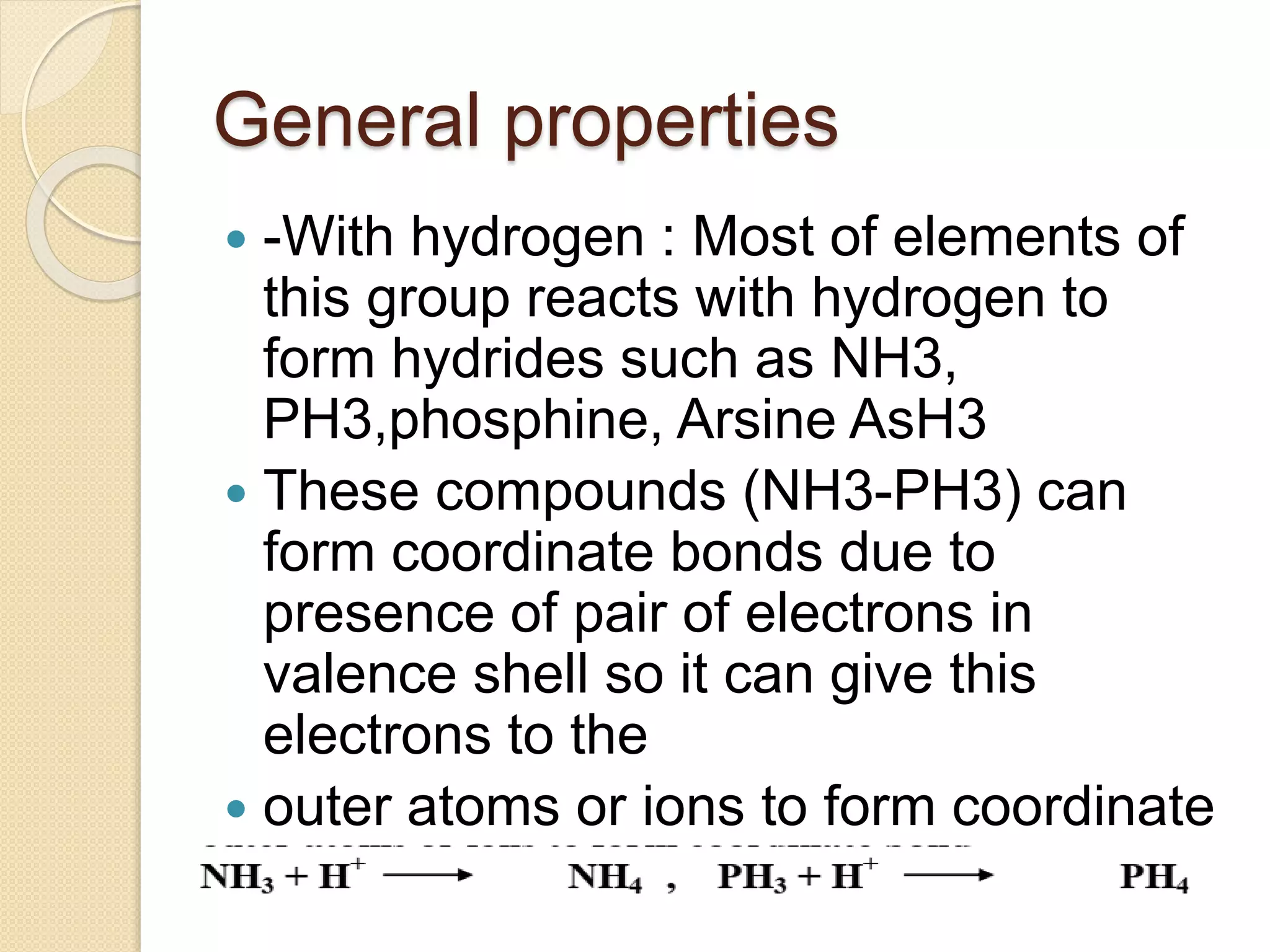
 These compounds (NH3-PH3) can
form coordinate bonds due to
presence of pair of electrons in
valence shell so it can give this
electrons to the
 outer atoms or ions to form coordinate
bond
General properties
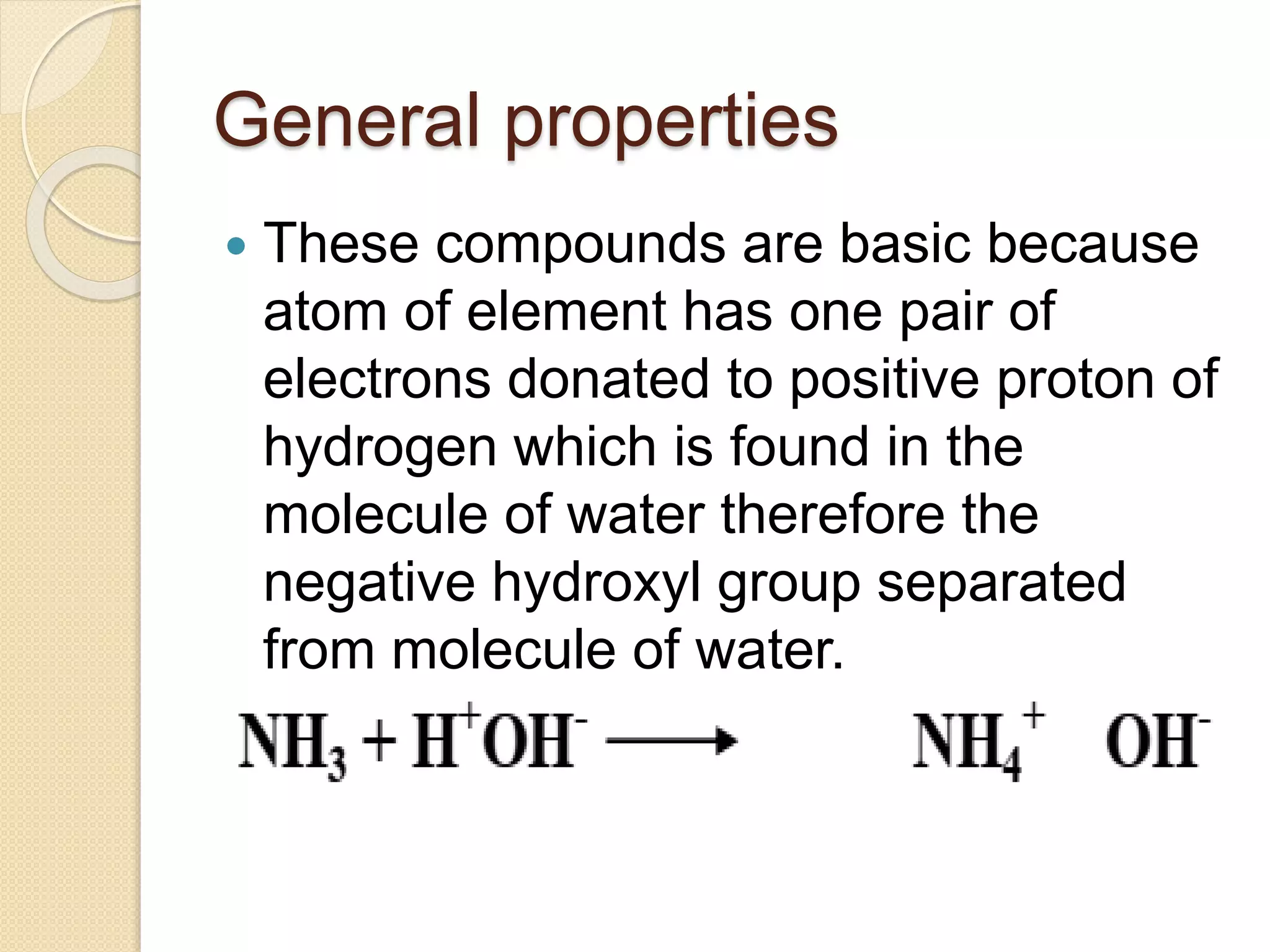
 These compounds are basic because
atom of element has one pair of
electrons donated to positive proton of
hydrogen which is found in the
molecule of water therefore the
negative hydroxyl group separated
from molecule of water.
General properties
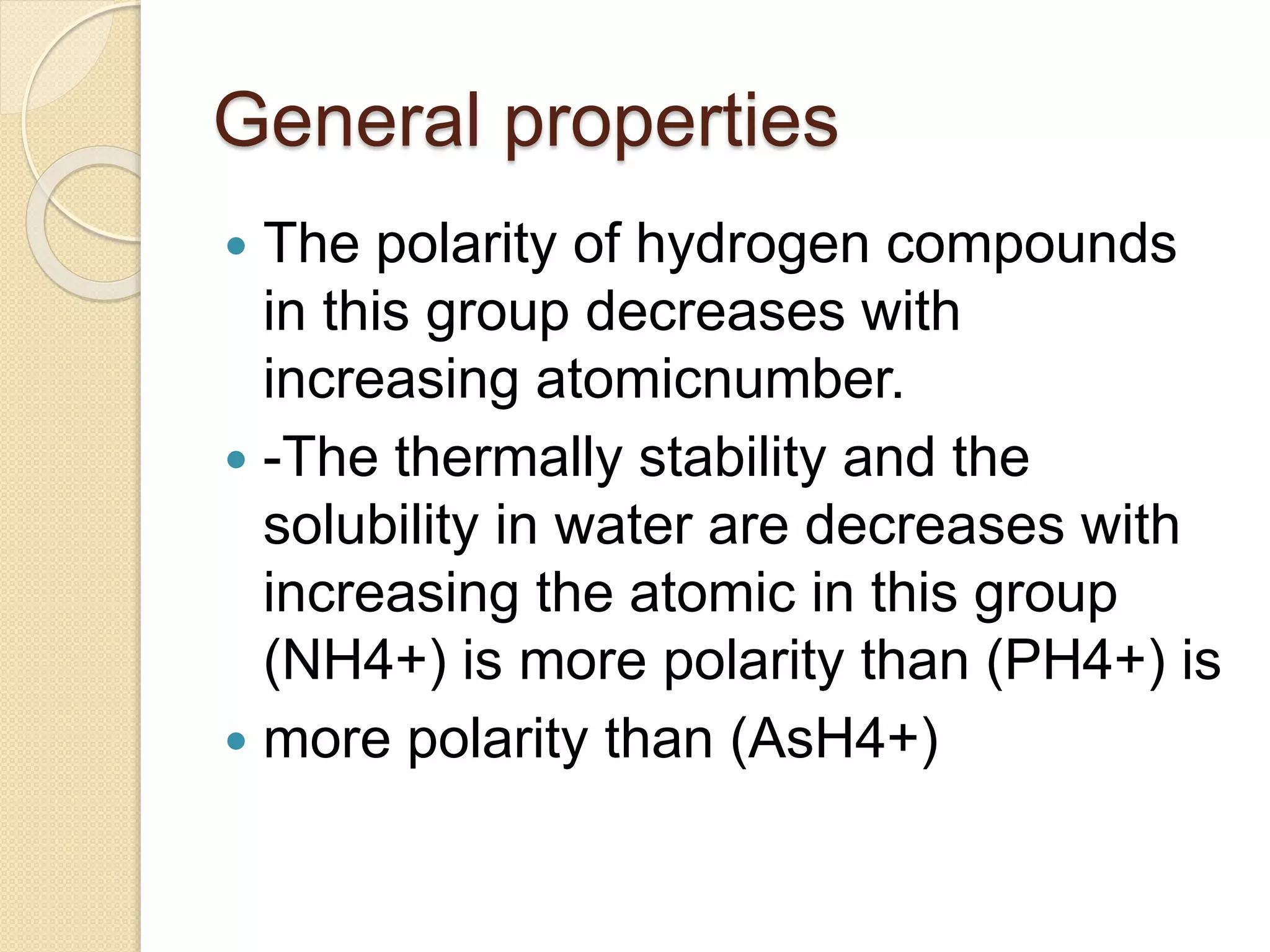
 The polarity of hydrogen compounds
in this group decreases with
increasing atomicnumber.
 -The thermally stability and the
solubility in water are decreases with
increasing the atomic in this group
(NH4+) is more polarity than (PH4+) is
 more polarity than (AsH4+)
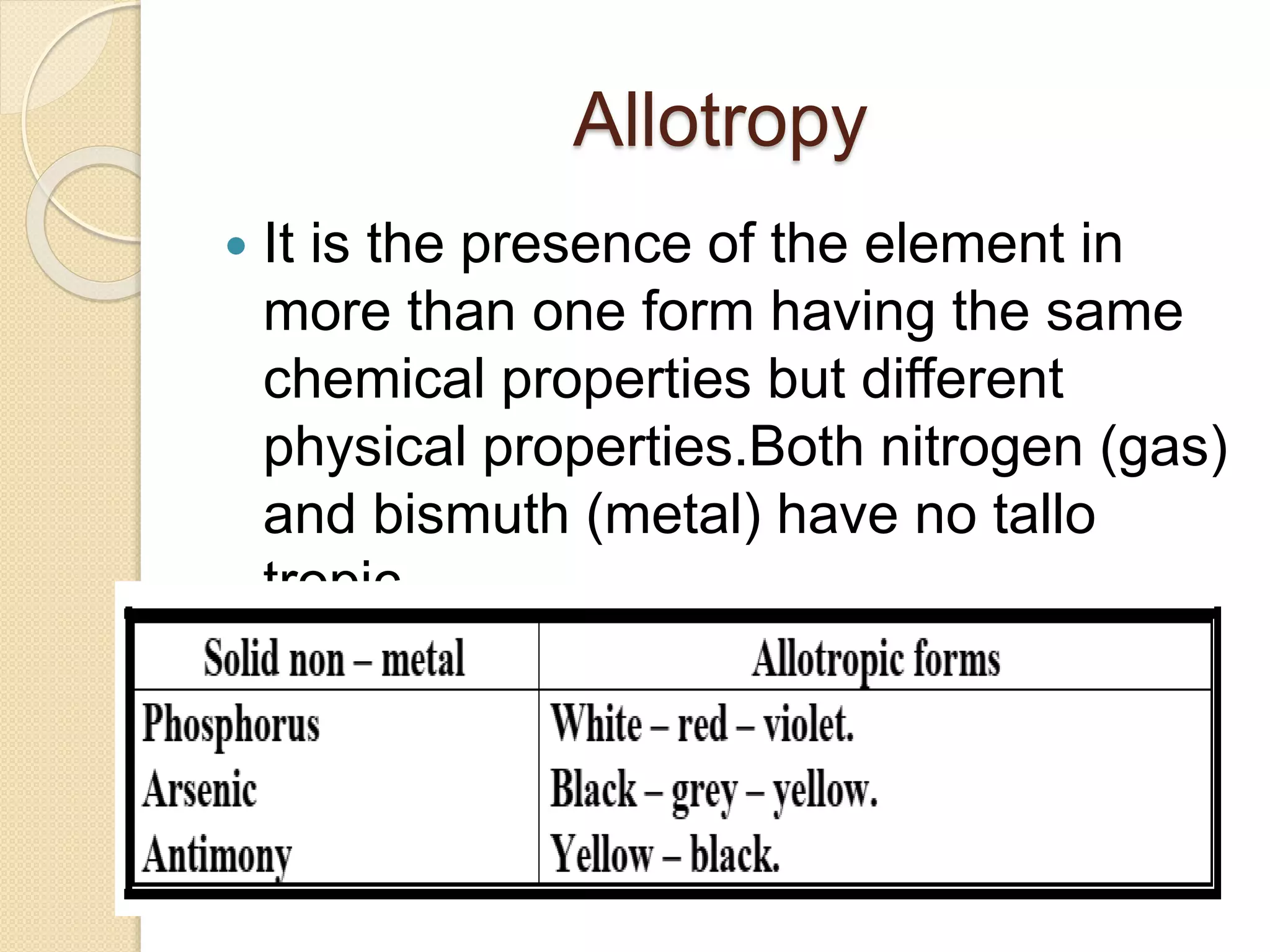
Allotropy
 It is the presence of the element in
more than one form having the same
chemical properties but different
physical properties.Both nitrogen (gas)
and bismuth (metal) have no tallo
tropic.
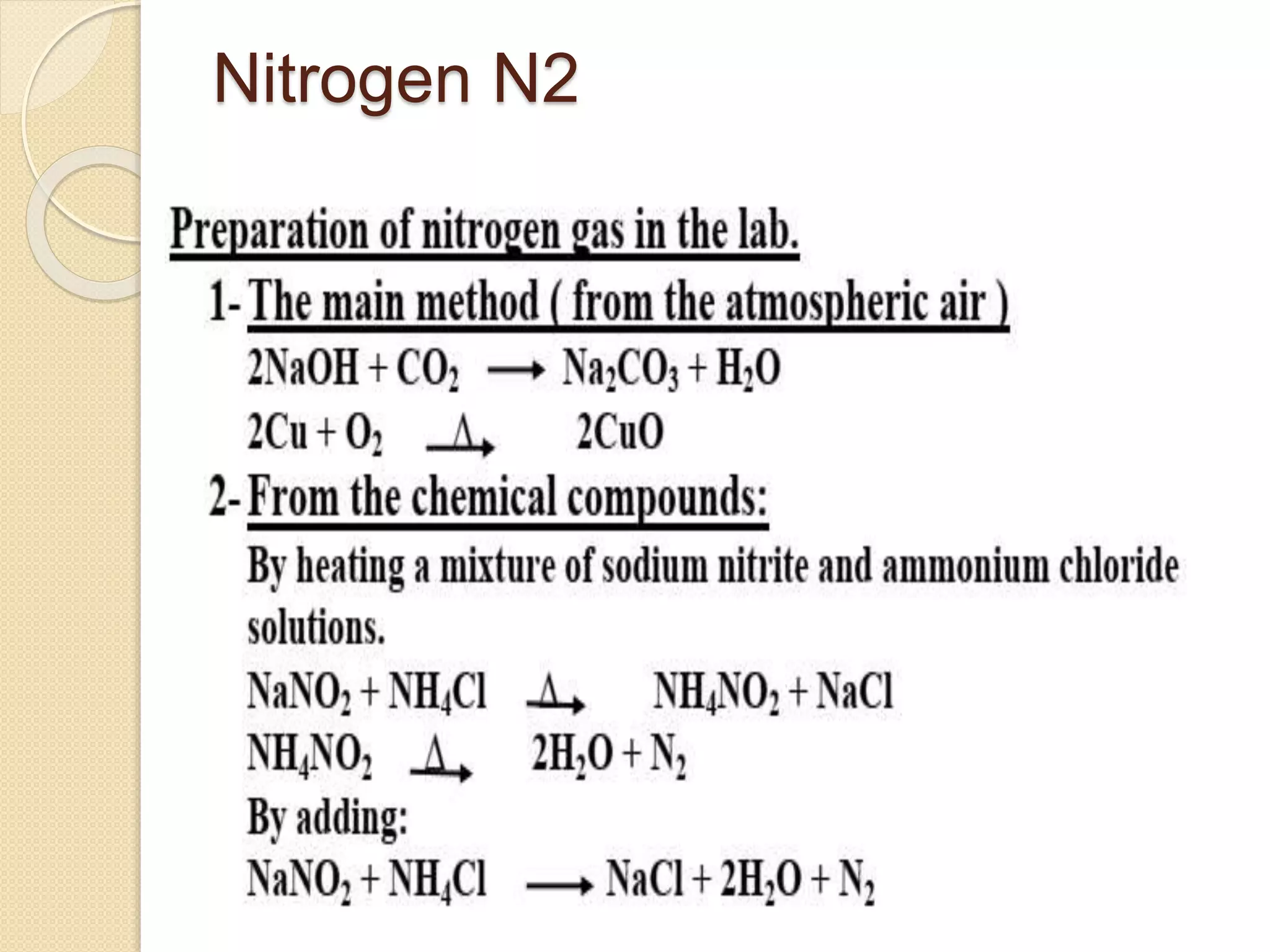
Nitrogen N2
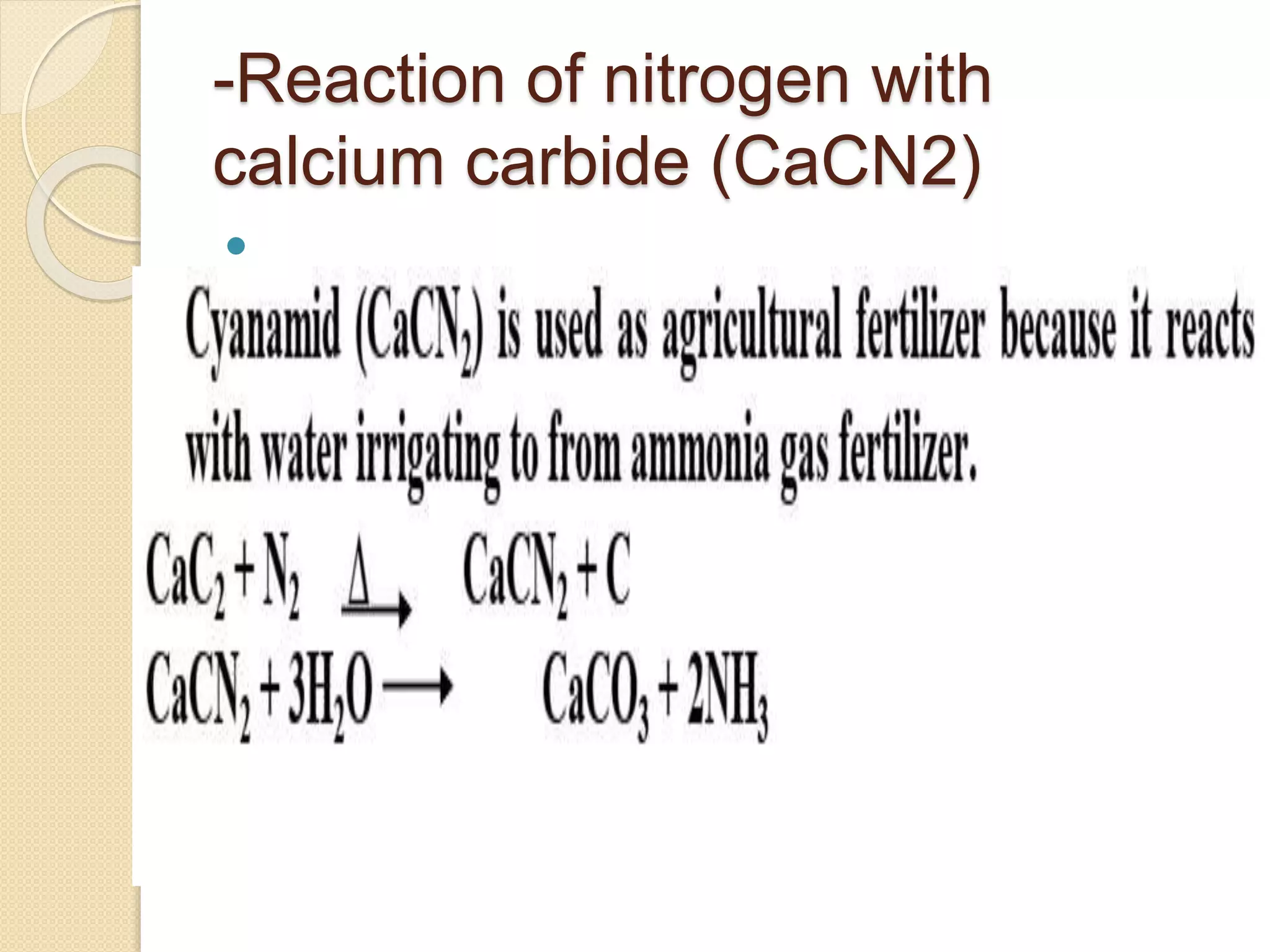
-Reaction of nitrogen with
calcium carbide (CaCN2)

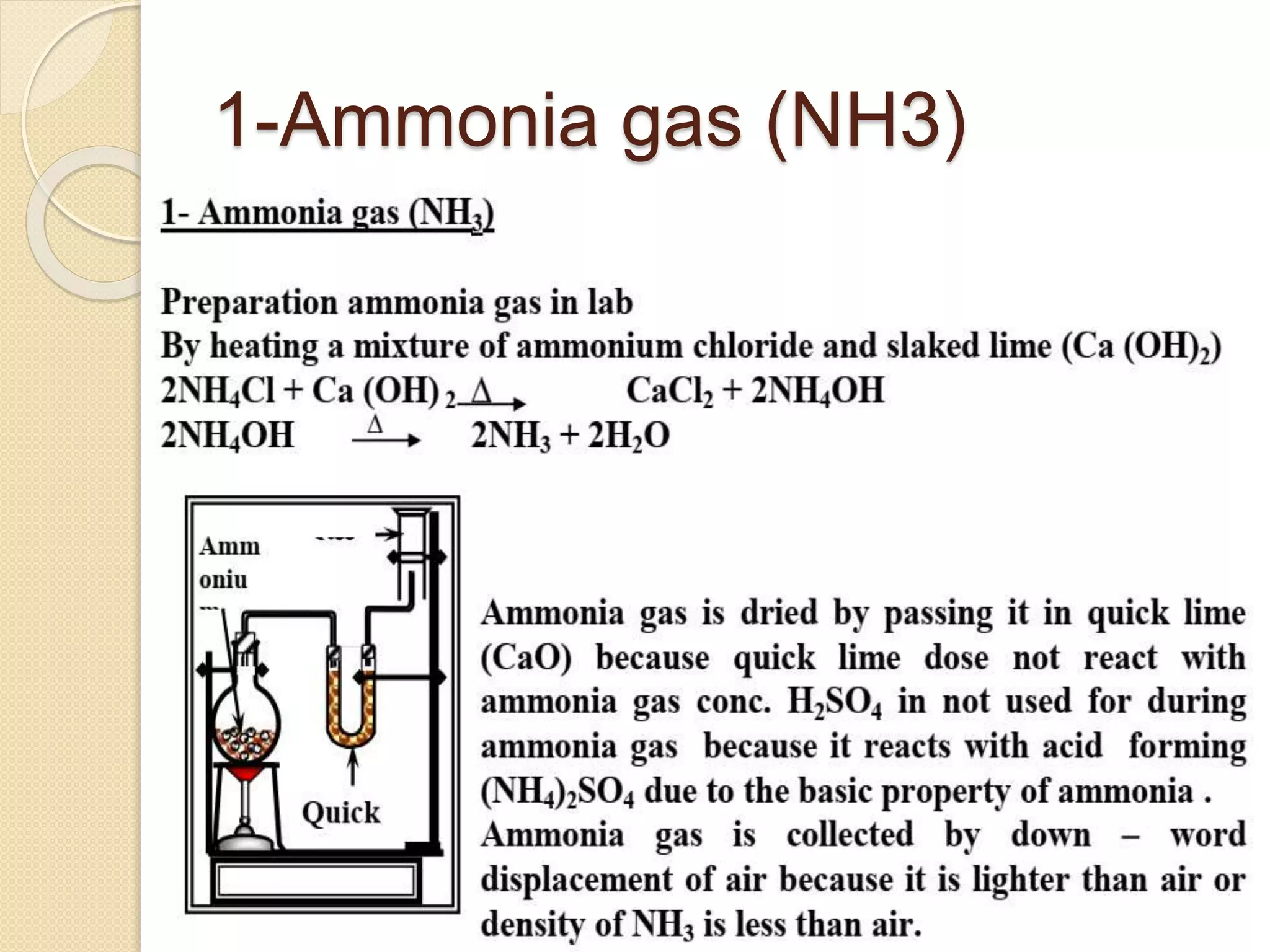
1-Ammonia gas (NH3)
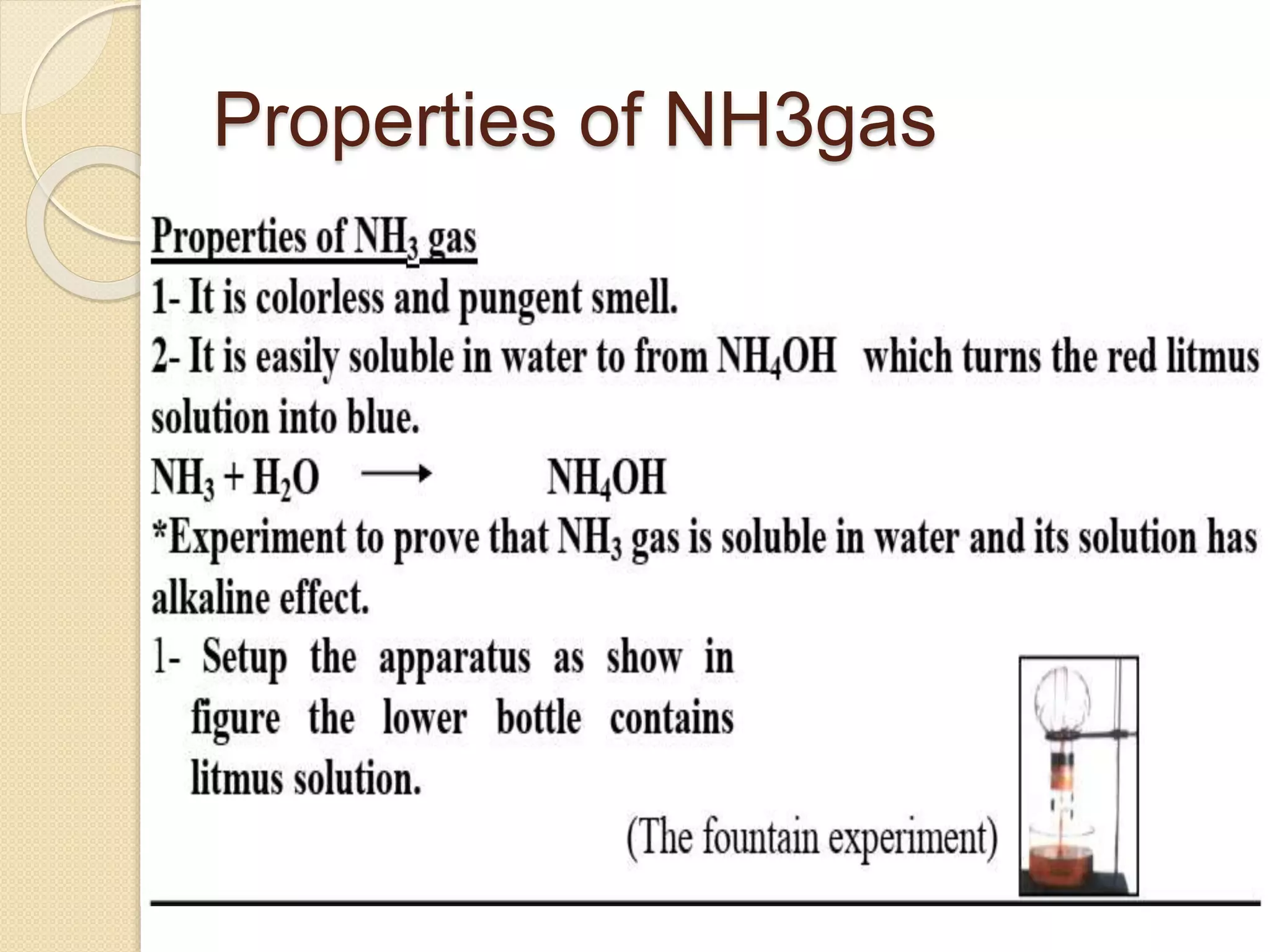
Properties of NH3gas

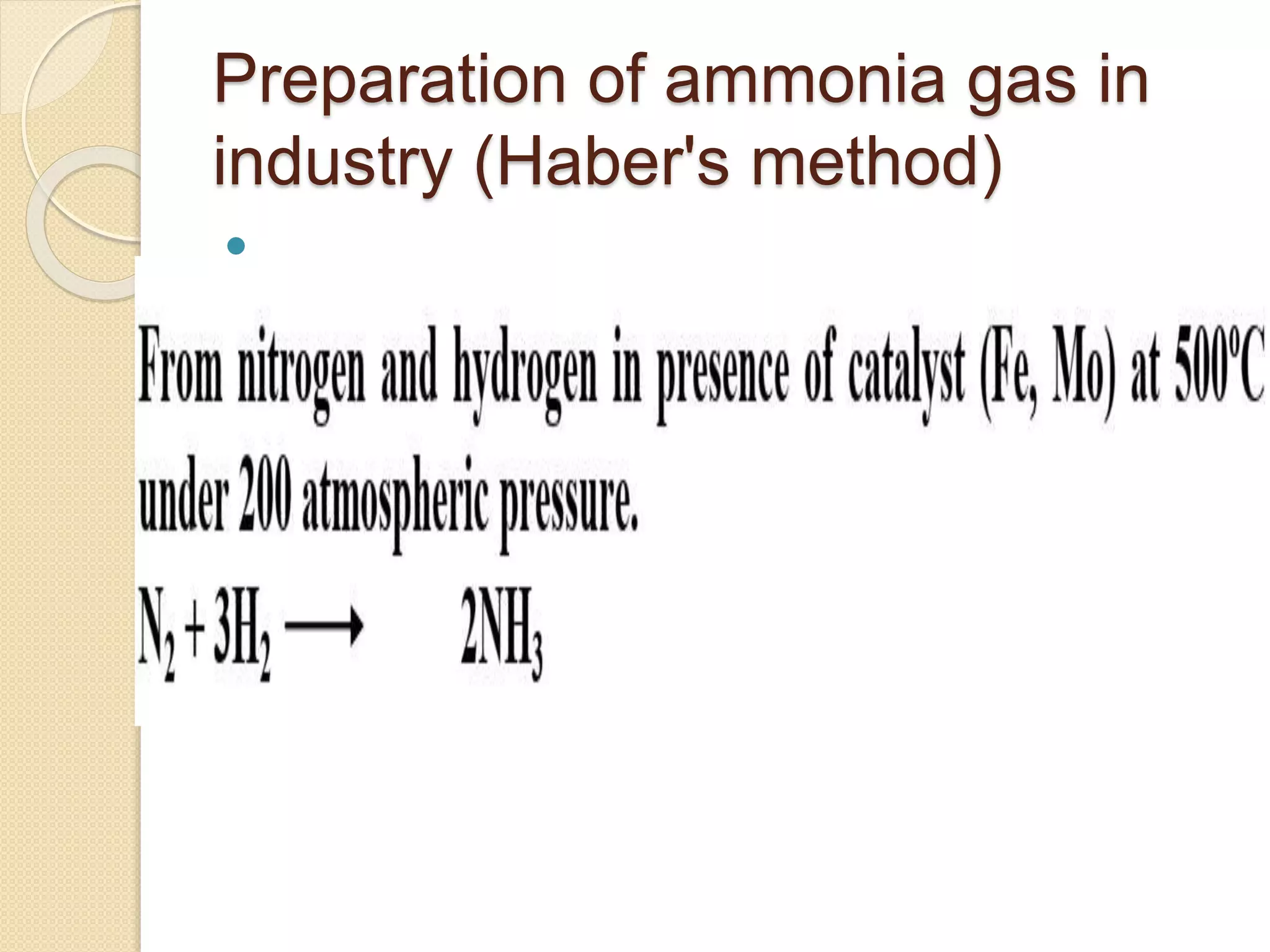
Preparation of ammonia gas in
industry (Haber's method)


Elements of group (5A).pptx

  • 1.
    Elements of group(5A) Kareem mahran
  • 2.
    Elements of group(5A)  NitrogenN7: non–metal–diatomic–gas in atmospheric air 80%  Phosphor P15: non–metal–Calcium phosphate ( Ca3(PO4)2) Apatite  CaF2Ca3(PO4)2(4 atom) .  Arsenic As33: metalloid–Arsenic sulphideAs2S3–vapor (4atom As4)  Antimony Sb51: metalloid–Antimony sulphide Sb2S3–vapor atoms Sb4  Bismuth Bi83: metal forming a crystal lattice– weak to conduct electricity  –vapor (2atom)
  • 3.
    General properties  -Oxidationnumber: Elements of group [5–A] have several oxidation numbers because they gain electrons from 1 to 3 through covalent  sharing or electrons from 1 to 5 electron and reach to the stability state
  • 4.
    General properties  2-Withoxygen:Allelements of this group form oxides are acidic(decreases with increasing the atomic number) such as N2O3, N2O5,  P2O3, P2O5while other are amphotericSb2O3or Bi2O3or basic  (increases with increasing the atomic number) Bi2O3.
  • 5.
    General properties  -Withhydrogen : Most of elements of this group reacts with hydrogen to form hydrides such as NH3, PH3,phosphine, Arsine AsH3  These compounds (NH3-PH3) can form coordinate bonds due to presence of pair of electrons in valence shell so it can give this electrons to the  outer atoms or ions to form coordinate bond
  • 6.
    General properties  Thesecompounds are basic because atom of element has one pair of electrons donated to positive proton of hydrogen which is found in the molecule of water therefore the negative hydroxyl group separated from molecule of water.
  • 7.
    General properties  Thepolarity of hydrogen compounds in this group decreases with increasing atomicnumber.  -The thermally stability and the solubility in water are decreases with increasing the atomic in this group (NH4+) is more polarity than (PH4+) is  more polarity than (AsH4+)
  • 8.
    Allotropy  It isthe presence of the element in more than one form having the same chemical properties but different physical properties.Both nitrogen (gas) and bismuth (metal) have no tallo tropic.
  • 9.
  • 10.
    -Reaction of nitrogenwith calcium carbide (CaCN2) 
  • 11.
  • 12.
  • 13.
    Preparation of ammoniagas in industry (Haber's method) 