MODERN OFFICE
TECHNIQUES
SUBMITTED TO:
MR. PAWAN
AGARWAL
SUBMITTED BY:
SMRITI VERMA
FABEHA KHAN
UMAR AHMAD
ZAIN ALI KHAN
GAURAV PALARIA
OFFICE TECHNOLOGY
 Changing technologies—including personal computers
(PCs), slide projectors, movie projectors, overhead
projectors, television monitors, videocassettes, videodisc
players, multimedia systems, and the Internet—have had a
major impact on the office environment since the start of
the twentieth century. The ability to use technology is an
essential skill in the ever changing workforce of the
twenty-first century.
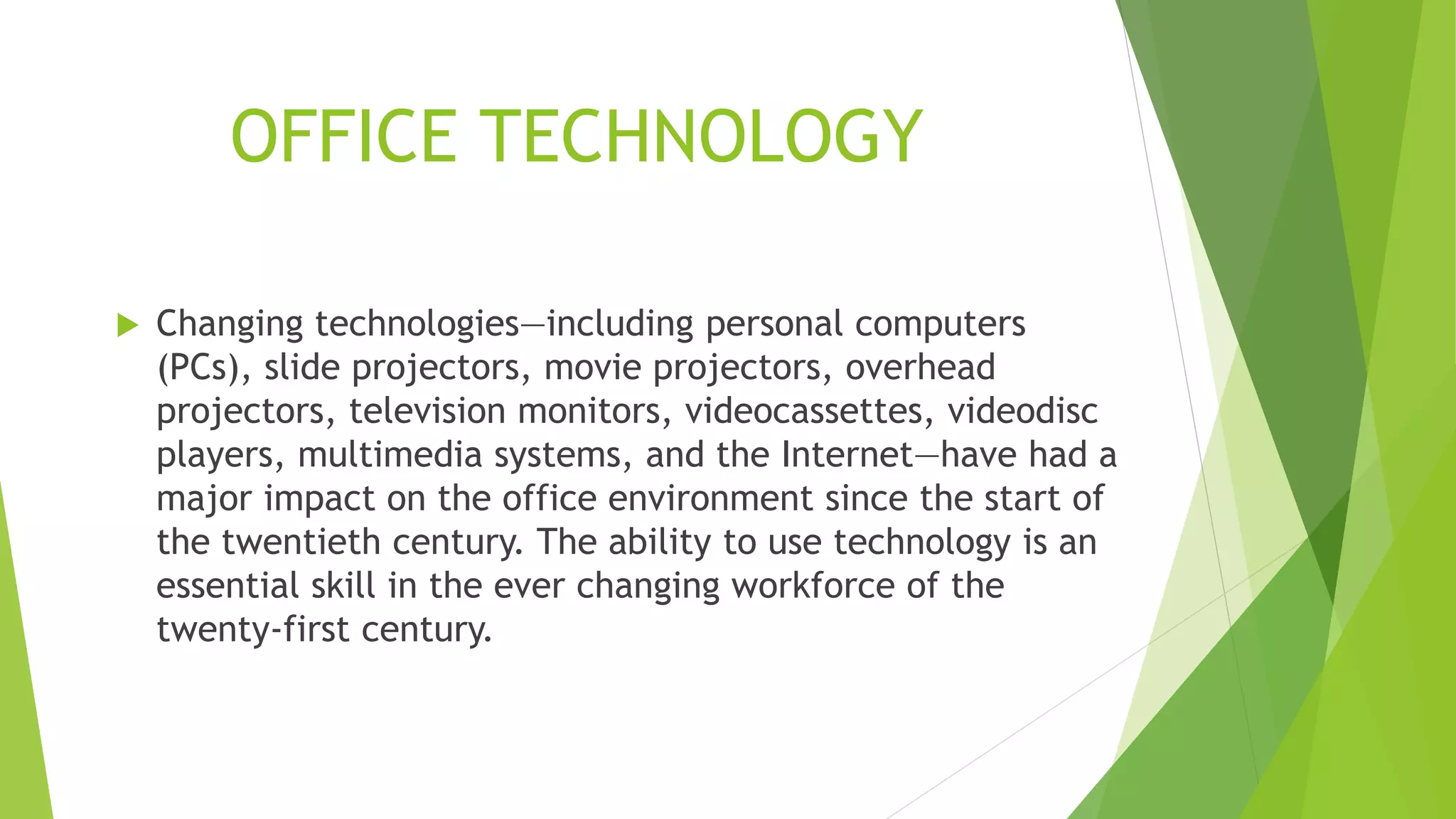
VIDEODISC
A disc similar in appearance and use to a phonograph record
on which programs have been recorded for playback on a
television set; also : optical disk- a ---------recording (as of a
movie) on a videodisc
PERSONAL COMPUTERS
 A personal computer (PC) is a small, relatively inexpensive
computer designed for an individual user. In price,
personal computers range anywhere from a few hundred
dollars to thousands of dollars. All are based on the
microprocessor technology that enables manufacturers to
put an entire CPU on one chip.
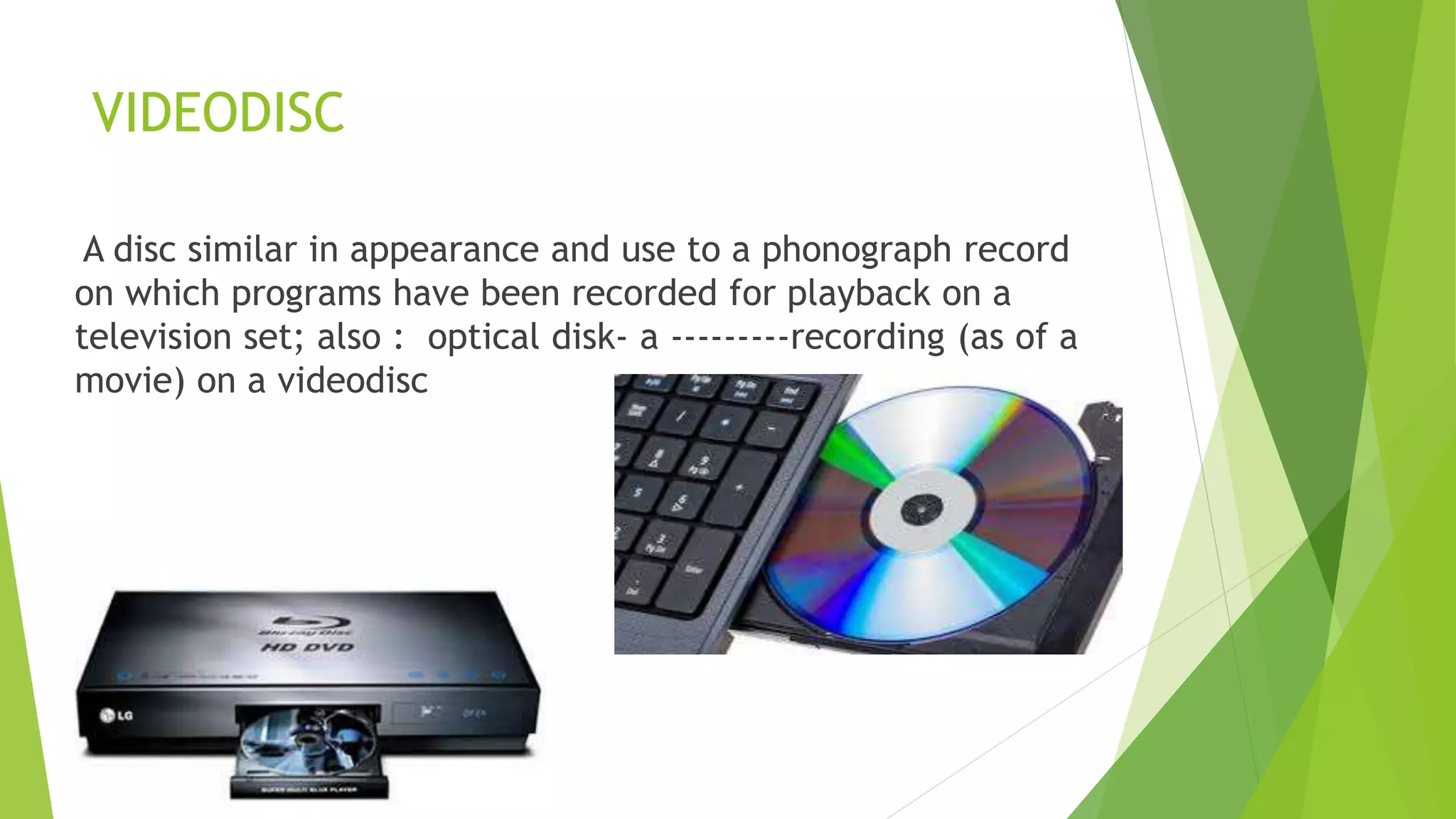
SLIDE PROJECTORS
Slide projectors work by shining light through specialized
photographs called slides. When the light goes through the
slide, it enlarges the photograph and displays the image on a
screen or on the wall.
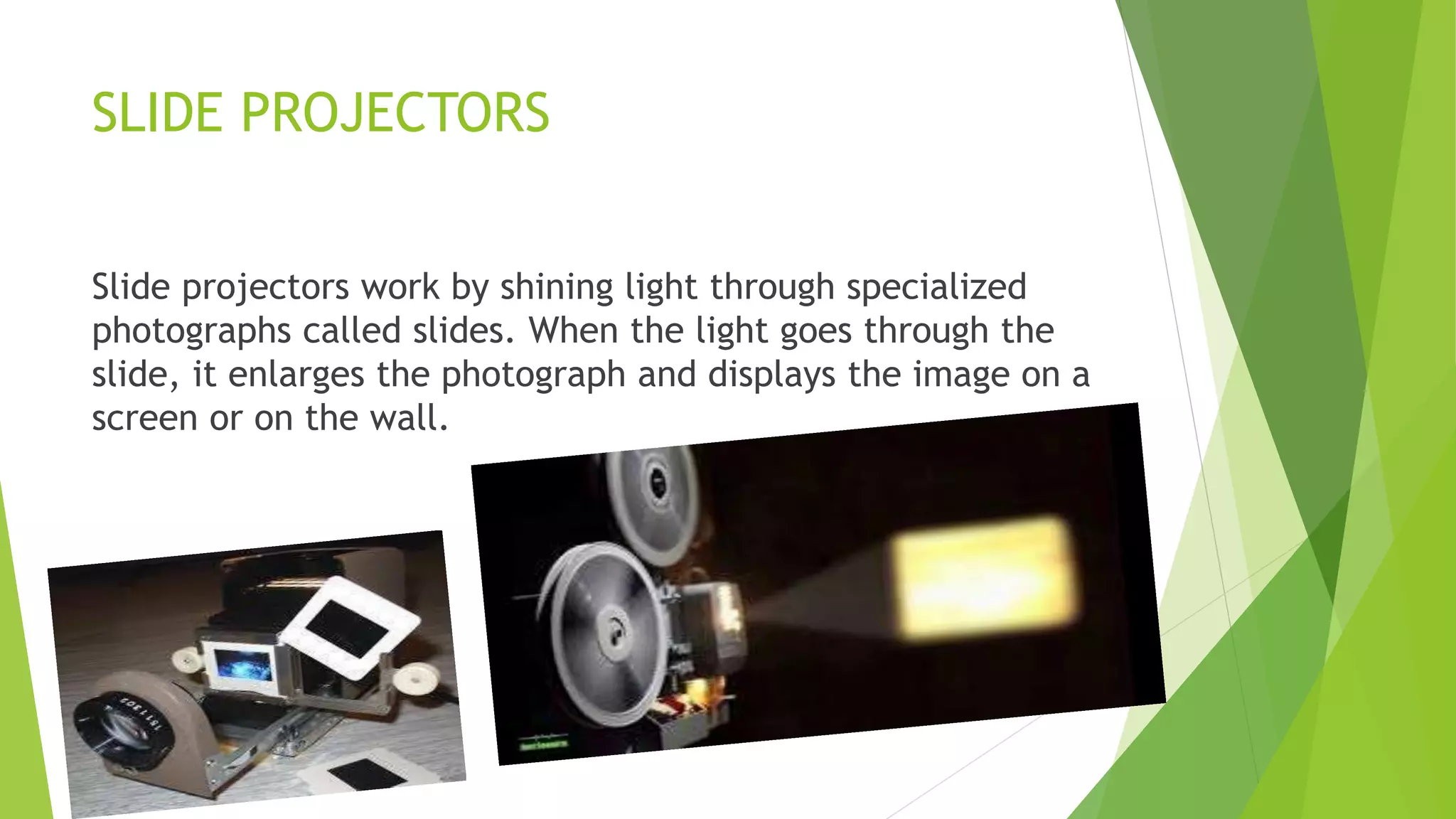
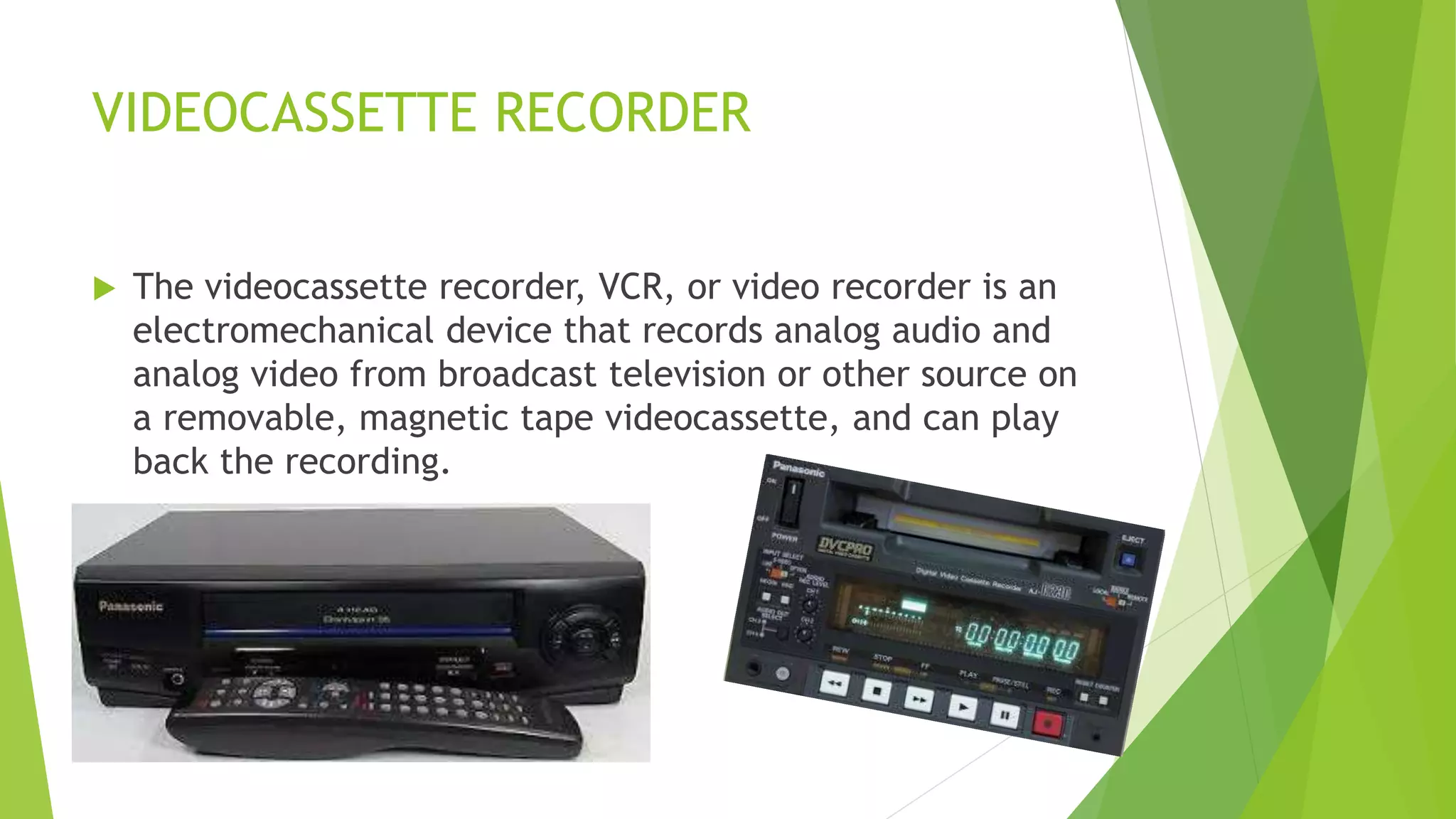
VIDEOCASSETTE RECORDER
 The videocassette recorder, VCR, or video recorder is an
electromechanical device that records analog audio and
analog video from broadcast television or other source on
a removable, magnetic tape videocassette, and can play
back the recording.
MULTIMEDIA SYSTEM
 A Multimedia System is a system capable of processing multimedia data and
applications.
 A Multimedia System is characterised by the processing, storage, generation,
manipulation and rendition of Multimedia information.
TEXT
AUDIO
GRAPHIC
VIDEO
ANIMATION
INTERNET
 It is a network of networks that consists of millions of private, public,
academic, business, and government networks of local to global scope, linked
by a broad array of electronic, wireless, and optical networking technologies.
The Internet carries an extensive range of information resources and services,
such as the inter-linked hypertext documents and applications of the World
Wide Web (WWW), electronic mail, newsgroups, voice over IP telephony, and
peer-to-peer networks for file sharing.
BIOMETRIC MACHINES
 A Biometric machine is a security identification
and authentication device. Such devices use
automated methods of verifying or recognising
the identity of a living person based on a
physiological or behavioural characteristic.
CAMERAS
 A camera is an optical instrument for recording or capturing images, which
may be stored locally, transmitted to another location, or both. The images
may be individual still photographs or sequences of images constituting videos
or movies. The camera is a remote sensing device as it senses subjects
without physical contact. The word camera comes from camera obscura,
which means "dark chamber" and is the Latin name of the original device for
projecting an image of external reality onto a flat surface. The modern
photographic camera evolved from the camera obscura. The functioning of
the camera is very similar to the functioning of the human eye.
INTERCOM
Intercom are generally mounted permanently in
buildings and vehicles. Intercoms can incorporate
connections to public address loudspeaker
systems, walkie talkies, telephones, and to other
intercom systems.
TABLETS
 A tablet computer, commonly shortened to tablet,
is a thin, flat mobile computer with a touchscreen
display, which in 2016 is usually color, processing
circuitry, and a rechargeable battery in a single
device. Tablets often come equipped with
sensors, including digital cameras, a microphone,
and an accelerometer.
PRINTERS
 In computing, a printer is a peripheral which makes a
persistent human-readable representation of graphics or
text on paper or similar physical media.[1] The two most
common printer mechanisms are black and white laser
printers used for common documents, and color inkjet
printers which can produce high quality photograph
output.
CALCULATORS
 An electronic calculator is a small, portable
electronic device used to perform both
basic arithmetic operations and complex
mathematical operations.
E-MAIL
 Today's email systems are based on a store-and-forward model. Email
servers accept, forward, deliver, and store messages. Neither the
users nor their computers are required to be online simultaneously;
they need to connect only briefly, typically to a mail server, for as
long as it takes to send or receive messages.
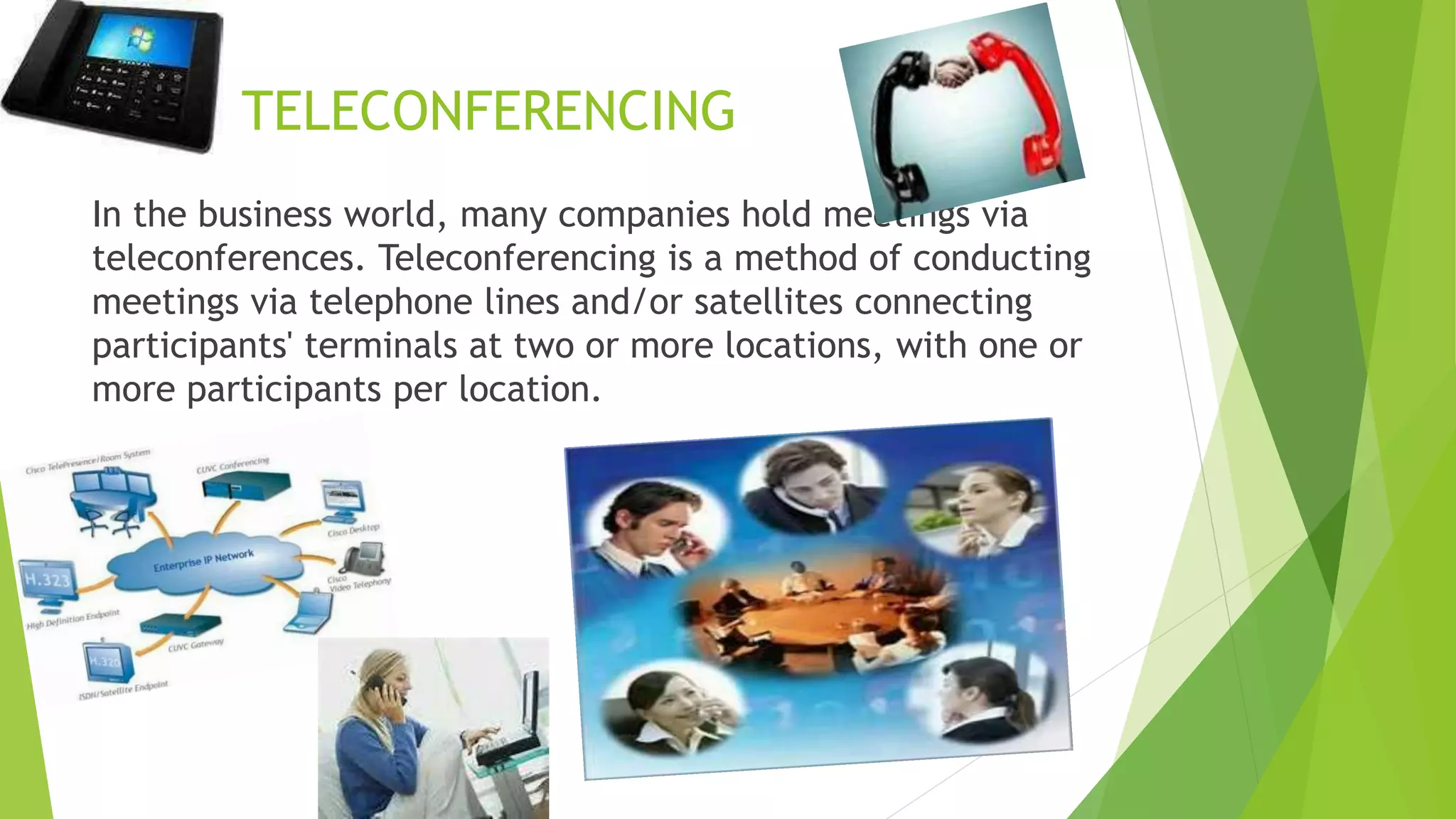
TELECONFERENCING
In the business world, many companies hold meetings via
teleconferences. Teleconferencing is a method of conducting
meetings via telephone lines and/or satellites connecting
participants' terminals at two or more locations, with one or
more participants per location.
SMART BOARD
 A smart board is a tool that improves the way people
meet, share ideas, and teach. It looks and feels like a
regular whiteboard combined with the power of the
computer.
VIDEOCONFERENCING
 With the advent of voice recognition, a day may
come when human translators are no longer
needed. The future of videoconferencing is not
only multilingual, but 100 percent real-time—with
no delays.
Thank You

Business.com.

  • 1.
    MODERN OFFICE TECHNIQUES SUBMITTED TO: MR.PAWAN AGARWAL SUBMITTED BY: SMRITI VERMA FABEHA KHAN UMAR AHMAD ZAIN ALI KHAN GAURAV PALARIA
  • 2.
    OFFICE TECHNOLOGY  Changingtechnologies—including personal computers (PCs), slide projectors, movie projectors, overhead projectors, television monitors, videocassettes, videodisc players, multimedia systems, and the Internet—have had a major impact on the office environment since the start of the twentieth century. The ability to use technology is an essential skill in the ever changing workforce of the twenty-first century.
  • 3.
    VIDEODISC A disc similarin appearance and use to a phonograph record on which programs have been recorded for playback on a television set; also : optical disk- a ---------recording (as of a movie) on a videodisc
  • 4.
    PERSONAL COMPUTERS  Apersonal computer (PC) is a small, relatively inexpensive computer designed for an individual user. In price, personal computers range anywhere from a few hundred dollars to thousands of dollars. All are based on the microprocessor technology that enables manufacturers to put an entire CPU on one chip.
  • 5.
    SLIDE PROJECTORS Slide projectorswork by shining light through specialized photographs called slides. When the light goes through the slide, it enlarges the photograph and displays the image on a screen or on the wall.
  • 6.
    VIDEOCASSETTE RECORDER  Thevideocassette recorder, VCR, or video recorder is an electromechanical device that records analog audio and analog video from broadcast television or other source on a removable, magnetic tape videocassette, and can play back the recording.
  • 7.
    MULTIMEDIA SYSTEM  AMultimedia System is a system capable of processing multimedia data and applications.  A Multimedia System is characterised by the processing, storage, generation, manipulation and rendition of Multimedia information. TEXT AUDIO GRAPHIC VIDEO ANIMATION
  • 8.
    INTERNET  It isa network of networks that consists of millions of private, public, academic, business, and government networks of local to global scope, linked by a broad array of electronic, wireless, and optical networking technologies. The Internet carries an extensive range of information resources and services, such as the inter-linked hypertext documents and applications of the World Wide Web (WWW), electronic mail, newsgroups, voice over IP telephony, and peer-to-peer networks for file sharing.
  • 9.
    BIOMETRIC MACHINES  ABiometric machine is a security identification and authentication device. Such devices use automated methods of verifying or recognising the identity of a living person based on a physiological or behavioural characteristic.
  • 10.
    CAMERAS  A camerais an optical instrument for recording or capturing images, which may be stored locally, transmitted to another location, or both. The images may be individual still photographs or sequences of images constituting videos or movies. The camera is a remote sensing device as it senses subjects without physical contact. The word camera comes from camera obscura, which means "dark chamber" and is the Latin name of the original device for projecting an image of external reality onto a flat surface. The modern photographic camera evolved from the camera obscura. The functioning of the camera is very similar to the functioning of the human eye.
  • 11.
    INTERCOM Intercom are generallymounted permanently in buildings and vehicles. Intercoms can incorporate connections to public address loudspeaker systems, walkie talkies, telephones, and to other intercom systems.
  • 12.
    TABLETS  A tabletcomputer, commonly shortened to tablet, is a thin, flat mobile computer with a touchscreen display, which in 2016 is usually color, processing circuitry, and a rechargeable battery in a single device. Tablets often come equipped with sensors, including digital cameras, a microphone, and an accelerometer.
  • 13.
    PRINTERS  In computing,a printer is a peripheral which makes a persistent human-readable representation of graphics or text on paper or similar physical media.[1] The two most common printer mechanisms are black and white laser printers used for common documents, and color inkjet printers which can produce high quality photograph output.
  • 14.
    CALCULATORS  An electroniccalculator is a small, portable electronic device used to perform both basic arithmetic operations and complex mathematical operations.
  • 15.
    E-MAIL  Today's emailsystems are based on a store-and-forward model. Email servers accept, forward, deliver, and store messages. Neither the users nor their computers are required to be online simultaneously; they need to connect only briefly, typically to a mail server, for as long as it takes to send or receive messages.
  • 16.
    TELECONFERENCING In the businessworld, many companies hold meetings via teleconferences. Teleconferencing is a method of conducting meetings via telephone lines and/or satellites connecting participants' terminals at two or more locations, with one or more participants per location.
  • 17.
    SMART BOARD  Asmart board is a tool that improves the way people meet, share ideas, and teach. It looks and feels like a regular whiteboard combined with the power of the computer.
  • 18.
    VIDEOCONFERENCING  With theadvent of voice recognition, a day may come when human translators are no longer needed. The future of videoconferencing is not only multilingual, but 100 percent real-time—with no delays.
  • 19.