Electronic
Commerce
LECTURE-1
WEB DEVELOPMENT & E-COMMERACE
MUHAMMAD USMAN QADRI
CTTC DEPARTMENT
Electronic Commerce
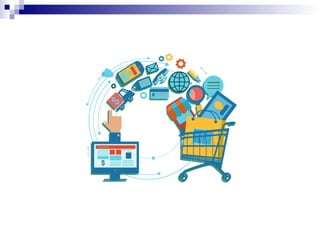
Electronic Commerce - Electronic commerce,
commonly known as e-commerce,e-
Commerceore-comm, consists of the buying
and selling of products or services over
electronic systems such as the Internet and
other computer networks.
The Scope of Electronic Commerce
Electronic Commerce encompasses one or more of the
following:
•EDI (Electronic Data Interchange )
•EDI on the Internet
•E-mail on the Internet
•Shopping on the World Wide Web
•Product sales and services on the Web
•Electronic banking or funds transfer
•Outsourced customer and employee care operations
Differences between Electronic
Commerce and traditional commerce
The major difference is the way information is exchanged
and processed:
1. Traditional commerce:
2. E-Commerce:
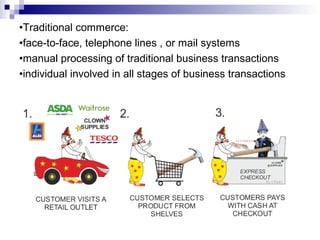
•Traditional commerce:
•face-to-face, telephone lines , or mail systems
•manual processing of traditional business transactions
•individual involved in all stages of business transactions
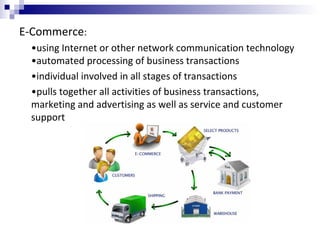
E-Commerce:
•using Internet or other network communication technology
•automated processing of business transactions
•individual involved in all stages of transactions
•pulls together all activities of business transactions,
marketing and advertising as well as service and customer
support
Characteristics of Electronic
Commerce
The tools are electronic but the application is
commerce.
- Commerce is not accounting or decision support or
any other internally focuses function.
- Commerce is externally focused on those with whom
you do business.
- Commerce is doing business, not reporting on it or
sending messages about it.
Special characteristics of electronic
commerce and Web commerce:
- information exchanged and processed by a communications
network and computers, as well as e-commerce software.
- most transactions are processed automatically.
- pulls together a gamut of business support services, such as
- inter-organizational e-mail, on-line directories
- trading support systems for commodities
- products, and customized products
- custom-built goods and services
- ordering and logistic support system supports
Why Internet Commerce?
In the short term:
- The top line: Access to a Global Market
- the ability to reach new customers and create
more intimate relationships with all customers.
The bottom line:
- Dramatic Reduction in distribution costs
- Drastic (likely to have a strong ) cost reductions
for distribution and customer service.
In the long term:
- The Internet may well change the structure of
the competitive landscape.
- Internet communications will transform
- the relationship between business and their
customers.
- the conversion from physical to digital will
displace the source of business value.
Capabilities Required for
Internet/Web Commerce?
Enable buyers to:
- inquire about products
- review product and service information
- place orders, authorize payment
- receive both goods and services on-line
Capabilities Required for
Internet/Web Commerce?
Enable sellers to:
- advertise products
- receive orders
- collect payments
- deliver goods electronically
- provide ongoing customer support
Benefits of Internet Commerce
Business benefits:
- Reduced costs to buyers from increased competition
on-line
- Reduced costs to suppliers by on-line auction
- Reduced errors, time, and overhead costs
information processing
- Reduced inventories, and warehouse
- Increased access to real-time inventory information,
speed-up ordering & purchasing processing time
Benefits of Internet Commerce
Easier enter into new markets in an efficient way
- Easily create new markets and get new
customers
- Automated business processing
- Cost-effective document transfer
- Reduced time to complete business
transactions, speed-up the delivery time
- Reduced business overhead and enhance
business management
There are 6 basic types of
e-commerce:
 Business-to-Business (B2B)
 Business-to-Consumer (B2C)
 Consumer-to-Consumer (C2C)
 Consumer-to-Business (C2B)
 Business-to-Administration (B2A)
 Consumer-to-Administration (C2A)
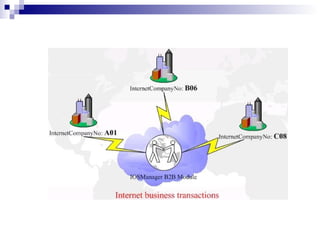
Business-to-business (B2B)
Business-to-business (B2B) refers to a situation where one
business makes a commercial transaction with another. This
typically occurs when:
 A business is sourcing materials for their production process
(e.g. a food manufacturer purchasing salt).
 A business needs the services of another for operational
reasons (e.g. a food manufacturer employing an accountancy
firm to audit their finances).
 A business re-sells goods and services produced by others
(e.g. a retailer buying the end product from the food
manufacturer).
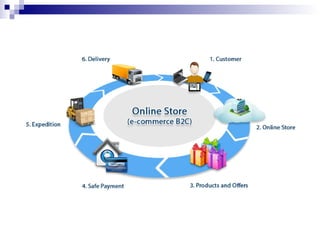
Business-to-Consumer (B2C)
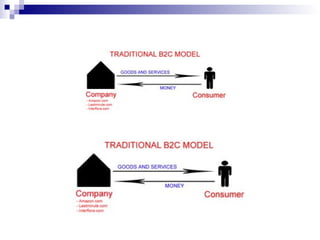
Business to consumer (B2C) is business or
transactions conducted directly between a company
and consumers who are the end-users of its products
or services. The business-to-consumer as a business
model differs significantly from the business-to-
business model, which refers to commerce between
two or more businesses.
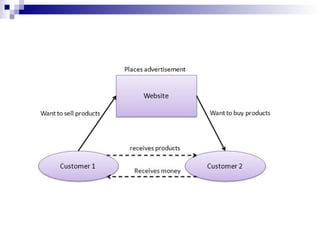
Consumer-to-Consumer (C2C)
Customer to customer (C2C) markets provide an
innovative way to allow customers to interact with
each other. Traditional markets require business to
customer relationships, in which a customer goes to
the business in order to purchase a product or
service. In customer to customer markets, the
business facilitates an environment where customers
can sell goods or services to each other.
Consumer-to-Business (C2B)
Consumer-to-business (C2B) is a business model in
which consumers (individuals) create value and
businesses consume that value. For example, when a
consumer writes reviews or when a consumer gives a
useful idea for new product development then that
consumer is creating value for the business if the
business adopts the input. Excepted concepts are
crowd sourcing and co-creation.
Electronic commerce

Electronic commerce

  • 1.
    Electronic Commerce LECTURE-1 WEB DEVELOPMENT &E-COMMERACE MUHAMMAD USMAN QADRI CTTC DEPARTMENT
  • 2.
    Electronic Commerce Electronic Commerce- Electronic commerce, commonly known as e-commerce,e- Commerceore-comm, consists of the buying and selling of products or services over electronic systems such as the Internet and other computer networks.
  • 6.
    The Scope ofElectronic Commerce Electronic Commerce encompasses one or more of the following: •EDI (Electronic Data Interchange ) •EDI on the Internet •E-mail on the Internet •Shopping on the World Wide Web •Product sales and services on the Web •Electronic banking or funds transfer •Outsourced customer and employee care operations
  • 7.
    Differences between Electronic Commerceand traditional commerce The major difference is the way information is exchanged and processed: 1. Traditional commerce: 2. E-Commerce:
  • 8.
    •Traditional commerce: •face-to-face, telephonelines , or mail systems •manual processing of traditional business transactions •individual involved in all stages of business transactions
  • 9.
    E-Commerce: •using Internet orother network communication technology •automated processing of business transactions •individual involved in all stages of transactions •pulls together all activities of business transactions, marketing and advertising as well as service and customer support
  • 10.
    Characteristics of Electronic Commerce Thetools are electronic but the application is commerce. - Commerce is not accounting or decision support or any other internally focuses function. - Commerce is externally focused on those with whom you do business. - Commerce is doing business, not reporting on it or sending messages about it.
  • 11.
    Special characteristics ofelectronic commerce and Web commerce: - information exchanged and processed by a communications network and computers, as well as e-commerce software. - most transactions are processed automatically. - pulls together a gamut of business support services, such as - inter-organizational e-mail, on-line directories - trading support systems for commodities - products, and customized products - custom-built goods and services - ordering and logistic support system supports
  • 12.
    Why Internet Commerce? Inthe short term: - The top line: Access to a Global Market - the ability to reach new customers and create more intimate relationships with all customers. The bottom line: - Dramatic Reduction in distribution costs - Drastic (likely to have a strong ) cost reductions for distribution and customer service.
  • 13.
    In the longterm: - The Internet may well change the structure of the competitive landscape. - Internet communications will transform - the relationship between business and their customers. - the conversion from physical to digital will displace the source of business value.
  • 14.
    Capabilities Required for Internet/WebCommerce? Enable buyers to: - inquire about products - review product and service information - place orders, authorize payment - receive both goods and services on-line
  • 15.
    Capabilities Required for Internet/WebCommerce? Enable sellers to: - advertise products - receive orders - collect payments - deliver goods electronically - provide ongoing customer support
  • 16.
    Benefits of InternetCommerce Business benefits: - Reduced costs to buyers from increased competition on-line - Reduced costs to suppliers by on-line auction - Reduced errors, time, and overhead costs information processing - Reduced inventories, and warehouse - Increased access to real-time inventory information, speed-up ordering & purchasing processing time
  • 17.
    Benefits of InternetCommerce Easier enter into new markets in an efficient way - Easily create new markets and get new customers - Automated business processing - Cost-effective document transfer - Reduced time to complete business transactions, speed-up the delivery time - Reduced business overhead and enhance business management
  • 18.
    There are 6basic types of e-commerce:  Business-to-Business (B2B)  Business-to-Consumer (B2C)  Consumer-to-Consumer (C2C)  Consumer-to-Business (C2B)  Business-to-Administration (B2A)  Consumer-to-Administration (C2A)
  • 19.
    Business-to-business (B2B) Business-to-business (B2B)refers to a situation where one business makes a commercial transaction with another. This typically occurs when:  A business is sourcing materials for their production process (e.g. a food manufacturer purchasing salt).  A business needs the services of another for operational reasons (e.g. a food manufacturer employing an accountancy firm to audit their finances).  A business re-sells goods and services produced by others (e.g. a retailer buying the end product from the food manufacturer).
  • 21.
    Business-to-Consumer (B2C) Business toconsumer (B2C) is business or transactions conducted directly between a company and consumers who are the end-users of its products or services. The business-to-consumer as a business model differs significantly from the business-to- business model, which refers to commerce between two or more businesses.
  • 23.
    Consumer-to-Consumer (C2C) Customer tocustomer (C2C) markets provide an innovative way to allow customers to interact with each other. Traditional markets require business to customer relationships, in which a customer goes to the business in order to purchase a product or service. In customer to customer markets, the business facilitates an environment where customers can sell goods or services to each other.
  • 25.
    Consumer-to-Business (C2B) Consumer-to-business (C2B)is a business model in which consumers (individuals) create value and businesses consume that value. For example, when a consumer writes reviews or when a consumer gives a useful idea for new product development then that consumer is creating value for the business if the business adopts the input. Excepted concepts are crowd sourcing and co-creation.