


ELECTROLYTES
NIKHIL NANJAPPA
ELECTROLYTES
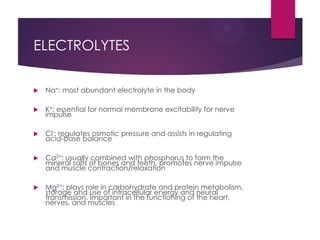
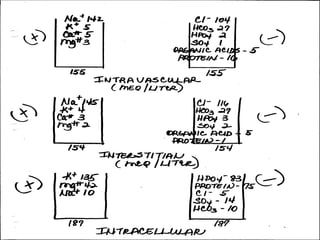
 Na+: most abundant electrolyte in the body
 K+: essential for normal membrane excitability for nerve
impulse
 Cl-: regulates osmotic pressure and assists in regulating
acid-base balance
 Ca2+: usually combined with phosphorus to form the
mineral salts of bones and teeth, promotes nerve impulse
and muscle contraction/relaxation
 Mg2+: plays role in carbohydrate and protein metabolism,
storage and use of intracellular energy and neural
transmission. Important in the functioning of the heart,
nerves, and muscles
MAJOR ELECTROLYTE IMBALANCES
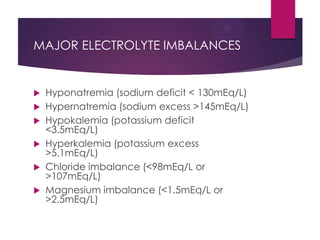
 Hyponatremia (sodium deficit < 130mEq/L)
 Hypernatremia (sodium excess >145mEq/L)
 Hypokalemia (potassium deficit
<3.5mEq/L)
 Hyperkalemia (potassium excess
>5.1mEq/L)
 Chloride imbalance (<98mEq/L or
>107mEq/L)
 Magnesium imbalance (<1.5mEq/L or
>2.5mEq/L)
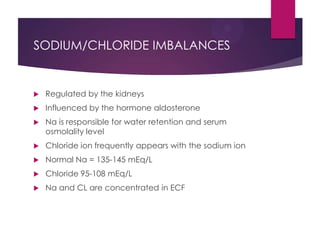
SODIUM/CHLORIDE IMBALANCES
 Regulated by the kidneys
 Influenced by the hormone aldosterone
 Na is responsible for water retention and serum
osmolality level
 Chloride ion frequently appears with the sodium ion
 Normal Na = 135-145 mEq/L
 Chloride 95-108 mEq/L
 Na and CL are concentrated in ECF
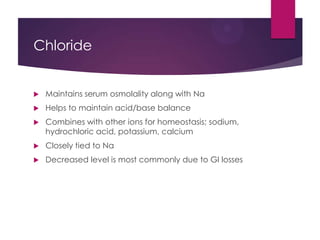
Chloride
 Maintains serum osmolality along with Na
 Helps to maintain acid/base balance
 Combines with other ions for homeostasis; sodium,
hydrochloric acid, potassium, calcium
 Closely tied to Na
 Decreased level is most commonly due to GI losses
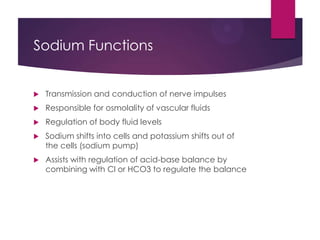
Sodium Functions
 Transmission and conduction of nerve impulses
 Responsible for osmolality of vascular fluids
 Regulation of body fluid levels
 Sodium shifts into cells and potassium shifts out of
the cells (sodium pump)
 Assists with regulation of acid-base balance by
combining with Cl or HCO3 to regulate the balance
Chloride Functions
 Found in ECF
 Changes the serum osmolality
 Goes with Na in retention of water
 Assists with regulation of acid-base balance
 Cl combines with hydrogen to form hydrochloric
acid in the stomach
Food Sources
High Sodium
Bacon
Corned beef
Ham
Catsup
Potato chips
Pretzels with salt
Pickles
Olives
Soda crackers
Tomato juice
Beef cubes
Dill
Decaffeinated coffee
Low Sodium
Fruit
Fresh
Frozen
canned
Unsalted grains
Pastas
Oatmeal
Popcorn
Shredded wheat
Fresh meats
Hyponatremia
 Excessive sodium loss or H2O gain
 CAUSES
 Prolonged diuretic therapy
 Excessive diaphoresis
 Insufficient Na intake
 GI losses – suctioning, laxatives, vomiting
 Administration of hypotonic fluids
 Compulsive water drinking
 Labor induction with oxytocin
 Cystic fibrosis
 alcoholism
CLINICAL MANIFESTATIONS
 Headache
 Faintness
 Confusion
 Muscle cramping/twitching
 Increased weight
 Convulsions
Hyponatremia
 Assessment
 Monitor for S/S in patients at risk
 Muscle weakness
 Tachycardia
 Fatigue
 Apathy
 Dry skin, pale mucus membranes
 Confusion
 Headache
 Nausea/Vomiting, Abdominal cramps
 Orthostatic hypotension
Treatment
 Restrict fluids
 Monitor VS
 Monitor serum Na levels
 IV normal saline or Lactated Ringers
 If Na is below 115, mEq/L hypertonic saline is ordered
 May give a diuretic for increasing H2O loss
 Encourage a balanced diet
 I/O
 Safety for weakness or confusion
 Assist with ambulation if low B/P
Hypernatremia
 Occurs with excess loss of H2O or excessive retention of Na
 Can lead to death if not treated
 Causes
 Vomiting/diarrhea
 Diaphoresis
 Inadequate ADH
 Some drugs
 Hypertonic fluids/tube feedings
 Major burns
 S/S
 Thirst
 Flushed skin
 Dry mucus membranes
 Low UOP
 Tachycardia
 Seizures
 Hyperactive deep tendon reflexes
Treatment of Hypernatremia
Low Na diet
May use salt substitutes if K+ OK
Encourage H2O consumption
Monitor fluid intake on patients
with heart or renal disease
Observe changes in B/P, and
heart rate if hypovolemic
Monitor serum Na levels
Assess respiratory for crackles
Weigh daily
Assess skin and mucus
membranes
Assist with oral hygiene
Check neurological status
Teach patient to monitor I/O
and watch for edema
Teach patient and family signs
and symptoms and when to
report them
Safety precautions
Potassium Imbalances
 Potassium is the most abundant cation in the body cells
 97% is found in the intracellular fluid
 Also plentiful in the GI tract
 Normal extracellular K+ is 3.5-5.3
 A serum K+ level below 2.5 or above 7.0 can cause cardiac arrest
 80-90% is excreted through the kidneys
 Functions
 Promotes conduction and transmission of nerve impulses
 Contraction of muscle
 Promotes enzyme action
 Assist in the maintenance of acid-base
 Food sources – veggies, fruits, nuts, meat
 Daily intake of K is necessary because it is poorly conserved by the body
Hypokalemia
 Causes
 Prolonged diuretic therapy
 Inadequate intake
 Severe diaphoresis
 Gastric suctioning, laxative use, vomiting
 Excess insulin
 Excess stress
 Hepatic disease
 Acute alcoholism
Signs and Symptoms
 Anorexia
 N/V
 Drowsiness, lethargy, confusion
 Leg cramps
 Muscle weakness
 Hyperreflexia
 Hypotension
 Cardiac dysrhythmias
 Polyuria
Treatment
 IV or PO replacement
 PO with 8 oz of fluid
 Give K+ IV diluted in a large vein
 * Never push K+ as a bolus *
 Monitor site for infiltration
 Monitor patients at risk
 Monitor I/O
 Monitor EKG
 Monitor Serum K+
 Watch UOP
 Watch patients who take Digitalis for toxicity
 Teach family and patient dietary changes
Hyperkalemia
 Greater then 5.0, EKG changes, decreased pH
 Results form impaired renal function
 Metabolic acidosis
 Acts as myocardial depressant; decreased heart
rate, cardiac output
 Muscle weakness
 GI hyperactivity
Etiology
 Increased dietary intake
 Excessive administration of K+
 Excessive use of salt substitutes
 Widespread cell damage, burns, trauma
 Administration of larger quantities of blood that is
old
 Hyponatremia
 Renal failure
Signs and Symptoms
 Apathy
 Confusion
 Numbness/paresthesia of extremities
 Abdominal cramps
 Nausea
 Flaccid muscles
 Diarrhea
 Oliguria
 Bradycardia
 Cardiac arrest
Nursing Care
 Monitor patients at risk
 Cardiac monitoring
 Monitor pulse, rate and rhythm, and B/P
 Assess for hyperactive bowel sounds
 Assess sensory and motor function
 Monitor neurological status
 Medications
 Calcium gluconate IV may be give as an antidote
 D50W and regular insulin to facilitate movement into the cells
 Administer Kayexolate (oral and rectal0
 Dialysis
Calcium
 Regulated by the parathyroid gland
 Parathyroid hormone
 Helps with calcium retention and phosphate excretion
through the kidneys
 Promotes calcium absorption in the intestines
 Helps mobilize calcium from the bone
Hypocalcemia
 Abnormalities of the parathyroid gland or
inadequate intake or excessive losses
 Can cause skeletal and neuromuscular
abnormalities
 Impairs clotting mechanisms
 Affects membrane permeability
 Diagnostic findings
 EKG changes
 Serum Ca++levels < 8.5 mg/dL
 Prolonged PT and PTT
Etiology
 Surgically induced hypoparathyroidism
 Renal failure
 Vitamin D deficiency
 Inadequate exposure to ultraviolet light
 Acute pancreatitis
 hyperphosphatemia
Signs and Symptoms
 Muscle cramps
 Hyperactive deep tendon reflexes
 Paresthesia of fingers, toes and face
 Tetany
 Positive Trousseau’s sign/Chvostek’s sign
 Laryngeal spasms
 Confusion
 Memory loss
 Cardiac dysrhythmias
Nursing Care
 Assess client’s at risk; surgery/transfusions
 Seizure precautions
 Administer IV Ca++ slowly; watch for infiltration
 Keep calcium gluconate at bedside
 Assess nutritional intake of Ca++
 Watch for sensitivity if taking Digitalis, may cause
lead to cardia arrest
Hypercalcemia
 Increased serum levels of Ca++
 Symptoms are directly related to degree of elevation
 Clients with metastatic cancer are especially at risk
 Cause
 Excessive intake
 Excessive use of antacids with phosphate-binding
 Prolonged immobility
 Excessive vitamin D intake
 Thiazide diuretics
 Cancer
 Thyrotoxicosis
Signs and Symptoms
 Muscle weakness
 Personality changes
 Nausea and vomiting
 Extreme thirst
 Anorexia
 Constipation
 Polyuria
 Pathological fractures
 Calcifications in the skin and cornea
 Cardiac arrest
Diagnostic Findings
 Serum Ca++ > 10.5 mg/dl
 Done changes on x-ray
 EKG changes
Nursing Care
 Monitor clients at risk; immobile, cancer
 Ambulate clients early
 Drink plenty of fluids, 3-5 liters to help excrete excess
Ca++
 Administer IV NS 200-500/hr if tolerated or for
moderate hypercalcemia
 Administer loop diuretics
 Administer Calcitonin
 Teach client to avoid dairy products
Hypomagnesemia
 Excess Mg loss from renal or GI
 Insufficient dietary intake
 Essential for neuromuscular integration;
hypomagnesemia increases muscle irritability and
contractility
 Causes decreased blood pressure and cardiac
dysrhythmias
 Often mistaken for hypokalemia, which can occur
simultaneously
Causes
 Excessive dietary intake of Ca++ or vitamin D
 Losses from gastric suctioning
 Severe nausea, vomiting or diarrhea,
 Pancreatitis, alcoholism
 Excessive diuretic therapy
 Administration of fluids without Mg
 Starvation
 Malabsorption syndromes
 Ulcerative colitis
 Hypercalcemia. Hypoaldosteronism
 High dose steroid use
 Cancer chemotherapy
Signs and Symptoms
 Cardiac dysrhythmias; hypotensiontremor
 Tetany
 Hyperactive deep tendon reflexes
 Positive Chvostek’s and Trousseau’s signs
 Memory loss
 Emotional lability
 Confusion
 Hallucinations
 Seizures
Diagnostic Findings
 Serum Mg level < 1,5 mEq/liter
 Hypocalcemia
 Hypokalemia
 EKG changes
Nursing Care
 Monitor clients at risk
 Watch for digitalis toxicity
 Cardiac monitoring
 Seizure precautions
 Treat with oral, IM, IV or Mg salts
 Monitor urine output
 Teach patients about foods high in Mg
 Green vegetables
 Nuts
 Beans
 fruits
Hypermagnesemia
 Usually results from renal failure
 Excessive intake usually involves OTC RX
 Produces sedative effect on neuromuscular
junctions, diminishes muscle cell excitability
 Can cause hypotension or cardiac arrest
Causes
 Renal failure
 Excessive use of Mg containing antacids
 Untreated diabetic ketoacidosis
 Hypoadrenalism
Signs and Symptoms
 Lethargy and drowsiness
 Depress neuromuscular activity
 Depresses respiratons
 Sensation of warmth throughout the body
 Hypoactive deep tendon reflexes
 Hypotension
 Bradycardia
 Cardiac arrest
Diagnostic Findings
 Serum Mg > 3mEq/liter
 EKG changes
Nursing Care
 Monitor clients at risk
 Monitor VS, especially B/P
 Assess neuromuscular status
 Cardiac monitoring
 Be prepared to give Ca gluconate
 Minimize intake

Electrolytes

  • 1.
  • 2.
    ELECTROLYTES  Na+: mostabundant electrolyte in the body  K+: essential for normal membrane excitability for nerve impulse  Cl-: regulates osmotic pressure and assists in regulating acid-base balance  Ca2+: usually combined with phosphorus to form the mineral salts of bones and teeth, promotes nerve impulse and muscle contraction/relaxation  Mg2+: plays role in carbohydrate and protein metabolism, storage and use of intracellular energy and neural transmission. Important in the functioning of the heart, nerves, and muscles
  • 3.
    MAJOR ELECTROLYTE IMBALANCES Hyponatremia (sodium deficit < 130mEq/L)  Hypernatremia (sodium excess >145mEq/L)  Hypokalemia (potassium deficit <3.5mEq/L)  Hyperkalemia (potassium excess >5.1mEq/L)  Chloride imbalance (<98mEq/L or >107mEq/L)  Magnesium imbalance (<1.5mEq/L or >2.5mEq/L)
  • 5.
    SODIUM/CHLORIDE IMBALANCES  Regulatedby the kidneys  Influenced by the hormone aldosterone  Na is responsible for water retention and serum osmolality level  Chloride ion frequently appears with the sodium ion  Normal Na = 135-145 mEq/L  Chloride 95-108 mEq/L  Na and CL are concentrated in ECF
  • 6.
    Chloride  Maintains serumosmolality along with Na  Helps to maintain acid/base balance  Combines with other ions for homeostasis; sodium, hydrochloric acid, potassium, calcium  Closely tied to Na  Decreased level is most commonly due to GI losses
  • 7.
    Sodium Functions  Transmissionand conduction of nerve impulses  Responsible for osmolality of vascular fluids  Regulation of body fluid levels  Sodium shifts into cells and potassium shifts out of the cells (sodium pump)  Assists with regulation of acid-base balance by combining with Cl or HCO3 to regulate the balance
  • 8.
    Chloride Functions  Foundin ECF  Changes the serum osmolality  Goes with Na in retention of water  Assists with regulation of acid-base balance  Cl combines with hydrogen to form hydrochloric acid in the stomach
  • 9.
    Food Sources High Sodium Bacon Cornedbeef Ham Catsup Potato chips Pretzels with salt Pickles Olives Soda crackers Tomato juice Beef cubes Dill Decaffeinated coffee Low Sodium Fruit Fresh Frozen canned Unsalted grains Pastas Oatmeal Popcorn Shredded wheat Fresh meats
  • 10.
    Hyponatremia  Excessive sodiumloss or H2O gain  CAUSES  Prolonged diuretic therapy  Excessive diaphoresis  Insufficient Na intake  GI losses – suctioning, laxatives, vomiting  Administration of hypotonic fluids  Compulsive water drinking  Labor induction with oxytocin  Cystic fibrosis  alcoholism
  • 11.
    CLINICAL MANIFESTATIONS  Headache Faintness  Confusion  Muscle cramping/twitching  Increased weight  Convulsions
  • 12.
    Hyponatremia  Assessment  Monitorfor S/S in patients at risk  Muscle weakness  Tachycardia  Fatigue  Apathy  Dry skin, pale mucus membranes  Confusion  Headache  Nausea/Vomiting, Abdominal cramps  Orthostatic hypotension
  • 13.
    Treatment  Restrict fluids Monitor VS  Monitor serum Na levels  IV normal saline or Lactated Ringers  If Na is below 115, mEq/L hypertonic saline is ordered  May give a diuretic for increasing H2O loss  Encourage a balanced diet  I/O  Safety for weakness or confusion  Assist with ambulation if low B/P
  • 14.
    Hypernatremia  Occurs withexcess loss of H2O or excessive retention of Na  Can lead to death if not treated  Causes  Vomiting/diarrhea  Diaphoresis  Inadequate ADH  Some drugs  Hypertonic fluids/tube feedings  Major burns  S/S  Thirst  Flushed skin  Dry mucus membranes  Low UOP  Tachycardia  Seizures  Hyperactive deep tendon reflexes
  • 15.
    Treatment of Hypernatremia LowNa diet May use salt substitutes if K+ OK Encourage H2O consumption Monitor fluid intake on patients with heart or renal disease Observe changes in B/P, and heart rate if hypovolemic Monitor serum Na levels Assess respiratory for crackles Weigh daily Assess skin and mucus membranes Assist with oral hygiene Check neurological status Teach patient to monitor I/O and watch for edema Teach patient and family signs and symptoms and when to report them Safety precautions
  • 16.
    Potassium Imbalances  Potassiumis the most abundant cation in the body cells  97% is found in the intracellular fluid  Also plentiful in the GI tract  Normal extracellular K+ is 3.5-5.3  A serum K+ level below 2.5 or above 7.0 can cause cardiac arrest  80-90% is excreted through the kidneys  Functions  Promotes conduction and transmission of nerve impulses  Contraction of muscle  Promotes enzyme action  Assist in the maintenance of acid-base  Food sources – veggies, fruits, nuts, meat  Daily intake of K is necessary because it is poorly conserved by the body
  • 17.
    Hypokalemia  Causes  Prolongeddiuretic therapy  Inadequate intake  Severe diaphoresis  Gastric suctioning, laxative use, vomiting  Excess insulin  Excess stress  Hepatic disease  Acute alcoholism
  • 18.
    Signs and Symptoms Anorexia  N/V  Drowsiness, lethargy, confusion  Leg cramps  Muscle weakness  Hyperreflexia  Hypotension  Cardiac dysrhythmias  Polyuria
  • 19.
    Treatment  IV orPO replacement  PO with 8 oz of fluid  Give K+ IV diluted in a large vein  * Never push K+ as a bolus *  Monitor site for infiltration  Monitor patients at risk  Monitor I/O  Monitor EKG  Monitor Serum K+  Watch UOP  Watch patients who take Digitalis for toxicity  Teach family and patient dietary changes
  • 20.
    Hyperkalemia  Greater then5.0, EKG changes, decreased pH  Results form impaired renal function  Metabolic acidosis  Acts as myocardial depressant; decreased heart rate, cardiac output  Muscle weakness  GI hyperactivity
  • 21.
    Etiology  Increased dietaryintake  Excessive administration of K+  Excessive use of salt substitutes  Widespread cell damage, burns, trauma  Administration of larger quantities of blood that is old  Hyponatremia  Renal failure
  • 22.
    Signs and Symptoms Apathy  Confusion  Numbness/paresthesia of extremities  Abdominal cramps  Nausea  Flaccid muscles  Diarrhea  Oliguria  Bradycardia  Cardiac arrest
  • 23.
    Nursing Care  Monitorpatients at risk  Cardiac monitoring  Monitor pulse, rate and rhythm, and B/P  Assess for hyperactive bowel sounds  Assess sensory and motor function  Monitor neurological status  Medications  Calcium gluconate IV may be give as an antidote  D50W and regular insulin to facilitate movement into the cells  Administer Kayexolate (oral and rectal0  Dialysis
  • 24.
    Calcium  Regulated bythe parathyroid gland  Parathyroid hormone  Helps with calcium retention and phosphate excretion through the kidneys  Promotes calcium absorption in the intestines  Helps mobilize calcium from the bone
  • 25.
    Hypocalcemia  Abnormalities ofthe parathyroid gland or inadequate intake or excessive losses  Can cause skeletal and neuromuscular abnormalities  Impairs clotting mechanisms  Affects membrane permeability  Diagnostic findings  EKG changes  Serum Ca++levels < 8.5 mg/dL  Prolonged PT and PTT
  • 26.
    Etiology  Surgically inducedhypoparathyroidism  Renal failure  Vitamin D deficiency  Inadequate exposure to ultraviolet light  Acute pancreatitis  hyperphosphatemia
  • 27.
    Signs and Symptoms Muscle cramps  Hyperactive deep tendon reflexes  Paresthesia of fingers, toes and face  Tetany  Positive Trousseau’s sign/Chvostek’s sign  Laryngeal spasms  Confusion  Memory loss  Cardiac dysrhythmias
  • 28.
    Nursing Care  Assessclient’s at risk; surgery/transfusions  Seizure precautions  Administer IV Ca++ slowly; watch for infiltration  Keep calcium gluconate at bedside  Assess nutritional intake of Ca++  Watch for sensitivity if taking Digitalis, may cause lead to cardia arrest
  • 29.
    Hypercalcemia  Increased serumlevels of Ca++  Symptoms are directly related to degree of elevation  Clients with metastatic cancer are especially at risk  Cause  Excessive intake  Excessive use of antacids with phosphate-binding  Prolonged immobility  Excessive vitamin D intake  Thiazide diuretics  Cancer  Thyrotoxicosis
  • 30.
    Signs and Symptoms Muscle weakness  Personality changes  Nausea and vomiting  Extreme thirst  Anorexia  Constipation  Polyuria  Pathological fractures  Calcifications in the skin and cornea  Cardiac arrest
  • 31.
    Diagnostic Findings  SerumCa++ > 10.5 mg/dl  Done changes on x-ray  EKG changes
  • 32.
    Nursing Care  Monitorclients at risk; immobile, cancer  Ambulate clients early  Drink plenty of fluids, 3-5 liters to help excrete excess Ca++  Administer IV NS 200-500/hr if tolerated or for moderate hypercalcemia  Administer loop diuretics  Administer Calcitonin  Teach client to avoid dairy products
  • 33.
    Hypomagnesemia  Excess Mgloss from renal or GI  Insufficient dietary intake  Essential for neuromuscular integration; hypomagnesemia increases muscle irritability and contractility  Causes decreased blood pressure and cardiac dysrhythmias  Often mistaken for hypokalemia, which can occur simultaneously
  • 34.
    Causes  Excessive dietaryintake of Ca++ or vitamin D  Losses from gastric suctioning  Severe nausea, vomiting or diarrhea,  Pancreatitis, alcoholism  Excessive diuretic therapy  Administration of fluids without Mg  Starvation  Malabsorption syndromes  Ulcerative colitis  Hypercalcemia. Hypoaldosteronism  High dose steroid use  Cancer chemotherapy
  • 35.
    Signs and Symptoms Cardiac dysrhythmias; hypotensiontremor  Tetany  Hyperactive deep tendon reflexes  Positive Chvostek’s and Trousseau’s signs  Memory loss  Emotional lability  Confusion  Hallucinations  Seizures
  • 36.
    Diagnostic Findings  SerumMg level < 1,5 mEq/liter  Hypocalcemia  Hypokalemia  EKG changes
  • 37.
    Nursing Care  Monitorclients at risk  Watch for digitalis toxicity  Cardiac monitoring  Seizure precautions  Treat with oral, IM, IV or Mg salts  Monitor urine output  Teach patients about foods high in Mg  Green vegetables  Nuts  Beans  fruits
  • 38.
    Hypermagnesemia  Usually resultsfrom renal failure  Excessive intake usually involves OTC RX  Produces sedative effect on neuromuscular junctions, diminishes muscle cell excitability  Can cause hypotension or cardiac arrest
  • 39.
    Causes  Renal failure Excessive use of Mg containing antacids  Untreated diabetic ketoacidosis  Hypoadrenalism
  • 40.
    Signs and Symptoms Lethargy and drowsiness  Depress neuromuscular activity  Depresses respiratons  Sensation of warmth throughout the body  Hypoactive deep tendon reflexes  Hypotension  Bradycardia  Cardiac arrest
  • 41.
    Diagnostic Findings  SerumMg > 3mEq/liter  EKG changes
  • 42.
    Nursing Care  Monitorclients at risk  Monitor VS, especially B/P  Assess neuromuscular status  Cardiac monitoring  Be prepared to give Ca gluconate  Minimize intake