Electrical Safety
29 CFR 1910.332
Graves Construction Services
Safety Training
Concerned About Electricity?
 How many sets of
Christmas
lights do you plug into
one
extension cord?
 Do you still use your
hot
and sparking electric
drill?
Concerned About Electricity?
 Is your vacuum
cleaner’s
cord twisted and
frayed?
 Have you installed
outlet
covers to protect your
toddler’s probing
fingers?
Electrical Safety Goals
 Electricity and the human body
 Electrical hazards and safe work
practices
Electrical Circuits
 Electrical source
 Electrical user
 Wires
Rules of Electricity
 Electricity travels in a completed circuit
 Electricity always travels in the path of
least resistance
 Electricity tries to travel to ground
Electricity and People
 A person usually offers a lesser resistance
for the electricity
 The person forms a completed circuit when
touching the ground
 Electricity always tries to travel to ground
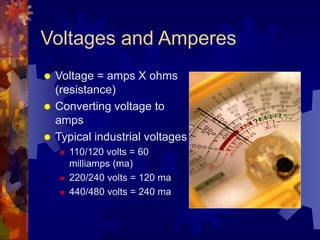
Voltages and Amperes
 Voltage = amps X ohms
(resistance)
 Converting voltage to
amps
 Typical industrial voltages
 110/120 volts = 60
milliamps (ma)
 220/240 volts = 120 ma
 440/480 volts = 240 ma
Effects on the Human Body
 1 ma: can be felt by the body
 2-10 ma: minor shock, might result in a
fall
 10-25 ma: loss of muscle control, may
not be able to let go of the current
 25-75 ma: painful, may lead to collapse
or death
 75-300 ma: last for 1/4 second, almost
always immediately fatal
Body’s Resistance
 Skin offers most of the body’s
electrical resistance
 Increased resistance
 Thick and callused skin (foot or hand)
 Dry skin
 Decreased resistance
 Thin skin (inner forearm)
 Wet or sweaty skin
 Broken or abraded skin (scratches)
Resistance Varies
 Different levels of electrical resistance
for each person.
 Ranges from 500 ohms to many
thousands
of ohms.
 The greater the body’s resistance, the
less chance of harm.
 A similar voltage shock can be minor to
one person and deadly to another.
Additional Resistance
 Gloves
 Shoes
 Mats
Electrical Safety Goals
 Electricity and the human body
 Electrical hazards and safe work practices
Training
 Qualified workers
 How to identify exposed energized parts
 How to safeguard or work on energized
parts
 Unqualified workers
 How electricity works
 Risks of working with energized
equipment
 Tasks to be performed only by qualified
workers
Hazard Control
 Electrical systems are inherently safe
 Injuries typically occur when:
 Procedures are inappropriate
 Procedures are not followed or ignored
 Safety systems are circumvented
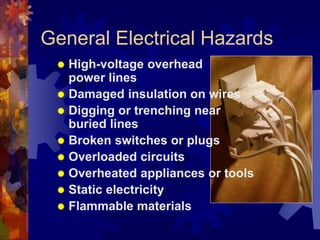
General Electrical Hazards
 High-voltage overhead
power lines
 Damaged insulation on wires
 Digging or trenching near
buried lines
 Broken switches or plugs
 Overloaded circuits
 Overheated appliances or tools
 Static electricity
 Flammable materials
Portable Power Tools
 Inspect portable power tools
 Never use damaged equipment
 Tag it out of service
 Have it repaired or replaced
 Never use portable power equipment in
wet or damp areas
 Stop using power tools if they become
hot or start sparking
Extension Cords
 Inspect/must be
construction duty
 For temporary work
only
 Do not use as a
rope
to pull or lift objects
 Should not be
fastened with
staples or hung
over hooks
Electrical Cord Inspection
 Deformed or mission pins
 Damaged outer jacket or insulation
 Evidence of internal damage
 If damaged, take out of service until
repaired
Circuit Protection
 Energize or de-energize with
appropriate switches, breakers, etc.
 Do not energize or de-energize with
fuses, terminal lugs, or cable splice
connections.
 If circuit protection device is tripped—
inspect.
Grounding Equipment
 Most electrical equipment is designed
with a grounding system
 Do not use equipment with damaged
grounding connectors
 Do not use adapters that interrupt the
grounding connection
Ground Fault Circuit
Interrupters
 GFCIs reduce the likelihood of fatal shocks
 Detect small amount of earth current and
automatically switch off the power
 Used with all portable tools
 Fuses and circuit breakers protect
equipment, not people
Static Electricity
 Created when materials rub together
 Can cause shocks or even minor skin
burns
 Reduced or prevented by:
 Proper grounding
 Rubber matting
 Grounding wires, gloves, or shoes
Flammable/ignitable Materials
 Flammable gases, vapors, or liquids
 Combustible dust
 Can be ignited by static electricity
 Require specially designed electrical
equipment
Operators
 Never tamper with electrical interlocks
 Do not repair electrical components of
your machine
 Properly shut off machinery before working
in the point of operation
 Obey warning signs and follow safe procedures
Summary
 Electricity will try to reach ground even if it
means going through a person
 Even the “small” voltage from your home
can cause serious injury
 Always inspect power tools and cords and
do not use them if damaged
 Do not attempt to repair electrical
equipment unless trained and qualified

Electrical Safety

  • 1.
    Electrical Safety 29 CFR1910.332 Graves Construction Services Safety Training
  • 2.
    Concerned About Electricity? How many sets of Christmas lights do you plug into one extension cord?  Do you still use your hot and sparking electric drill?
  • 3.
    Concerned About Electricity? Is your vacuum cleaner’s cord twisted and frayed?  Have you installed outlet covers to protect your toddler’s probing fingers?
  • 4.
    Electrical Safety Goals Electricity and the human body  Electrical hazards and safe work practices
  • 5.
    Electrical Circuits  Electricalsource  Electrical user  Wires
  • 6.
    Rules of Electricity Electricity travels in a completed circuit  Electricity always travels in the path of least resistance  Electricity tries to travel to ground
  • 7.
    Electricity and People A person usually offers a lesser resistance for the electricity  The person forms a completed circuit when touching the ground  Electricity always tries to travel to ground
  • 8.
    Voltages and Amperes Voltage = amps X ohms (resistance)  Converting voltage to amps  Typical industrial voltages  110/120 volts = 60 milliamps (ma)  220/240 volts = 120 ma  440/480 volts = 240 ma
  • 9.
    Effects on theHuman Body  1 ma: can be felt by the body  2-10 ma: minor shock, might result in a fall  10-25 ma: loss of muscle control, may not be able to let go of the current  25-75 ma: painful, may lead to collapse or death  75-300 ma: last for 1/4 second, almost always immediately fatal
  • 10.
    Body’s Resistance  Skinoffers most of the body’s electrical resistance  Increased resistance  Thick and callused skin (foot or hand)  Dry skin  Decreased resistance  Thin skin (inner forearm)  Wet or sweaty skin  Broken or abraded skin (scratches)
  • 11.
    Resistance Varies  Differentlevels of electrical resistance for each person.  Ranges from 500 ohms to many thousands of ohms.  The greater the body’s resistance, the less chance of harm.  A similar voltage shock can be minor to one person and deadly to another.
  • 12.
  • 13.
    Electrical Safety Goals Electricity and the human body  Electrical hazards and safe work practices
  • 14.
    Training  Qualified workers How to identify exposed energized parts  How to safeguard or work on energized parts  Unqualified workers  How electricity works  Risks of working with energized equipment  Tasks to be performed only by qualified workers
  • 15.
    Hazard Control  Electricalsystems are inherently safe  Injuries typically occur when:  Procedures are inappropriate  Procedures are not followed or ignored  Safety systems are circumvented
  • 16.
    General Electrical Hazards High-voltage overhead power lines  Damaged insulation on wires  Digging or trenching near buried lines  Broken switches or plugs  Overloaded circuits  Overheated appliances or tools  Static electricity  Flammable materials
  • 17.
    Portable Power Tools Inspect portable power tools  Never use damaged equipment  Tag it out of service  Have it repaired or replaced  Never use portable power equipment in wet or damp areas  Stop using power tools if they become hot or start sparking
  • 18.
    Extension Cords  Inspect/mustbe construction duty  For temporary work only  Do not use as a rope to pull or lift objects  Should not be fastened with staples or hung over hooks
  • 19.
    Electrical Cord Inspection Deformed or mission pins  Damaged outer jacket or insulation  Evidence of internal damage  If damaged, take out of service until repaired
  • 20.
    Circuit Protection  Energizeor de-energize with appropriate switches, breakers, etc.  Do not energize or de-energize with fuses, terminal lugs, or cable splice connections.  If circuit protection device is tripped— inspect.
  • 21.
    Grounding Equipment  Mostelectrical equipment is designed with a grounding system  Do not use equipment with damaged grounding connectors  Do not use adapters that interrupt the grounding connection
  • 22.
    Ground Fault Circuit Interrupters GFCIs reduce the likelihood of fatal shocks  Detect small amount of earth current and automatically switch off the power  Used with all portable tools  Fuses and circuit breakers protect equipment, not people
  • 23.
    Static Electricity  Createdwhen materials rub together  Can cause shocks or even minor skin burns  Reduced or prevented by:  Proper grounding  Rubber matting  Grounding wires, gloves, or shoes
  • 24.
    Flammable/ignitable Materials  Flammablegases, vapors, or liquids  Combustible dust  Can be ignited by static electricity  Require specially designed electrical equipment
  • 25.
    Operators  Never tamperwith electrical interlocks  Do not repair electrical components of your machine  Properly shut off machinery before working in the point of operation  Obey warning signs and follow safe procedures
  • 26.
    Summary  Electricity willtry to reach ground even if it means going through a person  Even the “small” voltage from your home can cause serious injury  Always inspect power tools and cords and do not use them if damaged  Do not attempt to repair electrical equipment unless trained and qualified