આઈ.ટી.આઈ,
મેહમદાવાદ
 Purpose
 Basic Concepts of Electricity
 Hazard Recognition
 Effects of Electricity on the Human Body
 Electrical Hazard Protection
 Work Practices
 How to Respond/Report a Problem
 Supervisor Responsibilities
 Employee Responsibilities
 Video
 Raise your awareness to potential electrical
hazards.
 Instruct you on how to recognize electrical
hazards.
 Provide ways to eliminate, remove, and prevent
electrical hazards in the workplace.
 Emphasizing the extreme importance of observing
all electrical safety requirements and practices.
 Instructing you on what to do in the event an
electrical accident.
 Course is not designed to teach you to work on
electrical equipment.
 You will not be qualified to work on electrical
equipment .
 If you see problems with electrical equipment,
notify your supervisor.
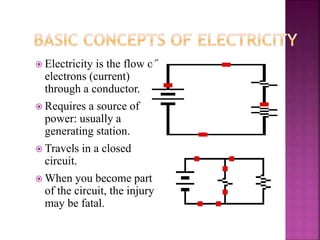
 Electricity is the flow of
electrons (current)
through a conductor.
 Requires a source of
power: usually a
generating station.
 Travels in a closed
circuit.
 When you become part
of the circuit, the injury
may be fatal.
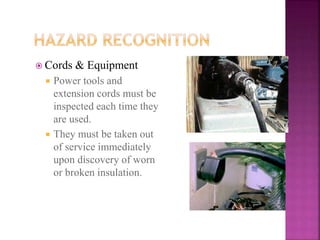
 Cords & Equipment
 Power tools and
extension cords must be
inspected each time they
are used.
 They must be taken out
of service immediately
upon discovery of worn
or broken insulation.
 Cords & Equipment
 Visually inspect electrical equipment before each use
for damage and/or external defects such as loose,
missing or deformed parts, pinched or crushed outer
jackets or insulation. This type of external damage
may indicate internal damage to the equipment.
 Electrical cords that are worn or damaged must be
replaced without delay.
 Before cleaning electrical equipment, turn it off and
unplug it.
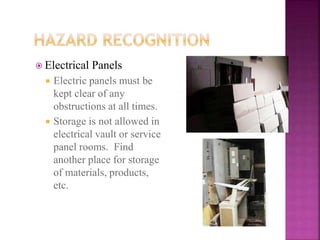
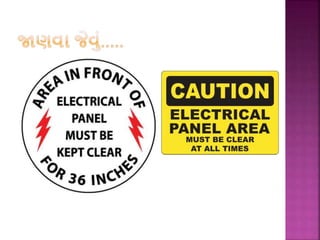
 Electrical Panels
 Electric panels must be
kept clear of any
obstructions at all times.
 Storage is not allowed in
electrical vault or service
panel rooms. Find
another place for storage
of materials, products,
etc.
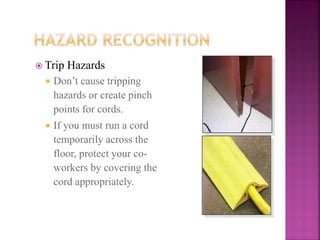
 Trip Hazards
 Don’t cause tripping
hazards or create pinch
points for cords.
 If you must run a cord
temporarily across the
floor, protect your co-
workers by covering the
cord appropriately.
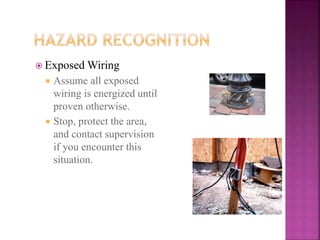
 Exposed Wiring
 Assume all exposed
wiring is energized until
proven otherwise.
 Stop, protect the area,
and contact supervision
if you encounter this
situation.
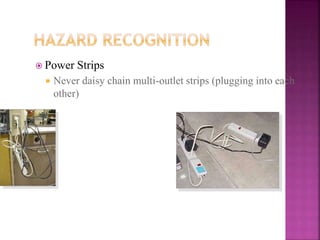
 Power Strips
 Never daisy chain multi-outlet strips (plugging into each
other)
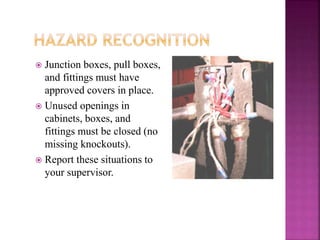
 Junction boxes, pull boxes,
and fittings must have
approved covers in place.
 Unused openings in
cabinets, boxes, and
fittings must be closed (no
missing knockouts).
 Report these situations to
your supervisor.
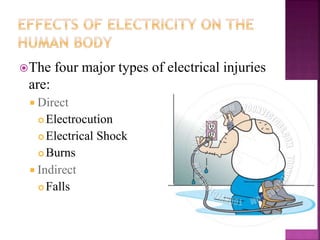
The four major types of electrical injuries
are:
 Direct
 Electrocution
 Electrical Shock
 Burns
 Indirect
 Falls
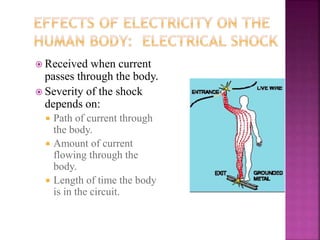
 Received when current
passes through the body.
 Severity of the shock
depends on:
 Path of current through
the body.
 Amount of current
flowing through the
body.
 Length of time the body
is in the circuit.
 Range of currents lasting 1 second will illicit the
following reactions:
 1 milliamp
 Just a faint tingle.
 5 milliamps
 Slight shock felt. Most people can let go.
 6-30 milliamps
 Painful shock. Muscular control is lost. This is the
range were “freezing current” starts. It may not be
possible to let go.
 50-150 milliamps
 Extremely painful shock, respiratory arrest,
(breathing stops) and severe muscle contractions.
Death is possible.

 1,000-4,300 milliamps (1-4.3 amps)
 Arrhythmic heart pumping action, muscles
contract, and nerve damage occurs. Death is likely.
 10,000+ milliamps (10 amps)
 Cardiac arrest and severe burns occur. Death is
probable.
 The longer the exposure, the increased danger of shock
to the victim.
 Low voltage can be extremely dangerous because the
degree of injury depends not only on the current, but
on the length of time in contact with the circuit.
 Example:
 A current of 100mA applied for 3 seconds is as dangerous
as 900mA applied for 0.03 seconds.
 Low Voltage Does Not Mean Low Hazard.
High voltages lead to additional injuries
such as:
 Violent muscular contractions
 Muscle contractions may cause bone
fractures from either contractions
themselves or from falls.
 Internal bleeding, destruction of tissues,
nerves and muscles.
 The most common shock related, nonfatal injury is
a burn.
 Burns caused by electricity may be of three types:
 Electrical burns
 Arc burns
 Thermal contact burns
 Electrical burns need to be given immediate
medical attention.
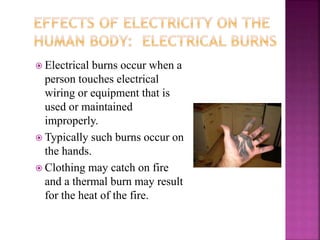
 Electrical burns occur when a
person touches electrical
wiring or equipment that is
used or maintained
improperly.
 Typically such burns occur on
the hands.
 Clothing may catch on fire
and a thermal burn may result
for the heat of the fire.
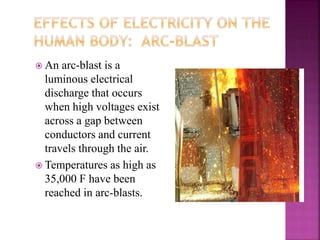
 An arc-blast is a
luminous electrical
discharge that occurs
when high voltages exist
across a gap between
conductors and current
travels through the air.
 Temperatures as high as
35,000 F have been
reached in arc-blasts.
 The three primary hazards associated with an arc-blast
are:
 Arching gives off thermal radiation (heat) and intense
light which causes burns.
 A high voltage arc can produce a considerable pressure
wave blast.
 Example: A person 2 ft. away from a 25,000-amp arc
feels a force of about 480 lbs on the front of the body.
 May cause copper and aluminum components to melt.
 The molten metal can be blasted great distances by the
pressure wave.
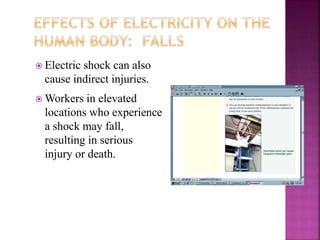
 Electric shock can also
cause indirect injuries.
 Workers in elevated
locations who experience
a shock may fall,
resulting in serious
injury or death.
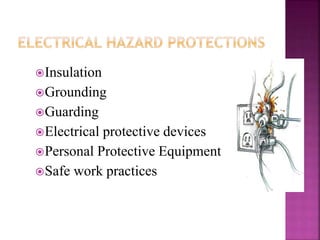
Insulation
Grounding
Guarding
Electrical protective devices
Personal Protective Equipment
Safe work practices
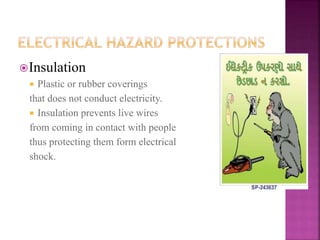
Insulation
 Plastic or rubber coverings
that does not conduct electricity.
 Insulation prevents live wires
from coming in contact with people
thus protecting them form electrical
shock.
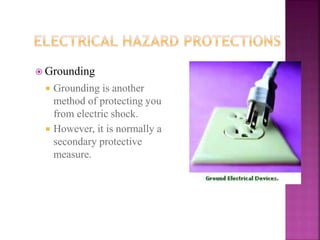
 Grounding
 Grounding is another
method of protecting you
from electric shock.
 However, it is normally a
secondary protective
measure.
 Grounding
 The "ground" refers to a conductive body, usually the
earth, and means a conductive connection, whether
intentional or accidental, by which an electric circuit or
equipment is connected to earth or the ground plane.
 By "grounding" a tool or electrical system, a low-
resistance path to the earth is intentionally created.
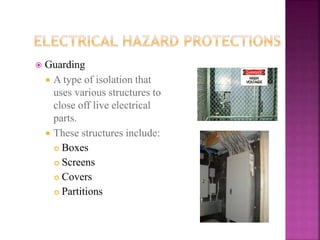
 Guarding
 A type of isolation that
uses various structures to
close off live electrical
parts.
 These structures include:
 Boxes
 Screens
 Covers
 Partitions
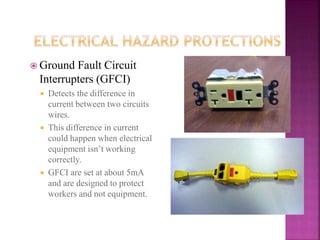
 Ground Fault Circuit
Interrupters (GFCI)
 Detects the difference in
current between two circuits
wires.
 This difference in current
could happen when electrical
equipment isn’t working
correctly.
 GFCI are set at about 5mA
and are designed to protect
workers and not equipment.
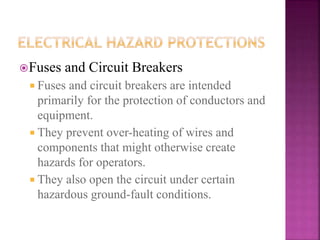
Fuses and Circuit Breakers
 Fuses and circuit breakers are intended
primarily for the protection of conductors and
equipment.
 They prevent over-heating of wires and
components that might otherwise create
hazards for operators.
 They also open the circuit under certain
hazardous ground-fault conditions.
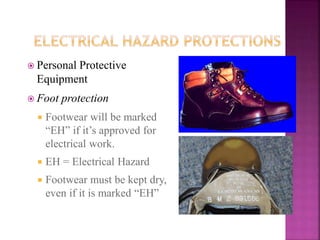
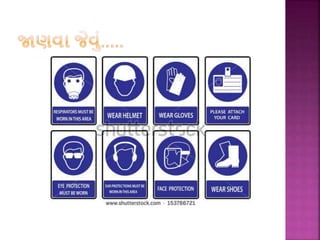
 Personal Protective
Equipment
 Foot protection
 Footwear will be marked
“EH” if it’s approved for
electrical work.
 EH = Electrical Hazard
 Footwear must be kept dry,
even if it is marked “EH”
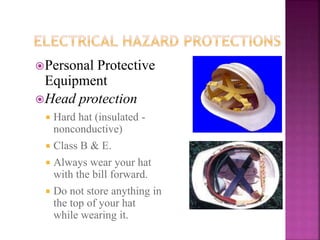
Personal Protective
Equipment
Head protection
 Hard hat (insulated -
nonconductive)
 Class B & E.
 Always wear your hat
with the bill forward.
 Do not store anything in
the top of your hat
while wearing it.
Personal Protective
Equipment
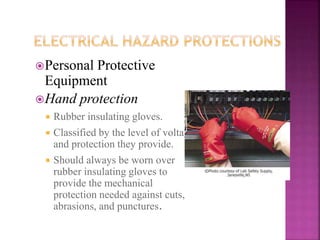
Hand protection
 Rubber insulating gloves.
 Classified by the level of voltage
and protection they provide.
 Should always be worn over
rubber insulating gloves to
provide the mechanical
protection needed against cuts,
abrasions, and punctures.
Personal Protective Equipment
 Use, store and maintain your electrical PPE in a safe,
reliable condition.
 Wear nonconductive head protection wherever there is a
danger of head injury from electric shock or burns due to
contact with exposed energized parts.
 Wear protective equipment for the eyes or face wherever
there is danger of injury to the eyes or face from electric
arcs or flashes or from flying objects resulting from
electrical explosion.
Personal Protective Equipment
 Electrical PPE with any of the following
defects may not be used:
 If holes, tears, punctures, or cuts are present.
 Texture changes: Swelling, softening, hardening, or
becoming sticky or inelastic.
 An embedded foreign object.
 Any other defect that damages the insulating
properties.
 Employees and others working with electric
equipment need to use safe work practices.
 Plan your work by yourself and with others.
 Allows you to coordinate your work and take advantage of
what others know about identifying and controlling hazards.
 Lock out and Tag out circuits and equipment.
 Shut off the circuit.
 Lock and tag out the circuit at the distribution panel.
 Test the circuit to make sure it’s de-energized.
 Do not work in wet conditions.
 Avoid overhead power lines.
 You should be at least 10 feet away from high-voltage
transmission lines.
 Use proper wiring and connectors
 Avoid overloading circuits.
 Test GFCI’s monthly.
 Make sure switches and insulation are in good condition.
 Never use a three prong plug with the third prong broken off.
 Use and maintain tools properly.
 Inspect tools before using them.
 Damaged tools must be removed from service.
 Keep tool and cords away from heat, oil and sharp objects.
 Using appropriate personal protective equipment
 Wear safety glasses to avoid eye injury.
 Wear proper foot protection.
 Wear a hard hat.
 Follow the manufacturer’s directions for
cleaning/maintaining PPE.
Do not panic; remain calm
In the event of a personal injury:
 Call 911 immediately
 If a person is being shocked, turn of the source of
electricity
 Do not touch someone being shocked
 Remove the person away from the electrical source
using a non-conductive material
 Call Security at X4111 and EH&S at X4150
 Notify your supervisor
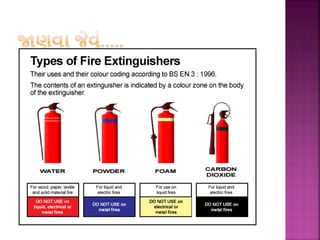
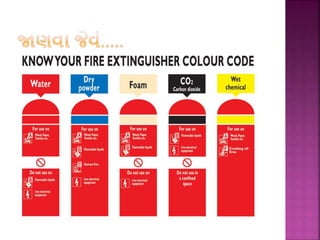
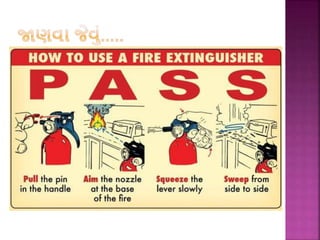
 In the event of an electrical fire:
 Activate the fire alarm system
 Do not use a Type A, water extinguisher
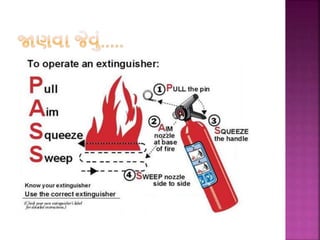
 If you know how to use an extinguisher, use a CO2 or
dry chemical fire extinguisher
 Alert everyone in the area to evacuate
 Notify Security at X4111 and EH&S at X4150
 If you are not sure about using a fire extinguisher, leave
the area and close any doors behind you
 Wait for the Fire Dept. personnel to arrive
 Review project carefully with your workers, unless
they are routine assignments
 Emphasize safety practices
 Train workers on area-specific policies and
procedures
 Check your employees’ work practices to ensure
compliance
 Check the final product to ensure that no
deficiencies exist
 Provide the appropriate disciplinary measures for
poor electrical safety practices.
Review each project carefully with your
supervisor
Become thoroughly familiar with your
assignments
Only perform work in which you are
trained
If at all in doubt, ask questions
Have your supervisor review your
completed project
Follow your supervisor’s instructions
Follow safe work practices
Make sure lines are de-energized before
your work on them
Wear any required PPE
Alert your co-workers to any unsafe
work practices
Report all problems to your supervisor
Know what to do in the event of an
emergency
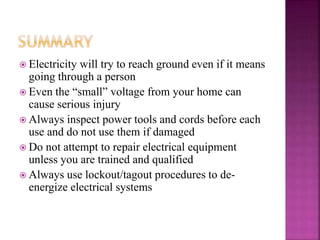
 Electricity will try to reach ground even if it means
going through a person
 Even the “small” voltage from your home can
cause serious injury
 Always inspect power tools and cords before each
use and do not use them if damaged
 Do not attempt to repair electrical equipment
unless you are trained and qualified
 Always use lockout/tagout procedures to de-
energize electrical systems
Use electrical tools and equipment that
are protected by a GFI
Review your assignments with your
supervisors
Utilize correct PPE
Report all problems to your supervisors
If at all in doubt, ask questions
જય હિન્દ......

ELECTRICAL SAFETY PRESENTATION.ppt

  • 1.
  • 2.
     Purpose  BasicConcepts of Electricity  Hazard Recognition  Effects of Electricity on the Human Body  Electrical Hazard Protection  Work Practices  How to Respond/Report a Problem  Supervisor Responsibilities  Employee Responsibilities  Video
  • 3.
     Raise yourawareness to potential electrical hazards.  Instruct you on how to recognize electrical hazards.  Provide ways to eliminate, remove, and prevent electrical hazards in the workplace.  Emphasizing the extreme importance of observing all electrical safety requirements and practices.  Instructing you on what to do in the event an electrical accident.
  • 4.
     Course isnot designed to teach you to work on electrical equipment.  You will not be qualified to work on electrical equipment .  If you see problems with electrical equipment, notify your supervisor.
  • 5.
     Electricity isthe flow of electrons (current) through a conductor.  Requires a source of power: usually a generating station.  Travels in a closed circuit.  When you become part of the circuit, the injury may be fatal.
  • 6.
     Cords &Equipment  Power tools and extension cords must be inspected each time they are used.  They must be taken out of service immediately upon discovery of worn or broken insulation.
  • 7.
     Cords &Equipment  Visually inspect electrical equipment before each use for damage and/or external defects such as loose, missing or deformed parts, pinched or crushed outer jackets or insulation. This type of external damage may indicate internal damage to the equipment.  Electrical cords that are worn or damaged must be replaced without delay.  Before cleaning electrical equipment, turn it off and unplug it.
  • 8.
     Electrical Panels Electric panels must be kept clear of any obstructions at all times.  Storage is not allowed in electrical vault or service panel rooms. Find another place for storage of materials, products, etc.
  • 9.
     Trip Hazards Don’t cause tripping hazards or create pinch points for cords.  If you must run a cord temporarily across the floor, protect your co- workers by covering the cord appropriately.
  • 10.
     Exposed Wiring Assume all exposed wiring is energized until proven otherwise.  Stop, protect the area, and contact supervision if you encounter this situation.
  • 11.
     Power Strips Never daisy chain multi-outlet strips (plugging into each other)
  • 12.
     Junction boxes,pull boxes, and fittings must have approved covers in place.  Unused openings in cabinets, boxes, and fittings must be closed (no missing knockouts).  Report these situations to your supervisor.
  • 13.
    The four majortypes of electrical injuries are:  Direct  Electrocution  Electrical Shock  Burns  Indirect  Falls
  • 14.
     Received whencurrent passes through the body.  Severity of the shock depends on:  Path of current through the body.  Amount of current flowing through the body.  Length of time the body is in the circuit.
  • 15.
     Range ofcurrents lasting 1 second will illicit the following reactions:  1 milliamp  Just a faint tingle.  5 milliamps  Slight shock felt. Most people can let go.  6-30 milliamps  Painful shock. Muscular control is lost. This is the range were “freezing current” starts. It may not be possible to let go.
  • 16.
     50-150 milliamps Extremely painful shock, respiratory arrest, (breathing stops) and severe muscle contractions. Death is possible.  1,000-4,300 milliamps (1-4.3 amps)  Arrhythmic heart pumping action, muscles contract, and nerve damage occurs. Death is likely.  10,000+ milliamps (10 amps)  Cardiac arrest and severe burns occur. Death is probable.
  • 17.
     The longerthe exposure, the increased danger of shock to the victim.  Low voltage can be extremely dangerous because the degree of injury depends not only on the current, but on the length of time in contact with the circuit.  Example:  A current of 100mA applied for 3 seconds is as dangerous as 900mA applied for 0.03 seconds.  Low Voltage Does Not Mean Low Hazard.
  • 18.
    High voltages leadto additional injuries such as:  Violent muscular contractions  Muscle contractions may cause bone fractures from either contractions themselves or from falls.  Internal bleeding, destruction of tissues, nerves and muscles.
  • 19.
     The mostcommon shock related, nonfatal injury is a burn.  Burns caused by electricity may be of three types:  Electrical burns  Arc burns  Thermal contact burns  Electrical burns need to be given immediate medical attention.
  • 20.
     Electrical burnsoccur when a person touches electrical wiring or equipment that is used or maintained improperly.  Typically such burns occur on the hands.  Clothing may catch on fire and a thermal burn may result for the heat of the fire.
  • 21.
     An arc-blastis a luminous electrical discharge that occurs when high voltages exist across a gap between conductors and current travels through the air.  Temperatures as high as 35,000 F have been reached in arc-blasts.
  • 22.
     The threeprimary hazards associated with an arc-blast are:  Arching gives off thermal radiation (heat) and intense light which causes burns.  A high voltage arc can produce a considerable pressure wave blast.  Example: A person 2 ft. away from a 25,000-amp arc feels a force of about 480 lbs on the front of the body.  May cause copper and aluminum components to melt.  The molten metal can be blasted great distances by the pressure wave.
  • 23.
     Electric shockcan also cause indirect injuries.  Workers in elevated locations who experience a shock may fall, resulting in serious injury or death.
  • 24.
  • 25.
    Insulation  Plastic orrubber coverings that does not conduct electricity.  Insulation prevents live wires from coming in contact with people thus protecting them form electrical shock.
  • 26.
     Grounding  Groundingis another method of protecting you from electric shock.  However, it is normally a secondary protective measure.
  • 27.
     Grounding  The"ground" refers to a conductive body, usually the earth, and means a conductive connection, whether intentional or accidental, by which an electric circuit or equipment is connected to earth or the ground plane.  By "grounding" a tool or electrical system, a low- resistance path to the earth is intentionally created.
  • 28.
     Guarding  Atype of isolation that uses various structures to close off live electrical parts.  These structures include:  Boxes  Screens  Covers  Partitions
  • 29.
     Ground FaultCircuit Interrupters (GFCI)  Detects the difference in current between two circuits wires.  This difference in current could happen when electrical equipment isn’t working correctly.  GFCI are set at about 5mA and are designed to protect workers and not equipment.
  • 30.
    Fuses and CircuitBreakers  Fuses and circuit breakers are intended primarily for the protection of conductors and equipment.  They prevent over-heating of wires and components that might otherwise create hazards for operators.  They also open the circuit under certain hazardous ground-fault conditions.
  • 31.
     Personal Protective Equipment Foot protection  Footwear will be marked “EH” if it’s approved for electrical work.  EH = Electrical Hazard  Footwear must be kept dry, even if it is marked “EH”
  • 32.
    Personal Protective Equipment Head protection Hard hat (insulated - nonconductive)  Class B & E.  Always wear your hat with the bill forward.  Do not store anything in the top of your hat while wearing it.
  • 33.
    Personal Protective Equipment Hand protection Rubber insulating gloves.  Classified by the level of voltage and protection they provide.  Should always be worn over rubber insulating gloves to provide the mechanical protection needed against cuts, abrasions, and punctures.
  • 34.
    Personal Protective Equipment Use, store and maintain your electrical PPE in a safe, reliable condition.  Wear nonconductive head protection wherever there is a danger of head injury from electric shock or burns due to contact with exposed energized parts.  Wear protective equipment for the eyes or face wherever there is danger of injury to the eyes or face from electric arcs or flashes or from flying objects resulting from electrical explosion.
  • 35.
    Personal Protective Equipment Electrical PPE with any of the following defects may not be used:  If holes, tears, punctures, or cuts are present.  Texture changes: Swelling, softening, hardening, or becoming sticky or inelastic.  An embedded foreign object.  Any other defect that damages the insulating properties.
  • 36.
     Employees andothers working with electric equipment need to use safe work practices.  Plan your work by yourself and with others.  Allows you to coordinate your work and take advantage of what others know about identifying and controlling hazards.  Lock out and Tag out circuits and equipment.  Shut off the circuit.  Lock and tag out the circuit at the distribution panel.  Test the circuit to make sure it’s de-energized.
  • 37.
     Do notwork in wet conditions.  Avoid overhead power lines.  You should be at least 10 feet away from high-voltage transmission lines.  Use proper wiring and connectors  Avoid overloading circuits.  Test GFCI’s monthly.  Make sure switches and insulation are in good condition.  Never use a three prong plug with the third prong broken off.
  • 38.
     Use andmaintain tools properly.  Inspect tools before using them.  Damaged tools must be removed from service.  Keep tool and cords away from heat, oil and sharp objects.  Using appropriate personal protective equipment  Wear safety glasses to avoid eye injury.  Wear proper foot protection.  Wear a hard hat.  Follow the manufacturer’s directions for cleaning/maintaining PPE.
  • 39.
    Do not panic;remain calm In the event of a personal injury:  Call 911 immediately  If a person is being shocked, turn of the source of electricity  Do not touch someone being shocked  Remove the person away from the electrical source using a non-conductive material  Call Security at X4111 and EH&S at X4150  Notify your supervisor
  • 40.
     In theevent of an electrical fire:  Activate the fire alarm system  Do not use a Type A, water extinguisher  If you know how to use an extinguisher, use a CO2 or dry chemical fire extinguisher  Alert everyone in the area to evacuate  Notify Security at X4111 and EH&S at X4150  If you are not sure about using a fire extinguisher, leave the area and close any doors behind you  Wait for the Fire Dept. personnel to arrive
  • 41.
     Review projectcarefully with your workers, unless they are routine assignments  Emphasize safety practices  Train workers on area-specific policies and procedures  Check your employees’ work practices to ensure compliance  Check the final product to ensure that no deficiencies exist  Provide the appropriate disciplinary measures for poor electrical safety practices.
  • 42.
    Review each projectcarefully with your supervisor Become thoroughly familiar with your assignments Only perform work in which you are trained If at all in doubt, ask questions Have your supervisor review your completed project Follow your supervisor’s instructions
  • 43.
    Follow safe workpractices Make sure lines are de-energized before your work on them Wear any required PPE Alert your co-workers to any unsafe work practices Report all problems to your supervisor Know what to do in the event of an emergency
  • 44.
     Electricity willtry to reach ground even if it means going through a person  Even the “small” voltage from your home can cause serious injury  Always inspect power tools and cords before each use and do not use them if damaged  Do not attempt to repair electrical equipment unless you are trained and qualified  Always use lockout/tagout procedures to de- energize electrical systems
  • 45.
    Use electrical toolsand equipment that are protected by a GFI Review your assignments with your supervisors Utilize correct PPE Report all problems to your supervisors If at all in doubt, ask questions
  • 54.