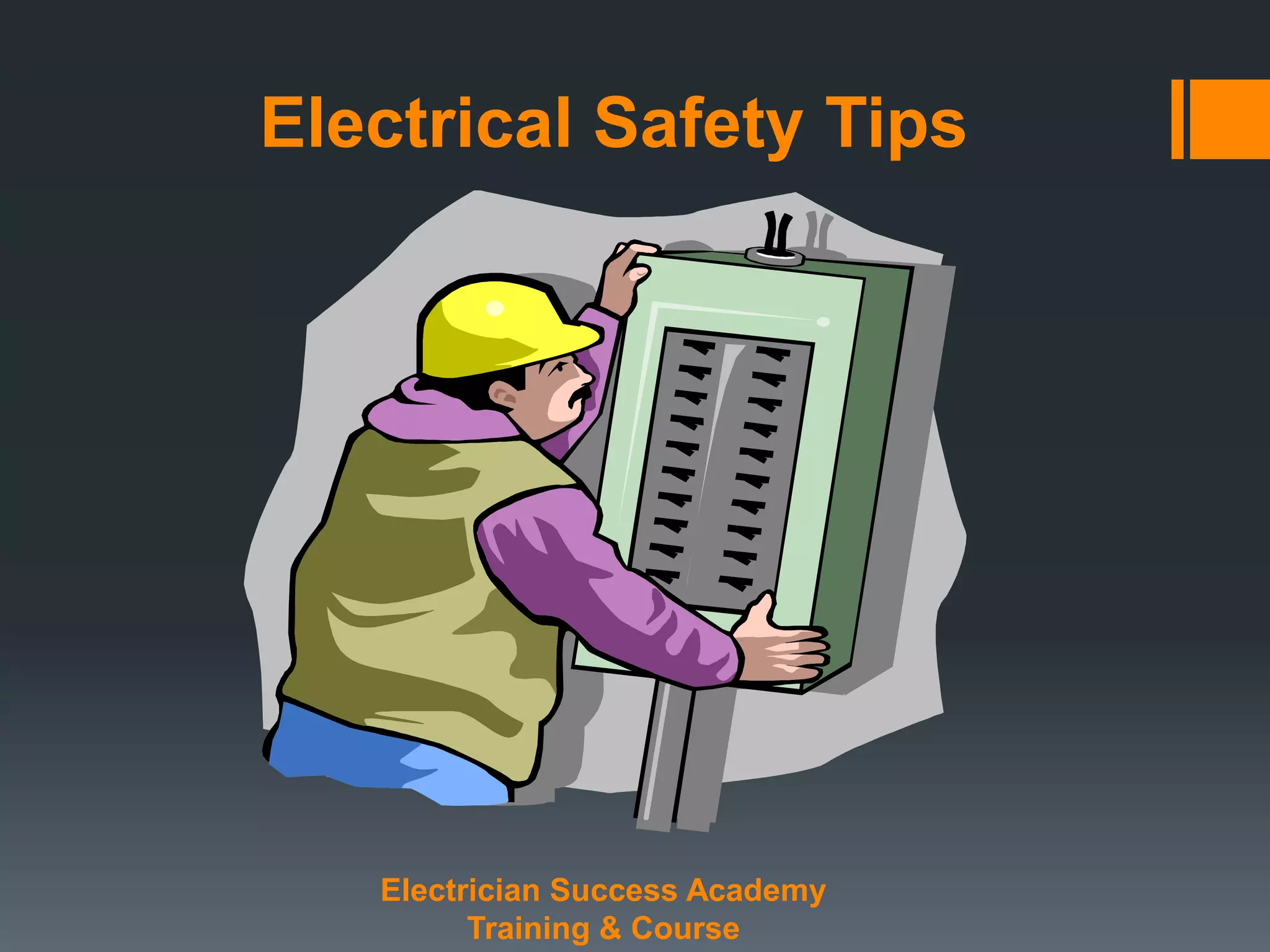



Electrical Safety Tips
Electrician Success Academy
Training & Course
Summary
Electrical equipment must be:
 Listed and labeled
 Free from hazards
 Used in the proper manner
If you use electrical tools you must be:
 Protected from electrical shock
 Provided necessary safety equipment
Electrical Terms
 Current -- electrical movement (measured in amps)
 Circuit -- complete path of the current. Includes electricity source, a
conductor, and the output device or load (such as a lamp, tool, or
heater)
 Resistance -- restriction to electrical flow
 Conductors – substances, like metals, with little resistance to
electricity that allow electricity to flow
 Grounding – a conductive connection to the earth which acts as a
protective measure
 Insulators -- substances with high resistance to electricity like glass,
porcelain, plastic, and dry wood that prevent electricity from getting to
unwanted areas
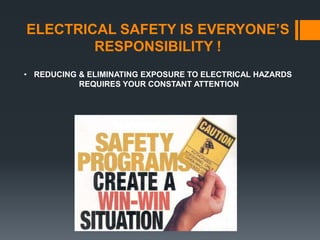
ELECTRICAL SAFETY IS EVERYONE’S
RESPONSIBILITY !
• REDUCING & ELIMINATING EXPOSURE TO ELECTRICAL HAZARDS
REQUIRES YOUR CONSTANT ATTENTION
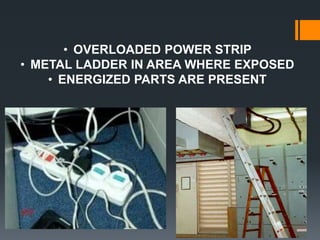
• OVERLOADED POWER STRIP
• METAL LADDER IN AREA WHERE EXPOSED
• ENERGIZED PARTS ARE PRESENT
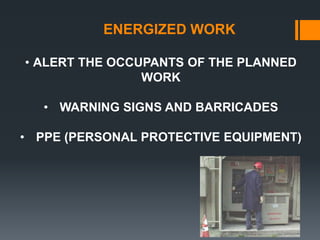
ENERGIZED WORK
• ALERT THE OCCUPANTS OF THE PLANNED
WORK
• WARNING SIGNS AND BARRICADES
• PPE (PERSONAL PROTECTIVE EQUIPMENT)
ELECTRICAL PANEL DIRECTORIES
• IN PLACE AND ACCURATE AND POWER CABINETS AND
BREAKERS PROPERLY LABELED
PROTECTIVE COVERS
• GUARDING OF ENERGIZED PARTS TO PREVENT
ACCIDENTAL CONTACT; OVER POWER PANELS,
JUNCTION BOXES, AND UNUSED HOLES.
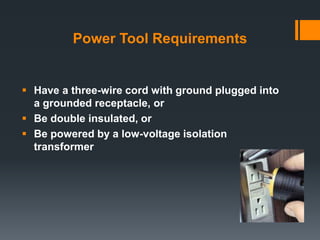
Power Tool Requirements
 Have a three-wire cord with ground plugged into
a grounded receptacle, or
 Be double insulated, or
 Be powered by a low-voltage isolation
transformer
Tool Safety Tips
 Use gloves and appropriate footwear
 Store in dry place when not using
 Don’t use in wet/damp conditions
 Keep working areas well lit
 Ensure not a tripping hazard
 Don’t carry a tool by the cord
 Don’t yank the cord to disconnect it
 Keep cords away from heat, oil, & sharp edges
 Disconnect when not in use and when changing
accessories such as blades & bits
 Remove damaged tools from use
Safety-Related Work Practices
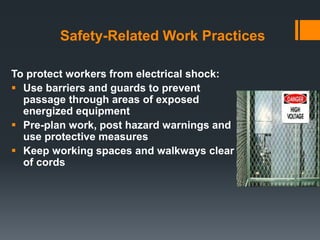
To protect workers from electrical shock:
 Use barriers and guards to prevent
passage through areas of exposed
energized equipment
 Pre-plan work, post hazard warnings and
use protective measures
 Keep working spaces and walkways clear
of cords
 Use special insulated tools
when working on fuses with
energized terminals
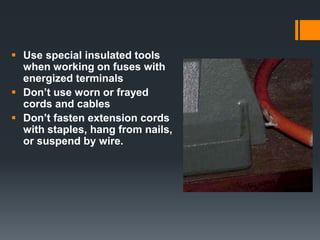
 Don’t use worn or frayed
cords and cables
 Don’t fasten extension cords
with staples, hang from nails,
or suspend by wire.
Training
 Deenergize electric equipment before inspecting
or repairing
 Using cords, cables, and electric tools that are in
good repair
 Lockout / Tag out recognition and procedures
 Use appropriate protective equipment
Train employees working with electric equipment
in safe work practices, including:
Electrical Safety Tips

Electrical Safety Tips

  • 1.
    Electrical Safety Tips ElectricianSuccess Academy Training & Course
  • 2.
    Summary Electrical equipment mustbe:  Listed and labeled  Free from hazards  Used in the proper manner If you use electrical tools you must be:  Protected from electrical shock  Provided necessary safety equipment
  • 3.
    Electrical Terms  Current-- electrical movement (measured in amps)  Circuit -- complete path of the current. Includes electricity source, a conductor, and the output device or load (such as a lamp, tool, or heater)  Resistance -- restriction to electrical flow  Conductors – substances, like metals, with little resistance to electricity that allow electricity to flow  Grounding – a conductive connection to the earth which acts as a protective measure  Insulators -- substances with high resistance to electricity like glass, porcelain, plastic, and dry wood that prevent electricity from getting to unwanted areas
  • 4.
    ELECTRICAL SAFETY ISEVERYONE’S RESPONSIBILITY ! • REDUCING & ELIMINATING EXPOSURE TO ELECTRICAL HAZARDS REQUIRES YOUR CONSTANT ATTENTION
  • 5.
    • OVERLOADED POWERSTRIP • METAL LADDER IN AREA WHERE EXPOSED • ENERGIZED PARTS ARE PRESENT
  • 6.
    ENERGIZED WORK • ALERTTHE OCCUPANTS OF THE PLANNED WORK • WARNING SIGNS AND BARRICADES • PPE (PERSONAL PROTECTIVE EQUIPMENT)
  • 7.
    ELECTRICAL PANEL DIRECTORIES •IN PLACE AND ACCURATE AND POWER CABINETS AND BREAKERS PROPERLY LABELED
  • 8.
    PROTECTIVE COVERS • GUARDINGOF ENERGIZED PARTS TO PREVENT ACCIDENTAL CONTACT; OVER POWER PANELS, JUNCTION BOXES, AND UNUSED HOLES.
  • 9.
    Power Tool Requirements Have a three-wire cord with ground plugged into a grounded receptacle, or  Be double insulated, or  Be powered by a low-voltage isolation transformer
  • 10.
    Tool Safety Tips Use gloves and appropriate footwear  Store in dry place when not using  Don’t use in wet/damp conditions  Keep working areas well lit  Ensure not a tripping hazard  Don’t carry a tool by the cord  Don’t yank the cord to disconnect it  Keep cords away from heat, oil, & sharp edges  Disconnect when not in use and when changing accessories such as blades & bits  Remove damaged tools from use
  • 11.
    Safety-Related Work Practices Toprotect workers from electrical shock:  Use barriers and guards to prevent passage through areas of exposed energized equipment  Pre-plan work, post hazard warnings and use protective measures  Keep working spaces and walkways clear of cords
  • 12.
     Use specialinsulated tools when working on fuses with energized terminals  Don’t use worn or frayed cords and cables  Don’t fasten extension cords with staples, hang from nails, or suspend by wire.
  • 13.
    Training  Deenergize electricequipment before inspecting or repairing  Using cords, cables, and electric tools that are in good repair  Lockout / Tag out recognition and procedures  Use appropriate protective equipment Train employees working with electric equipment in safe work practices, including: