National Safety Council-
Tamilnadu Chapter
“Safety & Health in construction Site”
Electrical Safety with Temporary
Electrical Installation
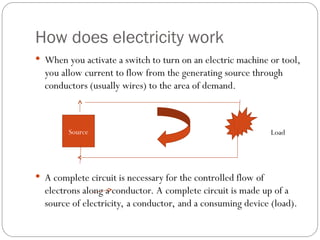
How does electricity work
 When you activate a switch to turn on an electric machine or tool,
you allow current to flow from the generating source through
conductors (usually wires) to the area of demand.
 A complete circuit is necessary for the controlled flow of
electrons along a conductor. A complete circuit is made up of a
source of electricity, a conductor, and a consuming device (load).
Source Load
Hazard
A source of Danger that
can cause Injury or Death
while working near or on
Energized Electrical
Equipment
Electrical hazards
 Shock
 Electrocution
 Electrical Burn
 Fire
 Arc Flash Burn
 Explosion
 Converted Energy(rotating equipment)
 Electrochemical (batteries)
Electrical shock hazard
What's the Difference
between a Sensation
and a Fatality?
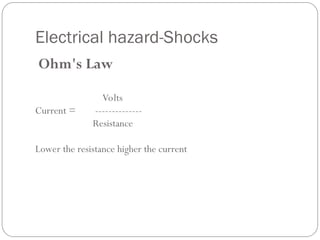
Electrical hazard-Shocks
Ohm's Law
Volts
Current = --------------
Resistance
Lower the resistance higher the current
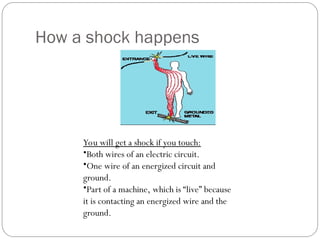
How a shock happens
You will get a shock if you touch:
•Both wires of an electric circuit.
•One wire of an energized circuit and
ground.
•Part of a machine, which is “live” because
it is contacting an energized wire and the
ground.
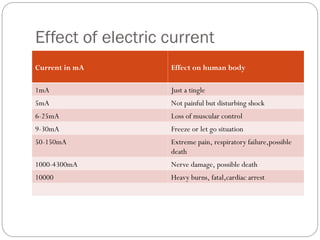
Effect of electric current
Current in mA Effect on human body
1mA Just a tingle
5mA Not painful but disturbing shock
6-25mA Loss of muscular control
9-30mA Freeze or let go situation
50-150mA Extreme pain, respiratory failure,possible
death
1000-4300mA Nerve damage, possible death
10000 Heavy burns, fatal,cardiac arrest
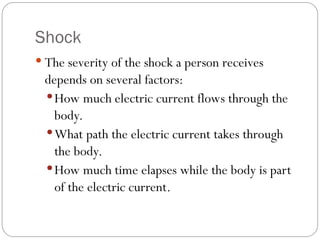
Shock
 The severity of the shock a person receives
depends on several factors:
How much electric current flows through the
body.
What path the electric current takes through
the body.
How much time elapses while the body is part
of the electric current.
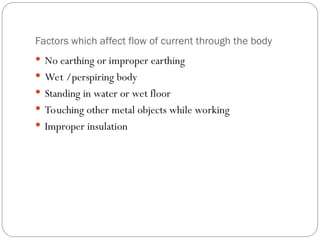
Factors which affect flow of current through the body
 No earthing or improper earthing
 Wet /perspiring body
 Standing in water or wet floor
 Touching other metal objects while working
 Improper insulation
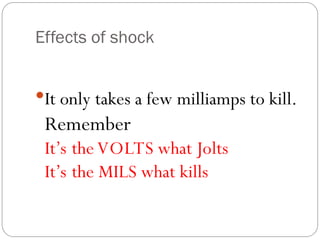
Effects of shock
It only takes a few milliamps to kill.
Remember
It’s the VOLTS what Jolts
It’s the MILS what kills
Effect of shock
 An electric shock can create damages to the body than is
visible.
 It could create internal bleeding which could destroy
internal tissues nerves etc
 Can create Ventricular fibrillation and result in cardiac
arrest
 Result of a shock could be a trip and fall which lead to
major injuries
Burn hazards
 Electricity passing through any "resistance" liberates heat
energy, eg an electric toaster.
 Human tissue also resists the flow of electric current,
and the heat liberated causes burns.
 These burns are often associated with electric shock, and
usually occur at the point of contact with the electrical
source
Fires
 Happens when electrical faults develop into fires when
combustible materials are present
 When severe arcing takes place will result in burn injuries
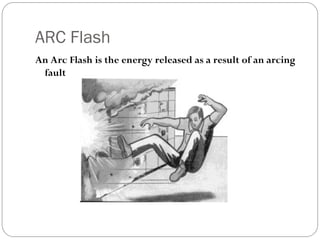
ARC Flash
An Arc Flash is the energy released as a result of an arcing
fault
Preventing Electrical Accidents:
 Protection from electrical hazards is one way to prevent
accidents caused by electric current. Protective methods to
control electrical hazards include:
 Insulation.
 Electrical protective devices.
 Guarding.
 Grounding.
 PPE.
 Good Work Practices
Insulations
 Insulators of glass, mica, rubber, or plastic
are put on electrical conductors to protect
you from electrical hazards. Before you begin
to work on any piece of electrical equipment,
take a look at the insulation (on electrical
cords, for example) to be sure there are no
exposed electrical wires. Also use insulated
tools.
Earth Leakage Circuit Breaker
 However the only electrical protective device whose sole
purpose is to protect people is the ground-fault circuit-
interrupter. The ELCB is not an over current device. It
senses an imbalance in current flow over the normal path and
opens the circuit.
Grounding
 Electrical equipment grounding occurs when the equipment
grounding conductor provides a path of dangerous fault
current to return to the system ground at the supply source
of the circuit should the insulation fail.
Grounding does not guarantee that an employee will never
receive a shock, or be injured or killed by electricity in the
workplace. However, this simple procedure will
substantially reduce the likelihood of such accidents. Be sure
any equipment you work on is properly grounded
PPE
 Personal Protective Equipment:
If you work in an area where there are potential electrical
hazards, your employer must provide you with protective
equipment.You must use electrical protective equipment
appropriate for the body parts that need protection and for
the work to be done. Electrical protective equipment
includes insulating blankets, matting, gloves, sleeves,
overshoes, face protection, and hard hats among other
equipment specially made to protect you from electricity.
Safe work practices
 If you’re not sure, don’t touch
 Lockout/ tag out!
Before any repair work or inspection of a piece of electrical
equipment is begun by an authorized person, the current
should be turned off at the switch box, and the switch
padlocked in the OFF position.
The other step in this procedure is the tagging of the switch or
controls of the machine or other equipment which is
currently locked out of service. The tag should indicate
which circuits or pieces of equipment are out of service
Safe work Practices
 Work safely
Safety should be first in your mind when working with
electricity.
You are facing hazards from the tools you are working with
.
egularly inspect tools, cords, grounds, and accessories. Make repairs only if you are authorized to do so. Otherwise, a
General rules
 Be sure your electrical equipment is maintained properly. Regularly inspect
tools, cords, grounds, and accessories. Make repairs only if you are
authorized to do so. Otherwise, arrange to have equipment repaired or
replaced immediately
 Be sure you use safely features like three-pin plugs, double-insulated tools,
and safety switches. Be sure machine guards are in place and that you
always follow proper procedures.
 Use extension cords only when flexibility is necessary:
 Never use them as substitutes for fixed wiring.
 Never run them through holes in walls, ceilings, floors, doorways, or
windows.
 Never use them where they are concealed behind walls, ceilings, or
floors.
Common Hazards on Construction sites
 Wires being inserted in power sockets without plugs
 Loose joints and haphazard laying of cables
 No proper earthing of panels and equipment
 Tapping supply without checking cable size or fuse rating
 Unauthorized persons working on electrical
 No monitoring of temporary connections on a routine basis
 Bye passing of RLCB
 Uninsulated tools
 Working on live lines without anybody authorizing
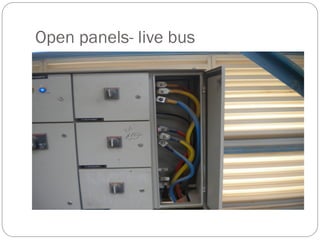
 Open panels and live bus and open holes for rodent entry
 Using electrical body earthing as welding return
Wrong Perceptions or Notions about Electrical
Safety
 An ELCB is the ultimate protection. No - ELCB is a shock preventer and only
works in cases of good earthling. .
 If the panel is fixed on a steel structure it is a good ear thing. No - The panel
has to be earthed at 2 different points to reduce the earth resistance. A thin coat
of paint is enough to prevent a good earth connection
 Welding returns can be via the building or machinery structure or earths . No .
Separate cable from job is required. It is a major fire hazard and can result in
protective earths being burnt off without being noticed leaving danger for later
 Low voltage is safe and can be carelessly used. No - Any voltage above 50V is
hazardous and are still a major fire risks. In poor conditions i.e. wet,
conducting environments people have been killed by 50 volt equipment.
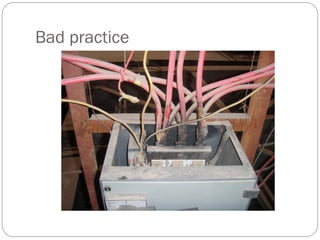
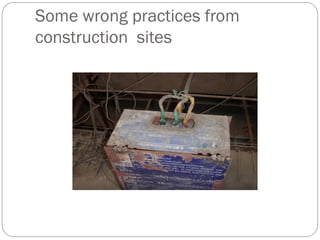
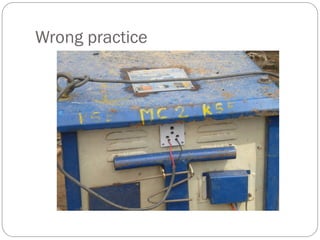
Some wrong practices from
construction sites
Bad practice
Wrong practice
Open panels- live bus
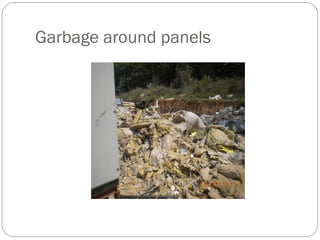
Garbage around panels
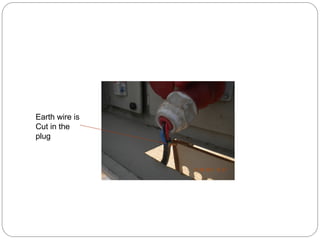
Earth wire is
Cut in the
plug
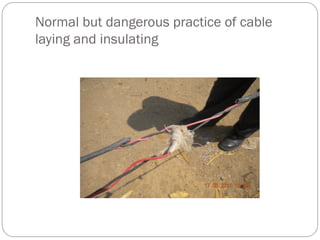
Normal but dangerous practice of cable
laying and insulating
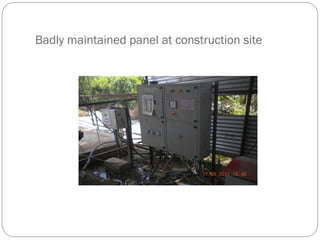
Badly maintained panel at construction site
Using ELCB of more than 30mA
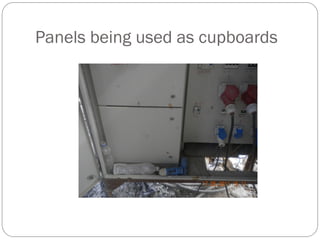
Panels being used as cupboards
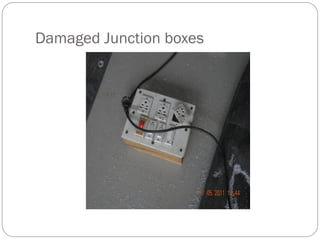
Damaged Junction boxes
Another major concern
 Badly maintained portable tools & welding sets
 Improper welding earths
 Uninsulated tools being used
 Unskilled people working on electrical panels & machines
 Earthing mistakes
 Temporary connections
Any Questions

Electrical Safety with Temporary Electrical Installation.ppt

  • 1.
    National Safety Council- TamilnaduChapter “Safety & Health in construction Site” Electrical Safety with Temporary Electrical Installation
  • 3.
    How does electricitywork  When you activate a switch to turn on an electric machine or tool, you allow current to flow from the generating source through conductors (usually wires) to the area of demand.  A complete circuit is necessary for the controlled flow of electrons along a conductor. A complete circuit is made up of a source of electricity, a conductor, and a consuming device (load). Source Load
  • 4.
    Hazard A source ofDanger that can cause Injury or Death while working near or on Energized Electrical Equipment
  • 5.
    Electrical hazards  Shock Electrocution  Electrical Burn  Fire  Arc Flash Burn  Explosion  Converted Energy(rotating equipment)  Electrochemical (batteries)
  • 6.
    Electrical shock hazard What'sthe Difference between a Sensation and a Fatality?
  • 7.
    Electrical hazard-Shocks Ohm's Law Volts Current= -------------- Resistance Lower the resistance higher the current
  • 8.
    How a shockhappens You will get a shock if you touch: •Both wires of an electric circuit. •One wire of an energized circuit and ground. •Part of a machine, which is “live” because it is contacting an energized wire and the ground.
  • 9.
    Effect of electriccurrent Current in mA Effect on human body 1mA Just a tingle 5mA Not painful but disturbing shock 6-25mA Loss of muscular control 9-30mA Freeze or let go situation 50-150mA Extreme pain, respiratory failure,possible death 1000-4300mA Nerve damage, possible death 10000 Heavy burns, fatal,cardiac arrest
  • 10.
    Shock  The severityof the shock a person receives depends on several factors: How much electric current flows through the body. What path the electric current takes through the body. How much time elapses while the body is part of the electric current.
  • 11.
    Factors which affectflow of current through the body  No earthing or improper earthing  Wet /perspiring body  Standing in water or wet floor  Touching other metal objects while working  Improper insulation
  • 12.
    Effects of shock Itonly takes a few milliamps to kill. Remember It’s the VOLTS what Jolts It’s the MILS what kills
  • 13.
    Effect of shock An electric shock can create damages to the body than is visible.  It could create internal bleeding which could destroy internal tissues nerves etc  Can create Ventricular fibrillation and result in cardiac arrest  Result of a shock could be a trip and fall which lead to major injuries
  • 14.
    Burn hazards  Electricitypassing through any "resistance" liberates heat energy, eg an electric toaster.  Human tissue also resists the flow of electric current, and the heat liberated causes burns.  These burns are often associated with electric shock, and usually occur at the point of contact with the electrical source
  • 15.
    Fires  Happens whenelectrical faults develop into fires when combustible materials are present  When severe arcing takes place will result in burn injuries
  • 16.
    ARC Flash An ArcFlash is the energy released as a result of an arcing fault
  • 17.
    Preventing Electrical Accidents: Protection from electrical hazards is one way to prevent accidents caused by electric current. Protective methods to control electrical hazards include:  Insulation.  Electrical protective devices.  Guarding.  Grounding.  PPE.  Good Work Practices
  • 18.
    Insulations  Insulators ofglass, mica, rubber, or plastic are put on electrical conductors to protect you from electrical hazards. Before you begin to work on any piece of electrical equipment, take a look at the insulation (on electrical cords, for example) to be sure there are no exposed electrical wires. Also use insulated tools.
  • 19.
    Earth Leakage CircuitBreaker  However the only electrical protective device whose sole purpose is to protect people is the ground-fault circuit- interrupter. The ELCB is not an over current device. It senses an imbalance in current flow over the normal path and opens the circuit.
  • 20.
    Grounding  Electrical equipmentgrounding occurs when the equipment grounding conductor provides a path of dangerous fault current to return to the system ground at the supply source of the circuit should the insulation fail. Grounding does not guarantee that an employee will never receive a shock, or be injured or killed by electricity in the workplace. However, this simple procedure will substantially reduce the likelihood of such accidents. Be sure any equipment you work on is properly grounded
  • 21.
    PPE  Personal ProtectiveEquipment: If you work in an area where there are potential electrical hazards, your employer must provide you with protective equipment.You must use electrical protective equipment appropriate for the body parts that need protection and for the work to be done. Electrical protective equipment includes insulating blankets, matting, gloves, sleeves, overshoes, face protection, and hard hats among other equipment specially made to protect you from electricity.
  • 22.
    Safe work practices If you’re not sure, don’t touch  Lockout/ tag out! Before any repair work or inspection of a piece of electrical equipment is begun by an authorized person, the current should be turned off at the switch box, and the switch padlocked in the OFF position. The other step in this procedure is the tagging of the switch or controls of the machine or other equipment which is currently locked out of service. The tag should indicate which circuits or pieces of equipment are out of service
  • 23.
    Safe work Practices Work safely Safety should be first in your mind when working with electricity. You are facing hazards from the tools you are working with . egularly inspect tools, cords, grounds, and accessories. Make repairs only if you are authorized to do so. Otherwise, a
  • 24.
    General rules  Besure your electrical equipment is maintained properly. Regularly inspect tools, cords, grounds, and accessories. Make repairs only if you are authorized to do so. Otherwise, arrange to have equipment repaired or replaced immediately  Be sure you use safely features like three-pin plugs, double-insulated tools, and safety switches. Be sure machine guards are in place and that you always follow proper procedures.  Use extension cords only when flexibility is necessary:  Never use them as substitutes for fixed wiring.  Never run them through holes in walls, ceilings, floors, doorways, or windows.  Never use them where they are concealed behind walls, ceilings, or floors.
  • 25.
    Common Hazards onConstruction sites  Wires being inserted in power sockets without plugs  Loose joints and haphazard laying of cables  No proper earthing of panels and equipment  Tapping supply without checking cable size or fuse rating  Unauthorized persons working on electrical  No monitoring of temporary connections on a routine basis  Bye passing of RLCB  Uninsulated tools  Working on live lines without anybody authorizing  Open panels and live bus and open holes for rodent entry  Using electrical body earthing as welding return
  • 26.
    Wrong Perceptions orNotions about Electrical Safety  An ELCB is the ultimate protection. No - ELCB is a shock preventer and only works in cases of good earthling. .  If the panel is fixed on a steel structure it is a good ear thing. No - The panel has to be earthed at 2 different points to reduce the earth resistance. A thin coat of paint is enough to prevent a good earth connection  Welding returns can be via the building or machinery structure or earths . No . Separate cable from job is required. It is a major fire hazard and can result in protective earths being burnt off without being noticed leaving danger for later  Low voltage is safe and can be carelessly used. No - Any voltage above 50V is hazardous and are still a major fire risks. In poor conditions i.e. wet, conducting environments people have been killed by 50 volt equipment.
  • 27.
    Some wrong practicesfrom construction sites
  • 28.
  • 29.
  • 30.
  • 31.
  • 32.
    Earth wire is Cutin the plug
  • 33.
    Normal but dangerouspractice of cable laying and insulating
  • 34.
    Badly maintained panelat construction site
  • 35.
    Using ELCB ofmore than 30mA
  • 36.
    Panels being usedas cupboards
  • 37.
  • 38.
    Another major concern Badly maintained portable tools & welding sets  Improper welding earths  Uninsulated tools being used  Unskilled people working on electrical panels & machines  Earthing mistakes  Temporary connections
  • 39.