ELECTRICAL LAB

IN THIS SLIDESHOW WE ARE
GOING TO LEARN ABOUT SOME OF
THE SAFETY MEASURES WE HAVE TO
FOLLOW WHILE WE ARE IN AN
ELECTRICAL LAB
ELECTRICAL SAFETY
You must not enter a lab unless you have
permission from a technician or lecturer.
You are expected to arrive on time and not depart
before the end of a laboratory.
You should behave in an orderly fashion at all
times in the lab.
You must not stand on the stools or benches in the
laboratory.
GENERAL LAB SAFETY RULES

You should inspect laboratory equipment for
visible damage before using it. If there is a
problem with a piece of equipment report it to
the technician or lecturer. DO NOT return
faulty equipment to a storage area
Never strip insulation from a wire with your
teeth or a knife, always use an appropriate
wire stripping tool.
PERSONAL SAFETY

WE MUST NOT DISCONNECT ANY
PLUG BY PULLING FLEXIBLE CABLE

YOU MUST NOT ENERGISE ANY
CONDUCTOR UNLESS YOU ARE SURE
THAT EVERYTHING IS CLEAR AND
NOBODY IS IN CONTACT WITH THAT
PARTICULAR CIRCUIT

DO NOT USE A COMBINATION
PLIER AS A HAMMER

REMEMBER TO OFF THE MAIN
SWITCH BEFORE REPLACING THE
FUSE

USE SCREWDRIVERS WHEN
WORKING ON ELECTRICAL
CIRCUITS

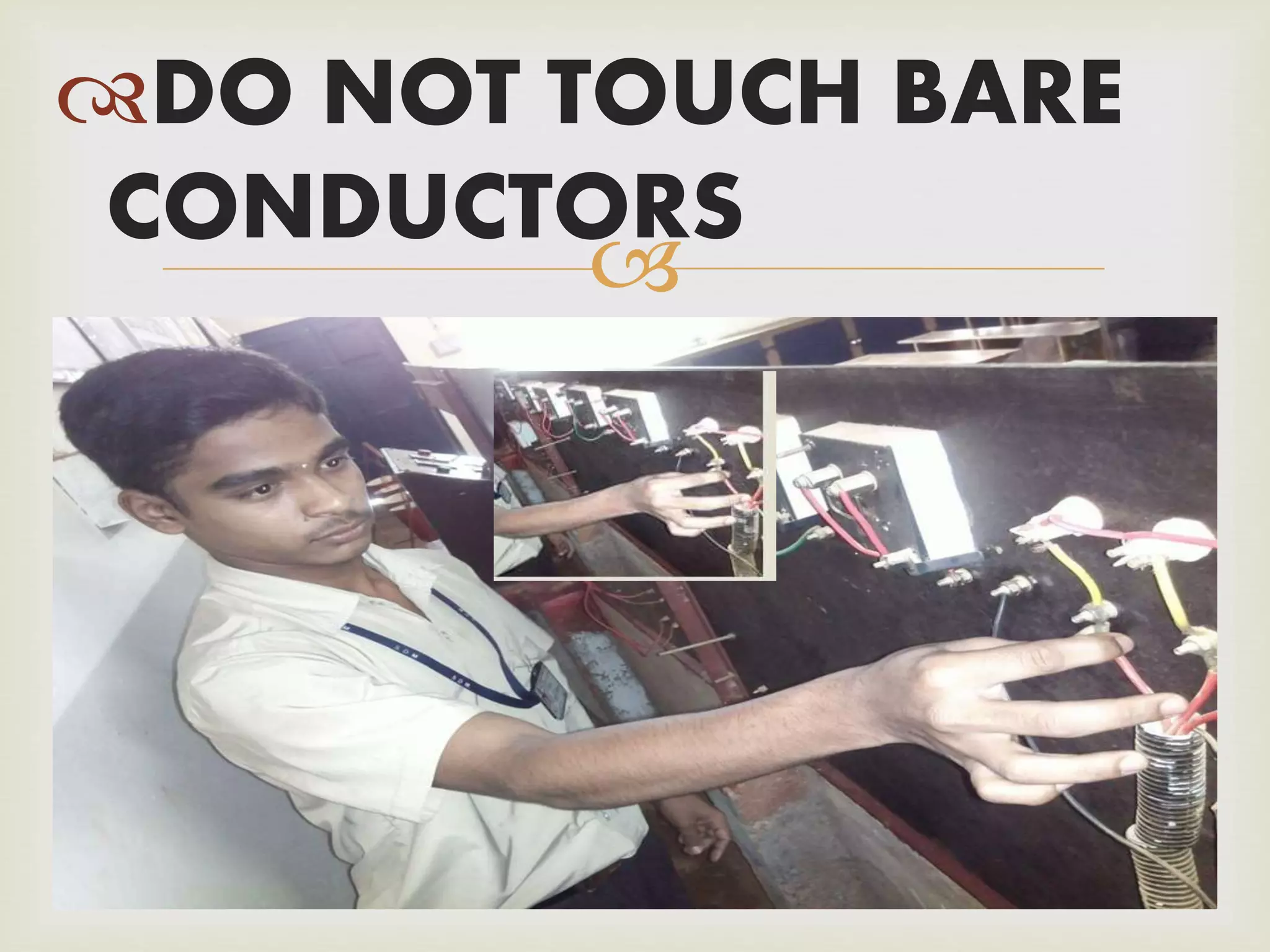
DO NOT TOUCH BARE
CONDUCTORS

STAND ON RUBBER MATS WHILE
WORKING OR OPERATING WITH ELETRCAL
PANELS OR SWITCHES

POSITION THE LADDER ON
FIRM GROUND

USE ALWAYS EARTH CONNECTION FOR
ALL ELECTRICAL APPLIANCES ALONG WITH
3 PIN SOCKETS AND PLUGS

Disconnect the supply immediately.
Do not throw the water on a live
conductor or equipment. It is dangerous
because water is conductor of
electricity.
Throw dry sand or dust on the fire
equipments.
Use carbon tetrachloride or liquid
carbon dioxide type fire extinguishers.

PREVENTING ACCIDENTS
 Avoid contact with energized circuits.
 Disconnect the power source before servicing or repairing
electrical equipment.
 Work with only one hand, keeping the other hand behind you
or in a pocket
 If water or a chemical is spilled onto equipment, shut off
power at the main switch or circuit breaker and unplug the
equipment.
 If an individual comes in contact with a live electrical
conductor, do not touch the equipment, cord or person.
 Disconnect the power source from the circuit breaker or pull
out the plug using a leather belt .


PREPARED BY :- GURUDATH & SURESHA.N.R

Electrician Lab Safety Rules for ITI

  • 1.
  • 2.
     IN THIS SLIDESHOWWE ARE GOING TO LEARN ABOUT SOME OF THE SAFETY MEASURES WE HAVE TO FOLLOW WHILE WE ARE IN AN ELECTRICAL LAB ELECTRICAL SAFETY
  • 3.
    You must notenter a lab unless you have permission from a technician or lecturer. You are expected to arrive on time and not depart before the end of a laboratory. You should behave in an orderly fashion at all times in the lab. You must not stand on the stools or benches in the laboratory. GENERAL LAB SAFETY RULES
  • 4.
     You should inspectlaboratory equipment for visible damage before using it. If there is a problem with a piece of equipment report it to the technician or lecturer. DO NOT return faulty equipment to a storage area Never strip insulation from a wire with your teeth or a knife, always use an appropriate wire stripping tool. PERSONAL SAFETY
  • 5.
     WE MUST NOTDISCONNECT ANY PLUG BY PULLING FLEXIBLE CABLE
  • 6.
     YOU MUST NOTENERGISE ANY CONDUCTOR UNLESS YOU ARE SURE THAT EVERYTHING IS CLEAR AND NOBODY IS IN CONTACT WITH THAT PARTICULAR CIRCUIT
  • 7.
     DO NOT USEA COMBINATION PLIER AS A HAMMER
  • 8.
     REMEMBER TO OFFTHE MAIN SWITCH BEFORE REPLACING THE FUSE
  • 9.
  • 10.
     DO NOT TOUCHBARE CONDUCTORS
  • 11.
     STAND ON RUBBERMATS WHILE WORKING OR OPERATING WITH ELETRCAL PANELS OR SWITCHES
  • 12.
  • 13.
     USE ALWAYS EARTHCONNECTION FOR ALL ELECTRICAL APPLIANCES ALONG WITH 3 PIN SOCKETS AND PLUGS
  • 14.
     Disconnect the supplyimmediately. Do not throw the water on a live conductor or equipment. It is dangerous because water is conductor of electricity. Throw dry sand or dust on the fire equipments. Use carbon tetrachloride or liquid carbon dioxide type fire extinguishers.
  • 15.
     PREVENTING ACCIDENTS  Avoidcontact with energized circuits.  Disconnect the power source before servicing or repairing electrical equipment.  Work with only one hand, keeping the other hand behind you or in a pocket  If water or a chemical is spilled onto equipment, shut off power at the main switch or circuit breaker and unplug the equipment.  If an individual comes in contact with a live electrical conductor, do not touch the equipment, cord or person.  Disconnect the power source from the circuit breaker or pull out the plug using a leather belt .
  • 17.
  • 18.
     PREPARED BY :-GURUDATH & SURESHA.N.R