Second Life - an Environment for Authentic e-
Learning?
Hanna Teräs, Marjatta Myllylä, Tuomas Kaihua & Päivi Svärd
AACE E-Learn 2011, Hawaii

                                                             Image: lrargerich (Flickr)
“More authentic       Higher Education
learning, more working    Evaluation Council
      life oriented
 approaches, versatile
  use of social media,
     better student
   engagement and
  ownership through             National Assembly For Wales / Cynulliad Cymru


 collaborative learning
    and knowledge
 construction, please!”
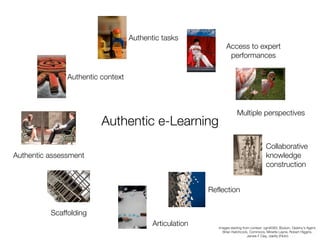
Authentic tasks
                                                                Access to expert
                                                                 performances

               Authentic context


                                                                       Multiple perspectives
                         Authentic e-Learning
                                                                                          Collaborative
Authentic assessment                                                                      knowledge
                                                                                          construction


                                                         Reflection


          Scaffolding
                                          Articulation      Images starting from context: vgm8383, Bodum, Destiny’s Agent,
                                                              Brian Hatchcock, Commons, Minette Layne, Robert Higgins,
                                                                               James F Clay, clairity (Flickr)
Easier said than
done.

• An international benchmarking
  project (Leppisaari,
  Herrington, Vainio, Im 2011):
  collaborative knowledge
  construction weakly
  implemented.


• Myllylä, Mäkelä & Torp (2009):
  LMS based discussion forums
  ineffective in creating learning
  communities.
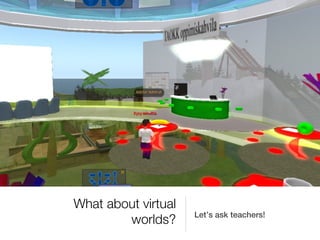
What about virtual
                     Let’s ask teachers!
        worlds?
Interviewees

• 10 (7 women, 3 men).


• Active SL educators from
  different parts of Finland.


• Different subject matter
  experts


• Found in SL related events, in
  SL itself, through existing
  professional networks.


• Took place in SL.


                                   Image: Christopher S Penn (Flickr)
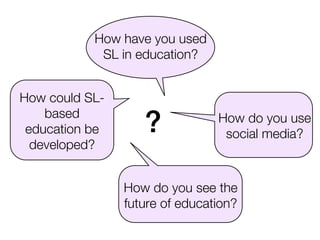
How have you used
            SL in education?


How could SL-
    based
 education be      ?            How do you use
                                 social media?
  developed?


                How do you see the
                future of education?
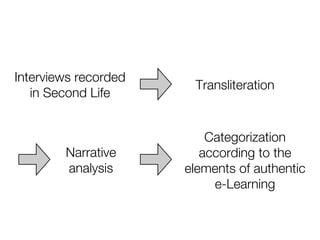
Interviews recorded
                       Transliteration
   in Second Life


                          Categorization
        Narrative        according to the
        analysis      elements of authentic
                           e-Learning
Image: Bodum


Authentic context
and tasks

• Negative experiences with
  classroom -> simulating
  working life contexts in SL


• High degree of customization
  of the learning process ->
  ownership and commitment


• Authentic, field-specific tasks
  (intl. trade fair, hospital,
  language learning)


• Integration of real & second
  life activities
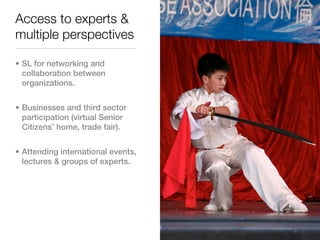
Access to experts &
multiple perspectives

• SL for networking and
  collaboration between
  organizations.


• Businesses and third sector
  participation (virtual Senior
  Citizens’ home, trade fair).


• Attending international events,
  lectures & groups of experts.
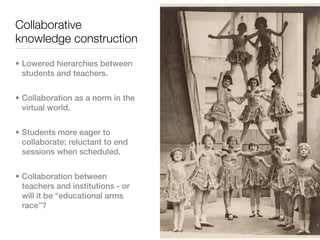
Collaborative
knowledge construction

• Lowered hierarchies between
  students and teachers.


• Collaboration as a norm in the
  virtual world.


• Students more eager to
  collaborate: reluctant to end
  sessions when scheduled.


• Collaboration between
  teachers and institutions - or
  will it be “educational arms
  race”?
Reflection and
articulation

• Need for additional, text-
  based media outside or
  integrated in SL to promote
  reflection and articulation
  (Blogs, discussion forums,
  Etherpad).


• Attending to feelings:
  experiences differ greatly.


• “Could be combined with
  digital narration”.
Scaffolding and
assessment

• No one had used lecturing,
  instead they had authentic
  project-based activities -> a
  natural shift in teachers’ roles.


• Group tutorial and thesis
  supervision sessions.


• Demanding for teachers
  because of lack of support.


• No one mentioned
  assessment!
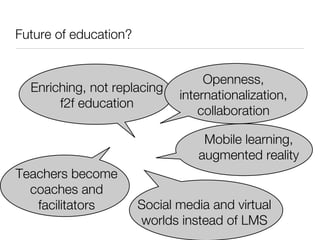
Future of education?


                                   Openness,
  Enriching, not replacing
                              internationalization,
       f2f education
                                  collaboration

                                  Mobile learning,
                                 augmented reality
Teachers become
  coaches and
   facilitators        Social media and virtual
                       worlds instead of LMS
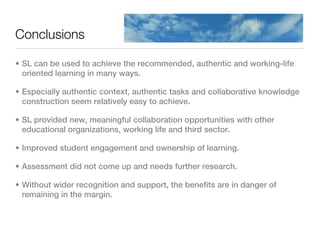
Conclusions

• SL can be used to achieve the recommended, authentic and working-life
  oriented learning in many ways.

• Especially authentic context, authentic tasks and collaborative knowledge
  construction seem relatively easy to achieve.

• SL provided new, meaningful collaboration opportunities with other
  educational organizations, working life and third sector.

• Improved student engagement and ownership of learning.

• Assessment did not come up and needs further research.

• Without wider recognition and support, the benefits are in danger of
  remaining in the margin.
Thank You!


Hanna Teräs, Tampere University of Applied Sciences
hanna.teras@tamk.fi / www.hannateras.com

Elearn2011

  • 1.
    Second Life -an Environment for Authentic e- Learning? Hanna Teräs, Marjatta Myllylä, Tuomas Kaihua & Päivi Svärd AACE E-Learn 2011, Hawaii Image: lrargerich (Flickr)
  • 2.
    “More authentic Higher Education learning, more working Evaluation Council life oriented approaches, versatile use of social media, better student engagement and ownership through National Assembly For Wales / Cynulliad Cymru collaborative learning and knowledge construction, please!”
  • 3.
    Authentic tasks Access to expert performances Authentic context Multiple perspectives Authentic e-Learning Collaborative Authentic assessment knowledge construction Reflection Scaffolding Articulation Images starting from context: vgm8383, Bodum, Destiny’s Agent, Brian Hatchcock, Commons, Minette Layne, Robert Higgins, James F Clay, clairity (Flickr)
  • 4.
    Easier said than done. •An international benchmarking project (Leppisaari, Herrington, Vainio, Im 2011): collaborative knowledge construction weakly implemented. • Myllylä, Mäkelä & Torp (2009): LMS based discussion forums ineffective in creating learning communities.
  • 5.
    What about virtual Let’s ask teachers! worlds?
  • 6.
    Interviewees • 10 (7women, 3 men). • Active SL educators from different parts of Finland. • Different subject matter experts • Found in SL related events, in SL itself, through existing professional networks. • Took place in SL. Image: Christopher S Penn (Flickr)
  • 7.
    How have youused SL in education? How could SL- based education be ? How do you use social media? developed? How do you see the future of education?
  • 8.
    Interviews recorded Transliteration in Second Life Categorization Narrative according to the analysis elements of authentic e-Learning
  • 9.
    Image: Bodum Authentic context andtasks • Negative experiences with classroom -> simulating working life contexts in SL • High degree of customization of the learning process -> ownership and commitment • Authentic, field-specific tasks (intl. trade fair, hospital, language learning) • Integration of real & second life activities
  • 10.
    Access to experts& multiple perspectives • SL for networking and collaboration between organizations. • Businesses and third sector participation (virtual Senior Citizens’ home, trade fair). • Attending international events, lectures & groups of experts.
  • 11.
    Collaborative knowledge construction • Loweredhierarchies between students and teachers. • Collaboration as a norm in the virtual world. • Students more eager to collaborate: reluctant to end sessions when scheduled. • Collaboration between teachers and institutions - or will it be “educational arms race”?
  • 12.
    Reflection and articulation • Needfor additional, text- based media outside or integrated in SL to promote reflection and articulation (Blogs, discussion forums, Etherpad). • Attending to feelings: experiences differ greatly. • “Could be combined with digital narration”.
  • 13.
    Scaffolding and assessment • Noone had used lecturing, instead they had authentic project-based activities -> a natural shift in teachers’ roles. • Group tutorial and thesis supervision sessions. • Demanding for teachers because of lack of support. • No one mentioned assessment!
  • 14.
    Future of education? Openness, Enriching, not replacing internationalization, f2f education collaboration Mobile learning, augmented reality Teachers become coaches and facilitators Social media and virtual worlds instead of LMS
  • 15.
    Conclusions • SL canbe used to achieve the recommended, authentic and working-life oriented learning in many ways. • Especially authentic context, authentic tasks and collaborative knowledge construction seem relatively easy to achieve. • SL provided new, meaningful collaboration opportunities with other educational organizations, working life and third sector. • Improved student engagement and ownership of learning. • Assessment did not come up and needs further research. • Without wider recognition and support, the benefits are in danger of remaining in the margin.
  • 16.
    Thank You! Hanna Teräs,Tampere University of Applied Sciences hanna.teras@tamk.fi / www.hannateras.com