John Hamerlinck
Minnesota Campus Compact

       Lisa Houle
    Bethel University
Context               Experience


          Course
          Design
                            ?              Challenges


                         Opportunities


Webinar
Agenda
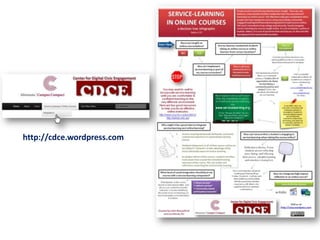
http://cdce.wordpress.com
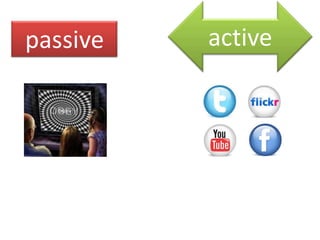
passive   active
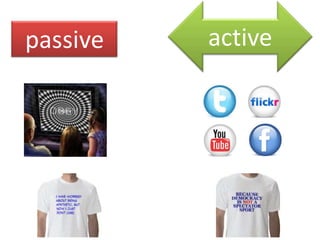
passive   active
passive   active
David Wiley
                            Licensed under Creative Commons By-SA


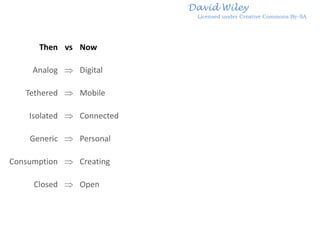
      Then vs Now

     Analog    Digital

   Tethered    Mobile

    Isolated   Connected

    Generic    Personal

Consumption    Creating

     Closed    Open
David Wiley
                             Licensed under Creative Commons By-SA


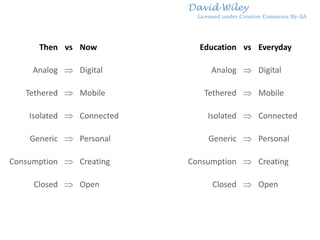
      Then vs Now            Education vs Everyday

     Analog    Digital           Analog          Digital

   Tethered    Mobile          Tethered          Mobile

    Isolated   Connected        Isolated         Connected

    Generic    Personal         Generic          Personal

Consumption    Creating    Consumption           Creating

     Closed    Open               Closed         Open
David Wiley
                        Licensed under Creative Commons By-SA


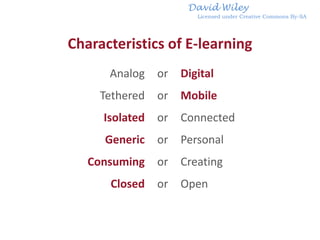
Characteristics of E-learning
      Analog    or   Digital
     Tethered   or   Mobile
     Isolated   or   Connected
     Generic    or   Personal
   Consuming    or   Creating
      Closed    or   Open
Image: explodingdog.com
image: http://www.offwestend.com
http://sloanconsortium.org/publications/survey/going_distance_2011
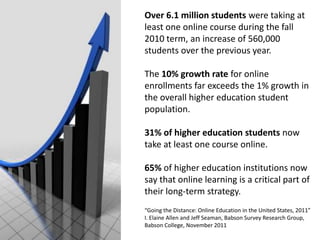
Over 6.1 million students were taking at
least one online course during the fall
2010 term, an increase of 560,000
students over the previous year.

The 10% growth rate for online
enrollments far exceeds the 1% growth in
the overall higher education student
population.

31% of higher education students now
take at least one course online.

65% of higher education institutions now
say that online learning is a critical part of
their long-term strategy.
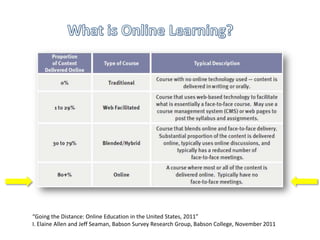
“Going the Distance: Online Education in the United States, 2011”
I. Elaine Allen and Jeff Seaman, Babson Survey Research Group,
Babson College, November 2011
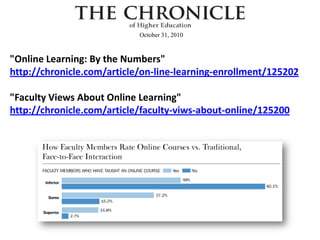
October 31, 2010


"Online Learning: By the Numbers"
http://chronicle.com/article/on-line-learning-enrollment/125202

"Faculty Views About Online Learning"
http://chronicle.com/article/faculty-viws-about-online/125200
“Going the Distance: Online Education in the United States, 2011”
I. Elaine Allen and Jeff Seaman, Babson Survey Research Group, Babson College, November 2011
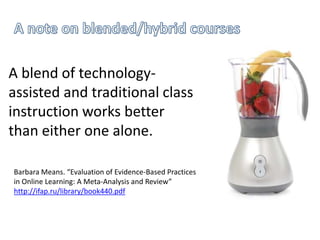
A blend of technology-
assisted and traditional class
instruction works better
than either one alone.

Barbara Means. “Evaluation of Evidence-Based Practices
in Online Learning: A Meta-Analysis and Review”
http://ifap.ru/library/book440.pdf
Am I already
  an effective
online teacher?


                  cartoon: http://personalesltrainer.com
“The coin of
                                                          the realm is
                                                          faculty time.”
                                                          - Steve Carson, MIT OpenCourseWare


Image: Ron Leishman http://rlillustrations.blogspot.com
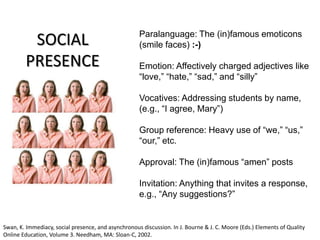
Paralanguage: The (in)famous emoticons
         SOCIAL                                      (smile faces) :-)

        PRESENCE                                     Emotion: Affectively charged adjectives like
                                                     “love,” “hate,” “sad,” and “silly”

                                                     Vocatives: Addressing students by name,
                                                     (e.g., “I agree, Mary”)

                                                     Group reference: Heavy use of “we,” “us,”
                                                     “our,” etc.

                                                     Approval: The (in)famous “amen” posts

                                                     Invitation: Anything that invites a response,
                                                     e.g., “Any suggestions?”


Swan, K. Immediacy, social presence, and asynchronous discussion. In J. Bourne & J. C. Moore (Eds.) Elements of Quality
Online Education, Volume 3. Needham, MA: Sloan-C, 2002.
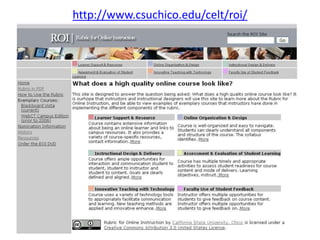
http://www.csuchico.edu/celt/roi/
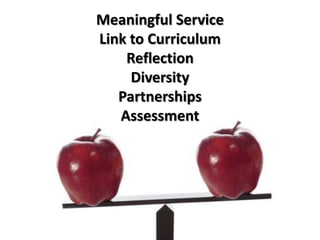
Meaningful Service
Link to Curriculum
    Reflection
     Diversity
   Partnerships
   Assessment
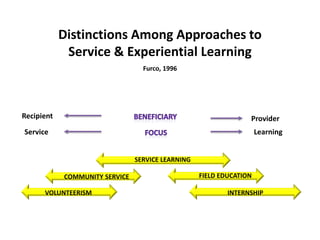
Distinctions Among Approaches to
             Service & Experiential Learning
                                  Furco, 1996


Recipient                                                        Provider
Service                                                              Learning


                                SERVICE LEARNING

            COMMUNITY SERVICE                      FIELD EDUCATION

      VOLUNTEERISM                                         INTERNSHIP
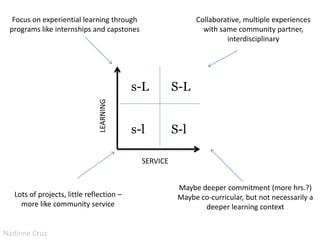
Focus on experiential learning through                     Collaborative, multiple experiences
 programs like internships and capstones                       with same community partner,
                                                                      interdisciplinary


                                           s-L         S-L
                                LEARNING


                                           s-l         S-l

                                             SERVICE


                                                        Maybe deeper commitment (more hrs.?)
   Lots of projects, little reflection –                Maybe co-curricular, but not necessarily a
     more like community service                               deeper learning context


Nadinne Cruz
American Association for Higher Education & Accreditation (Formerly AAHE) http://www.aahea.org


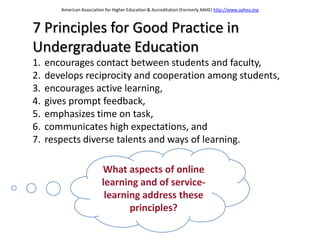
7 Principles for Good Practice in
Undergraduate Education
1.   encourages contact between students and faculty,
2.   develops reciprocity and cooperation among students,
3.   encourages active learning,
4.   gives prompt feedback,
5.   emphasizes time on task,
6.   communicates high expectations, and
7.   respects diverse talents and ways of learning.

                           What aspects of online
                           learning and of service-
                            learning address these
                                  principles?
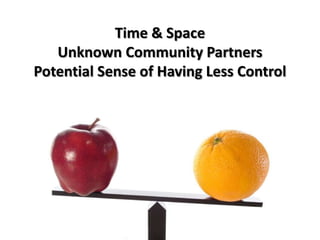
Time & Space
   Unknown Community Partners
Potential Sense of Having Less Control
Learning is being
   redefined for you.
  Do you also need to
expand your own notion
   of what service is?
If your experience
 is primarily with
 direct service . . .


               . . . you may want to consider
                  indirect service models or
                     advocacy, focused on
                 community-based research
                     or the development of
                      deliverable products.
Reflection
  Collaborative Projects
Creating Learning Objects
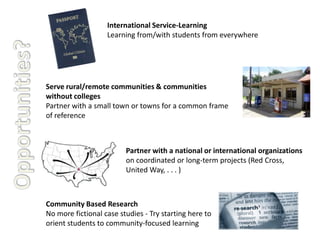
International Service-Learning
                   Learning from/with students from everywhere


Serve rural/remote communities & communities
without colleges
Partner with a small town or towns for a common frame
of reference


                         Partner with a national or international organizations
                         on coordinated or long-term projects (Red Cross,
                         United Way, . . . )


Community Based Research
No more fictional case studies - Try starting here to
orient students to community-focused learning
DO….
    Understand PRINCIPALS to lay a solid
foundation for a solid structure to be built
on.


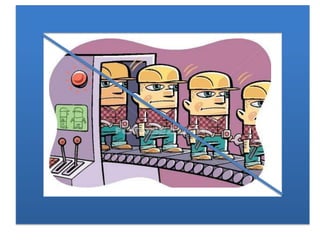
                                      DON’T…..
     Think in a one-size fits all pre-packaged
           pedagogical manufacturing plant
                                    framework.
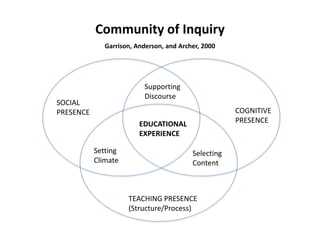
Community of Inquiry
              Garrison, Anderson, and Archer, 2000


                          Supporting
                          Discourse
SOCIAL
PRESENCE                                              COGNITIVE
                         EDUCATIONAL                  PRESENCE
                         EXPERIENCE

           Setting                        Selecting
           Climate                        Content


                     TEACHING PRESENCE
                     (Structure/Process)
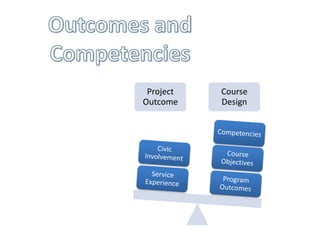
Project   Course
Outcome    Design
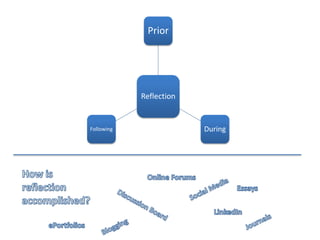
Prior


            Reflection


Following                During
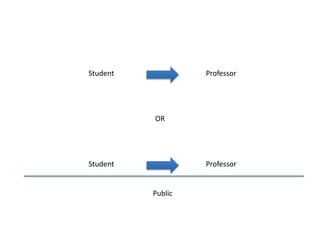
Student            Professor


          OR


Student            Professor


          Public
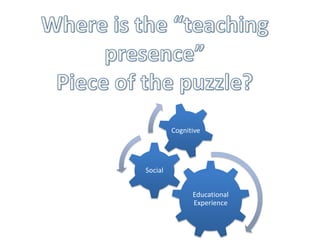
Cognitive


Social


               Educational
               Experience
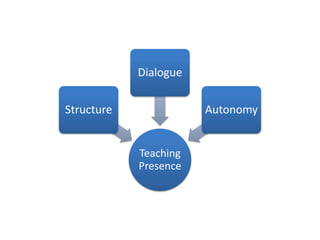
Dialogue

Structure              Autonomy


            Teaching
            Presence
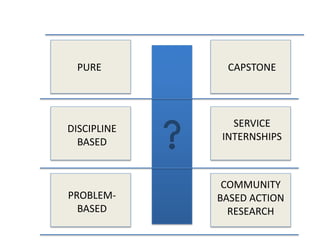
PURE         CAPSTONE


DISCIPLINE     SERVICE
  BASED      INTERNSHIPS


              COMMUNITY
PROBLEM-     BASED ACTION
  BASED        RESEARCH
John Hamerlinck                         Lisa Houle
    john@mncampuscompact.org                 l-houle@bethel.edu

Minnesota Campus Compact                Bethel University
     www.mncampuscompact.org                  www.bethel.edu
Campus in Community Blog                Blog - Journey of a Lifelong Learner
     http://mncompact.wordpress.com           http://lisahoule.wordpress.com
Center for Digital Civic Engagement     Twitter
     http://cdce.wordpress.com                @LisaHoule
Twitter                                 LinkedIn
     @mncompact                               http://www.linkedin.com/in/lisahoule
Facebook
     www.facebook.com/mncampuscompact
YouTube
     www.youtube.com/user/MNCompact

Sl online practical considerations

  • 1.
    John Hamerlinck Minnesota CampusCompact Lisa Houle Bethel University
  • 2.
    Context Experience Course Design ? Challenges Opportunities Webinar Agenda
  • 3.
  • 4.
  • 7.
    passive active
  • 8.
    passive active
  • 9.
    passive active
  • 10.
    David Wiley Licensed under Creative Commons By-SA Then vs Now Analog Digital Tethered Mobile Isolated Connected Generic Personal Consumption Creating Closed Open
  • 11.
    David Wiley Licensed under Creative Commons By-SA Then vs Now Education vs Everyday Analog Digital Analog Digital Tethered Mobile Tethered Mobile Isolated Connected Isolated Connected Generic Personal Generic Personal Consumption Creating Consumption Creating Closed Open Closed Open
  • 12.
    David Wiley Licensed under Creative Commons By-SA Characteristics of E-learning Analog or Digital Tethered or Mobile Isolated or Connected Generic or Personal Consuming or Creating Closed or Open
  • 13.
  • 14.
  • 15.
    Over 6.1 millionstudents were taking at least one online course during the fall 2010 term, an increase of 560,000 students over the previous year. The 10% growth rate for online enrollments far exceeds the 1% growth in the overall higher education student population. 31% of higher education students now take at least one course online. 65% of higher education institutions now say that online learning is a critical part of their long-term strategy. “Going the Distance: Online Education in the United States, 2011” I. Elaine Allen and Jeff Seaman, Babson Survey Research Group, Babson College, November 2011
  • 17.
    October 31, 2010 "OnlineLearning: By the Numbers" http://chronicle.com/article/on-line-learning-enrollment/125202 "Faculty Views About Online Learning" http://chronicle.com/article/faculty-viws-about-online/125200
  • 18.
    “Going the Distance:Online Education in the United States, 2011” I. Elaine Allen and Jeff Seaman, Babson Survey Research Group, Babson College, November 2011
  • 19.
    A blend oftechnology- assisted and traditional class instruction works better than either one alone. Barbara Means. “Evaluation of Evidence-Based Practices in Online Learning: A Meta-Analysis and Review” http://ifap.ru/library/book440.pdf
  • 21.
    Am I already an effective online teacher? cartoon: http://personalesltrainer.com
  • 22.
    “The coin of the realm is faculty time.” - Steve Carson, MIT OpenCourseWare Image: Ron Leishman http://rlillustrations.blogspot.com
  • 23.
    Paralanguage: The (in)famousemoticons SOCIAL (smile faces) :-) PRESENCE Emotion: Affectively charged adjectives like “love,” “hate,” “sad,” and “silly” Vocatives: Addressing students by name, (e.g., “I agree, Mary”) Group reference: Heavy use of “we,” “us,” “our,” etc. Approval: The (in)famous “amen” posts Invitation: Anything that invites a response, e.g., “Any suggestions?” Swan, K. Immediacy, social presence, and asynchronous discussion. In J. Bourne & J. C. Moore (Eds.) Elements of Quality Online Education, Volume 3. Needham, MA: Sloan-C, 2002.
  • 24.
  • 25.
    Meaningful Service Link toCurriculum Reflection Diversity Partnerships Assessment
  • 26.
    Distinctions Among Approachesto Service & Experiential Learning Furco, 1996 Recipient Provider Service Learning SERVICE LEARNING COMMUNITY SERVICE FIELD EDUCATION VOLUNTEERISM INTERNSHIP
  • 27.
    Focus on experientiallearning through Collaborative, multiple experiences programs like internships and capstones with same community partner, interdisciplinary s-L S-L LEARNING s-l S-l SERVICE Maybe deeper commitment (more hrs.?) Lots of projects, little reflection – Maybe co-curricular, but not necessarily a more like community service deeper learning context Nadinne Cruz
  • 28.
    American Association forHigher Education & Accreditation (Formerly AAHE) http://www.aahea.org 7 Principles for Good Practice in Undergraduate Education 1. encourages contact between students and faculty, 2. develops reciprocity and cooperation among students, 3. encourages active learning, 4. gives prompt feedback, 5. emphasizes time on task, 6. communicates high expectations, and 7. respects diverse talents and ways of learning. What aspects of online learning and of service- learning address these principles?
  • 30.
    Time & Space Unknown Community Partners Potential Sense of Having Less Control
  • 31.
    Learning is being redefined for you. Do you also need to expand your own notion of what service is?
  • 32.
    If your experience is primarily with direct service . . . . . . you may want to consider indirect service models or advocacy, focused on community-based research or the development of deliverable products.
  • 33.
    Reflection CollaborativeProjects Creating Learning Objects
  • 34.
    International Service-Learning Learning from/with students from everywhere Serve rural/remote communities & communities without colleges Partner with a small town or towns for a common frame of reference Partner with a national or international organizations on coordinated or long-term projects (Red Cross, United Way, . . . ) Community Based Research No more fictional case studies - Try starting here to orient students to community-focused learning
  • 36.
    DO…. Understand PRINCIPALS to lay a solid foundation for a solid structure to be built on. DON’T….. Think in a one-size fits all pre-packaged pedagogical manufacturing plant framework.
  • 38.
    Community of Inquiry Garrison, Anderson, and Archer, 2000 Supporting Discourse SOCIAL PRESENCE COGNITIVE EDUCATIONAL PRESENCE EXPERIENCE Setting Selecting Climate Content TEACHING PRESENCE (Structure/Process)
  • 39.
    Project Course Outcome Design
  • 40.
    Prior Reflection Following During
  • 41.
    Student Professor OR Student Professor Public
  • 42.
    Cognitive Social Educational Experience
  • 43.
    Dialogue Structure Autonomy Teaching Presence
  • 44.
    PURE CAPSTONE DISCIPLINE SERVICE BASED INTERNSHIPS COMMUNITY PROBLEM- BASED ACTION BASED RESEARCH
  • 45.
    John Hamerlinck Lisa Houle john@mncampuscompact.org l-houle@bethel.edu Minnesota Campus Compact Bethel University www.mncampuscompact.org www.bethel.edu Campus in Community Blog Blog - Journey of a Lifelong Learner http://mncompact.wordpress.com http://lisahoule.wordpress.com Center for Digital Civic Engagement Twitter http://cdce.wordpress.com @LisaHoule Twitter LinkedIn @mncompact http://www.linkedin.com/in/lisahoule Facebook www.facebook.com/mncampuscompact YouTube www.youtube.com/user/MNCompact