Sara Wilkie
Roy McCloud
Northbrook/Glenview
March Institute Day, 2010


Sara Wilkie
Roy McCloud
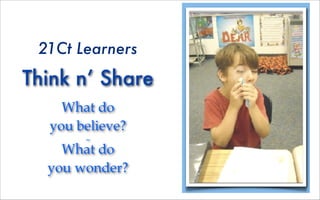
21Ct Learners

Think n’ Share
    What do
  you believe?
       ~
    What do
  you wonder?
A Vision of K-12 Students
H
“   ow do we address today’s
    students and how do today’s
    students affect how I manage
    my curriculum and classroom?
                                   ”
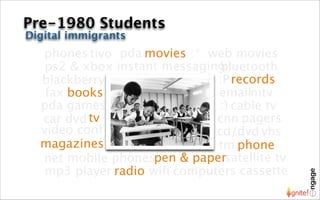
Pre-1980 Students
Digital immigrants
  phones tivo pda movies :* web movies
   ps2 & xbox instant messagingbluetooth
  blackberry                  :P records
   fax books                  emailmtv
  pda games                   :) cable tv
  car dvd tv                  cnn pagers
  video conf.                 cd/dvd vhs
  magazines                   tm phone
  net mobile phonespen & papersatellite tv
   mp3 player radio wifi computers cassette
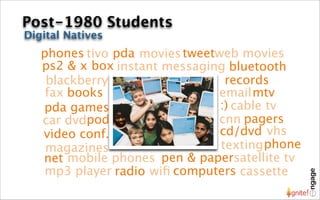
Post-1980 Students
Digital Natives
   phones tivo pda movies tweetweb movies
   ps2 & x box instant messaging bluetooth
    blackberry                   records
    fax books                  email mtv
   pda games                    :) cable tv
   car dvdpod                  cnn pagers
   video conf.                  cd/dvd vhs
    magazines                   texting phone
   net mobile phones pen & papersatellite tv
    mp3 player radio wifi computers cassette
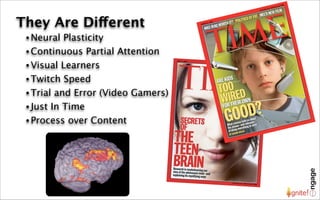
They Are Different
 • Neural  Plasticity
 • Continuous Partial Attention
 • Visual Learners
 • Twitch Speed
 • Trial and Error (Video Gamers)
 • Just In Time
 • Process over Content
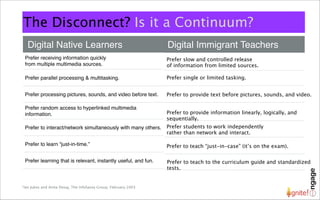
The Disconnect? Is it a Continuum?
   Digital Native Learners                                       Digital Immigrant Teachers
 Prefer receiving information quickly                            Prefer slow and controlled release
 from multiple multimedia sources.                               of information from limited sources.

 Prefer parallel processing & multitasking.                      Prefer single or limited tasking.


 Prefer processing pictures, sounds, and video before text.      Prefer to provide text before pictures, sounds, and video.

 Prefer random access to hyperlinked multimedia
 information.                                                    Prefer to provide information linearly, logically, and
                                                                 sequentially.
 Prefer to interact/network simultaneously with many others.     Prefer students to work independently
                                                                 rather than network and interact.

 Prefer to learn “just-in-time.”                                 Prefer to teach “just-in-case” (it’s on the exam).

 Prefer learning that is relevant, instantly useful, and fun.    Prefer to teach to the curriculum guide and standardized
                                                                 tests.


*Ian Jukes and Anita Dosaj, The InfoSavvy Group, February 2003
W
hat insights have you had about
the students in your classroom?
About yourself?
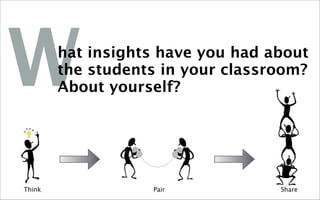
W       hat insights have you had about
        the students in your classroom?
        About yourself?


Think              Pair            Share
H
“   ow do we address today’s
    students and how do today’s
    students affect how I manage
    my curriculum and classroom?
                                   ”
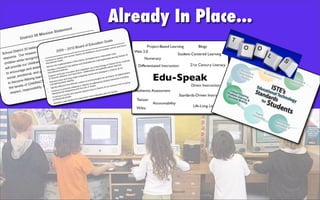
Already In Place...
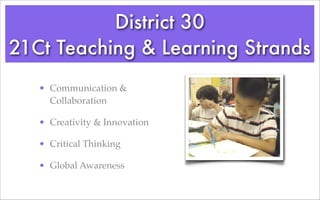
District 30
21Ct Teaching & Learning Strands
   • Communication &
     Collaboration

   • Creativity & Innovation

   • Critical Thinking

   • Global Awareness
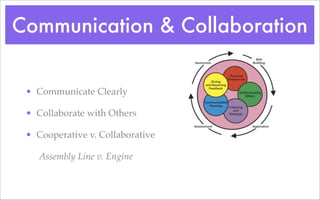
Communication & Collaboration


 • Communicate Clearly

 • Collaborate with Others

 • Cooperative v. Collaborative

    Assembly Line v. Engine
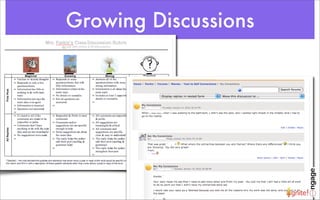
Growing Discussions
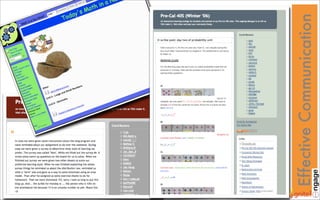
Effective Communication
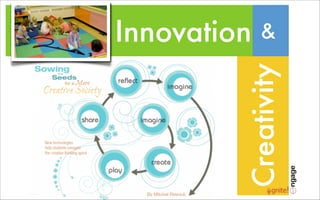
Innovation   &


         Creativity
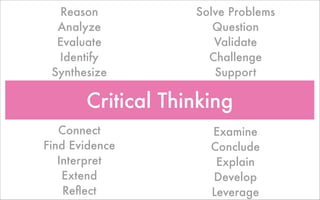
Reason          Solve Problems
  Analyze             Question
  Evaluate            Validate
  Identify           Challenge
 Synthesize           Support

       Critical Thinking
   Connect           Examine
Find Evidence        Conclude
   Interpret          Explain
    Extend           Develop
    Reflect           Leverage
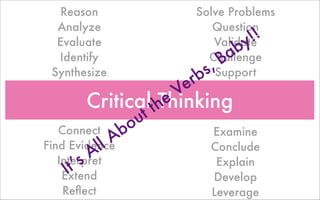
Reason                       Solve Problems
  Analyze                           Question
  Evaluate                                 y!!
                                     Validate
                                        a b
  Identify                            B
                                   Challenge
                                    ,Support
 Synthesize                     b s
                              e r
                             V
         Critical the
                   Thinking
                       u t
   Connect          b o             Examine
Find Evidencell A                   Conclude
           A
     It ’s
   Interpret                         Explain
    Extend                          Develop
    Reflect                          Leverage
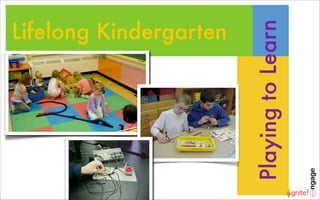
Lifelong Kindergarten


                        Playing to Learn
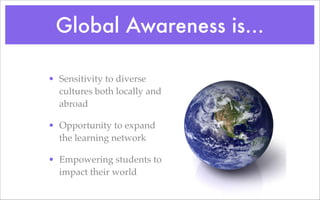
Global Awareness is...

• Sensitivity to diverse
  cultures both locally and
  abroad

• Opportunity to expand
  the learning network

• Empowering students to
  impact their world
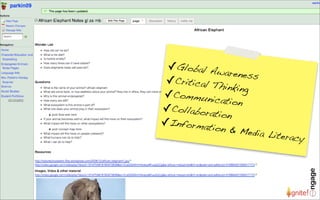
✓Global Awa
               reness
 ✓Critical Thi
               nking
✓Communica
             tion
✓Collaboratio
              n
✓Informatio
            n & Medi
                     a Literac
                               y
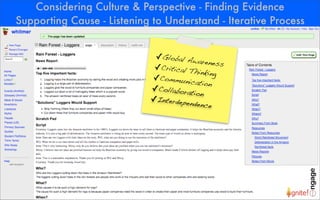
Considering Culture & Perspective - Finding Evidence
Supporting Cause - Listening to Understand - Iterative Process


                             ✓Global Awa
                                           reness
                             ✓Critical Thi
                                           nking
                            ✓Communica
                                         tion
                            ✓Collaboratio
                                          n
                            ✓Interdepend
                                         ence
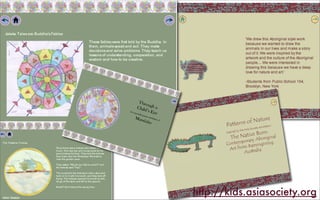
http://kids.asiasociety.org
Information Literacy &


                   Media
Motivation

• Autonomy - urge to direct their own lives

• Mastery - the desire to get better at something
  that matters to them

• Purpose - yearning to do what we do in the
  service of something larger than ourselves
What’s to be Gained?
• Reaching all learners

  • Engage and motivate students

  • Make learning relevant

  • Increase student achievement

  • Help students master abstract concepts

  • Address diverse learning styles

  • Build 21st-century literacy

  • Give students a sense of self
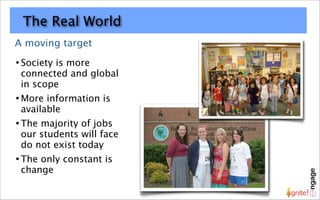
The Real World
A moving target
• Society
        is more
 connected and global
 in scope
• More information is
 available
• Themajority of jobs
 our students will face
 do not exist today
• Theonly constant is
 change
Don’t Go Quietly...
What’s the Difference?
We usually only ask the first

    •    How should technology resources be
        integrated into the curriculum?

    •    How should curriculum be designed
        to take advantage of the unique capabilities
        of technology?
Thank You
    for sharing your morning with us!
           Roy McCloud
    rm04bps@birmingham.k12.mi.us

               Sara Wilkie
     sw13bps@birmingham.k12.mi.us
http://ignite.wikis.birmingham.k12.mi.us/
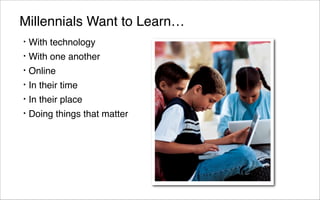
Millennials Want to Learn…
•   With technology
•   With one another
•   Online
•   In their time
•   In their place
•   Doing things that matter
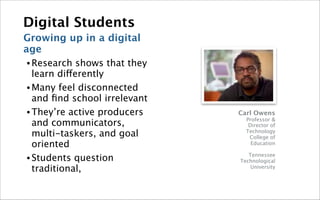
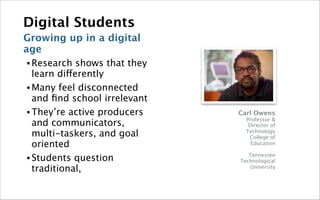
Digital Students
Growing up in a digital
age
• Research   shows that they
  learn differently
• Many feel disconnected
  and find school irrelevant
• They’re active producers     Carl Owens
                                 Professor &
  and communicators,              Director of
  multi-taskers, and goal        Technology
                                  College of
  oriented                         Education

                                  Tennessee
• Students question            Technological
  traditional,                     University
Digital Students
Growing up in a digital
age
• Research   shows that they
  learn differently
• Many feel disconnected
  and find school irrelevant
• They’re active producers     Carl Owens
                                 Professor &
  and communicators,              Director of
  multi-taskers, and goal        Technology
                                  College of
  oriented                         Education

                                  Tennessee
• Students question            Technological
  traditional,                     University

Sowing Seeds - District 30 Keynote

  • 1.
  • 2.
    Northbrook/Glenview March Institute Day,2010 Sara Wilkie Roy McCloud
  • 3.
    21Ct Learners Think n’Share What do you believe? ~ What do you wonder?
  • 4.
    A Vision ofK-12 Students
  • 5.
    H “ ow do we address today’s students and how do today’s students affect how I manage my curriculum and classroom? ”
  • 6.
    Pre-1980 Students Digital immigrants phones tivo pda movies :* web movies ps2 & xbox instant messagingbluetooth blackberry :P records fax books emailmtv pda games :) cable tv car dvd tv cnn pagers video conf. cd/dvd vhs magazines tm phone net mobile phonespen & papersatellite tv mp3 player radio wifi computers cassette
  • 7.
    Post-1980 Students Digital Natives phones tivo pda movies tweetweb movies ps2 & x box instant messaging bluetooth blackberry records fax books email mtv pda games :) cable tv car dvdpod cnn pagers video conf. cd/dvd vhs magazines texting phone net mobile phones pen & papersatellite tv mp3 player radio wifi computers cassette
  • 8.
    They Are Different • Neural Plasticity • Continuous Partial Attention • Visual Learners • Twitch Speed • Trial and Error (Video Gamers) • Just In Time • Process over Content
  • 9.
    The Disconnect? Isit a Continuum? Digital Native Learners Digital Immigrant Teachers Prefer receiving information quickly Prefer slow and controlled release from multiple multimedia sources. of information from limited sources. Prefer parallel processing & multitasking. Prefer single or limited tasking. Prefer processing pictures, sounds, and video before text. Prefer to provide text before pictures, sounds, and video. Prefer random access to hyperlinked multimedia information. Prefer to provide information linearly, logically, and sequentially. Prefer to interact/network simultaneously with many others. Prefer students to work independently rather than network and interact. Prefer to learn “just-in-time.” Prefer to teach “just-in-case” (it’s on the exam). Prefer learning that is relevant, instantly useful, and fun. Prefer to teach to the curriculum guide and standardized tests. *Ian Jukes and Anita Dosaj, The InfoSavvy Group, February 2003
  • 10.
    W hat insights haveyou had about the students in your classroom? About yourself?
  • 11.
    W hat insights have you had about the students in your classroom? About yourself? Think Pair Share
  • 12.
    H “ ow do we address today’s students and how do today’s students affect how I manage my curriculum and classroom? ”
  • 13.
  • 14.
    District 30 21Ct Teaching& Learning Strands • Communication & Collaboration • Creativity & Innovation • Critical Thinking • Global Awareness
  • 15.
    Communication & Collaboration • Communicate Clearly • Collaborate with Others • Cooperative v. Collaborative Assembly Line v. Engine
  • 16.
  • 17.
  • 18.
    Innovation & Creativity
  • 19.
    Reason Solve Problems Analyze Question Evaluate Validate Identify Challenge Synthesize Support Critical Thinking Connect Examine Find Evidence Conclude Interpret Explain Extend Develop Reflect Leverage
  • 20.
    Reason Solve Problems Analyze Question Evaluate y!! Validate a b Identify B Challenge ,Support Synthesize b s e r V Critical the Thinking u t Connect b o Examine Find Evidencell A Conclude A It ’s Interpret Explain Extend Develop Reflect Leverage
  • 21.
    Lifelong Kindergarten Playing to Learn
  • 22.
    Global Awareness is... •Sensitivity to diverse cultures both locally and abroad • Opportunity to expand the learning network • Empowering students to impact their world
  • 23.
    ✓Global Awa reness ✓Critical Thi nking ✓Communica tion ✓Collaboratio n ✓Informatio n & Medi a Literac y
  • 24.
    Considering Culture &Perspective - Finding Evidence Supporting Cause - Listening to Understand - Iterative Process ✓Global Awa reness ✓Critical Thi nking ✓Communica tion ✓Collaboratio n ✓Interdepend ence
  • 25.
  • 26.
  • 27.
    Motivation • Autonomy -urge to direct their own lives • Mastery - the desire to get better at something that matters to them • Purpose - yearning to do what we do in the service of something larger than ourselves
  • 28.
    What’s to beGained? • Reaching all learners • Engage and motivate students • Make learning relevant • Increase student achievement • Help students master abstract concepts • Address diverse learning styles • Build 21st-century literacy • Give students a sense of self
  • 29.
    The Real World Amoving target • Society is more connected and global in scope • More information is available • Themajority of jobs our students will face do not exist today • Theonly constant is change
  • 30.
  • 31.
    What’s the Difference? Weusually only ask the first • How should technology resources be integrated into the curriculum? • How should curriculum be designed to take advantage of the unique capabilities of technology?
  • 32.
    Thank You for sharing your morning with us! Roy McCloud rm04bps@birmingham.k12.mi.us Sara Wilkie sw13bps@birmingham.k12.mi.us http://ignite.wikis.birmingham.k12.mi.us/
  • 33.
    Millennials Want toLearn… • With technology • With one another • Online • In their time • In their place • Doing things that matter
  • 34.
    Digital Students Growing upin a digital age • Research shows that they learn differently • Many feel disconnected and find school irrelevant • They’re active producers Carl Owens Professor & and communicators, Director of multi-taskers, and goal Technology College of oriented Education Tennessee • Students question Technological traditional, University
  • 35.
    Digital Students Growing upin a digital age • Research shows that they learn differently • Many feel disconnected and find school irrelevant • They’re active producers Carl Owens Professor & and communicators, Director of multi-taskers, and goal Technology College of oriented Education Tennessee • Students question Technological traditional, University