FOOD FOR SPECIAL FUNCTION
BY
Pintu Choudhary
Master of Technology
( Food Science and Technology)
Indian Institute of Crop Processing Technology
Ministry of Food Processing Industries
Government of India
Thanjavur - 613005
OBESITY
 Definition: excessive weight that may impair health
 How do we measure If someone is obese?
 Body Mass Index (BMI)
 BMI Categories:
 Normal weight = 18.5-24.9
 Overweight = 25-29.9
 Obesity = BMI of 30 or greater
FOOD FOR OBESE
There are three dietary treatment
1. Powder based diet replacement product with low
energy content
2. Low fat diet- 3-10 kg wt. loss in one year
3. High protein diet
Same effect seen as low fat diet
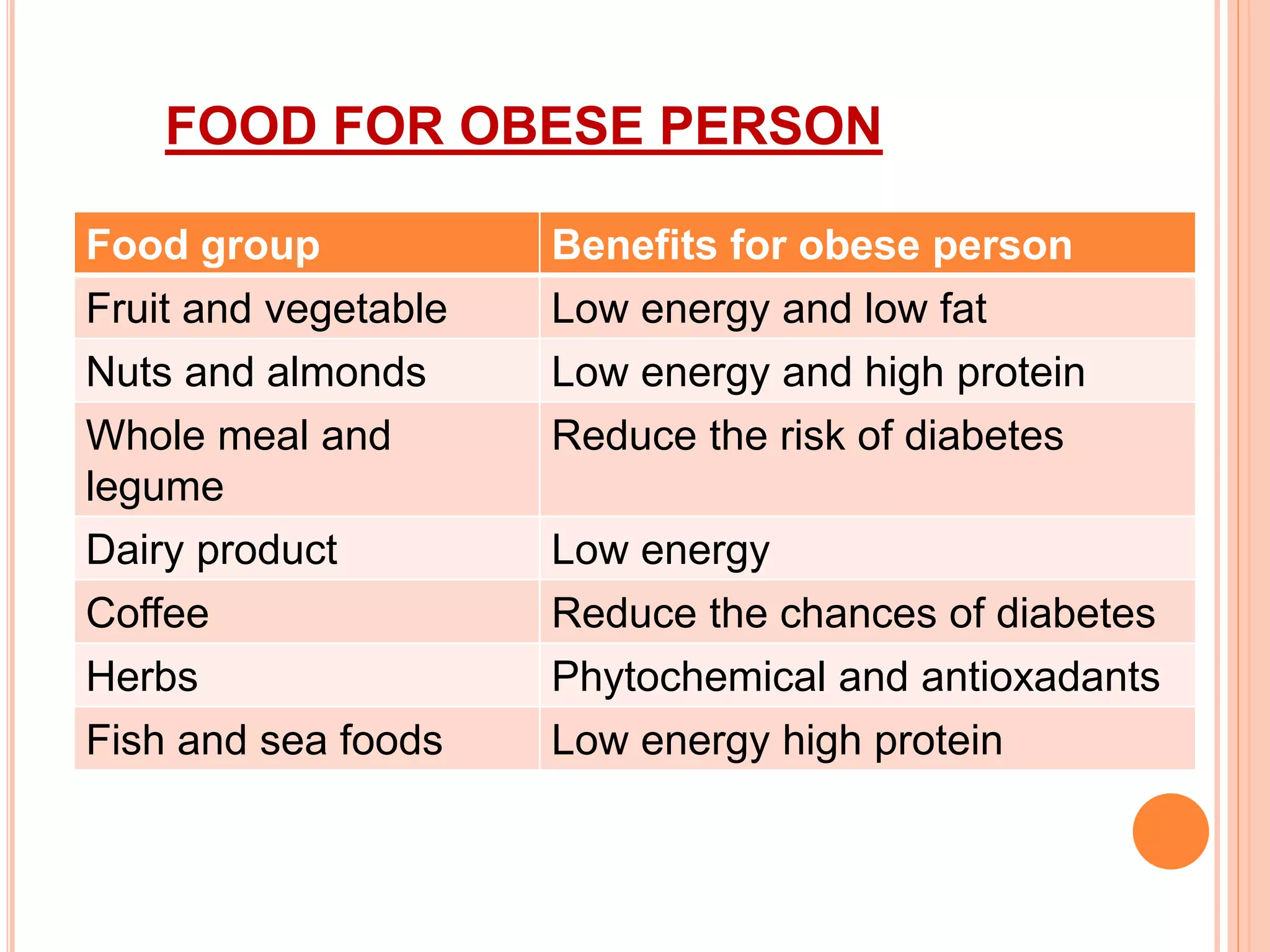
FOOD FOR OBESE PERSON
Food group Benefits for obese person
Fruit and vegetable Low energy and low fat
Nuts and almonds Low energy and high protein
Whole meal and
legume
Reduce the risk of diabetes
Dairy product Low energy
Coffee Reduce the chances of diabetes
Herbs Phytochemical and antioxadants
Fish and sea foods Low energy high protein
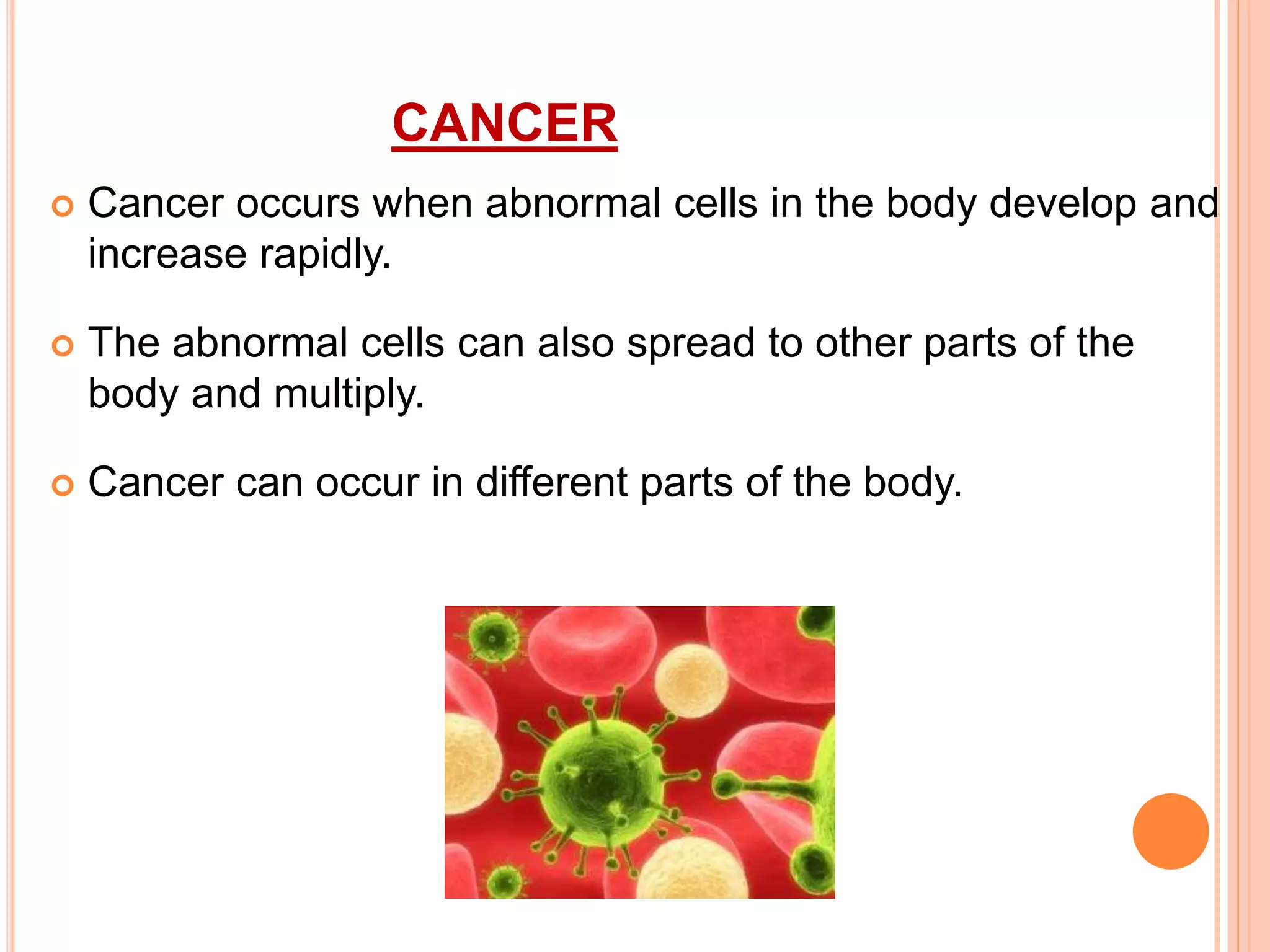
CANCER
 Cancer occurs when abnormal cells in the body develop and
increase rapidly.
 The abnormal cells can also spread to other parts of the
body and multiply.
 Cancer can occur in different parts of the body.
FOOD FOR CANCER
1. Limit consumption of energy dense foods.
2. Eat mostly foods of plant origin.
3. Limit intake of red meat and avoid processed
meat.
4. Limit alcoholic drinks.
5. Limit consumption of salt.
6. Aim to meet nutritional needs through diet alone.
LOW FAT FOOD
 Meat/Meat substitute: Lean cuts of lamb chicken ,Processed
meat prepared from lean meats, e.g., lean ham, lean
frankfurters, lean meat with soy protein Dry beans and peas
Tofu, tempeh; low-fat or nonfat meat analogs
 Eggs: Egg whites, cholesterol free egg substitute
 Dairy products: Milk: skim, or 1% (fluid, powdered,
evaporated), butter milk Yogurt: nonfat or low fat yogurt of
yogurt beverage
 Fats and Oils: Unsaturated oils, Olive, Canola, Peanut,
Soybean, Margarine: made from oils listed above, light or diet
margarine, especially soft or liquid forms. Use those with no
trans fatty acids.
 Breads, rice and pasta: Breads with 2 g of fiber or more:
whole grain, English muffins, bagels, buns, corn and flour
tortillas
LOW FAT FOODS
 Cereals: oat, wheat, corn, multigrain ,Brown rice,
Homemade baked goods using unsaturated oils, skim or
1% milk, and egg. substitute--Quick breads, biscuits,
cornbread muffins, bran muffins, pancakes, waffles
 Fruits and vegetables: Fresh, frozen, without added fat
or salt, Fresh, frozen, canned (in natural juice)or dried
Fruit juice: fresh frozen, frozen, canned.
 Sweets and Modified fat desserts: water, 100%juice,
Sweets: syrup, honey, jam, preserves, fruit-flavored
gelatin Frozen desserts: low-fat and nonfat yogurt, low-fat
and nonfat ice cream, sherbet, sorbet, fruit ice,
CHOLESTEROL
 High cholesterol can increase your risk of heart disease.
 High levels of cholesterol in your blood can enter the
lining of your arteries and form deposits or “plaques”.
These plaques can grow overtime and block the flow of
blood in your arteries. This puts you at risk for a heart
attack or stroke.
 Making changes to your eating to lower your intake of
saturated fat, trans fat and cholesterol, while increasing
fibre, can lower your cholesterol by as much as 35%
LOW CHOLESTEROL FOOD
 Vegetables and fruits.
 Whole grain foods rich in soluble fibre – oats, psyllium and
barley
 Sea foods e.g. salmon, trout, sardines which rich source of
Omega 3 fatty acid
 Bean based meals – kidney beans, chickpeas, lentils
 Nuts such as almonds and walnuts
 Improve the quantity and quality of fats you eat
 Oils are best for added fat – use small amounts, avoid frying
 Reducing alcohol can promote weight loss and help decrease
triglyceride levels
GLUTEN FREE FOOD
 Gluten is a protein found in wheat, rye and barley
that causes intestinal damage (often resulting in wt.
loss and nutrient deficiencies) for individuals with
gluten intolerance.
 Common symptoms of gluten intolerance include:
diarrhea, abdominal pain, bloating, fatigue,
 Forgetfulness and irritability.
GLUTEN FREE FOODS
 Meat products – unprocessed meat, fish, chicken,
bacon, ham off the bone and meats that are frozen or
canned
 Dairy products – full-cream milk, low-fat milk,
evaporated milk, condensed milk, fresh cream,
processed or block cheese, and some custards and soy
milks
 Fruits and vegetables – fresh, canned or frozen (but not
sauced), fruit juices, nuts and peanut butter
 Cereal and baking products – corn (maize) flour, soya
flour, lentil flour, rice (all types), rice flour, rice bran,
potato flour, buckwheat, millet, amaranth, breakfast
cereals made from corn and rice, without malt extract
from barley, polenta and psyllium
GLUTEN FREE FOODS
 Bread, cakes and biscuits – most rice crackers,
corn cakes, rice crisp breads, corn tortillas and corn
taco shells pasta and noodles – gluten-free pasta,
rice noodles, rice or bean vermicelli and 100 per
cent buckwheat noodles
 Condiments – tomato paste, jam, honey, maple
syrup, cocoa, all kinds of vinegars (except malt),
some sauces and some salad dressings
 Snacks – plain chips and corn chips, popcorn and
plain chocolate
 Drinks – tea, coffee, mineral water, wine, spirits and
liqueurs.
NON-DAIRY FOODS
 Milk sensitivities can cause breathing problems,
hives and rashes, abdominal pain, diarrhea, and
possibly weight loss. These lists avoid both sugar
(lactose) and protein (cow-milk)
 Lactose intolerance is a condition in which people
have digestive symptoms—such as bloating,
diarrhea, and gas—after eating or drinking milk or
milk products.
NON DAIRY FOODS
 Beverages :carbonated beverages ,cocoa without added
milk solid, soya milk drinks for adult coffee an tea.
 Breads and crackers: Toasted bread using margarine
potato chips, corn chips.
 Desserts: fruits, tapioca, home made corn starch
pudding, junkets made fruit juices or milk substitute
cookies (e.g. fig bars, gingersnaps)
 Meat and poultry: all types of chicken based food ,meat
products without using butter ,egg based products .
 Sweets: limit amount of good dental hygiene: sugar, jam ,
jellies, syrups, honey, candies such as gum drops, good
and fruity dots
SUGAR FREE
There are several reasons.
1. Diabetic, managing your insulin levels is a lot
easier with a sugar-free diet.
2. If you have candida, you need to eliminate
sugars.
3. It can be part of a low reactive diet, or a diet for
those wanting to lose weight, or support their liver
detox.
SUGAR FREE FOODS
 Vegetables and salads, lean meat, fish, fruits, eggs
and low fat dairy products in moderation,
unsweetened drinks e.g. green tea, coffee, plain or
mineral water, sugar-free soft drinks, miso,
legumes, rice, cereals and grains, pasta, salt,
pepper, vinegar, spices and herbs.
 Have an emphasis on unrefined carbohydrates,
protein and good fats.
REFRENCES
1. Sikand G, Kashyap ML, Yang I Medical nutrition therapy lowers serum
cholesterol and saves medication costs in men with
hypercholesterolemia.J Am Diet Assoc. 1998Aug;98(8):889-94; quiz 895-
6.PMID 9710659
2. Copperman N, Jacobson MS.Medical nutrition therapy of overweight
adolescents.Adolesc Med. 2003 Feb;14(1):11-21. PMID 12529187
3. Budimka Novaković, Maja. Medical nutrition prevention and medical
nutrition therapy of lipid metabolism disorder Med Pregl 62 Suppl 30:95-
100 (2009) PMID 19702125
4. http://www.bcrenalagency.ca/NR/rdonlyres/4B14D840-9DA0-4314-
A22E037B6A33A0C4/55432/INTRADIALYTICPARENTERALNUTRITION
Mar08_UpdatedJan12.pdf.
5. United States of Agriculture .Dietary Guidelines for
Americans,2010.Accessed April21,2012.
Food for obesity

Food for obesity

  • 1.
    FOOD FOR SPECIALFUNCTION BY Pintu Choudhary Master of Technology ( Food Science and Technology) Indian Institute of Crop Processing Technology Ministry of Food Processing Industries Government of India Thanjavur - 613005
  • 2.
    OBESITY  Definition: excessiveweight that may impair health  How do we measure If someone is obese?  Body Mass Index (BMI)  BMI Categories:  Normal weight = 18.5-24.9  Overweight = 25-29.9  Obesity = BMI of 30 or greater
  • 3.
    FOOD FOR OBESE Thereare three dietary treatment 1. Powder based diet replacement product with low energy content 2. Low fat diet- 3-10 kg wt. loss in one year 3. High protein diet Same effect seen as low fat diet
  • 4.
    FOOD FOR OBESEPERSON Food group Benefits for obese person Fruit and vegetable Low energy and low fat Nuts and almonds Low energy and high protein Whole meal and legume Reduce the risk of diabetes Dairy product Low energy Coffee Reduce the chances of diabetes Herbs Phytochemical and antioxadants Fish and sea foods Low energy high protein
  • 5.
    CANCER  Cancer occurswhen abnormal cells in the body develop and increase rapidly.  The abnormal cells can also spread to other parts of the body and multiply.  Cancer can occur in different parts of the body.
  • 6.
    FOOD FOR CANCER 1.Limit consumption of energy dense foods. 2. Eat mostly foods of plant origin. 3. Limit intake of red meat and avoid processed meat. 4. Limit alcoholic drinks. 5. Limit consumption of salt. 6. Aim to meet nutritional needs through diet alone.
  • 7.
    LOW FAT FOOD Meat/Meat substitute: Lean cuts of lamb chicken ,Processed meat prepared from lean meats, e.g., lean ham, lean frankfurters, lean meat with soy protein Dry beans and peas Tofu, tempeh; low-fat or nonfat meat analogs  Eggs: Egg whites, cholesterol free egg substitute  Dairy products: Milk: skim, or 1% (fluid, powdered, evaporated), butter milk Yogurt: nonfat or low fat yogurt of yogurt beverage  Fats and Oils: Unsaturated oils, Olive, Canola, Peanut, Soybean, Margarine: made from oils listed above, light or diet margarine, especially soft or liquid forms. Use those with no trans fatty acids.  Breads, rice and pasta: Breads with 2 g of fiber or more: whole grain, English muffins, bagels, buns, corn and flour tortillas
  • 8.
    LOW FAT FOODS Cereals: oat, wheat, corn, multigrain ,Brown rice, Homemade baked goods using unsaturated oils, skim or 1% milk, and egg. substitute--Quick breads, biscuits, cornbread muffins, bran muffins, pancakes, waffles  Fruits and vegetables: Fresh, frozen, without added fat or salt, Fresh, frozen, canned (in natural juice)or dried Fruit juice: fresh frozen, frozen, canned.  Sweets and Modified fat desserts: water, 100%juice, Sweets: syrup, honey, jam, preserves, fruit-flavored gelatin Frozen desserts: low-fat and nonfat yogurt, low-fat and nonfat ice cream, sherbet, sorbet, fruit ice,
  • 9.
    CHOLESTEROL  High cholesterolcan increase your risk of heart disease.  High levels of cholesterol in your blood can enter the lining of your arteries and form deposits or “plaques”. These plaques can grow overtime and block the flow of blood in your arteries. This puts you at risk for a heart attack or stroke.  Making changes to your eating to lower your intake of saturated fat, trans fat and cholesterol, while increasing fibre, can lower your cholesterol by as much as 35%
  • 10.
    LOW CHOLESTEROL FOOD Vegetables and fruits.  Whole grain foods rich in soluble fibre – oats, psyllium and barley  Sea foods e.g. salmon, trout, sardines which rich source of Omega 3 fatty acid  Bean based meals – kidney beans, chickpeas, lentils  Nuts such as almonds and walnuts  Improve the quantity and quality of fats you eat  Oils are best for added fat – use small amounts, avoid frying  Reducing alcohol can promote weight loss and help decrease triglyceride levels
  • 11.
    GLUTEN FREE FOOD Gluten is a protein found in wheat, rye and barley that causes intestinal damage (often resulting in wt. loss and nutrient deficiencies) for individuals with gluten intolerance.  Common symptoms of gluten intolerance include: diarrhea, abdominal pain, bloating, fatigue,  Forgetfulness and irritability.
  • 12.
    GLUTEN FREE FOODS Meat products – unprocessed meat, fish, chicken, bacon, ham off the bone and meats that are frozen or canned  Dairy products – full-cream milk, low-fat milk, evaporated milk, condensed milk, fresh cream, processed or block cheese, and some custards and soy milks  Fruits and vegetables – fresh, canned or frozen (but not sauced), fruit juices, nuts and peanut butter  Cereal and baking products – corn (maize) flour, soya flour, lentil flour, rice (all types), rice flour, rice bran, potato flour, buckwheat, millet, amaranth, breakfast cereals made from corn and rice, without malt extract from barley, polenta and psyllium
  • 13.
    GLUTEN FREE FOODS Bread, cakes and biscuits – most rice crackers, corn cakes, rice crisp breads, corn tortillas and corn taco shells pasta and noodles – gluten-free pasta, rice noodles, rice or bean vermicelli and 100 per cent buckwheat noodles  Condiments – tomato paste, jam, honey, maple syrup, cocoa, all kinds of vinegars (except malt), some sauces and some salad dressings  Snacks – plain chips and corn chips, popcorn and plain chocolate  Drinks – tea, coffee, mineral water, wine, spirits and liqueurs.
  • 14.
    NON-DAIRY FOODS  Milksensitivities can cause breathing problems, hives and rashes, abdominal pain, diarrhea, and possibly weight loss. These lists avoid both sugar (lactose) and protein (cow-milk)  Lactose intolerance is a condition in which people have digestive symptoms—such as bloating, diarrhea, and gas—after eating or drinking milk or milk products.
  • 15.
    NON DAIRY FOODS Beverages :carbonated beverages ,cocoa without added milk solid, soya milk drinks for adult coffee an tea.  Breads and crackers: Toasted bread using margarine potato chips, corn chips.  Desserts: fruits, tapioca, home made corn starch pudding, junkets made fruit juices or milk substitute cookies (e.g. fig bars, gingersnaps)  Meat and poultry: all types of chicken based food ,meat products without using butter ,egg based products .  Sweets: limit amount of good dental hygiene: sugar, jam , jellies, syrups, honey, candies such as gum drops, good and fruity dots
  • 16.
    SUGAR FREE There areseveral reasons. 1. Diabetic, managing your insulin levels is a lot easier with a sugar-free diet. 2. If you have candida, you need to eliminate sugars. 3. It can be part of a low reactive diet, or a diet for those wanting to lose weight, or support their liver detox.
  • 17.
    SUGAR FREE FOODS Vegetables and salads, lean meat, fish, fruits, eggs and low fat dairy products in moderation, unsweetened drinks e.g. green tea, coffee, plain or mineral water, sugar-free soft drinks, miso, legumes, rice, cereals and grains, pasta, salt, pepper, vinegar, spices and herbs.  Have an emphasis on unrefined carbohydrates, protein and good fats.
  • 18.
    REFRENCES 1. Sikand G,Kashyap ML, Yang I Medical nutrition therapy lowers serum cholesterol and saves medication costs in men with hypercholesterolemia.J Am Diet Assoc. 1998Aug;98(8):889-94; quiz 895- 6.PMID 9710659 2. Copperman N, Jacobson MS.Medical nutrition therapy of overweight adolescents.Adolesc Med. 2003 Feb;14(1):11-21. PMID 12529187 3. Budimka Novaković, Maja. Medical nutrition prevention and medical nutrition therapy of lipid metabolism disorder Med Pregl 62 Suppl 30:95- 100 (2009) PMID 19702125 4. http://www.bcrenalagency.ca/NR/rdonlyres/4B14D840-9DA0-4314- A22E037B6A33A0C4/55432/INTRADIALYTICPARENTERALNUTRITION Mar08_UpdatedJan12.pdf. 5. United States of Agriculture .Dietary Guidelines for Americans,2010.Accessed April21,2012.

Editor's Notes

  • #3 Body Mass Index is defined as weight in kilos divided by height, squared. Sob it looks like this: kg/m2 Body mass index (BMI) is measure of body fat based on height and weight that applies to both adult men and women. BMI Categories: Normal weight = 18.5-24.9 Overweight = 25-29.9 Obesity = BMI of 30 or greater Reference: US Department of Health and Human Services, retrieved from: http://www.nhlbisupport.com/bmi/bminojs.htm The information you need is someone's weight in kilograms and then their height. The formula is: Metric BMI Formula BMI = ( Weight in Kilograms / ( Height in Meters ) x ( Height in Meters ) ) For example: BMI = (75 kg/ 1.6 m) x (1.6 m) = 75/2.56 =29.29 BMI, which then rounds up to 29.3…This BMI indicates this person is overweight…not quite obese, but getting close! Exercise: Calculate your own BMI, where are you on the BMI scale?