Effective Communication
in the Workplace
“Basic Communication Skills”- 4
Rajaa A. Mahmoud
2019
Learning Objectives:
After completing this workshop, you will be
able to:
 Explore the power of emotions
 Know how feelings affect our bodies
 Know the Five most common negative
emotions at work
 Learn tips to Manage, Process and
Embrace Negative Emotions
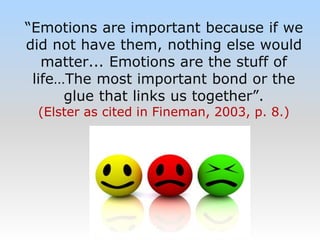
“Emotions are important because if we
did not have them, nothing else would
matter... Emotions are the stuff of
life…The most important bond or the
glue that links us together”.
(Elster as cited in Fineman, 2003, p. 8.)
“Relationship requires connection.
It depends not only on the capacity
for empathy, or the ability to listen to
others and learn their language or
take their point of view, but also on
having a voice”
(Gilligan, 1993, p. xix-xx).
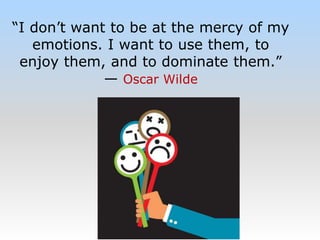
“I don’t want to be at the mercy of my
emotions. I want to use them, to
enjoy them, and to dominate them.”
— Oscar Wilde
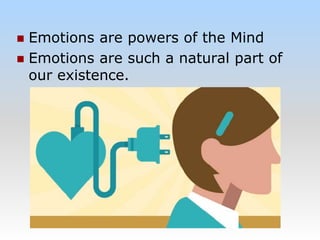
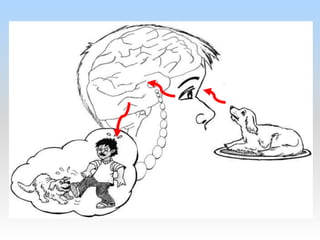
 Emotions are powers of the Mind
 Emotions are such a natural part of
our existence.
Imagine, we can climb mountains,
spend time with family and friends, do
a thousand things, but without
emotion what’s the point?
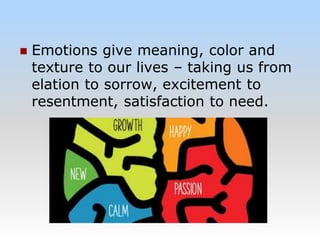
 Emotions give meaning, color and
texture to our lives – taking us from
elation to sorrow, excitement to
resentment, satisfaction to need.
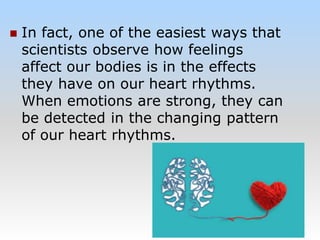
 In fact, one of the easiest ways that
scientists observe how feelings
affect our bodies is in the effects
they have on our heart rhythms.
When emotions are strong, they can
be detected in the changing pattern
of our heart rhythms.
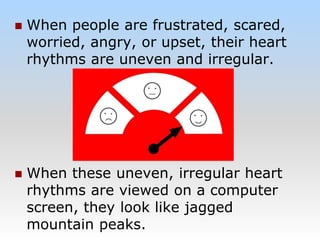
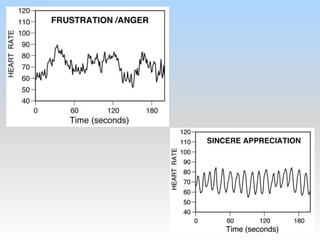
 When people are frustrated, scared,
worried, angry, or upset, their heart
rhythms are uneven and irregular.
 When these uneven, irregular heart
rhythms are viewed on a computer
screen, they look like jagged
mountain peaks.
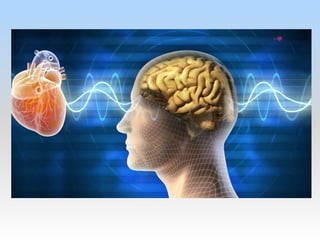
 In recent years,
scientists have discovered that the heart
has its own independent nervous system
—a complex system referred to as “the
brain in the heart.” This system receives
and relays information back to the brain
in the head, creating a two-way
communication between heart and brain.
A Look at Negative Emotions
in the Workplace
 Our work and the workplace can be
sources of great joy & achievement
for us.
A Look at Negative Emotions
in the Workplace
 On the flip side, they can also be a
battleground for dissatisfaction and
a range of negative emotions.
Five most common negative
emotions at work
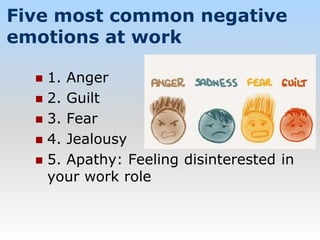
 1. Anger
 2. Guilt
 3. Fear
 4. Jealousy
 5. Apathy: Feeling disinterested in
your work role
Tips to Manage, Process and
Embrace Negative Emotions
 Sims (2017) explored ways to
proactively process and
acknowledge negative emotions and
came up with the acronym TEARS of
HOPE to help coach and guide
individuals.
1. T = Teach and Learn
 This is the process of listening to what
your body is trying to teach you
through the presentation of negative
emotions, and learn what they mean.
1. T = Teach and Learn
 It’s building your own personal
knowledge of the way you respond to
emotional states, interpreting the
signals your body is sending you, and
acknowledging that they serve a
purpose.
2. E = Express & enable
 Negative emotions encourage us to
express them.
 It’s about increasing your acceptance
of your natural instincts and enabling
them to be present without
resentment.
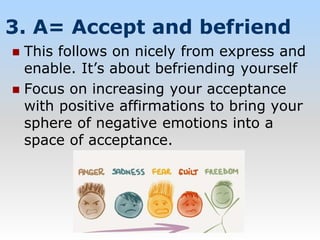
3. A= Accept and befriend
 This follows on nicely from express and
enable. It’s about befriending yourself
 Focus on increasing your acceptance
with positive affirmations to bring your
sphere of negative emotions into a
space of acceptance.
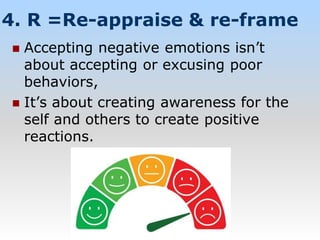
4. R =Re-appraise & re-frame
 Accepting negative emotions isn’t
about accepting or excusing poor
behaviors,
 It’s about creating awareness for the
self and others to create positive
reactions.
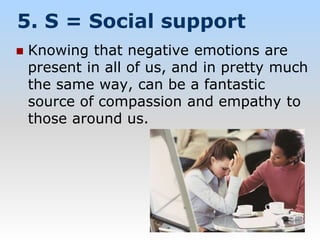
5. S = Social support
 Knowing that negative emotions are
present in all of us, and in pretty much
the same way, can be a fantastic
source of compassion and empathy to
those around us.
6. H = Hedonic well-being &
happiness
 The process of grouping
positive experiences with
negative. Because we more
readily recall negative experiences, it
can be useful for us to group them with
positive experiences & can focus more of
our energy on recalling the positive
experiences.
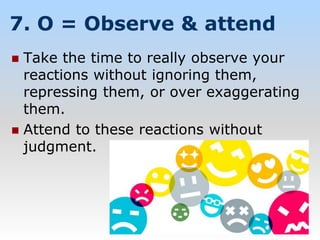
7. O = Observe & attend
 Take the time to really observe your
reactions without ignoring them,
repressing them, or over exaggerating
them.
 Attend to these reactions without
judgment.
8. P = Physiology & behavioral
changes
 Just as you observe your emotional and
mental responses, observe your
physiological reactions too.
 Bring your focus to your breath, your
heart rate and sense out the changes in
your physiology that a negative emotion
may have caused.
9. E = Eudaimonia
 Eudaimonia : A Greek word refers to
having a good spirit.
 It means you have found a state of
being that is happy, healthy and
prosperous, and you have learned to
engage in actions that result in your
overall well-being.

Effective Communication in the Workplace- 4.pdf

  • 1.
    Effective Communication in theWorkplace “Basic Communication Skills”- 4 Rajaa A. Mahmoud 2019
  • 2.
    Learning Objectives: After completingthis workshop, you will be able to:  Explore the power of emotions  Know how feelings affect our bodies  Know the Five most common negative emotions at work  Learn tips to Manage, Process and Embrace Negative Emotions
  • 3.
    “Emotions are importantbecause if we did not have them, nothing else would matter... Emotions are the stuff of life…The most important bond or the glue that links us together”. (Elster as cited in Fineman, 2003, p. 8.)
  • 4.
    “Relationship requires connection. Itdepends not only on the capacity for empathy, or the ability to listen to others and learn their language or take their point of view, but also on having a voice” (Gilligan, 1993, p. xix-xx).
  • 5.
    “I don’t wantto be at the mercy of my emotions. I want to use them, to enjoy them, and to dominate them.” — Oscar Wilde
  • 6.
     Emotions arepowers of the Mind  Emotions are such a natural part of our existence.
  • 7.
    Imagine, we canclimb mountains, spend time with family and friends, do a thousand things, but without emotion what’s the point?
  • 8.
     Emotions givemeaning, color and texture to our lives – taking us from elation to sorrow, excitement to resentment, satisfaction to need.
  • 9.
     In fact,one of the easiest ways that scientists observe how feelings affect our bodies is in the effects they have on our heart rhythms. When emotions are strong, they can be detected in the changing pattern of our heart rhythms.
  • 10.
     When peopleare frustrated, scared, worried, angry, or upset, their heart rhythms are uneven and irregular.  When these uneven, irregular heart rhythms are viewed on a computer screen, they look like jagged mountain peaks.
  • 12.
     In recentyears, scientists have discovered that the heart has its own independent nervous system —a complex system referred to as “the brain in the heart.” This system receives and relays information back to the brain in the head, creating a two-way communication between heart and brain.
  • 15.
    A Look atNegative Emotions in the Workplace  Our work and the workplace can be sources of great joy & achievement for us.
  • 16.
    A Look atNegative Emotions in the Workplace  On the flip side, they can also be a battleground for dissatisfaction and a range of negative emotions.
  • 17.
    Five most commonnegative emotions at work  1. Anger  2. Guilt  3. Fear  4. Jealousy  5. Apathy: Feeling disinterested in your work role
  • 18.
    Tips to Manage,Process and Embrace Negative Emotions  Sims (2017) explored ways to proactively process and acknowledge negative emotions and came up with the acronym TEARS of HOPE to help coach and guide individuals.
  • 19.
    1. T =Teach and Learn  This is the process of listening to what your body is trying to teach you through the presentation of negative emotions, and learn what they mean.
  • 20.
    1. T =Teach and Learn  It’s building your own personal knowledge of the way you respond to emotional states, interpreting the signals your body is sending you, and acknowledging that they serve a purpose.
  • 21.
    2. E =Express & enable  Negative emotions encourage us to express them.  It’s about increasing your acceptance of your natural instincts and enabling them to be present without resentment.
  • 22.
    3. A= Acceptand befriend  This follows on nicely from express and enable. It’s about befriending yourself  Focus on increasing your acceptance with positive affirmations to bring your sphere of negative emotions into a space of acceptance.
  • 23.
    4. R =Re-appraise& re-frame  Accepting negative emotions isn’t about accepting or excusing poor behaviors,  It’s about creating awareness for the self and others to create positive reactions.
  • 24.
    5. S =Social support  Knowing that negative emotions are present in all of us, and in pretty much the same way, can be a fantastic source of compassion and empathy to those around us.
  • 25.
    6. H =Hedonic well-being & happiness  The process of grouping positive experiences with negative. Because we more readily recall negative experiences, it can be useful for us to group them with positive experiences & can focus more of our energy on recalling the positive experiences.
  • 26.
    7. O =Observe & attend  Take the time to really observe your reactions without ignoring them, repressing them, or over exaggerating them.  Attend to these reactions without judgment.
  • 27.
    8. P =Physiology & behavioral changes  Just as you observe your emotional and mental responses, observe your physiological reactions too.  Bring your focus to your breath, your heart rate and sense out the changes in your physiology that a negative emotion may have caused.
  • 28.
    9. E =Eudaimonia  Eudaimonia : A Greek word refers to having a good spirit.  It means you have found a state of being that is happy, healthy and prosperous, and you have learned to engage in actions that result in your overall well-being.