Effect of Load on a Synchronous
Motor
© S H A W O N R E Z A
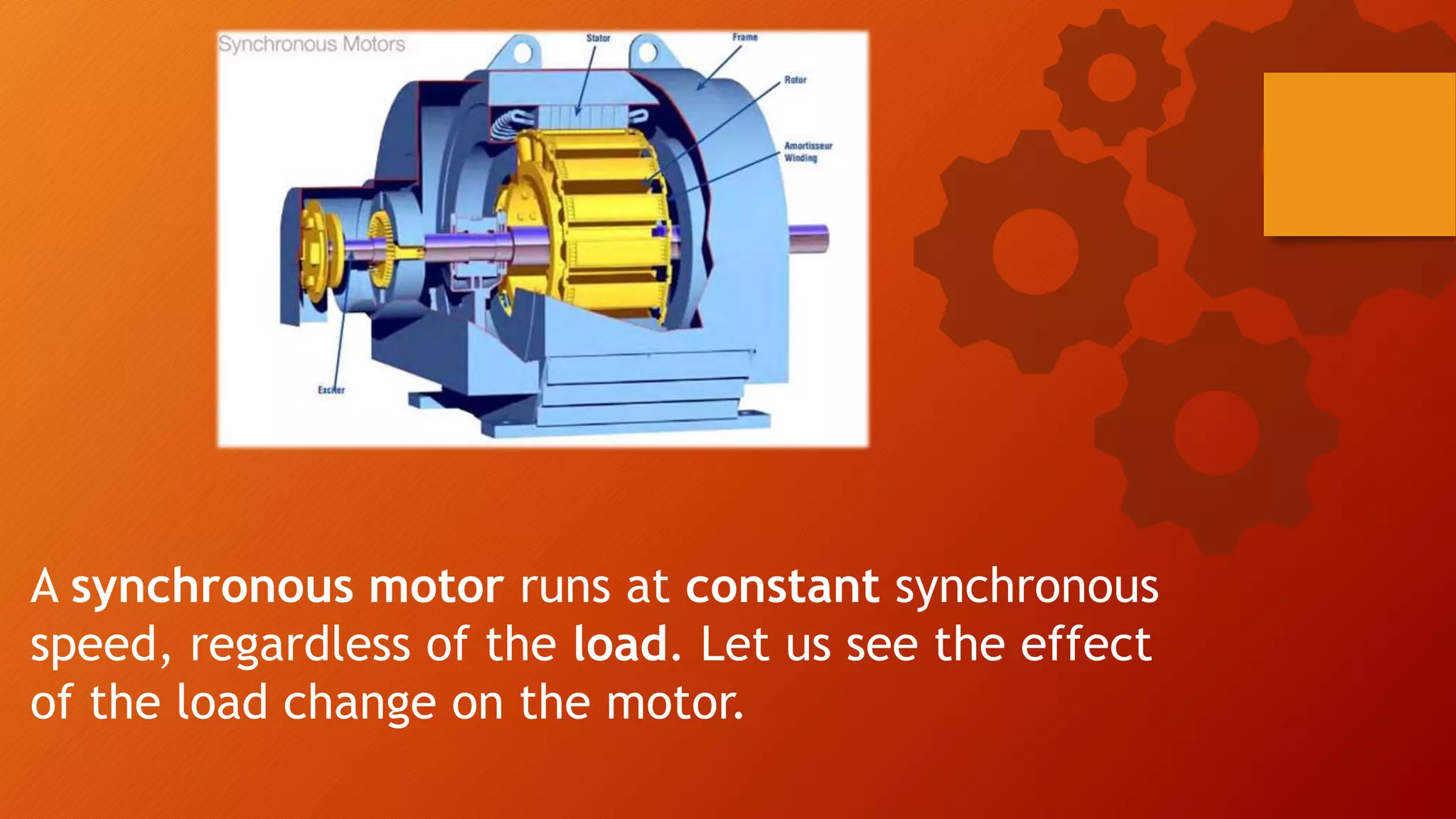
A synchronous motor runs at constant synchronous
speed, regardless of the load. Let us see the effect
of the load change on the motor.
If the load on a synchronous motor is increased
the following points are considered which are
given below.
1. The motor continues to run at synchronous
speed.
2. The torque angle δ increases.
3. The excitation voltage Ef remains constant
4. The armature current Ia drawn from the supply
increases.
5. The phase angle ϕ increases in the lagging direction.
The load on the shaft is increased.the rotor slows down
momentarily, as it required some time to take increased
power from the line. In another word, it can be said that
even if the rotor is rotating at synchronous speed, the
rotor slips back in space because of the increase in the
load. In this process, the torque angle δ becomes larger
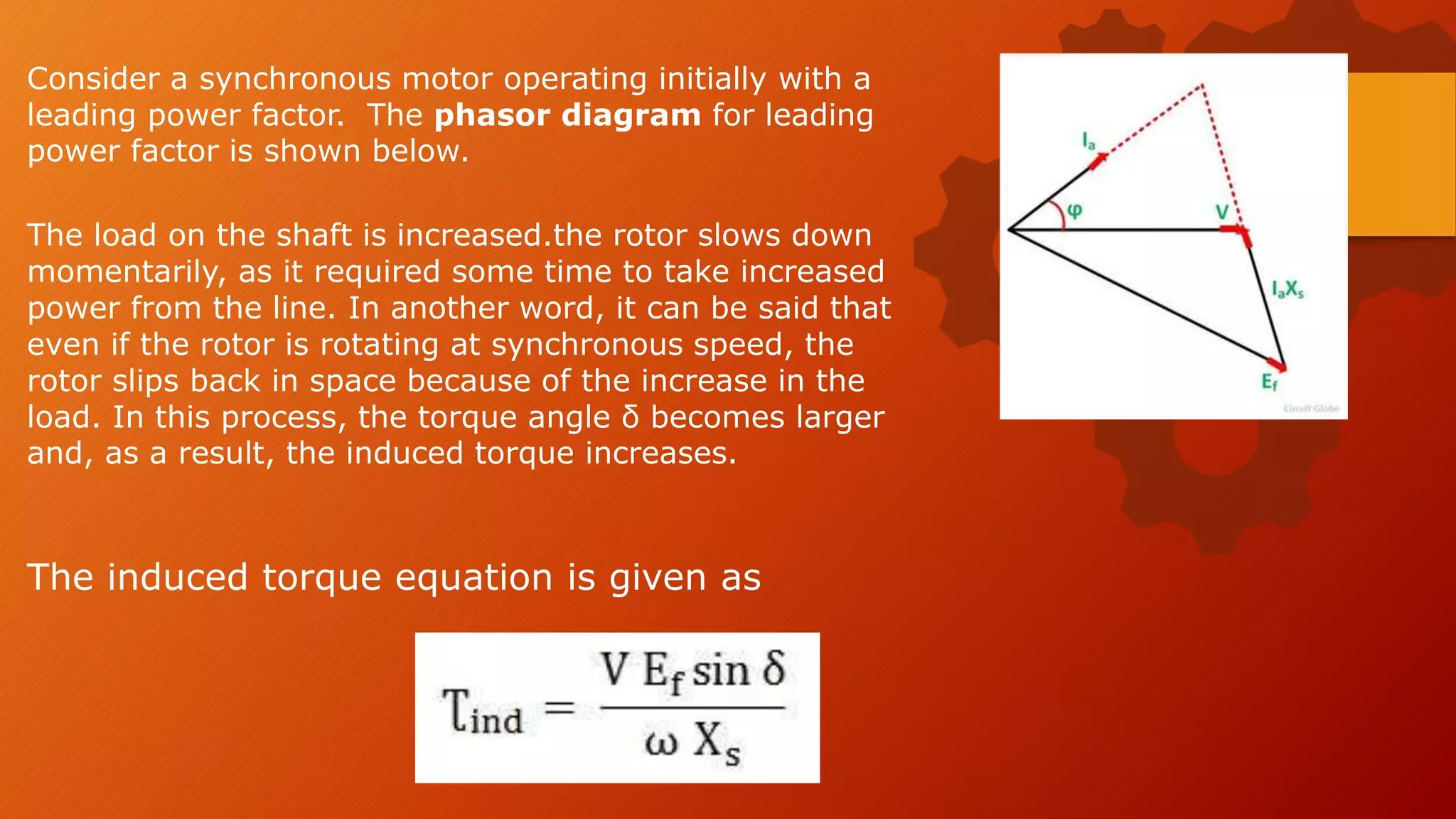
and, as a result, the induced torque increases.
The induced torque equation is given as
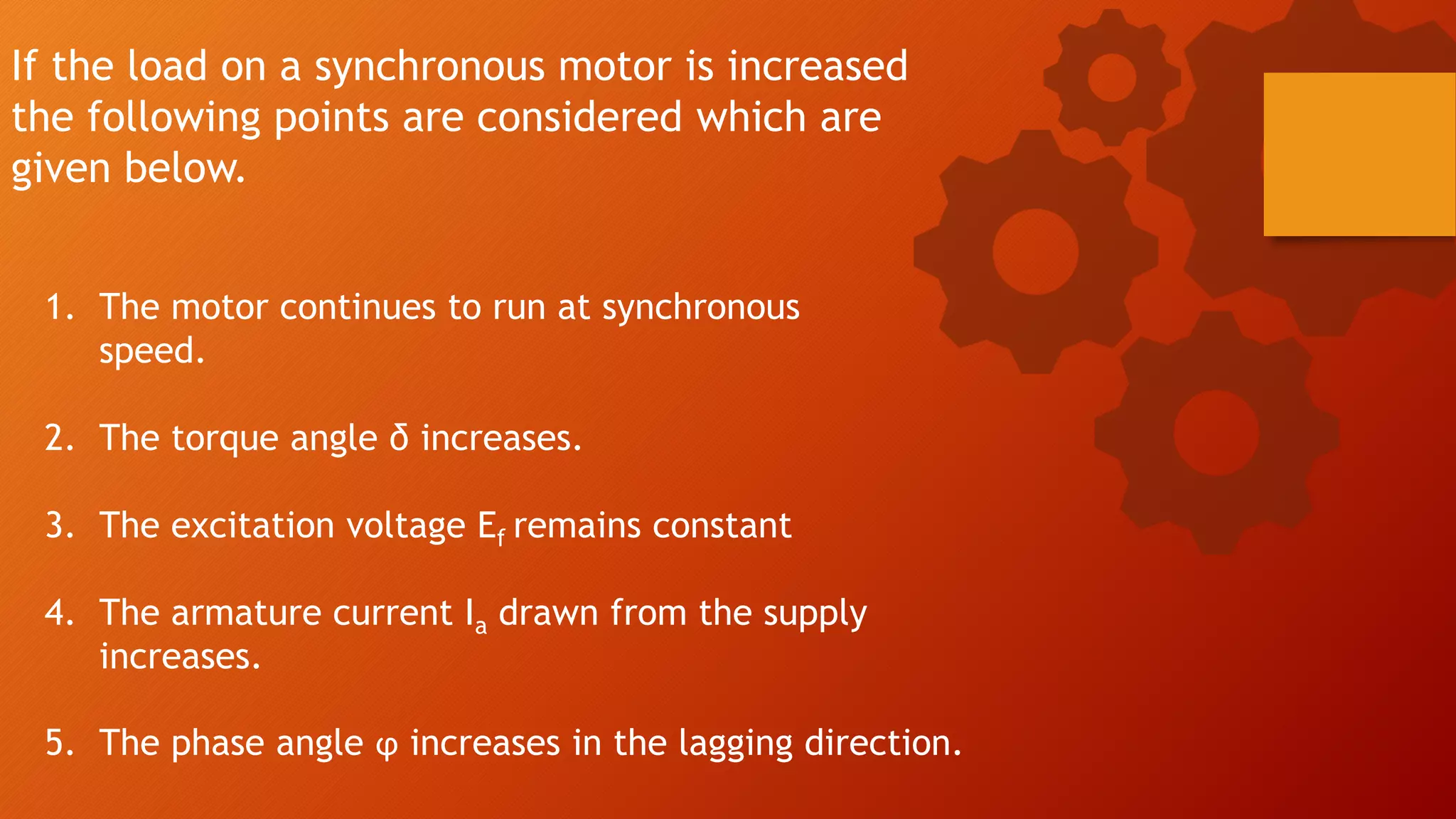
Consider a synchronous motor operating initially with a
leading power factor. The phasor diagram for leading
power factor is shown below.
Then increased torque increases the rotor speed, and the
motor again regains the synchronous speed, but with the
larger torque angle. The excitation voltage Ef is
proportional to ϕω, it depends upon the field current and
the speed of the motor. Since the motor is moving at a
synchronous speed, and the field current is also constant.
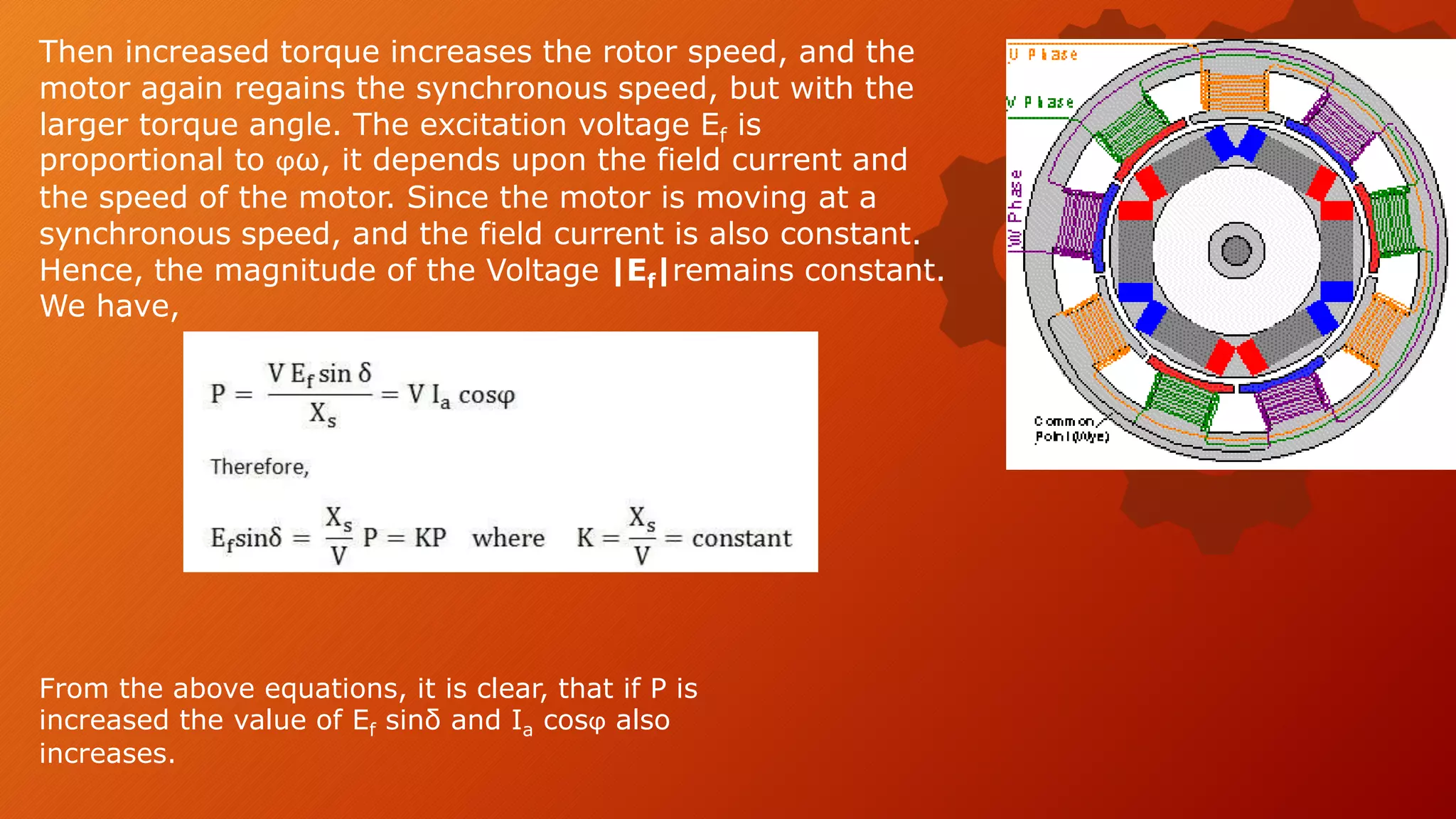
Hence, the magnitude of the Voltage |Ef|remains constant.
We have,
From the above equations, it is clear, that if P is
increased the value of Ef sinδ and Ia cosϕ also
increases.
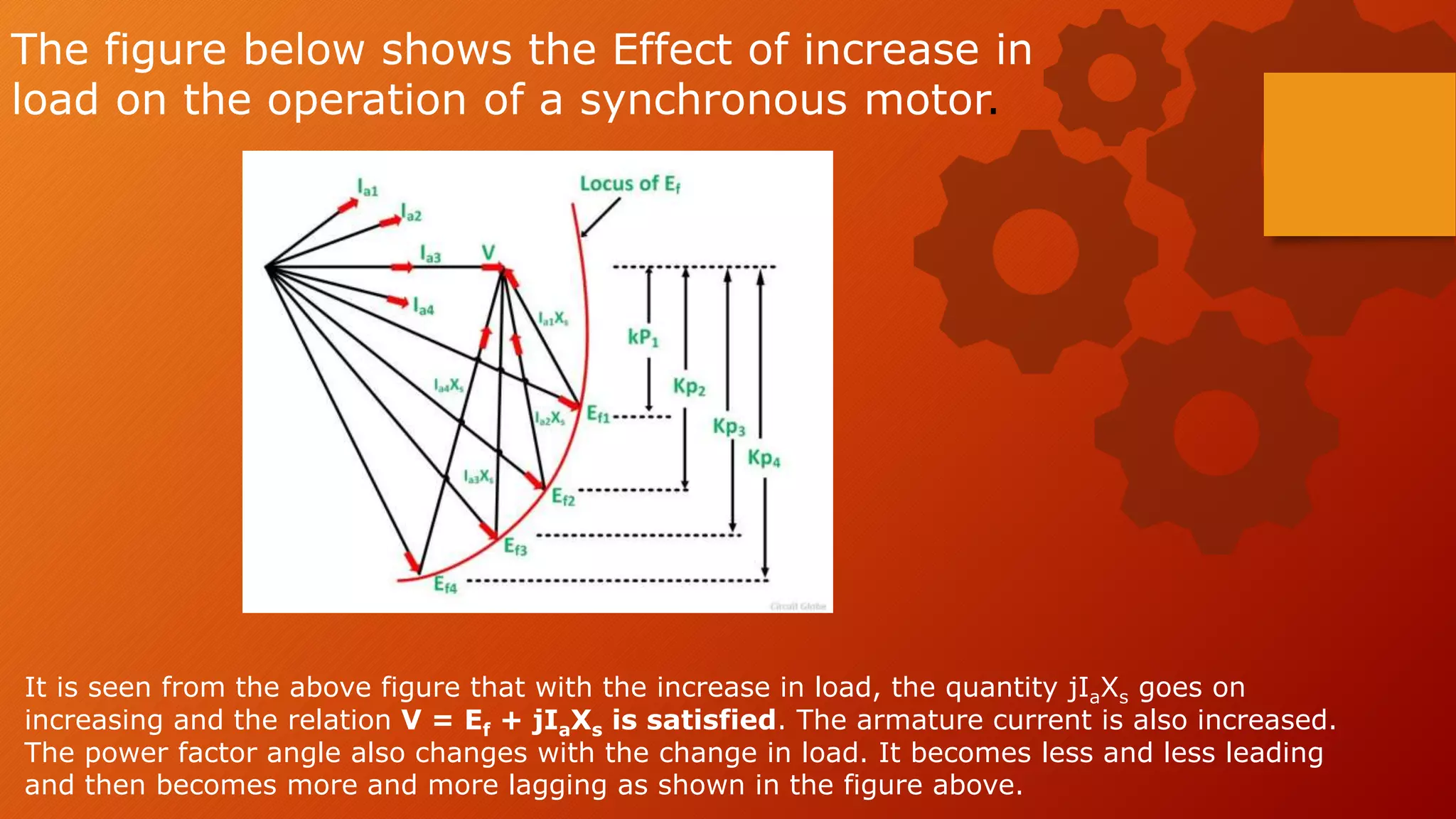
The figure below shows the Effect of increase in
load on the operation of a synchronous motor.
It is seen from the above figure that with the increase in load, the quantity jIaXs goes on
increasing and the relation V = Ef + jIaXs is satisfied. The armature current is also increased.
The power factor angle also changes with the change in load. It becomes less and less leading
and then becomes more and more lagging as shown in the figure above.
There is a limit to the mechanical load that can be applied
to a synchronous motor. As the load is increased, the
torque angle δ also increases until the condition arises
when the rotor is pulled out of synchronism and the
motor is stopped.
Pull-out torque is defined as the maximum value of the
torque which a synchronous motor can develop at rated
voltage and frequency without losing synchronism. It
values varies from 1.5 to 3.5 times the full load torque.
Thank You

Effect of load on a synchronous motor

  • 1.
    Effect of Loadon a Synchronous Motor © S H A W O N R E Z A
  • 2.
    A synchronous motorruns at constant synchronous speed, regardless of the load. Let us see the effect of the load change on the motor.
  • 3.
    If the loadon a synchronous motor is increased the following points are considered which are given below. 1. The motor continues to run at synchronous speed. 2. The torque angle δ increases. 3. The excitation voltage Ef remains constant 4. The armature current Ia drawn from the supply increases. 5. The phase angle ϕ increases in the lagging direction.
  • 4.
    The load onthe shaft is increased.the rotor slows down momentarily, as it required some time to take increased power from the line. In another word, it can be said that even if the rotor is rotating at synchronous speed, the rotor slips back in space because of the increase in the load. In this process, the torque angle δ becomes larger and, as a result, the induced torque increases. The induced torque equation is given as Consider a synchronous motor operating initially with a leading power factor. The phasor diagram for leading power factor is shown below.
  • 5.
    Then increased torqueincreases the rotor speed, and the motor again regains the synchronous speed, but with the larger torque angle. The excitation voltage Ef is proportional to ϕω, it depends upon the field current and the speed of the motor. Since the motor is moving at a synchronous speed, and the field current is also constant. Hence, the magnitude of the Voltage |Ef|remains constant. We have, From the above equations, it is clear, that if P is increased the value of Ef sinδ and Ia cosϕ also increases.
  • 6.
    The figure belowshows the Effect of increase in load on the operation of a synchronous motor. It is seen from the above figure that with the increase in load, the quantity jIaXs goes on increasing and the relation V = Ef + jIaXs is satisfied. The armature current is also increased. The power factor angle also changes with the change in load. It becomes less and less leading and then becomes more and more lagging as shown in the figure above.
  • 7.
    There is alimit to the mechanical load that can be applied to a synchronous motor. As the load is increased, the torque angle δ also increases until the condition arises when the rotor is pulled out of synchronism and the motor is stopped. Pull-out torque is defined as the maximum value of the torque which a synchronous motor can develop at rated voltage and frequency without losing synchronism. It values varies from 1.5 to 3.5 times the full load torque.
  • 8.

Editor's Notes

  • #3 Notes to presenter: Description of what you learned in your own words on one side. Include information about the topic Details about the topic will also be helpful here. Tell the story of your learning experience. Just like a story there should always be a beginning, middle and an end. On the other side, you can add a graphic that provides evidence of what you learned. Feel free to use more than one slide to reflect upon your process. It also helps to add some video of your process.