A CAREER IN
CARDIOLOGY
DR SHAMIM RAHMAN
CARDIOLOGY ST7, INTERVENTIONAL FELLOW
BHF CLINICAL RESEARCH FELLOW (IMPERIAL COLLEGE LONDON)
SPECIALTY CAREERS FAIR 2016
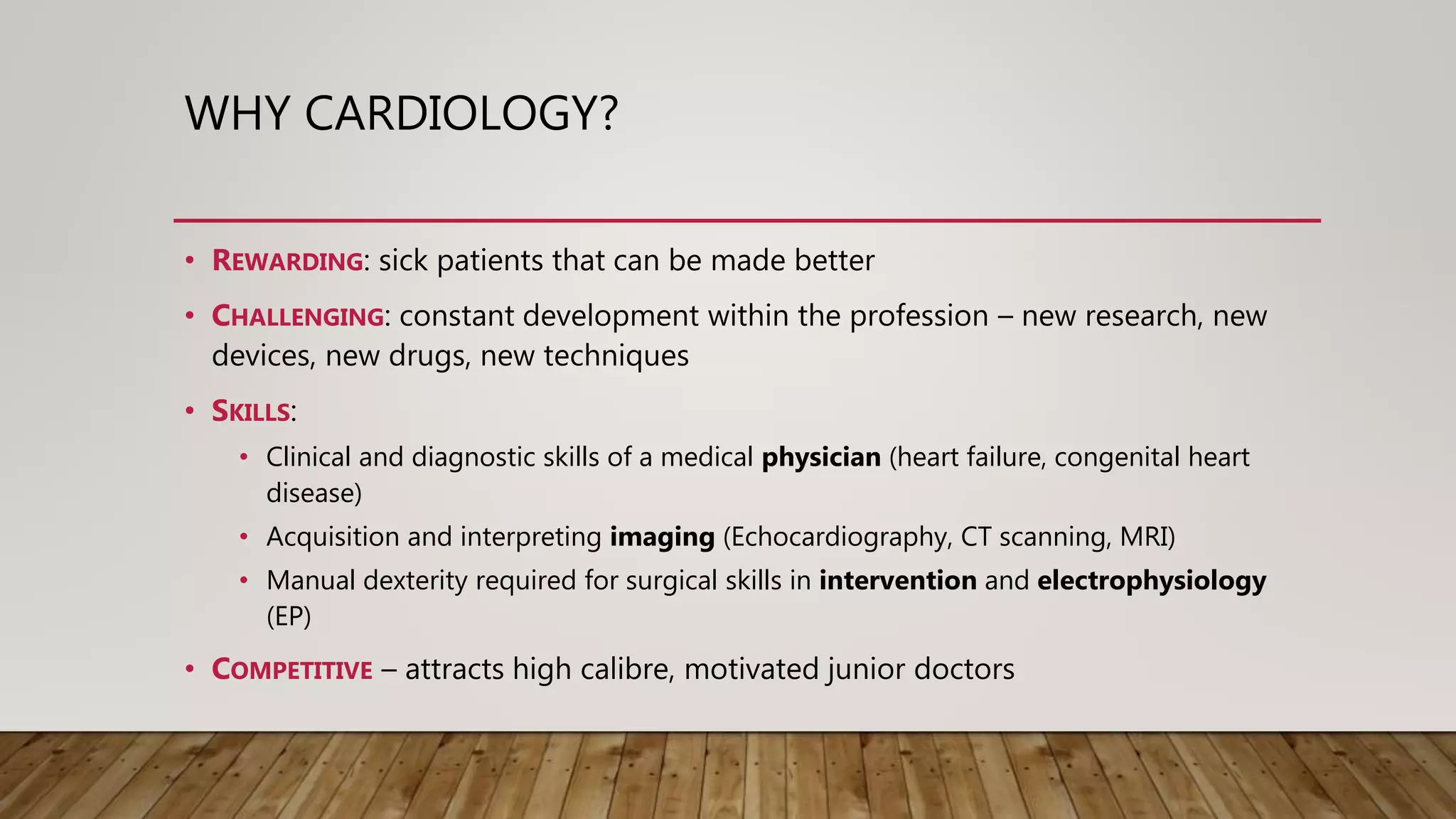
WHY CARDIOLOGY?
• REWARDING: sick patients that can be made better
• CHALLENGING: constant development within the profession – new research, new
devices, new drugs, new techniques
• SKILLS:
• Clinical and diagnostic skills of a medical physician (heart failure, congenital heart
disease)
• Acquisition and interpreting imaging (Echocardiography, CT scanning, MRI)
• Manual dexterity required for surgical skills in intervention and electrophysiology
(EP)
• COMPETITIVE – attracts high calibre, motivated junior doctors
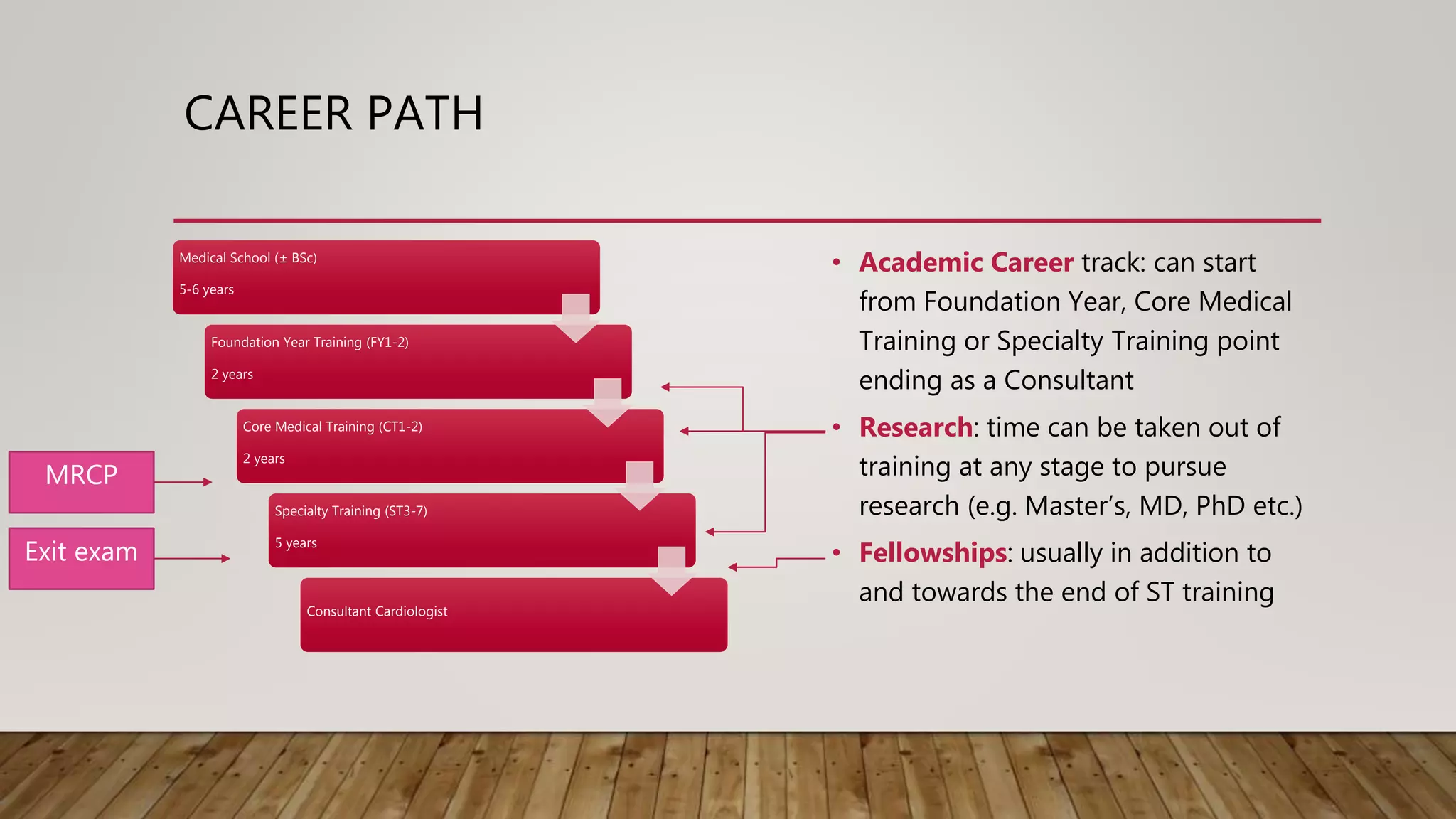
CAREER PATH
Medical School (± BSc)
5-6 years
Foundation Year Training (FY1-2)
2 years
Core Medical Training (CT1-2)
2 years
Specialty Training (ST3-7)
5 years
Consultant Cardiologist
• Academic Career track: can start
from Foundation Year, Core Medical
Training or Specialty Training point
ending as a Consultant
• Research: time can be taken out of
training at any stage to pursue
research (e.g. Master’s, MD, PhD etc.)
• Fellowships: usually in addition to
and towards the end of ST training
MRCP
Exit exam
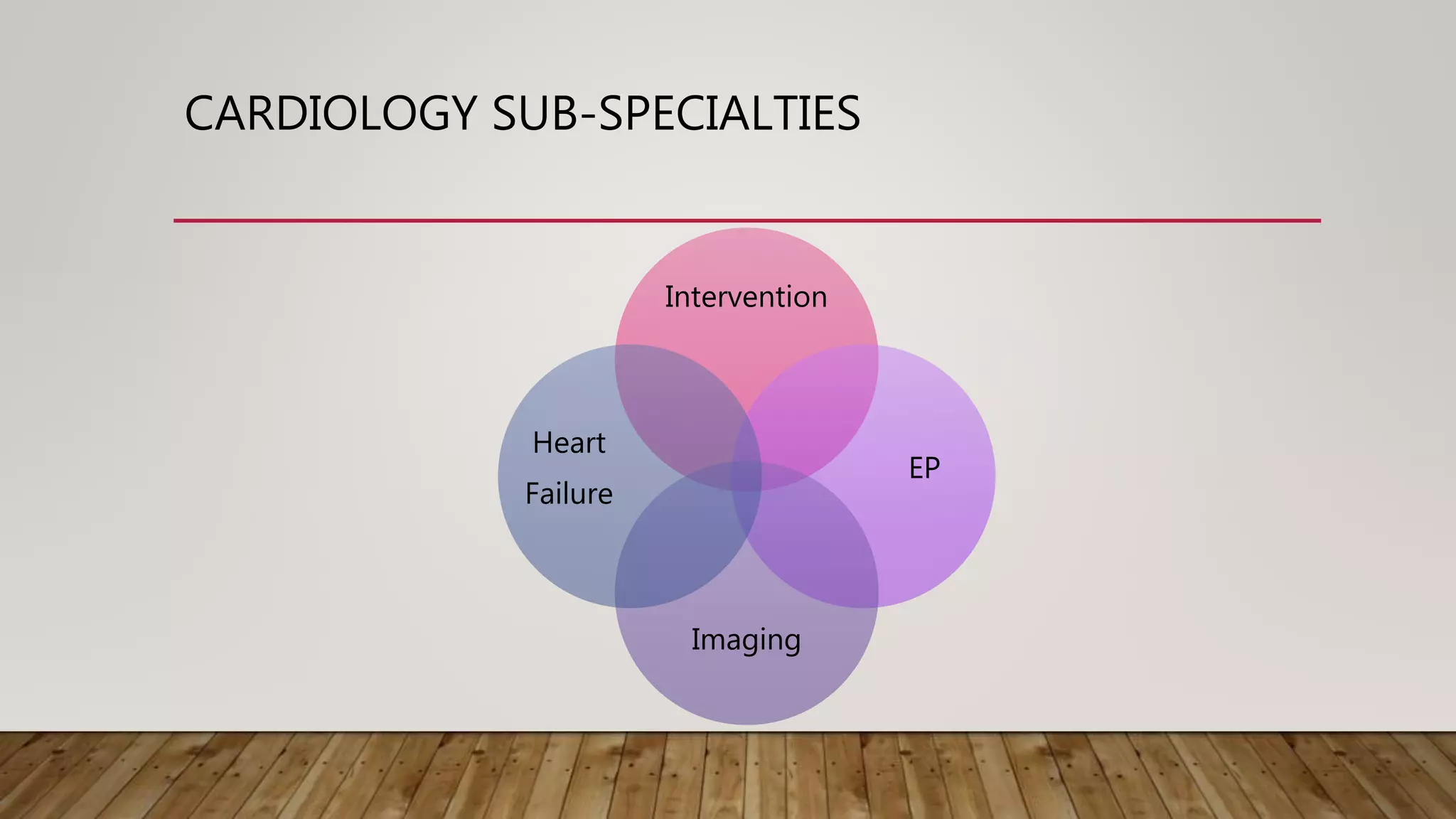
CARDIOLOGY SUB-SPECIALTIES
Intervention
EP
Imaging
Heart
Failure
INTERVENTIONAL CARDIOLOGY
• Acute treatment of heart attacks
• Unblocking arteries
• Putting in balloons and stents (PCI)
• Treating valvular heart disease
through minimal access “surgery”
• Closing holes in the heart
PCI: stent deployment within a coronary
artery
INTERVENTIONAL CARDIOLOGY
• Acute treatment of heart attacks
• Unblocking arteries
• Putting in balloons and stents (PCI)
• Treating valvular heart disease
through minimal access “surgery”
• Closing holes in the heart
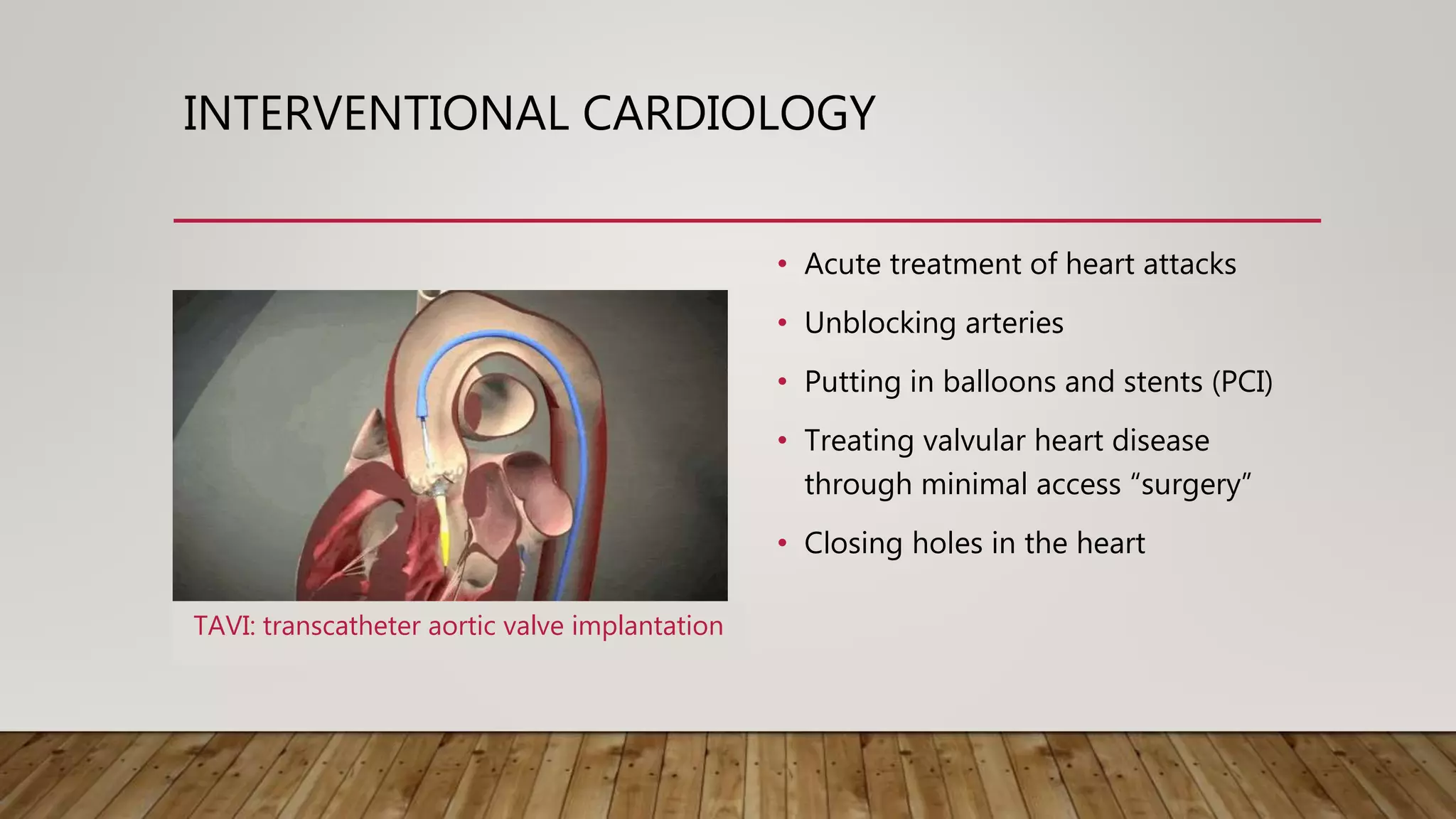
TAVI: transcatheter aortic valve implantation
HEART FAILURE / IMAGING
• Treating failing hearts
• Use of sophisticated imaging
techniques (echo, CT, MRI)
• Performing invasive imaging studies
(transoesophageal
echocardiography)
• Imaging support intra-operatively
• Complex pacemaker insertion
Colour doppler of flow showing mitral
regurgitation by echo
HEART FAILURE / IMAGING
• Treating failing hearts
• Use of sophisticated imaging
techniques (echo, CT, MRI)
• Performing invasive imaging studies
(transoesophageal
echocardiography)
• Imaging support intra-operatively
• Complex pacemaker insertion
CMR: MRI modelling of the heart
ELECTROPHYSIOLOGY (EP)
• Arrhythmia diagnosis
• Ablation of atrial and ventricular
arrhythmias
• Complex device insertion – ICDs,
biventricular pacemakers, LAA
occluder
• Sudden Cardiac Death in young
patients, athletes – diagnosis,
management
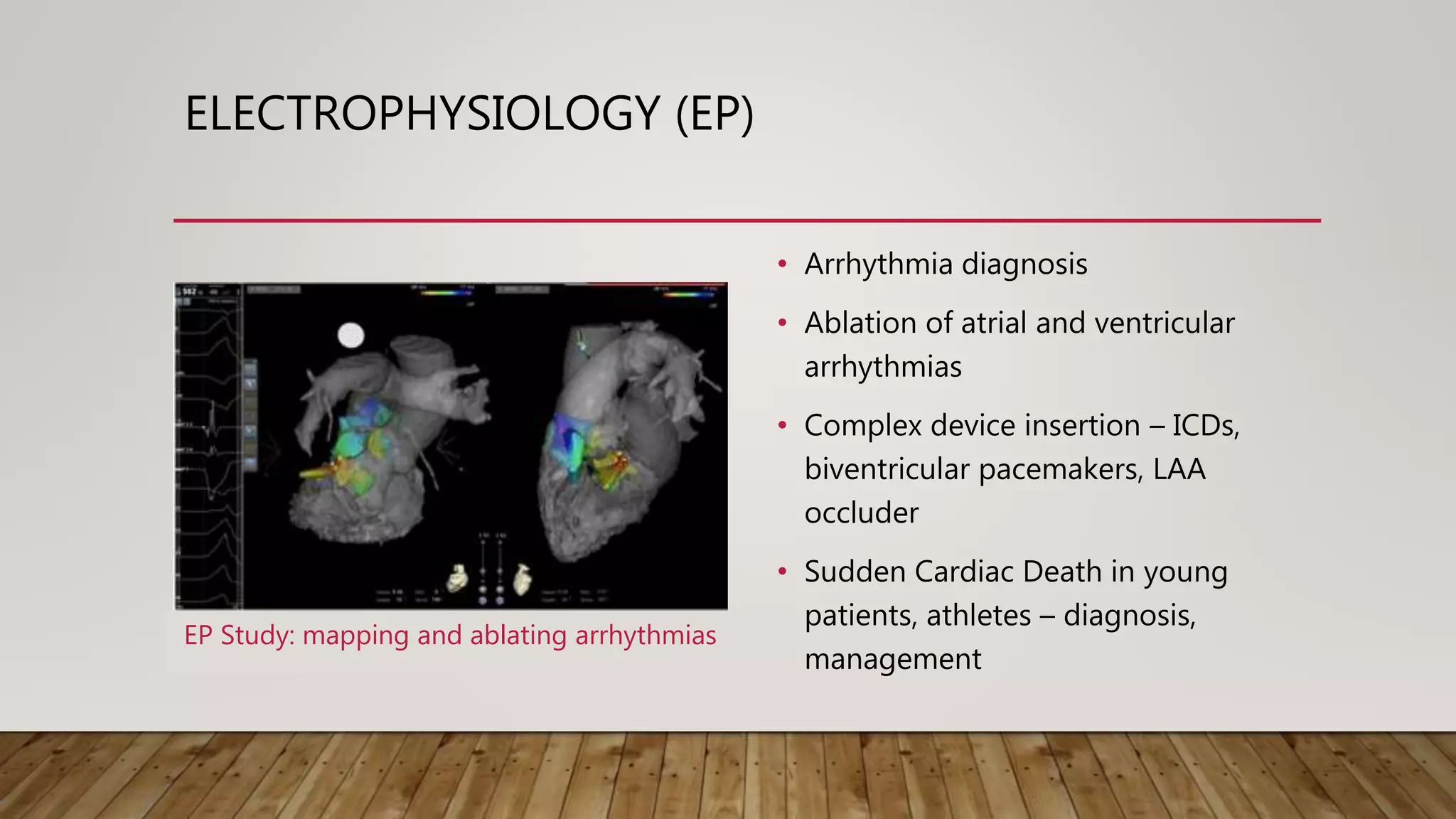
EP Study: mapping and ablating arrhythmias
ELECTROPHYSIOLOGY (EP)
• Arrhythmia diagnosis
• Ablation of atrial and ventricular
arrhythmias
• Complex device insertion – ICDs,
biventricular pacemakers, LAA
occluder
• Sudden Cardiac Death in young
patients, athletes – diagnosis,
management
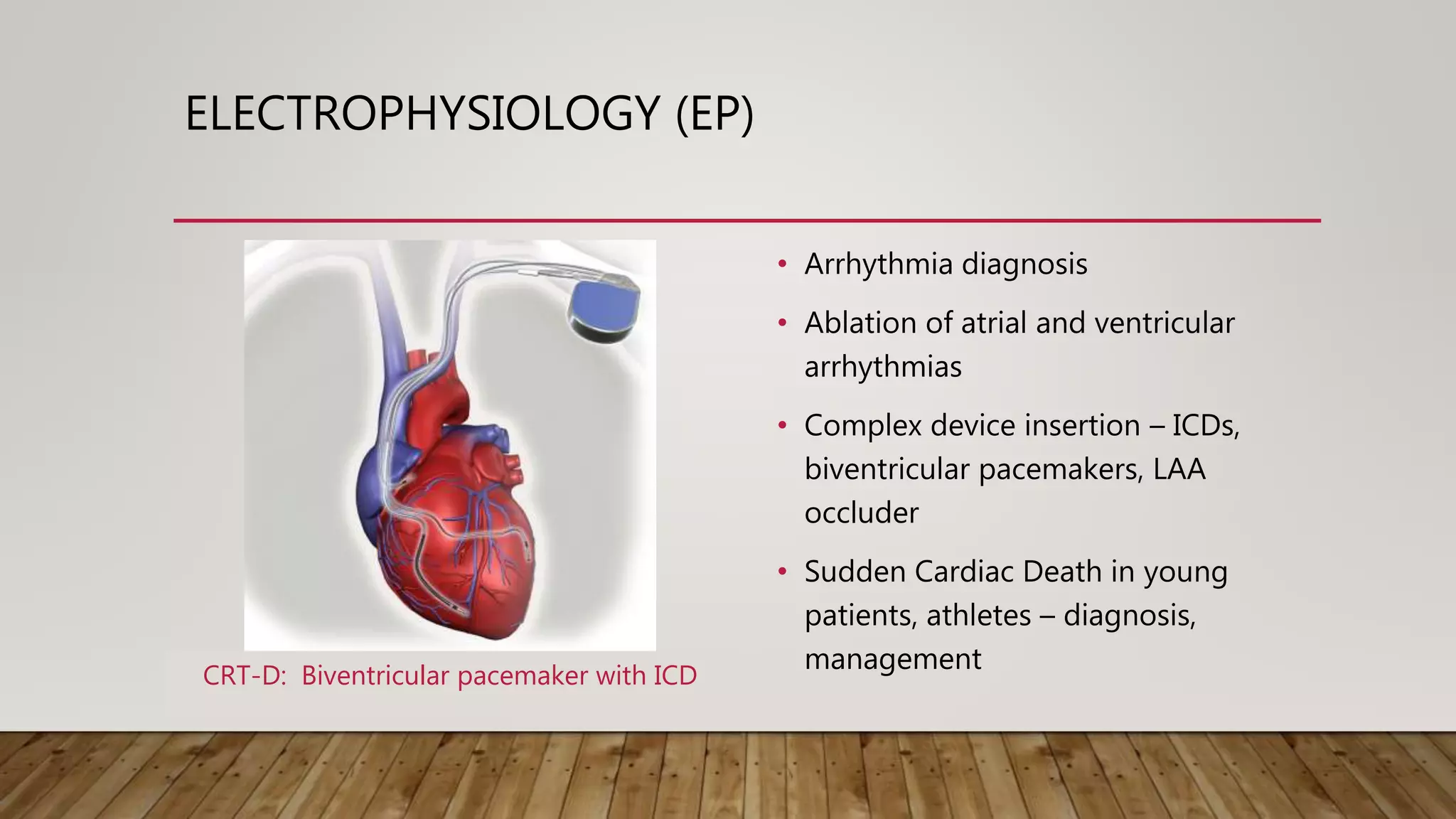
CRT-D: Biventricular pacemaker with ICD

RSM Careers Fair - Cardiology

  • 1.
    A CAREER IN CARDIOLOGY DRSHAMIM RAHMAN CARDIOLOGY ST7, INTERVENTIONAL FELLOW BHF CLINICAL RESEARCH FELLOW (IMPERIAL COLLEGE LONDON) SPECIALTY CAREERS FAIR 2016
  • 2.
    WHY CARDIOLOGY? • REWARDING:sick patients that can be made better • CHALLENGING: constant development within the profession – new research, new devices, new drugs, new techniques • SKILLS: • Clinical and diagnostic skills of a medical physician (heart failure, congenital heart disease) • Acquisition and interpreting imaging (Echocardiography, CT scanning, MRI) • Manual dexterity required for surgical skills in intervention and electrophysiology (EP) • COMPETITIVE – attracts high calibre, motivated junior doctors
  • 3.
    CAREER PATH Medical School(± BSc) 5-6 years Foundation Year Training (FY1-2) 2 years Core Medical Training (CT1-2) 2 years Specialty Training (ST3-7) 5 years Consultant Cardiologist • Academic Career track: can start from Foundation Year, Core Medical Training or Specialty Training point ending as a Consultant • Research: time can be taken out of training at any stage to pursue research (e.g. Master’s, MD, PhD etc.) • Fellowships: usually in addition to and towards the end of ST training MRCP Exit exam
  • 4.
  • 5.
    INTERVENTIONAL CARDIOLOGY • Acutetreatment of heart attacks • Unblocking arteries • Putting in balloons and stents (PCI) • Treating valvular heart disease through minimal access “surgery” • Closing holes in the heart PCI: stent deployment within a coronary artery
  • 6.
    INTERVENTIONAL CARDIOLOGY • Acutetreatment of heart attacks • Unblocking arteries • Putting in balloons and stents (PCI) • Treating valvular heart disease through minimal access “surgery” • Closing holes in the heart TAVI: transcatheter aortic valve implantation
  • 7.
    HEART FAILURE /IMAGING • Treating failing hearts • Use of sophisticated imaging techniques (echo, CT, MRI) • Performing invasive imaging studies (transoesophageal echocardiography) • Imaging support intra-operatively • Complex pacemaker insertion Colour doppler of flow showing mitral regurgitation by echo
  • 8.
    HEART FAILURE /IMAGING • Treating failing hearts • Use of sophisticated imaging techniques (echo, CT, MRI) • Performing invasive imaging studies (transoesophageal echocardiography) • Imaging support intra-operatively • Complex pacemaker insertion CMR: MRI modelling of the heart
  • 9.
    ELECTROPHYSIOLOGY (EP) • Arrhythmiadiagnosis • Ablation of atrial and ventricular arrhythmias • Complex device insertion – ICDs, biventricular pacemakers, LAA occluder • Sudden Cardiac Death in young patients, athletes – diagnosis, management EP Study: mapping and ablating arrhythmias
  • 10.
    ELECTROPHYSIOLOGY (EP) • Arrhythmiadiagnosis • Ablation of atrial and ventricular arrhythmias • Complex device insertion – ICDs, biventricular pacemakers, LAA occluder • Sudden Cardiac Death in young patients, athletes – diagnosis, management CRT-D: Biventricular pacemaker with ICD