Intro to Ecosystems
Learning Goals
 Understand what an ecosystem is and what it consist of
 Understand how energy cycles through an ecosystem
 Investigate cultural paradigms (worldviews) of ecosystems and
the environment
Ecosystems
 Ecosystem: An interaction between
plants, animals, microorganisms, and
their environment.
 Eg. Ocean ecosystem, forest, desert
Ecosystems are comprised of:
 Abiotic: the non-living components in nature; they
determine what types of species can live in the area
Ex. sunlight, temperature, soil, minerals, wind, water, rock,
air
 Biotic: the living components in nature; these organisms
interact with each other and the abiotic factors
Ex. bacteria, algae, microorganisms, fungi, plants, animals
An Organisms Niche
 Habitat: The actual place an organism lives
 Niche: Both living and non-living parts of an ecosystem that
determines an organism’s role in the ecosystem
 The niche of an organism and it’s interactions is determined by
where it stands in the ecological structure of the ecosystem
Producers
Consumers
Decomposers
Scavengers
Producers
 Autotrophs: Make their own food
Phototrophic
Chemotrophic
Consumers
 Heterotrophs: Cannot make their own
food. They must ingest (eat) other
organisms
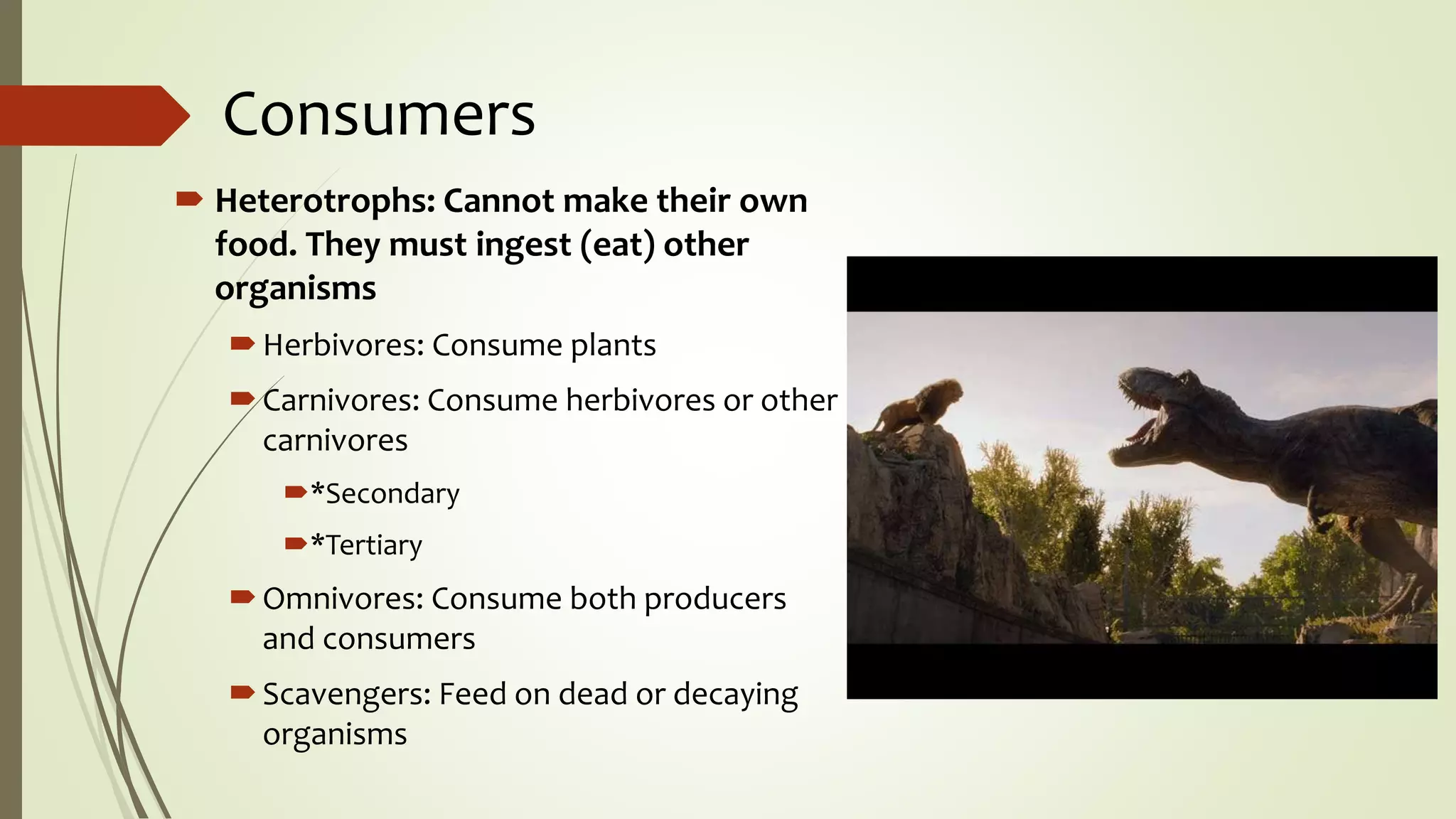
Herbivores: Consume plants
Carnivores: Consume herbivores or other
carnivores
*Secondary
*Tertiary
Omnivores: Consume both producers
and consumers
Scavengers: Feed on dead or decaying
organisms
Decomposers
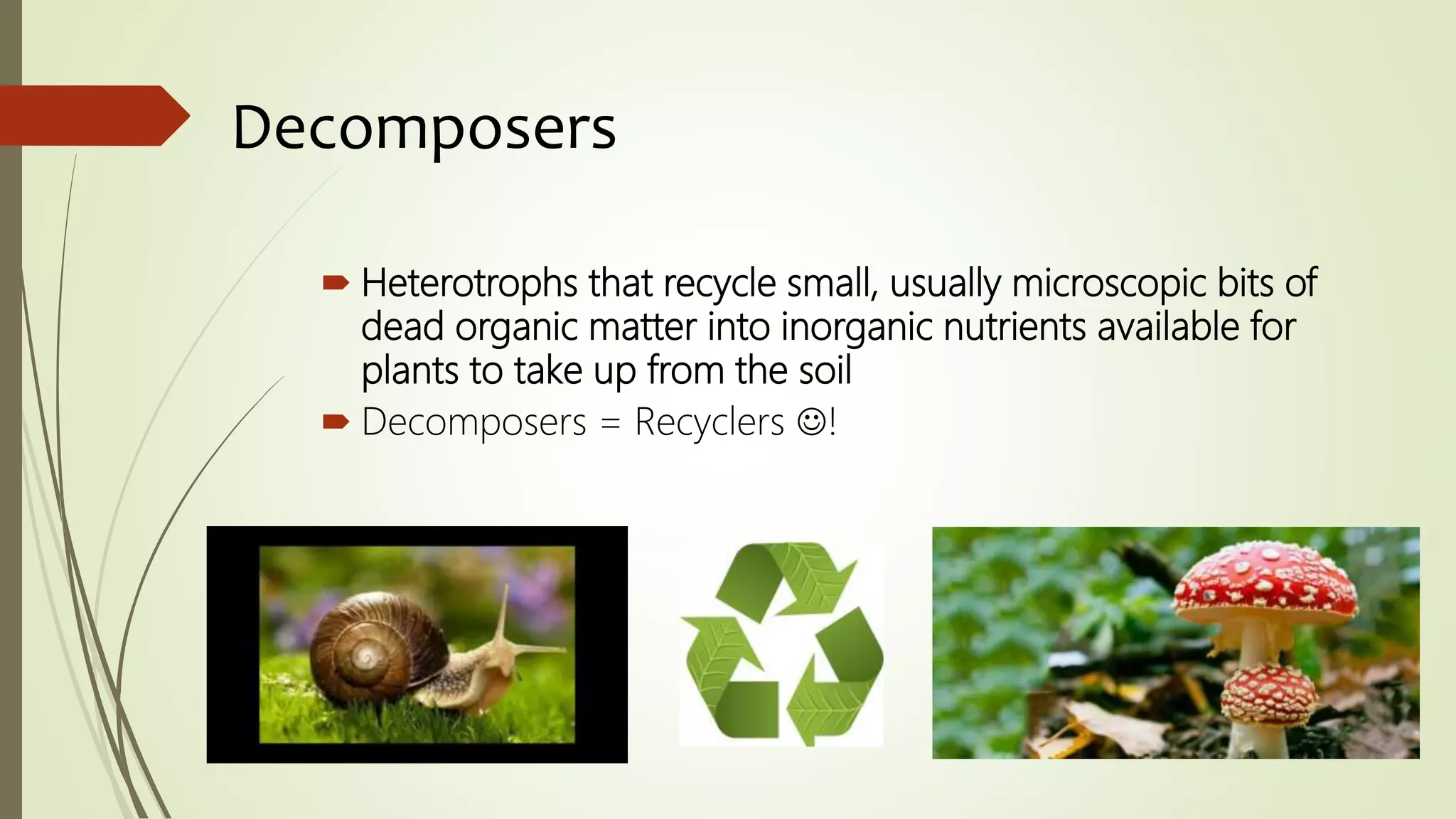
 Heterotrophs that recycle small, usually microscopic bits of
dead organic matter into inorganic nutrients available for
plants to take up from the soil
 Decomposers = Recyclers !
Scavengers
 Scavengers: Feed on dead or decaying organisms
 Essentially, Scavengers reduce the size of dead organic matter…
Decomposers will finish the job
 *All living things (whether they are predators, prey, producers or
decomposers) have a valuable position to the sustainability and stability of
an ecosystem.*
Energy in Ecosystems
 Energy – the capacity of a system to do work; the ability to move or bring
about a change in matter
Energy can’t be created or destroyed, it can only change forms
Light
Heat (thermal)
Mechanical
Kinetic/Potential
Chemical
Electrical
Energy Cycle
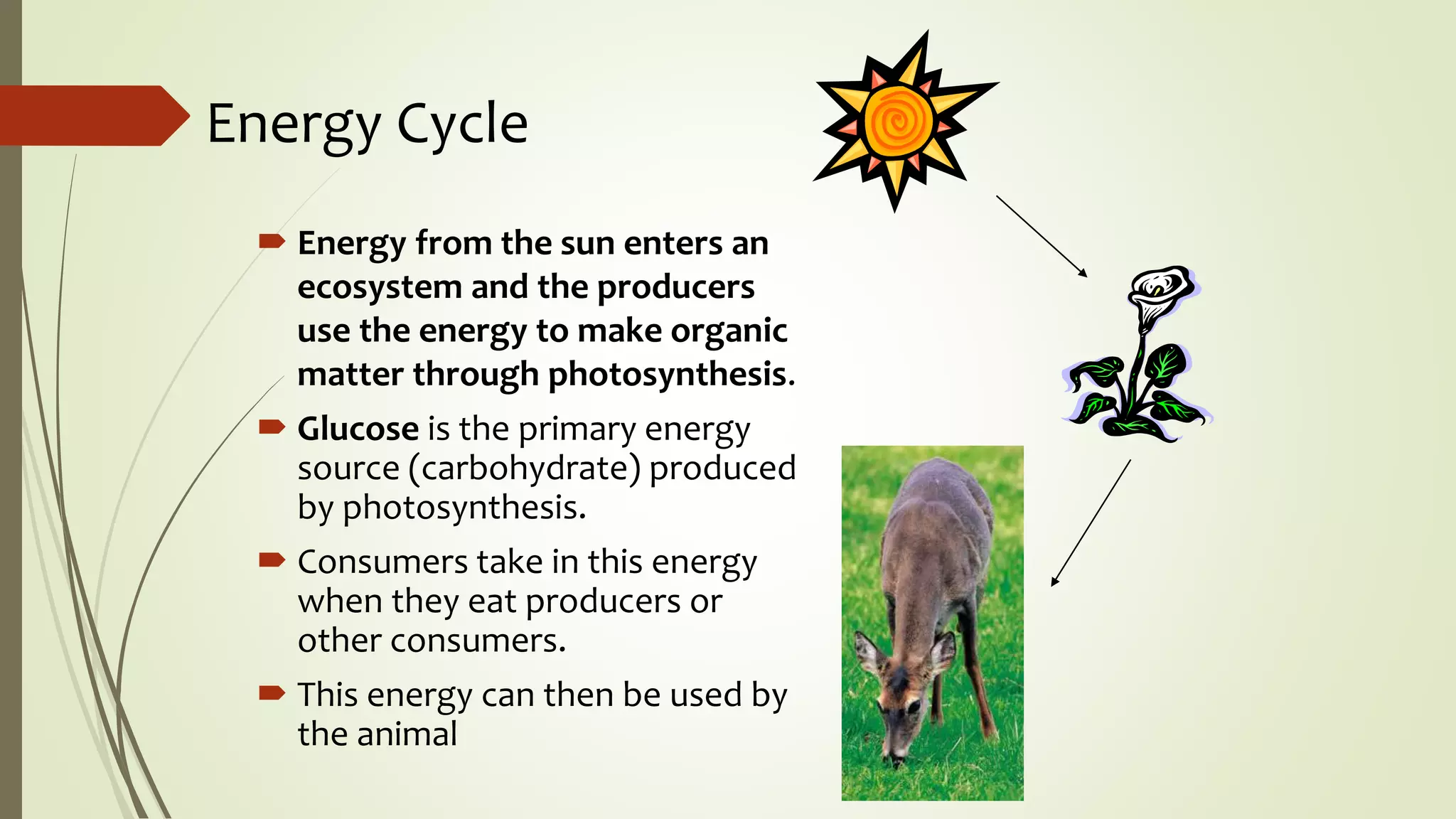
 Energy from the sun enters an
ecosystem and the producers
use the energy to make organic
matter through photosynthesis.
 Glucose is the primary energy
source (carbohydrate) produced
by photosynthesis.
 Consumers take in this energy
when they eat producers or
other consumers.
 This energy can then be used by
the animal
The Work of Living Things
 “Work”: Energy transformations in plants and animals which
are essential to life
 Types:
Synthetic – e.g.
Electrical – e.g. Nerves sending signals to the brain
Mechanical: Ex: movement of muscles.
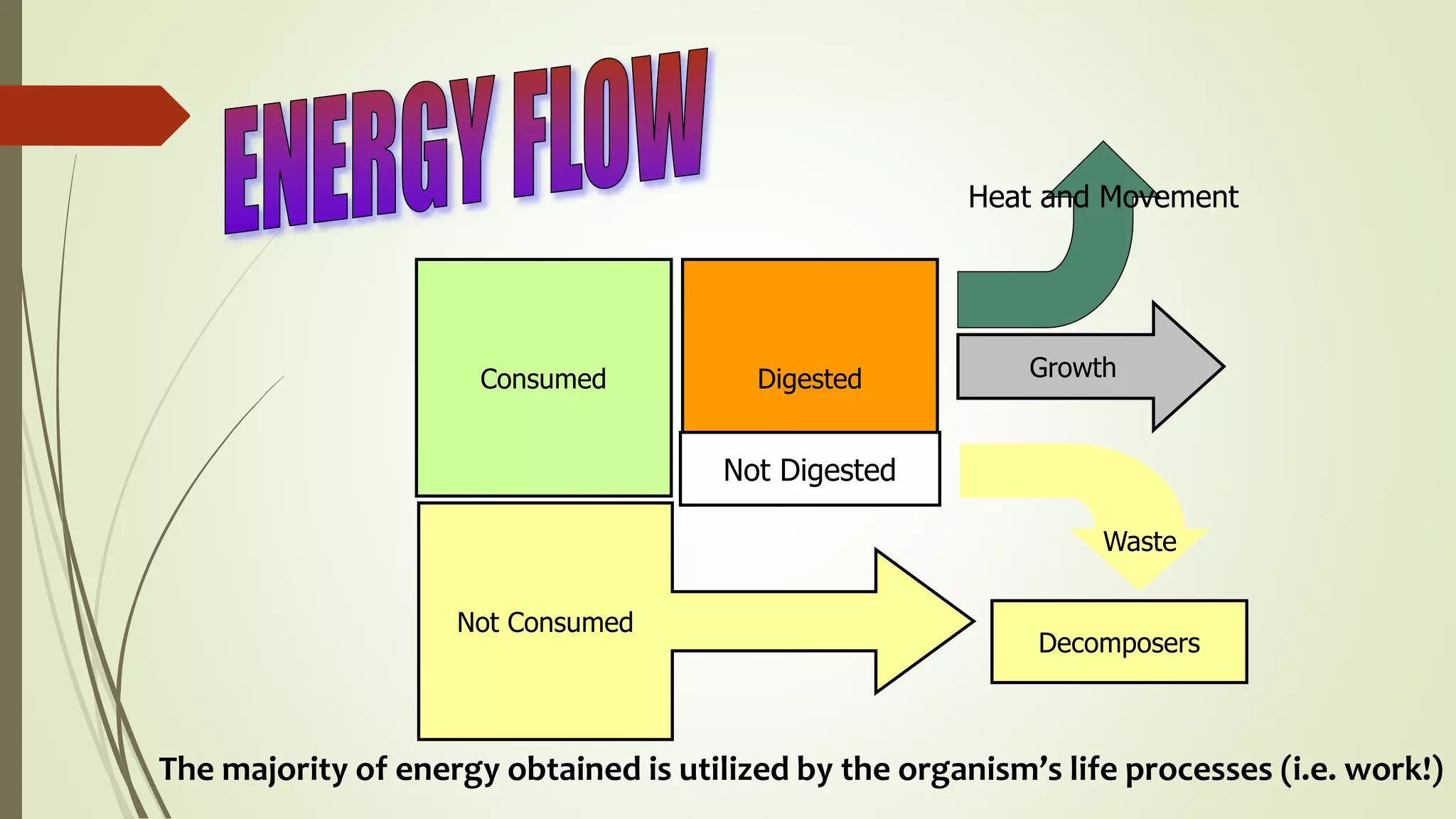
Consumed
Not Consumed
Digested
Not Digested
Heat and Movement
Growth
Waste
Decomposers
The majority of energy obtained is utilized by the organism’s life processes (i.e. work!)
Think, Pair, Share
 1. Brainstorm things that we find in nature
 2. Organize them into two groups: living things, nonliving things
 3. Look at your lists and decide the following:
Do they do “work”? What work do they do?
What kind of energy does each use?
Light
Heat (thermal)
Mechanical
Kinetic/Potential
Chemical
Electrical
Relationships with Ecosystems
Paradigms: the set of experiences, beliefs, and values that
constitute a way of viewing reality, such as ecosystems
There is no right or wrong world view, only different
Worldviews affect how we think about our environment
Different cultures and communities view relationships
between people, biotic, and abiotic factors in different
ways
Greek Classification of Nature
 Greek: Ekos means home, therefore
ecosystem
 4 Elements: Wind, Water, Rock, Fire
Historical connection: Greek
Mythology
Today’s connection: global issues over
climate change, water accessibility,
soil use, energy use and fossil fuels
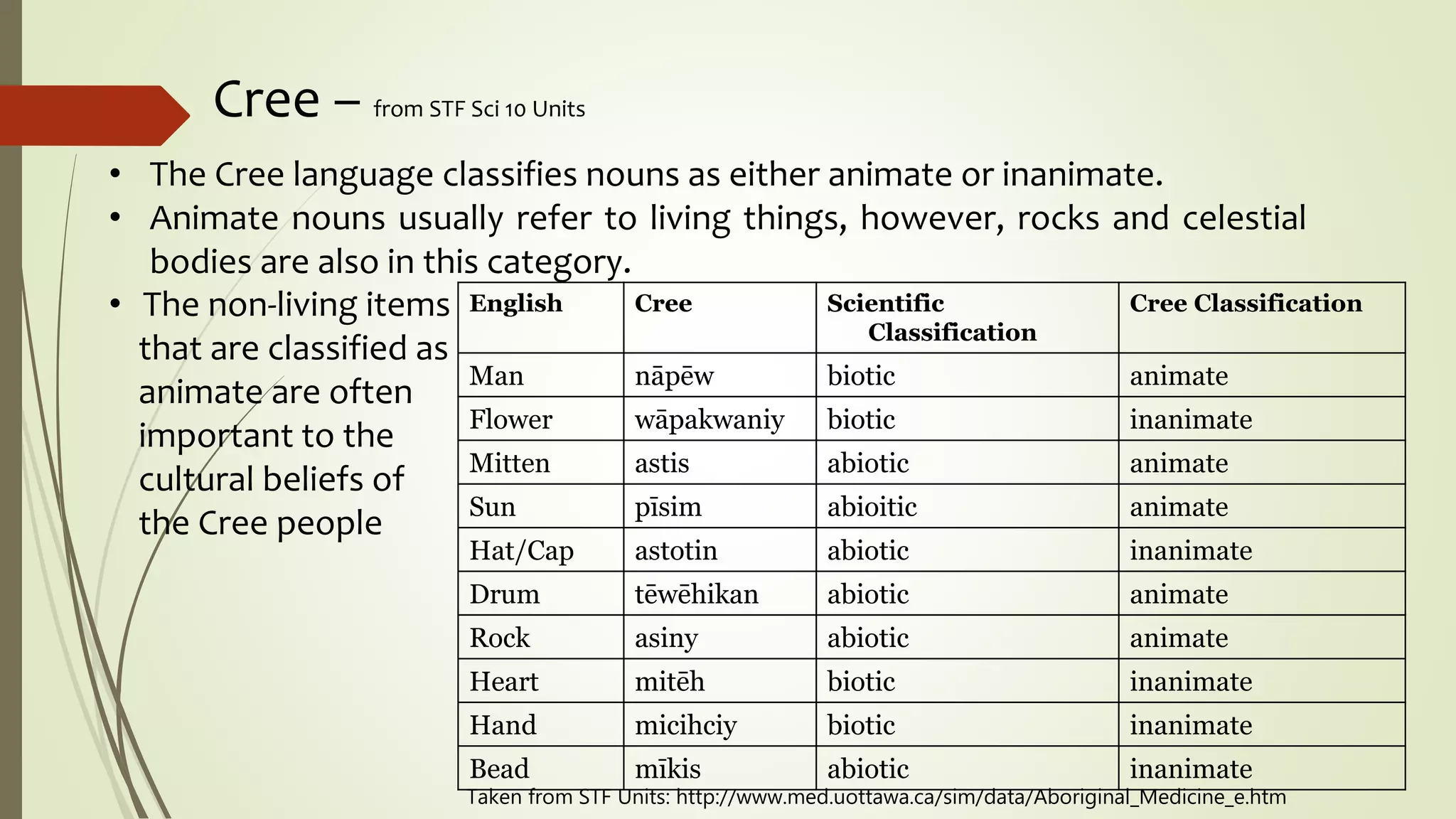
Cree – from STF Sci 10 Units
English Cree Scientific
Classification
Cree Classification
Man nāpēw biotic animate
Flower wāpakwaniy biotic inanimate
Mitten astis abiotic animate
Sun pīsim abioitic animate
Hat/Cap astotin abiotic inanimate
Drum tēwēhikan abiotic animate
Rock asiny abiotic animate
Heart mitēh biotic inanimate
Hand micihciy biotic inanimate
Bead mīkis abiotic inanimate
• The Cree language classifies nouns as either animate or inanimate.
• Animate nouns usually refer to living things, however, rocks and celestial
bodies are also in this category.
• The non-living items
that are classified as
animate are often
important to the
cultural beliefs of
the Cree people
Taken from STF Units: http://www.med.uottawa.ca/sim/data/Aboriginal_Medicine_e.htm
Chinese Classification of Nature
 No legs = fish
 1 leg = mushrooms (plants)
 2 legs = chicken and other fowl
 4 legs = 4 legged animals
First Nations Organization of the
Environment
Food, energy, environment,
economy
Wind, water, trees, animals
North, south, east, west
Winged ones, four legged ones,
swimmers, plant world
Taken from STF Units
http://www.med.uottawa.ca/sim/data/Aboriginal_Medicine_e.htm
Roles of Humans in Ecosystems
 Paradigms or World Views will also influence how you view
your place in an ecosystem
Is our species part of the food chain?
Is our species part of the nutrient cycles? (oxygen, carbon,
nitrogen, phosphorus)
How does our population’s growth impact our ecosystem?
How does our population function?
What is our ecosystem?
What biotic and abiotic factors do we rely on?
Paradigms:
Utilitarian
• Environmental resources should be used
by humans
• Humans dominate nature
Preservationist:
• Undisturbed natural areas should be set
aside from harmful human activities
• Humans separate from nature
Conservationist:
• Natural areas and resources should be
used in ways that sustain them for
current and future generations and other
forms of life
• Humans part of nature
Portfolio #1 – to be handed in
 What paradigm or worldview do you feel you identify the most
with? Why?
 Explain what you think your personal role within your
ecosystem is.
 What relationships do you think humanity has with our
environment?

Ecosystems

  • 1.
  • 2.
    Learning Goals  Understandwhat an ecosystem is and what it consist of  Understand how energy cycles through an ecosystem  Investigate cultural paradigms (worldviews) of ecosystems and the environment
  • 3.
    Ecosystems  Ecosystem: Aninteraction between plants, animals, microorganisms, and their environment.  Eg. Ocean ecosystem, forest, desert
  • 4.
    Ecosystems are comprisedof:  Abiotic: the non-living components in nature; they determine what types of species can live in the area Ex. sunlight, temperature, soil, minerals, wind, water, rock, air  Biotic: the living components in nature; these organisms interact with each other and the abiotic factors Ex. bacteria, algae, microorganisms, fungi, plants, animals
  • 5.
    An Organisms Niche Habitat: The actual place an organism lives  Niche: Both living and non-living parts of an ecosystem that determines an organism’s role in the ecosystem  The niche of an organism and it’s interactions is determined by where it stands in the ecological structure of the ecosystem Producers Consumers Decomposers Scavengers
  • 6.
    Producers  Autotrophs: Maketheir own food Phototrophic Chemotrophic
  • 7.
    Consumers  Heterotrophs: Cannotmake their own food. They must ingest (eat) other organisms Herbivores: Consume plants Carnivores: Consume herbivores or other carnivores *Secondary *Tertiary Omnivores: Consume both producers and consumers Scavengers: Feed on dead or decaying organisms
  • 8.
    Decomposers  Heterotrophs thatrecycle small, usually microscopic bits of dead organic matter into inorganic nutrients available for plants to take up from the soil  Decomposers = Recyclers !
  • 9.
    Scavengers  Scavengers: Feedon dead or decaying organisms  Essentially, Scavengers reduce the size of dead organic matter… Decomposers will finish the job
  • 10.
     *All livingthings (whether they are predators, prey, producers or decomposers) have a valuable position to the sustainability and stability of an ecosystem.*
  • 11.
    Energy in Ecosystems Energy – the capacity of a system to do work; the ability to move or bring about a change in matter Energy can’t be created or destroyed, it can only change forms Light Heat (thermal) Mechanical Kinetic/Potential Chemical Electrical
  • 12.
    Energy Cycle  Energyfrom the sun enters an ecosystem and the producers use the energy to make organic matter through photosynthesis.  Glucose is the primary energy source (carbohydrate) produced by photosynthesis.  Consumers take in this energy when they eat producers or other consumers.  This energy can then be used by the animal
  • 14.
    The Work ofLiving Things  “Work”: Energy transformations in plants and animals which are essential to life  Types: Synthetic – e.g. Electrical – e.g. Nerves sending signals to the brain Mechanical: Ex: movement of muscles.
  • 15.
    Consumed Not Consumed Digested Not Digested Heatand Movement Growth Waste Decomposers The majority of energy obtained is utilized by the organism’s life processes (i.e. work!)
  • 16.
    Think, Pair, Share 1. Brainstorm things that we find in nature  2. Organize them into two groups: living things, nonliving things  3. Look at your lists and decide the following: Do they do “work”? What work do they do? What kind of energy does each use? Light Heat (thermal) Mechanical Kinetic/Potential Chemical Electrical
  • 17.
    Relationships with Ecosystems Paradigms:the set of experiences, beliefs, and values that constitute a way of viewing reality, such as ecosystems There is no right or wrong world view, only different Worldviews affect how we think about our environment Different cultures and communities view relationships between people, biotic, and abiotic factors in different ways
  • 18.
    Greek Classification ofNature  Greek: Ekos means home, therefore ecosystem  4 Elements: Wind, Water, Rock, Fire Historical connection: Greek Mythology Today’s connection: global issues over climate change, water accessibility, soil use, energy use and fossil fuels
  • 19.
    Cree – fromSTF Sci 10 Units English Cree Scientific Classification Cree Classification Man nāpēw biotic animate Flower wāpakwaniy biotic inanimate Mitten astis abiotic animate Sun pīsim abioitic animate Hat/Cap astotin abiotic inanimate Drum tēwēhikan abiotic animate Rock asiny abiotic animate Heart mitēh biotic inanimate Hand micihciy biotic inanimate Bead mīkis abiotic inanimate • The Cree language classifies nouns as either animate or inanimate. • Animate nouns usually refer to living things, however, rocks and celestial bodies are also in this category. • The non-living items that are classified as animate are often important to the cultural beliefs of the Cree people Taken from STF Units: http://www.med.uottawa.ca/sim/data/Aboriginal_Medicine_e.htm
  • 20.
    Chinese Classification ofNature  No legs = fish  1 leg = mushrooms (plants)  2 legs = chicken and other fowl  4 legs = 4 legged animals
  • 21.
    First Nations Organizationof the Environment Food, energy, environment, economy Wind, water, trees, animals North, south, east, west Winged ones, four legged ones, swimmers, plant world Taken from STF Units http://www.med.uottawa.ca/sim/data/Aboriginal_Medicine_e.htm
  • 22.
    Roles of Humansin Ecosystems  Paradigms or World Views will also influence how you view your place in an ecosystem Is our species part of the food chain? Is our species part of the nutrient cycles? (oxygen, carbon, nitrogen, phosphorus) How does our population’s growth impact our ecosystem? How does our population function? What is our ecosystem? What biotic and abiotic factors do we rely on?
  • 23.
    Paradigms: Utilitarian • Environmental resourcesshould be used by humans • Humans dominate nature Preservationist: • Undisturbed natural areas should be set aside from harmful human activities • Humans separate from nature Conservationist: • Natural areas and resources should be used in ways that sustain them for current and future generations and other forms of life • Humans part of nature
  • 24.
    Portfolio #1 –to be handed in  What paradigm or worldview do you feel you identify the most with? Why?  Explain what you think your personal role within your ecosystem is.  What relationships do you think humanity has with our environment?