• Date: October 23 2018
• Topic:
• Define chemistry in your own words.
• Give an example of chemistry in your day-to-
day life.
Bell Ringer #1
Part A: Classification of
Matter
Matter
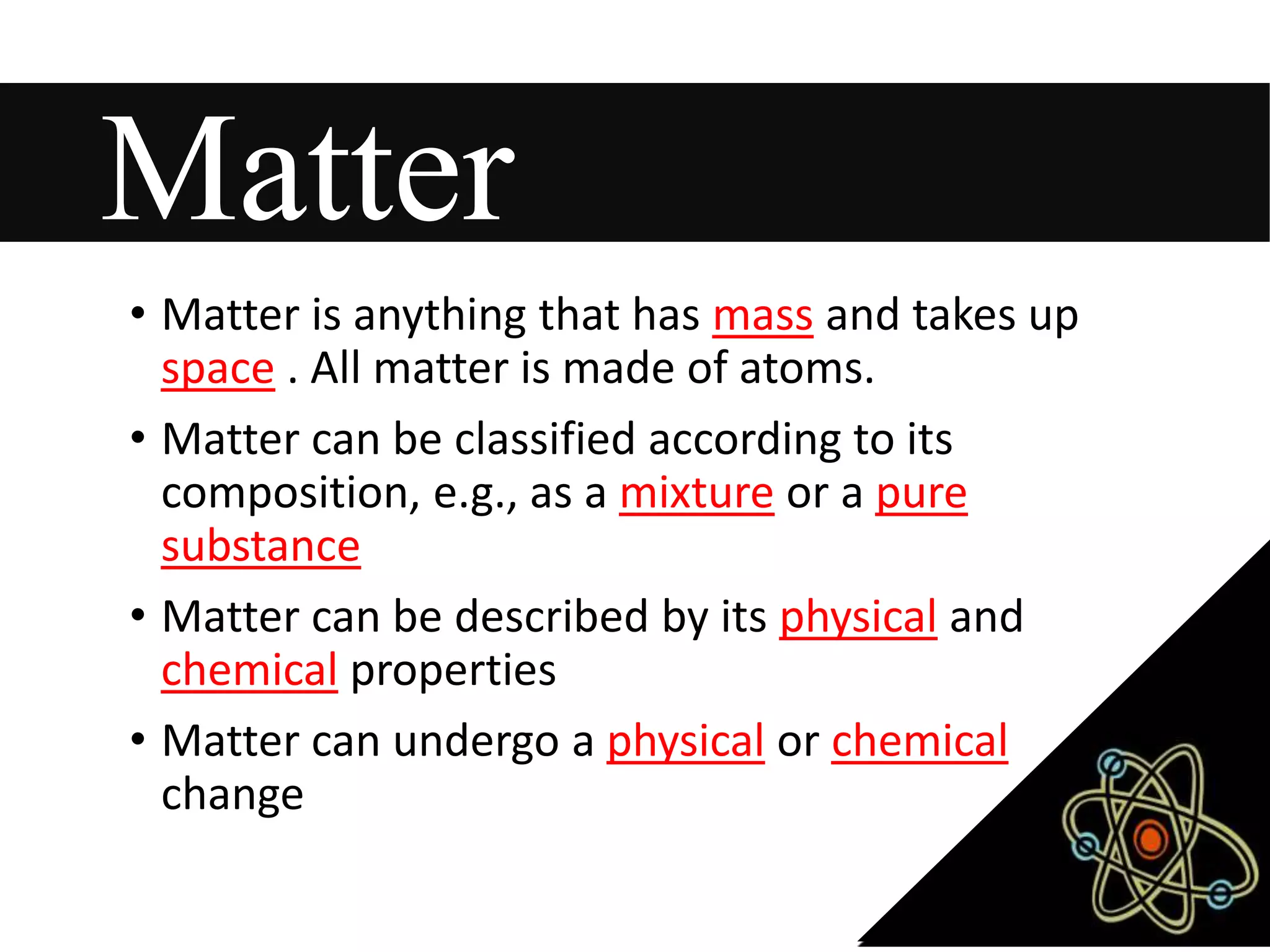
• Matter is anything that has mass and takes up
space . All matter is made of atoms.
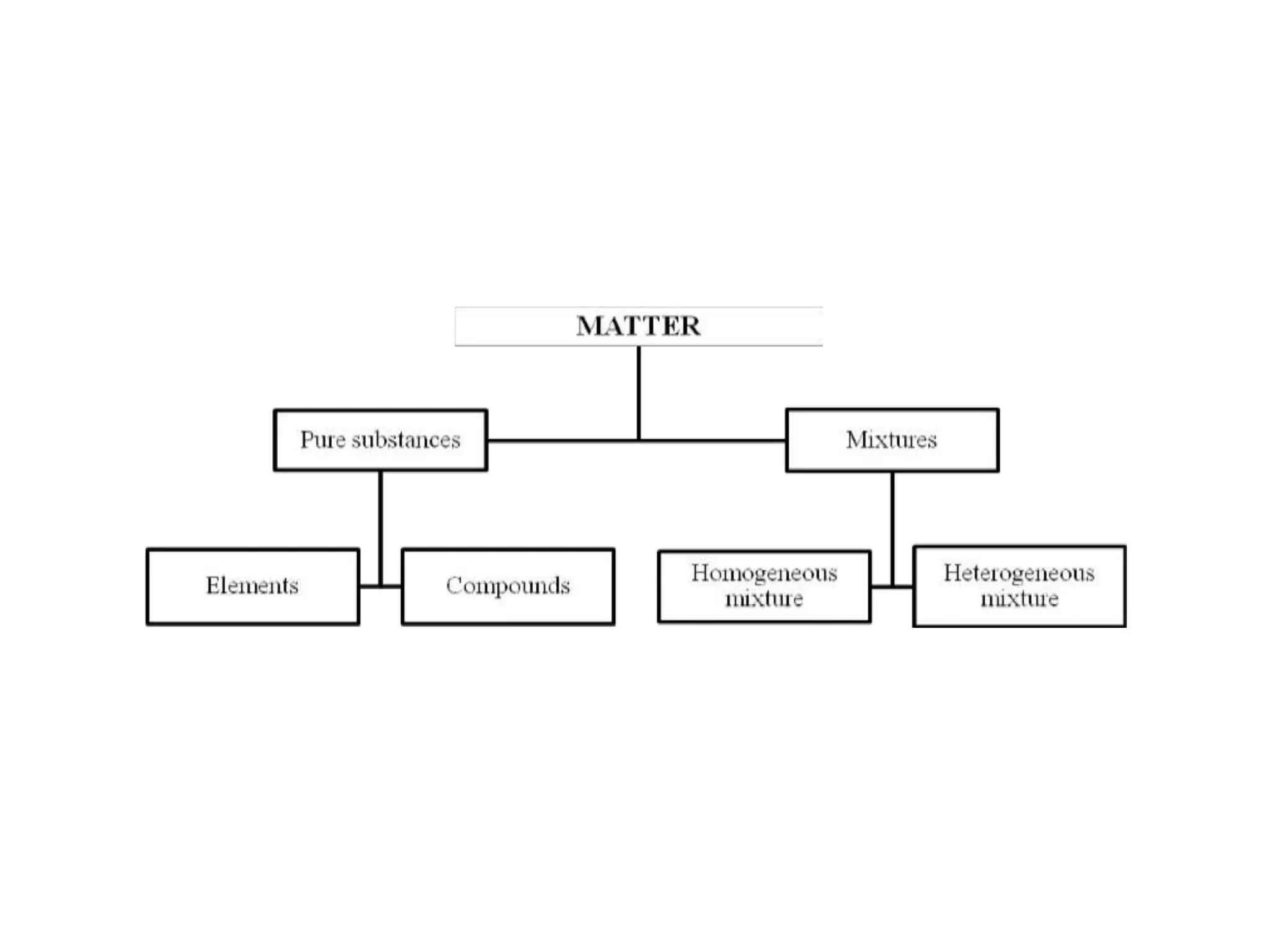
• Matter can be classified according to its
composition, e.g., as a mixture or a pure
substance
• Matter can be described by its physical and
chemical properties
• Matter can undergo a physical or chemical
change
Pure Substance
• A substance in which all particles making up the
substance are the same.
• An element is a pure substance that is made of atoms,
and thus cannot be broken down into simpler
substances.
• e.g., gold, carbon, hydrogen, etc. (see periodic table
of elements)
• A compound is a pure substance that is made of two or
more atoms combined in a fixed proportion.
• e.g. H2O (is always 2 hydrogens and 1 oxygen)
e.g. CO2 (is always 1 carbon and 2 oxygens)
Mixture
• A substance in which there are two or more types of
particles
• A mixture can be homogeneous or heterogeneous.
• A homogeneous mixture is a mixture in which the
particles are uniformly scattered. Only one phase is
visible (e.g., solutions such as Kool-Aid)
• A heterogeneous mixture is a mixture in which the
particles are not uniformly scattered and therefore
have more than one phase. (e.g., oil and water, or
trail mix)
Physical
Property
• A characteristic of a substance, observed using either
one of the five senses, or a scientific instrument.
• May be either qualitative or quantitative.
• e.g., physical state; colour; odour; taste; freezing/boiling
point; electrical conductivity
Chemical Property
• A characteristic of a substance that describes its
ability to react with other substances
• e.g., reaction with water; combustibility; toxicity;
stability
Physical Change
• Involves a substance changing its physical properties.
• No new substances are formed, and the change may
be reversible.
• e.g., freezing water, dissolving salt in water
Chemical Change
• Involves a change in matter in which at least one new
substance, having new properties, is formed.
• Clues a chemical change has occurred:
1. Change in colour
• 2. Change in temperature
• 3. Change in smell
• 4. Formation of a precipitate
• 5. Formation of gas bubbles
Part B: Atomic Structure
Atoms
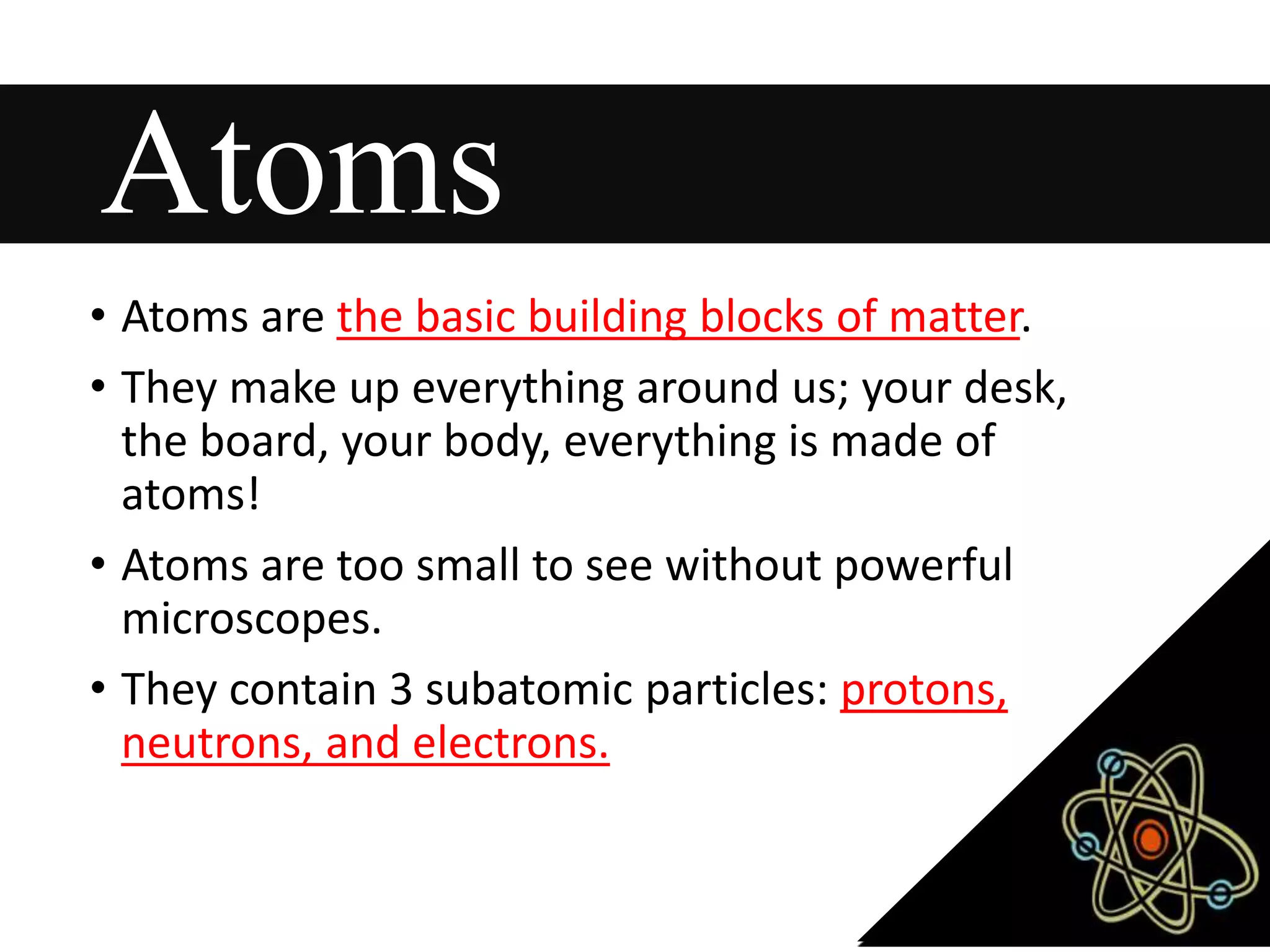
• Atoms are the basic building blocks of matter.
• They make up everything around us; your desk,
the board, your body, everything is made of
atoms!
• Atoms are too small to see without powerful
microscopes.
• They contain 3 subatomic particles: protons,
neutrons, and electrons.
Atomic Structure
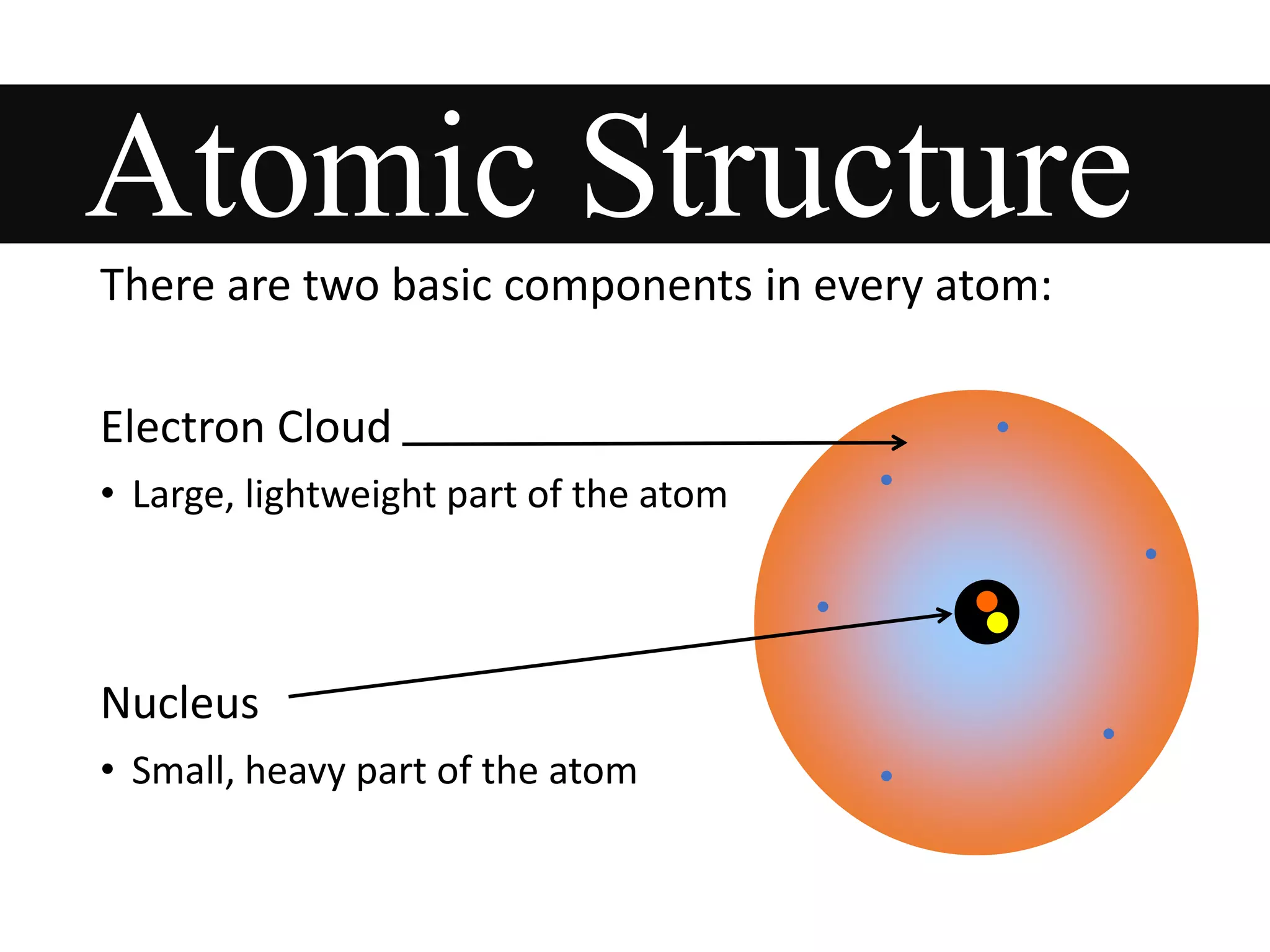
There are two basic components in every atom:
Electron Cloud
• Large, lightweight part of the atom
Nucleus
• Small, heavy part of the atom
Subatomic Particles
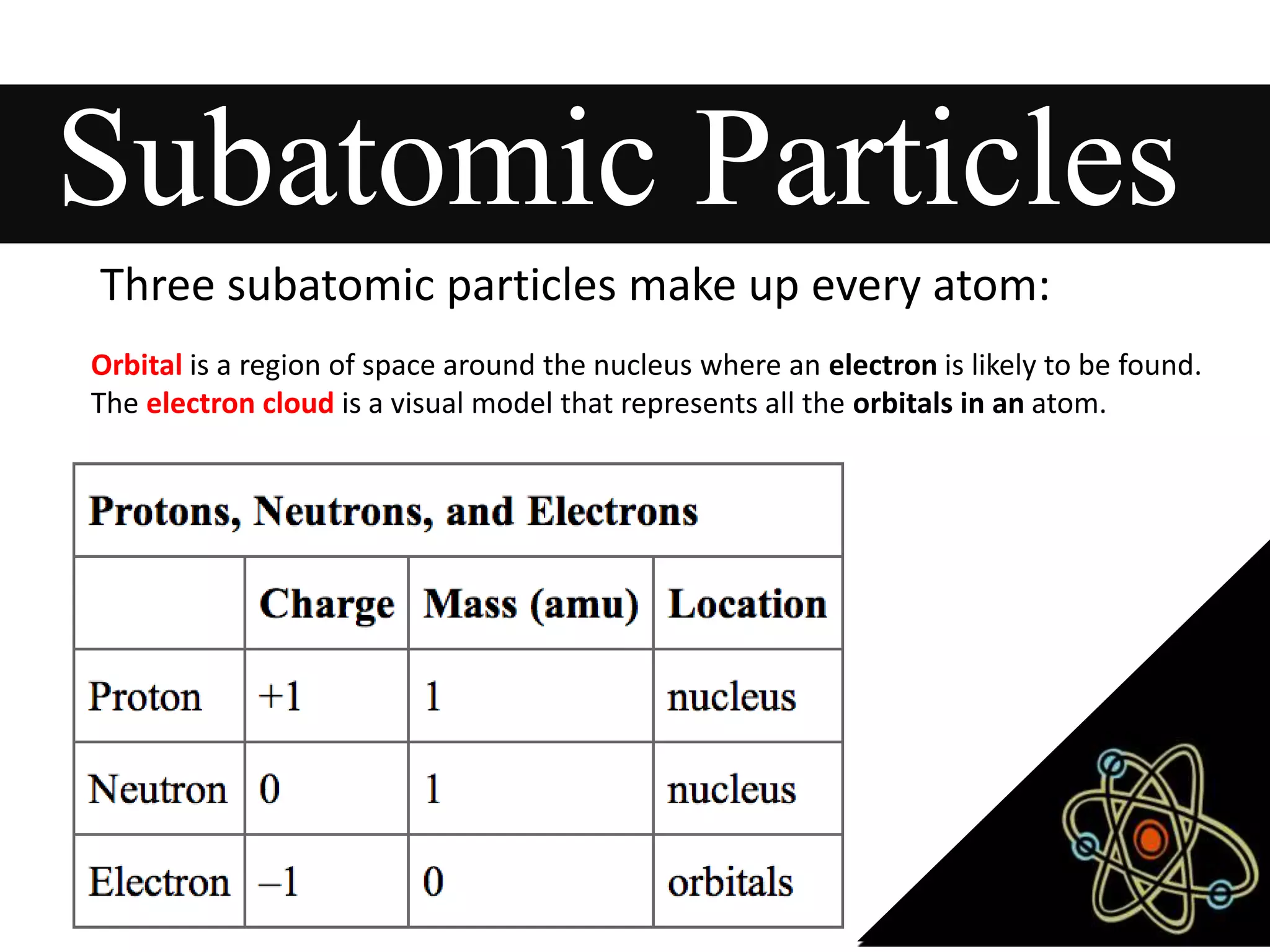
Three subatomic particles make up every atom:
Orbital is a region of space around the nucleus where an electron is likely to be found.
The electron cloud is a visual model that represents all the orbitals in an atom.
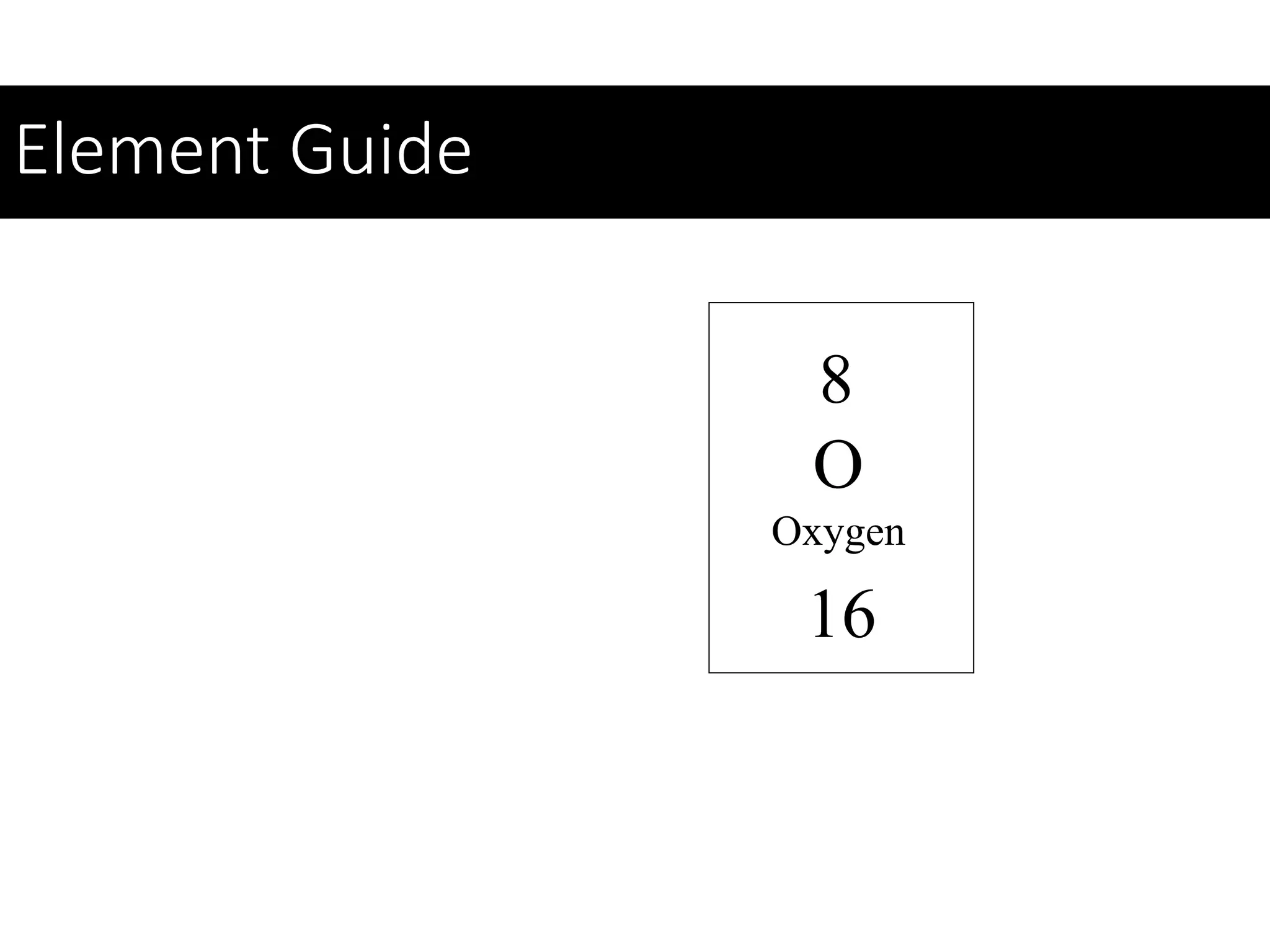
Element Guide
8
16
O
Oxygen
Element Guide
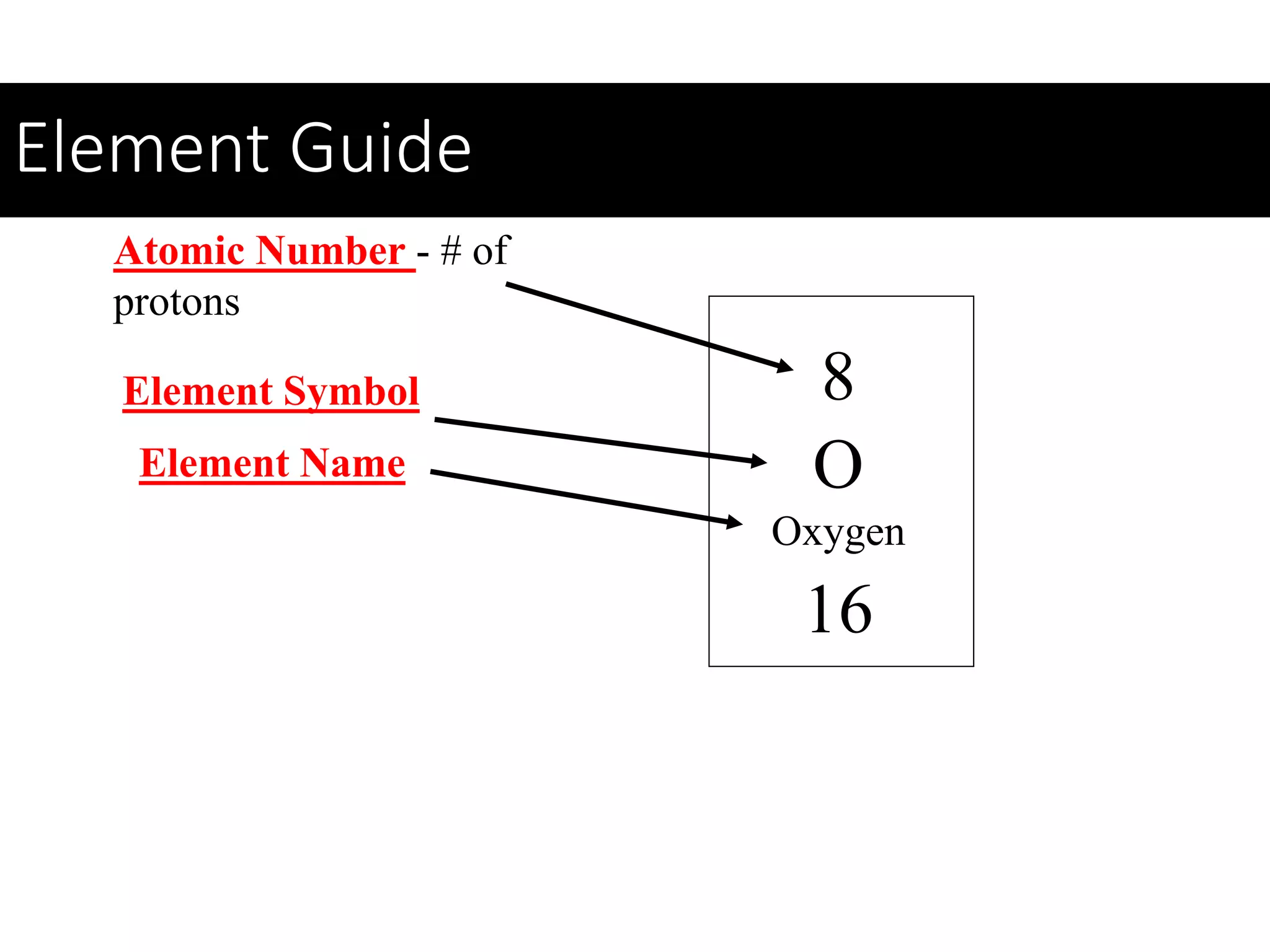
Atomic Number - # of
protons
• Elements are different because they contain different
numbers of protons.
• Atomic number = # of protons.
• Atoms are neutral, so this is also the number of electrons.
Element Guide
Element Guide
8Element Symbol
Atomic Number - # of
protons
16
O
Oxygen
Element Guide
Element Guide
8
O
Oxygen
Element Symbol
Atomic Number - # of
protons
Element Name
16
Element Guide
Element Guide
8
Element Name
Element Symbol
16
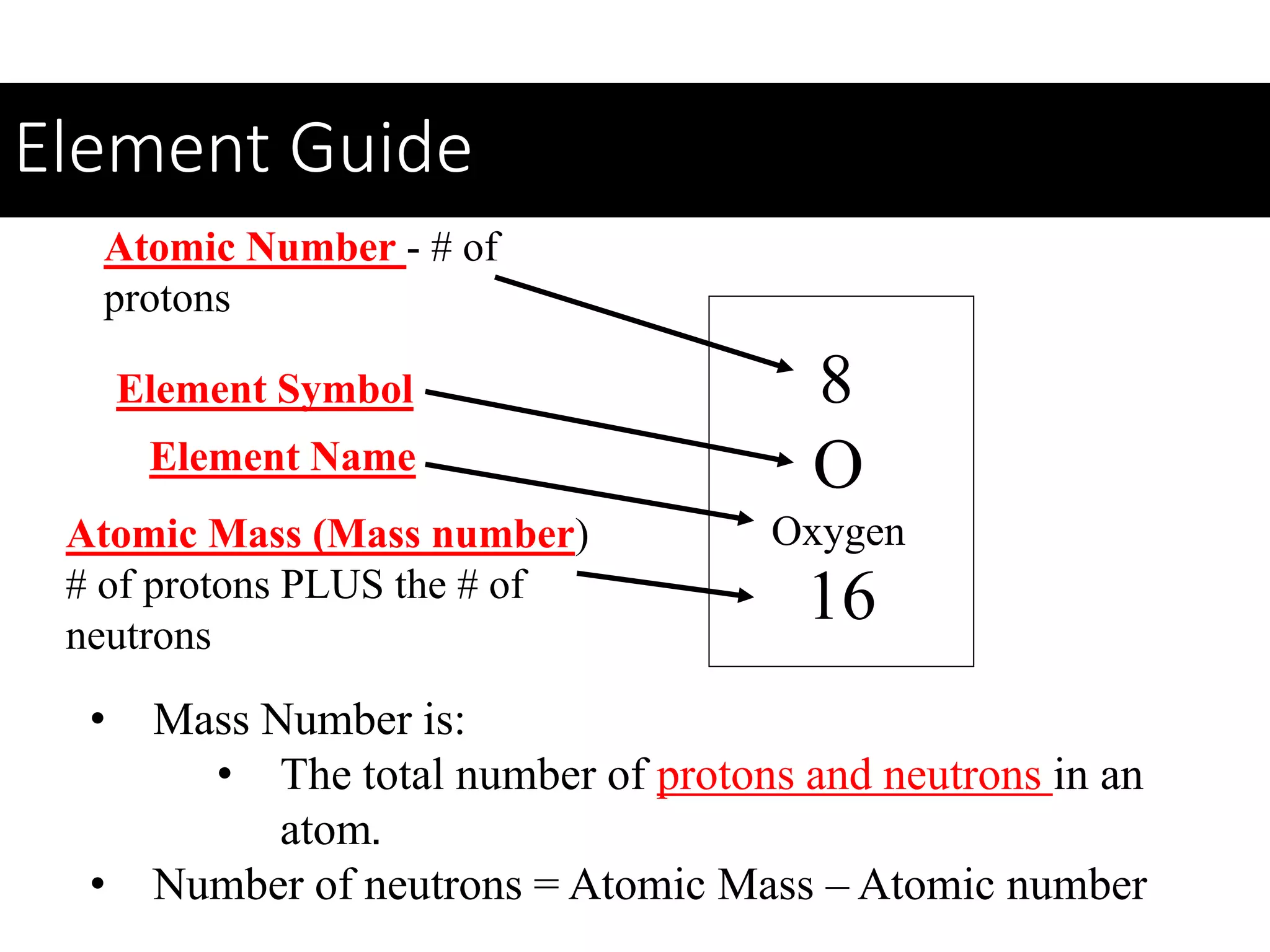
Atomic Mass (Mass number)
# of protons PLUS the # of
neutrons
Atomic Number - # of
protons
• Mass Number is:
• The total number of protons and neutrons in an
atom.
• Number of neutrons = Atomic Mass – Atomic number
O
Oxygen
Element Guide
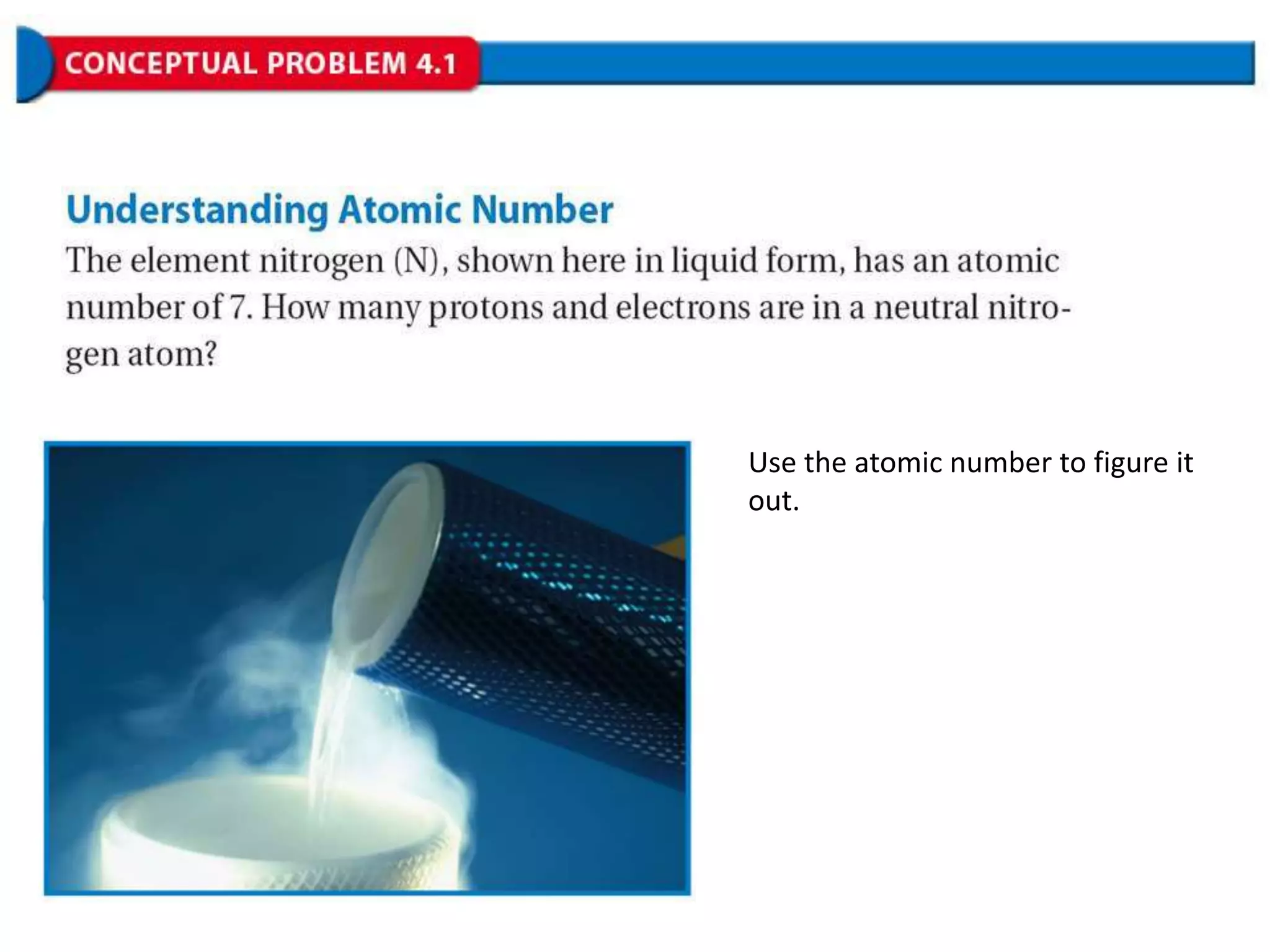
Use the atomic number to figure it
out.
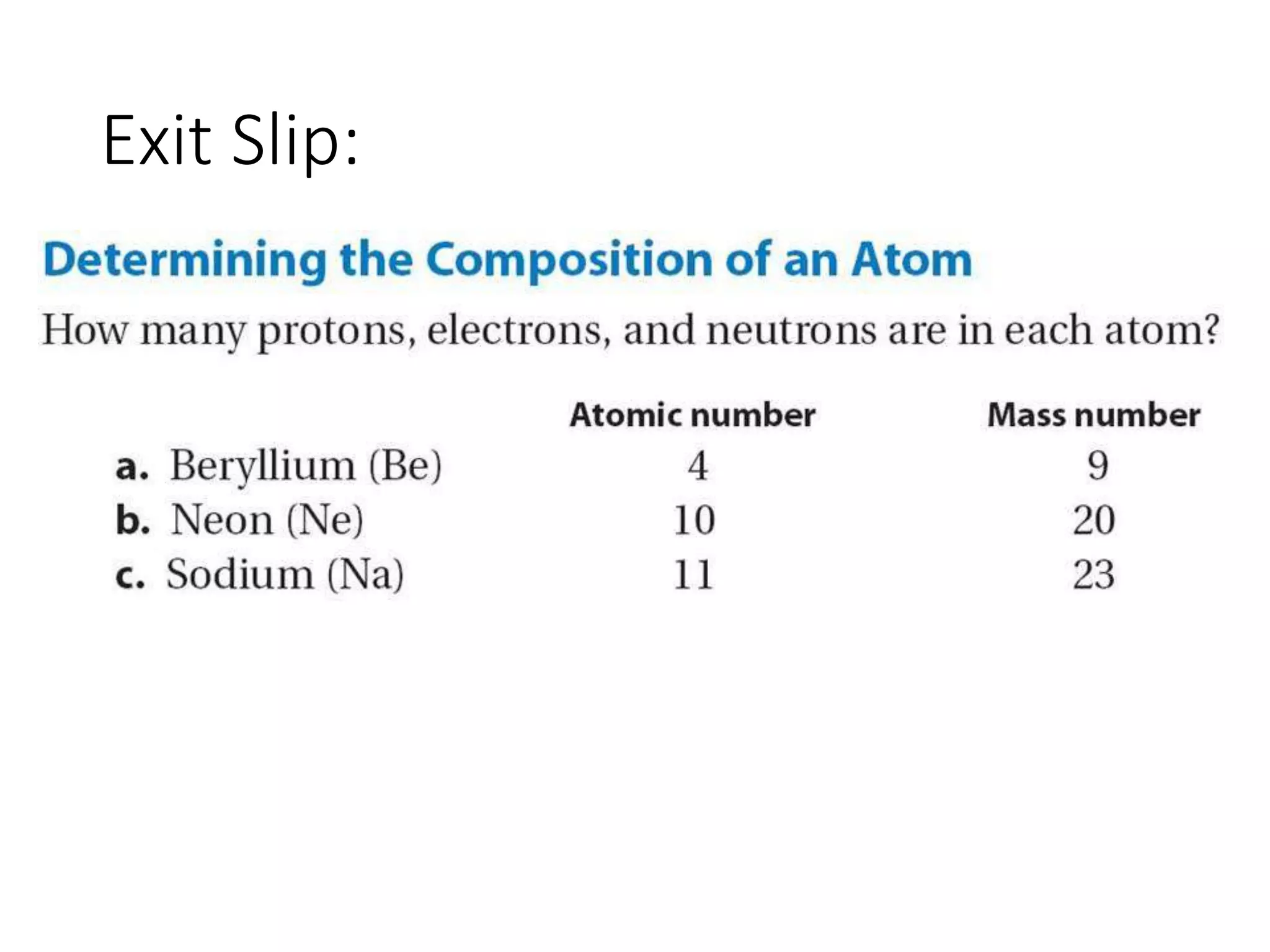
Exit Slip:
Bell Ringer #2
•Name some properties you would use to
tell the difference between a banana
and a ham sandwich. Try to think of
properties that could be used to tell any
banana from any ham sandwich.
Subatomic Particles
Three subatomic particles make up every atom:
Orbital is a region of space around the nucleus where an electron is likely to be found.
The electron cloud is a visual model that represents all the orbitals in an atom.
Part C: Periodic Table of Elements
What is the Periodic Table?
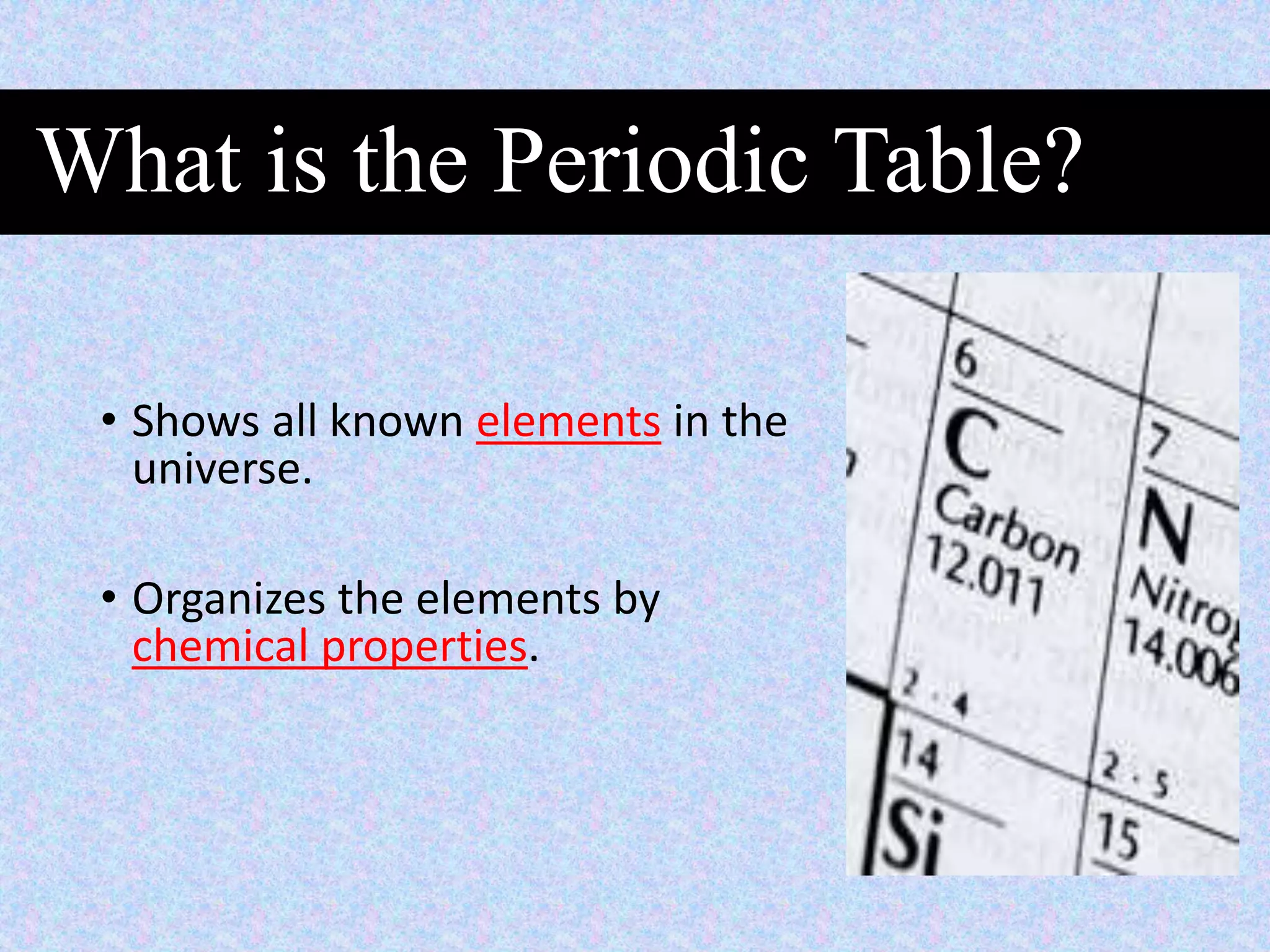
• Shows all known elements in the
universe.
• Organizes the elements by
chemical properties.
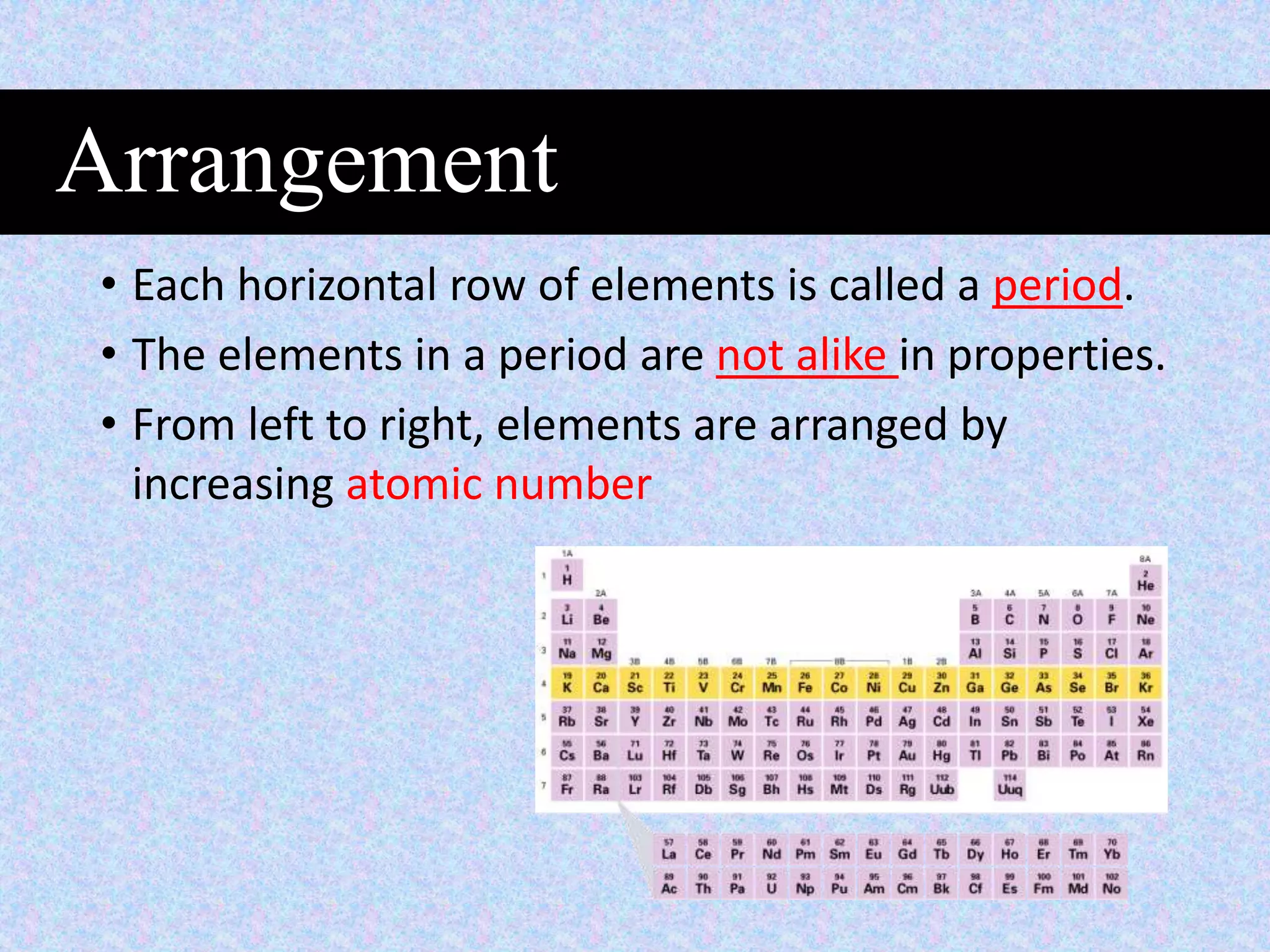
• Each horizontal row of elements is called a period.
• The elements in a period are not alike in properties.
• From left to right, elements are arranged by
increasing atomic number
Arrangement
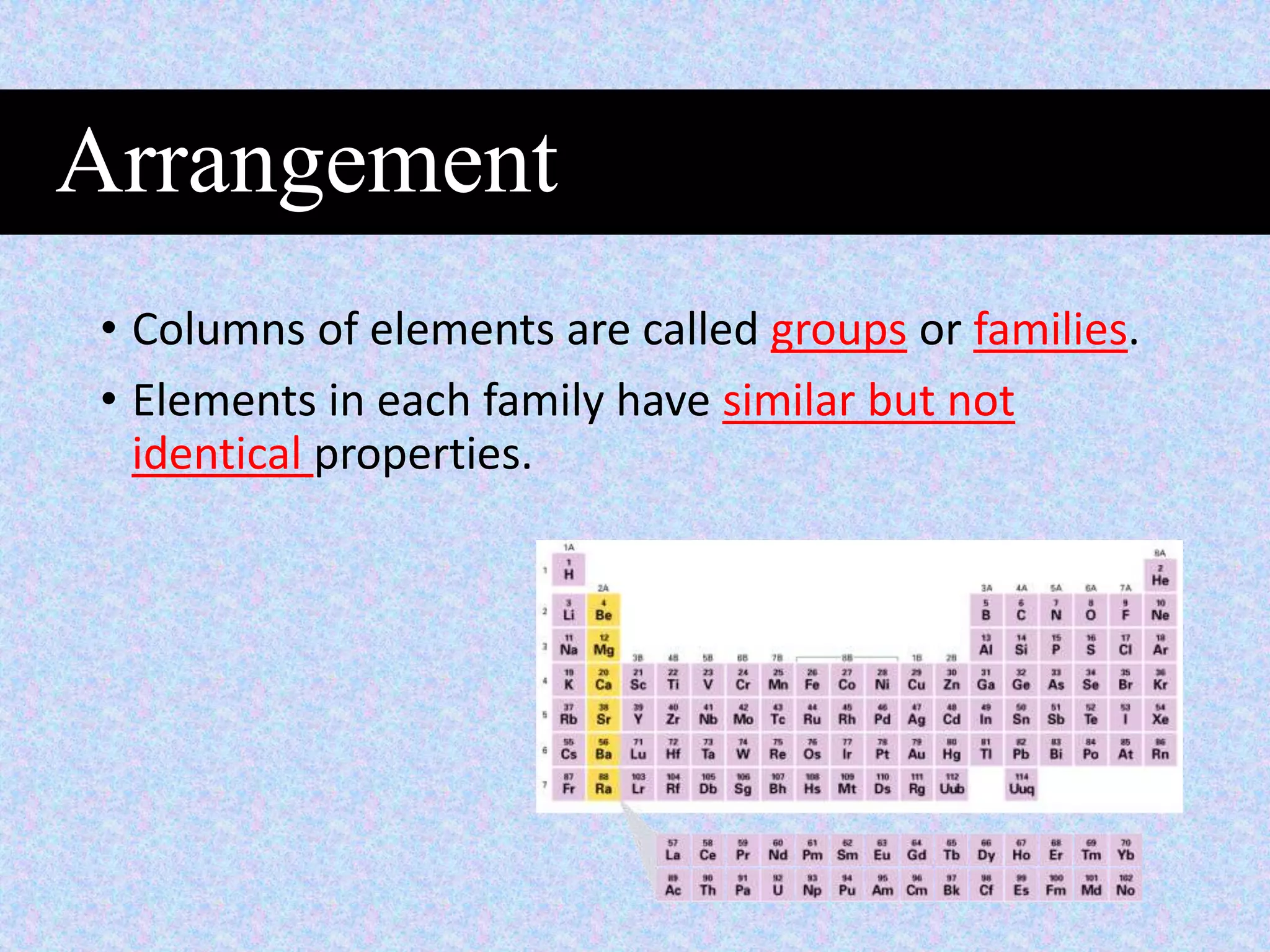
• Columns of elements are called groups or families.
• Elements in each family have similar but not
identical properties.
Arrangement
• Metals are good conductors of
heat and electricity.
• Metals are shiny.
• Metals are ductile (can be
stretched into thin wires).
• Metals are malleable (can be
pounded into thin sheets).
• A chemical property of metal is
its reaction with water which
results in corrosion
(deterioration).
Properties of Metals
• Non-metals are poor
conductors of heat and
electricity.
• Non-metals are not ductile
or malleable.
• Solid non-metals are
brittle and break easily.
• They are dull.
• Many non-metals are
gases.
Sulfur
Properties of Non-metals
• Metalloids (metal-like) have
properties of both metals and
non-metals.
• They are solids that can be
shiny or dull.
• They conduct heat and
electricity better than non-
metals but not as well as
metals.
• They are ductile and
malleable.
Silicon
Properties of Metalloids
Lets Colour!!
Atoms and atomic theory review

Atoms and atomic theory review

  • 2.
    • Date: October23 2018 • Topic: • Define chemistry in your own words. • Give an example of chemistry in your day-to- day life. Bell Ringer #1
  • 3.
  • 4.
    Matter • Matter isanything that has mass and takes up space . All matter is made of atoms. • Matter can be classified according to its composition, e.g., as a mixture or a pure substance • Matter can be described by its physical and chemical properties • Matter can undergo a physical or chemical change
  • 5.
    Pure Substance • Asubstance in which all particles making up the substance are the same. • An element is a pure substance that is made of atoms, and thus cannot be broken down into simpler substances. • e.g., gold, carbon, hydrogen, etc. (see periodic table of elements) • A compound is a pure substance that is made of two or more atoms combined in a fixed proportion. • e.g. H2O (is always 2 hydrogens and 1 oxygen) e.g. CO2 (is always 1 carbon and 2 oxygens)
  • 6.
    Mixture • A substancein which there are two or more types of particles • A mixture can be homogeneous or heterogeneous. • A homogeneous mixture is a mixture in which the particles are uniformly scattered. Only one phase is visible (e.g., solutions such as Kool-Aid) • A heterogeneous mixture is a mixture in which the particles are not uniformly scattered and therefore have more than one phase. (e.g., oil and water, or trail mix)
  • 8.
    Physical Property • A characteristicof a substance, observed using either one of the five senses, or a scientific instrument. • May be either qualitative or quantitative. • e.g., physical state; colour; odour; taste; freezing/boiling point; electrical conductivity
  • 9.
    Chemical Property • Acharacteristic of a substance that describes its ability to react with other substances • e.g., reaction with water; combustibility; toxicity; stability
  • 10.
    Physical Change • Involvesa substance changing its physical properties. • No new substances are formed, and the change may be reversible. • e.g., freezing water, dissolving salt in water
  • 11.
    Chemical Change • Involvesa change in matter in which at least one new substance, having new properties, is formed. • Clues a chemical change has occurred: 1. Change in colour • 2. Change in temperature • 3. Change in smell • 4. Formation of a precipitate • 5. Formation of gas bubbles
  • 12.
    Part B: AtomicStructure
  • 13.
    Atoms • Atoms arethe basic building blocks of matter. • They make up everything around us; your desk, the board, your body, everything is made of atoms! • Atoms are too small to see without powerful microscopes. • They contain 3 subatomic particles: protons, neutrons, and electrons.
  • 14.
    Atomic Structure There aretwo basic components in every atom: Electron Cloud • Large, lightweight part of the atom Nucleus • Small, heavy part of the atom
  • 15.
    Subatomic Particles Three subatomicparticles make up every atom: Orbital is a region of space around the nucleus where an electron is likely to be found. The electron cloud is a visual model that represents all the orbitals in an atom.
  • 16.
  • 17.
    Element Guide Atomic Number- # of protons • Elements are different because they contain different numbers of protons. • Atomic number = # of protons. • Atoms are neutral, so this is also the number of electrons. Element Guide

  • 18.
    Element Guide 8Element Symbol AtomicNumber - # of protons 16 O Oxygen Element Guide
  • 19.
    Element Guide 8 O Oxygen Element Symbol AtomicNumber - # of protons Element Name 16 Element Guide
  • 20.
    Element Guide 8 Element Name ElementSymbol 16 Atomic Mass (Mass number) # of protons PLUS the # of neutrons Atomic Number - # of protons • Mass Number is: • The total number of protons and neutrons in an atom. • Number of neutrons = Atomic Mass – Atomic number O Oxygen Element Guide
  • 22.
    Use the atomicnumber to figure it out.
  • 23.
  • 24.
    Bell Ringer #2 •Namesome properties you would use to tell the difference between a banana and a ham sandwich. Try to think of properties that could be used to tell any banana from any ham sandwich.
  • 27.
    Subatomic Particles Three subatomicparticles make up every atom: Orbital is a region of space around the nucleus where an electron is likely to be found. The electron cloud is a visual model that represents all the orbitals in an atom.
  • 28.
    Part C: PeriodicTable of Elements
  • 29.
    What is thePeriodic Table? • Shows all known elements in the universe. • Organizes the elements by chemical properties.
  • 30.
    • Each horizontalrow of elements is called a period. • The elements in a period are not alike in properties. • From left to right, elements are arranged by increasing atomic number Arrangement
  • 31.
    • Columns ofelements are called groups or families. • Elements in each family have similar but not identical properties. Arrangement
  • 33.
    • Metals aregood conductors of heat and electricity. • Metals are shiny. • Metals are ductile (can be stretched into thin wires). • Metals are malleable (can be pounded into thin sheets). • A chemical property of metal is its reaction with water which results in corrosion (deterioration). Properties of Metals
  • 34.
    • Non-metals arepoor conductors of heat and electricity. • Non-metals are not ductile or malleable. • Solid non-metals are brittle and break easily. • They are dull. • Many non-metals are gases. Sulfur Properties of Non-metals
  • 35.
    • Metalloids (metal-like)have properties of both metals and non-metals. • They are solids that can be shiny or dull. • They conduct heat and electricity better than non- metals but not as well as metals. • They are ductile and malleable. Silicon Properties of Metalloids
  • 36.