Zoljargal Jargalsaikhan
Community is a group of populations interacting and inhabiting a certain area. It is a complex mixture of different populations that exist together Community ecology is the study of the distribution, abundance, demography, and interactions between populations of coexisting species.
The structure of a community refers to its: Diversity – the number of different species Populations – how many of each species there are Appearance – size and distribution of species Interactions – what jobs the species play within the community and how they interact with each other
NATIVE SPECIES  are those species that typically live and thrive in a particular ecosystem and have been present there for a long period of time.  NON-NATIVE SPECIES  are species which are either deliberately or accidentally introduced into an ecosystem INDICATOR SPECIES  are species which are particularly sensitive to environmental change and so serve as signs of early warning of damage to a community KEYSTONE SPECIES  are species that play a more important role in an ecosystem than would be suggested by their population
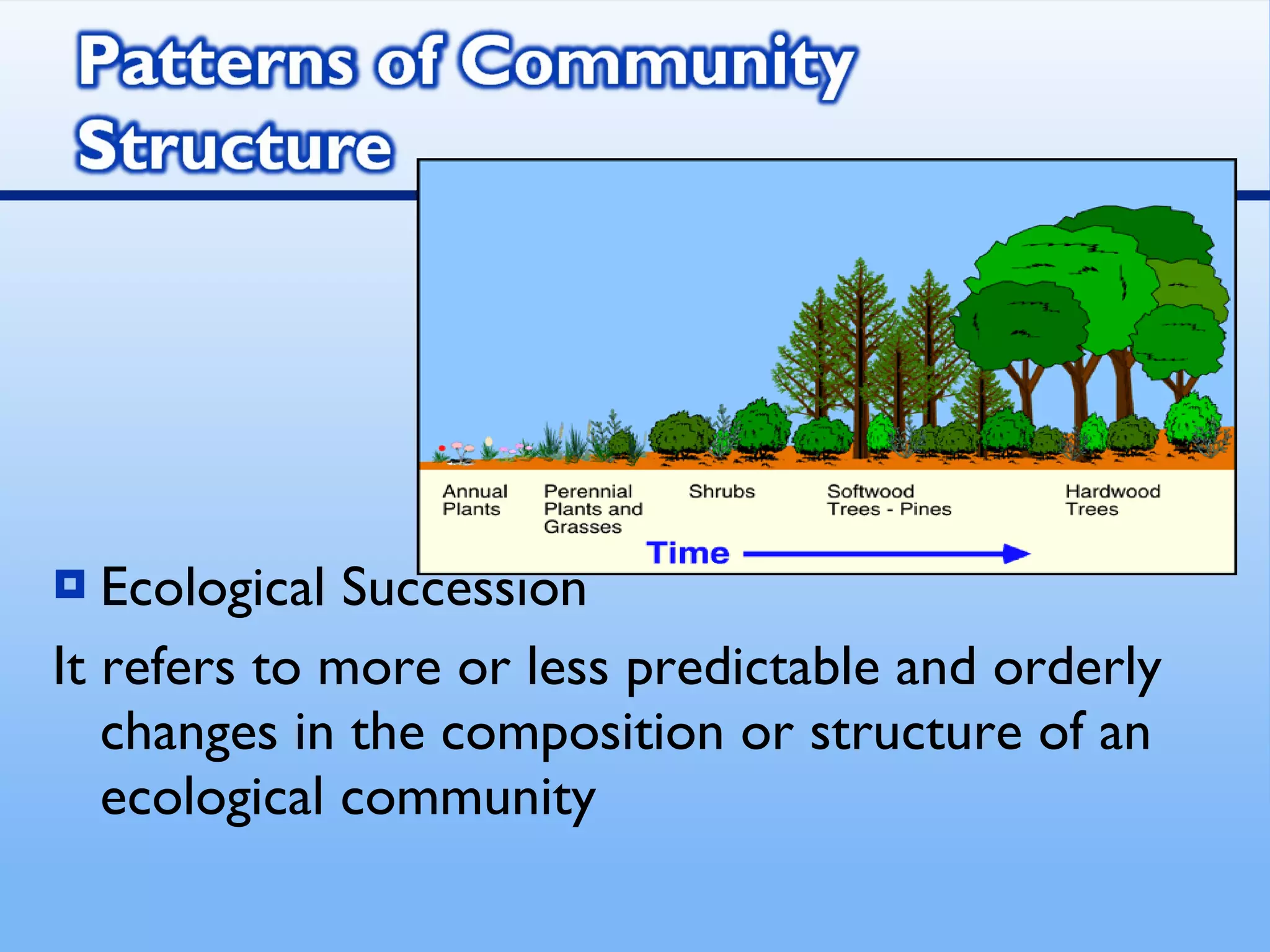
Ecological Succession It refers to more or less predictable and orderly changes in the composition or structure of an ecological community
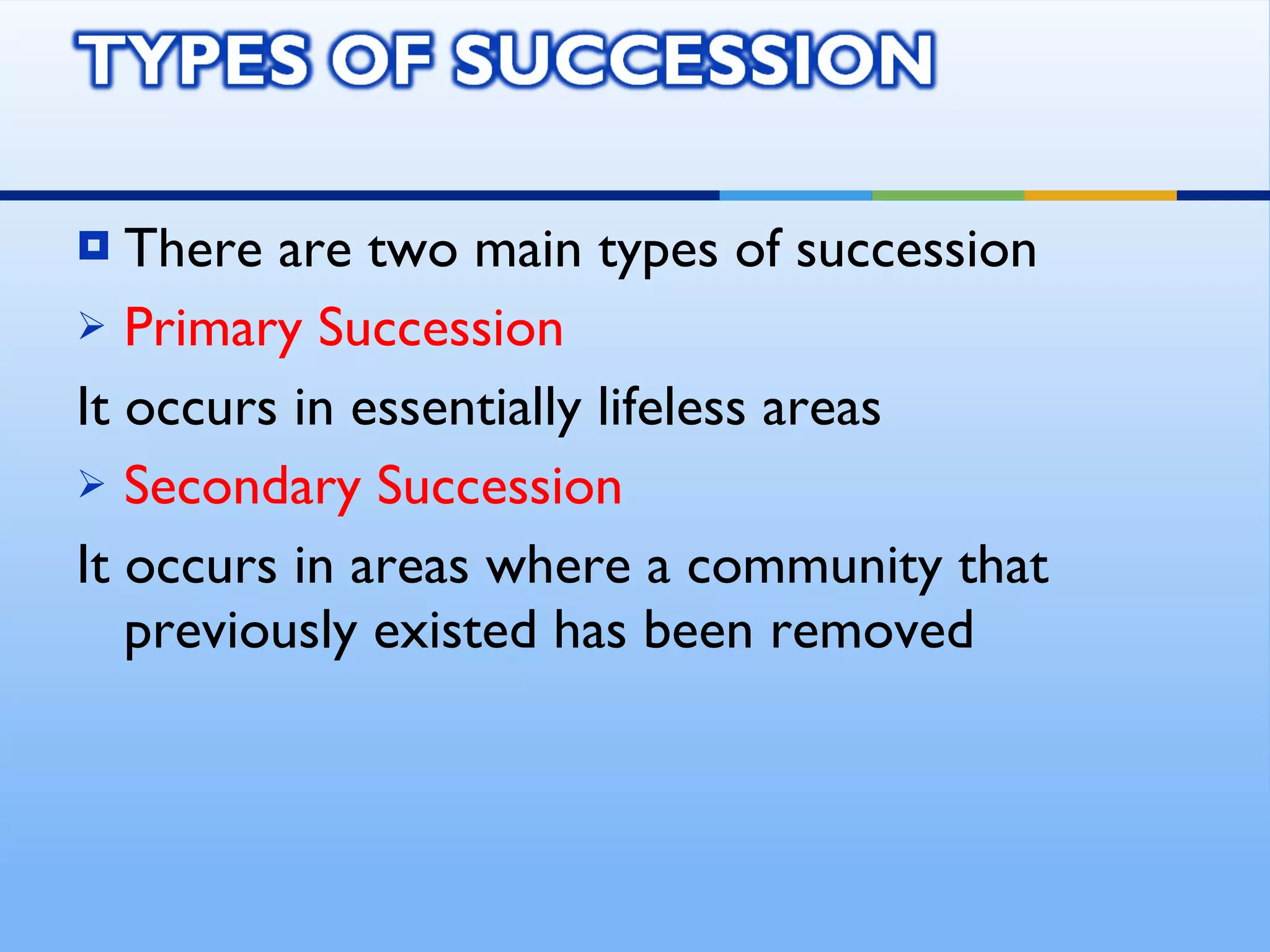
There are two main types of succession Primary Succession  It occurs in essentially lifeless areas Secondary Succession It occurs in areas where a community that previously existed has been removed
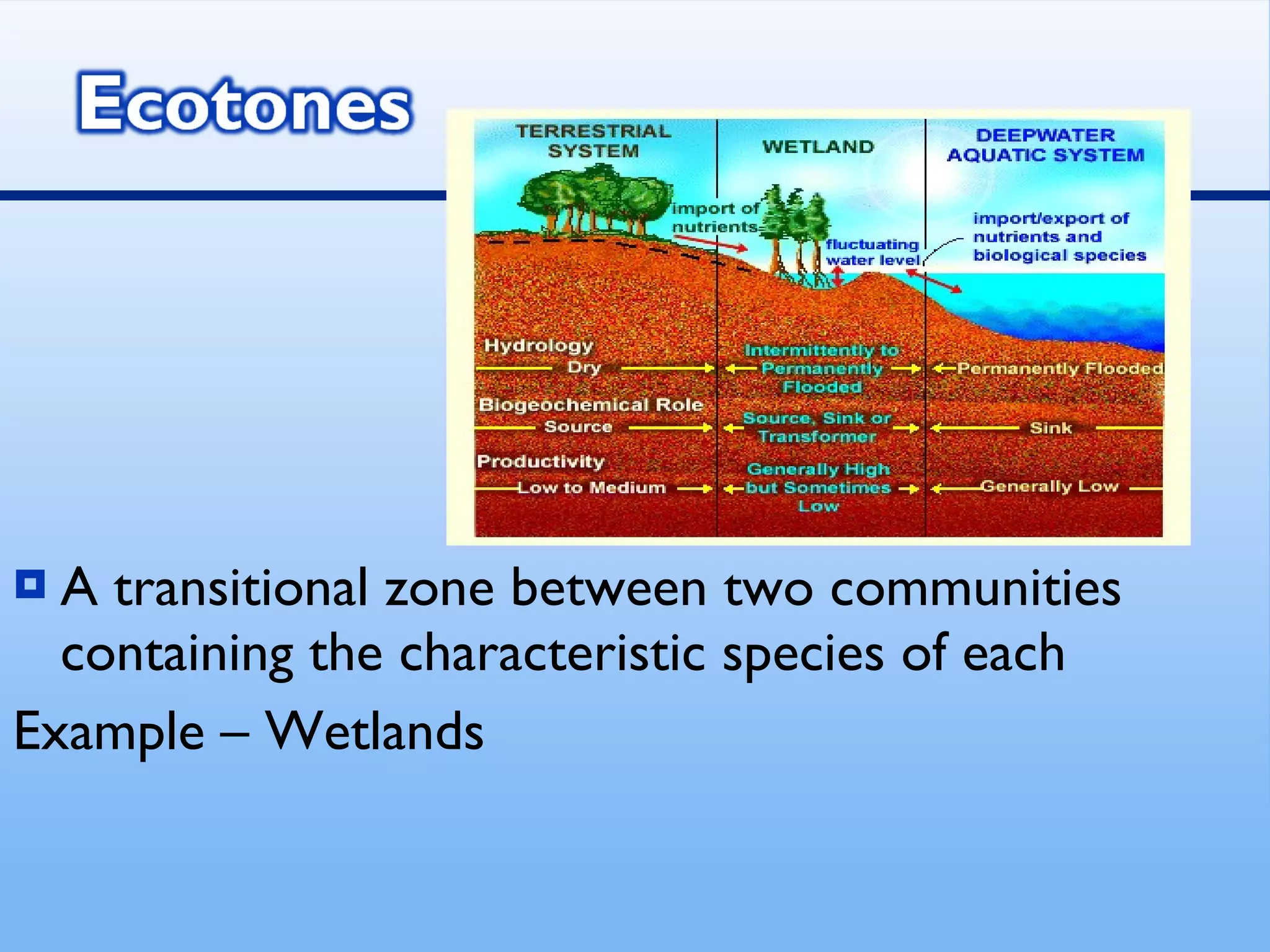
A transitional zone between two communities containing the characteristic species of each Example – Wetlands
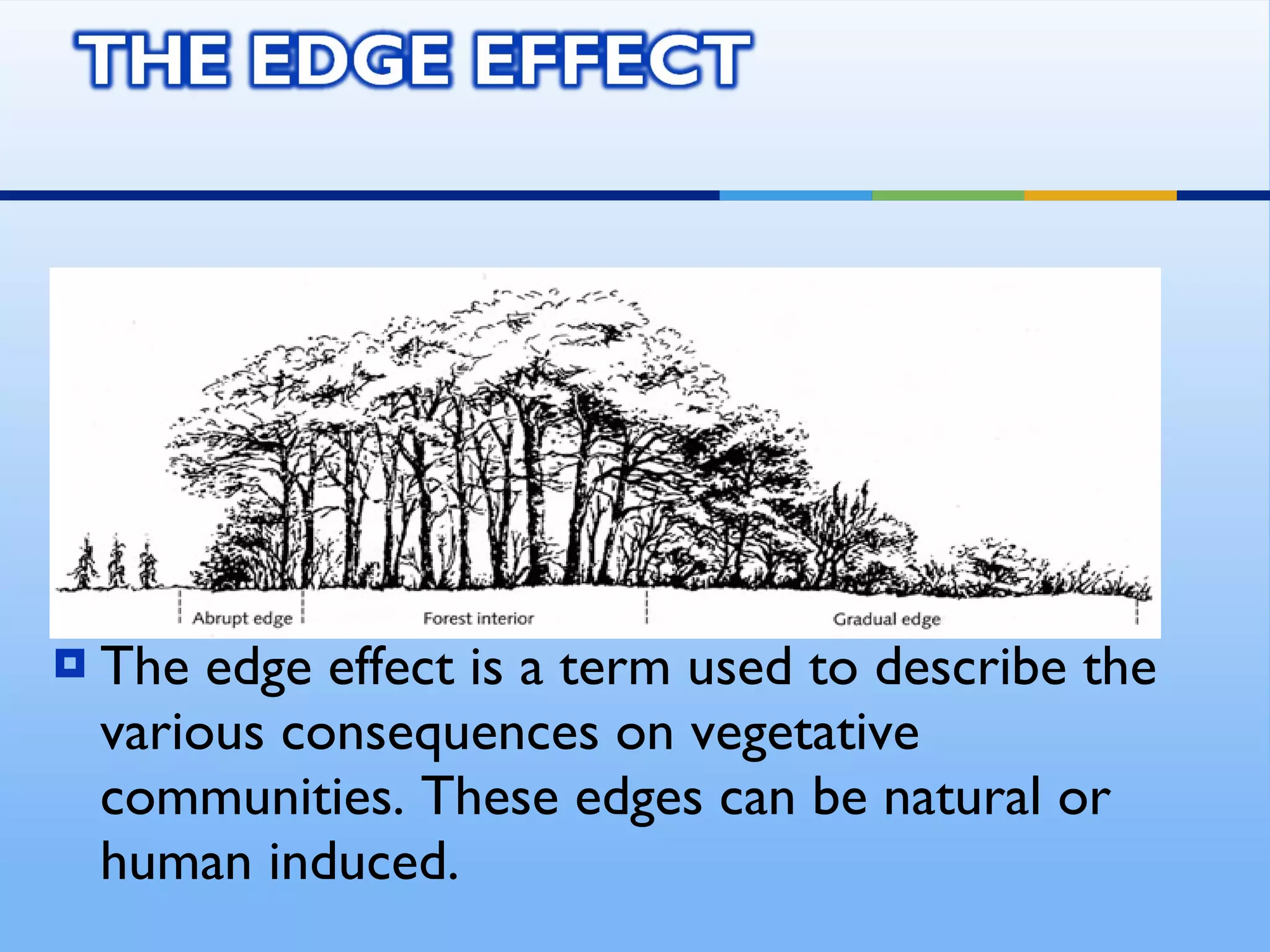
The edge effect is a term used to describe the various consequences on vegetative communities. These edges can be natural or human induced.
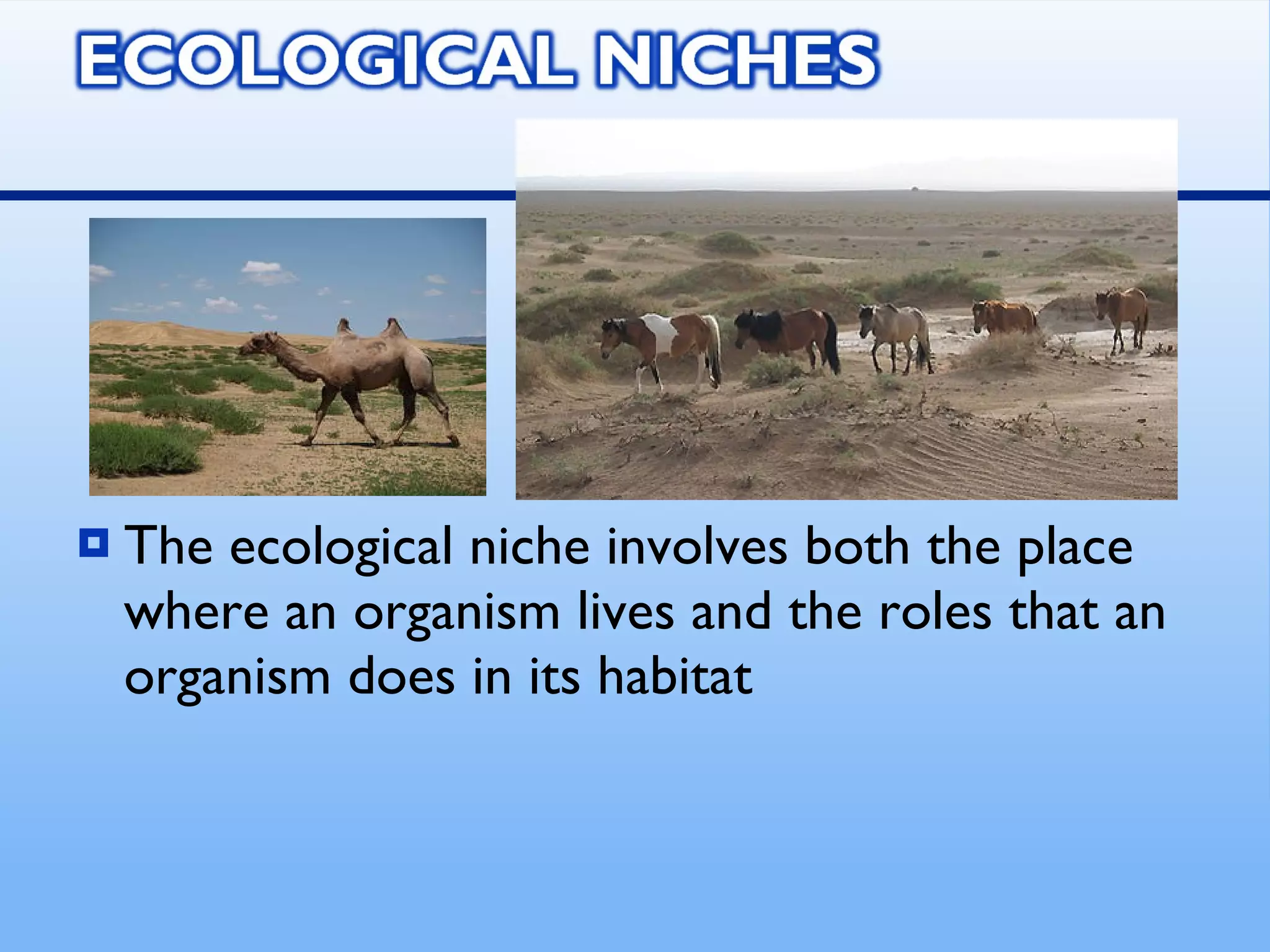
The ecological niche involves both the place where an organism lives and the roles that an organism does in its habitat
 

Community Structure Zoljargal

  • 1.
  • 2.
    Community is agroup of populations interacting and inhabiting a certain area. It is a complex mixture of different populations that exist together Community ecology is the study of the distribution, abundance, demography, and interactions between populations of coexisting species.
  • 3.
    The structure ofa community refers to its: Diversity – the number of different species Populations – how many of each species there are Appearance – size and distribution of species Interactions – what jobs the species play within the community and how they interact with each other
  • 4.
    NATIVE SPECIES are those species that typically live and thrive in a particular ecosystem and have been present there for a long period of time. NON-NATIVE SPECIES are species which are either deliberately or accidentally introduced into an ecosystem INDICATOR SPECIES are species which are particularly sensitive to environmental change and so serve as signs of early warning of damage to a community KEYSTONE SPECIES are species that play a more important role in an ecosystem than would be suggested by their population
  • 5.
    Ecological Succession Itrefers to more or less predictable and orderly changes in the composition or structure of an ecological community
  • 6.
    There are twomain types of succession Primary Succession It occurs in essentially lifeless areas Secondary Succession It occurs in areas where a community that previously existed has been removed
  • 7.
    A transitional zonebetween two communities containing the characteristic species of each Example – Wetlands
  • 8.
    The edge effectis a term used to describe the various consequences on vegetative communities. These edges can be natural or human induced.
  • 9.
    The ecological nicheinvolves both the place where an organism lives and the roles that an organism does in its habitat
  • 10.