An Introduction
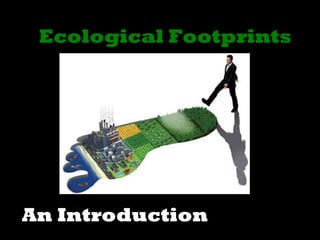
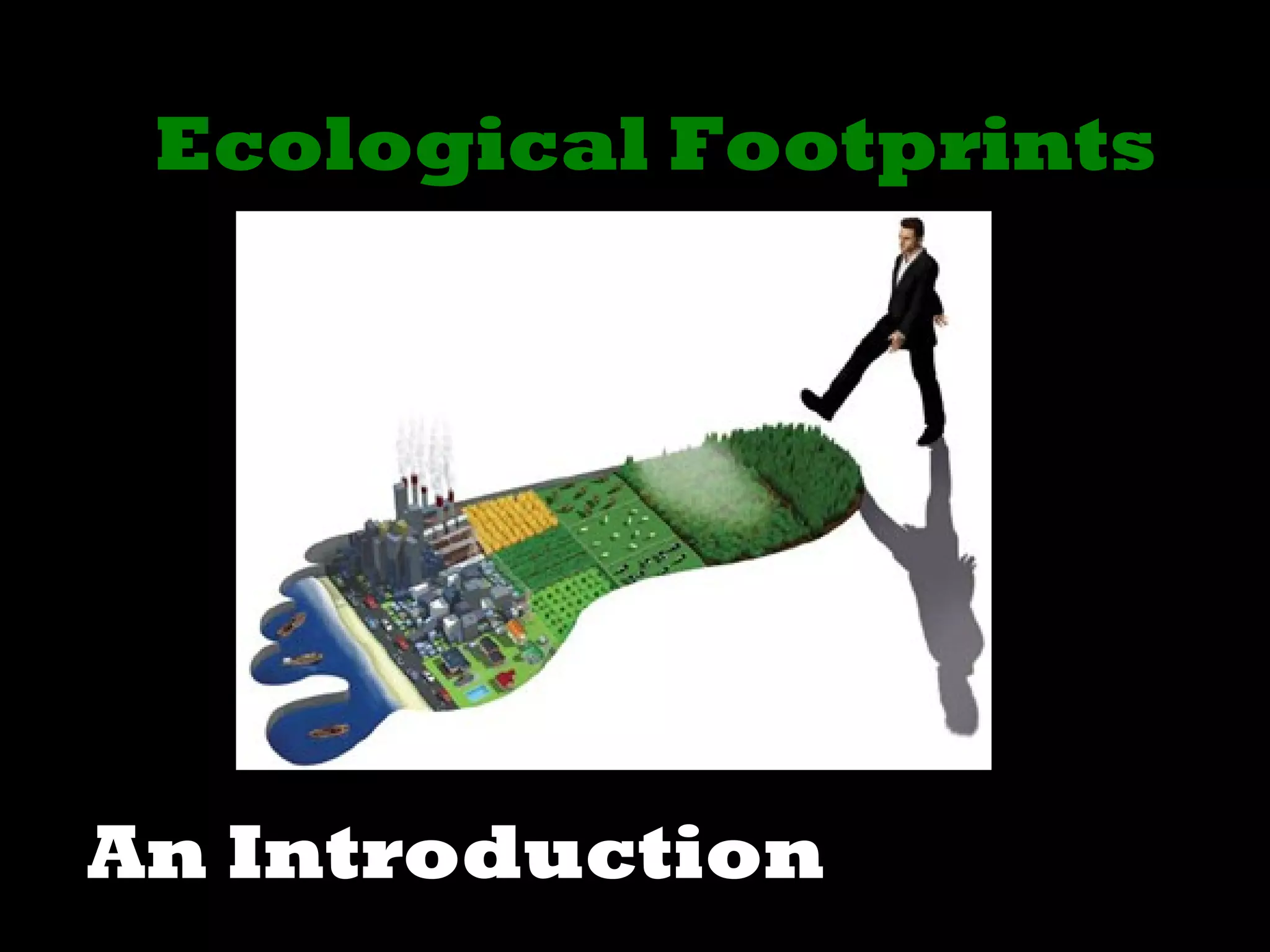
Ecological Footprints
Syllabus Link
Measuring trends in resource consumption, including
individual, national and global ecological footprints
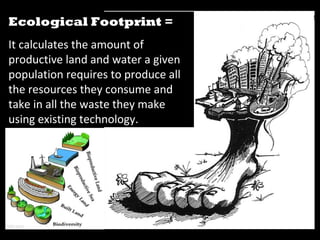
Ecological Footprint =
It calculates the amount of
productive land and water a given
population requires to produce all
the resources they consume and
take in all the waste they make
using existing technology.
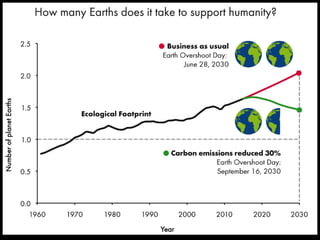
• How many planets do you need?
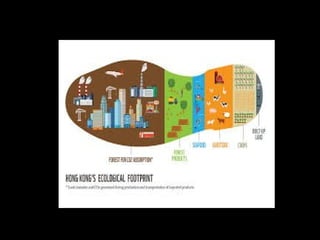
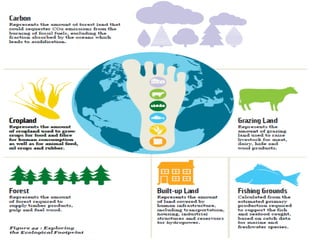
• What are the components of measuring an
ecological footprint?
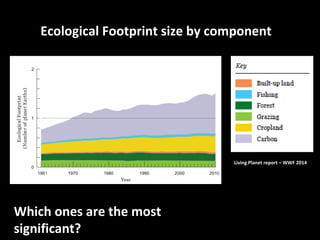
Ecological Footprint size by component
Living Planet report – WWF 2014
Which ones are the most
significant?
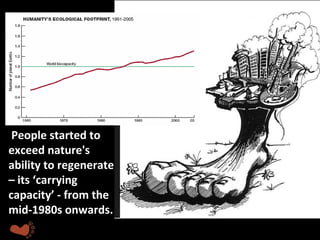
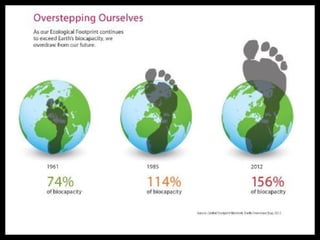
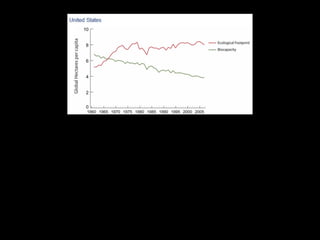
People started to
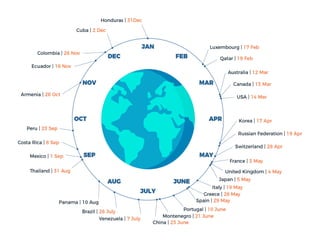
exceed nature's
ability to regenerate
– its ‘carrying
capacity’ - from the
mid-1980s onwards.
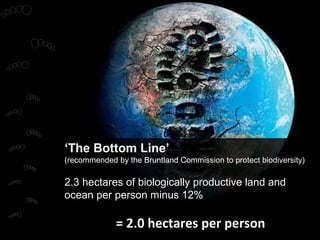
‘The Bottom Line’
(recommended by the Bruntland Commission to protect biodiversity)
2.3 hectares of biologically productive land and
ocean per person minus 12%
= 2.0 hectares per person
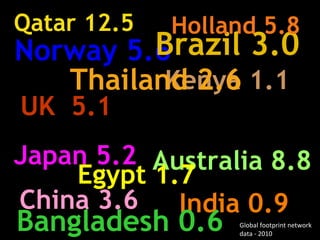
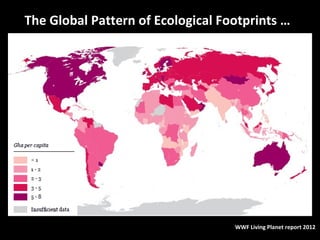
USA 8.0
Australia 8.8
UK 5.1
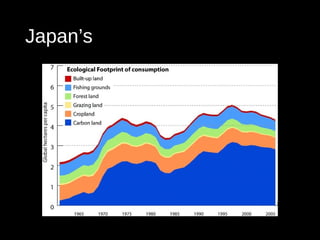
Japan 5.2
Norway 5.6Brazil 3.0
China 3.6
Egypt 1.7
India 0.9
Kenya 1.1
Bangladesh 0.6
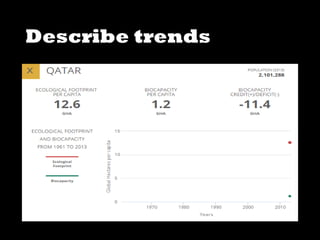
Qatar 12.5 Holland 5.8
Thailand 2.6
Global footprint network
data - 2010
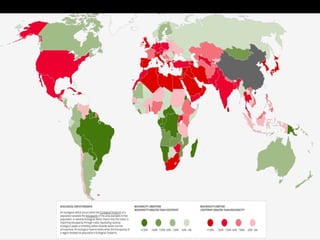
The Global Pattern of Ecological Footprints …
WWF Living Planet report 2012
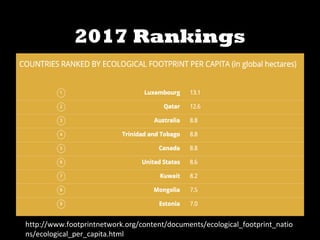
2017 Rankings
http://www.footprintnetwork.org/content/documents/ecological_footprint_natio
ns/ecological_per_capita.html
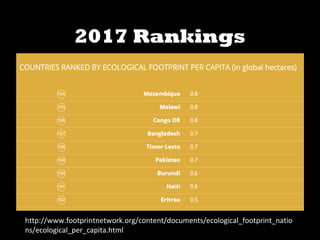
2017 Rankings
http://www.footprintnetwork.org/content/documents/ecological_footprint_natio
ns/ecological_per_capita.html
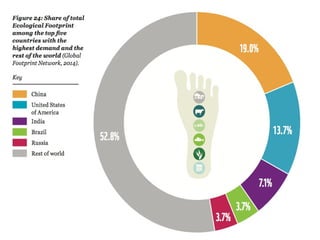
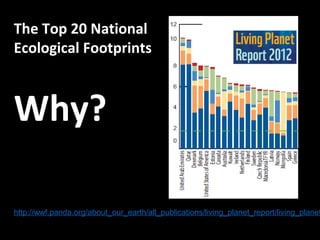
The Top 20 National
Ecological Footprints
Why?
http://wwf.panda.org/about_our_earth/all_publications/living_planet_report/living_planet
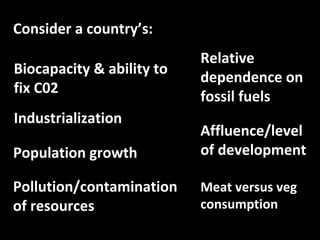
Consider a country’s:
Biocapacity & ability to
fix C02
Industrialization
Population growth
Pollution/contamination
of resources
Affluence/level
of development
Meat versus veg
consumption
Relative
dependence on
fossil fuels
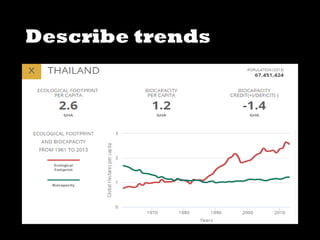
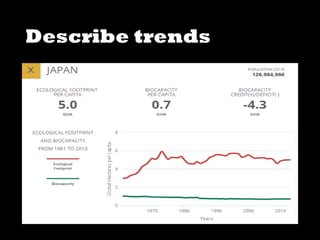
Describe trends
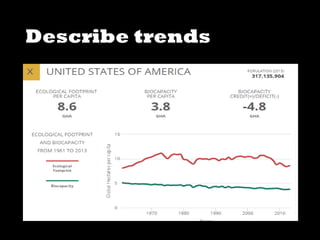
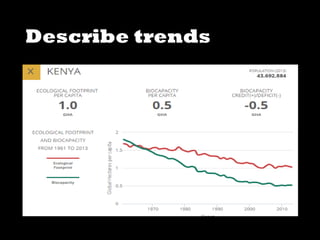
Describe trends
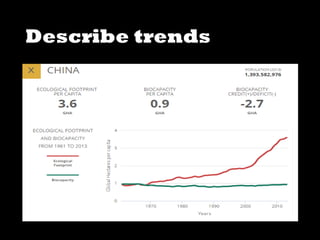
Describe trends
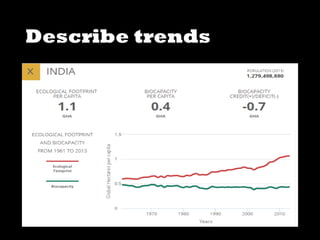
Describe trends
Describe trends
Describe trends
Describe trends
Japan’s
Ecological footprints introduction

Ecological footprints introduction