Activity Goal Setting
Experiential Learning
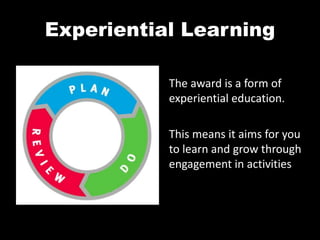
The award is a form of
experiential education.
This means it aims for you
to learn and grow through
engagement in activities
Experiential Learning
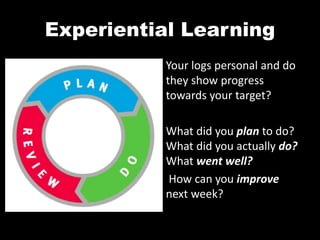
Experiential learning is
based on an experiential
learning cycle.
To make activities
effective you need to plan
well.
To improve and grow you
need to reflect
Experiential Learning
Your logs personal and do
they show progress
towards your target?
What did you plan to do?
What did you actually do?
What went well?
How can you improve
next week?
Activity Goals
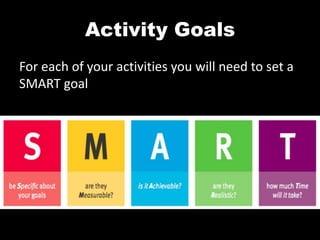
For each of your activities you will need to set a
SMART goal
Goals
Goals should be periodically reviewed in discussion
between the participant, Award Leader and the Activity
Coach / Assessor.
It is important that a realistic goal is established and
remains so. It should be subject to revision if necessary.
The goal should also motivate a participant to finish their
activity rather than cause them to give up because the
task is too di cult.
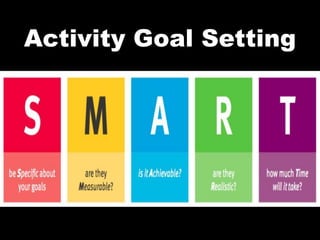
A specific goal that can
be easily defined.
What exactly are you
going to do in your
chosen activity?
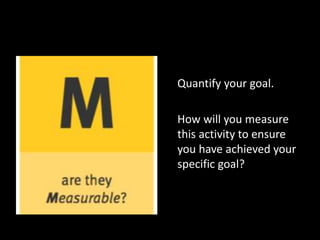
Quantify your goal.
How will you measure
this activity to ensure
you have achieved your
specific goal?
Is it possible for you to
achieve this goal?
Is it a goal that can
actually be achieved?
Is it feasible?
Support etc to make it
realistic as a goal
Is their an available
activity coach/
supervisor?
Do you need additional
support?
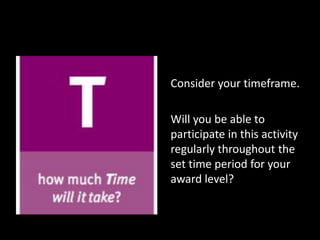
Consider your timeframe.
Will you be able to
participate in this activity
regularly throughout the
set time period for your
award level?
In the Skills, Voluntary Service and Physical
Recreation sections, participants, helped by
their Award Leader, should and an adult who is
knowledgeable and experienced in that activity
and can help them to set individually
challenging and realistic goals. Such an adult is
called an Assessor or Activity Coach.

Activity Goal Setting

  • 1.
  • 2.
    Experiential Learning The awardis a form of experiential education. This means it aims for you to learn and grow through engagement in activities
  • 3.
    Experiential Learning Experiential learningis based on an experiential learning cycle. To make activities effective you need to plan well. To improve and grow you need to reflect
  • 4.
    Experiential Learning Your logspersonal and do they show progress towards your target? What did you plan to do? What did you actually do? What went well? How can you improve next week?
  • 5.
    Activity Goals For eachof your activities you will need to set a SMART goal
  • 6.
    Goals Goals should beperiodically reviewed in discussion between the participant, Award Leader and the Activity Coach / Assessor. It is important that a realistic goal is established and remains so. It should be subject to revision if necessary. The goal should also motivate a participant to finish their activity rather than cause them to give up because the task is too di cult.
  • 7.
    A specific goalthat can be easily defined. What exactly are you going to do in your chosen activity?
  • 8.
    Quantify your goal. Howwill you measure this activity to ensure you have achieved your specific goal?
  • 9.
    Is it possiblefor you to achieve this goal? Is it a goal that can actually be achieved? Is it feasible?
  • 10.
    Support etc tomake it realistic as a goal Is their an available activity coach/ supervisor? Do you need additional support?
  • 11.
    Consider your timeframe. Willyou be able to participate in this activity regularly throughout the set time period for your award level?
  • 12.
    In the Skills,Voluntary Service and Physical Recreation sections, participants, helped by their Award Leader, should and an adult who is knowledgeable and experienced in that activity and can help them to set individually challenging and realistic goals. Such an adult is called an Assessor or Activity Coach.