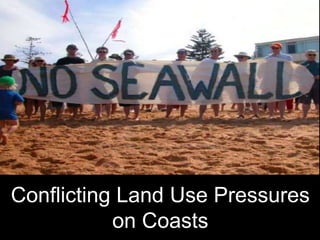
Conflicting Land Use Pressures
on Coasts
Syllabus Link
Conflicting land-use pressures on coastlines,
including commercial land uses (tourism, industry
and housing) and conservation measures
• One case study to illustrate the roles of, and
outcomes for, coastal stakeholders
Introduction
Coasts are a resource. They are useful for people
in many different ways and this can lead to conflict
when people have competing wants and priorities.
Conflicts may arise between:
• Human use of the coast and the natural
environment
• Different human land uses that are incompatible
#5: Complexity - Conflicts of Interest
There are many different groups of people who
have an interest in how coastal areas are managed.
These include:
• Local residents (home & livelihoods)
• Environmental groups
• Developers
• Local & national governments
• Tourist businesses & boards
• National Park Authorities
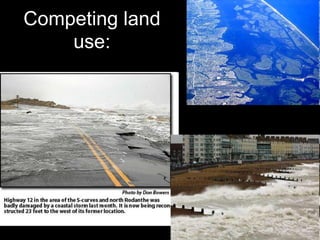
Competing land
use:
• Urbanization and transport:
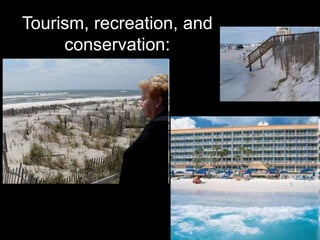
Tourism, recreation, and
conservation:
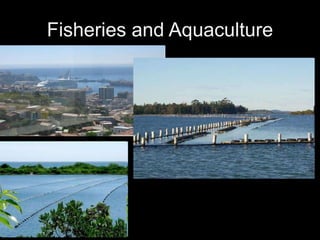
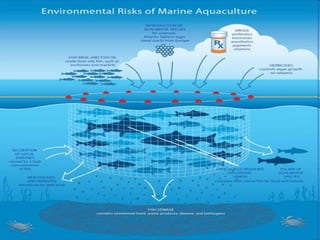
Fisheries and Aquaculture
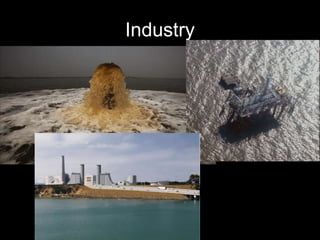
Industry
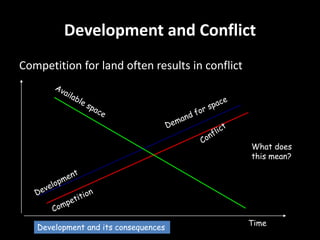
Development and Conflict
Competition for land often results in conflict
Time
What does
this mean?
Development and its consequences
Coastal Stakeholders
Groups intereseted in or impacted by the use of
the coast are known as stakeholders: individuals
or groups who have anything of value that may
be affected by development I the coastal zone or
by the actions taken to manage coastal area.
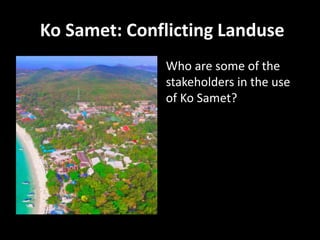
Ko Samet: Conflicting Landuse
Who are some of the
stakeholders in the use
of Ko Samet?
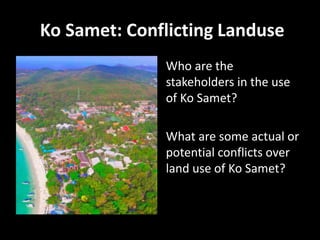
Ko Samet: Conflicting Landuse
Who are the
stakeholders in the use
of Ko Samet?
What are some actual or
potential conflicts over
land use of Ko Samet?
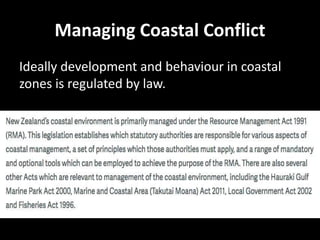
Managing Coastal Conflict
Ideally development and behaviour in coastal
zones is regulated by law.
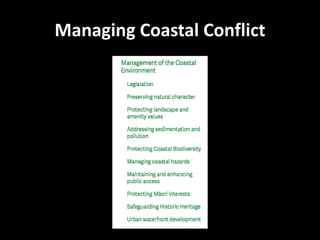
Managing Coastal Conflict
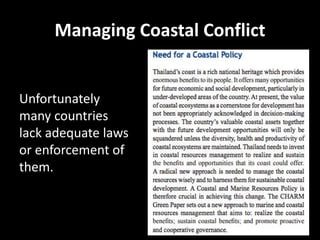
Unfortunately
many countries
lack adequate laws
or enforcement of
them.
Conflicting land use intro

Conflicting land use intro