Downloaded 558 times
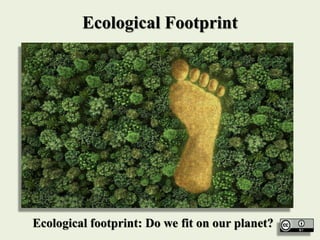




The document provides an overview of the ecological footprint concept. It defines ecological footprint as a method that measures human demand on nature against the Earth's biological capacity to regenerate resources and absorb waste. Key points include: - Humanity's ecological footprint has exceeded the Earth's biocapacity since the 1970s, meaning more than 1 Earth is needed each year to replenish what is used. - The ecological footprint is calculated by adding up the productive land and sea area required to produce the resources an individual, group, or activity consumes and absorb their waste, expressed in global hectares. - Many countries and individuals have an ecological deficit, using more than what local ecosystems can regenerate.


