A VENOVENOUS ECMO
PRIMER
with 5 CERTAINTIES AND 4
CHALLENGES
Susan C Seatter, MD
Abbott Northwestern
Intensivists
Innovation Summit
September 26, 2015
DISCLOSURE
There are no conflicts of interest or relevant financial interests
in making this presentation. My presentation does not include
discussion of an unlabeled use of a commercial product, or an
investigational use not yet approved for any purpose.
OBJECTIVES
VV ECMO Indications
VV ECMO Principles
VV ECMO Circuit
VV ECMO Outcomes
VV ECMO Future
DEFINITION OF VENOVENOUS
EXTRACORPOREAL MEMBRANE
OXYGENATION
For respiratory failure
Most commonly hypoxemic but also hypercarbic respiratory
failure
No cardiac support
Patients may be supported for days to weeks (average 10 days)
Bridge to lung transplant
Adult respiratory distress syndrome (ARDS)
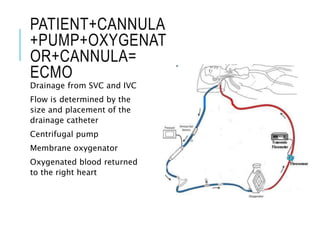
PATIENT+CANNULA
+PUMP+OXYGENAT
OR+CANNULA=
ECMO
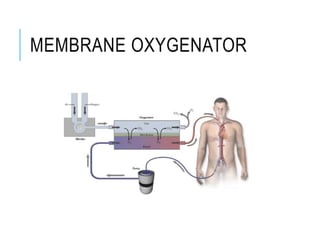
Drainage from SVC and IVC
Flow is determined by the
size and placement of the
drainage catheter
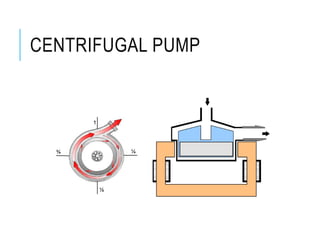
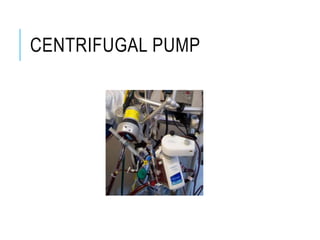
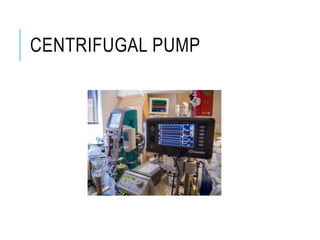
Centrifugal pump
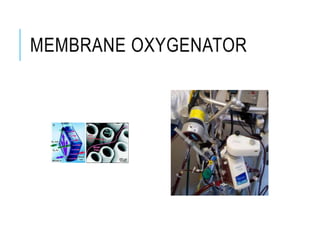
Membrane oxygenator
Oxygenated blood returned
to the right heart
VV ECMO: 5
CERTAINTIES
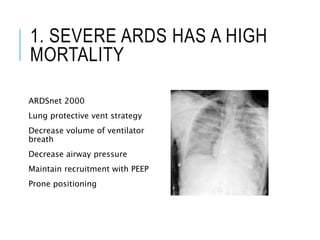
1. SEVERE ARDS HAS A HIGH
MORTALITY
ARDSnet 2000
Lung protective vent strategy
Decrease volume of ventilator
breath
Decrease airway pressure
Maintain recruitment with PEEP
Prone positioning
1. SEVERE ARDS HAS A HIGH
MORTALITY
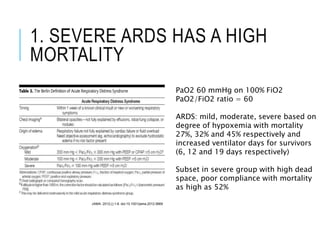
JAMA. 2012;():1-8. doi:10.1001/jama.2012.5669
PaO2 60 mmHg on 100% FiO2
PaO2/FiO2 ratio = 60
ARDS: mild, moderate, severe based on
degree of hypoxemia with mortality
27%, 32% and 45% respectively and
increased ventilator days for survivors
(6, 12 and 19 days respectively)
Subset in severe group with high dead
space, poor compliance with mortality
as high as 52%
2. VV ECMO IS A RESCUE
THERAPY FOR REFRACTORY
RESPIRATORY FAILURE
ARDS
ARDSnet 2000
Lung protective ventilation
H1N1 2009
Berlin Consensus Conference
2012
ECMO
Extracorporeal life support
organization: Dr. Robert
Bartlett 1989
Conventional ventilatory
support versus ECMO for ARDS
(CESAR) 2009
Observational studies 2011-
2012
Consensus recommendations
Technology
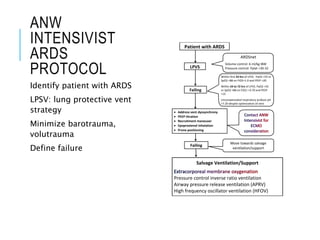
ANW
INTENSIVIST
ARDS
PROTOCOL
Patient with ARDS
Patient with ARDS
LPVS
ARDSnet
Volume control: 6 ml/kg IBW
Pressure control: Pplat <30-32
Failing
Within first 24 hrs of LPVS. PaO2 <55 or
SpO2 <88 on FiO2=1.0 and PEEP >20
Within 24 to 72 hrs of LPVS. PaO2 <55
or SpO2 <88 on FiO2 > 0.70 and PEEP
>15
Uncompensated respiratory acidosis pH
<7.20 despite optimization of vent
support and sodium bicarbonate.
 Address vent dyssynchrony
 PEEP titration
 Recruitment maneuver
 Epoprostenol inhalation
 Prone positioning
Failing
Move towards salvage
ventilation/support
Salvage Ventilation/Support
Pressure control inverse ratio ventilation
Airway pressure release ventilation (APRV)
High frequency oscillator ventilation (HFOV)
Identify patient with ARDS
LPSV: lung protective vent
strategy
Minimize barotrauma,
volutrauma
Define failure
3. THE MODERN VV ECMO
CIRCUIT IS MUCH IMPROVED
FROM THE PAST
Decreased complications
Simpler circuit
Durable circuit
Transportable circuit
“Biocompatibility”
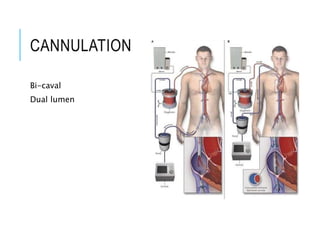
CANNULATION
Bi-caval
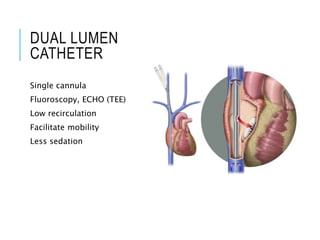
Dual lumen
DUAL LUMEN
CATHETER
Single cannula
Fluoroscopy, ECHO (TEE)
Low recirculation
Facilitate mobility
Less sedation
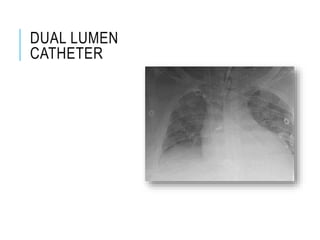
DUAL LUMEN
CATHETER
MEMBRANE OXYGENATOR
MEMBRANE OXYGENATOR
CENTRIFUGAL PUMP
CENTRIFUGAL PUMP
CENTRIFUGAL PUMP
4. PATIENTS SURVIVE ON
ECMO
ECMO allows the lungs to “rest”
ECMO allows the lungs to heal
ELSO database: 60% survival (45-50% mortality for severe
ARDS)
Single organ failure
Long term outcome vs ARDS without ECMO
Complications
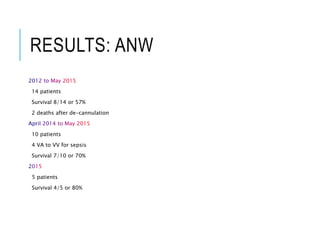
RESULTS: ANW
14 patients
Survival 8/14 or 57%
2 deaths after de-cannulation
10 patients
4 VA to VV for sepsis
Survival 7/10 or 70%
5 patients
Survival 4/5 or 80%
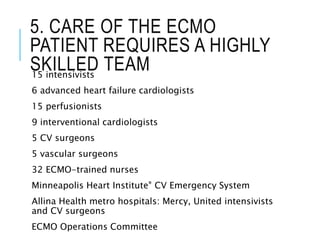
5. CARE OF THE ECMO
PATIENT REQUIRES A HIGHLY
SKILLED TEAM15 intensivists
6 advanced heart failure cardiologists
15 perfusionists
9 interventional cardiologists
5 CV surgeons
5 vascular surgeons
32 ECMO-trained nurses
Minneapolis Heart Institute® CV Emergency System
Allina Health metro hospitals: Mercy, United intensivists
and CV surgeons
ECMO Operations Committee
VV ECMO: 4
CHALLENGES
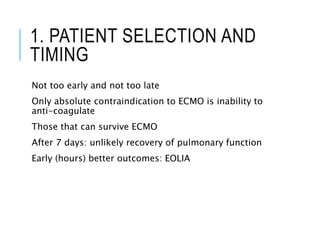
1. PATIENT SELECTION AND
TIMING
Not too early and not too late
Only absolute contraindication to ECMO is inability to
anti-coagulate
Those that can survive ECMO
After 7 days: unlikely recovery of pulmonary function
Early (hours) better outcomes: EOLIA
1. PATIENT SELECTION AND
TIMING: CONSIDER ECMO
EARLY
Extracorporeal Membrane Oxygenation for Severe Acute
Respiratory Distress Syndrome (EOLIA)
This international multicenter, randomized, open trial will evaluate
the impact of Extracorporeal Membrane Oxygenation (ECMO),
instituted early after the diagnosis of acute respiratory distress
syndrome (ARDS) not evolving favorably after 3-6 hours under
optimal ventilatory management and maximum medical treatment
ARDS defined according to the following criteria :
Intubation and mechanical ventilation for ≤ 6 days
Bilateral radiological pulmonary infiltrates consistent with edema
PaO2/FiO2 ratio < 200 mm Hg
Absence of clinical evidence of elevated left atrial pressure and/or
pulmonary arterial occlusion pressure ≤ 18 mm Hg
2. VENTILATOR MANAGEMENT
Open vs closed lung
Higher PEEP early
Don’t use the lungs: tolerate low O2 sat as long as
oxygen delivery exceeds consumption
Sedation: early trach, early mobilization, allow
spontaneous breathing
Best O2 sat with no lung function: 75%
2. VENTILATOR
MANAGEMENT: DON’T USE
THE LUNGS
Open vs closed lung
Additional barotrauma and its consequences
Atelectasis with apnea ventilation
Improved survival on ECMO with higher PEEP days 1-3
Plateau pressure < 25 mm Hg, RR 10-20, Goal FiO2 <
0.5
Lung rest: 77% Lung recruitment: 18%
Tidal volume < 6 cc/kg/IBW: 76%
PEEP 6-10: 58%
Assist-controlled ventilation: pressure or volume mode
3. ECMO TRANSPORT
Transport early
Transport prone
Cannulate at outside facility
Transport on ECMO
Allina Health VV ECMO Transport Team
4. STANDARDIZATION OF
CARE: REVIEW YOUR WORK
High volume centers 30 VV ECMO patients/year
Recommendation for regional centers
15 intensivists: all have completed ELSO-sponsored VV
ECMO training course
ECMO privileges: prior experience or course, hours and CME
ECMO Conference
ECMO M&M
ELSO Center of Excellence
Partnerships in Allina Health system
4. STANDARDIZATION OF
CARE
24/7
Allina-wide use of ARDS protocol
Early call for failure of LPVS
Abbott Northwestern Hospital Flagship
Is it ECMO or is it the center?
ELSO Center of Excellence
Twin Cities ECMO Consortium
EXTRACORPOREAL LIFE
SUPPORT ORGANIZATION
Guidelines for Adult Respiratory
Failure
REFERENCES
Extracorporeal life support for patients with acute
respiratory distress syndrome: report of a Consensus
Conference. Richard, C et al. Annals of Intensive Care.
2014, 4:15.
Mechanical ventilation during ECMO. An International
Survey. Annals ATS. 2014; 11: 956-61.
Mechanical ventilation during ECMO. CC Forum. 2014,
18:203
Extracorporeal Cardiopulmonary Support in Critical Care.
4th Edition. Annich, G et al. ELSO. Ann Arbor, MI. 2012
VV ECMO for acute lung failure in adults. Schmid, C et al.
J Heart Lung Transplant. 2012; 31:9-15.
REFERENCES
Contemporary extracorporeal membrane oxygenation for
adult respiratory failure: life support in the new era.
MacLaren, G et al. Intensive Care Med. 2011.
ECMO for ARDS in adults. Brodie, D and Bacchetta , M. N
Eng J Med. 2011; 365: 1905-14.
ECMO in adult ARDS. Park et al. Crit Care Clin. 2011; 27:
627-646.
Conventional ventilatory support versus extracorporeal
membrane oxygenation for severe adult respiratory
distress syndrome (CESAR): a multicenter randomized
control trial. Peek, GJ et al. Lancet. 2009; 374: 1351-63.
Ventilation with lower tidal volumes as compared with
traditional tidal volumes for acute lung injury and the
acute respiratory distress syndrome. ARDSnet. N Eng J
Med. 2000; 342:1301-8.
CONTACT
susan.seatter@allina.com
ANW Intensivist Group would like to partner with your
institution to improve the outcome of patients with ARDS
in the region. We are on-call 24/7 at Abbott
Northwestern Hospital and can be contacted at any time
through One-Call 612-863-1000 to discuss a patient
with acute respiratory failure. We are available for
educational outreach and offer to speak about ARDS to
any interested hospital group.

ECMO in Severe Respiratory Failure

  • 1.
    A VENOVENOUS ECMO PRIMER with5 CERTAINTIES AND 4 CHALLENGES Susan C Seatter, MD Abbott Northwestern Intensivists Innovation Summit September 26, 2015
  • 2.
    DISCLOSURE There are noconflicts of interest or relevant financial interests in making this presentation. My presentation does not include discussion of an unlabeled use of a commercial product, or an investigational use not yet approved for any purpose.
  • 3.
    OBJECTIVES VV ECMO Indications VVECMO Principles VV ECMO Circuit VV ECMO Outcomes VV ECMO Future
  • 4.
    DEFINITION OF VENOVENOUS EXTRACORPOREALMEMBRANE OXYGENATION For respiratory failure Most commonly hypoxemic but also hypercarbic respiratory failure No cardiac support Patients may be supported for days to weeks (average 10 days) Bridge to lung transplant Adult respiratory distress syndrome (ARDS)
  • 5.
    PATIENT+CANNULA +PUMP+OXYGENAT OR+CANNULA= ECMO Drainage from SVCand IVC Flow is determined by the size and placement of the drainage catheter Centrifugal pump Membrane oxygenator Oxygenated blood returned to the right heart
  • 6.
  • 7.
    1. SEVERE ARDSHAS A HIGH MORTALITY ARDSnet 2000 Lung protective vent strategy Decrease volume of ventilator breath Decrease airway pressure Maintain recruitment with PEEP Prone positioning
  • 8.
    1. SEVERE ARDSHAS A HIGH MORTALITY JAMA. 2012;():1-8. doi:10.1001/jama.2012.5669 PaO2 60 mmHg on 100% FiO2 PaO2/FiO2 ratio = 60 ARDS: mild, moderate, severe based on degree of hypoxemia with mortality 27%, 32% and 45% respectively and increased ventilator days for survivors (6, 12 and 19 days respectively) Subset in severe group with high dead space, poor compliance with mortality as high as 52%
  • 9.
    2. VV ECMOIS A RESCUE THERAPY FOR REFRACTORY RESPIRATORY FAILURE ARDS ARDSnet 2000 Lung protective ventilation H1N1 2009 Berlin Consensus Conference 2012 ECMO Extracorporeal life support organization: Dr. Robert Bartlett 1989 Conventional ventilatory support versus ECMO for ARDS (CESAR) 2009 Observational studies 2011- 2012 Consensus recommendations Technology
  • 10.
    ANW INTENSIVIST ARDS PROTOCOL Patient with ARDS Patientwith ARDS LPVS ARDSnet Volume control: 6 ml/kg IBW Pressure control: Pplat <30-32 Failing Within first 24 hrs of LPVS. PaO2 <55 or SpO2 <88 on FiO2=1.0 and PEEP >20 Within 24 to 72 hrs of LPVS. PaO2 <55 or SpO2 <88 on FiO2 > 0.70 and PEEP >15 Uncompensated respiratory acidosis pH <7.20 despite optimization of vent support and sodium bicarbonate.  Address vent dyssynchrony  PEEP titration  Recruitment maneuver  Epoprostenol inhalation  Prone positioning Failing Move towards salvage ventilation/support Salvage Ventilation/Support Pressure control inverse ratio ventilation Airway pressure release ventilation (APRV) High frequency oscillator ventilation (HFOV) Identify patient with ARDS LPSV: lung protective vent strategy Minimize barotrauma, volutrauma Define failure
  • 11.
    3. THE MODERNVV ECMO CIRCUIT IS MUCH IMPROVED FROM THE PAST Decreased complications Simpler circuit Durable circuit Transportable circuit “Biocompatibility”
  • 12.
  • 14.
    DUAL LUMEN CATHETER Single cannula Fluoroscopy,ECHO (TEE) Low recirculation Facilitate mobility Less sedation
  • 15.
  • 16.
  • 17.
  • 18.
  • 19.
  • 20.
  • 21.
    4. PATIENTS SURVIVEON ECMO ECMO allows the lungs to “rest” ECMO allows the lungs to heal ELSO database: 60% survival (45-50% mortality for severe ARDS) Single organ failure Long term outcome vs ARDS without ECMO Complications
  • 22.
    RESULTS: ANW 14 patients Survival8/14 or 57% 2 deaths after de-cannulation 10 patients 4 VA to VV for sepsis Survival 7/10 or 70% 5 patients Survival 4/5 or 80%
  • 23.
    5. CARE OFTHE ECMO PATIENT REQUIRES A HIGHLY SKILLED TEAM15 intensivists 6 advanced heart failure cardiologists 15 perfusionists 9 interventional cardiologists 5 CV surgeons 5 vascular surgeons 32 ECMO-trained nurses Minneapolis Heart Institute® CV Emergency System Allina Health metro hospitals: Mercy, United intensivists and CV surgeons ECMO Operations Committee
  • 24.
  • 25.
    1. PATIENT SELECTIONAND TIMING Not too early and not too late Only absolute contraindication to ECMO is inability to anti-coagulate Those that can survive ECMO After 7 days: unlikely recovery of pulmonary function Early (hours) better outcomes: EOLIA
  • 26.
    1. PATIENT SELECTIONAND TIMING: CONSIDER ECMO EARLY Extracorporeal Membrane Oxygenation for Severe Acute Respiratory Distress Syndrome (EOLIA) This international multicenter, randomized, open trial will evaluate the impact of Extracorporeal Membrane Oxygenation (ECMO), instituted early after the diagnosis of acute respiratory distress syndrome (ARDS) not evolving favorably after 3-6 hours under optimal ventilatory management and maximum medical treatment ARDS defined according to the following criteria : Intubation and mechanical ventilation for ≤ 6 days Bilateral radiological pulmonary infiltrates consistent with edema PaO2/FiO2 ratio < 200 mm Hg Absence of clinical evidence of elevated left atrial pressure and/or pulmonary arterial occlusion pressure ≤ 18 mm Hg
  • 27.
    2. VENTILATOR MANAGEMENT Openvs closed lung Higher PEEP early Don’t use the lungs: tolerate low O2 sat as long as oxygen delivery exceeds consumption Sedation: early trach, early mobilization, allow spontaneous breathing Best O2 sat with no lung function: 75%
  • 28.
    2. VENTILATOR MANAGEMENT: DON’TUSE THE LUNGS Open vs closed lung Additional barotrauma and its consequences Atelectasis with apnea ventilation Improved survival on ECMO with higher PEEP days 1-3 Plateau pressure < 25 mm Hg, RR 10-20, Goal FiO2 < 0.5 Lung rest: 77% Lung recruitment: 18% Tidal volume < 6 cc/kg/IBW: 76% PEEP 6-10: 58% Assist-controlled ventilation: pressure or volume mode
  • 29.
    3. ECMO TRANSPORT Transportearly Transport prone Cannulate at outside facility Transport on ECMO Allina Health VV ECMO Transport Team
  • 30.
    4. STANDARDIZATION OF CARE:REVIEW YOUR WORK High volume centers 30 VV ECMO patients/year Recommendation for regional centers 15 intensivists: all have completed ELSO-sponsored VV ECMO training course ECMO privileges: prior experience or course, hours and CME ECMO Conference ECMO M&M ELSO Center of Excellence Partnerships in Allina Health system
  • 31.
    4. STANDARDIZATION OF CARE 24/7 Allina-wideuse of ARDS protocol Early call for failure of LPVS Abbott Northwestern Hospital Flagship Is it ECMO or is it the center? ELSO Center of Excellence Twin Cities ECMO Consortium
  • 32.
  • 33.
    REFERENCES Extracorporeal life supportfor patients with acute respiratory distress syndrome: report of a Consensus Conference. Richard, C et al. Annals of Intensive Care. 2014, 4:15. Mechanical ventilation during ECMO. An International Survey. Annals ATS. 2014; 11: 956-61. Mechanical ventilation during ECMO. CC Forum. 2014, 18:203 Extracorporeal Cardiopulmonary Support in Critical Care. 4th Edition. Annich, G et al. ELSO. Ann Arbor, MI. 2012 VV ECMO for acute lung failure in adults. Schmid, C et al. J Heart Lung Transplant. 2012; 31:9-15.
  • 34.
    REFERENCES Contemporary extracorporeal membraneoxygenation for adult respiratory failure: life support in the new era. MacLaren, G et al. Intensive Care Med. 2011. ECMO for ARDS in adults. Brodie, D and Bacchetta , M. N Eng J Med. 2011; 365: 1905-14. ECMO in adult ARDS. Park et al. Crit Care Clin. 2011; 27: 627-646. Conventional ventilatory support versus extracorporeal membrane oxygenation for severe adult respiratory distress syndrome (CESAR): a multicenter randomized control trial. Peek, GJ et al. Lancet. 2009; 374: 1351-63. Ventilation with lower tidal volumes as compared with traditional tidal volumes for acute lung injury and the acute respiratory distress syndrome. ARDSnet. N Eng J Med. 2000; 342:1301-8.
  • 35.
    CONTACT susan.seatter@allina.com ANW Intensivist Groupwould like to partner with your institution to improve the outcome of patients with ARDS in the region. We are on-call 24/7 at Abbott Northwestern Hospital and can be contacted at any time through One-Call 612-863-1000 to discuss a patient with acute respiratory failure. We are available for educational outreach and offer to speak about ARDS to any interested hospital group.

Editor's Notes

  • #27  One of the 3 following criteria of disease severity: i. PaO2/FiO2 < 50 mm Hg with FiO2 ≥ 80% for > 3 hours, despite optimization of mechanical ventilation (Vt set at 6 ml/kg and trial of PEEP ≥ 10 cm H2O) and despite possible recourse to usual adjunctive therapies (NO, recruitment maneuvers, prone position, HFO ventilation, almitrine infusion) OR ii. PaO2/FiO2 < 80 mm Hg with FiO2 ≥ 80% for > 6 hours, despite optimization of mechanical ventilation (Vt set at 6 ml/kg and trial of PEEP ≥ 10 cm H2O) and despite possible recourse to usual adjunctive therapies (NO, recruitment maneuvers, prone position, HFO ventilation, almitrine infusion) OR iii. pH < 7.25 for > 6 hours (with respiratory rate increased to 35/min) resulting from MV settings adjusted to keep plat ≤ 32 cm H2O (first, tidal volume reduction by steps of 1 mL/kg to 4 mL/kg then PEEP reduction to a minimum of 8 cm H2O. Almitrine (marketed as Duxil by Servier) is a diphenylmethylpiperazine derivative classified as a respiratory stimulant by the ATC. It enhances respiration by acting as an agonist of peripheral chemoreceptors located on the carotid bodies. The drug increases arterial oxygen tension while decreasing arterial carbon dioxide tension in patients with chronic obstructive pulmonary disease.
  • #29 EOLIA: volume-assist control mode, FiO2 30-60%, PEEP ≥10 cm H2O, VT lowered to obtain a plateau pressure <25 cm H2O, respiration rate (RR) 10-30/minute or APRV mode with high pressure level <25 cm H2O and low pressure level ≥10 cm H2O
  • #31 ECMO education: ELSO course, protocols and other info (ie anticoagulation) readily avalable Resource and back-up Partnership with advanced heart failure How many ECMO patients can we care for at one time? Referral for ECMO vs cannulate at outside hopsitals