
EBOLA VIRAL DISEASE
PRESENTED BY :- ANAS HARUNA INDABAWA
Department of Pharmacy, SHIATS
EMAIL:- anasindabawa7@gmail.com
 Ebola virus disease (EVD), formerly known as Ebola
hemorrhagic fever, is a severe, often fatal illness in humans.
 The virus is transmitted to people from wild animals and
spreads in the human population through human-to-human
transmission.
 The first EVD outbreaks occurred in remote villages in Central
Africa, near tropical rainforests, but the most recent outbreak in
West Africa has involved major urban as well as rural areas.
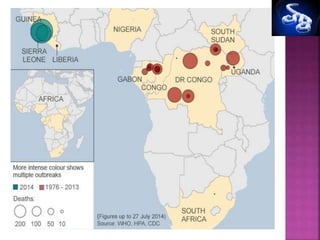
 Disease was first identified in 1976 into two simultaneous
outbreak, one in Nzara and the other in Yambuku, a village
near Ebola river from where the disease got its name.
 Between 1976 to 2013, World health organization (WHO),
reports a total 24 outbreaks involving 1,716 cases
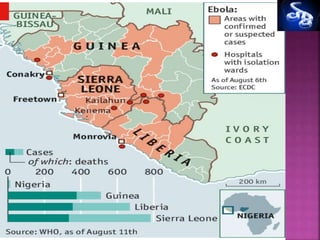
 The largest outbreak began in 2014 and continued into 2015
with an epidemic in west Africa affecting the countries of
Liberia, Sierra Leone and Guinea
 The disease is also distributed in some countries within Africa
like Zaire (Democratic republic of Congo), Uganda, Nigeria,
Mali and Sudan. Its also discovered in USA.
 As 30th December 2015, this outbreak had 28,638 reported
cases.
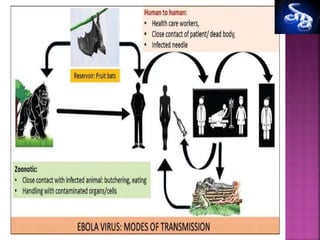
Ebola virus can be transmitted through
 Close contact with the blood, secretions, organs or other bodily
fluids of infected animals.
 Men who have recovered from the disease can still transmit the
virus through their semen for up to 7 weeks after recovery from
illness.
 Burial ceremonies in which mourners have direct contact with the
body of the deceased person can also play a role in the
transmission of Ebola.
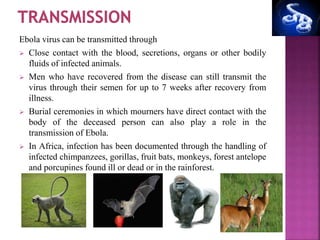
 In Africa, infection has been documented through the handling of
infected chimpanzees, gorillas, fruit bats, monkeys, forest antelope
and porcupines found ill or dead or in the rainforest.
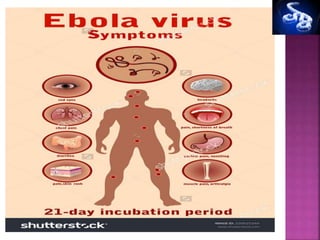
 The Ebola incubation period is the period of time between
infection with the Ebola virus and the appearance of symptoms
associated with the disease.
 Incubation period can be as short as 2 days or as long as 21 days.
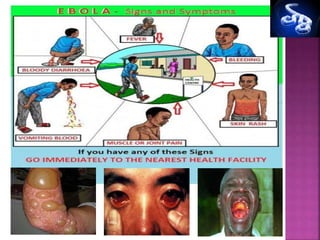
 After four to six days on average, symptoms of Ebola can begin
Acute symptoms may develop like:
 Sudden onset of fever
 Intense weakness
 Muscle pain
 Headache
 Sore throat
Then followed by:
 Vomiting
 Diarrhea
 Rashes
Usually followed with decrease liver and kidney function which
result to internal and external bleeding in some people.
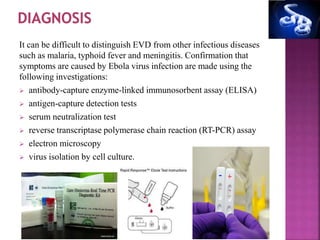
It can be difficult to distinguish EVD from other infectious diseases
such as malaria, typhoid fever and meningitis. Confirmation that
symptoms are caused by Ebola virus infection are made using the
following investigations:
 antibody-capture enzyme-linked immunosorbent assay (ELISA)
 antigen-capture detection tests
 serum neutralization test
 reverse transcriptase polymerase chain reaction (RT-PCR) assay
 electron microscopy
 virus isolation by cell culture.
There is as yet no proven treatment available for EVD.
However, a range of potential treatments including blood products,
immune therapies and drug therapies are currently being evaluated.
No licensed vaccines are available yet, but 2 potential vaccines are
undergoing human safety testing.
Supportive care-rehydration with oral or intravenous fluids-
and treatment of specific symptoms, improves survival.
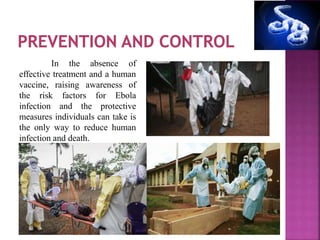
In the absence of
effective treatment and a human
vaccine, raising awareness of
the risk factors for Ebola
infection and the protective
measures individuals can take is
the only way to reduce human
infection and death.
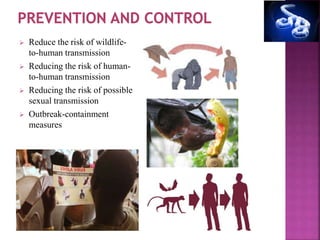
 Reduce the risk of wildlife-
to-human transmission
 Reducing the risk of human-
to-human transmission
 Reducing the risk of possible
sexual transmission
 Outbreak-containment
measures
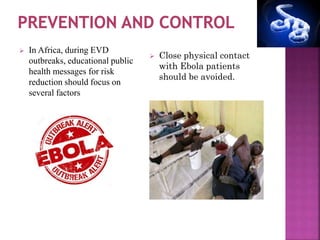
 In Africa, during EVD
outbreaks, educational public
health messages for risk
reduction should focus on
several factors
 Close physical contact
with Ebola patients
should be avoided.
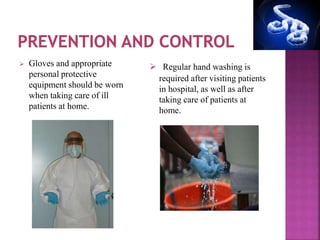
 Regular hand washing is
required after visiting patients
in hospital, as well as after
taking care of patients at
home.
 Gloves and appropriate
personal protective
equipment should be worn
when taking care of ill
patients at home.
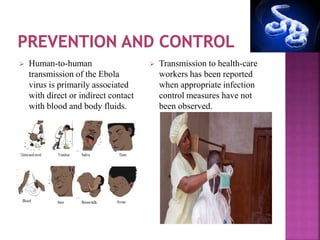
 Human-to-human
transmission of the Ebola
virus is primarily associated
with direct or indirect contact
with blood and body fluids.
 Transmission to health-care
workers has been reported
when appropriate infection
control measures have not
been observed.
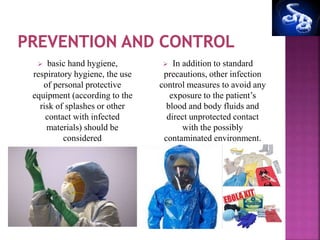
 basic hand hygiene,
respiratory hygiene, the use
of personal protective
equipment (according to the
risk of splashes or other
contact with infected
materials) should be
considered
 In addition to standard
precautions, other infection
control measures to avoid any
exposure to the patient’s
blood and body fluids and
direct unprotected contact
with the possibly
contaminated environment.
 http://www.who.int/mediacentre/factsheets/fs103/en/
 https://en.wikipedia.org/wiki/Ebola_virus_disease#Treatments
 http://indiaopines.com/ebola-virus-man-made-labs/
 http://jis.gov.jm/tips/frequently-asked-questions-ebola-virus-
disease/
 https://www.linkedin.com/pulse/20140825131837-90128373-
ebola-virus-disease-information-and-resources
 http://www.shutterstock.com/pic-220625344/stock-vector-ebola-
virus-disease-symptoms.html
 http://www.dailymail.co.uk/news/article-2786556/All-ll-need-
Hazmat-suit-Halloween-Doctors-slam-surge-useless-online-Ebola-
survival-kits-America-panic-buys.html
EBOLA VIRAL DISEASE
EBOLA VIRAL DISEASE

EBOLA VIRAL DISEASE

  • 1.
    EBOLA VIRAL DISEASE PRESENTEDBY :- ANAS HARUNA INDABAWA Department of Pharmacy, SHIATS EMAIL:- anasindabawa7@gmail.com
  • 2.
     Ebola virusdisease (EVD), formerly known as Ebola hemorrhagic fever, is a severe, often fatal illness in humans.  The virus is transmitted to people from wild animals and spreads in the human population through human-to-human transmission.  The first EVD outbreaks occurred in remote villages in Central Africa, near tropical rainforests, but the most recent outbreak in West Africa has involved major urban as well as rural areas.  Disease was first identified in 1976 into two simultaneous outbreak, one in Nzara and the other in Yambuku, a village near Ebola river from where the disease got its name.  Between 1976 to 2013, World health organization (WHO), reports a total 24 outbreaks involving 1,716 cases  The largest outbreak began in 2014 and continued into 2015 with an epidemic in west Africa affecting the countries of Liberia, Sierra Leone and Guinea  The disease is also distributed in some countries within Africa like Zaire (Democratic republic of Congo), Uganda, Nigeria, Mali and Sudan. Its also discovered in USA.  As 30th December 2015, this outbreak had 28,638 reported cases.
  • 5.
    Ebola virus canbe transmitted through  Close contact with the blood, secretions, organs or other bodily fluids of infected animals.  Men who have recovered from the disease can still transmit the virus through their semen for up to 7 weeks after recovery from illness.  Burial ceremonies in which mourners have direct contact with the body of the deceased person can also play a role in the transmission of Ebola.  In Africa, infection has been documented through the handling of infected chimpanzees, gorillas, fruit bats, monkeys, forest antelope and porcupines found ill or dead or in the rainforest.
  • 7.
     The Ebolaincubation period is the period of time between infection with the Ebola virus and the appearance of symptoms associated with the disease.  Incubation period can be as short as 2 days or as long as 21 days.  After four to six days on average, symptoms of Ebola can begin Acute symptoms may develop like:  Sudden onset of fever  Intense weakness  Muscle pain  Headache  Sore throat Then followed by:  Vomiting  Diarrhea  Rashes Usually followed with decrease liver and kidney function which result to internal and external bleeding in some people.
  • 10.
    It can bedifficult to distinguish EVD from other infectious diseases such as malaria, typhoid fever and meningitis. Confirmation that symptoms are caused by Ebola virus infection are made using the following investigations:  antibody-capture enzyme-linked immunosorbent assay (ELISA)  antigen-capture detection tests  serum neutralization test  reverse transcriptase polymerase chain reaction (RT-PCR) assay  electron microscopy  virus isolation by cell culture.
  • 11.
    There is asyet no proven treatment available for EVD. However, a range of potential treatments including blood products, immune therapies and drug therapies are currently being evaluated. No licensed vaccines are available yet, but 2 potential vaccines are undergoing human safety testing. Supportive care-rehydration with oral or intravenous fluids- and treatment of specific symptoms, improves survival.
  • 12.
    In the absenceof effective treatment and a human vaccine, raising awareness of the risk factors for Ebola infection and the protective measures individuals can take is the only way to reduce human infection and death.
  • 13.
     Reduce therisk of wildlife- to-human transmission  Reducing the risk of human- to-human transmission  Reducing the risk of possible sexual transmission  Outbreak-containment measures
  • 14.
     In Africa,during EVD outbreaks, educational public health messages for risk reduction should focus on several factors  Close physical contact with Ebola patients should be avoided.
  • 15.
     Regular handwashing is required after visiting patients in hospital, as well as after taking care of patients at home.  Gloves and appropriate personal protective equipment should be worn when taking care of ill patients at home.
  • 16.
     Human-to-human transmission ofthe Ebola virus is primarily associated with direct or indirect contact with blood and body fluids.  Transmission to health-care workers has been reported when appropriate infection control measures have not been observed.
  • 17.
     basic handhygiene, respiratory hygiene, the use of personal protective equipment (according to the risk of splashes or other contact with infected materials) should be considered  In addition to standard precautions, other infection control measures to avoid any exposure to the patient’s blood and body fluids and direct unprotected contact with the possibly contaminated environment.
  • 18.
     http://www.who.int/mediacentre/factsheets/fs103/en/  https://en.wikipedia.org/wiki/Ebola_virus_disease#Treatments http://indiaopines.com/ebola-virus-man-made-labs/  http://jis.gov.jm/tips/frequently-asked-questions-ebola-virus- disease/  https://www.linkedin.com/pulse/20140825131837-90128373- ebola-virus-disease-information-and-resources  http://www.shutterstock.com/pic-220625344/stock-vector-ebola- virus-disease-symptoms.html  http://www.dailymail.co.uk/news/article-2786556/All-ll-need- Hazmat-suit-Halloween-Doctors-slam-surge-useless-online-Ebola- survival-kits-America-panic-buys.html