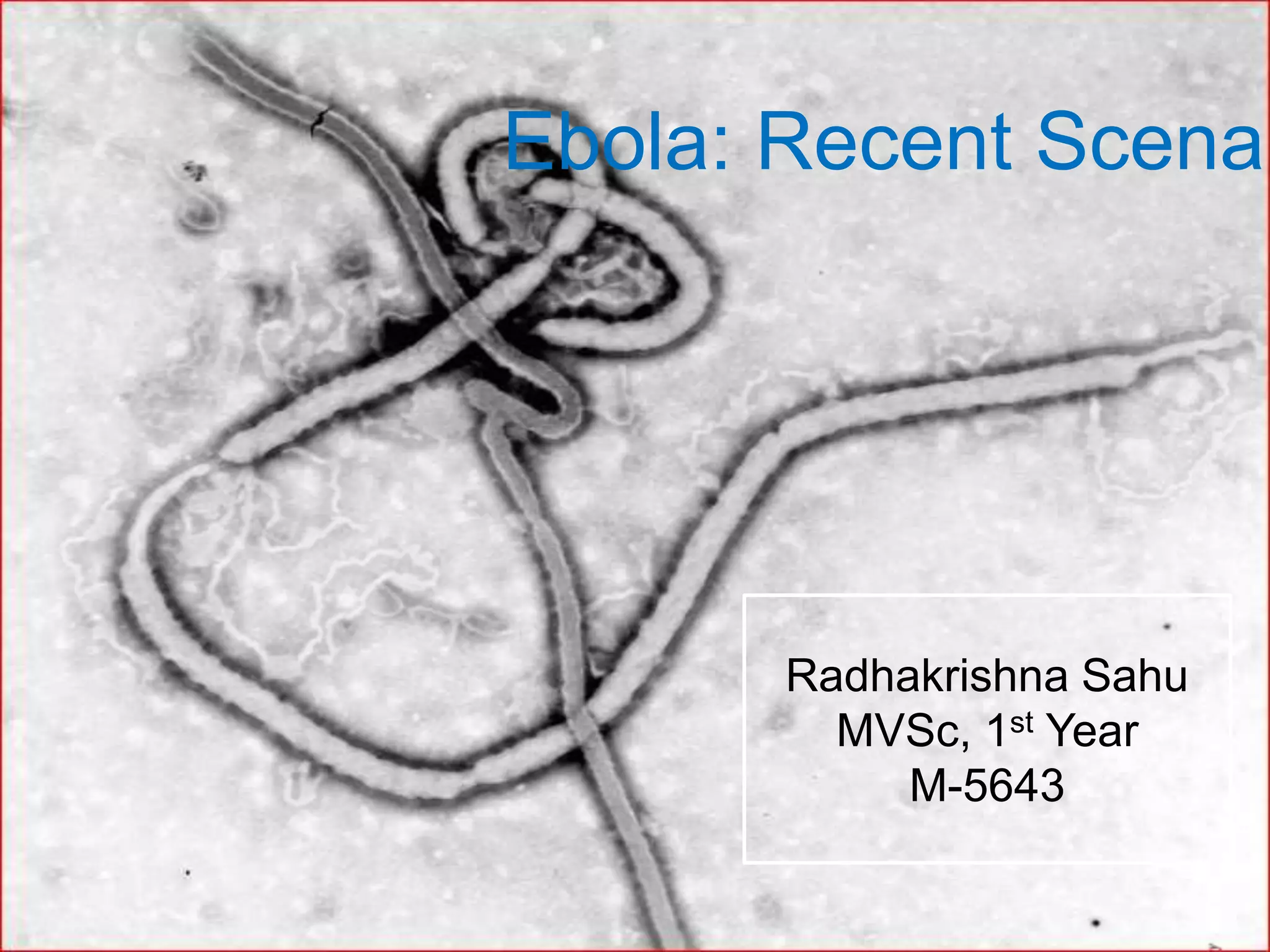
Ebola: Recent Scenar
Radhakrishna Sahu
MVSc, 1st Year
M-5643
• Order: Mononegavirales
• Family: Filoviridae
• Genus: Ebola like viruses
• Species: Ebola
Subtypes
Disease in humans
• Ebola-Zaire
• Ebola-Sudan
• Ebola-Ivory Coast
• Bundibugyo
Disease in nonhuman
primates
• Ebola-Reston
• Asymptomatic
(humans)
• Circulate in domestic
pigs
• In future may emerge
as a human pathogen
• Enveloped
• Single-stranded
• Filamentous
• Negative-sense RNA virus
• Variable-length (970 nm-
14,000nm)
• Diameter 80 nm
• Branched morphology
• Helical capsid
• Pleomorphic ‘U’- shaped, ‘6’-
shaped
Ebola virus disease (EVD)
 A severe, often fatal illness in humans (WHO,2014)
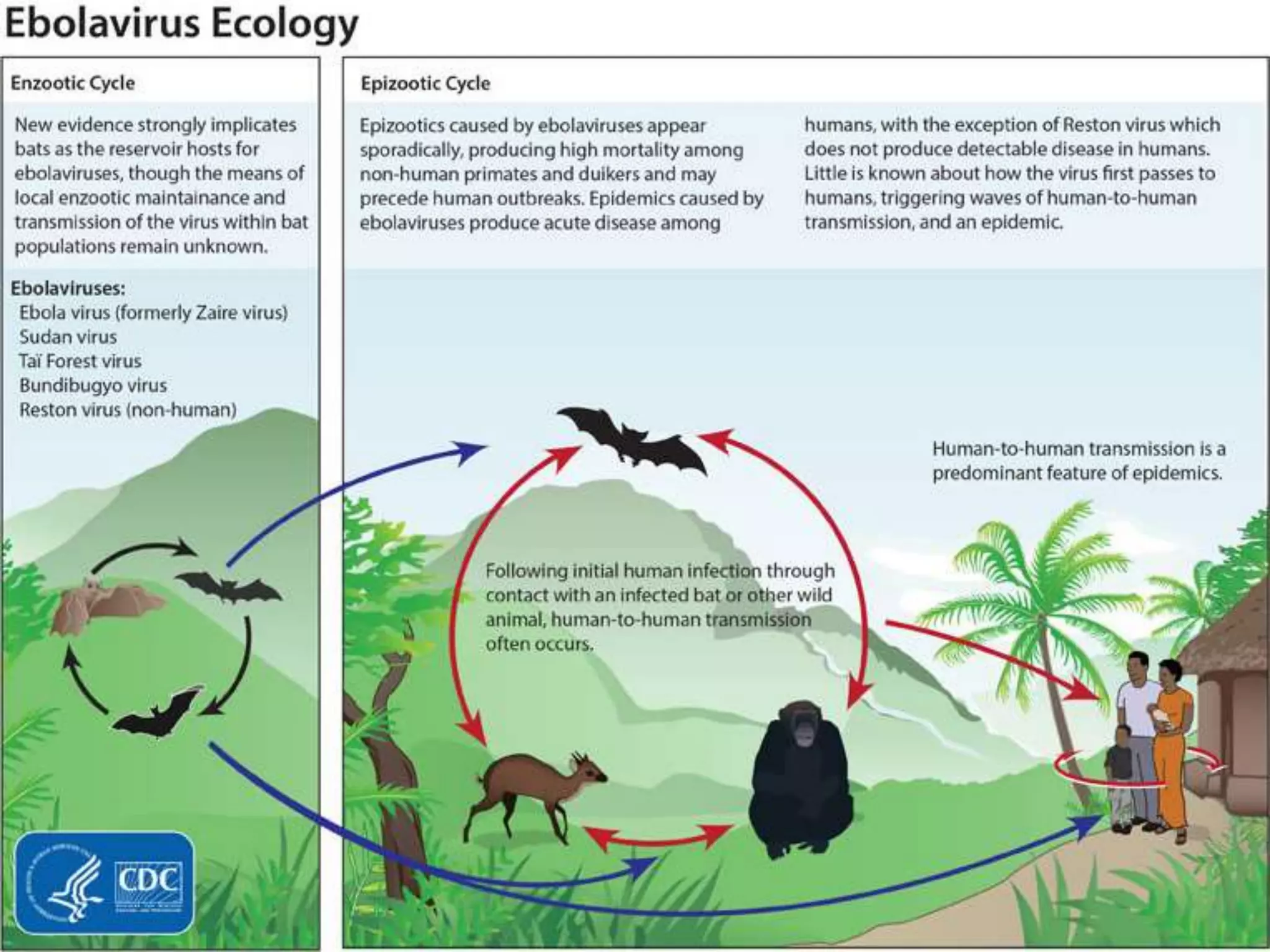
 wild animals --------humans
 Haemorragic fevers (human & non-human primates)
 CFR- 25% to 90% (Fauci,2014)
 Named ‘Ebola’ after the small river near Yambuku (1976 EHF
outbreak.)
 Categary A bioterrorism agent
Human--------human
A painting by David Goodsell which won ‘Welcome image award’ in US
Viral genomic RNA AND
proteins NP, VP35, VP30, and
L.(centre)
Glycoprotein (GP) spikes-
outer viral envelope of the
virion
In matrix space- VP40 and
VP24 are located.
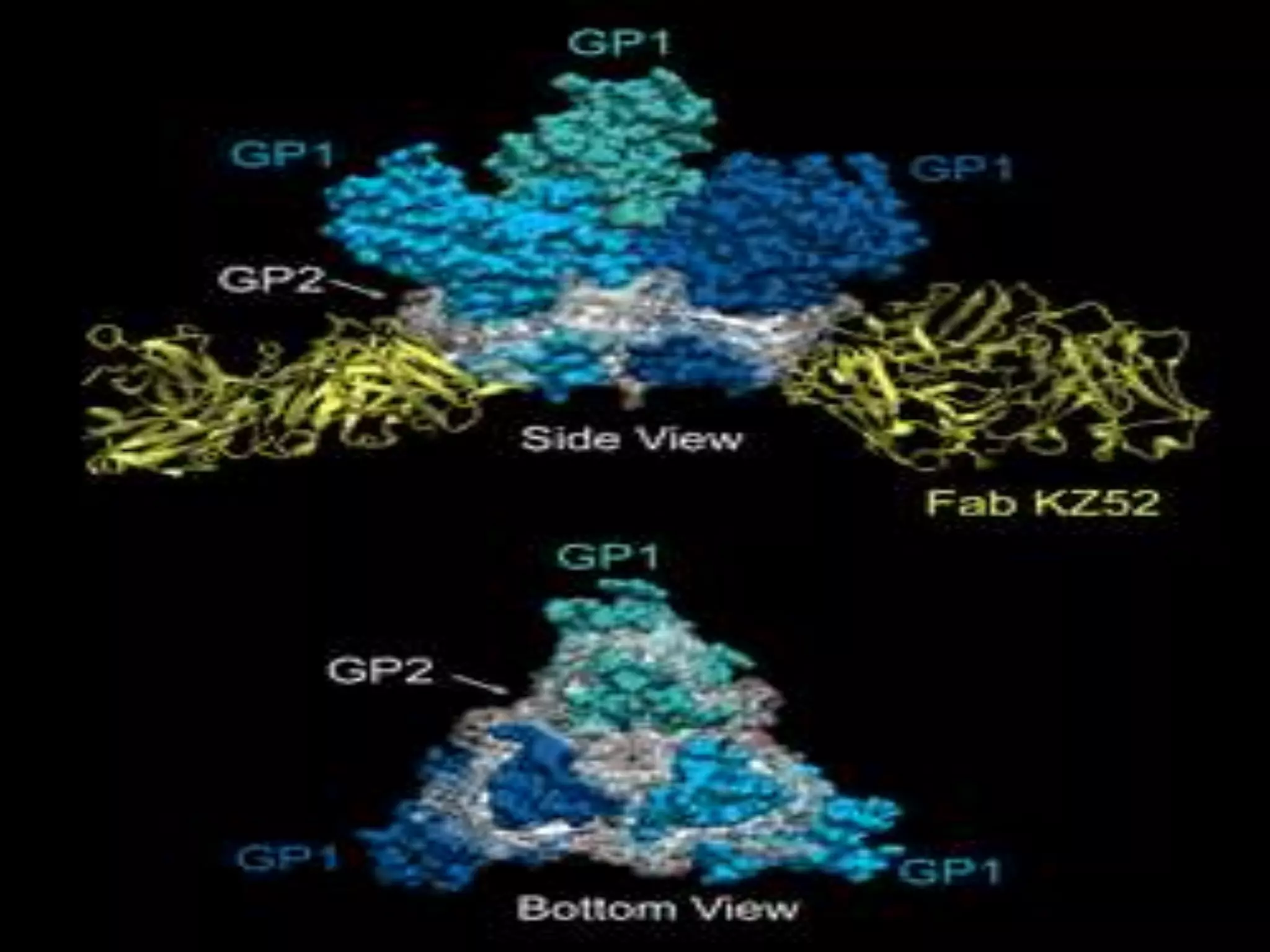
• GP1 subunit –
– cellular attachment
– putative receptor-binding regions.
• N-terminal 150 residues ------>six amino acids (critical residues)----
 three are clustered (potential receptor-binding pocket)
• GP2 subunit - fusion of the viral and host cell membranes
Comprehensive Analysis of Ebola Virus GP1 in Viral Entry J Virol. 2005 Apr; 79(8): 4793–4805. doi: 10.1128/JVI.79.8.4793-4805.2005
Is Ebola Airborne?
• Some degree of transmission via infectious aerosols (gastrointestinal tract, the
respiratory tract, or medical procedures,)
Michael T. Osterholm, mBio, a journal of the American Society of Microbiology
•“No data to exclude it, . The virus could mutate to become airborne ".
•Transmission of Ebola virus (Zaire strain) to uninfected control monkeys in a
biocontainment laboratory which were not in direct contact with infected ones
Jaax N1, Jahrling P, Geisbert T, Geisbert J, Steele K, McKee K, Nagley D, Johnson E, Jaax G, Peters C, The Lancet.
C.J. Peters, who researched Ebola in the late 1980s in Virginia, told the Los Angeles Times
Transmission to Healthcare Workers
• Highest risk of secondary Ebola virus infection.
• >50% of all health worker infections with occupation reported (n=
373/718).)
• Probable factors
1. Deficiencies in administrative, engineering and environmental
controls
2. Inappropriate use or lack of PPE
3. Defective IPC practice
4. Behaviour, and poor employment conditions
(A PRELIMINARY REPORT 21 May 2015 by WHO
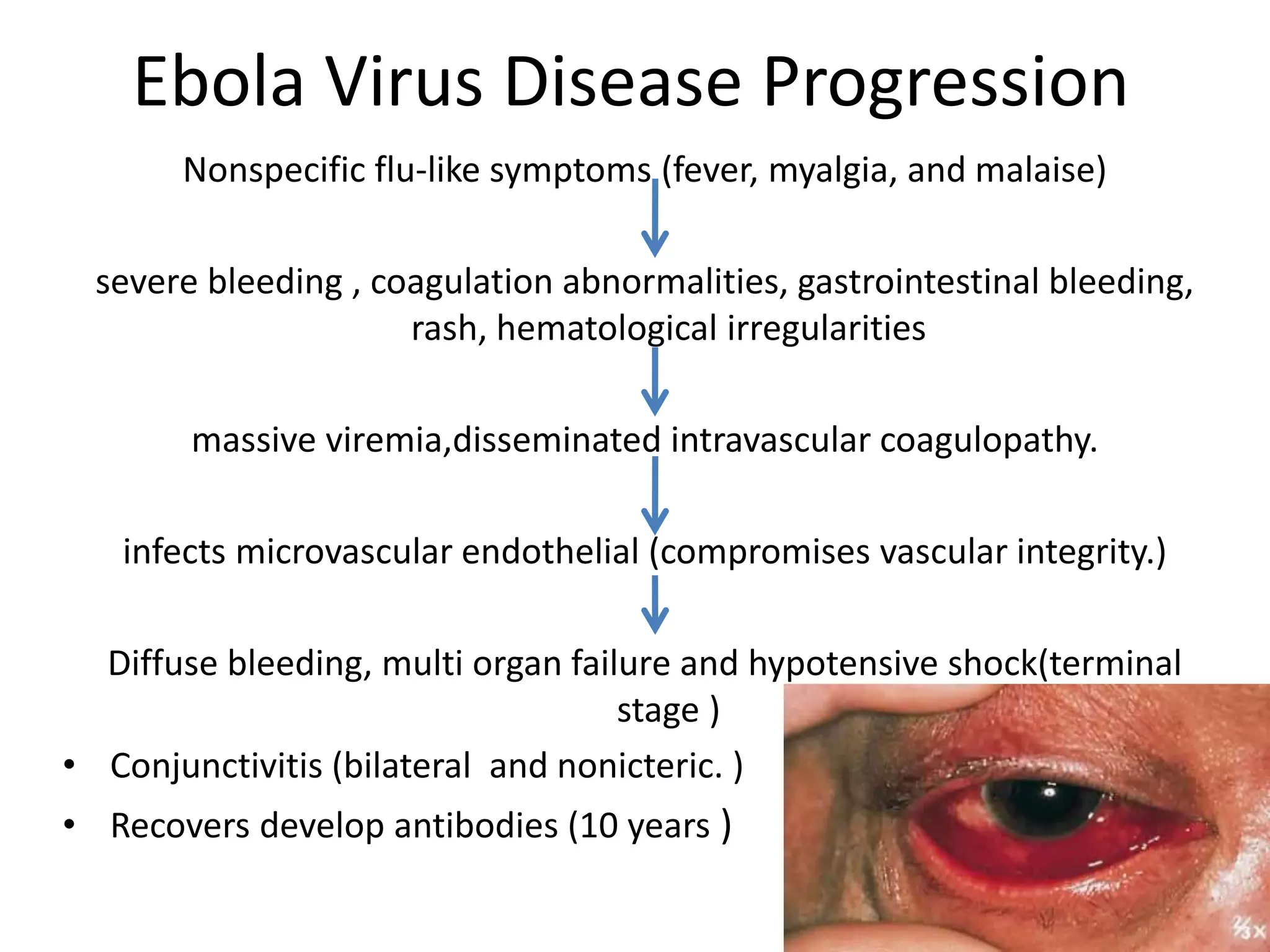
Ebola Virus Disease Progression
Nonspecific flu-like symptoms (fever, myalgia, and malaise)
severe bleeding , coagulation abnormalities, gastrointestinal bleeding,
rash, hematological irregularities
massive viremia,disseminated intravascular coagulopathy.
infects microvascular endothelial (compromises vascular integrity.)
Diffuse bleeding, multi organ failure and hypotensive shock(terminal
stage )
• Conjunctivitis (bilateral and nonicteric. )
• Recovers develop antibodies (10 years )
Pathogenesis
Timeline of Infection Diagnostic tests available
Within a few days after symptoms begin •Antigen-capture enzyme-linked
immunosorbent assay (ELISA) testing IgM ELISA
•Polymerase chain reaction (PCR)
•Virus isolation
Later in disease course or after recovery •IgM and IgG antibodies
Retrospectively in deceased patients •Immunohistochemistry testing
•PCR
•Virus isolation
http://www.cdc.gov/vhf/ebola/diagnosis/#modalIdString_CDCTable_0
BSL-4 laboratory facility and equipment and highly specialized personnel
Seven diagnostics have been approved
for emergency deployment by WHO
Test kits Manufacturer
OraQuick® Ebola Rapid Antigen
Test Kit
OraSure Technologies, Inc
RealStar® Filovirus Screen RT-PCR
Kit 1.0
Altona Diagnostics GmbH
Antigen Rapid Test Kit, ReEBOVTM Corgenix
LiferiverTM Ebola Virus (EBOV) Real
Time RT-PCR Kit
Shanghai ZJ BioTech Co., Ltd
Xpert® Ebola Test Cepheid AB - Solna, Sweden
FilmArray™ Biothreat-E BioFire Defence LLC.
SD Q Line Ebola Zaire Ag SD Biosensor Inc
ReEBOV Antigen Rapid Test Kit
• Quick (15 minutes)
• 92%- sensitivity
• 85%- specificity
• Works without electricity
• At room temperature
Cell phone sized device developed to
detect Ebola
• Quicker, takes arround 37 minute
• Less amount of blood
• Detect 16 biomarkers
• Counts number of copies of RNA
Treatment
 No proven treatment yet.
 A clinical trial of favipiravir and Interferon in Guniea during
outbreak.
 Rehydration (oral/i.v. fluid)
 Maintaining oxygen status.
 Melatonin (target immuno-inflammatory responsive events)
 ZMapp(Leafbio, USA) & MIL 77 (MabWorks, China)
monoclonal antibody "cocktail"
http://www.who.int/medicines/ebola-treatment/emp_ebola_therapies/en/
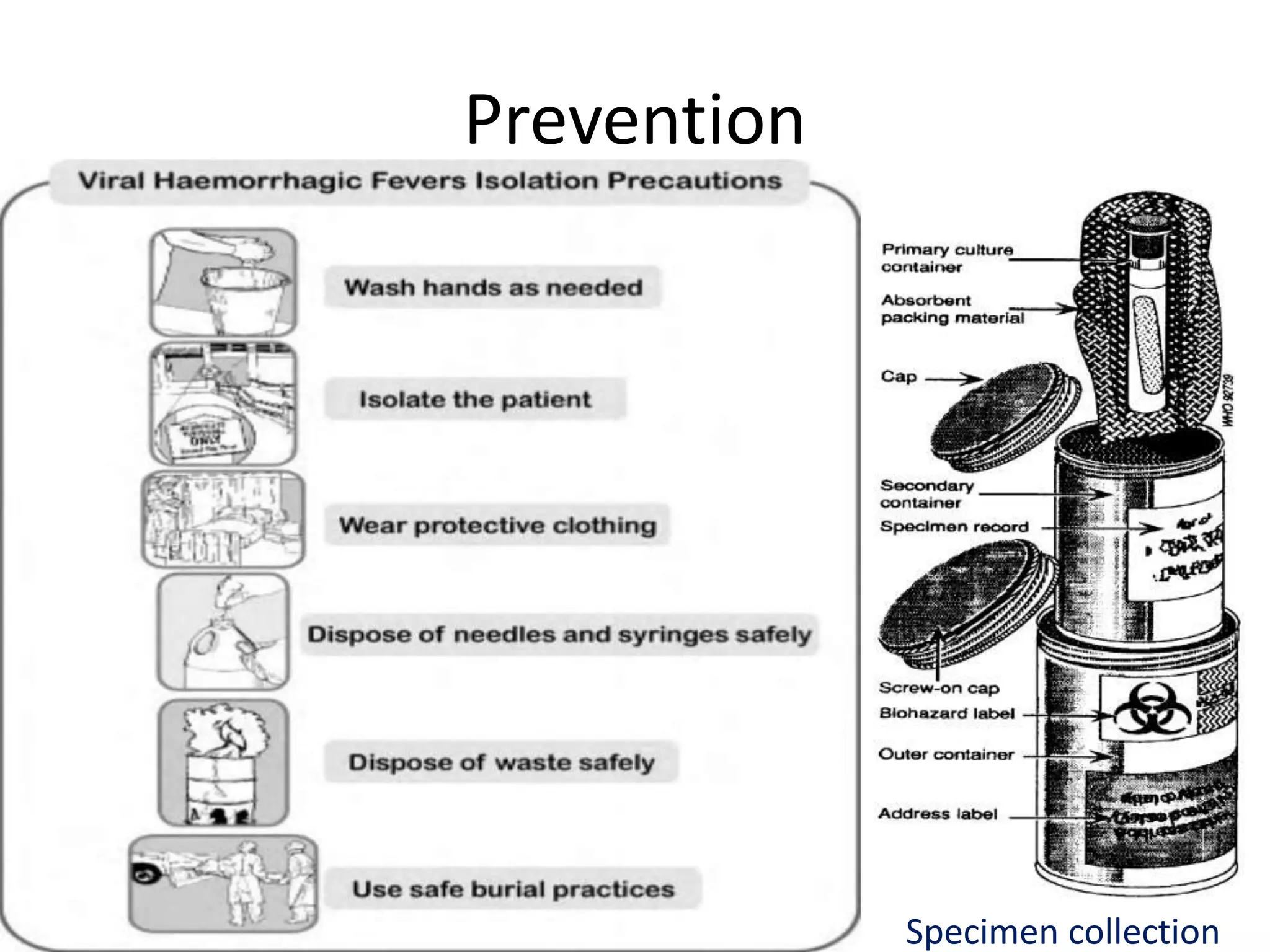
Prevention
Specimen collection
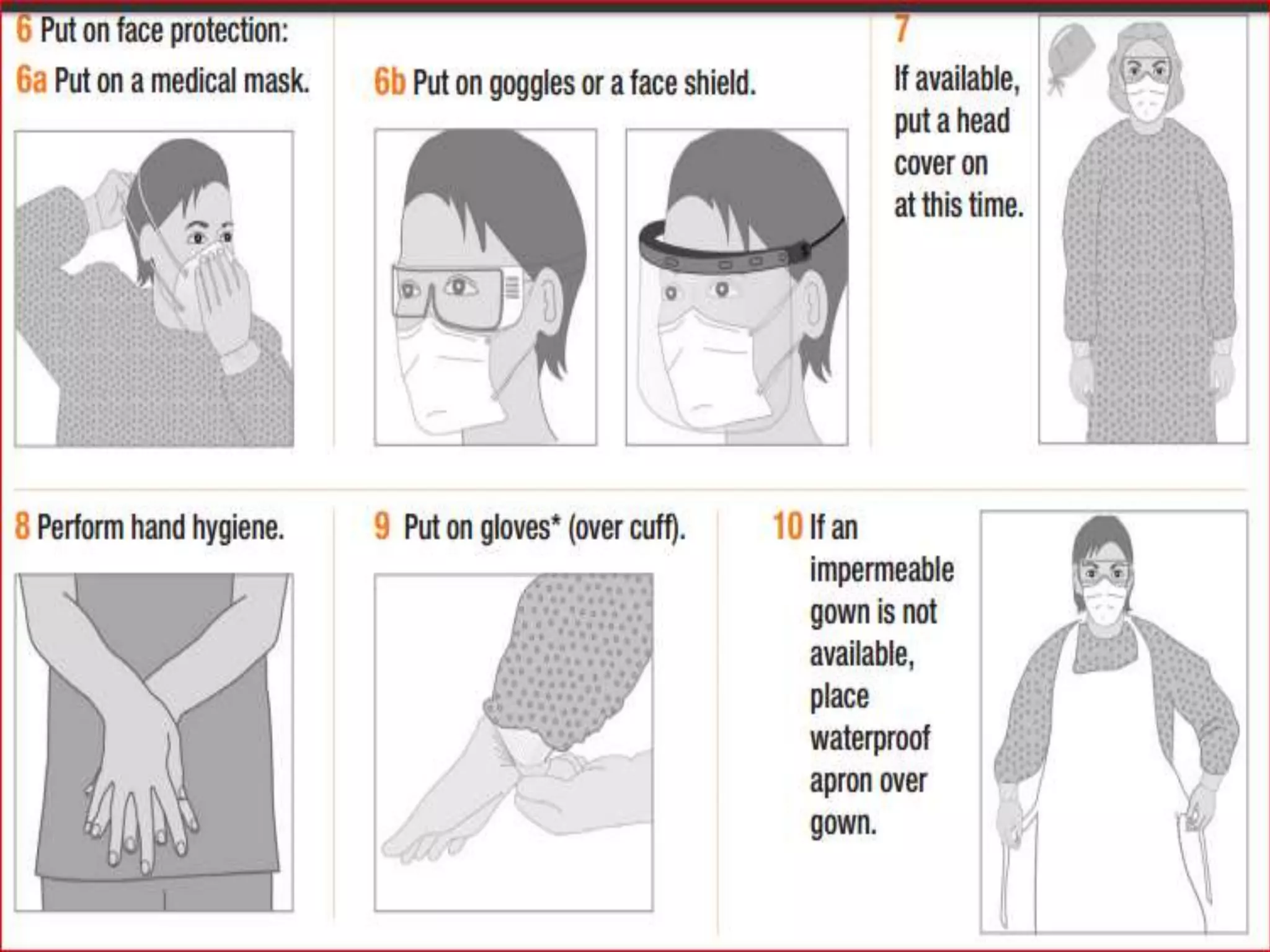
PPE: Steps to put on
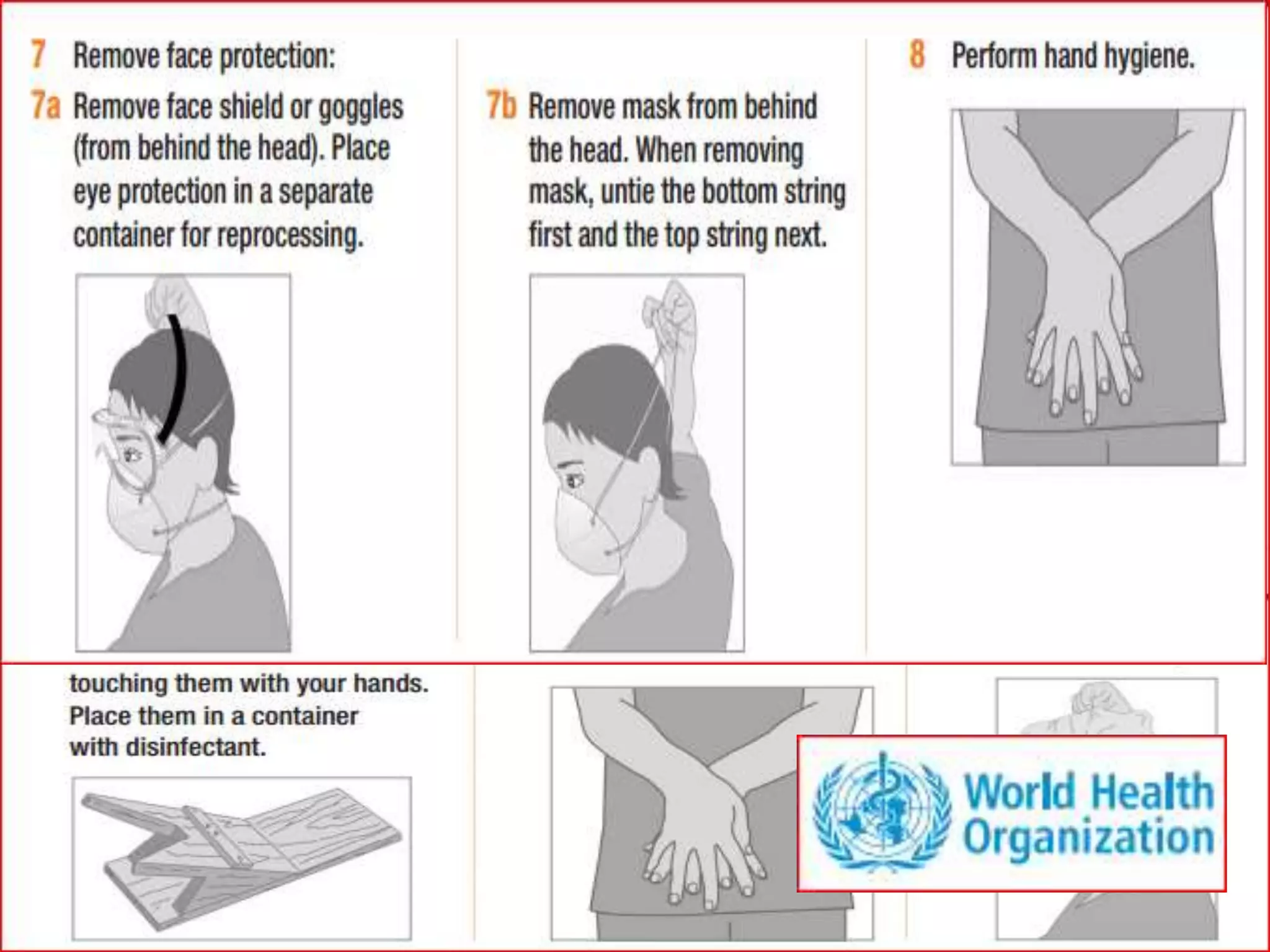
PPE: Steps to Put off
Vaccine
• at least 15 vaccines are being developed
• Four main candidates-
– VSB-EBOV
– ChAd3-ZEBOV,
– prime-boost regimen of Ad26- and MVA-EBOV (Johnson &
Johnson)
– recombinant particle made of EBOV glycoprotein (insect cell
line)
Phase II/III
trials in the
three affected
countries going
on
Phase 1
successfully
completed.
•Tolerable
•Safe
•Effective IR
http://medicalxpress.com/news/2016-05-ebola-vaccinepromising-
phase-trials.html
http://www.who.int/medicines/ebolatre
atment/emp_ebola_vaccines/en/
• VSV-EBOV- vesicular stomatitis virus, genetically engineered to
Ebola glycoproteins
• ChAd3-ZEBOV- Chim Adenovirus type 3 genetically engineered
to glycoproteins (Zaire and Sudan species)
• Ad26- and MVA-EBOV- first vaccine as prime, followed by a second
vaccine as boost
POST-EBOLA SYNDROME (PES)
• Headache
• difficulty walking
• muscle weakness
• depression and memory loss
• Hallucinations
• Blindness
• Deafness
• Confusion
• Psychosis
• Double vision
• Abnormal sensation
• Insomnia
• sexual problems (under-functioning &
hypersexuality in some cases)
neurological exams
•cranial nerve pursuits
•cranial nerve saccades
•peripheral neuropathy
•abnormal reflexes
•focal upper motor neuron
weakness.
Modified Rankin scale for
disability: 85% were rated at 1
long-term neurological
problems in survivors 6
months after initial infection.
Outbreaks till date
REGION MORBIDI
TY
MORTALI
TY
SPECIES YEAR
Dem. Rep. of Congo
(Yambuku
)
318 280 Zaire EBOV 1976
Sudan (Nzara)
284 151 Sudan EBOV 1976
Dem. Rep. of Congo
(Tandala)
1 1 Zaire EBOV 1977
Sudan (Nzara) 34 22 Sudan EBOV 1979
Gabon (Mekouka) 52 31 Zaire EBOV 1994
Ivory Coast (Tai Forest) 1 0 EIvoryCoast 1994
Dem. Rep. of Congo (Kikwit) 315 250 Zaire EBOV 1995
Gabon (Mayibout) 37 21 Zaire EBOV 1996
Gabon (Booue) 60 45 Zaire EBOV 1996
South Africa (Johannesburg) 2 1 Zaire EBOV 1996
Uganda (Gulu) 425 224 Sudan EBOV 2000
Gabon (Libreville) 65 53 Zaire EBOV 2001
Republic of Congo 57 43 Zaire EBOV 2001
Republic of Congo (Mbomo) 143 128 Zaire EBOV 2002
Republic of Congo (Mbomo) 35 29 Zaire EBOV 2003
Sudan (Yambio) 17 7 Sudan EBOV 2004
Dem. Rep. of Congo (Luebo) 264 187 Zaire EBOV 2007
Uganda (Bundibugyo) 149 37
Bundibugyo
EBOV
2007
Uganda 24 17 Sudan EBOV 2012
Democratic Republic of the
Congo
57 29 Bundibugyo
EBOV
2012
Democratic Republic of the
Congo
66 66 Zaire EBOV 2014
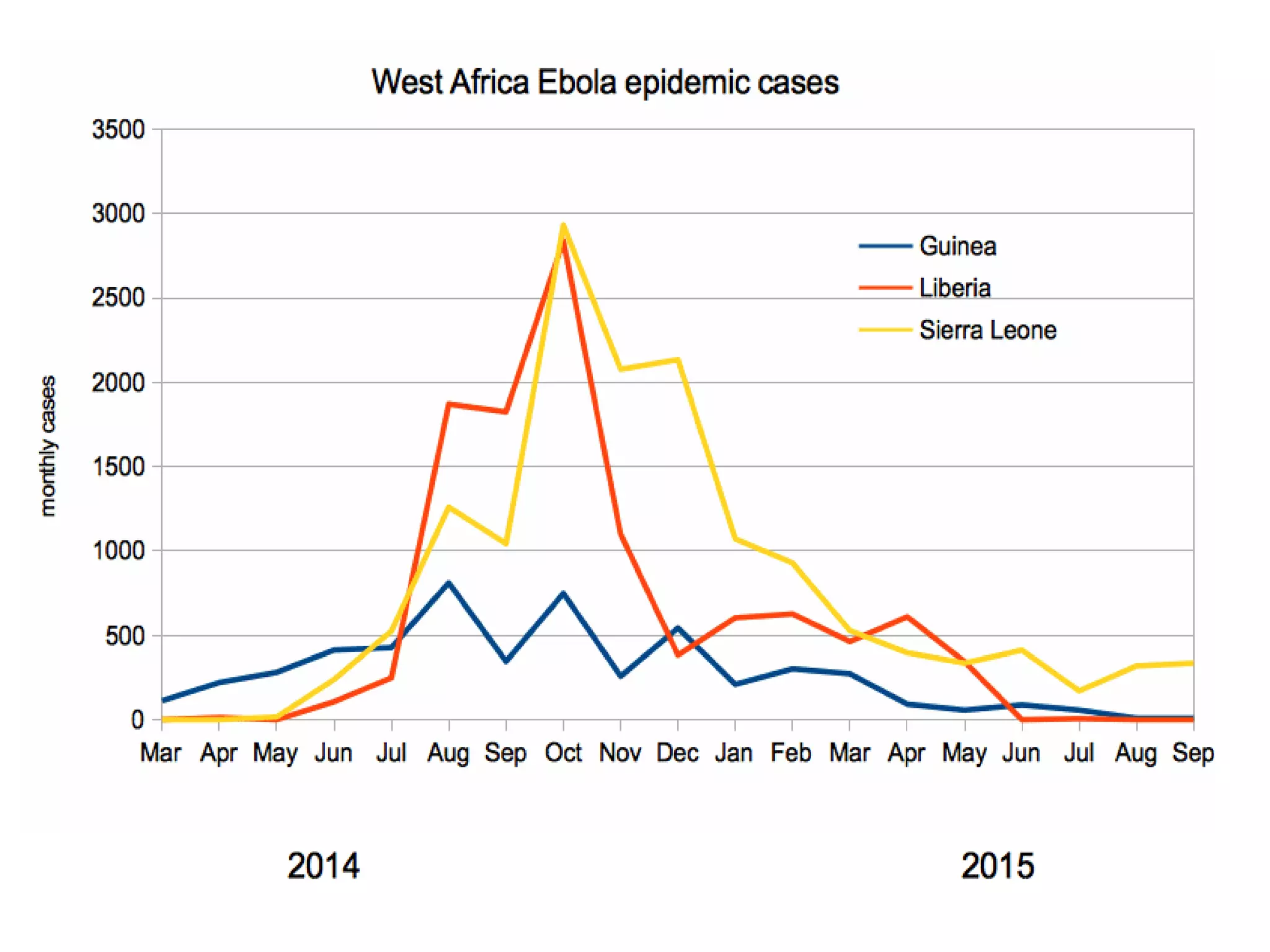
West African Ebola Pandemc
Liberia
Sierra Leone
Guinea
Nigeria
Mali
US
Italy
UK
Senegal
Spain
28,657
10,675
14,122
3,814
20
8
4
1
1
1
1
11,325
4,809
3,955
2,543
8
6
1
0
0
0
0
Zaire EBOV 2014-
15
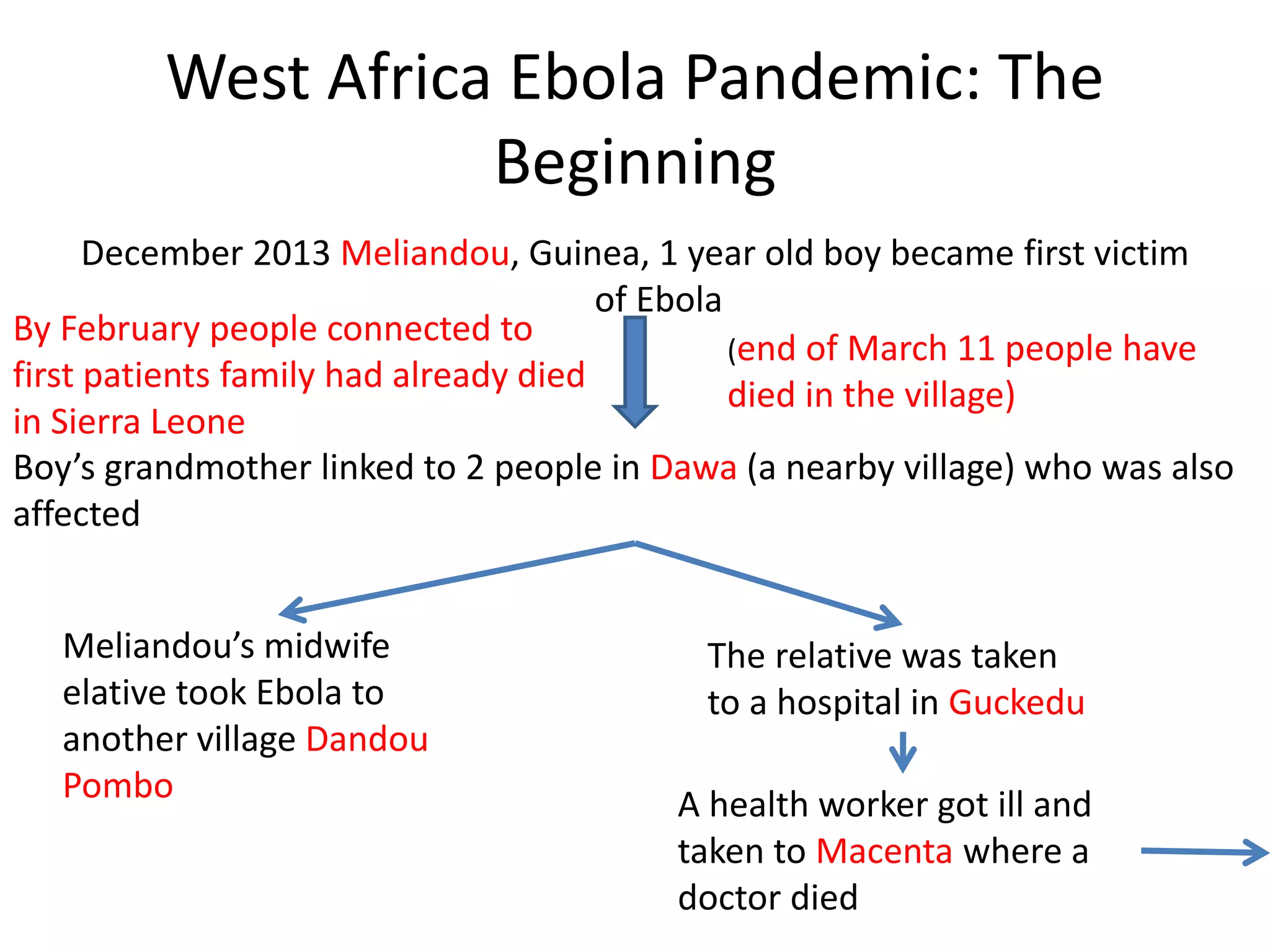
West Africa Ebola Pandemic: The
Beginning
December 2013 Meliandou, Guinea, 1 year old boy became first victim
of Ebola
(end of March 11 people have
died in the village)
Boy’s grandmother linked to 2 people in Dawa (a nearby village) who was also
affected
Meliandou’s midwife
elative took Ebola to
another village Dandou
Pombo
The relative was taken
to a hospital in Guckedu
A health worker got ill and
taken to Macenta where a
doctor died
By February people connected to
first patients family had already died
in Sierra Leone
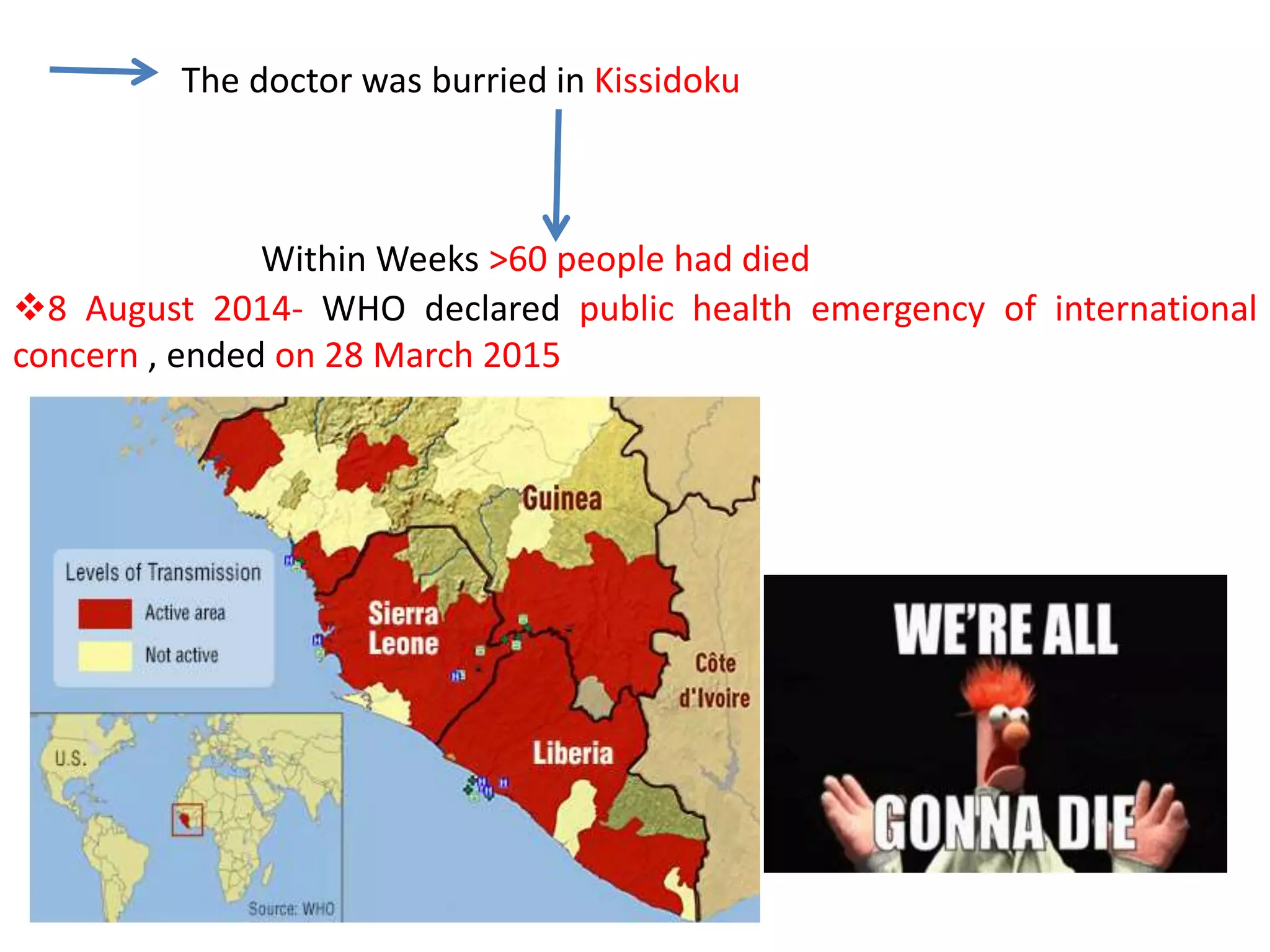
The doctor was burried in Kissidoku
Within Weeks >60 people had died
8 August 2014- WHO declared public health emergency of international
concern , ended on 28 March 2015
Factors that fuelled the outbreak
 Porous borders (easily crossable through foot and dug tunnel)
 major issue in Sub-saharan Africa but never in West Africa
 Funeral rituals
 Week public health systems
 Reliance on traditional healers
 A virus with different clinical and epidemiological features
The current Ebola virus’s hyper-evolution is unprecedented; there has
been more human-to-human transmission in the past four months than
most likely occurred in the last 500 to 1,000 years. Each new infection
represents trillions of throws of the genetic dice.
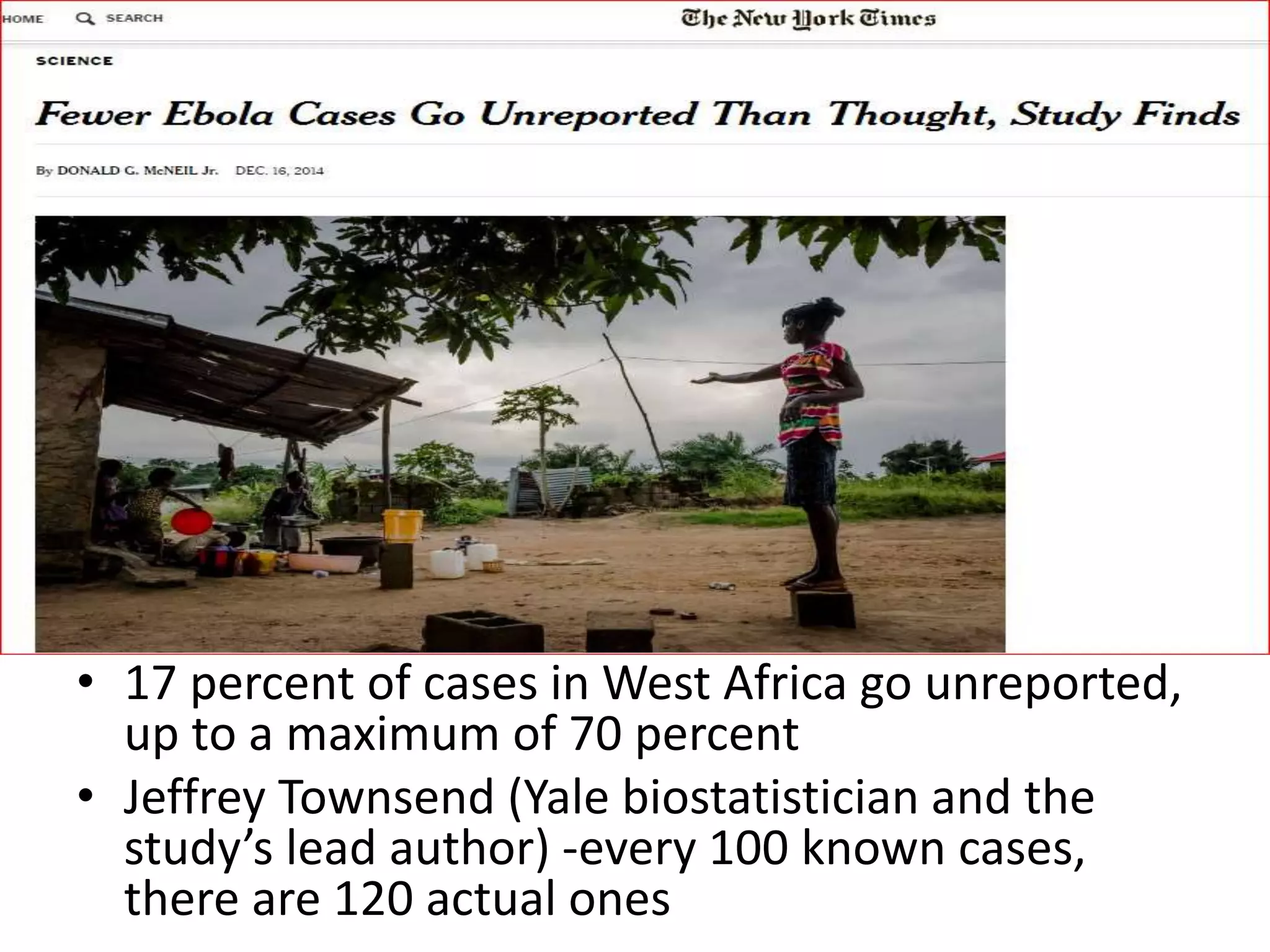
The New York Times
• 17 percent of cases in West Africa go unreported,
up to a maximum of 70 percent
• Jeffrey Townsend (Yale biostatistician and the
study’s lead author) -every 100 known cases,
there are 120 actual ones
Measures to halt international spread
of Ebola
• Routine screening (Both entry & exit)
– measuring temperatures
– obtaining a travel history for every
passenger
– caring safely those suspected to be
infected with Ebola
– information on Ebola to travellers
•The Travel and Transport Task Force,
established in August 2014,
•It follows recommendations of the IHR,
Emergency Committee on Ebola,
convened by WHO.
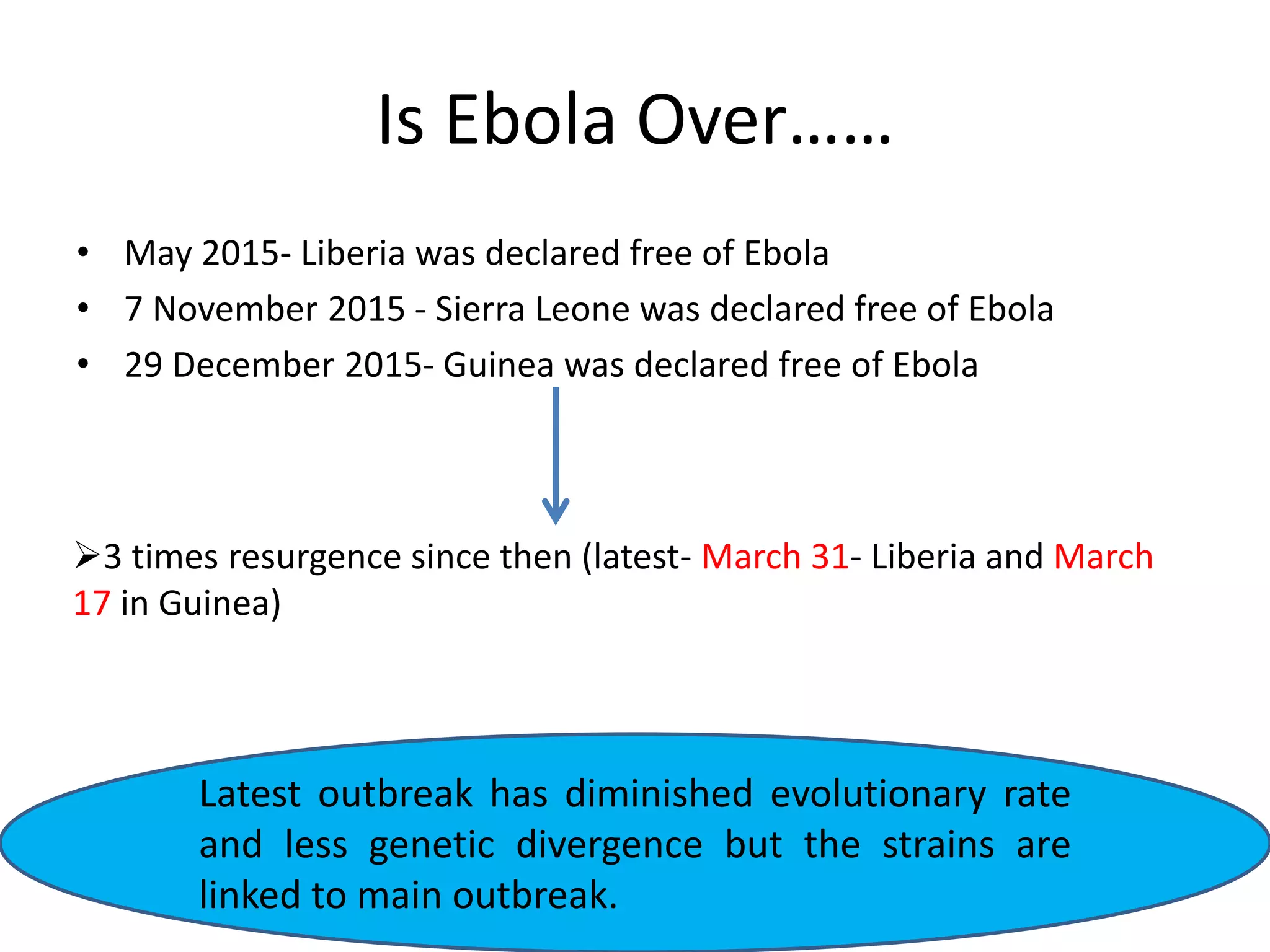
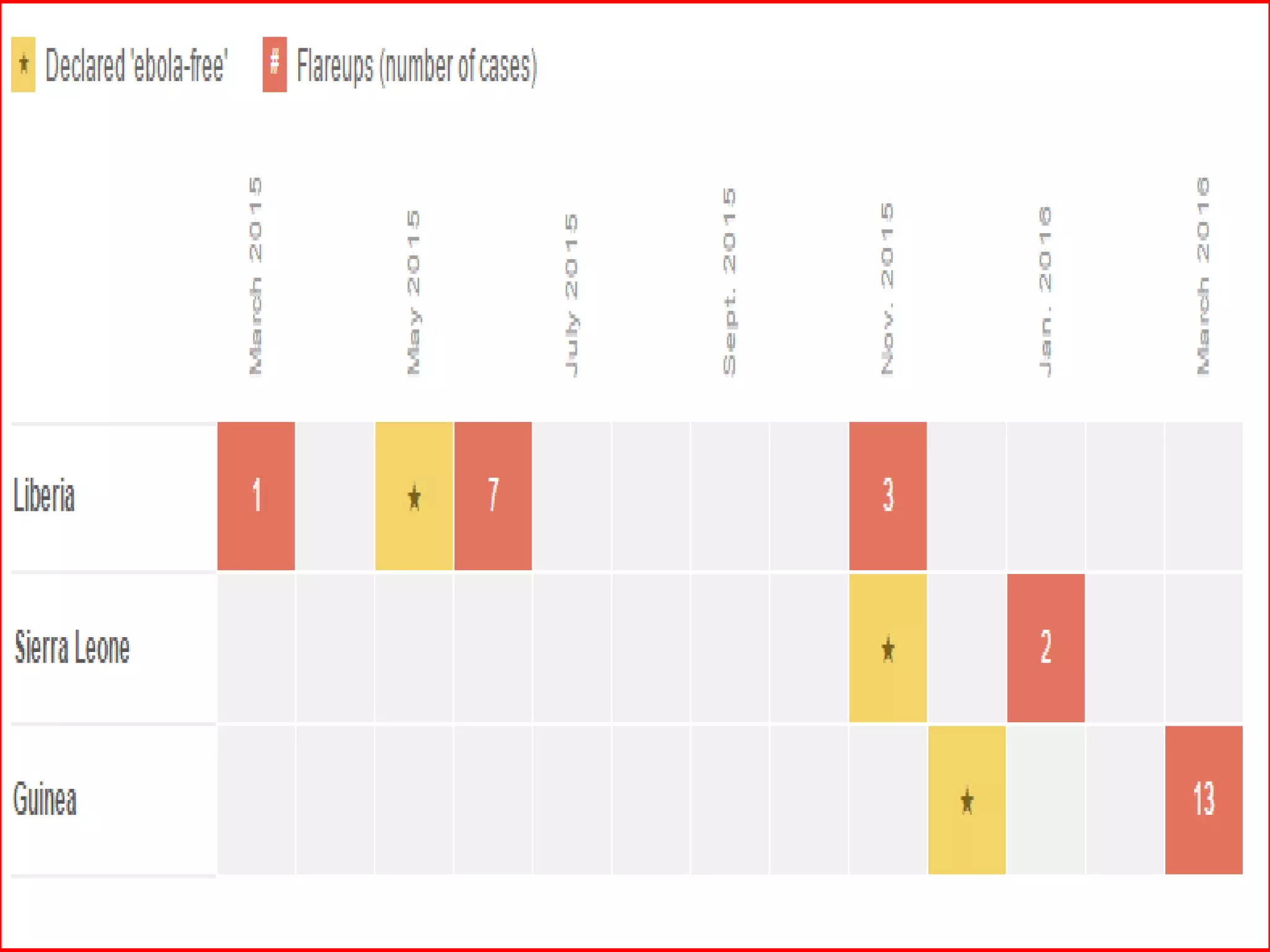
Is Ebola Over……
• May 2015- Liberia was declared free of Ebola
• 7 November 2015 - Sierra Leone was declared free of Ebola
• 29 December 2015- Guinea was declared free of Ebola
3 times resurgence since then (latest- March 31- Liberia and March
17 in Guinea)
Latest outbreak has diminished evolutionary rate
and less genetic divergence but the strains are
linked to main outbreak.
Why this flare-up
• persistent infection (eyes, spinal fluid, breast milk, testis)
• Sexual transmission is No. 1 concern
• In some cases virus persisted >1 yr
• Out of last 3 flare ups 2 is due to sexual transmission
• What about the other?????? (June 2015 Flare up)
“We believe that most, if not all, the clusters of new Ebola cases have come
from [persistent infections in] survivors, but sometimes it's very hard to
determine that with certainty," -Dr. Thomas Frieden, Director,Centers for
Disease Control and Prevention in the U.S.
Sexual Transmission of Ebola
• 82 days after symptom onset (Democratic Republic of Congo, 1995)
• recent outbreak vRNA detected after 406 days (13.5 months)
• vRNA detected vaginal fluid 33 days after symptom onset
(Democratic Republic of Congo, 1995).
• Live virus never been isolated. Can it be sexually transmitted from
females to males????
http://www.who.int/reproductivehealth/topics/rtis/ebola-virus-semen/en/
Guidelines to Prevent Sexual
Transmission
Male Ebola survivors
semen testing at 3 months
+/-
every month semen tests
negative twice by RT-PCR (interval of 1 wk.)
Can have sex with partner
http://www.who.int/reproductivehealth/topics/rtis/ebola-virus-semen/en/
Can have sex with partner
(-)
(+)
Not tested
Safe sex after 12 months
Controversy After the Outbreak
• No one exactly knows, how the index case appeared
• “The Ebola Outbreak in West Africa: Corporate Gangsters,
Multinationals & Rogue Politricksters”. By Chernoh Alpha M. Bah-
– origin of the outbreak in Sierra Leone
– western media covered-up the actual chain of events to
exonerate the role of international actors for the disaster.
• “This isn’t normal Ebola at all, I believe it’s been genetically modified.”.
•“US government laboratories creating bioweapons under the guise
of innocently working on cures. One of these laboratories,, is in
Kenema, the epicentre of outbreak.”
Francis Boyle, a noted scholar of bio-warfare and international law at the University of Illinois
`
So Finally Who Will Win?

Ebola and Its recent scenario

  • 1.
    Ebola: Recent Scenar RadhakrishnaSahu MVSc, 1st Year M-5643
  • 2.
    • Order: Mononegavirales •Family: Filoviridae • Genus: Ebola like viruses • Species: Ebola
  • 3.
    Subtypes Disease in humans •Ebola-Zaire • Ebola-Sudan • Ebola-Ivory Coast • Bundibugyo Disease in nonhuman primates • Ebola-Reston • Asymptomatic (humans) • Circulate in domestic pigs • In future may emerge as a human pathogen
  • 4.
    • Enveloped • Single-stranded •Filamentous • Negative-sense RNA virus • Variable-length (970 nm- 14,000nm) • Diameter 80 nm • Branched morphology • Helical capsid • Pleomorphic ‘U’- shaped, ‘6’- shaped
  • 5.
    Ebola virus disease(EVD)  A severe, often fatal illness in humans (WHO,2014)  wild animals --------humans  Haemorragic fevers (human & non-human primates)  CFR- 25% to 90% (Fauci,2014)  Named ‘Ebola’ after the small river near Yambuku (1976 EHF outbreak.)  Categary A bioterrorism agent Human--------human
  • 6.
    A painting byDavid Goodsell which won ‘Welcome image award’ in US Viral genomic RNA AND proteins NP, VP35, VP30, and L.(centre) Glycoprotein (GP) spikes- outer viral envelope of the virion In matrix space- VP40 and VP24 are located.
  • 8.
    • GP1 subunit– – cellular attachment – putative receptor-binding regions. • N-terminal 150 residues ------>six amino acids (critical residues)----  three are clustered (potential receptor-binding pocket) • GP2 subunit - fusion of the viral and host cell membranes Comprehensive Analysis of Ebola Virus GP1 in Viral Entry J Virol. 2005 Apr; 79(8): 4793–4805. doi: 10.1128/JVI.79.8.4793-4805.2005
  • 10.
    Is Ebola Airborne? •Some degree of transmission via infectious aerosols (gastrointestinal tract, the respiratory tract, or medical procedures,) Michael T. Osterholm, mBio, a journal of the American Society of Microbiology •“No data to exclude it, . The virus could mutate to become airborne ". •Transmission of Ebola virus (Zaire strain) to uninfected control monkeys in a biocontainment laboratory which were not in direct contact with infected ones Jaax N1, Jahrling P, Geisbert T, Geisbert J, Steele K, McKee K, Nagley D, Johnson E, Jaax G, Peters C, The Lancet. C.J. Peters, who researched Ebola in the late 1980s in Virginia, told the Los Angeles Times
  • 11.
    Transmission to HealthcareWorkers • Highest risk of secondary Ebola virus infection. • >50% of all health worker infections with occupation reported (n= 373/718).) • Probable factors 1. Deficiencies in administrative, engineering and environmental controls 2. Inappropriate use or lack of PPE 3. Defective IPC practice 4. Behaviour, and poor employment conditions (A PRELIMINARY REPORT 21 May 2015 by WHO
  • 12.
    Ebola Virus DiseaseProgression Nonspecific flu-like symptoms (fever, myalgia, and malaise) severe bleeding , coagulation abnormalities, gastrointestinal bleeding, rash, hematological irregularities massive viremia,disseminated intravascular coagulopathy. infects microvascular endothelial (compromises vascular integrity.) Diffuse bleeding, multi organ failure and hypotensive shock(terminal stage ) • Conjunctivitis (bilateral and nonicteric. ) • Recovers develop antibodies (10 years )
  • 13.
  • 14.
    Timeline of InfectionDiagnostic tests available Within a few days after symptoms begin •Antigen-capture enzyme-linked immunosorbent assay (ELISA) testing IgM ELISA •Polymerase chain reaction (PCR) •Virus isolation Later in disease course or after recovery •IgM and IgG antibodies Retrospectively in deceased patients •Immunohistochemistry testing •PCR •Virus isolation http://www.cdc.gov/vhf/ebola/diagnosis/#modalIdString_CDCTable_0 BSL-4 laboratory facility and equipment and highly specialized personnel
  • 15.
    Seven diagnostics havebeen approved for emergency deployment by WHO Test kits Manufacturer OraQuick® Ebola Rapid Antigen Test Kit OraSure Technologies, Inc RealStar® Filovirus Screen RT-PCR Kit 1.0 Altona Diagnostics GmbH Antigen Rapid Test Kit, ReEBOVTM Corgenix LiferiverTM Ebola Virus (EBOV) Real Time RT-PCR Kit Shanghai ZJ BioTech Co., Ltd Xpert® Ebola Test Cepheid AB - Solna, Sweden FilmArray™ Biothreat-E BioFire Defence LLC. SD Q Line Ebola Zaire Ag SD Biosensor Inc
  • 16.
    ReEBOV Antigen RapidTest Kit • Quick (15 minutes) • 92%- sensitivity • 85%- specificity • Works without electricity • At room temperature
  • 17.
    Cell phone sizeddevice developed to detect Ebola • Quicker, takes arround 37 minute • Less amount of blood • Detect 16 biomarkers • Counts number of copies of RNA
  • 18.
    Treatment  No proventreatment yet.  A clinical trial of favipiravir and Interferon in Guniea during outbreak.  Rehydration (oral/i.v. fluid)  Maintaining oxygen status.  Melatonin (target immuno-inflammatory responsive events)  ZMapp(Leafbio, USA) & MIL 77 (MabWorks, China) monoclonal antibody "cocktail" http://www.who.int/medicines/ebola-treatment/emp_ebola_therapies/en/
  • 19.
  • 20.
  • 21.
  • 22.
    Vaccine • at least15 vaccines are being developed • Four main candidates- – VSB-EBOV – ChAd3-ZEBOV, – prime-boost regimen of Ad26- and MVA-EBOV (Johnson & Johnson) – recombinant particle made of EBOV glycoprotein (insect cell line) Phase II/III trials in the three affected countries going on Phase 1 successfully completed. •Tolerable •Safe •Effective IR http://medicalxpress.com/news/2016-05-ebola-vaccinepromising- phase-trials.html http://www.who.int/medicines/ebolatre atment/emp_ebola_vaccines/en/
  • 23.
    • VSV-EBOV- vesicularstomatitis virus, genetically engineered to Ebola glycoproteins • ChAd3-ZEBOV- Chim Adenovirus type 3 genetically engineered to glycoproteins (Zaire and Sudan species) • Ad26- and MVA-EBOV- first vaccine as prime, followed by a second vaccine as boost
  • 24.
    POST-EBOLA SYNDROME (PES) •Headache • difficulty walking • muscle weakness • depression and memory loss • Hallucinations • Blindness • Deafness • Confusion • Psychosis • Double vision • Abnormal sensation • Insomnia • sexual problems (under-functioning & hypersexuality in some cases) neurological exams •cranial nerve pursuits •cranial nerve saccades •peripheral neuropathy •abnormal reflexes •focal upper motor neuron weakness. Modified Rankin scale for disability: 85% were rated at 1 long-term neurological problems in survivors 6 months after initial infection.
  • 25.
    Outbreaks till date REGIONMORBIDI TY MORTALI TY SPECIES YEAR Dem. Rep. of Congo (Yambuku ) 318 280 Zaire EBOV 1976 Sudan (Nzara) 284 151 Sudan EBOV 1976 Dem. Rep. of Congo (Tandala) 1 1 Zaire EBOV 1977 Sudan (Nzara) 34 22 Sudan EBOV 1979 Gabon (Mekouka) 52 31 Zaire EBOV 1994 Ivory Coast (Tai Forest) 1 0 EIvoryCoast 1994 Dem. Rep. of Congo (Kikwit) 315 250 Zaire EBOV 1995 Gabon (Mayibout) 37 21 Zaire EBOV 1996
  • 26.
    Gabon (Booue) 6045 Zaire EBOV 1996 South Africa (Johannesburg) 2 1 Zaire EBOV 1996 Uganda (Gulu) 425 224 Sudan EBOV 2000 Gabon (Libreville) 65 53 Zaire EBOV 2001 Republic of Congo 57 43 Zaire EBOV 2001 Republic of Congo (Mbomo) 143 128 Zaire EBOV 2002 Republic of Congo (Mbomo) 35 29 Zaire EBOV 2003 Sudan (Yambio) 17 7 Sudan EBOV 2004 Dem. Rep. of Congo (Luebo) 264 187 Zaire EBOV 2007 Uganda (Bundibugyo) 149 37 Bundibugyo EBOV 2007 Uganda 24 17 Sudan EBOV 2012
  • 27.
    Democratic Republic ofthe Congo 57 29 Bundibugyo EBOV 2012 Democratic Republic of the Congo 66 66 Zaire EBOV 2014 West African Ebola Pandemc Liberia Sierra Leone Guinea Nigeria Mali US Italy UK Senegal Spain 28,657 10,675 14,122 3,814 20 8 4 1 1 1 1 11,325 4,809 3,955 2,543 8 6 1 0 0 0 0 Zaire EBOV 2014- 15
  • 28.
    West Africa EbolaPandemic: The Beginning December 2013 Meliandou, Guinea, 1 year old boy became first victim of Ebola (end of March 11 people have died in the village) Boy’s grandmother linked to 2 people in Dawa (a nearby village) who was also affected Meliandou’s midwife elative took Ebola to another village Dandou Pombo The relative was taken to a hospital in Guckedu A health worker got ill and taken to Macenta where a doctor died By February people connected to first patients family had already died in Sierra Leone
  • 29.
    The doctor wasburried in Kissidoku Within Weeks >60 people had died 8 August 2014- WHO declared public health emergency of international concern , ended on 28 March 2015
  • 32.
    Factors that fuelledthe outbreak  Porous borders (easily crossable through foot and dug tunnel)  major issue in Sub-saharan Africa but never in West Africa  Funeral rituals  Week public health systems  Reliance on traditional healers  A virus with different clinical and epidemiological features The current Ebola virus’s hyper-evolution is unprecedented; there has been more human-to-human transmission in the past four months than most likely occurred in the last 500 to 1,000 years. Each new infection represents trillions of throws of the genetic dice. The New York Times
  • 33.
    • 17 percentof cases in West Africa go unreported, up to a maximum of 70 percent • Jeffrey Townsend (Yale biostatistician and the study’s lead author) -every 100 known cases, there are 120 actual ones
  • 34.
    Measures to haltinternational spread of Ebola • Routine screening (Both entry & exit) – measuring temperatures – obtaining a travel history for every passenger – caring safely those suspected to be infected with Ebola – information on Ebola to travellers •The Travel and Transport Task Force, established in August 2014, •It follows recommendations of the IHR, Emergency Committee on Ebola, convened by WHO.
  • 35.
    Is Ebola Over…… •May 2015- Liberia was declared free of Ebola • 7 November 2015 - Sierra Leone was declared free of Ebola • 29 December 2015- Guinea was declared free of Ebola 3 times resurgence since then (latest- March 31- Liberia and March 17 in Guinea) Latest outbreak has diminished evolutionary rate and less genetic divergence but the strains are linked to main outbreak.
  • 37.
    Why this flare-up •persistent infection (eyes, spinal fluid, breast milk, testis) • Sexual transmission is No. 1 concern • In some cases virus persisted >1 yr • Out of last 3 flare ups 2 is due to sexual transmission • What about the other?????? (June 2015 Flare up) “We believe that most, if not all, the clusters of new Ebola cases have come from [persistent infections in] survivors, but sometimes it's very hard to determine that with certainty," -Dr. Thomas Frieden, Director,Centers for Disease Control and Prevention in the U.S.
  • 38.
    Sexual Transmission ofEbola • 82 days after symptom onset (Democratic Republic of Congo, 1995) • recent outbreak vRNA detected after 406 days (13.5 months) • vRNA detected vaginal fluid 33 days after symptom onset (Democratic Republic of Congo, 1995). • Live virus never been isolated. Can it be sexually transmitted from females to males???? http://www.who.int/reproductivehealth/topics/rtis/ebola-virus-semen/en/
  • 39.
    Guidelines to PreventSexual Transmission Male Ebola survivors semen testing at 3 months +/- every month semen tests negative twice by RT-PCR (interval of 1 wk.) Can have sex with partner http://www.who.int/reproductivehealth/topics/rtis/ebola-virus-semen/en/ Can have sex with partner (-) (+) Not tested Safe sex after 12 months
  • 40.
    Controversy After theOutbreak • No one exactly knows, how the index case appeared • “The Ebola Outbreak in West Africa: Corporate Gangsters, Multinationals & Rogue Politricksters”. By Chernoh Alpha M. Bah- – origin of the outbreak in Sierra Leone – western media covered-up the actual chain of events to exonerate the role of international actors for the disaster. • “This isn’t normal Ebola at all, I believe it’s been genetically modified.”. •“US government laboratories creating bioweapons under the guise of innocently working on cures. One of these laboratories,, is in Kenema, the epicentre of outbreak.” Francis Boyle, a noted scholar of bio-warfare and international law at the University of Illinois
  • 41.

Editor's Notes

  • #10 Fruit bats (Pteropodidae family)- natural reservoir. (Leroy et al., 2005). both insectivorous and frugivorous bats can support the replication and circulation of EBOV (Swanepoel et al. 1996) body fluids of infected animals domestic pigs (Briand et al., 2014) chimpanzees, gorillas, fruit bats, monkeys, forest antelope and porcupines are source of infection Index case from animal to human most of the times handling bushmeat and contact with infected bats (Rizkalla et al.,2007 Not infectious during incubation period Clinically ill persons. Blood secretions, organs or other bodily fluids of infected people, semen, surfaces and materials (e.g. Bedding, clothing) contaminated with these fluids are important source of infection Burial ceremonies
  • #14 Virus enters the patient through mucous membranes, breaks in the skin, or parenterally Infects many cell types, including monocytes, macrophages, dendritic cells, endothelial cells, fibroblasts, hepatocytes, adrenal cortical cells, and epithelial cells. Incubation period-6(injection)-10(contact) days Ebola virus migrates from the initial infection site to regional lymph nodes Subsequently to the liver, spleen, and adrenal gland. Lymphocytes undergo apoptosis(decreased lymphocyte counts.) Hepatocellular necrosis occurs------dysregulation of clotting factors and coagulopathy. Adrenocortical necrosis (hypotension and impaired steroid synthesis.) Release of pro-inflammatory cytokines------vascular leak and impairment of clotting ------multiorgan failure and shock.