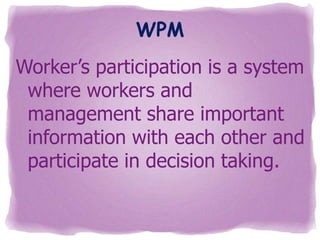
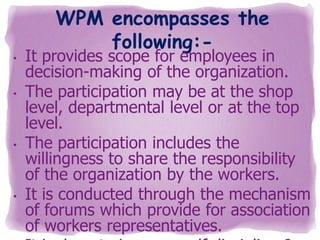
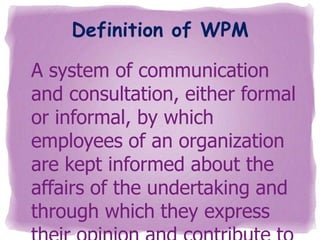
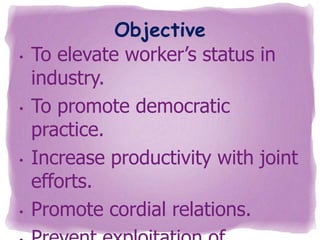
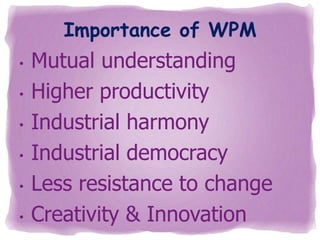
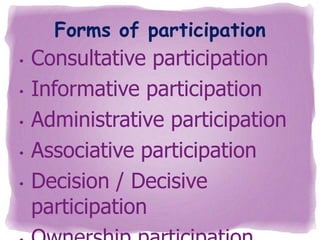
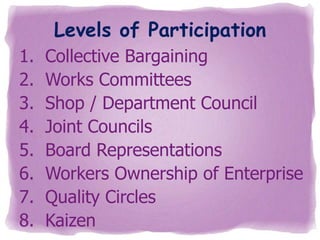
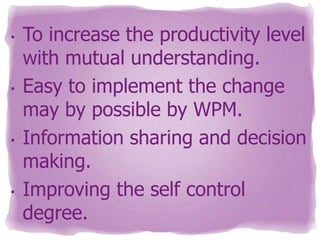
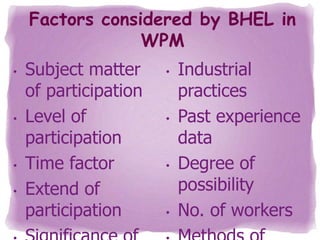
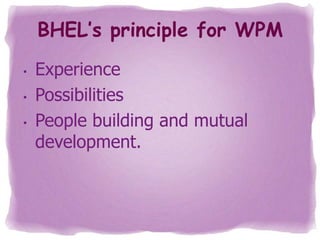
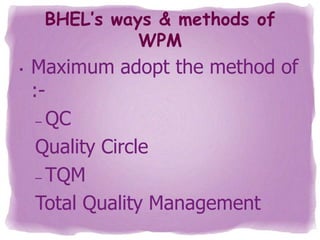
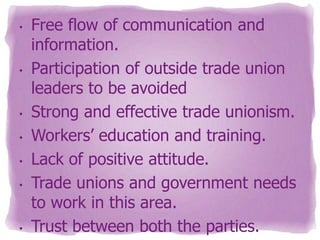
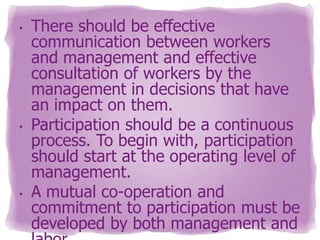
This document discusses worker participation in management (WPM) in India. It defines WPM and explains its objectives and importance, including mutual understanding, higher productivity, and industrial harmony. Several forms of WPM are described, such as consultative participation, administrative participation, and decision/decisive participation. Examples of WPM levels in India include collective bargaining, works committees, shop councils, joint councils, and board representation. Challenges to effective WPM implementation in India are also outlined, as well as examples of WPM practices at Tata Steel and BHEL.












![WPM [1].pptx.............................](https://cdn.slidesharecdn.com/ss_thumbnails/wpm1-240711175249-afe58813-thumbnail.jpg?width=640&height=640&fit=bounds)


