Ebola Virus Disease 
CDC Slides for U.S. Healthcare Workers* 
October 31, 2014 
Presentation is current through October 31, 2014 and will be updated every Friday by 5pm. For 
the most up-to-date information, please visit www.cdc.gov/ebola. 
*Presentation contains materials from CDC, MSF, and WHO 
Centers for Disease Control and Prevention 
Office of the Director 
1
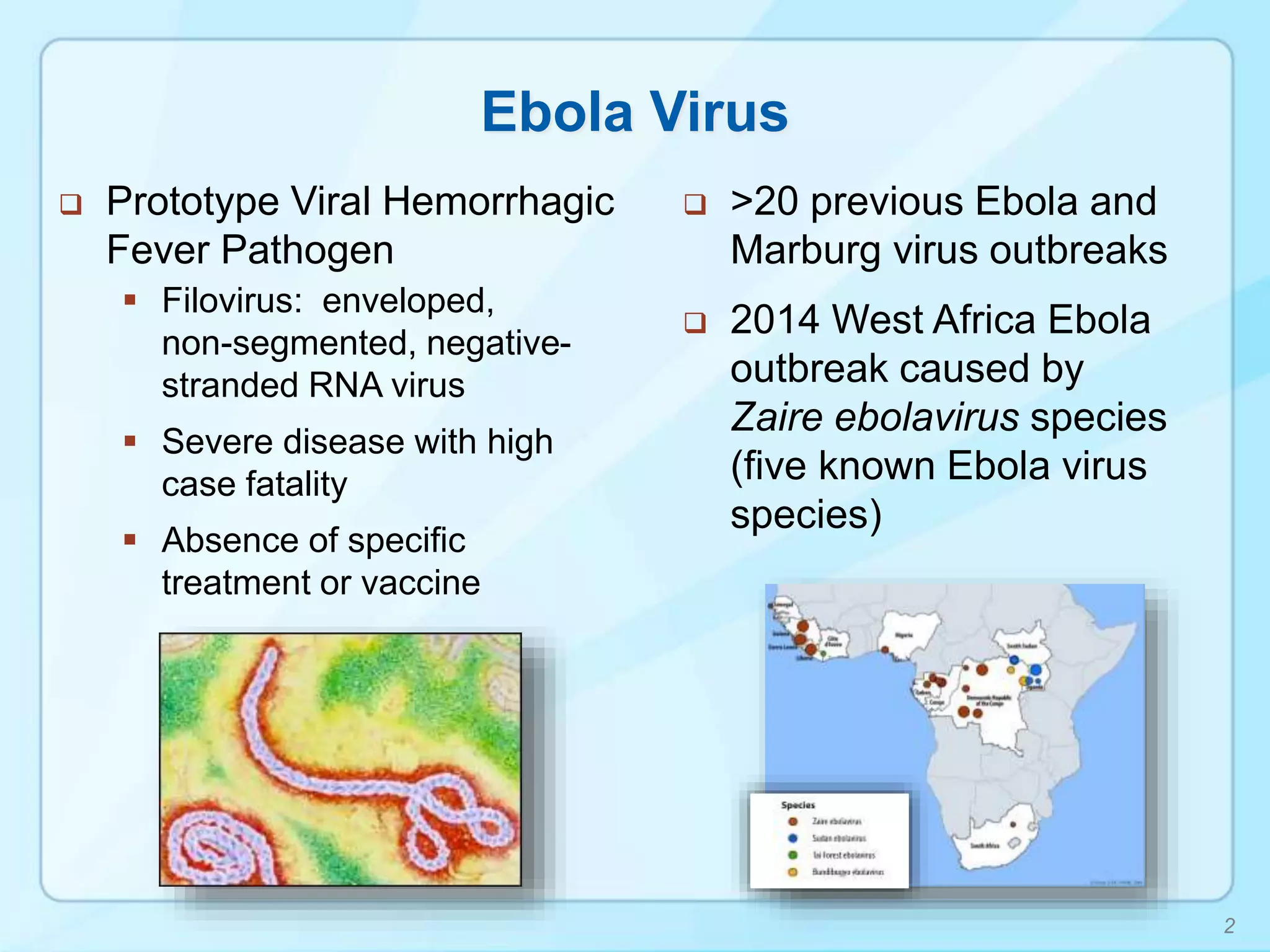
Ebola Virus 
 Prototype Viral Hemorrhagic 
Fever Pathogen 
 Filovirus: enveloped, 
non-segmented, negative-stranded 
RNA virus 
 Severe disease with high 
case fatality 
 Absence of specific 
treatment or vaccine 
 >20 previous Ebola and 
Marburg virus outbreaks 
 2014 West Africa Ebola 
outbreak caused by 
Zaire ebolavirus species 
(five known Ebola virus 
species) 
2
Ebola Virus 
 Zoonotic virus – bats the most likely reservoir, although 
species unknown 
 Spillover event from infected wild animals (e.g., fruit bats, 
monkey, duiker) to humans, followed by human-human 
transmission 
3
Figure. Ebola virus disease (EVD) cumulative 
incidence* — West Africa, October 18, 2014 
* Cumulative number of reported EVD cases per 100,000 persons since December 22, 2013. 
MMWR 2014;63(43):978-981 
4
2014 Ebola Outbreak, West Africa 
WHO Ebola Response Team. N Engl J Med 2014. DOI: 10.1056/NEJMoa1411100 
http://www.nejm.org/doi/full/10.1056/NEJMoa1411100?query=featured_ebola#t=articleResults 
5
EVD Cases and Deaths* 
Reporting 
Date 
Total Cases 
Confirmed 
Cases 
Total Deaths 
Guinea 27 Oct 14 1,906 1,391 997 
Liberia 25 Oct 14 6,535 2,515 2,413 
Sierra Leone 27 Oct 14 5,235 3,700 1,500 
Nigeria** 15 Oct 14 20 19 8 
Spain 27 Oct 14 1 1 0 
Senegal** 15 Oct 14 1 1 0 
United States 24 Oct 14 4 4 1 
Mali 23 Oct 14 1 1 1 
TOTAL 13,733 7,632 4,920 
Updated case counts available at http://www.cdc.gov/vhf/ebola/outbreaks/2014-west-africa/case-counts.html. 
*Reported by WHO using data from Ministries of Health 
**The outbreaks of EVD in Senegal and Nigeria were declared over on October 17 and 19, respectively. 
6
EVD Cases (United States) 
 As of October 24, 2014, EVD has been diagnosed in the United 
States in four people, one (the index patient) who traveled to Dallas, 
Texas from Liberia, two healthcare workers who cared for the index 
patient, and one medical aid worker who traveled to New York City 
from Guinea 
 Index patient – Symptoms developed on September 24, 2014 approximately 
four days after arrival, sought medical care at Texas Health Presbyterian Hospital 
of Dallas on September 26, was admitted to hospital on September 28, testing 
confirmed EVD on September 30, patient died October 8. 
 TX Healthcare Worker, Case 2 – Cared for index patient, was self-monitoring 
and presented to hospital reporting low-grade fever, diagnosed with EVD on 
October 10, recovered and released from NIH Clinical Center October 24. 
 TX Healthcare Worker, Case 3 – Cared for index patient, was self-monitoring 
and reported low-grade fever, diagnosed with EVD on October 15, recovered and 
released from Emory University Hospital in Atlanta October 28. 
 NY Medical Aid Worker, Case 4 – Worked with Ebola patients in Guinea, was 
self-monitoring and reported fever, diagnosed with EVD on October 24, currently 
in isolation at Bellevue Hospital in New York City. 
7 
Information on U.S. EVD cases available at http://www.cdc.gov/vhf/ebola/outbreaks/2014-west-africa/united-states-imported-case.html.
EVD Cases (United States) 
 As of October 31, 2014, four U.S. health workers and one 
journalist who were infected with Ebola virus in West Africa 
were transported to hospitals in the United States for care 
 All the patients have recovered and have been released from the 
hospital after laboratory testing confirmed that they no longer 
have Ebola virus in their blood 
8
Ebola Virus Transmission 
 Virus present in high quantity in blood, body fluids, and 
excreta of symptomatic EVD-infected patients 
 Opportunities for human-to-human transmission 
 Direct contact (through broken skin or unprotected mucous 
membranes) with an EVD-infected patient’s blood or body fluids 
 Sharps injury (with EVD-contaminated needle or other sharp) 
 Direct contact with the corpse of a person who died of EVD 
 Indirect contact with an EVD-infected patient’s blood or body 
fluids via a contaminated object (soiled linens or used utensils) 
 Ebola can also be transmitted via contact with blood, fluids, 
or meat of an infected animal 
 Limited evidence that dogs become infected with Ebola virus 
 No reports of dogs or cats becoming sick with or transmitting 
Ebola 
9
Detection of Ebola Virus in Different 
Human Body Fluids over Time 
10
Human-to-Human Transmission 
 Infected persons are not contagious until onset of 
symptoms 
 Infectiousness of body fluids (e.g., viral load) increases as 
patient becomes more ill 
 Remains from deceased infected persons are highly infectious 
 Human-to-human transmission of Ebola virus via inhalation 
(aerosols) has not been demonstrated 
11
EVD Risk Assessment 
**CDC Website to check current affected areas: www.cdc.gov/vhf/ebola
Ebola Virus Pathogenesis 
 Direct infection of tissues 
 Immune dysregulation 
 Hypovolemia and vascular collapse 
 Electrolyte abnormalities 
 Multi-organ failure, septic shock 
 Disseminated intravascular coagulation (DIC) and 
coagulopathy 
Lancet. Mar 5, 2011; 377(9768): 849–862. 
13
Early Clinical Presentation 
 Acute onset; typically 8–10 days after exposure 
(range 2–21 days) 
 Signs and symptoms 
 Initial: Fever, chills, myalgias, malaise, anorexia 
 After 5 days: GI symptoms, such as nausea, vomiting, watery 
diarrhea, abdominal pain 
 Other: Headache, conjunctivitis, hiccups, rash, chest pain, 
shortness of breath, confusion, seizures 
 Hemorrhagic symptoms in 18% of cases 
 Other possible infectious causes of symptoms 
 Malaria, typhoid fever, meningococcemia, Lassa fever and other 
bacterial infections (e.g., pneumonia) – all very common in Africa 
14
Clinical Features 
 Nonspecific early symptoms progress to: 
 Hypovolemic shock and multi-organ failure 
 Hemorrhagic disease 
 Death 
 Non-fatal cases typically improve 6–11 days after 
symptoms onset 
 Fatal disease associated with more severe early 
symptoms 
 Fatality rates of 70% have been reported in rural Africa 
 Intensive care, especially early intravenous and electrolyte 
management, may increase the survival rate 
15
Clinical Manifestations by Organ System 
in West African Ebola Outbreak 
Organ System Clinical Manifestation 
General Fever (87%), fatigue (76%), arthralgia (39%), myalgia (39%) 
Neurological Headache (53%), confusion (13%), eye pain (8%), coma (6%) 
Cardiovascular Chest pain (37%), 
Pulmonary Cough (30%), dyspnea (23%), sore throat (22%), hiccups (11%) 
Gastrointestinal Vomiting (68%), diarrhea (66%), anorexia (65%), abdominal pain 
(44%), dysphagia (33%), jaundice (10%) 
Hematological Any unexplained bleeding (18%), melena/hematochezia (6%), 
hematemesis (4%), vaginal bleeding (3%), gingival bleeding 
(2%), hemoptysis (2%), epistaxis (2%), bleeding at injection site 
(2%), hematuria (1%), petechiae/ecchymoses (1%) 
Integumentary Conjunctivitis (21%), rash (6%) 
WHO Ebola Response team. NEJM. 2014 
16
Examples of Hemorrhagic Signs 
Hematemesis 
Bleeding at IV Site 
Gingival bleeding 
17
Laboratory Findings 
 Thrombocytopenia (50,000–100,000/mL range) 
 Leukopenia followed by neutrophilia 
 Transaminase elevation: elevation serum aspartate amino-transferase 
(AST) > alanine transferase (ALT) 
 Electrolyte abnormalities from fluid shifts 
 Coagulation: PT and PTT prolonged 
 Renal: proteinuria, increased creatinine 
18
EVD: Expected diagnostic test results over 
Critical information: Date of onset of fever/symptoms 
viremia 
0 3 
10 
IgM 
ELISA IgM 
IgG 
days post onset of symptoms 
ELISA IgG 
IgM: up to 3 – 6 months 
IgG: 3 – 5 years or more (life-long persistance?) 
Fever 
RT-PCR 
time 
19
Ebola Virus Diagnosis 
 Real Time PCR (RT-PCR) 
 Used to diagnose acute infection 
 More sensitive than antigen detection ELISA 
 Identification of specific viral genetic fragments 
 Performed in select CLIA-certified laboratories 
 RT-PCR sample collection 
 Volume: minimum volume of 4mL whole blood 
 Plastic collection tubes (not glass or heparinized tubes) 
 Whole blood preserved with EDTA is preferred 
• Whole blood preserved with sodium polyanethol sulfonate (SPS), 
citrate, or with clot activator is acceptable 
20
Other Ebola Virus Diagnostics 
 Virus isolation 
 Requires Biosafety Level 4 laboratory; 
 Can take several days 
 Immunohistochemical staining and histopathology 
 On collected tissue or dead wild animals; localizes viral antigen 
 Serologic testing for IgM and IgG antibodies (ELISA) 
 Detection of viral antibodies in 
specimens, such as blood, serum, 
or tissue suspensions 
 Monitor the immune response 
in confirmed EVD patients 
21
Interpreting Negative Ebola RT-PCR 
Result 
 If symptoms started ≥3 days before the negative result 
 EVD is unlikely  consider other diagnoses 
 Infection control precautions for EVD can be discontinued unless 
clinical suspicion for EVD persists 
 If symptoms started <3 days before the negative 
RT-PCR result 
 Interpret result with caution 
 Repeat the test at ≥72 hours after onset of symptoms 
 Keep in isolation as a suspected case until a repeat RT-PCR ≥72 
hours after onset of symptoms is negative 
22
Clinical Management of EVD: 
Supportive, but Aggressive 
 Hypovolemia and sepsis physiology 
 Aggressive intravenous fluid resuscitation 
 Hemodynamic support and critical care management if 
necessary 
 Electrolyte and acid-base abnormalities 
 Aggressive electrolyte repletion 
 Correction of acid-base derangements 
 Symptomatic management of fever and gastrointestinal 
symptoms 
 Avoid NSAIDS 
 Multisystem organ failure can develop and may require 
 Oxygenation and mechanical ventilation 
 Correction of severe coagulopathy 
 Renal replacement therapy 
Reference: Fowler RA et al. Am J Respir Crit Care Med. 2014 
23
Investigational Therapies for EVD Patients 
 No approved Ebola-specific prophylaxis or treatment 
 Ribavirin has no in-vitro or in-vivo effect on Ebola virus 
 Therapeutics in development with limited human clinical trial 
data 
• Convalescent serum 
• Therapeutic medications 
o Zmapp – chimeric human-mouse monoclonal antibodies 
o Tekmira – lipid nanoparticle small interfering RNA 
o Brincidofovir – oral nucleotide analogue with antiviral activity 
 Vaccines – in clinical trials 
• Chimpanzee-derived adenovirus with an Ebola virus gene inserted 
• Attenuated vesicular stomatitis virus with an Ebola virus gene 
inserted 
References: 1Huggins, JW et al. Rev Infect Dis 1989; 2Ignatyev, G et al. J Biotechnol 2000; 3Jarhling, P et al. JID 2007 
S400; 4Mupapa, K et al. JID 1999 S18; 5Olinger, GG et al. PNAS 2012; 6Dye, JM et al. PNAS 2012; 7Qiu, X et al. Sci Transl 
Med 2013; 8Qiu, X et al. Nature 2014; 9Geisbert, TW et al. JID 2007; 10Geisbert, TW et al. Lancet 2010; 11Kobinger, GP et 
al. Virology 2006; 12Wang, D JV 2006; 13Geisbert, TW et al. JID 2011; and 14Gunther et al. JID 2011. 
24
Patient Recovery 
 Case-fatality rate 71% in the 2014 Ebola outbreak 
 Case-fatality rate is likely much lower with access to intensive 
care 
 Patients who survive often have signs of clinical 
improvement by the second week of illness 
 Associated with the development of virus-specific antibodies 
 Antibody with neutralizing activity against Ebola persists greater 
than 12 years after infection 
 Prolonged convalescence 
 Includes arthralgia, myalgia, abdominal pain, extreme fatigue, 
and anorexia; many symptoms resolve by 21 months 
 Significant arthralgia and myalgia may persist for >21 months 
 Skin sloughing and hair loss has also been reported 
References: 1WHO Ebola Response Team. NEJM 2014; 2Feldman H & Geisbert TW. Lancet 2011; 3Ksiazek TG et al. JID 
1999; 4Sanchez A et al. J Virol 2004; 5Sobarzo A et al. NEJM 2013; and 6Rowe AK et al. JID 1999. 
25
Practical Considerations for Evaluating 
Patients for EVD in the United States 
 CDC encourages all U.S. healthcare providers to 
 Ask patients with symptoms about a history of travel to West 
Africa in the 21 days before illness onset 
 Know the signs and symptoms of EVD 
 Know the initial steps to take if a diagnosis of EVD is suspected 
 CDC has developed documents to facilitate these 
evaluations 
 The EVD algorithm for the evaluation of a returned traveler 
• Available at http://www.cdc.gov/vhf/ebola/pdf/ebola-algorithm.pdf 
 The checklist for evaluation of a patient being evaluated for EVD 
• Available at http://www.cdc.gov/vhf/ebola/pdf/checklist-patients-evaluated- 
us-evd.pdf 
26
EVD Algorithm 
for Evaluation of 
the 
Returned Traveler 
**CDC Website to check current affected areas: www.cdc.gov/vhf/ebola 
Algorithm available at http://www.cdc.gov/vhf/ebola/pdf/ebola-algorithm.pdf 
Checklist available at http://www.cdc.gov/vhf/ebola/pdf/checklist-patients-evaluated-us-evd.pdf 
27
Interim Guidance for Monitoring and 
Movement of Persons with EVD Exposure 
 CDC has created guidance for monitoring people exposed 
to Ebola virus but without symptoms 
RISK LEVEL PUBLIC HEALTH ACTION 
Monitoring Restricted 
Public Activities 
www.cdc.gov/vhf/ebola/hcp/monitoring-and-movement-of-persons-with-exposure.html 
Restricted 
Travel 
HIGH risk Direct Active Monitoring Yes Yes 
SOME risk Direct Active Monitoring 
Case-by-case 
assessment 
Case-by-case 
assessment 
LOW risk 
Active Monitoring 
for some; 
Direct Active Monitoring 
for others 
No No 
NO risk No No No
EVD Summary 
 The 2014 Ebola outbreak in West Africa is the largest in 
history and has affected multiple countries 
 Think Ebola: U.S. healthcare providers should be aware of 
clinical presentation and risk factors for EVD 
 Human-to-human transmission by direct contact 
 No human-to-human transmission via inhalation (aerosols) 
 No transmission before symptom onset 
 Early case identification, isolation, treatment and effective 
infection control are essential to prevent Ebola transmission 
29
For more information, please contact Centers for Disease Control and Prevention 
1600 Clifton Road NE, Atlanta, GA 30333 
Telephone: 1-800-CDC-INFO (232-4636)/TTY: 1-888-232-6348 
Visit: www.atsdr.cdc.gov | Contact CDC at: 1-800-CDC-INFO or www.cdc.gov/info 
The findings and conclusions in this report are those of the authors and do not 
necessarily represent the official position of the Centers for Disease Control and 
Prevention. 
Centers for Disease Control and Prevention CS252465 
Office of the Director 30

Ebola 101-cdc-slides-for-us-healthcare-workers

  • 1.
    Ebola Virus Disease CDC Slides for U.S. Healthcare Workers* October 31, 2014 Presentation is current through October 31, 2014 and will be updated every Friday by 5pm. For the most up-to-date information, please visit www.cdc.gov/ebola. *Presentation contains materials from CDC, MSF, and WHO Centers for Disease Control and Prevention Office of the Director 1
  • 2.
    Ebola Virus Prototype Viral Hemorrhagic Fever Pathogen  Filovirus: enveloped, non-segmented, negative-stranded RNA virus  Severe disease with high case fatality  Absence of specific treatment or vaccine  >20 previous Ebola and Marburg virus outbreaks  2014 West Africa Ebola outbreak caused by Zaire ebolavirus species (five known Ebola virus species) 2
  • 3.
    Ebola Virus Zoonotic virus – bats the most likely reservoir, although species unknown  Spillover event from infected wild animals (e.g., fruit bats, monkey, duiker) to humans, followed by human-human transmission 3
  • 4.
    Figure. Ebola virusdisease (EVD) cumulative incidence* — West Africa, October 18, 2014 * Cumulative number of reported EVD cases per 100,000 persons since December 22, 2013. MMWR 2014;63(43):978-981 4
  • 5.
    2014 Ebola Outbreak,West Africa WHO Ebola Response Team. N Engl J Med 2014. DOI: 10.1056/NEJMoa1411100 http://www.nejm.org/doi/full/10.1056/NEJMoa1411100?query=featured_ebola#t=articleResults 5
  • 6.
    EVD Cases andDeaths* Reporting Date Total Cases Confirmed Cases Total Deaths Guinea 27 Oct 14 1,906 1,391 997 Liberia 25 Oct 14 6,535 2,515 2,413 Sierra Leone 27 Oct 14 5,235 3,700 1,500 Nigeria** 15 Oct 14 20 19 8 Spain 27 Oct 14 1 1 0 Senegal** 15 Oct 14 1 1 0 United States 24 Oct 14 4 4 1 Mali 23 Oct 14 1 1 1 TOTAL 13,733 7,632 4,920 Updated case counts available at http://www.cdc.gov/vhf/ebola/outbreaks/2014-west-africa/case-counts.html. *Reported by WHO using data from Ministries of Health **The outbreaks of EVD in Senegal and Nigeria were declared over on October 17 and 19, respectively. 6
  • 7.
    EVD Cases (UnitedStates)  As of October 24, 2014, EVD has been diagnosed in the United States in four people, one (the index patient) who traveled to Dallas, Texas from Liberia, two healthcare workers who cared for the index patient, and one medical aid worker who traveled to New York City from Guinea  Index patient – Symptoms developed on September 24, 2014 approximately four days after arrival, sought medical care at Texas Health Presbyterian Hospital of Dallas on September 26, was admitted to hospital on September 28, testing confirmed EVD on September 30, patient died October 8.  TX Healthcare Worker, Case 2 – Cared for index patient, was self-monitoring and presented to hospital reporting low-grade fever, diagnosed with EVD on October 10, recovered and released from NIH Clinical Center October 24.  TX Healthcare Worker, Case 3 – Cared for index patient, was self-monitoring and reported low-grade fever, diagnosed with EVD on October 15, recovered and released from Emory University Hospital in Atlanta October 28.  NY Medical Aid Worker, Case 4 – Worked with Ebola patients in Guinea, was self-monitoring and reported fever, diagnosed with EVD on October 24, currently in isolation at Bellevue Hospital in New York City. 7 Information on U.S. EVD cases available at http://www.cdc.gov/vhf/ebola/outbreaks/2014-west-africa/united-states-imported-case.html.
  • 8.
    EVD Cases (UnitedStates)  As of October 31, 2014, four U.S. health workers and one journalist who were infected with Ebola virus in West Africa were transported to hospitals in the United States for care  All the patients have recovered and have been released from the hospital after laboratory testing confirmed that they no longer have Ebola virus in their blood 8
  • 9.
    Ebola Virus Transmission  Virus present in high quantity in blood, body fluids, and excreta of symptomatic EVD-infected patients  Opportunities for human-to-human transmission  Direct contact (through broken skin or unprotected mucous membranes) with an EVD-infected patient’s blood or body fluids  Sharps injury (with EVD-contaminated needle or other sharp)  Direct contact with the corpse of a person who died of EVD  Indirect contact with an EVD-infected patient’s blood or body fluids via a contaminated object (soiled linens or used utensils)  Ebola can also be transmitted via contact with blood, fluids, or meat of an infected animal  Limited evidence that dogs become infected with Ebola virus  No reports of dogs or cats becoming sick with or transmitting Ebola 9
  • 10.
    Detection of EbolaVirus in Different Human Body Fluids over Time 10
  • 11.
    Human-to-Human Transmission Infected persons are not contagious until onset of symptoms  Infectiousness of body fluids (e.g., viral load) increases as patient becomes more ill  Remains from deceased infected persons are highly infectious  Human-to-human transmission of Ebola virus via inhalation (aerosols) has not been demonstrated 11
  • 12.
    EVD Risk Assessment **CDC Website to check current affected areas: www.cdc.gov/vhf/ebola
  • 13.
    Ebola Virus Pathogenesis  Direct infection of tissues  Immune dysregulation  Hypovolemia and vascular collapse  Electrolyte abnormalities  Multi-organ failure, septic shock  Disseminated intravascular coagulation (DIC) and coagulopathy Lancet. Mar 5, 2011; 377(9768): 849–862. 13
  • 14.
    Early Clinical Presentation  Acute onset; typically 8–10 days after exposure (range 2–21 days)  Signs and symptoms  Initial: Fever, chills, myalgias, malaise, anorexia  After 5 days: GI symptoms, such as nausea, vomiting, watery diarrhea, abdominal pain  Other: Headache, conjunctivitis, hiccups, rash, chest pain, shortness of breath, confusion, seizures  Hemorrhagic symptoms in 18% of cases  Other possible infectious causes of symptoms  Malaria, typhoid fever, meningococcemia, Lassa fever and other bacterial infections (e.g., pneumonia) – all very common in Africa 14
  • 15.
    Clinical Features Nonspecific early symptoms progress to:  Hypovolemic shock and multi-organ failure  Hemorrhagic disease  Death  Non-fatal cases typically improve 6–11 days after symptoms onset  Fatal disease associated with more severe early symptoms  Fatality rates of 70% have been reported in rural Africa  Intensive care, especially early intravenous and electrolyte management, may increase the survival rate 15
  • 16.
    Clinical Manifestations byOrgan System in West African Ebola Outbreak Organ System Clinical Manifestation General Fever (87%), fatigue (76%), arthralgia (39%), myalgia (39%) Neurological Headache (53%), confusion (13%), eye pain (8%), coma (6%) Cardiovascular Chest pain (37%), Pulmonary Cough (30%), dyspnea (23%), sore throat (22%), hiccups (11%) Gastrointestinal Vomiting (68%), diarrhea (66%), anorexia (65%), abdominal pain (44%), dysphagia (33%), jaundice (10%) Hematological Any unexplained bleeding (18%), melena/hematochezia (6%), hematemesis (4%), vaginal bleeding (3%), gingival bleeding (2%), hemoptysis (2%), epistaxis (2%), bleeding at injection site (2%), hematuria (1%), petechiae/ecchymoses (1%) Integumentary Conjunctivitis (21%), rash (6%) WHO Ebola Response team. NEJM. 2014 16
  • 17.
    Examples of HemorrhagicSigns Hematemesis Bleeding at IV Site Gingival bleeding 17
  • 18.
    Laboratory Findings Thrombocytopenia (50,000–100,000/mL range)  Leukopenia followed by neutrophilia  Transaminase elevation: elevation serum aspartate amino-transferase (AST) > alanine transferase (ALT)  Electrolyte abnormalities from fluid shifts  Coagulation: PT and PTT prolonged  Renal: proteinuria, increased creatinine 18
  • 19.
    EVD: Expected diagnostictest results over Critical information: Date of onset of fever/symptoms viremia 0 3 10 IgM ELISA IgM IgG days post onset of symptoms ELISA IgG IgM: up to 3 – 6 months IgG: 3 – 5 years or more (life-long persistance?) Fever RT-PCR time 19
  • 20.
    Ebola Virus Diagnosis  Real Time PCR (RT-PCR)  Used to diagnose acute infection  More sensitive than antigen detection ELISA  Identification of specific viral genetic fragments  Performed in select CLIA-certified laboratories  RT-PCR sample collection  Volume: minimum volume of 4mL whole blood  Plastic collection tubes (not glass or heparinized tubes)  Whole blood preserved with EDTA is preferred • Whole blood preserved with sodium polyanethol sulfonate (SPS), citrate, or with clot activator is acceptable 20
  • 21.
    Other Ebola VirusDiagnostics  Virus isolation  Requires Biosafety Level 4 laboratory;  Can take several days  Immunohistochemical staining and histopathology  On collected tissue or dead wild animals; localizes viral antigen  Serologic testing for IgM and IgG antibodies (ELISA)  Detection of viral antibodies in specimens, such as blood, serum, or tissue suspensions  Monitor the immune response in confirmed EVD patients 21
  • 22.
    Interpreting Negative EbolaRT-PCR Result  If symptoms started ≥3 days before the negative result  EVD is unlikely  consider other diagnoses  Infection control precautions for EVD can be discontinued unless clinical suspicion for EVD persists  If symptoms started <3 days before the negative RT-PCR result  Interpret result with caution  Repeat the test at ≥72 hours after onset of symptoms  Keep in isolation as a suspected case until a repeat RT-PCR ≥72 hours after onset of symptoms is negative 22
  • 23.
    Clinical Management ofEVD: Supportive, but Aggressive  Hypovolemia and sepsis physiology  Aggressive intravenous fluid resuscitation  Hemodynamic support and critical care management if necessary  Electrolyte and acid-base abnormalities  Aggressive electrolyte repletion  Correction of acid-base derangements  Symptomatic management of fever and gastrointestinal symptoms  Avoid NSAIDS  Multisystem organ failure can develop and may require  Oxygenation and mechanical ventilation  Correction of severe coagulopathy  Renal replacement therapy Reference: Fowler RA et al. Am J Respir Crit Care Med. 2014 23
  • 24.
    Investigational Therapies forEVD Patients  No approved Ebola-specific prophylaxis or treatment  Ribavirin has no in-vitro or in-vivo effect on Ebola virus  Therapeutics in development with limited human clinical trial data • Convalescent serum • Therapeutic medications o Zmapp – chimeric human-mouse monoclonal antibodies o Tekmira – lipid nanoparticle small interfering RNA o Brincidofovir – oral nucleotide analogue with antiviral activity  Vaccines – in clinical trials • Chimpanzee-derived adenovirus with an Ebola virus gene inserted • Attenuated vesicular stomatitis virus with an Ebola virus gene inserted References: 1Huggins, JW et al. Rev Infect Dis 1989; 2Ignatyev, G et al. J Biotechnol 2000; 3Jarhling, P et al. JID 2007 S400; 4Mupapa, K et al. JID 1999 S18; 5Olinger, GG et al. PNAS 2012; 6Dye, JM et al. PNAS 2012; 7Qiu, X et al. Sci Transl Med 2013; 8Qiu, X et al. Nature 2014; 9Geisbert, TW et al. JID 2007; 10Geisbert, TW et al. Lancet 2010; 11Kobinger, GP et al. Virology 2006; 12Wang, D JV 2006; 13Geisbert, TW et al. JID 2011; and 14Gunther et al. JID 2011. 24
  • 25.
    Patient Recovery Case-fatality rate 71% in the 2014 Ebola outbreak  Case-fatality rate is likely much lower with access to intensive care  Patients who survive often have signs of clinical improvement by the second week of illness  Associated with the development of virus-specific antibodies  Antibody with neutralizing activity against Ebola persists greater than 12 years after infection  Prolonged convalescence  Includes arthralgia, myalgia, abdominal pain, extreme fatigue, and anorexia; many symptoms resolve by 21 months  Significant arthralgia and myalgia may persist for >21 months  Skin sloughing and hair loss has also been reported References: 1WHO Ebola Response Team. NEJM 2014; 2Feldman H & Geisbert TW. Lancet 2011; 3Ksiazek TG et al. JID 1999; 4Sanchez A et al. J Virol 2004; 5Sobarzo A et al. NEJM 2013; and 6Rowe AK et al. JID 1999. 25
  • 26.
    Practical Considerations forEvaluating Patients for EVD in the United States  CDC encourages all U.S. healthcare providers to  Ask patients with symptoms about a history of travel to West Africa in the 21 days before illness onset  Know the signs and symptoms of EVD  Know the initial steps to take if a diagnosis of EVD is suspected  CDC has developed documents to facilitate these evaluations  The EVD algorithm for the evaluation of a returned traveler • Available at http://www.cdc.gov/vhf/ebola/pdf/ebola-algorithm.pdf  The checklist for evaluation of a patient being evaluated for EVD • Available at http://www.cdc.gov/vhf/ebola/pdf/checklist-patients-evaluated- us-evd.pdf 26
  • 27.
    EVD Algorithm forEvaluation of the Returned Traveler **CDC Website to check current affected areas: www.cdc.gov/vhf/ebola Algorithm available at http://www.cdc.gov/vhf/ebola/pdf/ebola-algorithm.pdf Checklist available at http://www.cdc.gov/vhf/ebola/pdf/checklist-patients-evaluated-us-evd.pdf 27
  • 28.
    Interim Guidance forMonitoring and Movement of Persons with EVD Exposure  CDC has created guidance for monitoring people exposed to Ebola virus but without symptoms RISK LEVEL PUBLIC HEALTH ACTION Monitoring Restricted Public Activities www.cdc.gov/vhf/ebola/hcp/monitoring-and-movement-of-persons-with-exposure.html Restricted Travel HIGH risk Direct Active Monitoring Yes Yes SOME risk Direct Active Monitoring Case-by-case assessment Case-by-case assessment LOW risk Active Monitoring for some; Direct Active Monitoring for others No No NO risk No No No
  • 29.
    EVD Summary The 2014 Ebola outbreak in West Africa is the largest in history and has affected multiple countries  Think Ebola: U.S. healthcare providers should be aware of clinical presentation and risk factors for EVD  Human-to-human transmission by direct contact  No human-to-human transmission via inhalation (aerosols)  No transmission before symptom onset  Early case identification, isolation, treatment and effective infection control are essential to prevent Ebola transmission 29
  • 30.
    For more information,please contact Centers for Disease Control and Prevention 1600 Clifton Road NE, Atlanta, GA 30333 Telephone: 1-800-CDC-INFO (232-4636)/TTY: 1-888-232-6348 Visit: www.atsdr.cdc.gov | Contact CDC at: 1-800-CDC-INFO or www.cdc.gov/info The findings and conclusions in this report are those of the authors and do not necessarily represent the official position of the Centers for Disease Control and Prevention. Centers for Disease Control and Prevention CS252465 Office of the Director 30