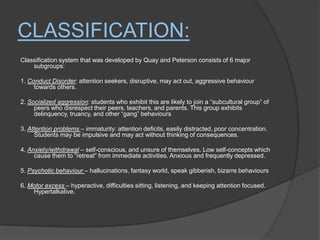
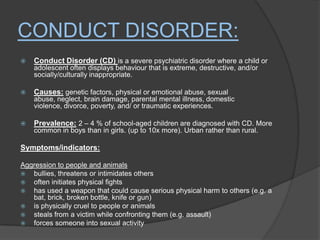
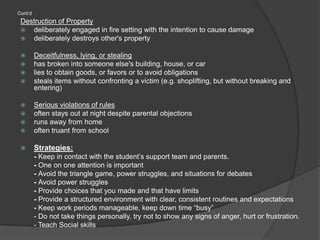
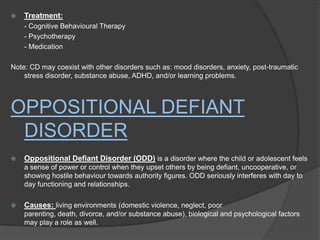
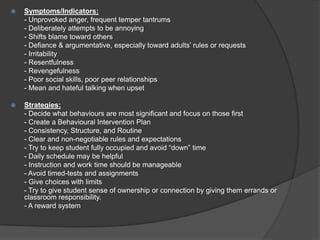
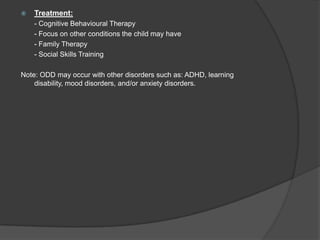
Behavioural disorders in children can take many forms and have various underlying causes. They are generally defined as extreme behaviours that differ significantly from social and cultural norms and negatively impact academic performance or relationships. Common types include conduct disorder, where a child exhibits aggressive or destructive behaviours; oppositional defiant disorder, where a child deliberately seeks to upset others through defiant behaviour; and anxiety/withdrawal, where a child is self-conscious and withdrawn. Treatment may involve cognitive behavioural therapy, medication, and treating any co-occurring conditions. It is important to understand each child's needs and implement structured environments and behaviour plans to help them succeed.