Environmentally sound management of
          e-waste in India
             Presentation by:
             AKASH MANDAL
            10/FET/C(S)/2006
               CIVIL – 6A1
                   FET
                  MRIU
e-Waste
What is E-waste?
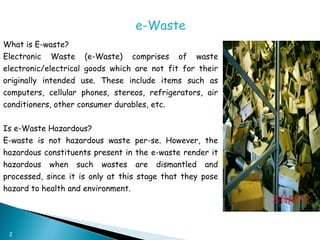
Electronic Waste (e-Waste) comprises of waste
electronic/electrical goods which are not fit for their
originally intended use. These include items such as
computers, cellular phones, stereos, refrigerators, air
conditioners, other consumer durables, etc.

Is e-Waste Hazardous?
E-waste is not hazardous waste per-se. However, the
hazardous constituents present in the e-waste render it
hazardous when such wastes are dismantled and
processed, since it is only at this stage that they pose
hazard to health and environment.


 2
COMPONENTS                          CONSTITUENTS
     Printed circuit boards            Lead & cadmium
     Cathode ray tubes (CRTs)          Lead oxide & Cadmium
     Switches & flat screen monitors   Mercury
     Computer batteries                Cadmium
     Capacitors and transformers       Poly Chlorinated Bi-phenyls (PCB)
     Printed circuit boards, plastic   Brominated Flame Retardant
      casings cable
     Cable insulation/coating          Poly Vinyl Chloride (PVC)


3
   Information and telecom fastest growing industry verticals

       PC sales crossed 7.3 million units in 2007-08 growing 16%;

        installed base of over 25 million units

       Consumer electronics market growing at 13-15% annually ; 120

        million installed base of TVS

       Cellular subscriber up by 96.86% over last year; Indtalled

        base to cross 300 million by 2010


4
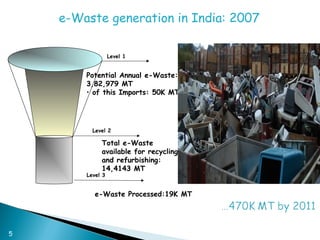
e-Waste generation in India: 2007

                  Level 1


        Potential Annual e-Waste:
        3,82,979 MT
        • of this Imports: 50K MT


          Level 2

             Total e-Waste
             available for recycling
             and refurbishing:
             14,4143 MT
        Level 3


           e-Waste Processed:19K MT


5                                       5
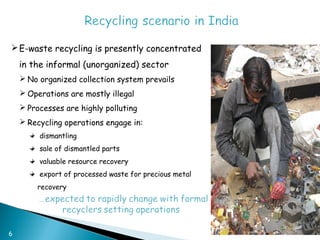
 E-waste recycling is presently concentrated
    in the informal (unorganized) sector
     No organized collection system prevails
     Operations are mostly illegal
     Processes are highly polluting
     Recycling operations engage in:
         dismantling
         sale of dismantled parts
         valuable resource recovery
         export of processed waste for precious metal
        recovery


6
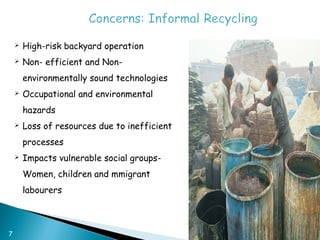
   High-risk backyard operation
       Non- efficient and Non-
        environmentally sound technologies
       Occupational and environmental
        hazards
       Loss of resources due to inefficient
        processes
       Impacts vulnerable social groups-
        Women, children and mmigrant
        labourers


7
   Various legislations cover different aspects of e-waste
         The hazardous waste (management and handling ) rules, 1998 as
          amended in 2008 for Toxic content – registration mandatory for
          recyclers
         Municipal Solid Waste Management & Handling Rules for non-Toxic
          content
         Basel convention for regulating transboundary movement
         Foreign Trade policy restricts import of second-hand computers and
          does not permit import of e-waste
         ‘Guidelines’ by Central Pollution Control Board ( 2008)


8
   The guidelines notified in April 2008 - basic guidance document
        identifying and recognizing fundamental principles:
           Producer Responsibility
           RoHS (Restriction on Hazardous Substances)
           Best practices
           Insight into technologies for various levels of recycling
       The guidelines explicitly mention the need for a separate
        legislation for implementing ‘Producer Responsibility’


9
    E-waste is ‘distinct’ as it is an end-of-consumption waste while hazardous waste
     results from a distinct industrial process
    Environment Protection Act provides for separate regulations for waste with
     ‘distinct’ characteristics - Biomedical Wastes (M&H) Rules- 1998 , lead acid
     batteries, the Batteries (M&H) Rules- 2001 etc.
    The e-waste value chain is rather complex as it involves multiple players -
     producers, distributors, retailers, end consumers, collection system, recyclers
     while hazardous waste chain involves only the ‘occupier/ generator’ and the
     ‘operator’
    Recovery of non-ferrous metals and reprocessing of used oil are the only two
     major activities in hazardous waste recycling while e-waste recycling involves
     refurbishment for reuse, dismantling and precious metal recovery which is a
     complex process


10
Title: E-waste (Management & Handling) Rules to be published under the

                                     Environment Protection Act
        OBJECTIVE :To put in place an effective mechanism to regulate the

         generation, collection, storage, transportation, import, export,

         environmentally sound recycling, treatment and disposal of e-waste. This

         includes refurbishment, collection system and producer responsibility

         thereby reducing the wastes destined for final disposal.


        ESSENCE: the producer of electrical and electronic equipments is

         responsible for the entire life cycle of its own branded product and in

         particular the environmentally sound end-of-life management and facilitating

         collection and take back.
11
   Responsibility of each element in the e-waste Value Chain:
         •   Producers – Extended/Individual Producer Responsibility
         •   Dealers
         •   Collection agencies/ collection Centres
         •   Dismantler
         •   Recycler
         •   Consumer and bulk consumers
        Procedure for Authorization of producers, collection agencies,
         dismantlers, recyclers and enforcement agencies
        Procedure for registration/renewal of registration of recyclers
        Regulations for import of e-waste
        Liability of producers, collection agencies, transporter, dismantlers and
         recyclers
        Information & Tracking
         Elimination of hazardous substances used in e-equipments
        Setting up of Designated Authority to ensure transparency, audit and
         inspect facilities, examine authorization/ registration etc.


12
13

E waste

  • 1.
    Environmentally sound managementof e-waste in India Presentation by: AKASH MANDAL 10/FET/C(S)/2006 CIVIL – 6A1 FET MRIU
  • 2.
    e-Waste What is E-waste? ElectronicWaste (e-Waste) comprises of waste electronic/electrical goods which are not fit for their originally intended use. These include items such as computers, cellular phones, stereos, refrigerators, air conditioners, other consumer durables, etc. Is e-Waste Hazardous? E-waste is not hazardous waste per-se. However, the hazardous constituents present in the e-waste render it hazardous when such wastes are dismantled and processed, since it is only at this stage that they pose hazard to health and environment. 2
  • 3.
    COMPONENTS CONSTITUENTS  Printed circuit boards Lead & cadmium  Cathode ray tubes (CRTs) Lead oxide & Cadmium  Switches & flat screen monitors Mercury  Computer batteries Cadmium  Capacitors and transformers Poly Chlorinated Bi-phenyls (PCB)  Printed circuit boards, plastic Brominated Flame Retardant casings cable  Cable insulation/coating Poly Vinyl Chloride (PVC) 3
  • 4.
    Information and telecom fastest growing industry verticals  PC sales crossed 7.3 million units in 2007-08 growing 16%; installed base of over 25 million units  Consumer electronics market growing at 13-15% annually ; 120 million installed base of TVS  Cellular subscriber up by 96.86% over last year; Indtalled base to cross 300 million by 2010 4
  • 5.
    e-Waste generation inIndia: 2007 Level 1 Potential Annual e-Waste: 3,82,979 MT • of this Imports: 50K MT Level 2 Total e-Waste available for recycling and refurbishing: 14,4143 MT Level 3 e-Waste Processed:19K MT 5 5
  • 6.
     E-waste recyclingis presently concentrated in the informal (unorganized) sector  No organized collection system prevails  Operations are mostly illegal  Processes are highly polluting  Recycling operations engage in: dismantling sale of dismantled parts valuable resource recovery export of processed waste for precious metal recovery 6
  • 7.
    High-risk backyard operation  Non- efficient and Non- environmentally sound technologies  Occupational and environmental hazards  Loss of resources due to inefficient processes  Impacts vulnerable social groups- Women, children and mmigrant labourers 7
  • 8.
    Various legislations cover different aspects of e-waste  The hazardous waste (management and handling ) rules, 1998 as amended in 2008 for Toxic content – registration mandatory for recyclers  Municipal Solid Waste Management & Handling Rules for non-Toxic content  Basel convention for regulating transboundary movement  Foreign Trade policy restricts import of second-hand computers and does not permit import of e-waste  ‘Guidelines’ by Central Pollution Control Board ( 2008) 8
  • 9.
    The guidelines notified in April 2008 - basic guidance document identifying and recognizing fundamental principles:  Producer Responsibility  RoHS (Restriction on Hazardous Substances)  Best practices  Insight into technologies for various levels of recycling  The guidelines explicitly mention the need for a separate legislation for implementing ‘Producer Responsibility’ 9
  • 10.
    E-waste is ‘distinct’ as it is an end-of-consumption waste while hazardous waste results from a distinct industrial process  Environment Protection Act provides for separate regulations for waste with ‘distinct’ characteristics - Biomedical Wastes (M&H) Rules- 1998 , lead acid batteries, the Batteries (M&H) Rules- 2001 etc.  The e-waste value chain is rather complex as it involves multiple players - producers, distributors, retailers, end consumers, collection system, recyclers while hazardous waste chain involves only the ‘occupier/ generator’ and the ‘operator’  Recovery of non-ferrous metals and reprocessing of used oil are the only two major activities in hazardous waste recycling while e-waste recycling involves refurbishment for reuse, dismantling and precious metal recovery which is a complex process 10
  • 11.
    Title: E-waste (Management& Handling) Rules to be published under the Environment Protection Act  OBJECTIVE :To put in place an effective mechanism to regulate the generation, collection, storage, transportation, import, export, environmentally sound recycling, treatment and disposal of e-waste. This includes refurbishment, collection system and producer responsibility thereby reducing the wastes destined for final disposal.  ESSENCE: the producer of electrical and electronic equipments is responsible for the entire life cycle of its own branded product and in particular the environmentally sound end-of-life management and facilitating collection and take back. 11
  • 12.
    Responsibility of each element in the e-waste Value Chain: • Producers – Extended/Individual Producer Responsibility • Dealers • Collection agencies/ collection Centres • Dismantler • Recycler • Consumer and bulk consumers  Procedure for Authorization of producers, collection agencies, dismantlers, recyclers and enforcement agencies  Procedure for registration/renewal of registration of recyclers  Regulations for import of e-waste  Liability of producers, collection agencies, transporter, dismantlers and recyclers  Information & Tracking  Elimination of hazardous substances used in e-equipments  Setting up of Designated Authority to ensure transparency, audit and inspect facilities, examine authorization/ registration etc. 12
  • 13.